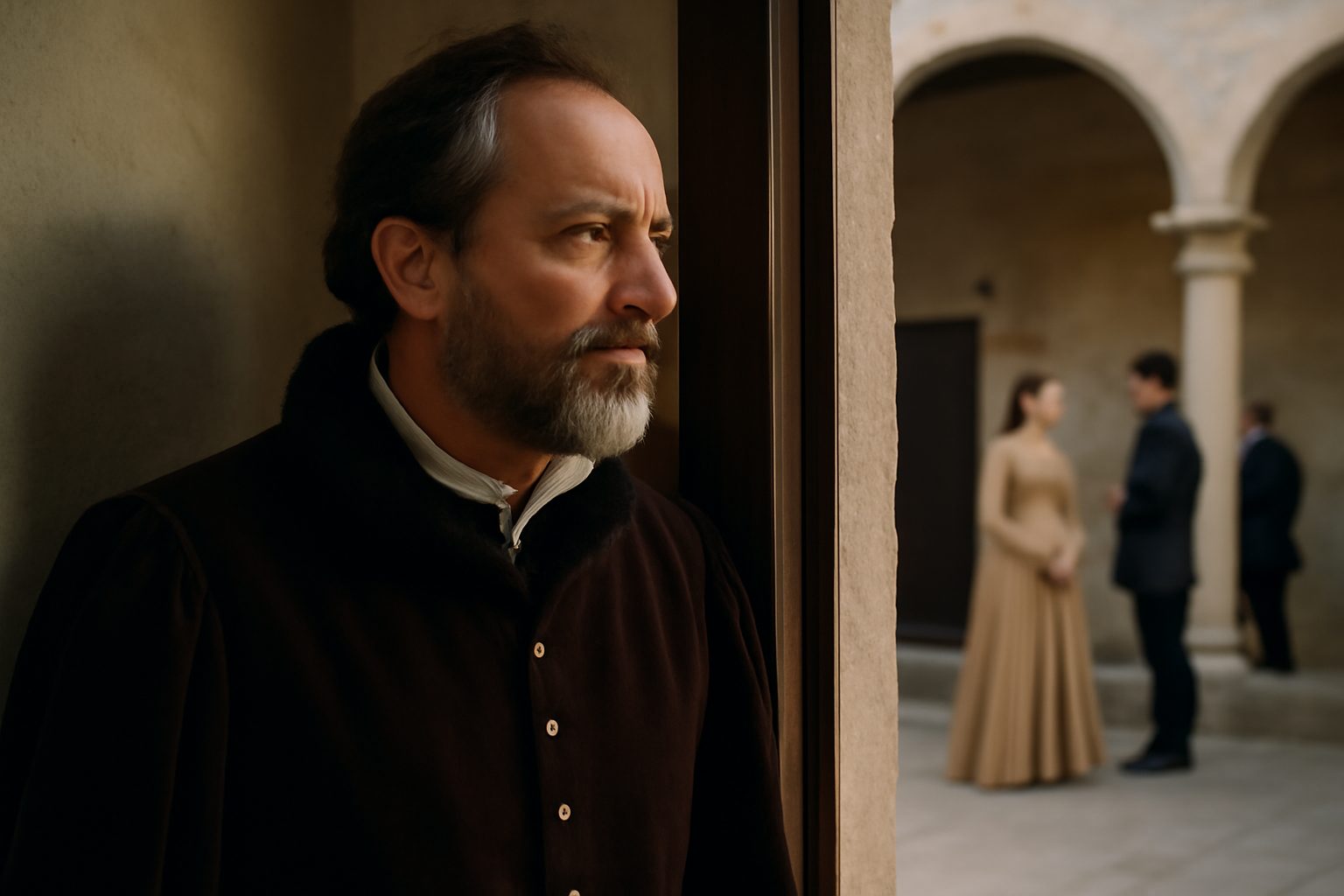
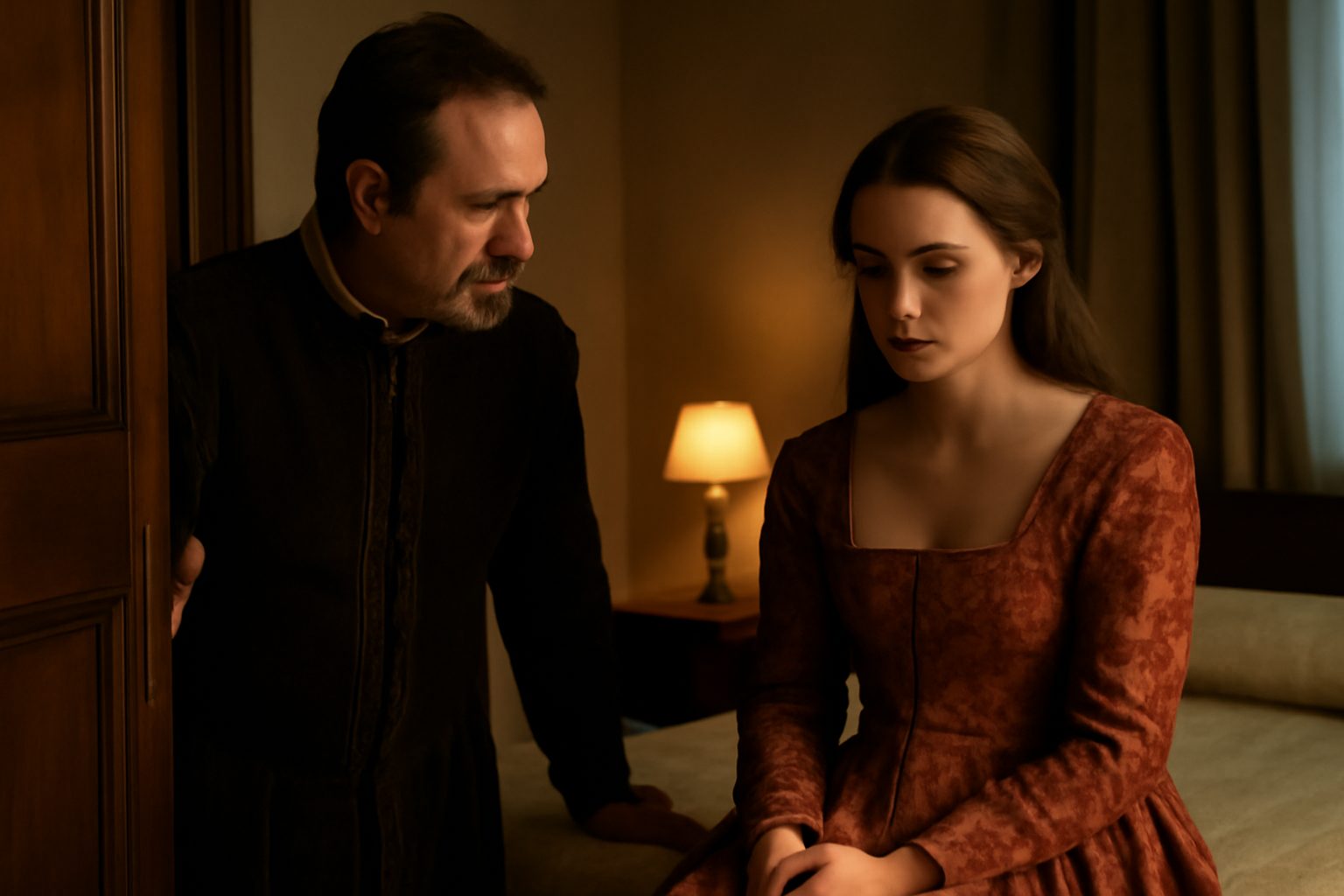
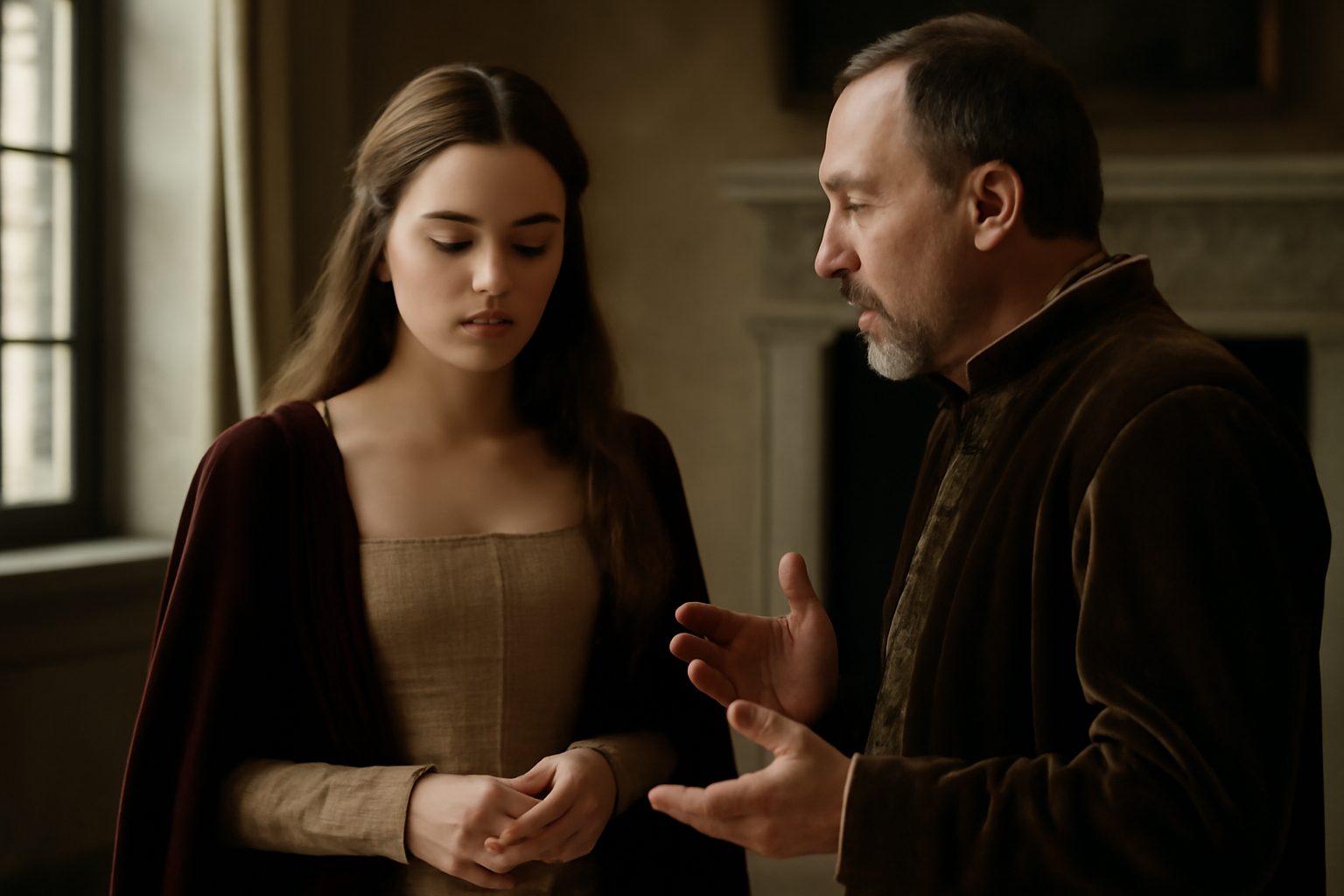
In Act 3, Scene 4 of Romeo and Juliet, Lord Capulet speaks these words as he hastily arranges Juliet's marriage to Paris. Still unaware of her secret union with Romeo, he insists on setting the wedding for Thursday, eager to resolve matters after Tybalt's death. This moment highlights the pressure and haste driving the Capulets' decisions, unknowingly setting the stage for further tragedy.
Capulet: "O' Thursday let it be: o' Thursday, tell her,"
In modern day english, we would say:
Let it be on Thursday—tell her Thursday.
Frequently Asked Questions
What day does Capulet choose for Juliet's wedding?
Thursday
Connections to other verses:
Connections to "O' Thursday let it be: o' Thursday, tell her,"
This line, spoken by Lord Capulet, is a decisive moment in the scene where he finalizes the wedding date for Juliet and Paris. It connects directly to several other verses that build toward this decision and its implications.
Decision-Making and Timing
The declaration follows a discussion about the appropriate day for the wedding. Earlier, Capulet suggests "And bid her, mark you me, on Wednesday next--", but Paris expresses concern about the haste. Capulet then asks, "And there an end. But what say you to Thursday?", to which Paris eagerly replies, "My lord, I would that Thursday were to-morrow." This exchange culminates in Capulet's firm "O' Thursday let it be," showing how the date is mutually agreed upon.
Context of Grief and Haste
The urgency behind setting the date is rooted in the recent death of Tybalt. Capulet acknowledges the unfortunate timing with "That we have had no time to move our daughter:" and "These times of woe afford no time to woo." He also notes Juliet's profound grief for Tybalt in "Look you, she loved her kinsman Tybalt dearly," which makes the rushed wedding plans seem even more inconsiderate.
Confidence in Juliet's Compliance
Capulet expresses certainty that Juliet will obey his wishes, stating "Of my child's love: I think she will be ruled" and "In all respects by me; nay, more, I doubt it not." This overconfidence tragically contrasts with Juliet's secret marriage to Romeo and sets the stage for future conflict.
Instructions and Preparations
Following the decision, Capulet gives orders to prepare for the wedding. He tells Lady Capulet, "Wife, go you to her ere you go to bed;" to inform Juliet, and later confirms, "Prepare her, wife, against this wedding-day." He also assures Paris of Juliet's affection with "Acquaint her here of my son Paris' love;" and declares "She shall be married to this noble earl."
Final Confirmation and Closure
The scene concludes with Capulet reaffirming the date: "Well get you gone: o' Thursday be it, then." This echoes the initial "O' Thursday let it be," closing the discussion and moving the plot inexorably toward the arranged marriage.