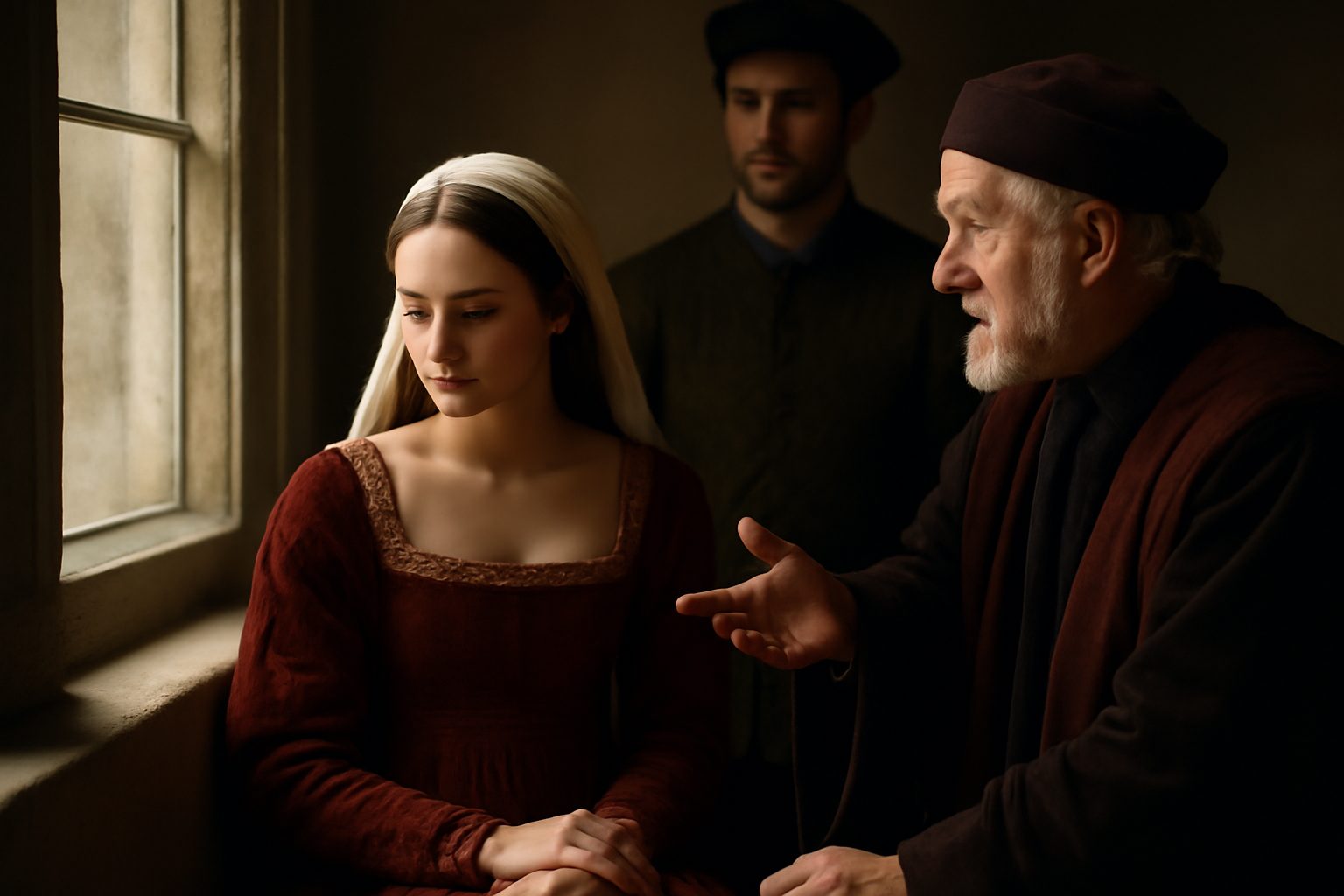
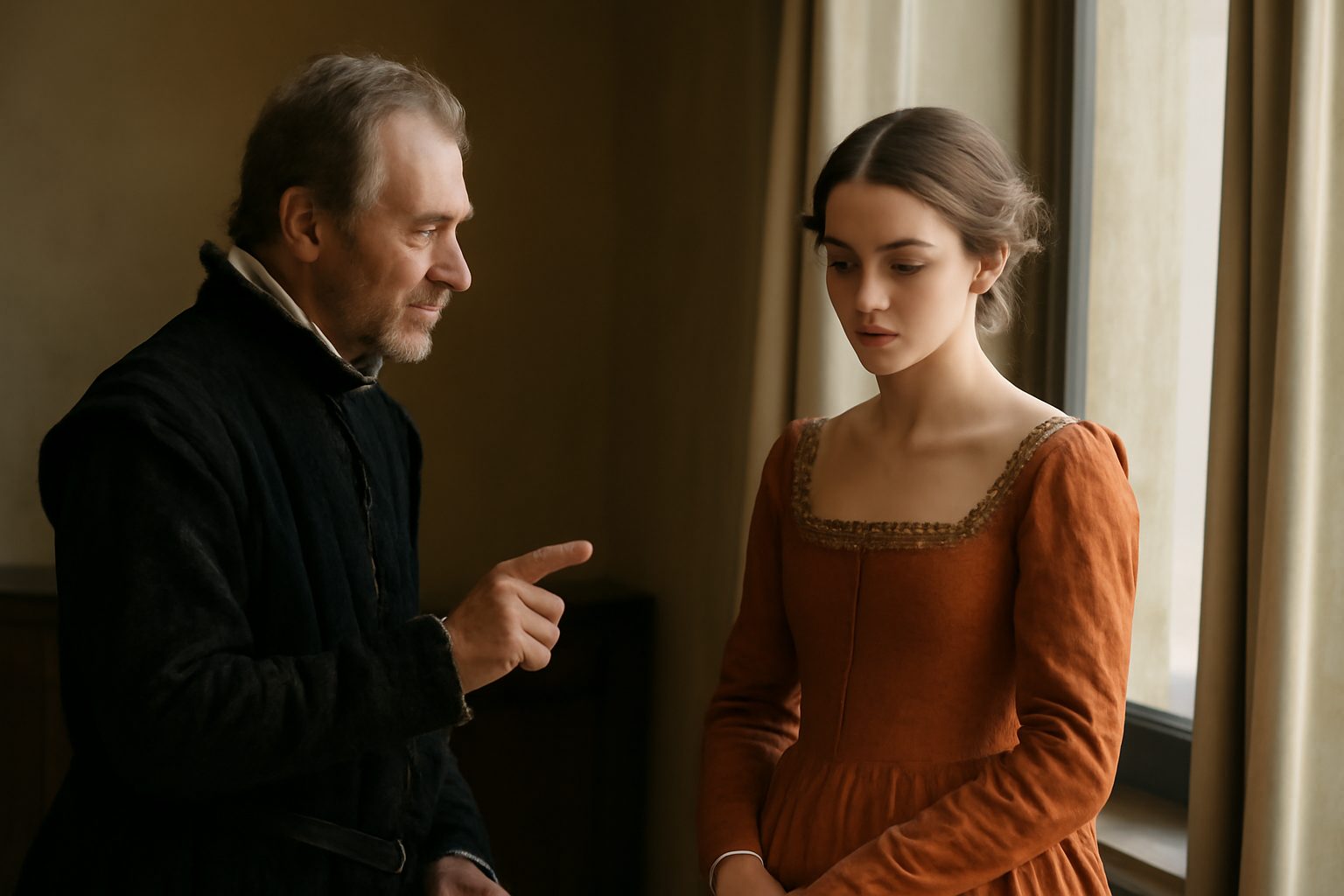
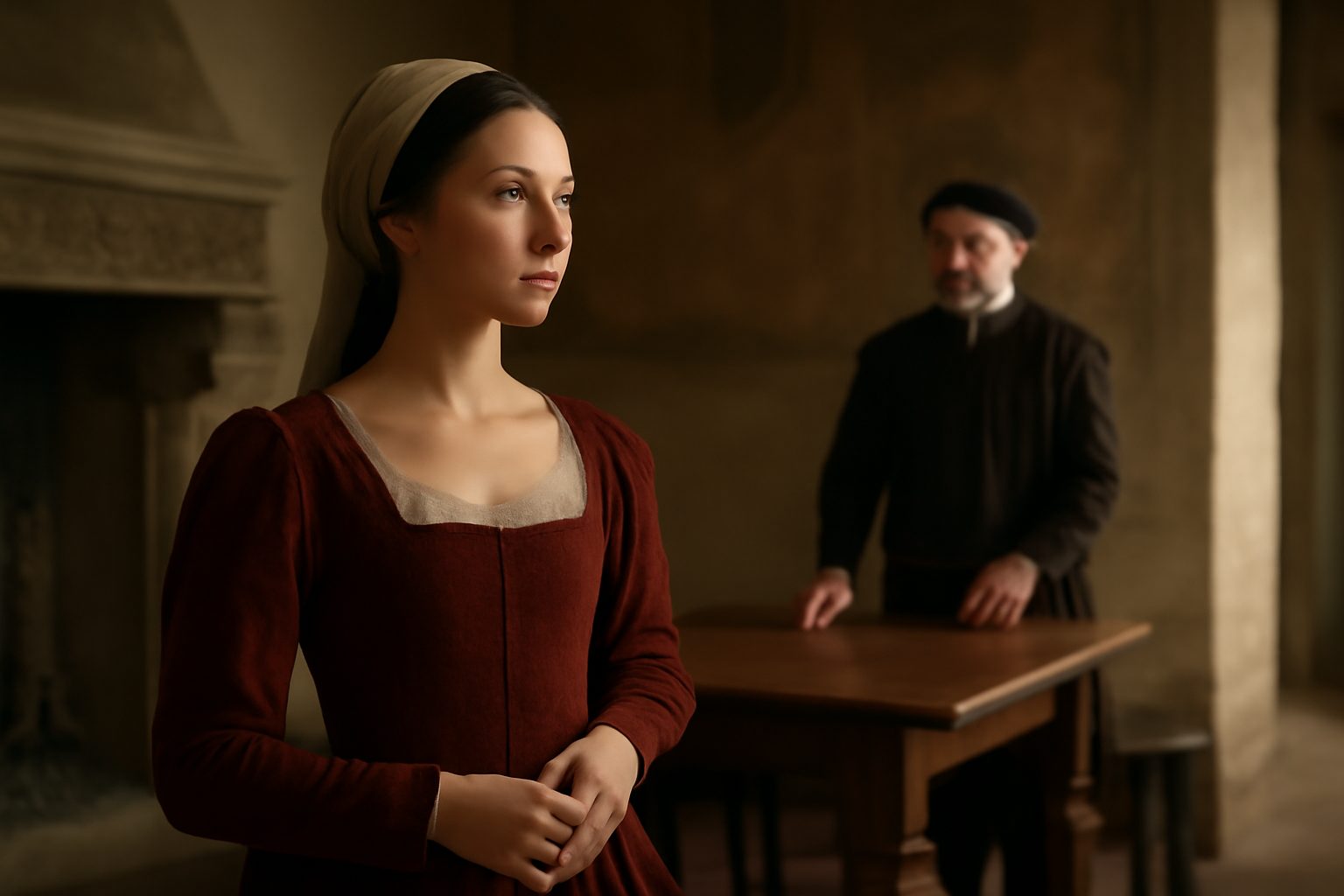
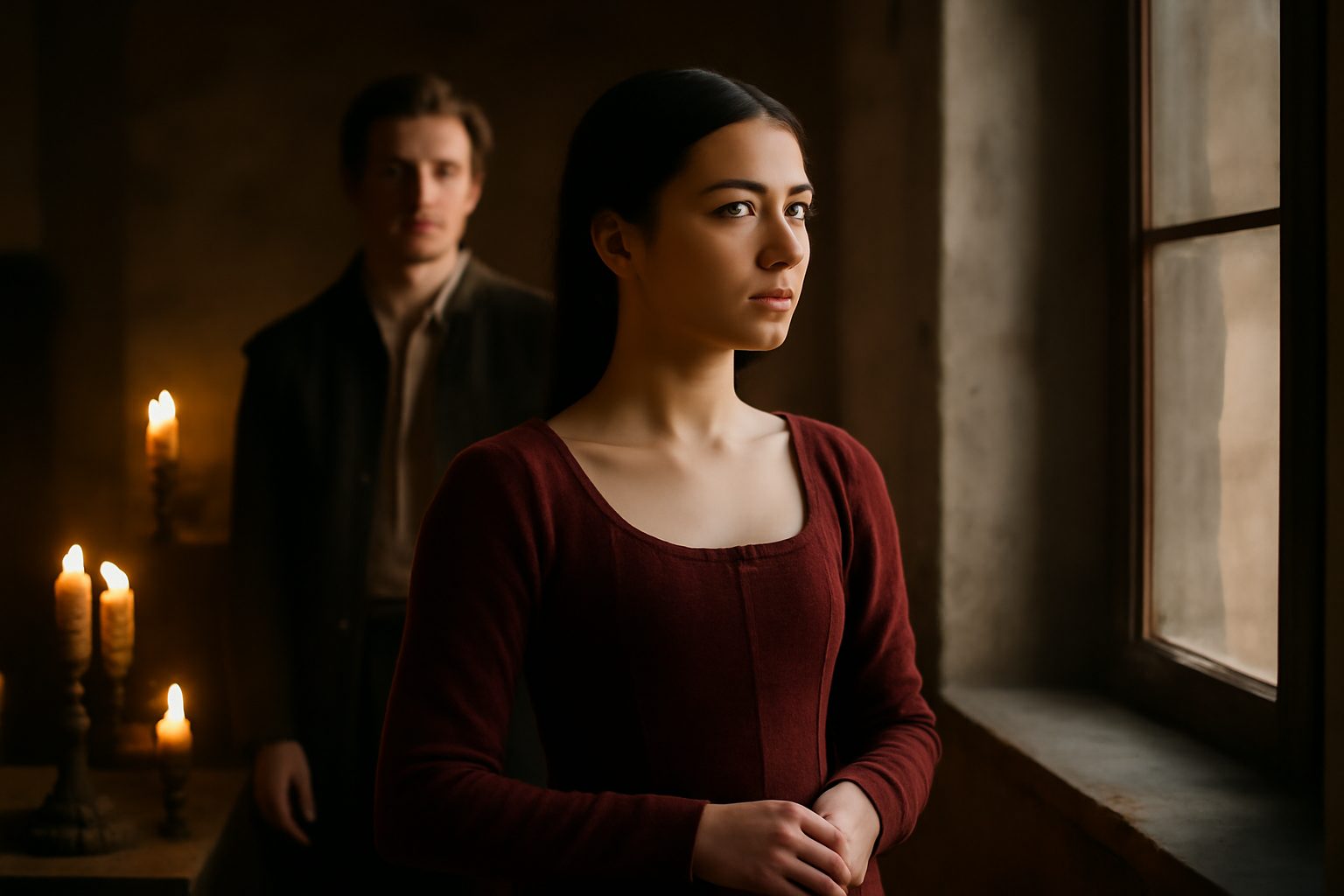
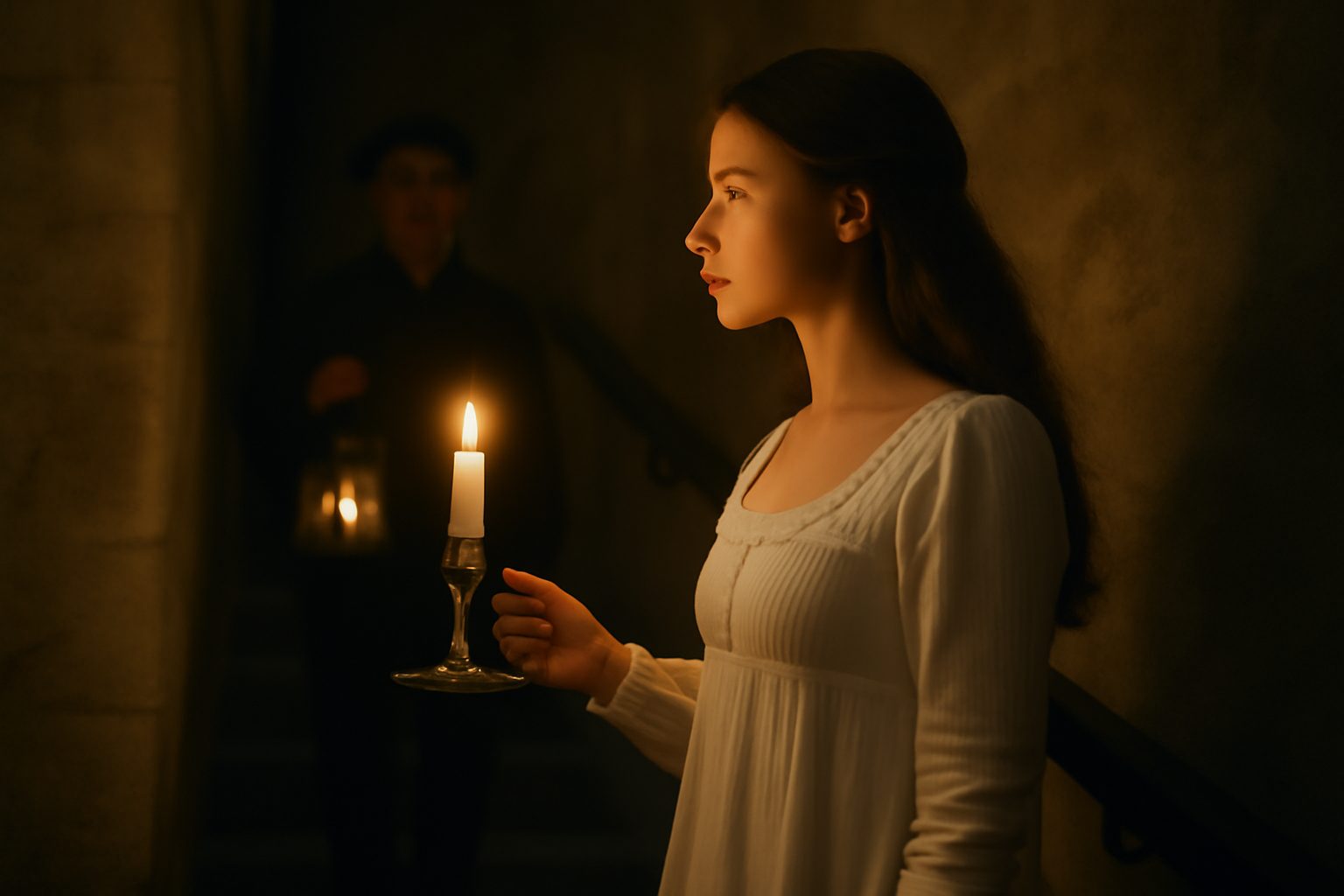
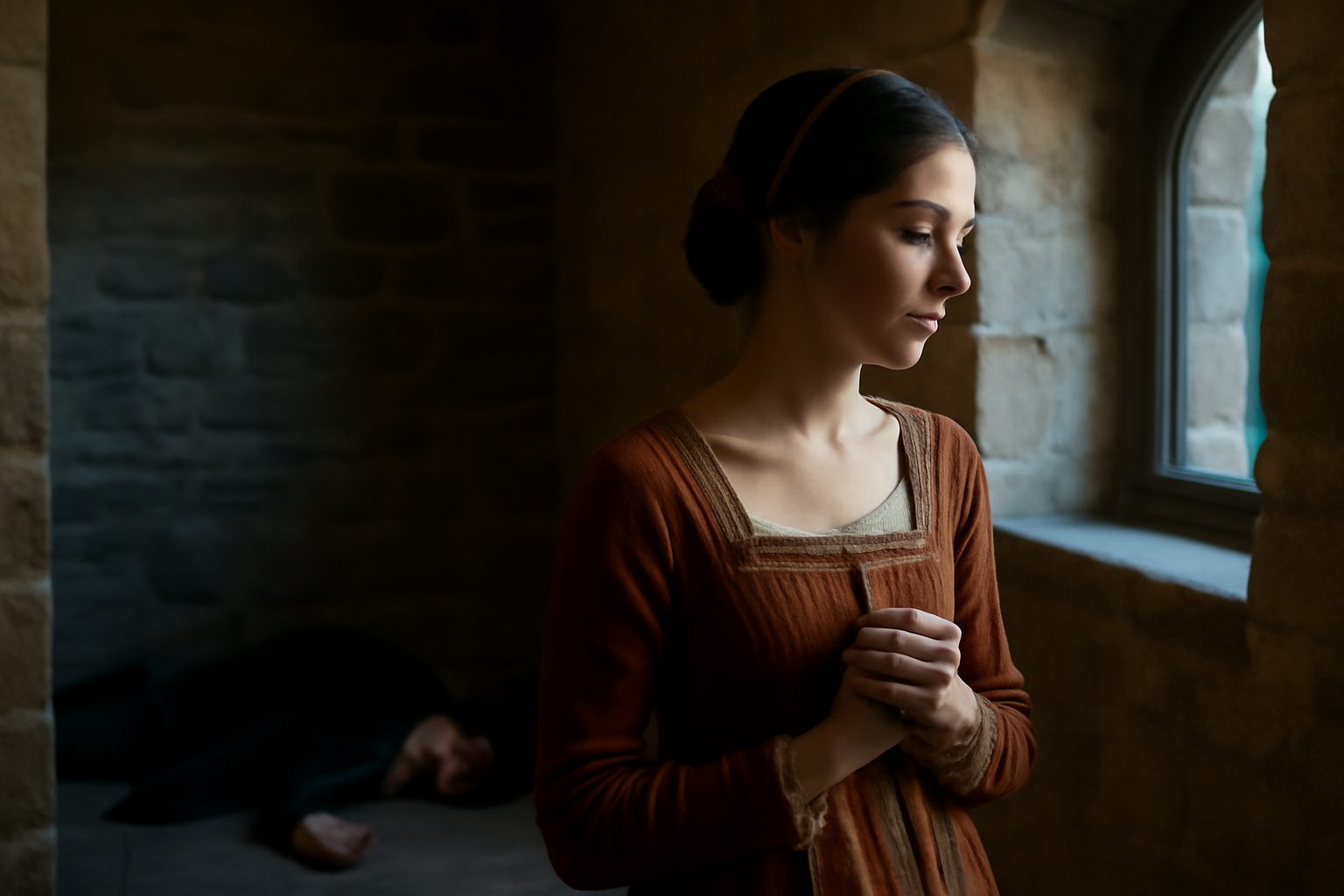
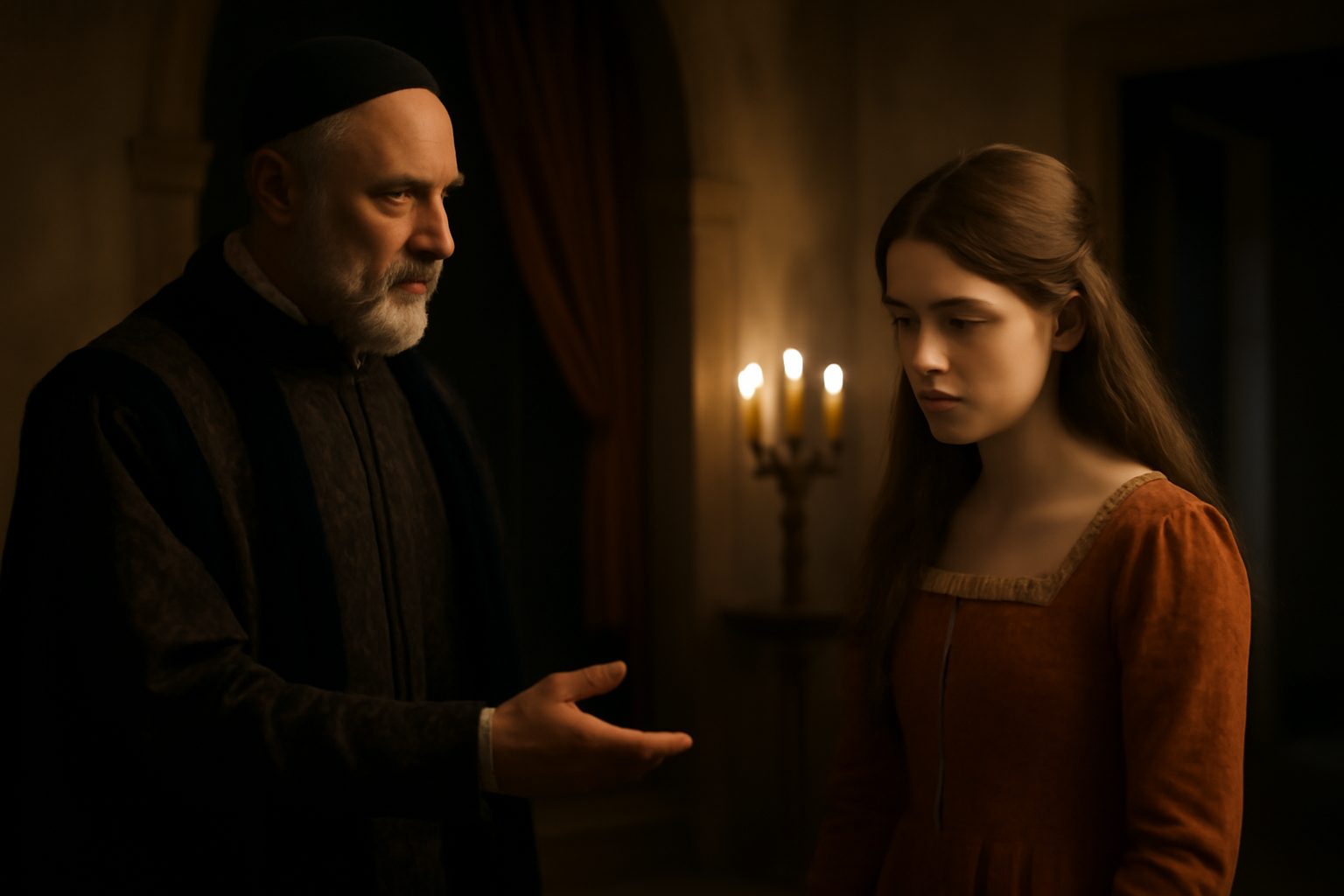
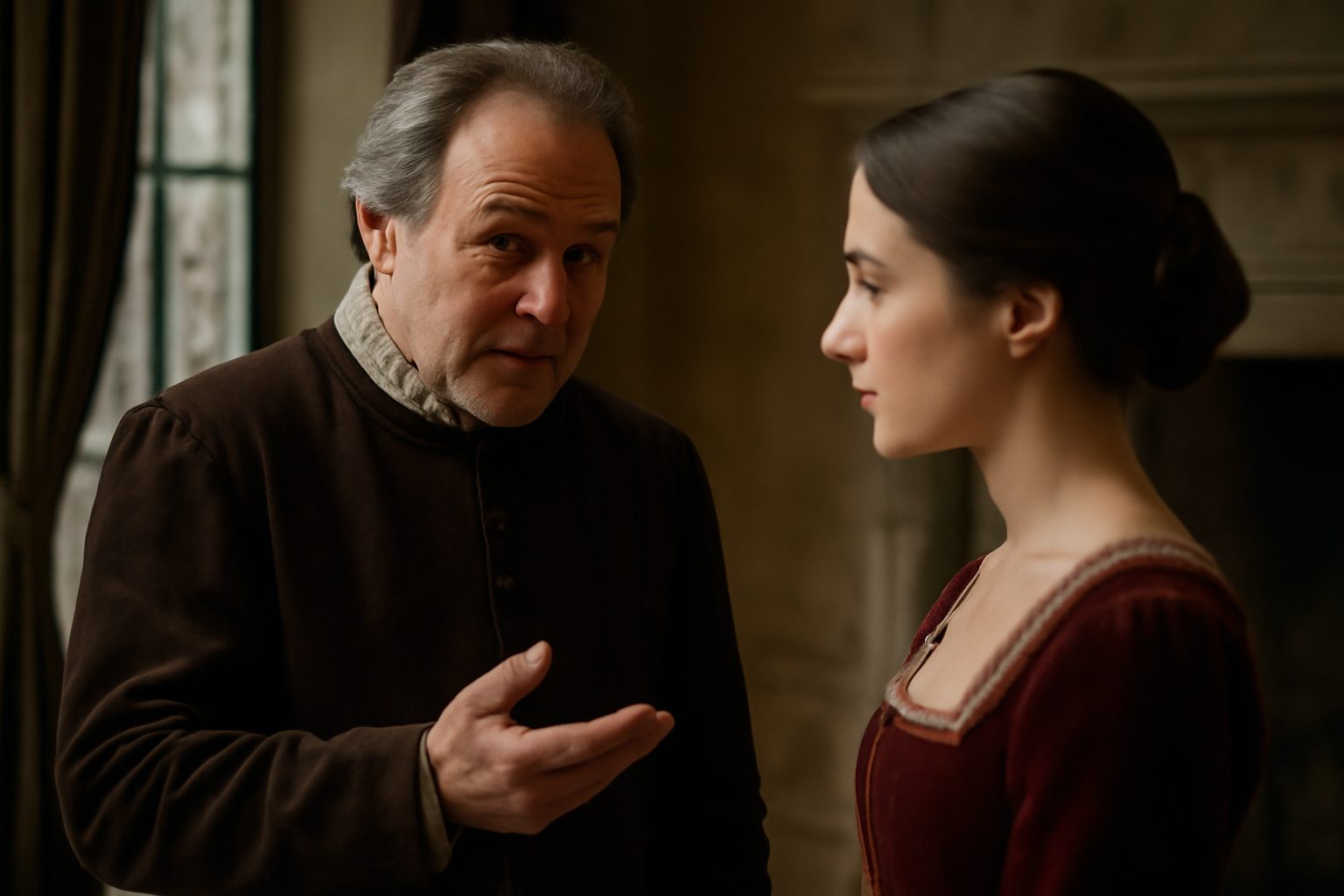
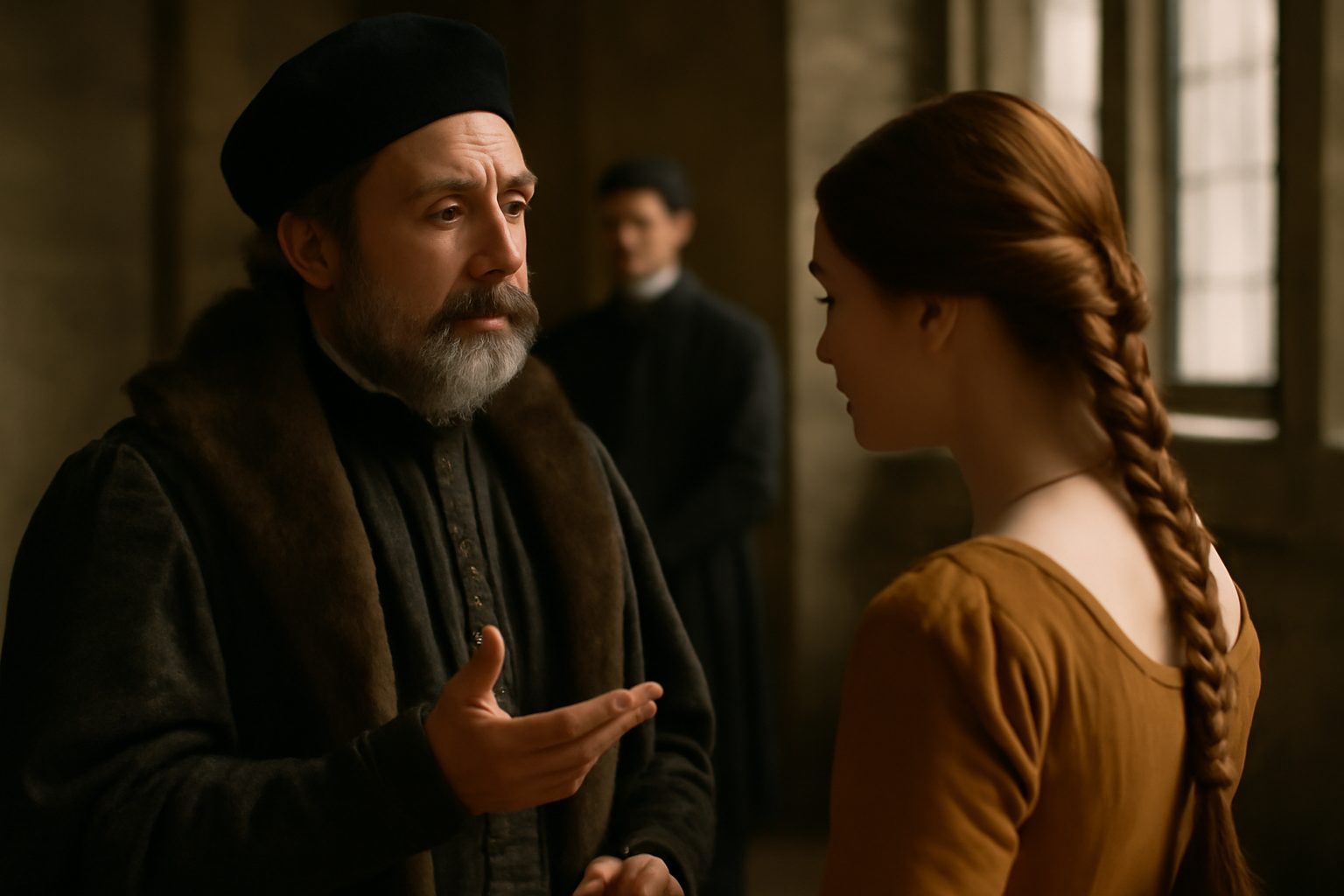
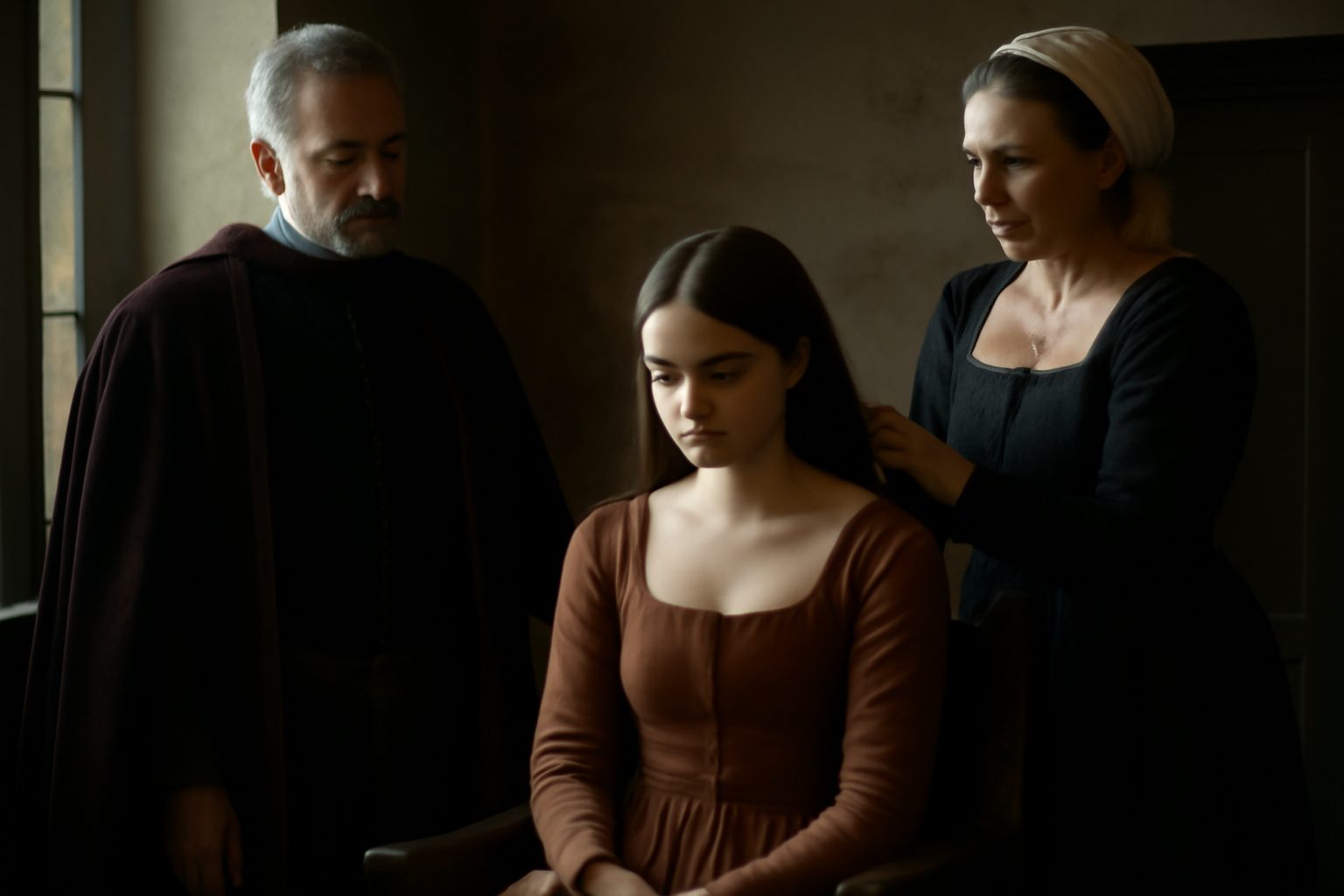
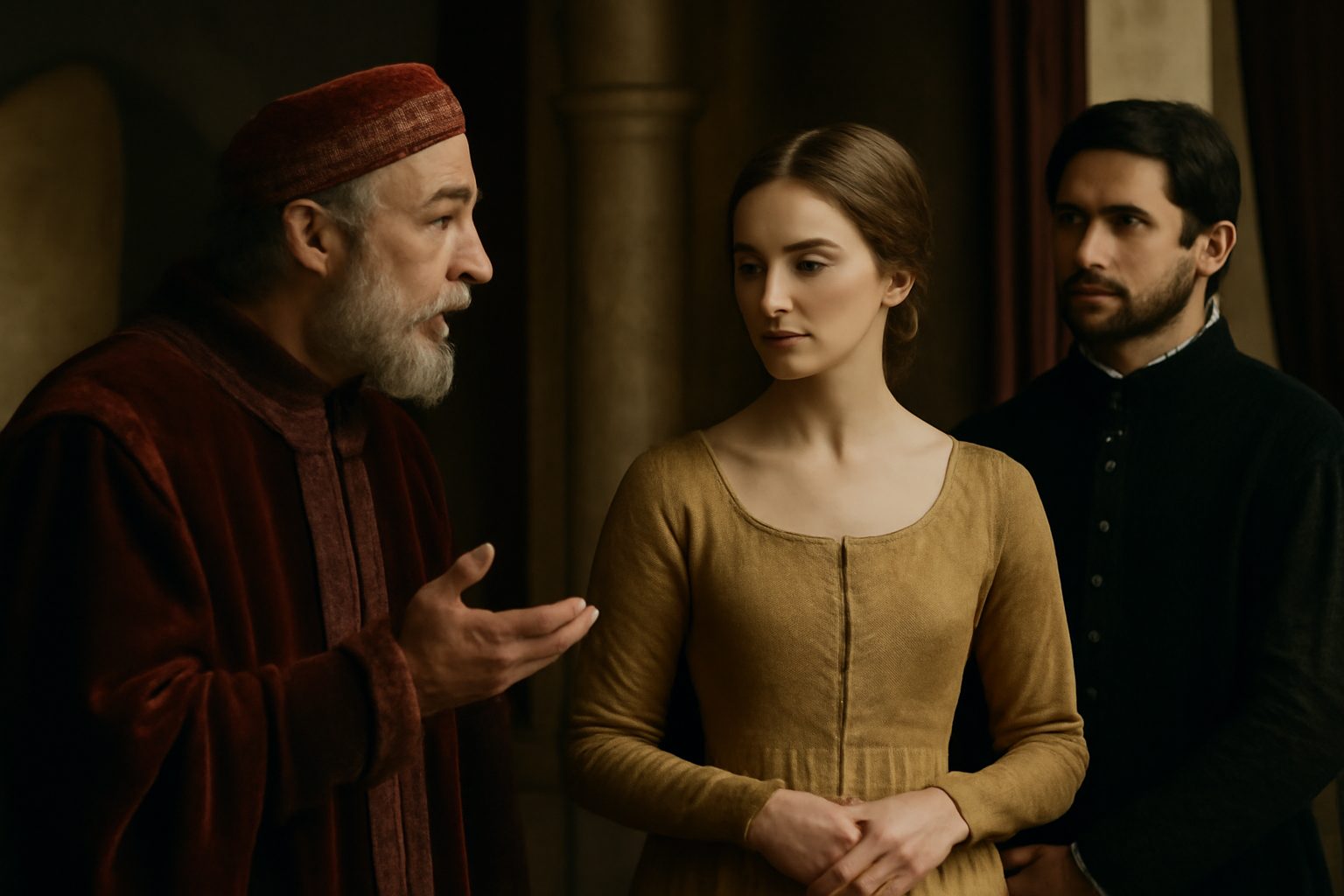
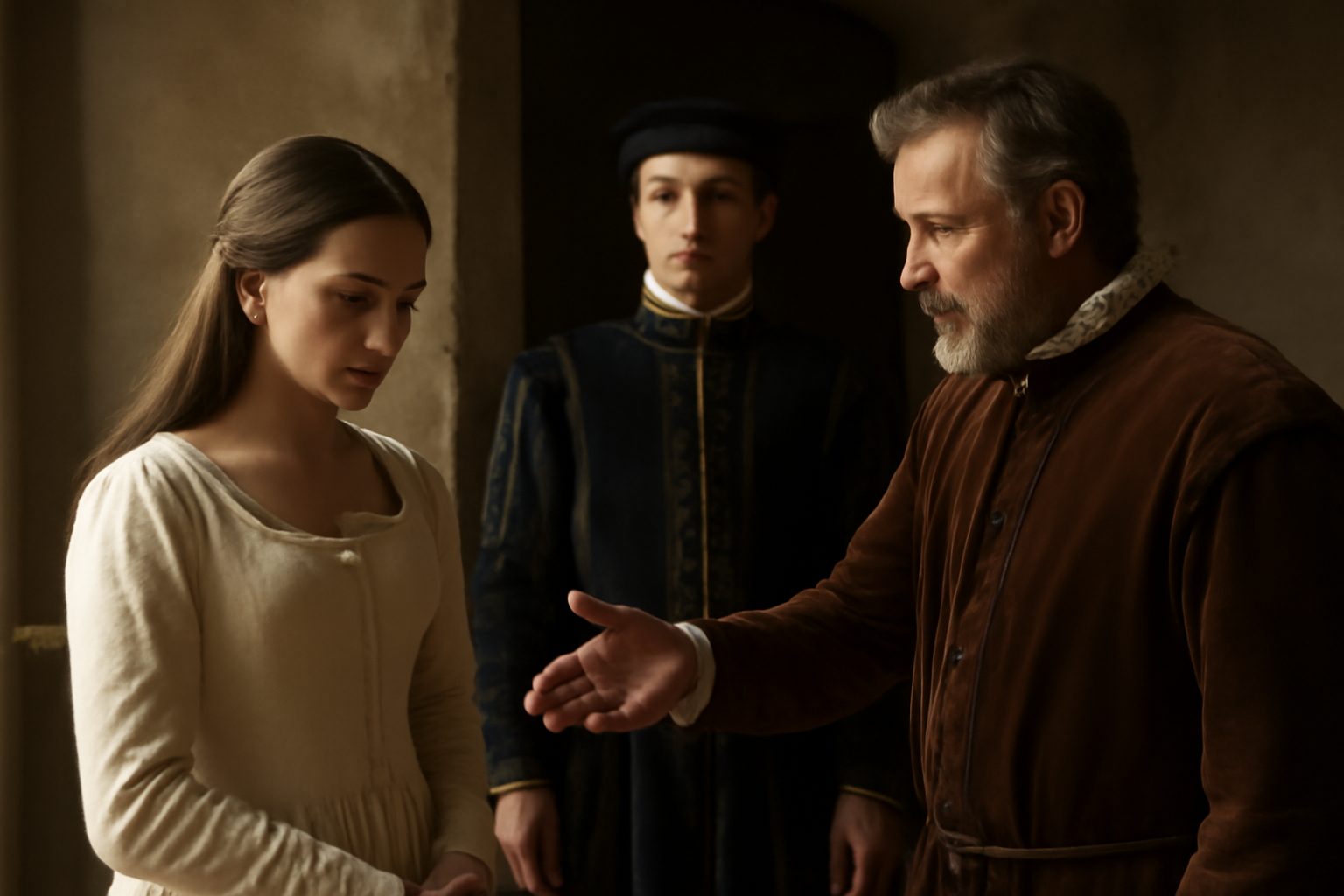
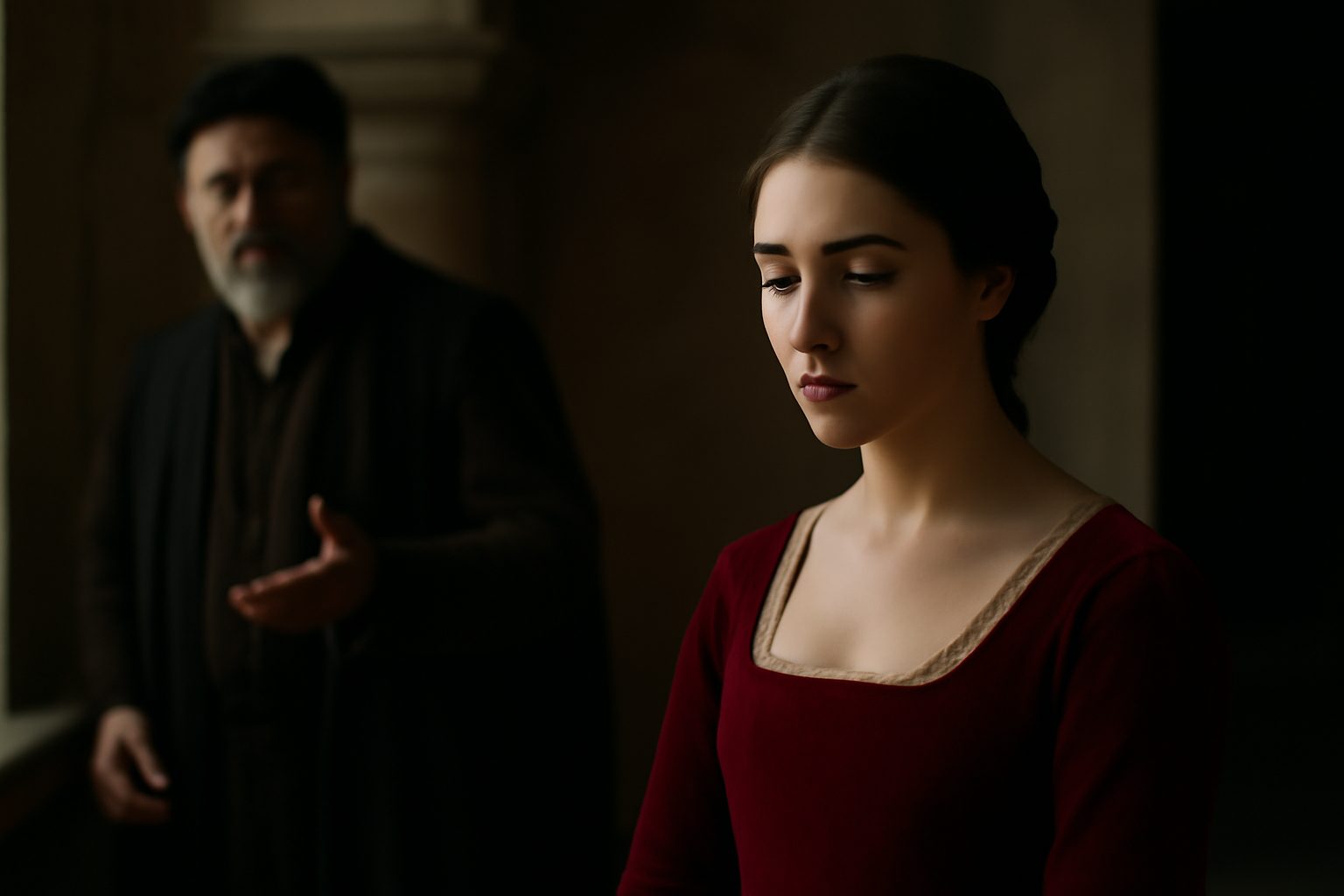
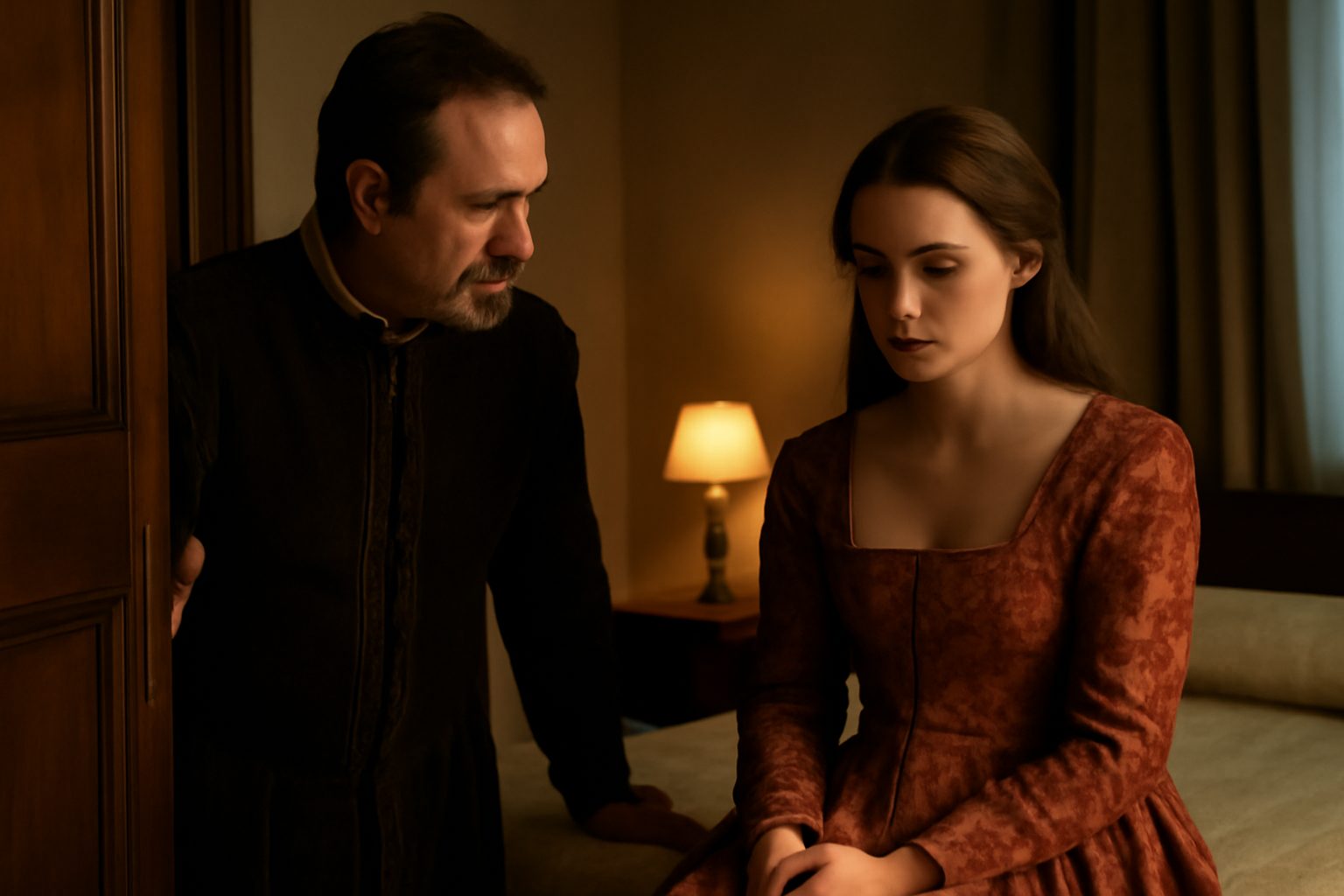
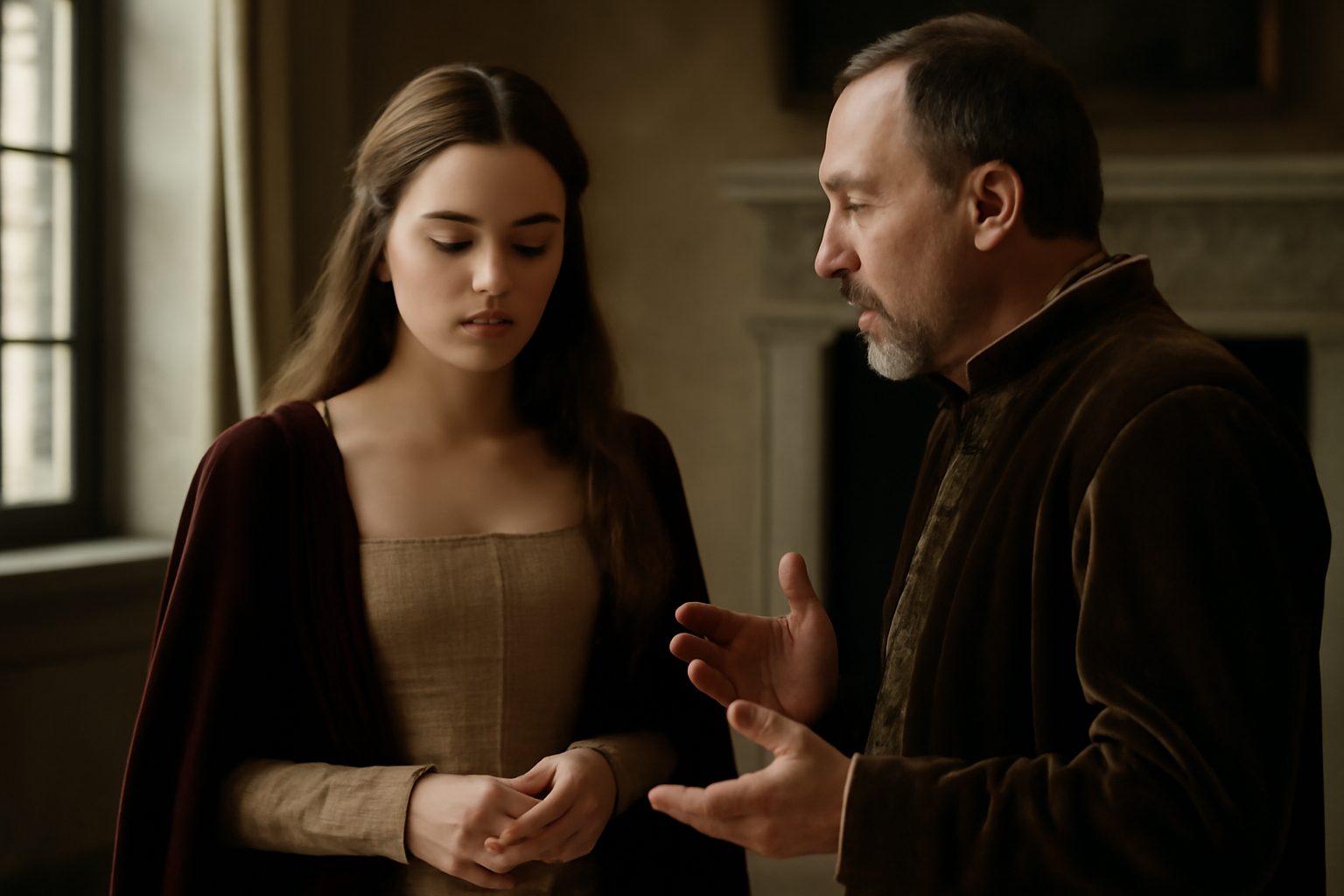
In Act 3, Scene 4 of Romeo and Juliet, Lord Capulet speaks to Paris about hastily arranging Juliet's marriage, despite the recent turmoil involving Tybalt's death. The line reflects Capulet's attempt to downplay the festivities, suggesting a modest gathering rather than an elaborate celebration. This moment underscores the urgency and tension in the Capulet household as they rush to secure Juliet's future.
Capulet: "We'll keep no great ado,--a friend or two;"
In modern day english, we would say:
We won’t make a big fuss—just invite a few friends.
Frequently Asked Questions
What does Capulet mean when he says they will not make a big fuss and only invite a few friends?
Capulet is saying that Juliet's wedding to Paris will be a small and simple event, not a large celebration with many guests.
Connections to other verses:
Connections to "We'll keep no great ado,--a friend or two;"
This line, spoken by Lord Capulet, reflects his decision to host a modest wedding celebration for Juliet and Paris, a stark contrast to the grand festivities he had originally envisioned. It connects thematically and contextually to several other verses in the scene.
Modesty and Practicality
Capulet's intention for a small gathering is directly linked to "Therefore we'll have some half a dozen friends", which quantifies his plan and emphasizes restraint. This modesty is further justified by the recent turmoil, as noted in "For, hark you, Tybalt being slain so late", where Capulet acknowledges Tybalt's death as a reason to avoid excessive revelry. He also expresses concern about public perception in "It may be thought we held him carelessly", fearing that a lavish celebration might appear disrespectful.
Haste and Urgency
The subdued wedding plans are part of Capulet's rushed arrangements, which begin with "And bid her, mark you me, on Wednesday next--", though the date is later changed. Paris's eagerness is evident in "My lord, I would that Thursday were to-morrow", reinforcing the urgency that underpins Capulet's pragmatic approach to the celebration.
Emotional Context
Capulet's decision for a quiet wedding also considers Juliet's grief, mentioned in "Look you, she loved her kinsman Tybalt dearly" and "To-night she is mew'd up to her heaviness". This emotional weight makes a subdued event more appropriate, aligning with the somber tone of the scene.