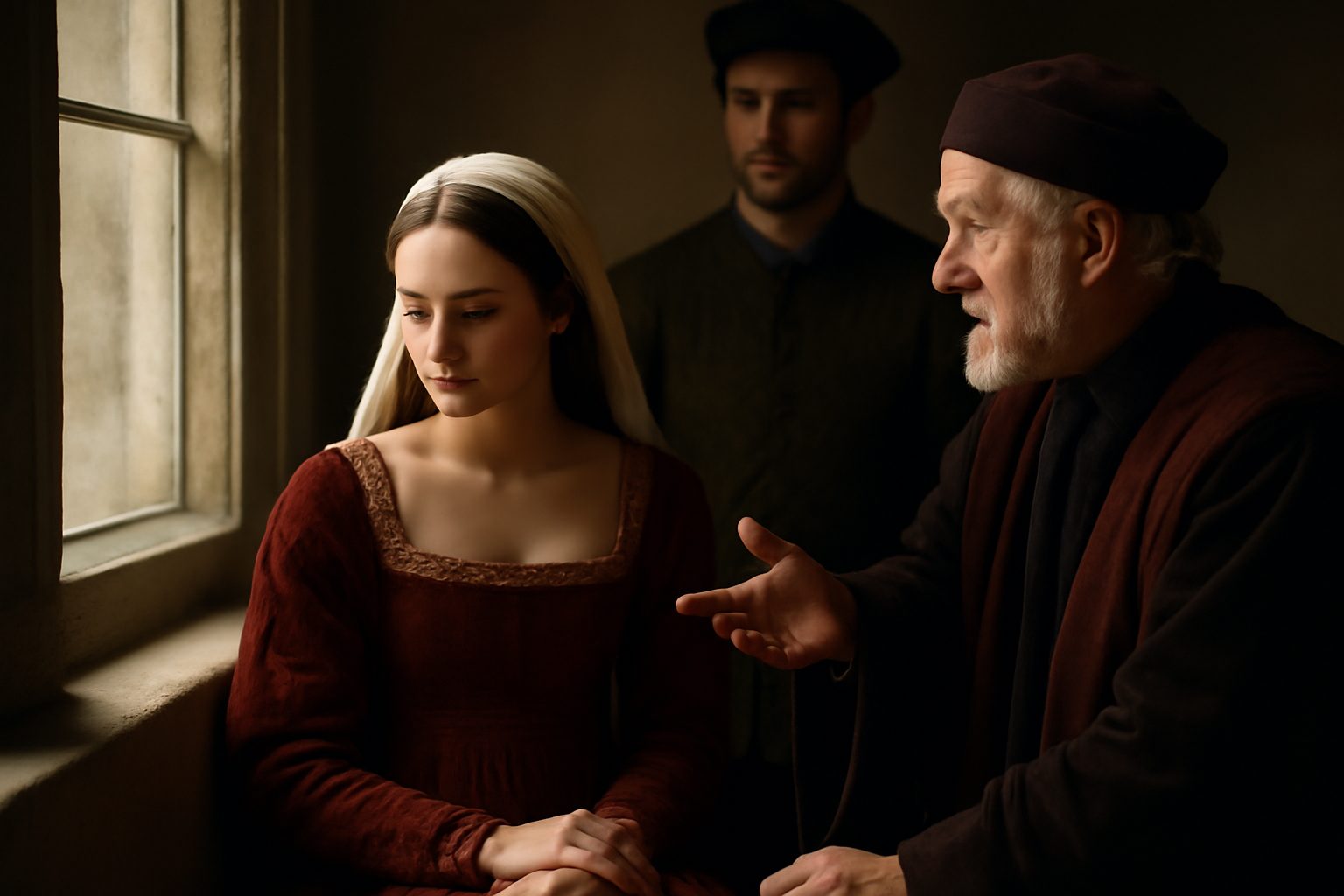
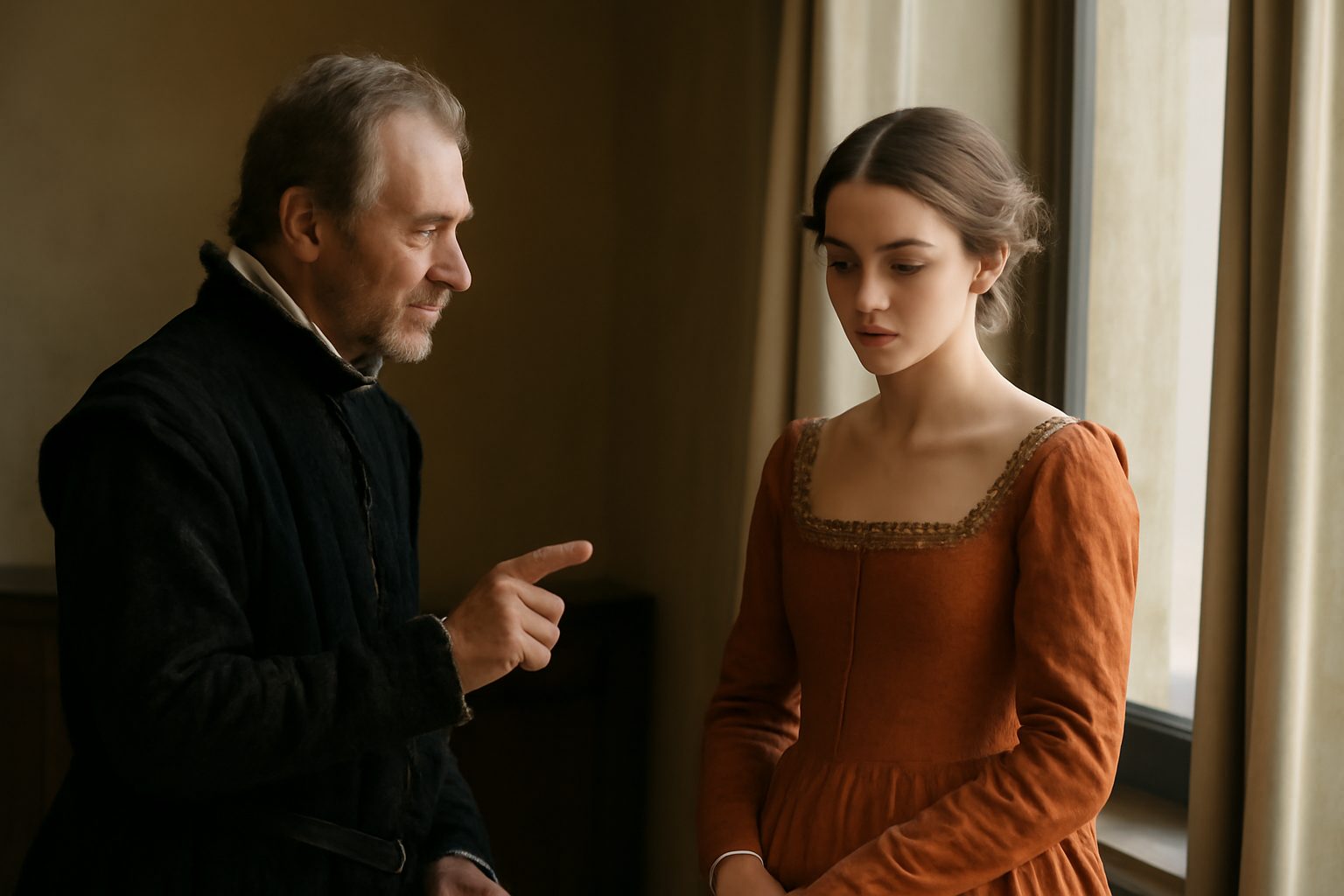
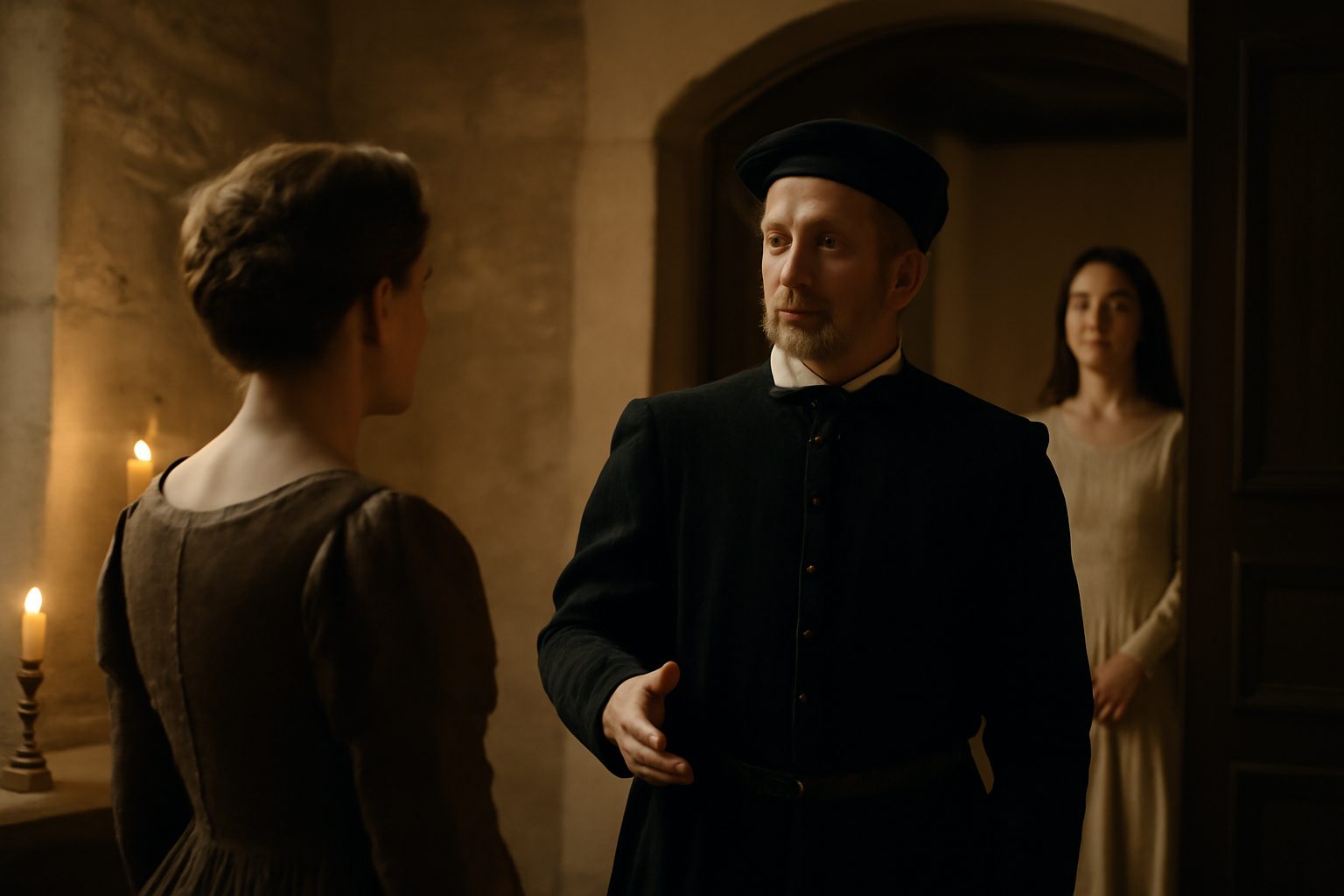
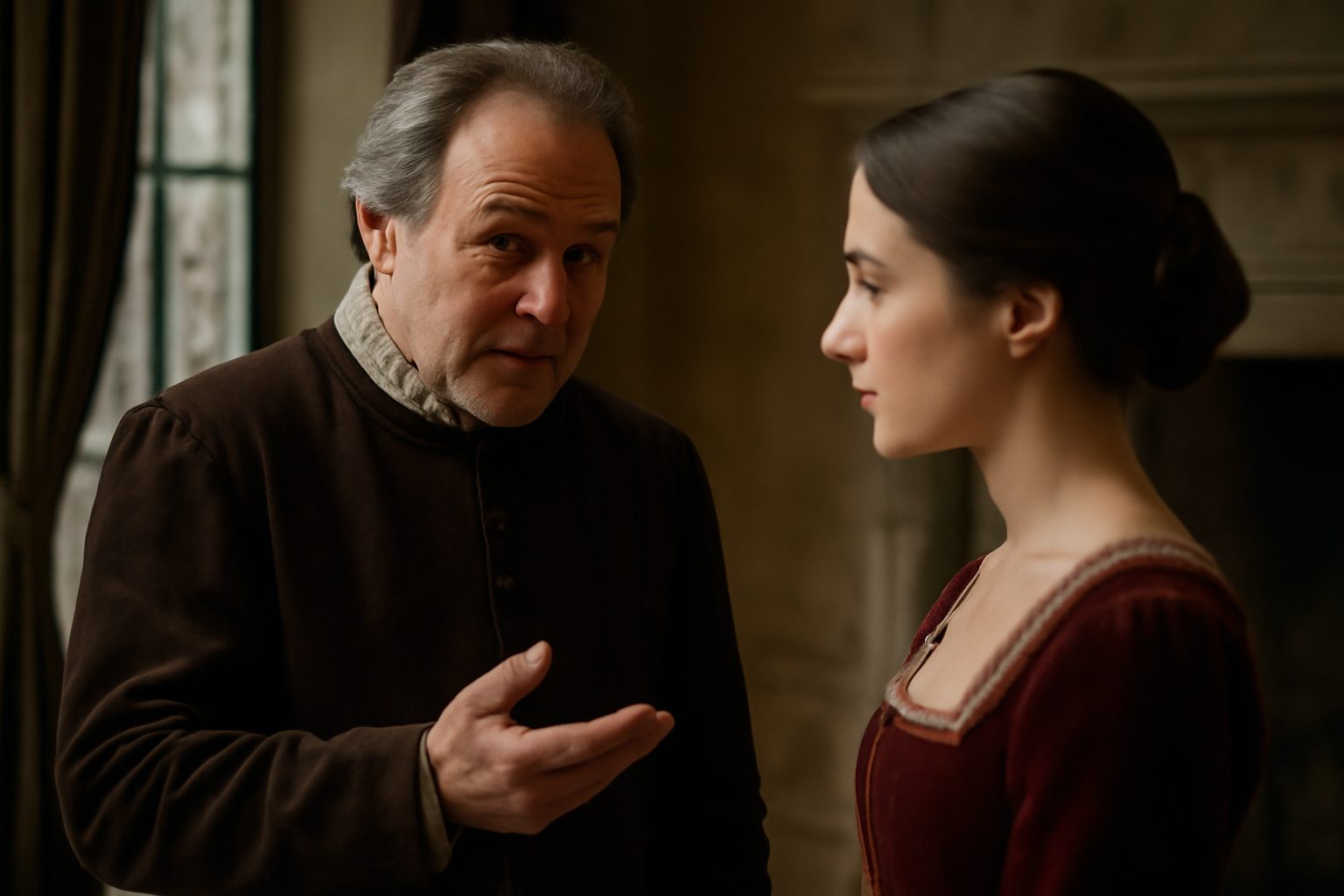
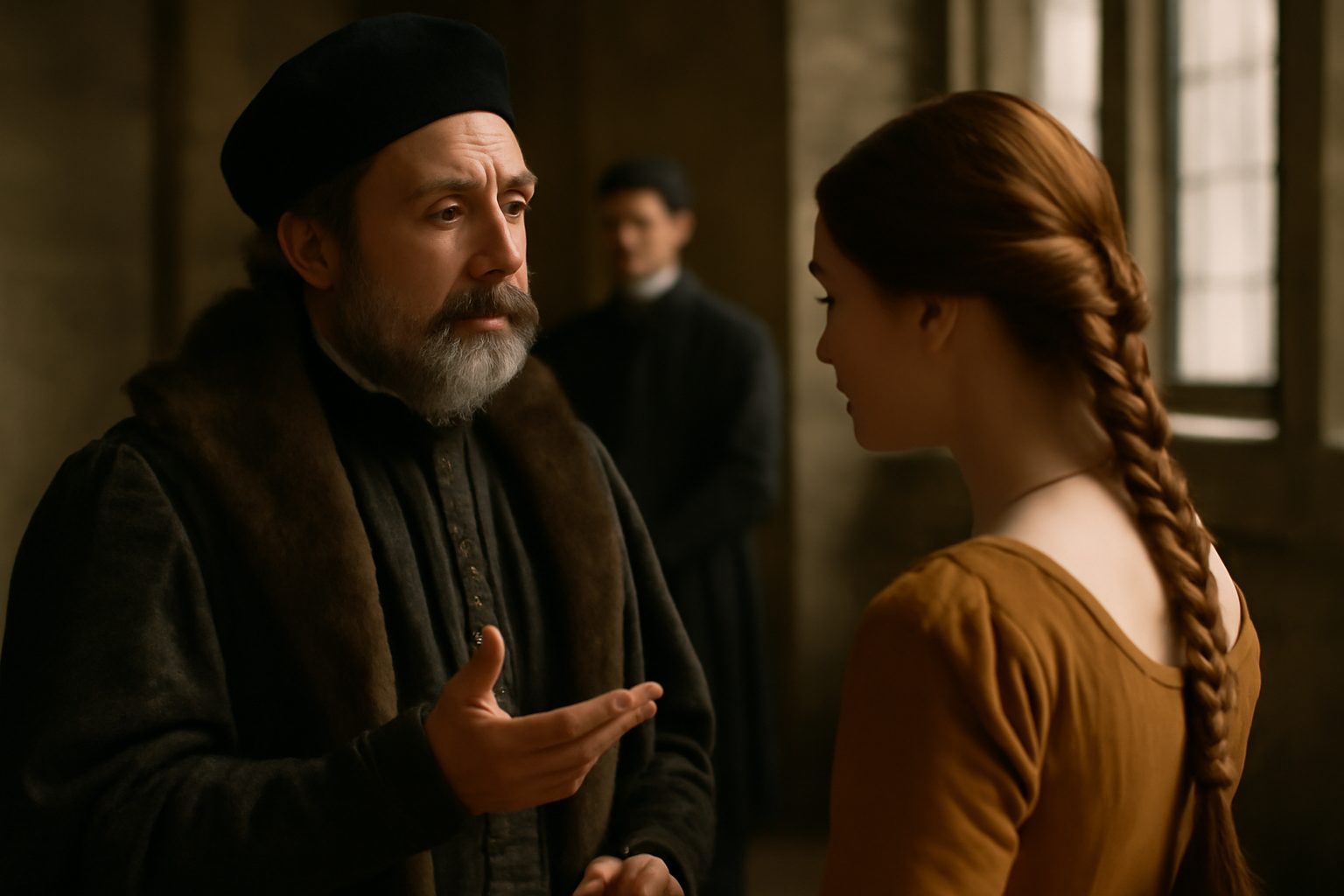
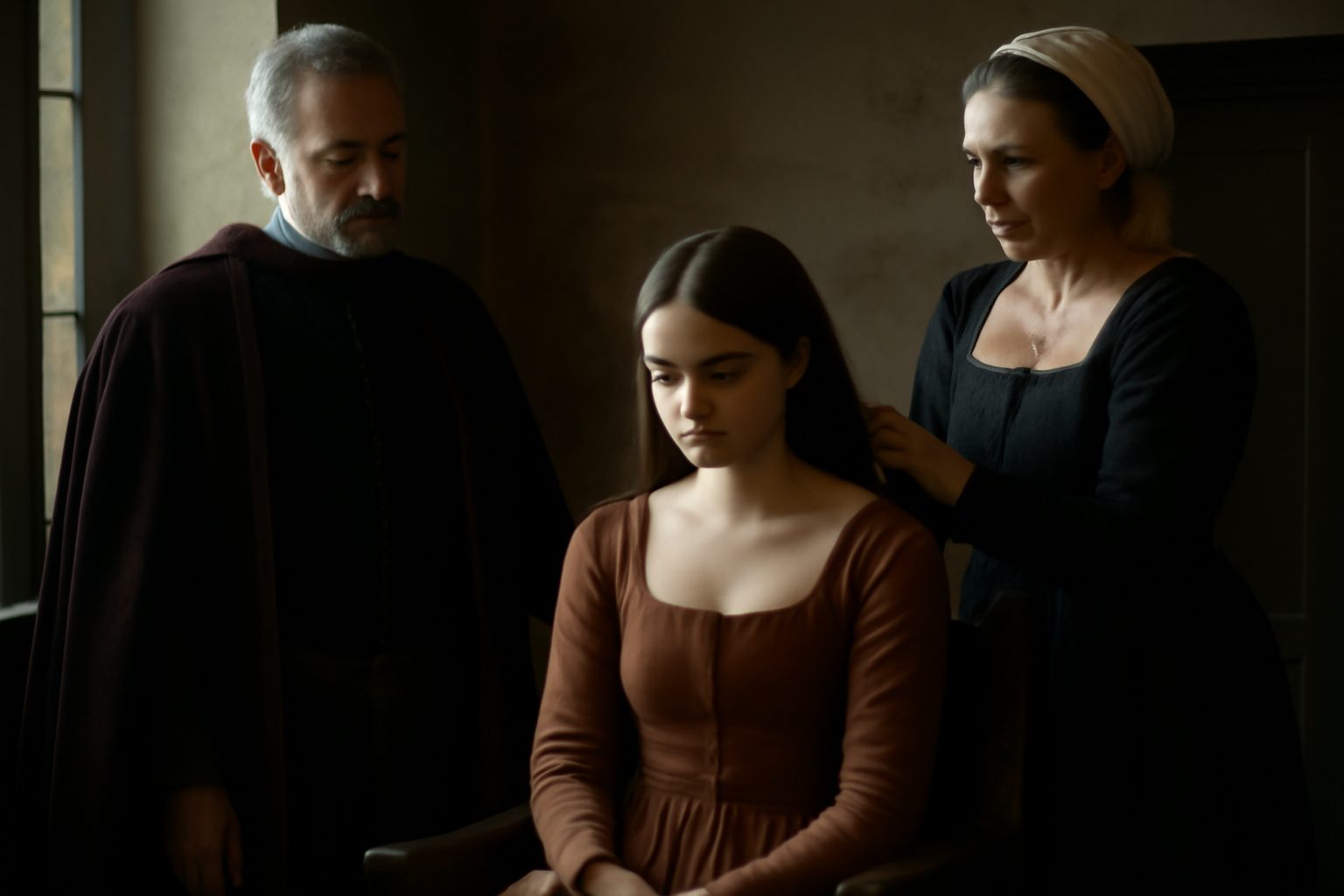
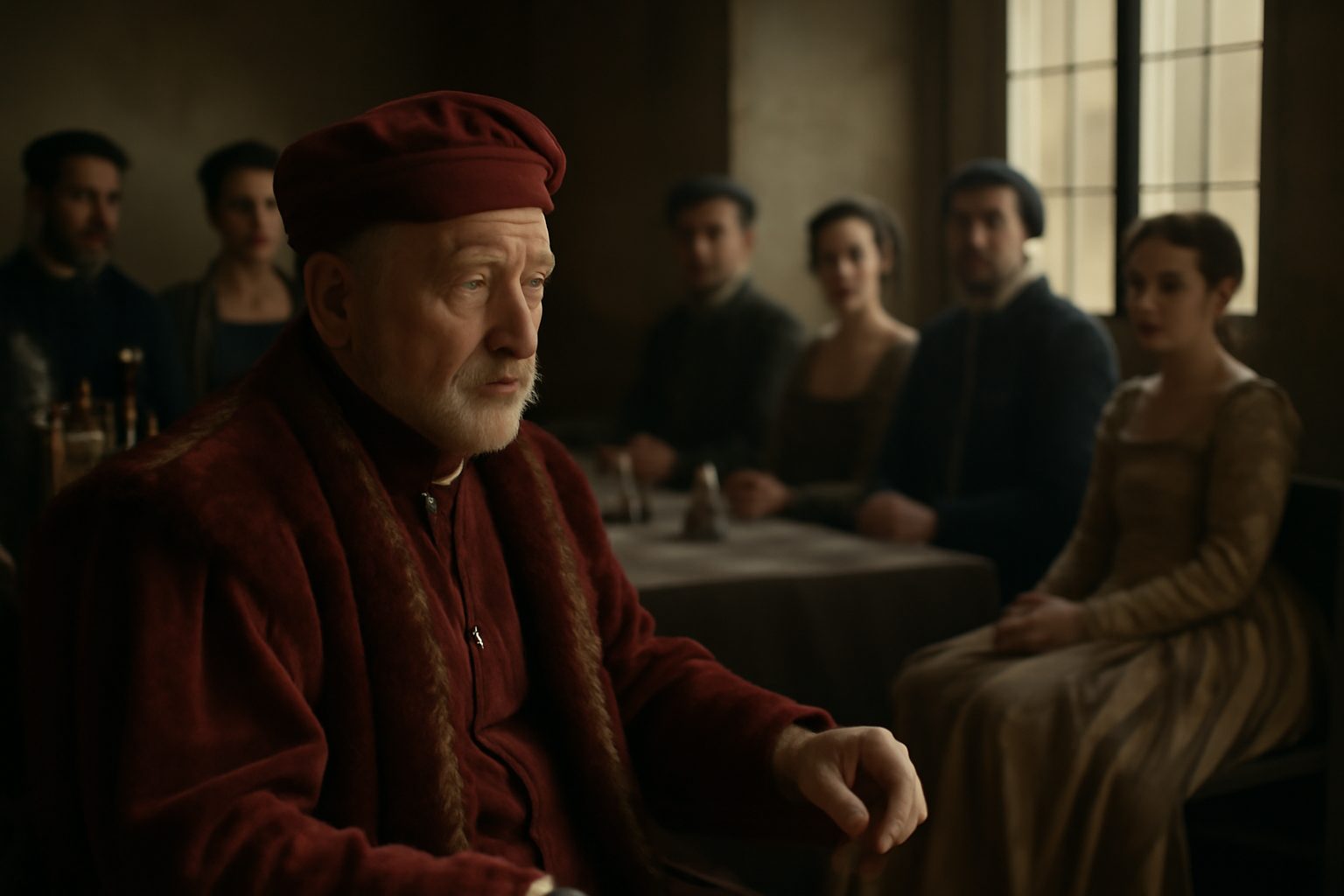
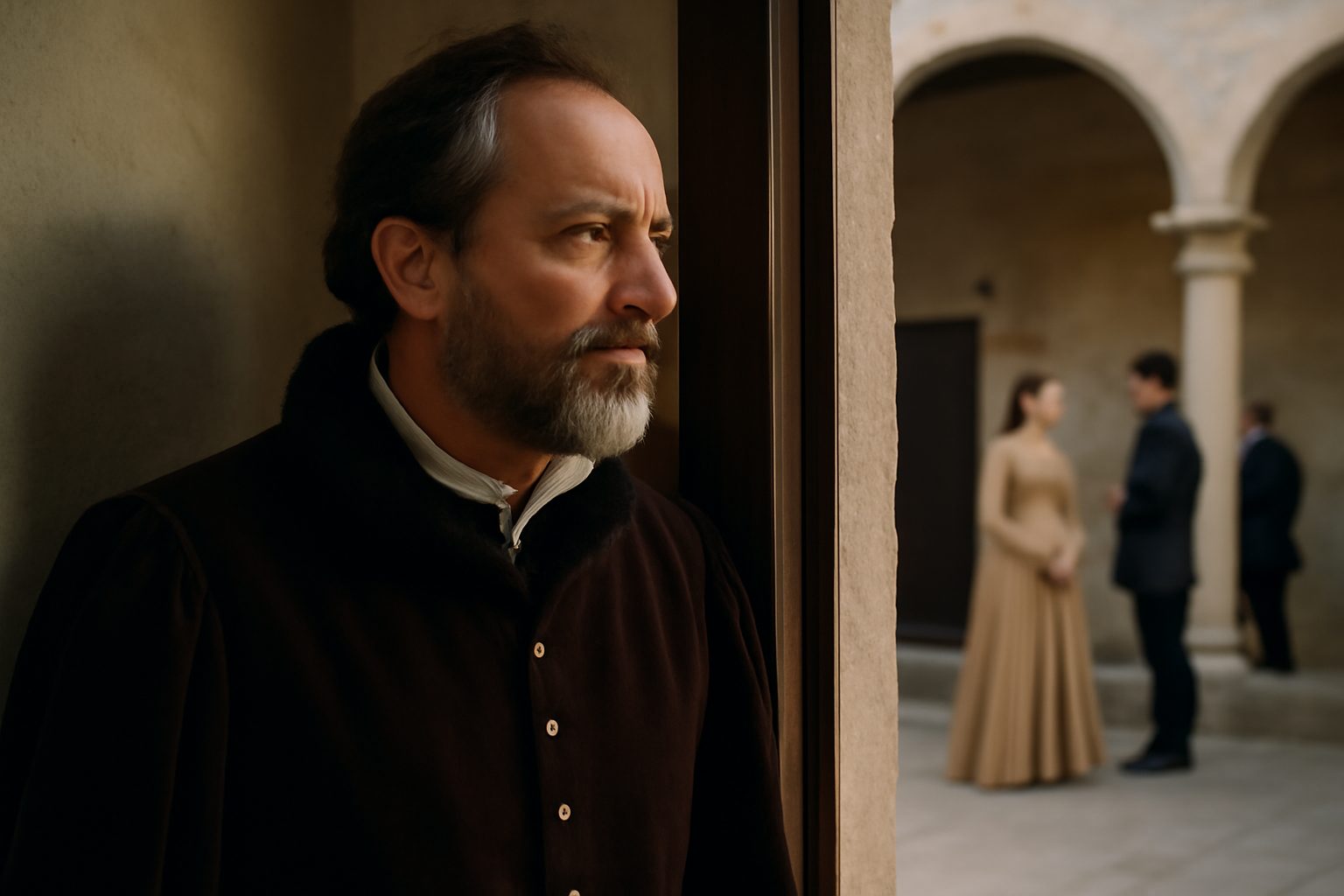
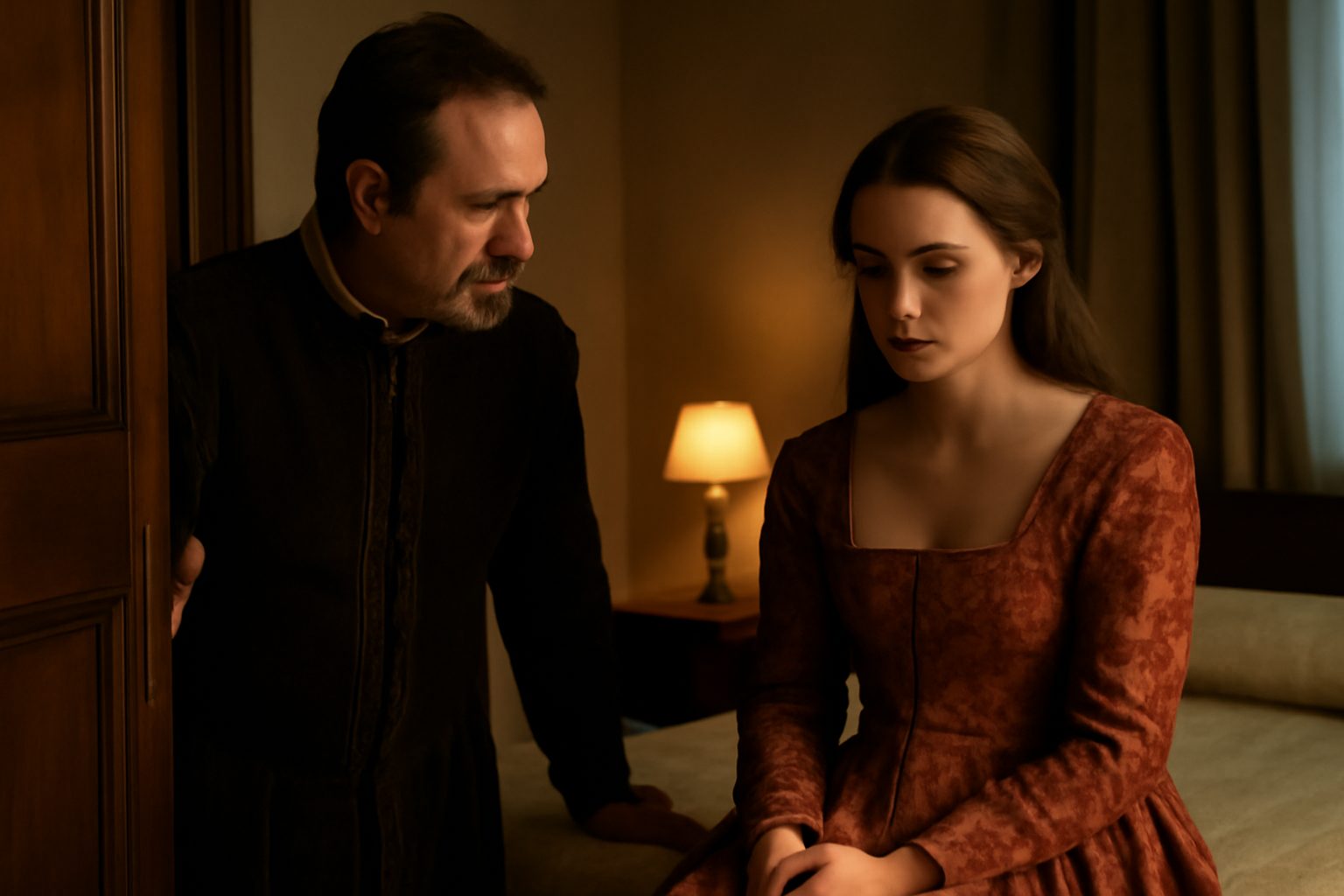
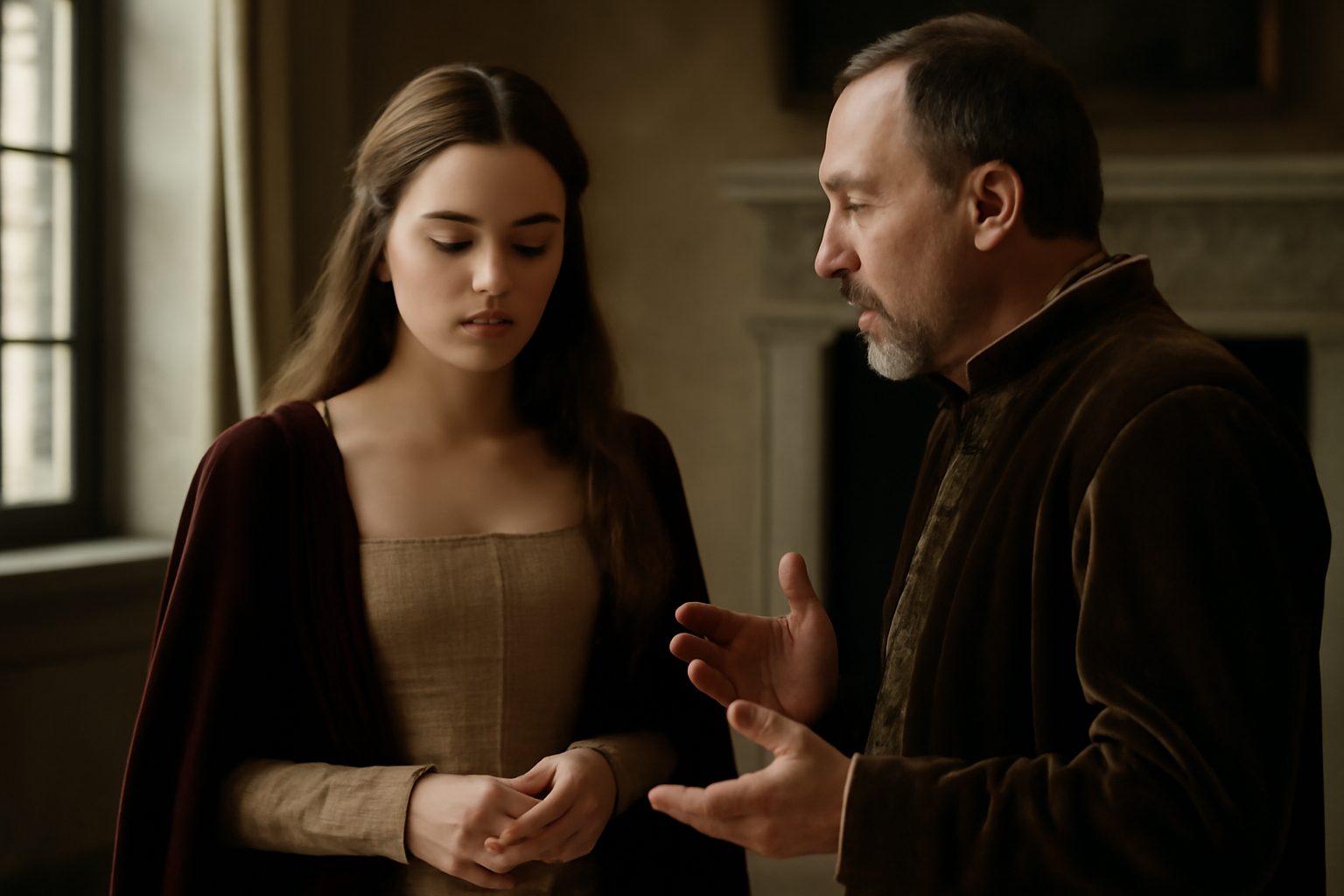
In this scene, Lord Capulet speaks with Paris about the proposed marriage to Juliet, unaware of her secret union with Romeo. After Paris presses for a quick wedding, Capulet initially hesitates but then abruptly agrees to Thursday, eager to resolve matters. The line marks a pivotal moment as Capulet's decision sets in motion the tragic events that follow.
Capulet: "And there an end. But what say you to Thursday?"
In modern day english, we would say:
That’s settled then. How does Thursday sound?
Frequently Asked Questions
What day does Capulet suggest for the wedding?
Thursday
Connections to other verses:
Connections to "And there an end. But what say you to Thursday?"
This line, spoken by Lord Capulet, serves as a decisive pivot in the scene's discussion of Juliet's marriage to Paris. It follows a series of deliberations about timing and propriety, directly responding to earlier uncertainties.
Link to Initial Planning and Urgency
The verse connects to "And bid her, mark you me, on Wednesday next--", where Capulet initially suggests Wednesday. His shift to Thursday reflects both practical considerations and growing impatience, emphasized by Paris's eagerness in "My lord, I would that Thursday were to-morrow."
Connection to Grief and Timing
Capulet's abrupt scheduling contrasts with earlier acknowledgments of grief, such as "Look you, she loved her kinsman Tybalt dearly" and "These times of woe afford no time to woo." The push for Thursday reveals his prioritization of social and political alliances over emotional readiness.
Resolution and Confirmation
The line leads directly to Paris's agreement in "O' Thursday let it be: o' Thursday, tell her" and Capulet's final confirmation in "Well get you gone: o' Thursday be it, then.", closing the debate and setting the irreversible course for tragedy.