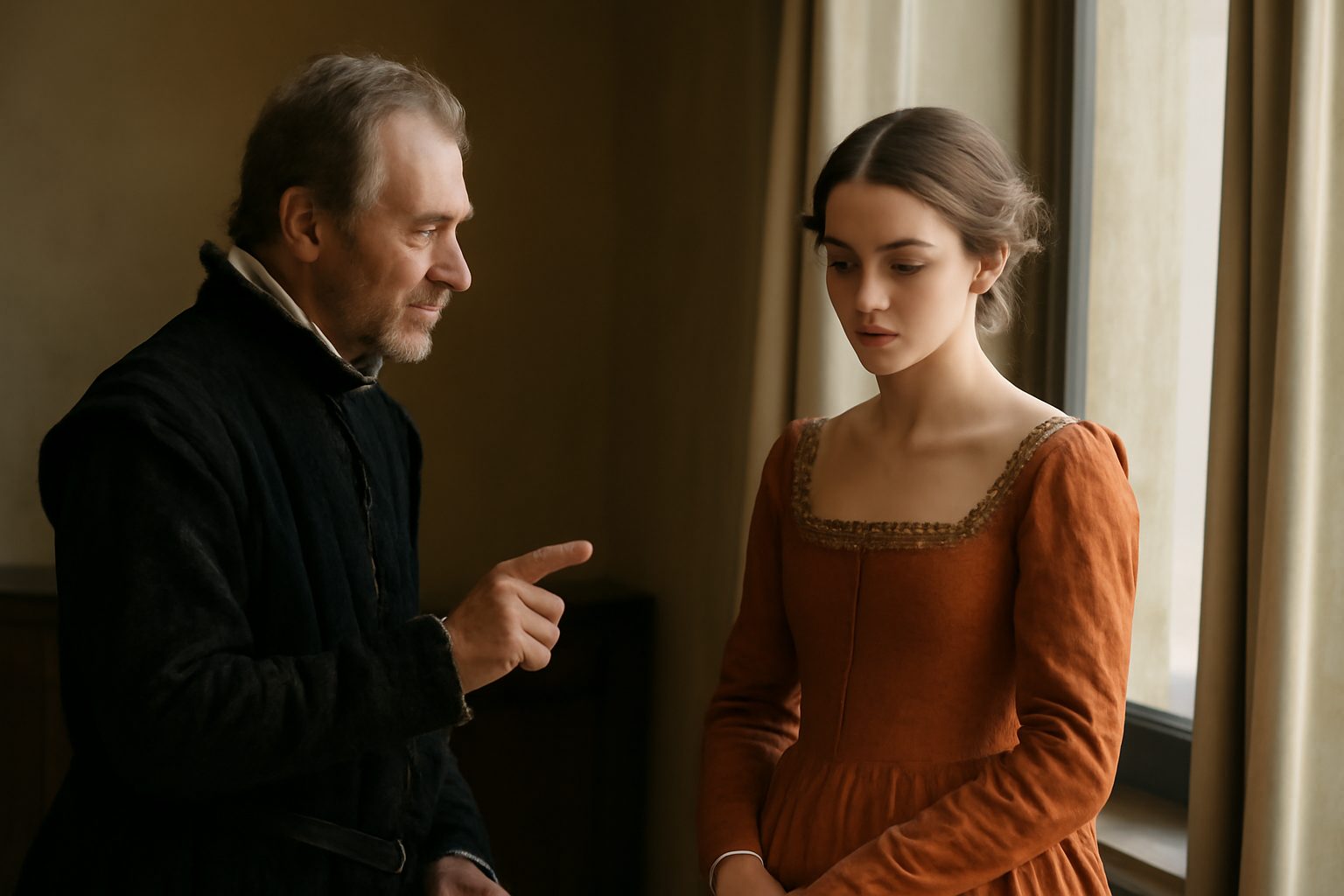
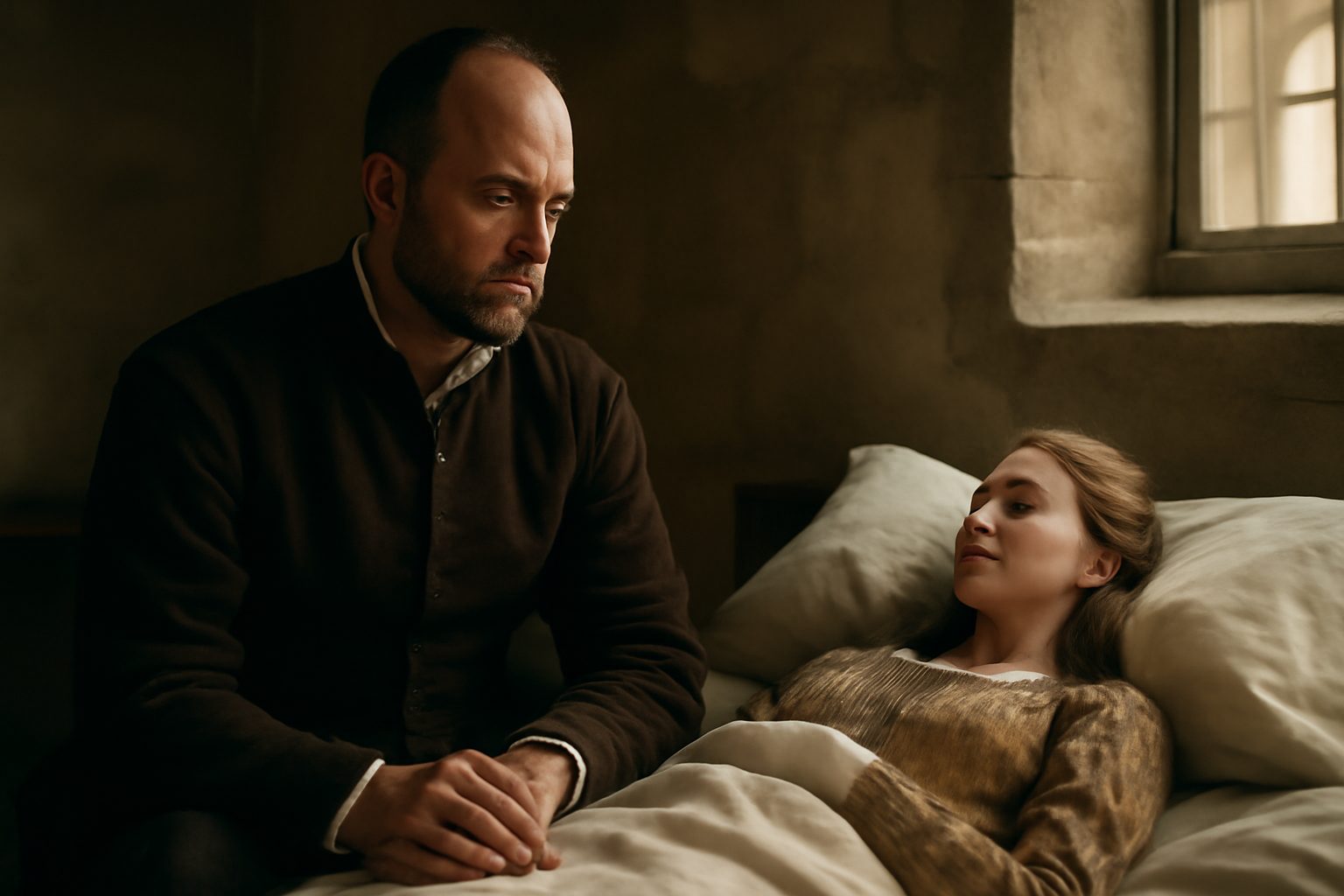
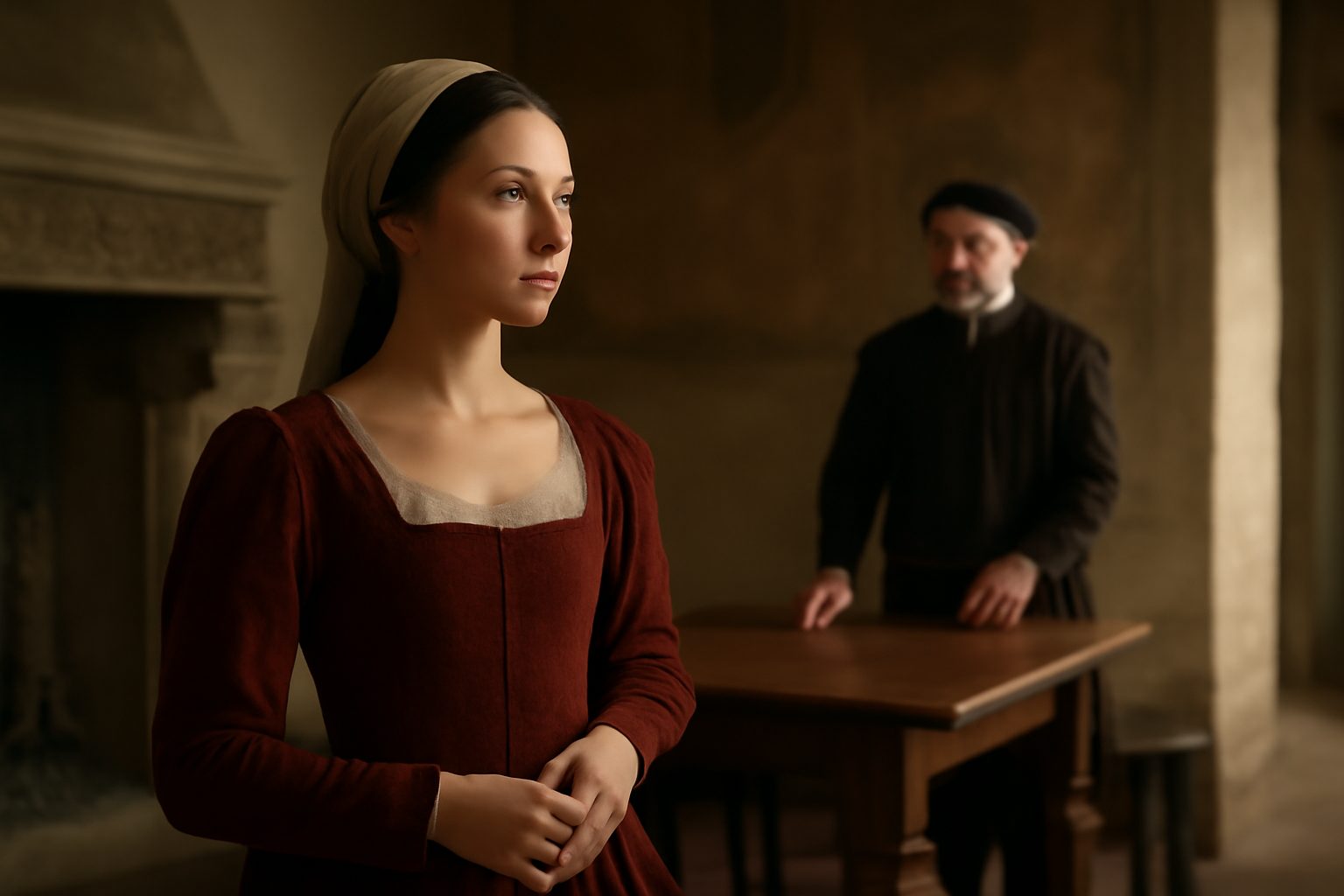
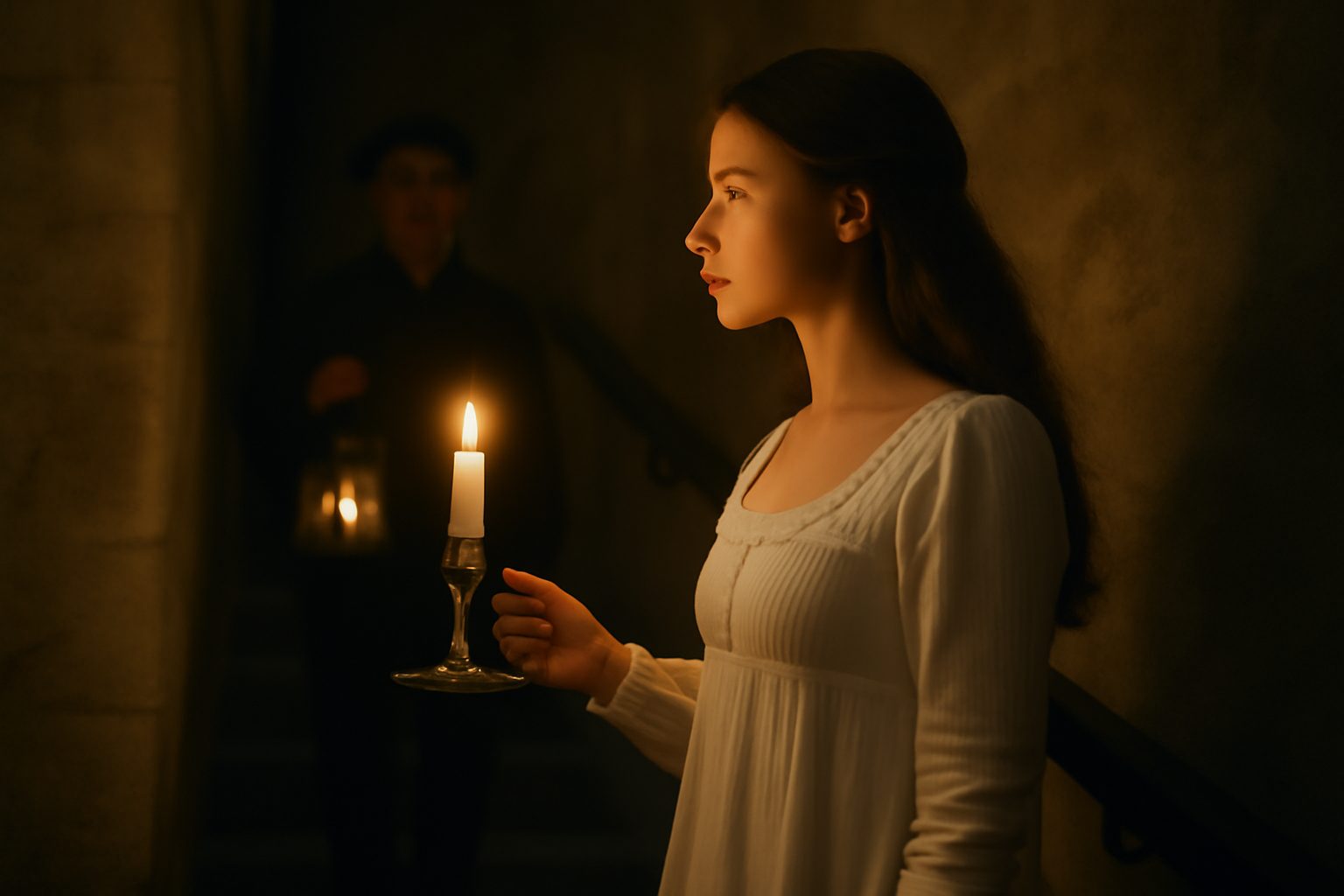
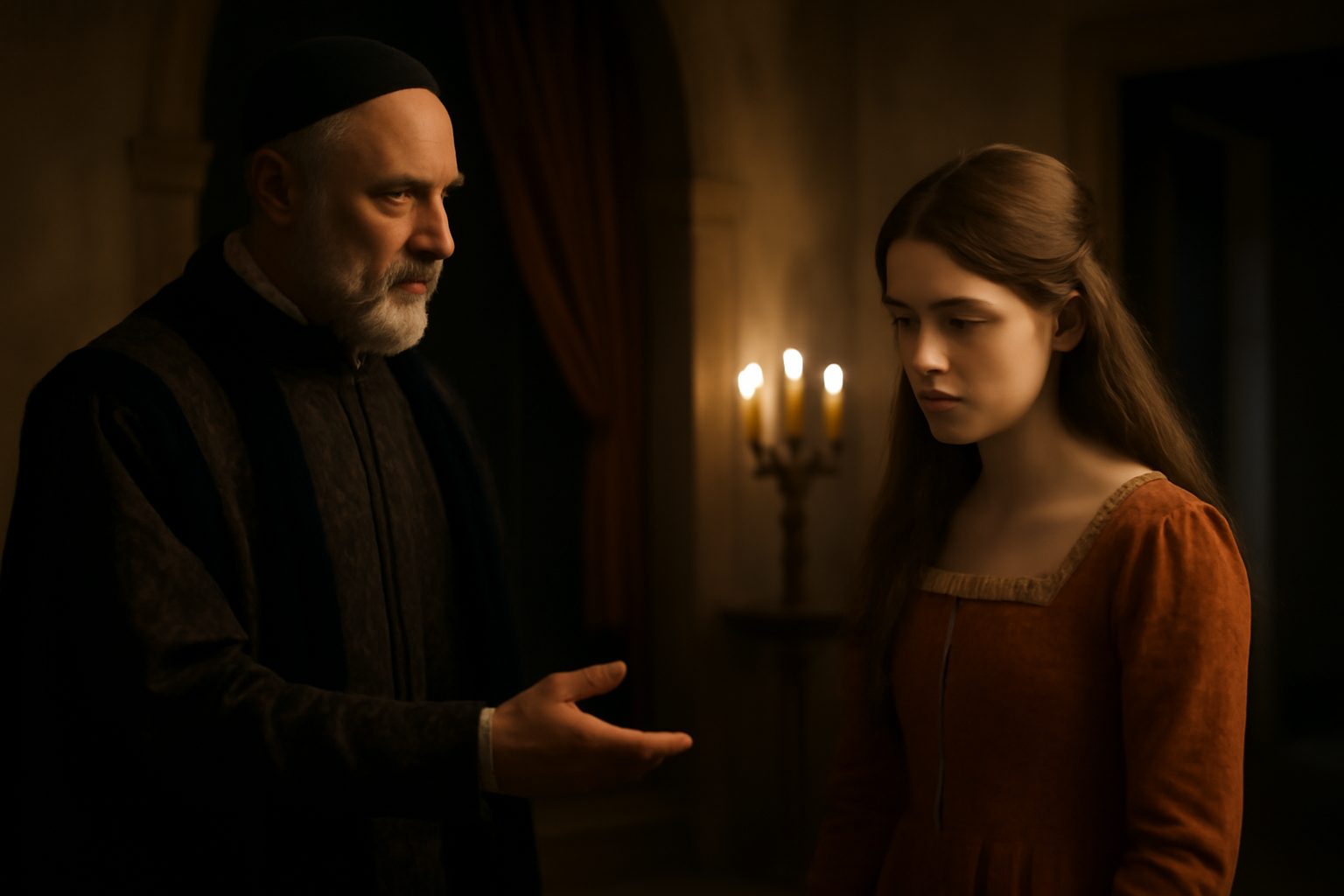
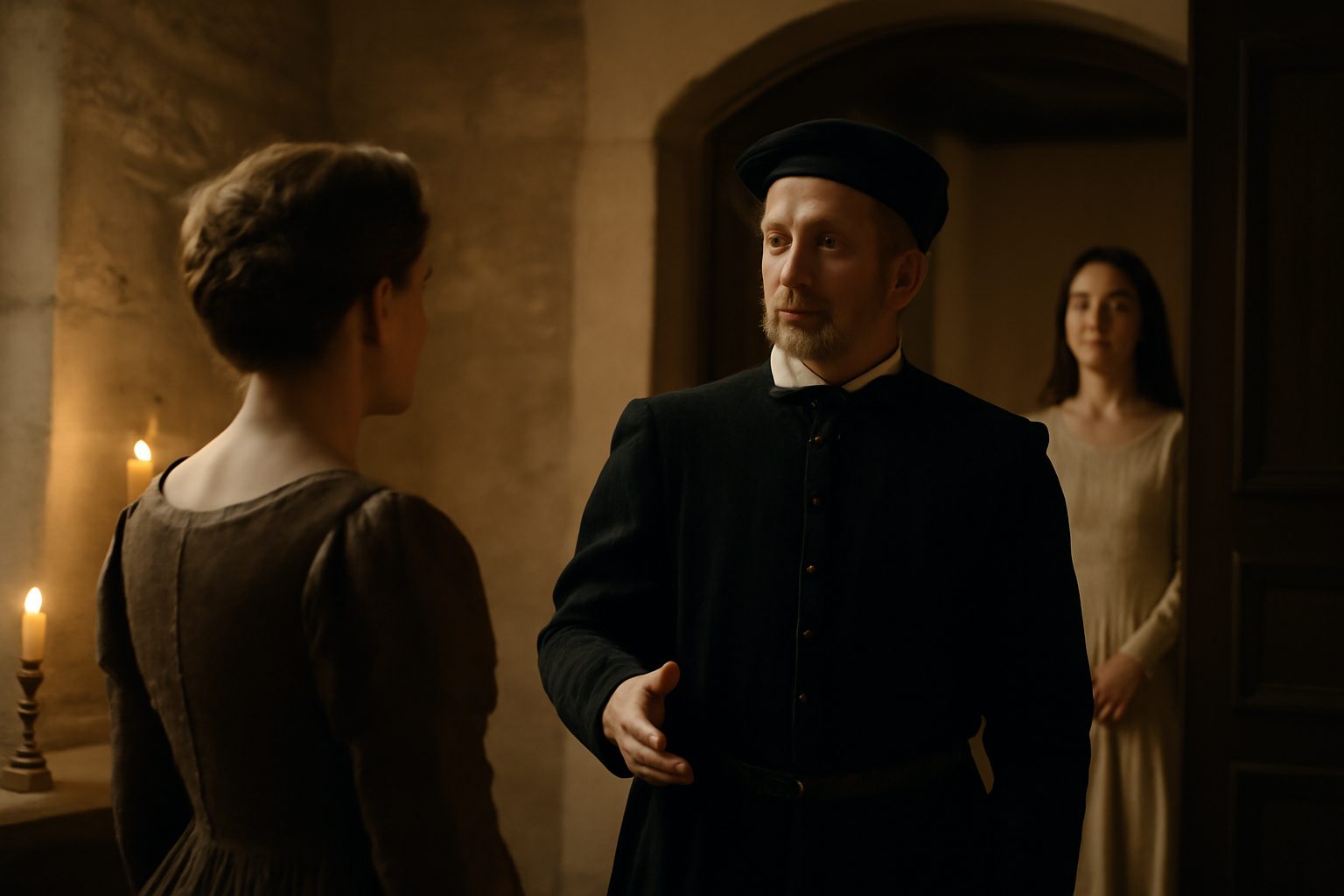
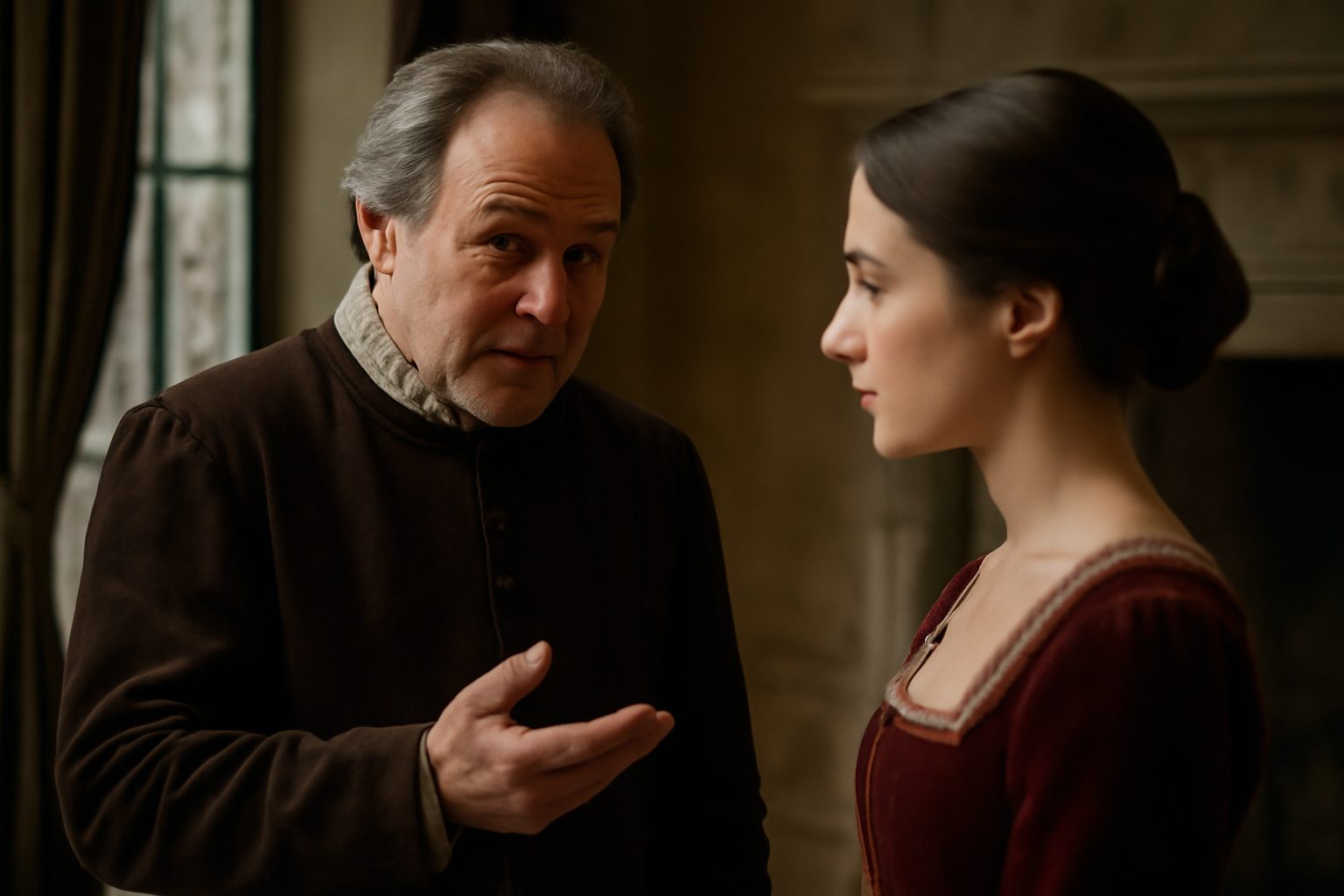
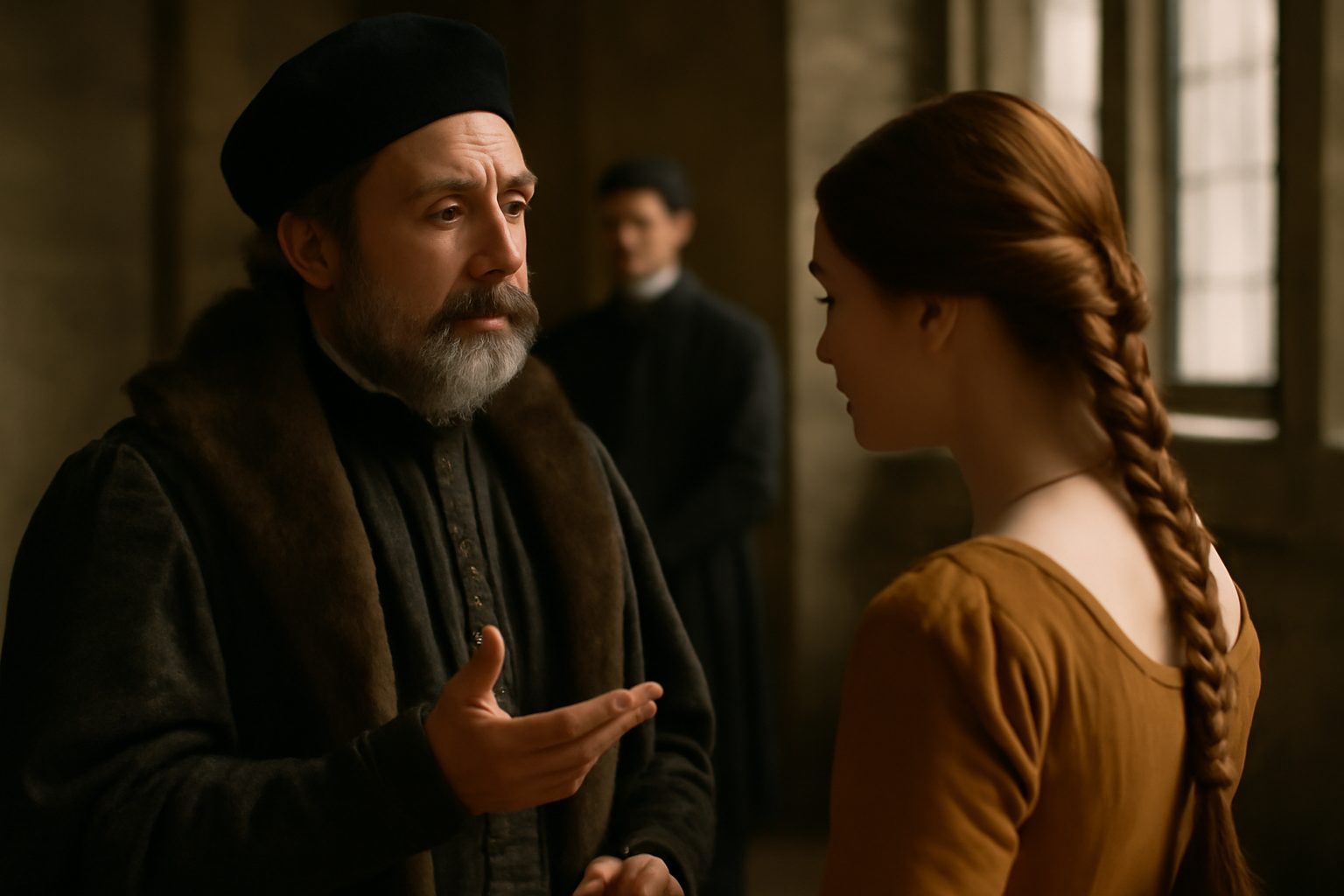
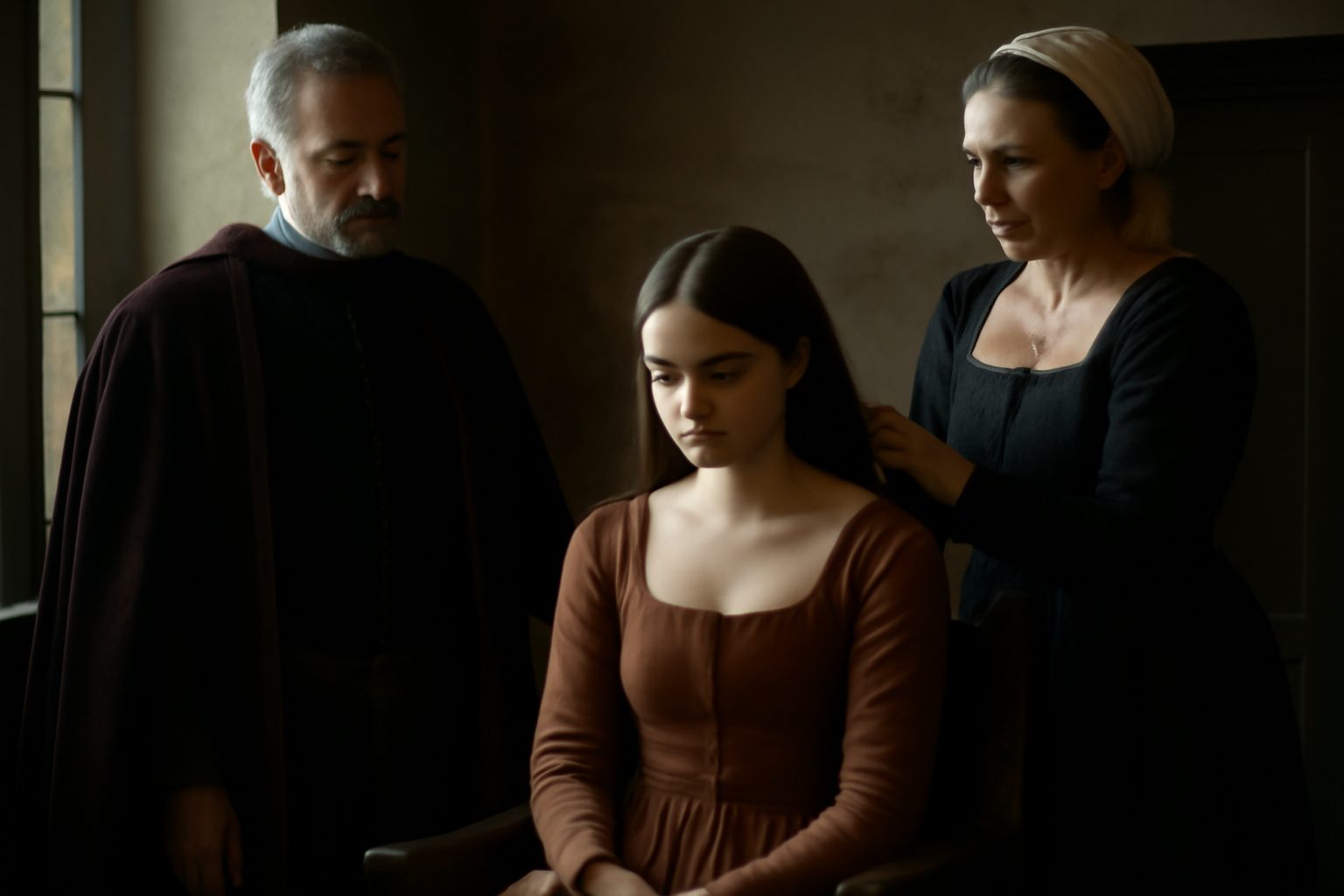
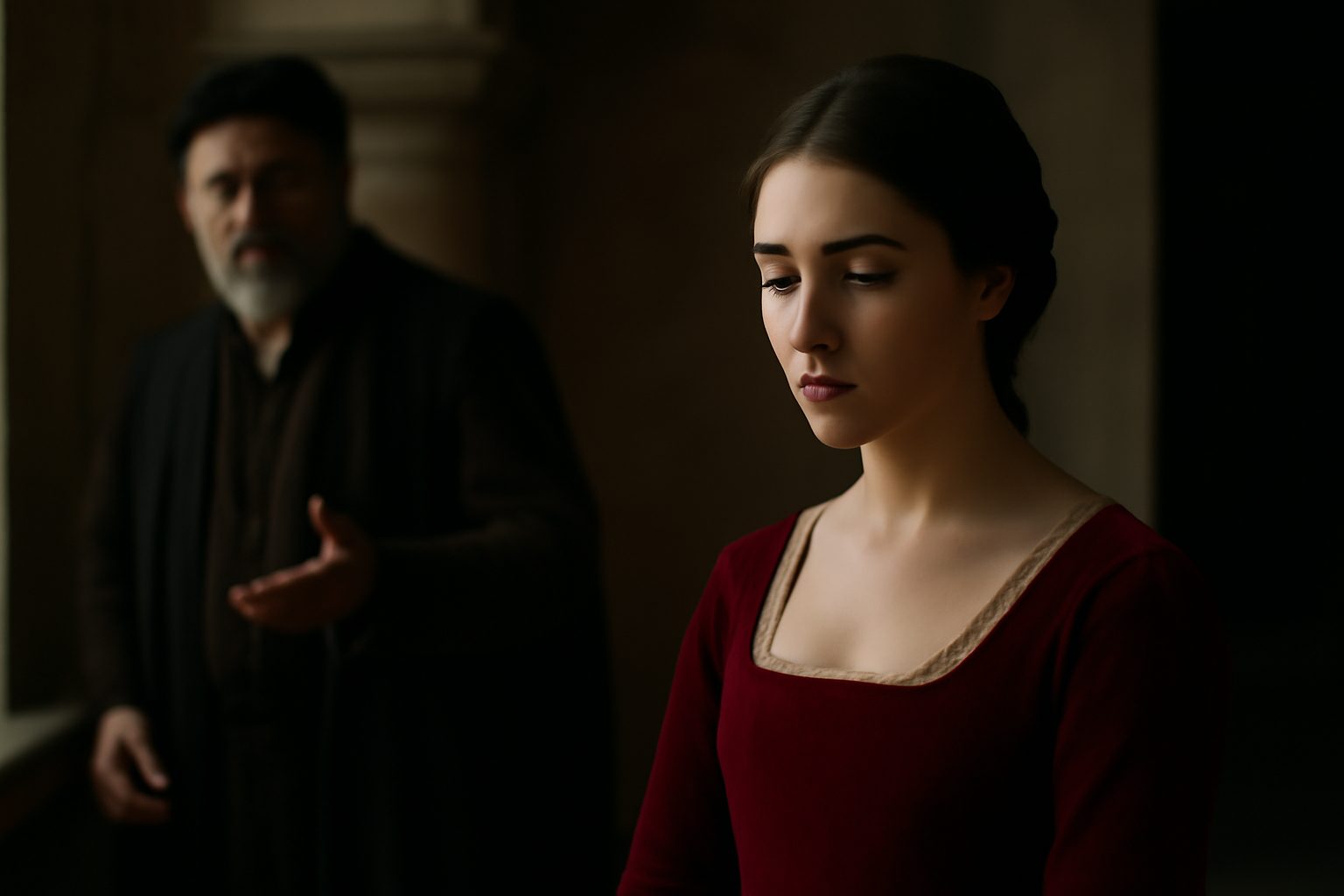
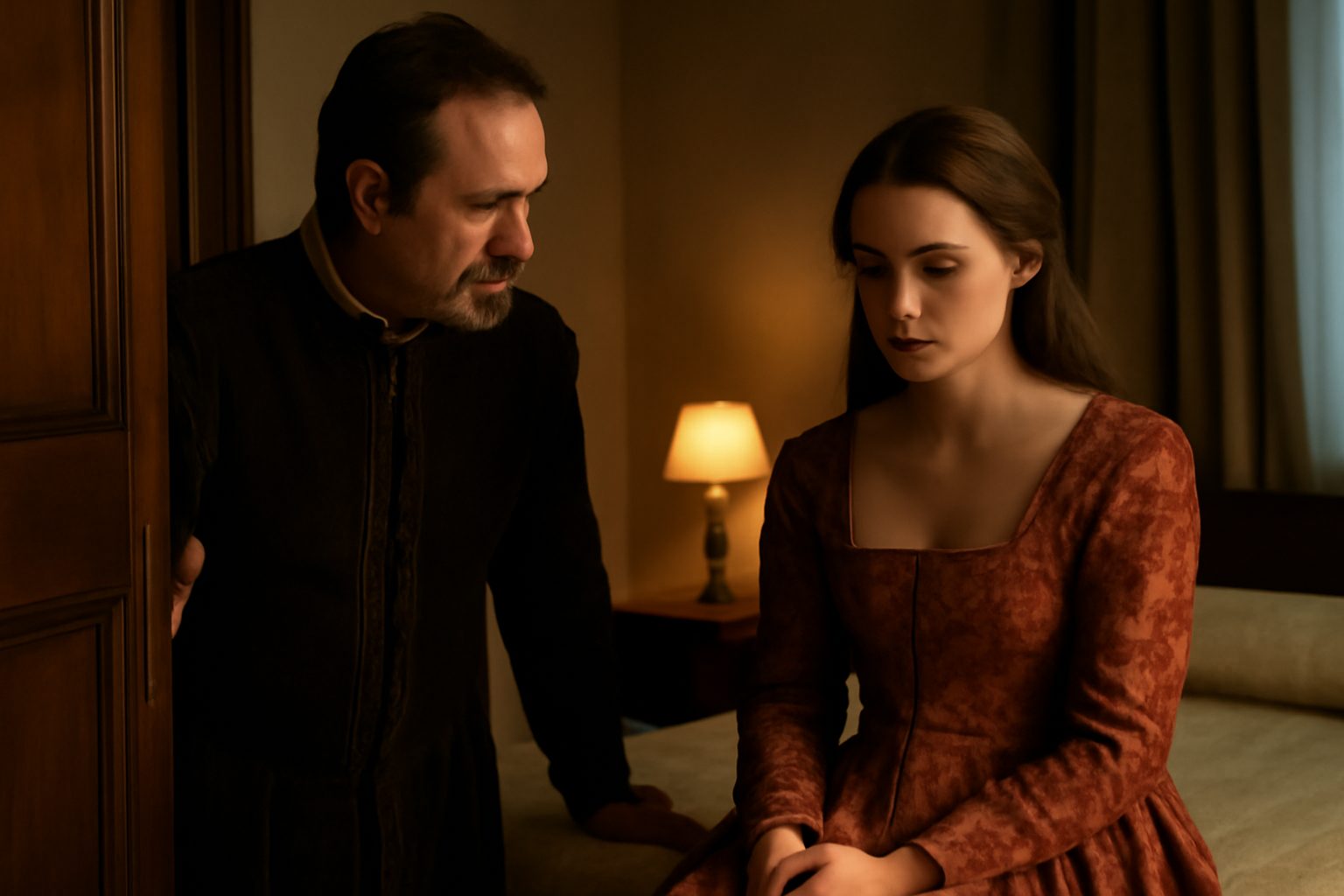
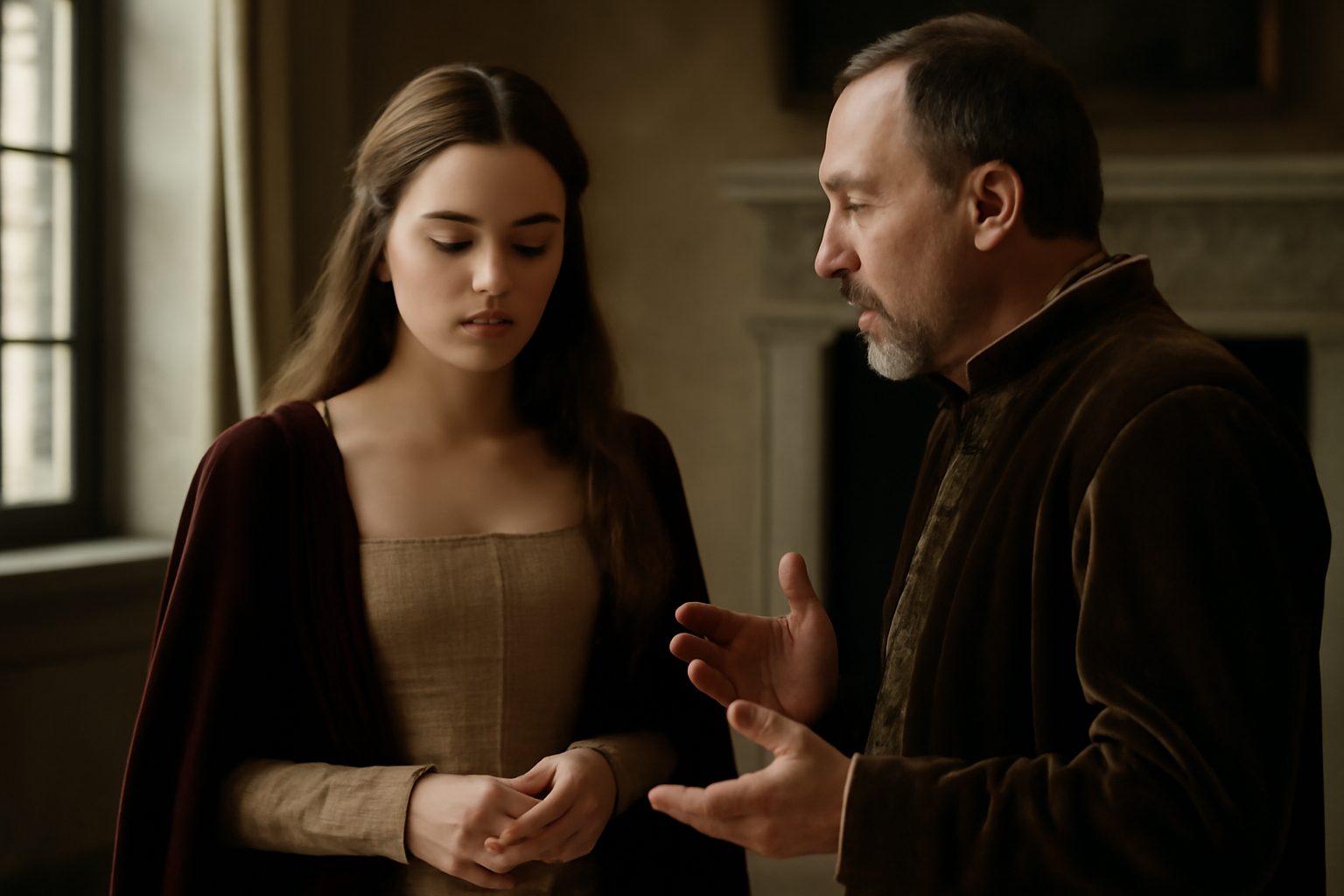
In Act 3, Scene 4 of Romeo and Juliet, Lord Capulet speaks these words as he eagerly anticipates Juliet's marriage to Paris. Having just agreed to the union, he impulsively moves the wedding date forward to Thursday, unaware that Juliet is already secretly married to Romeo. This hasty decision adds urgency to the unfolding tragedy, as Juliet now faces even greater pressure to comply with her father's wishes.
Paris: "My lord, I would that Thursday were to-morrow."
In modern day english, we would say:
I wish Thursday was tomorrow, my lord.
Frequently Asked Questions
What day does Paris wish was tomorrow?
Thursday
Connections to other verses:
Connections to "My lord, I would that Thursday were to-morrow."
This line, spoken by Paris, expresses his eagerness to hasten the wedding with Juliet. It connects thematically and contextually to several other verses in the scene:
Impatience and Urgency
Paris's wish for Thursday to arrive sooner reflects his impatience, which is echoed in Will you be ready? do you like this haste? where he questions Capulet about the rapid pace of the arrangements. This urgency is further emphasized when Capulet agrees to the accelerated timeline in Well get you gone: o' Thursday be it, then., solidifying Thursday as the chosen day.
Context of Mourning and Haste
The rush to marry is set against the backdrop of Tybalt's recent death, as noted in For, hark you, Tybalt being slain so late,, which explains the need for a subdued ceremony. Capulet's earlier line, These times of woe afford no time to woo., underscores the tension between grief and the desire to proceed quickly, a sentiment Paris shares in his wish for an imminent Thursday.
Planning and Confirmation
Paris's eagerness is part of a broader discussion about the wedding date. Capulet initially suggests Wednesday in And bid her, mark you me, on Wednesday next--, but later, after realizing it is too soon, he and Paris settle on Thursday, as seen in And there an end. But what say you to Thursday?. Paris's line is a direct response to this, showing his approval and desire for it to come quickly.
Parental Assurance and Control
Capulet's confidence in Juliet's compliance, expressed in Of my child's love: I think she will be ruled, provides the context for Paris's optimism. This assurance likely fuels Paris's impatience, as he believes the marriage is certain and eagerly anticipates it.
Conclusion of the Scene
The scene winds down with characters acknowledging the late hour, such as in Afore me! it is so very very late,, contrasting with Paris's forward-looking wish. His line serves as a climax of the scene's planning, leading to the final agreements and goodnights, like Good night..