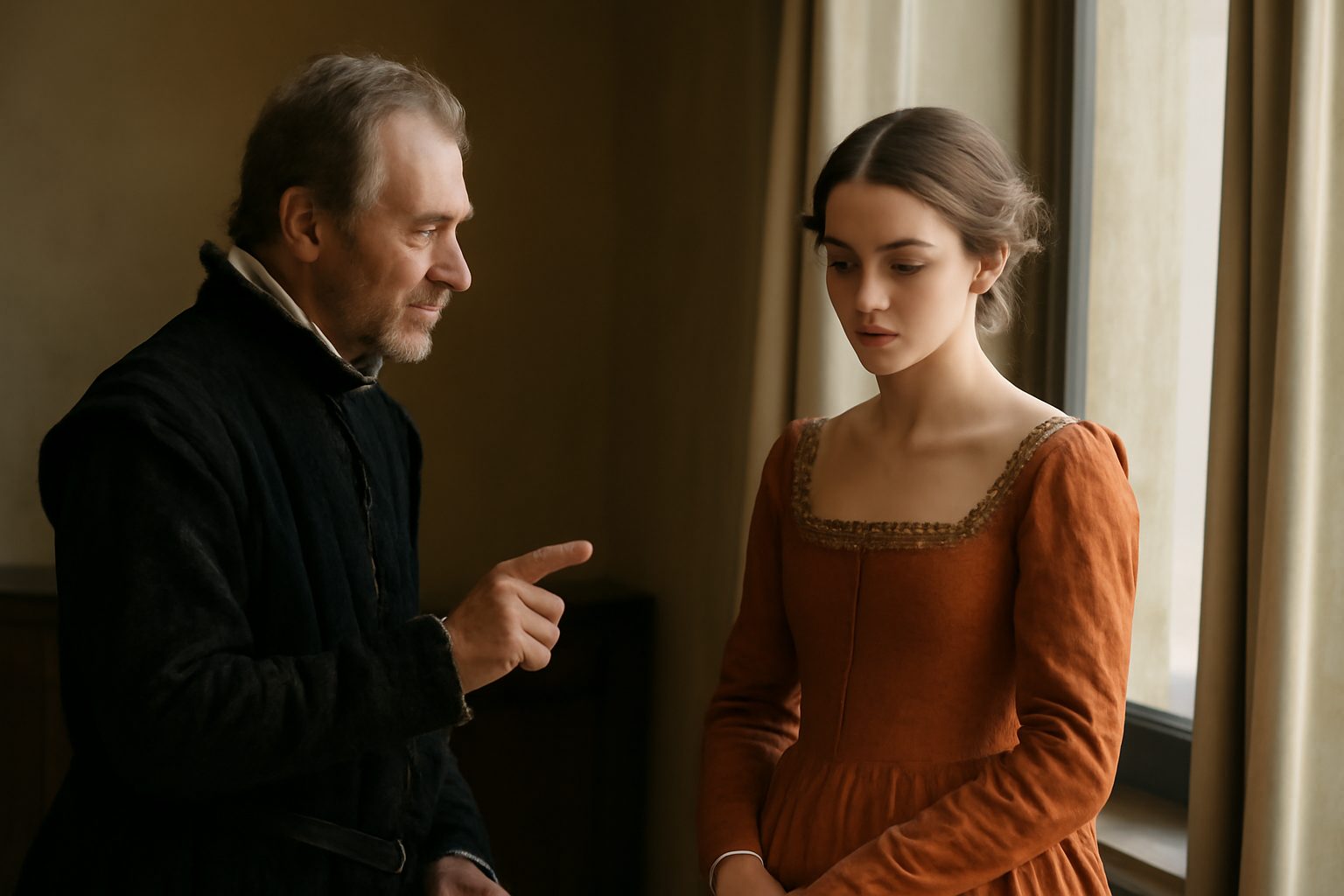
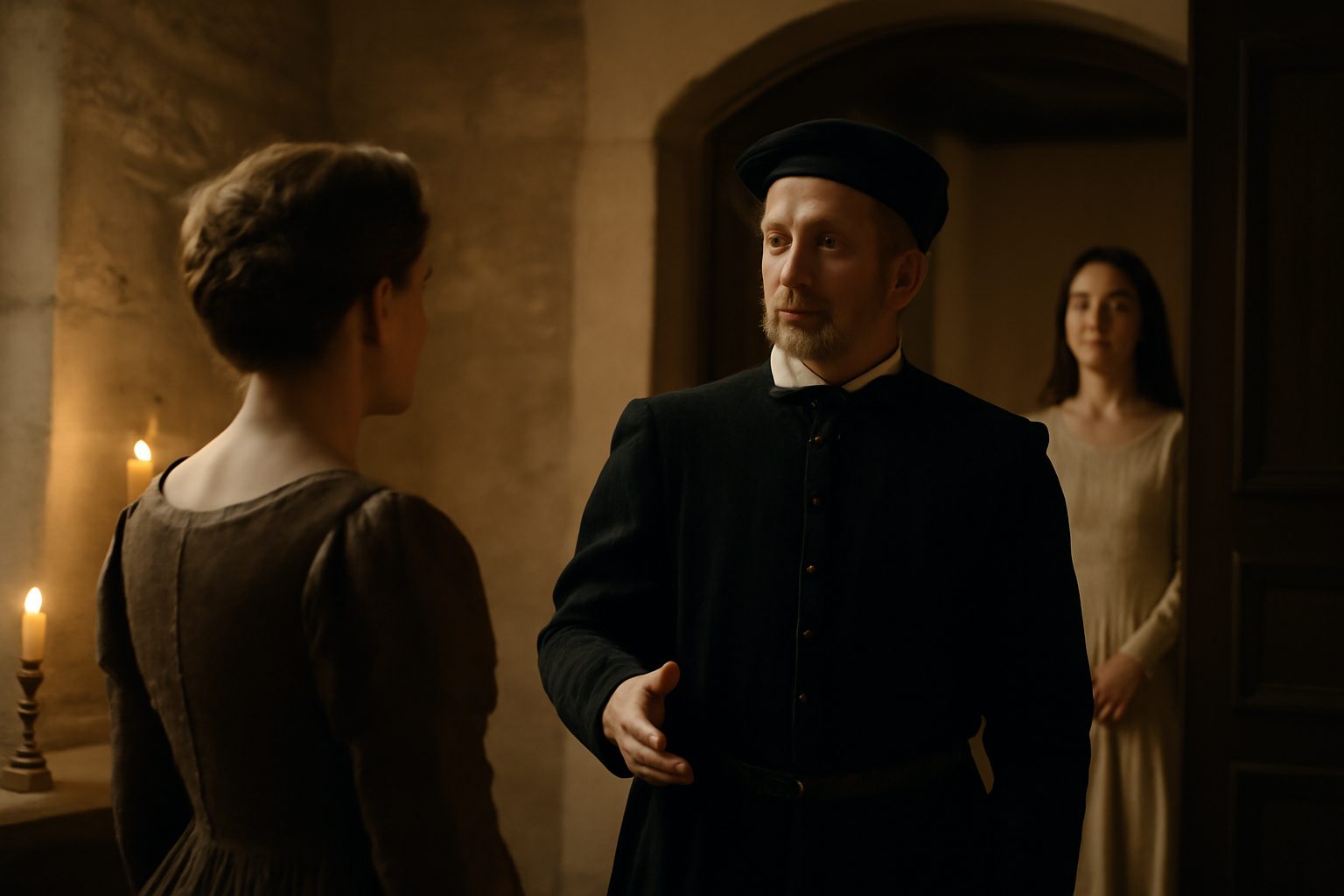
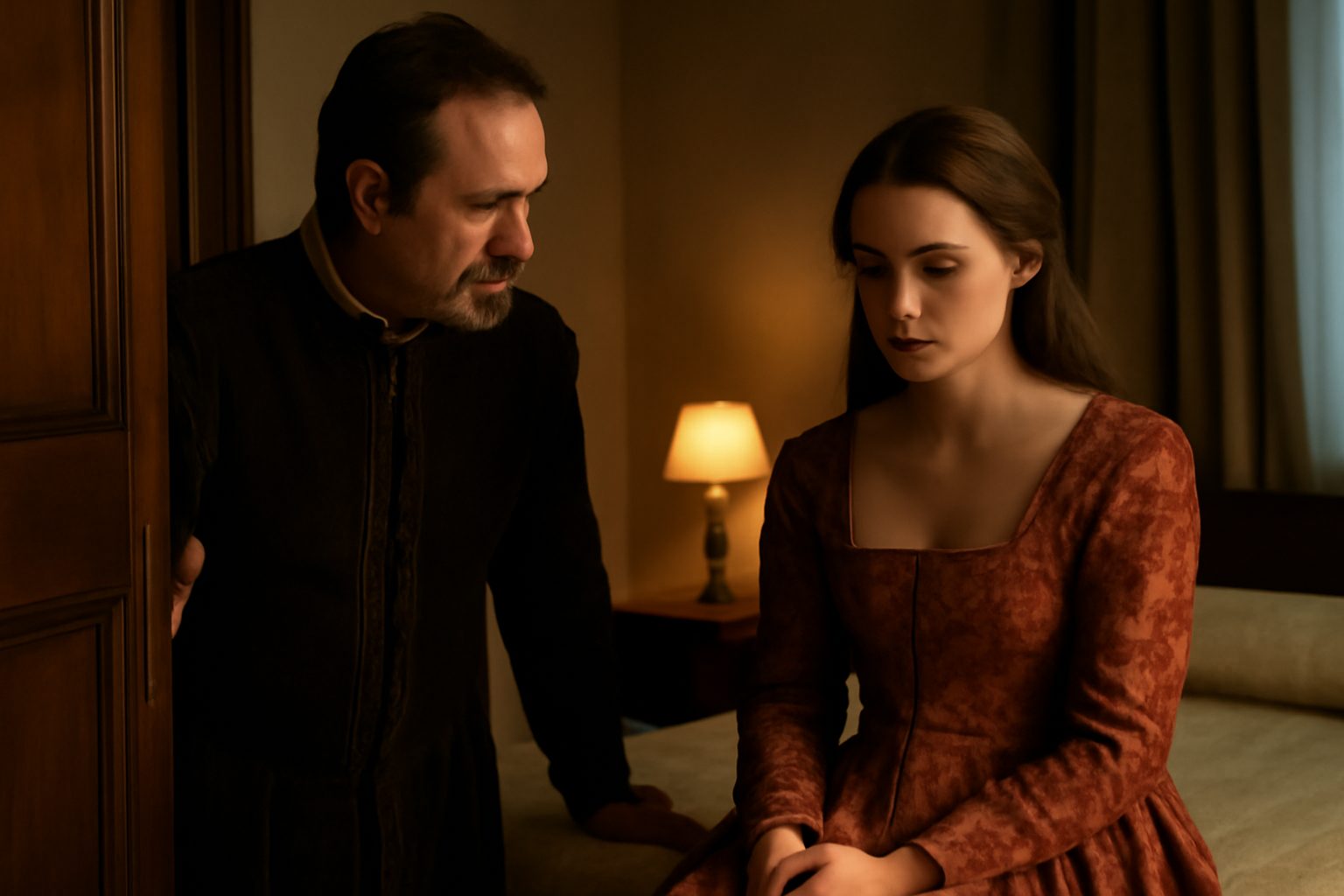
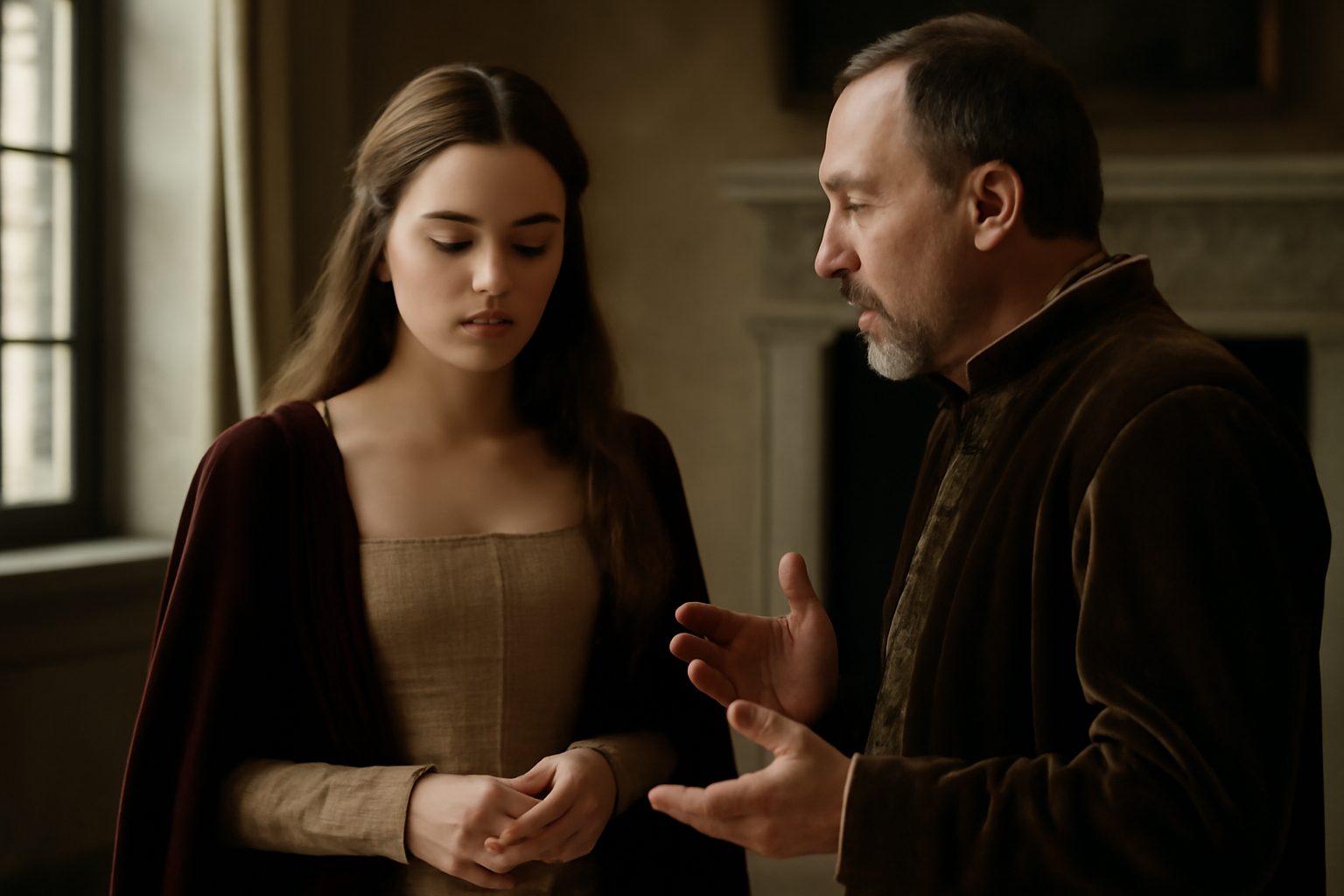
In Act 3, Scene 4 of Romeo and Juliet, Lord Capulet speaks these words to his wife as he abruptly arranges Juliet's marriage to Paris. This moment follows Tybalt's death and Romeo's banishment, with Capulet seeking to lift the family's spirits through a hasty wedding. The line underscores his authority and the societal pressures that will soon clash with Juliet's secret love for Romeo.
Capulet: "Prepare her, wife, against this wedding-day."
In modern day english, we would say:
Get your daughter ready for the wedding day.
Frequently Asked Questions
Who is Capulet speaking to in this line?
He is speaking to his wife, Lady Capulet.
What event is Capulet preparing for?
He is preparing for Juliet's wedding to Paris.
Connections to other verses:
Connections to "Prepare her, wife, against this wedding-day."
The verse "Prepare her, wife, against this wedding-day." is spoken by Lord Capulet, instructing Lady Capulet to ready Juliet for marriage. This directive is deeply intertwined with other verses in the scene, reflecting themes of haste, parental authority, and the tragic misalignment of intentions.
Connection to Planning and Haste
This command follows the decision to set the wedding for Thursday, as seen in "O' Thursday let it be: o' Thursday, tell her," and "Well get you gone: o' Thursday be it, then." The urgency is further emphasized by Paris's eagerness in "My lord, I would that Thursday were to-morrow." and Capulet's own push for swift action in "Will you be ready? do you like this haste?"
Connection to Parental Assumptions
Capulet's confidence in Juliet's compliance is rooted in earlier assertions, such as "Of my child's love: I think she will be ruled" and "In all respects by me; nay, more, I doubt it not." This contrasts sharply with the reality of Juliet's secret marriage to Romeo, highlighting the tragic disconnect.
Connection to Lady Capulet's Role
The instruction directly involves Lady Capulet, echoing earlier tasks assigned to her, such as in "Wife, go you to her ere you go to bed;" and "Go you to Juliet ere you go to bed," which aim to inform Juliet of Paris's love and the wedding plans.
Connection to Context of Grief
This planning occurs amidst mourning for Tybalt, as noted in "Look you, she loved her kinsman Tybalt dearly," and "For, hark you, Tybalt being slain so late," making the rush to marry particularly insensitive and foreshadowing conflict.
Connection to Structural Irony
The verse's certainty contrasts with Juliet's unseen despair, referenced in "To-night she is mew'd up to her heaviness," and the broader irony that the wedding they prepare for will never occur, leading instead to tragedy.