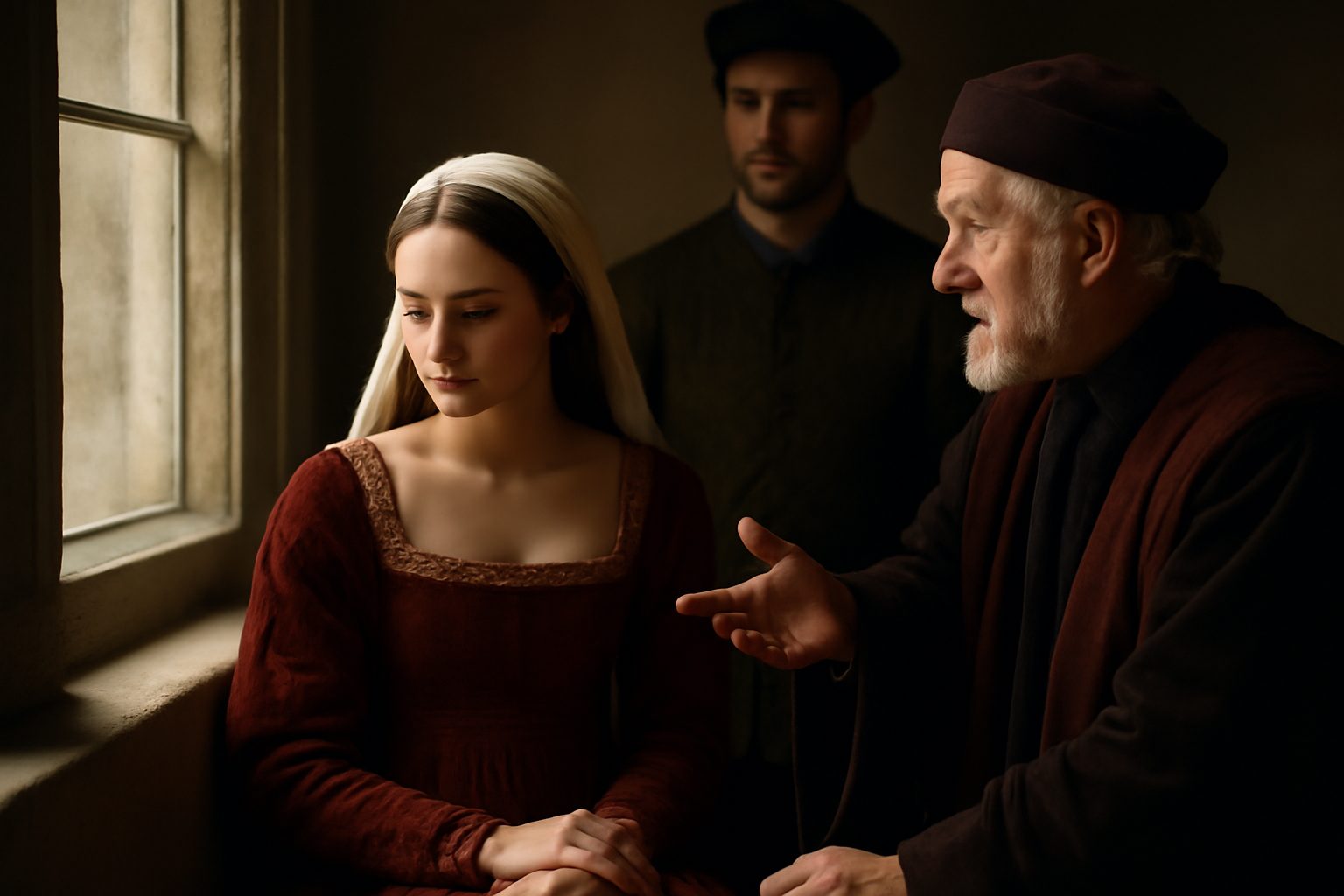
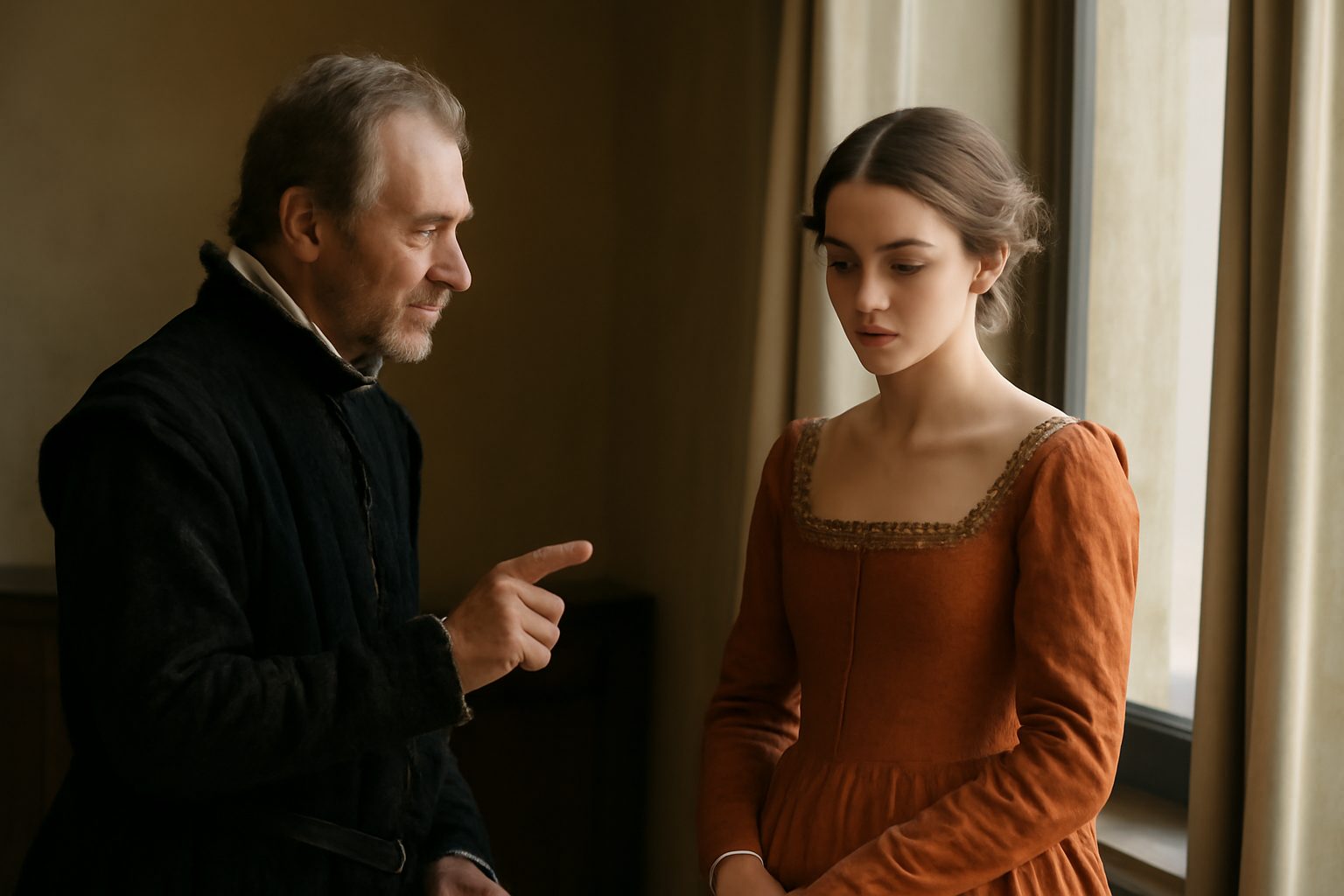
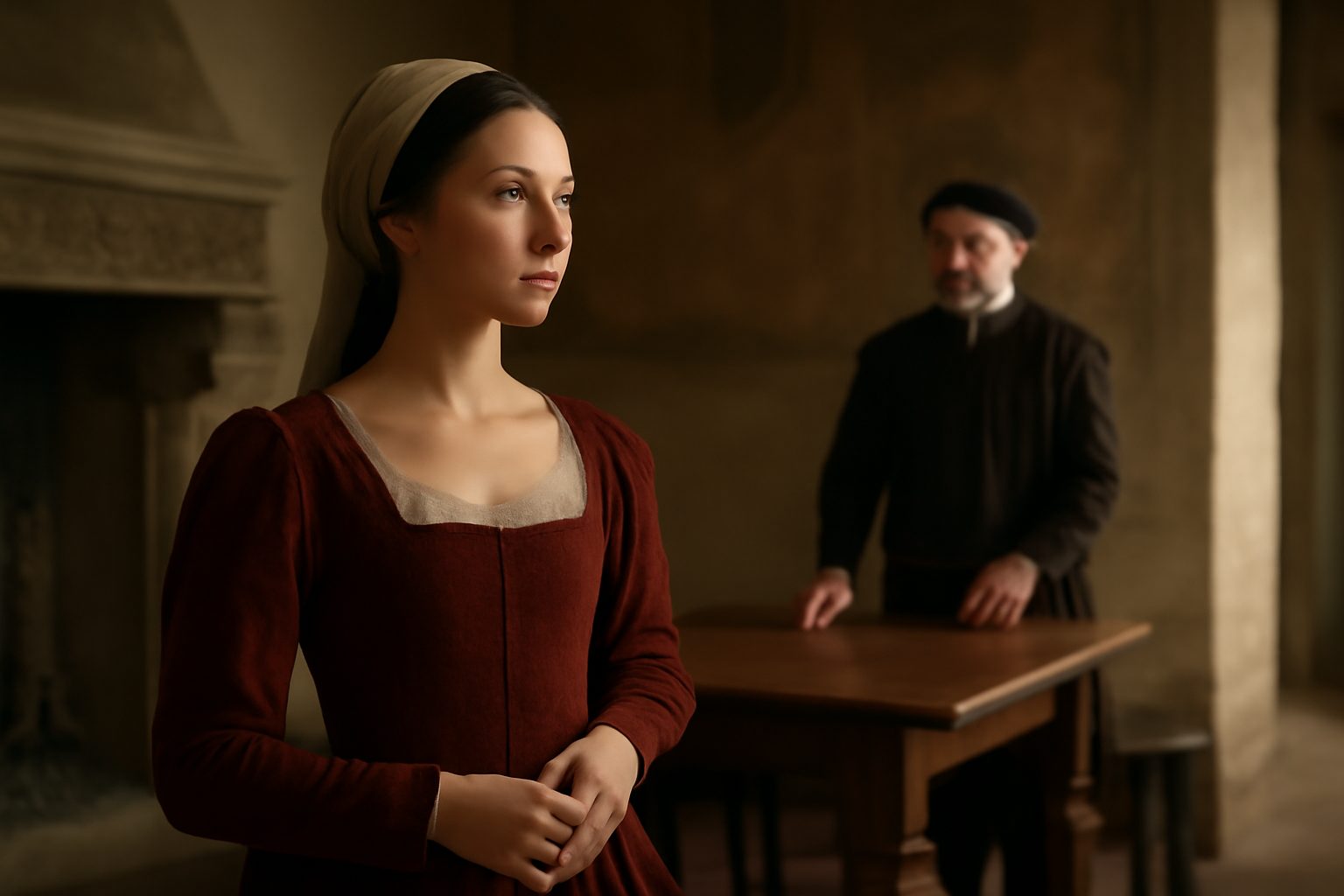
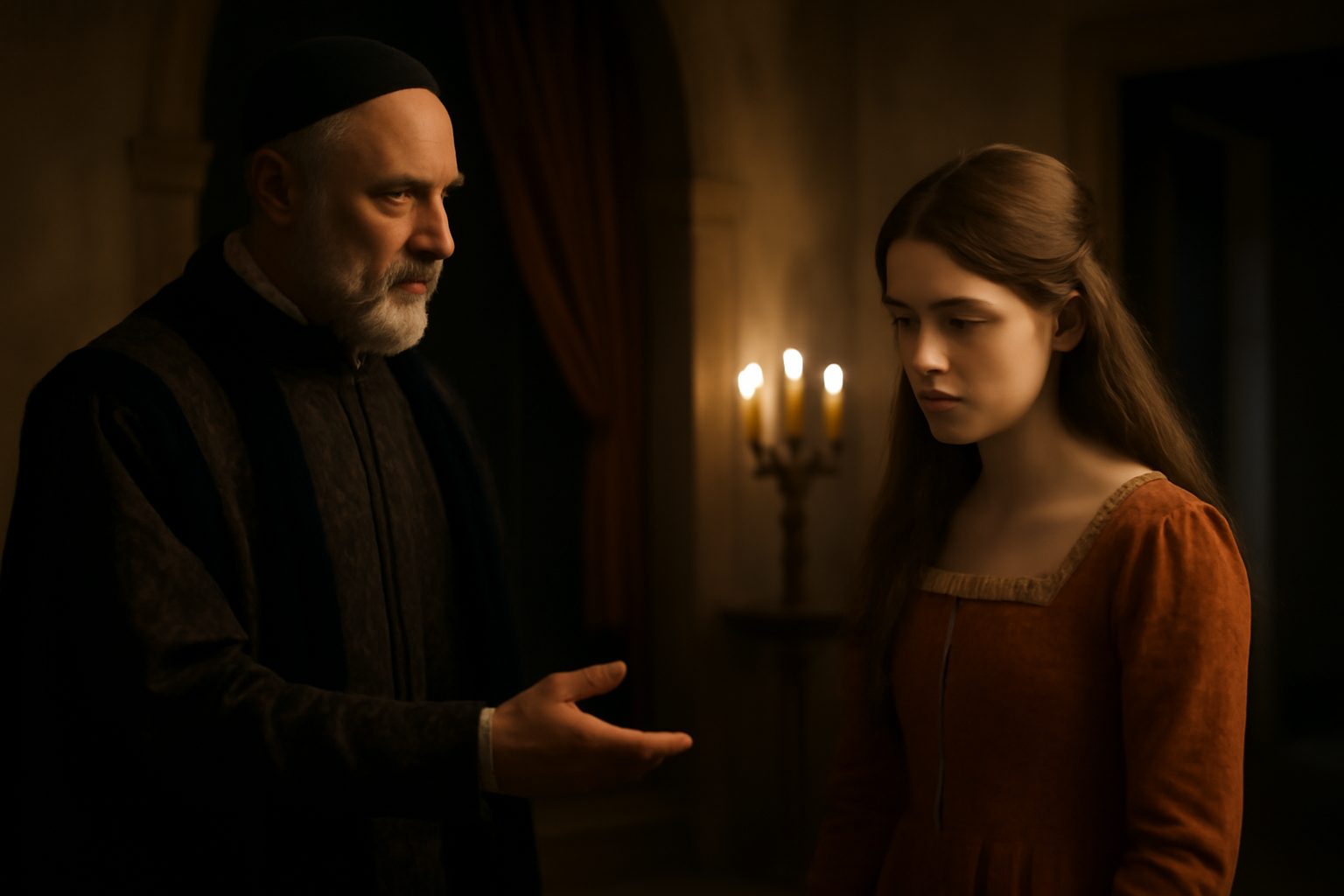
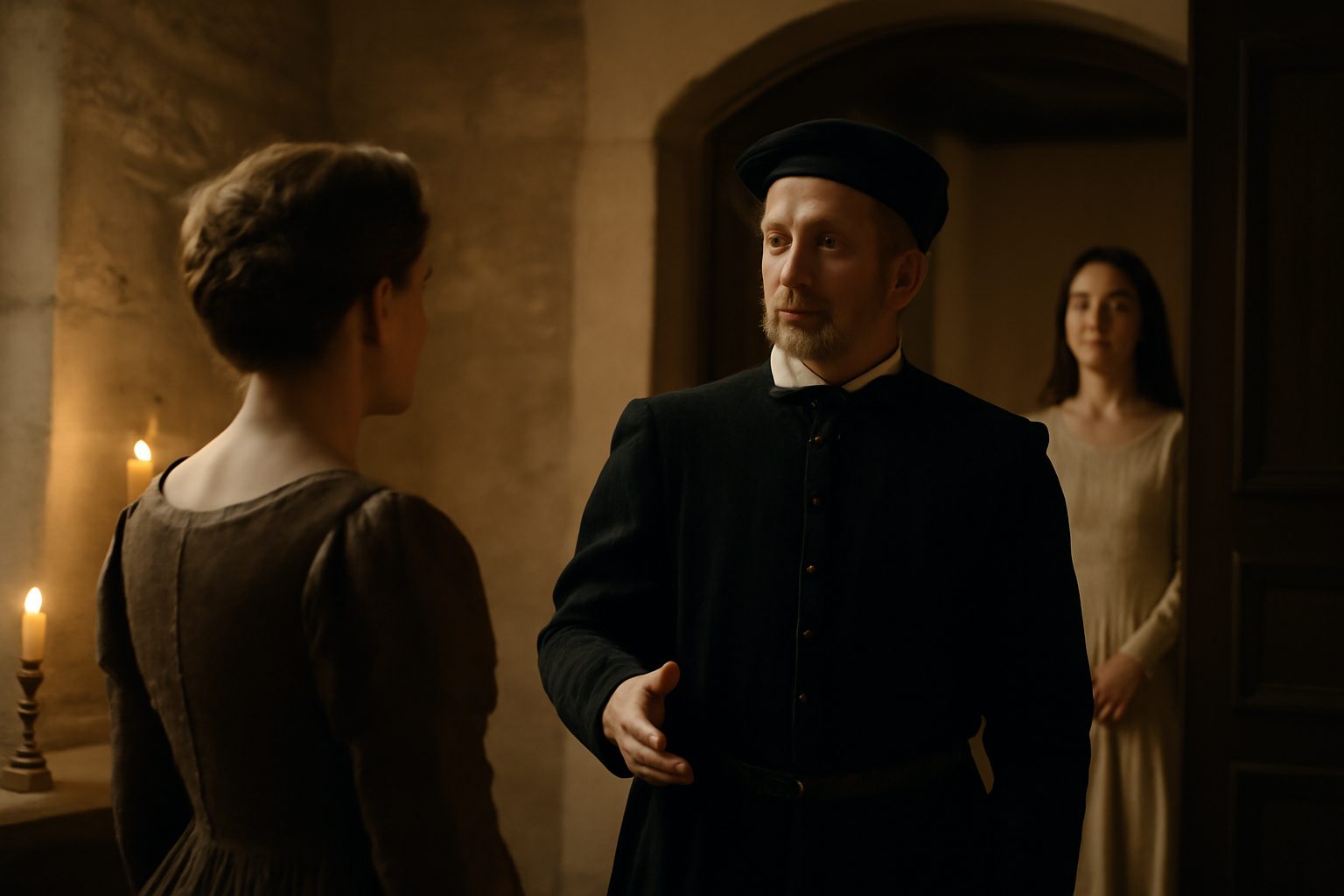
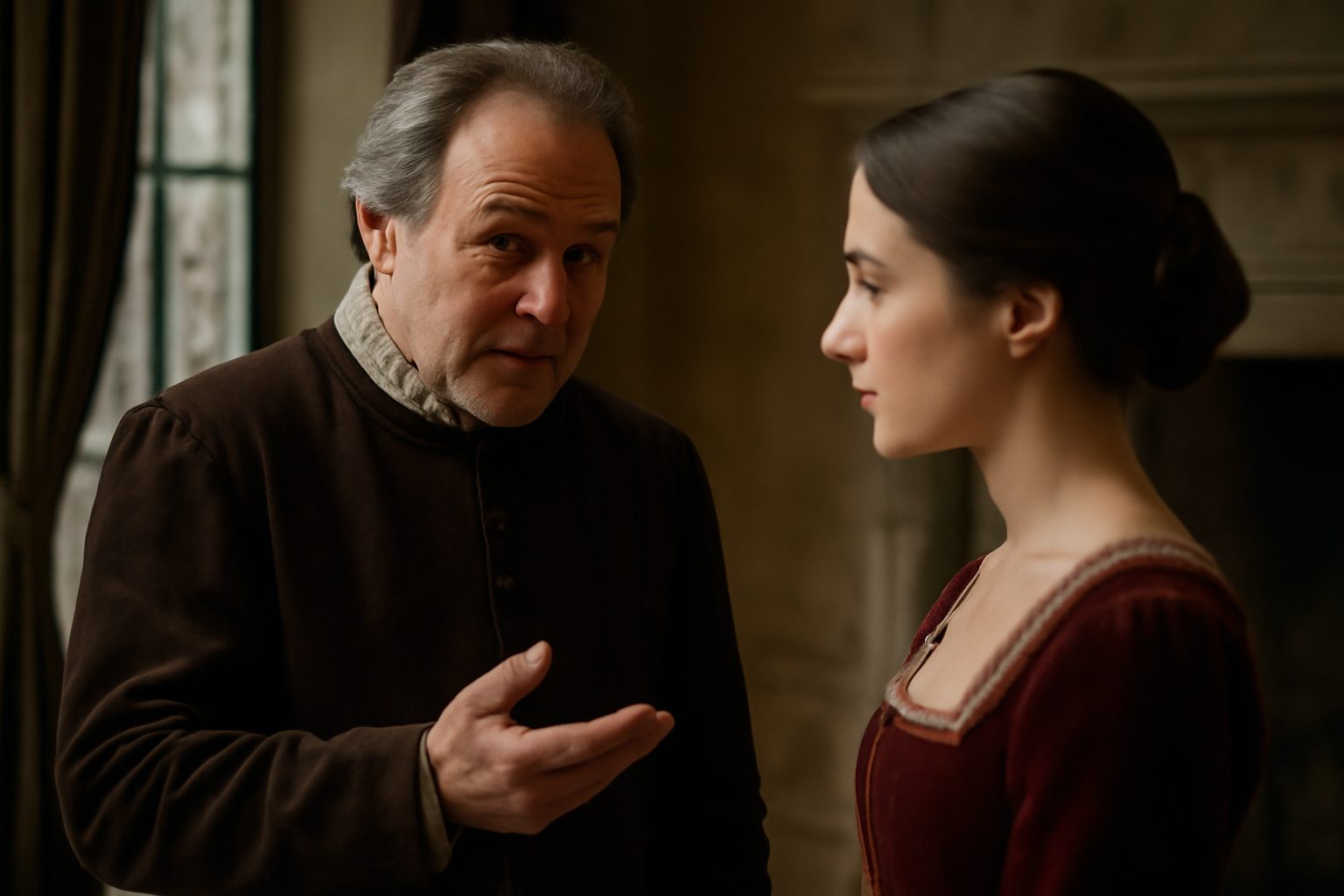
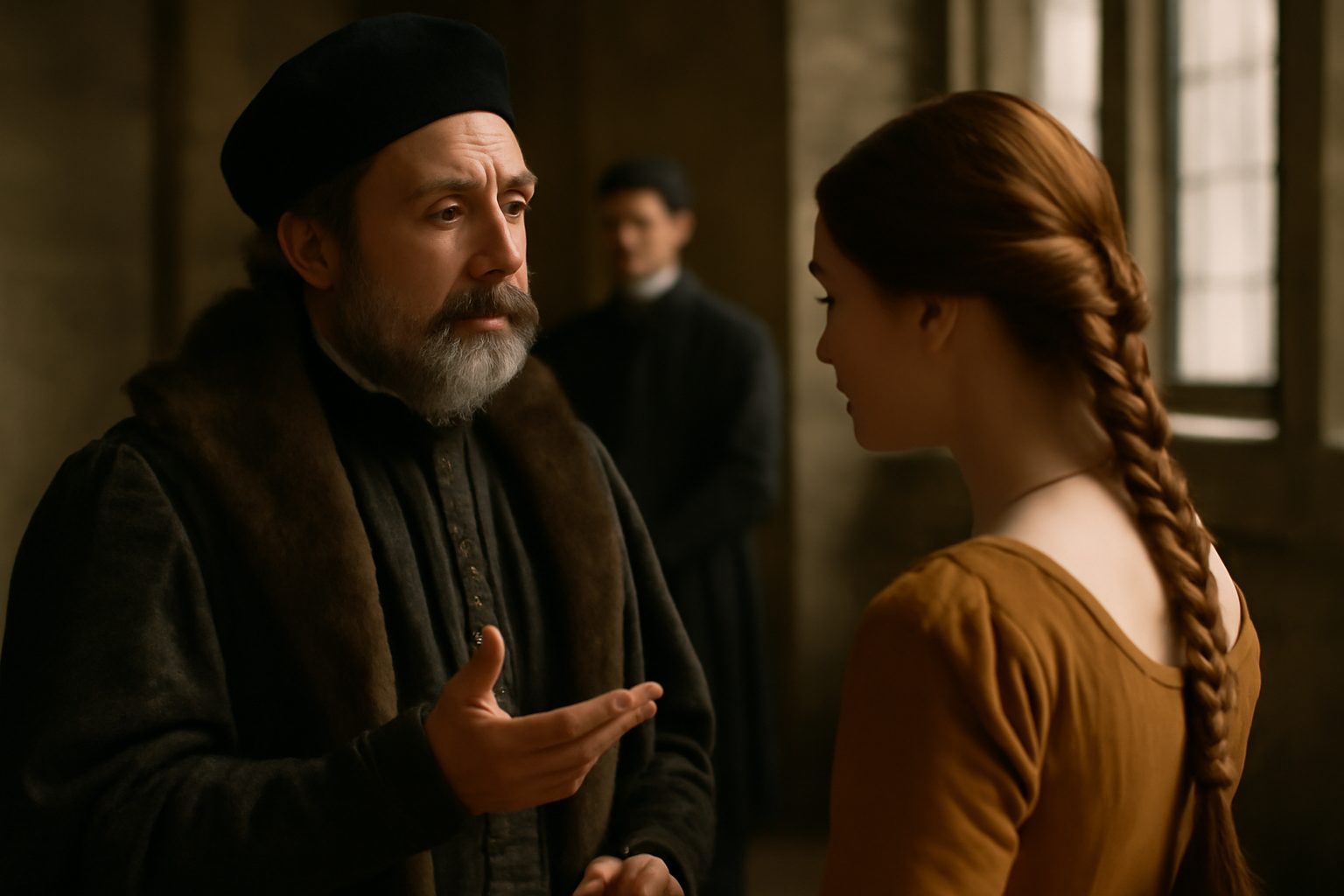
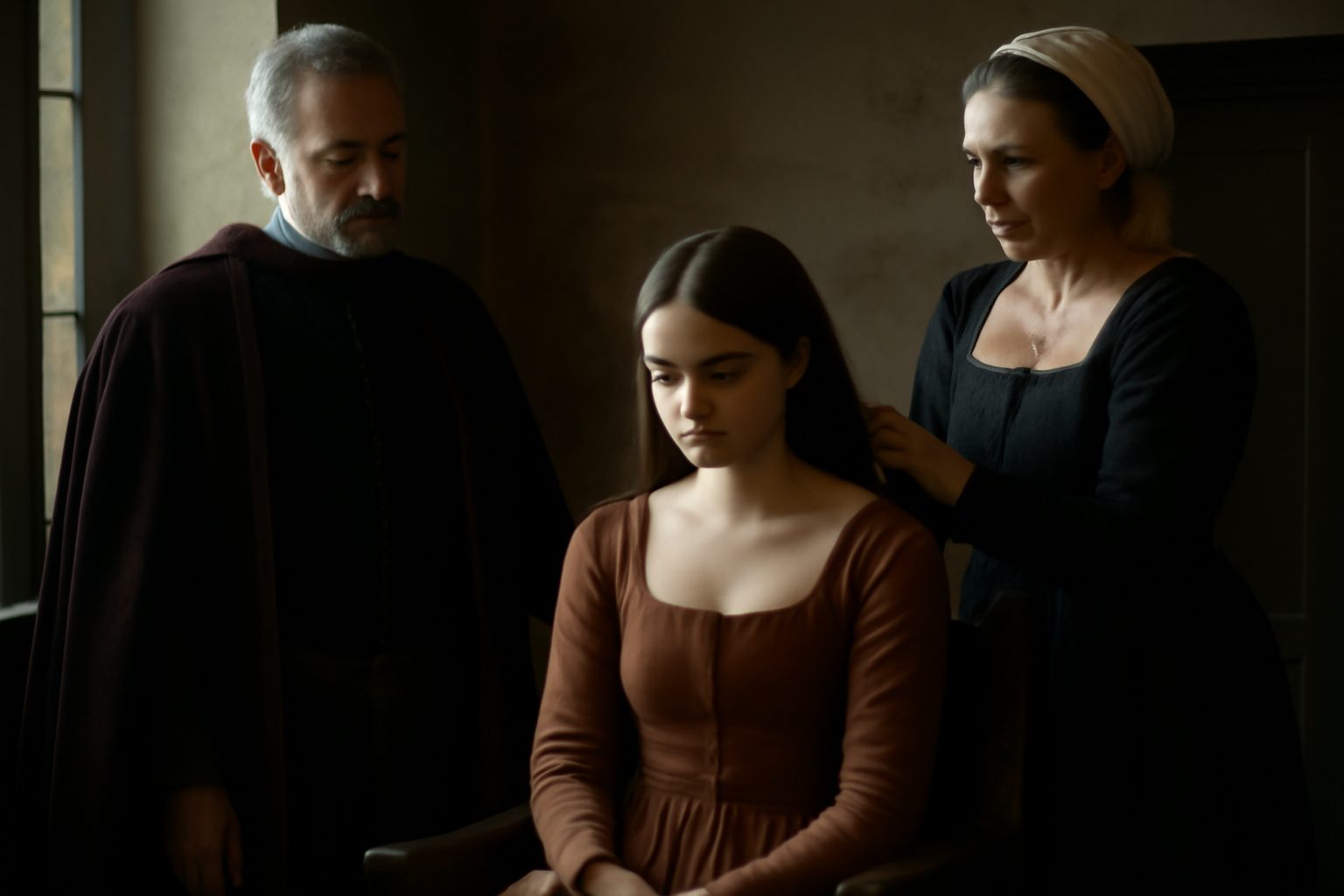
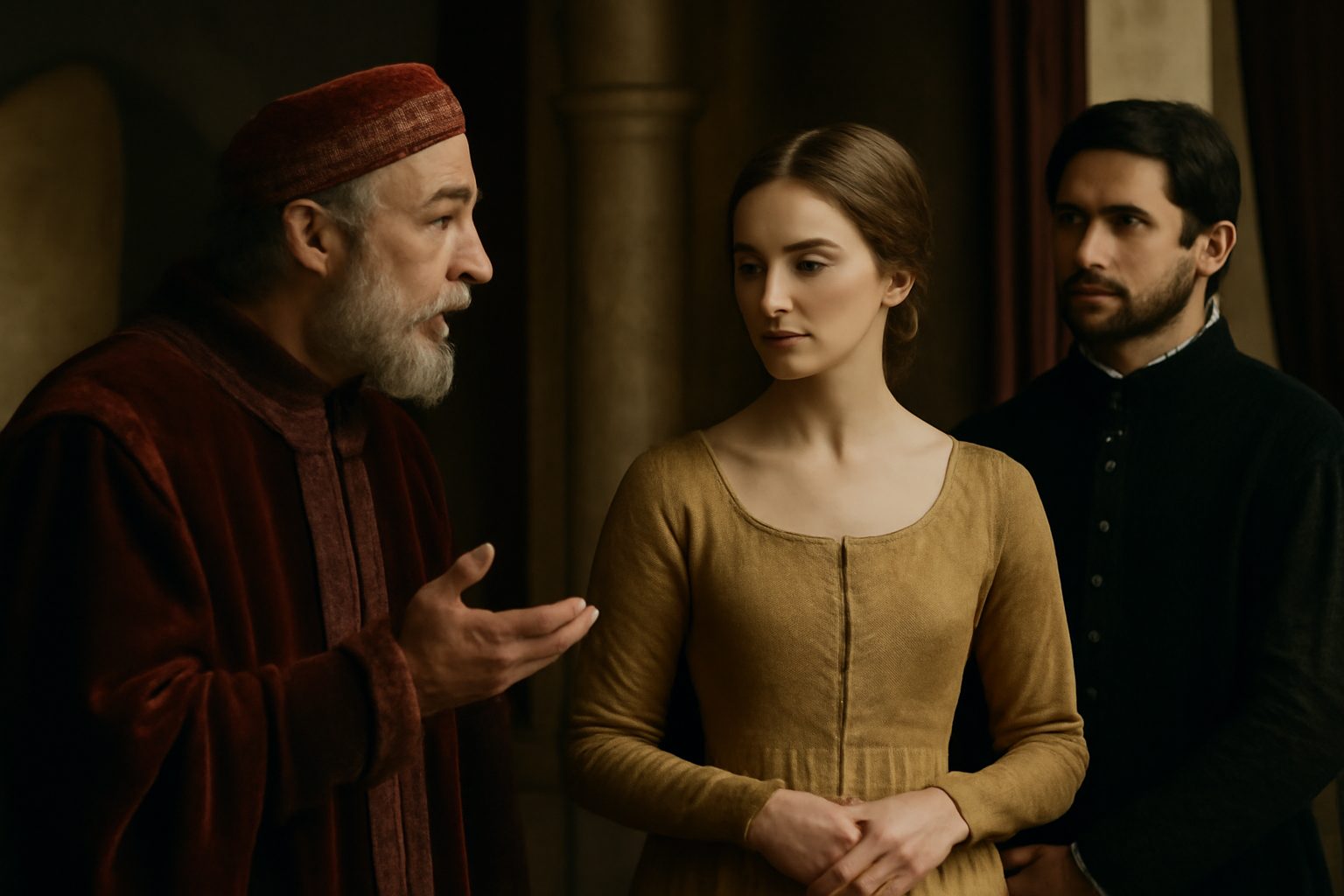
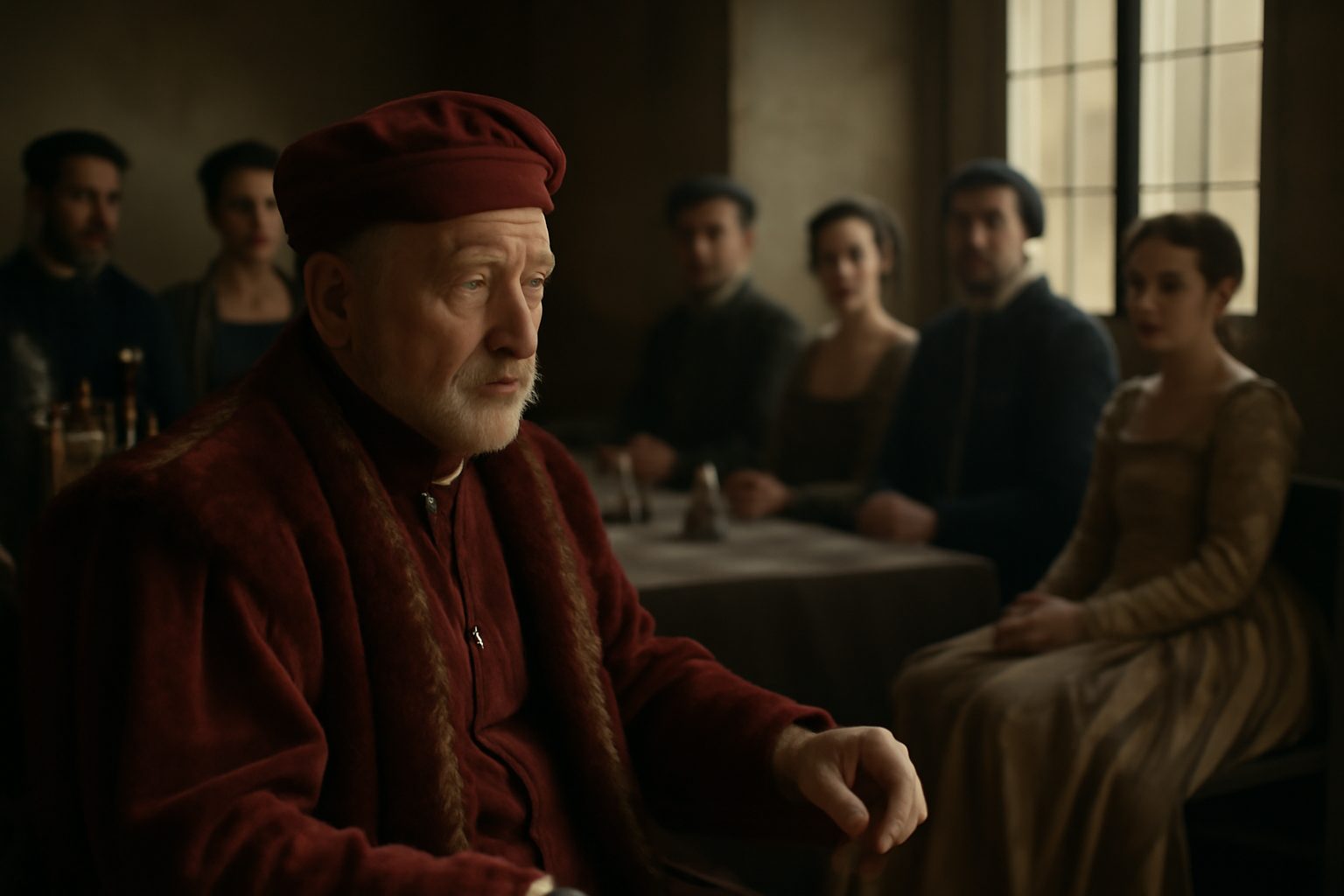
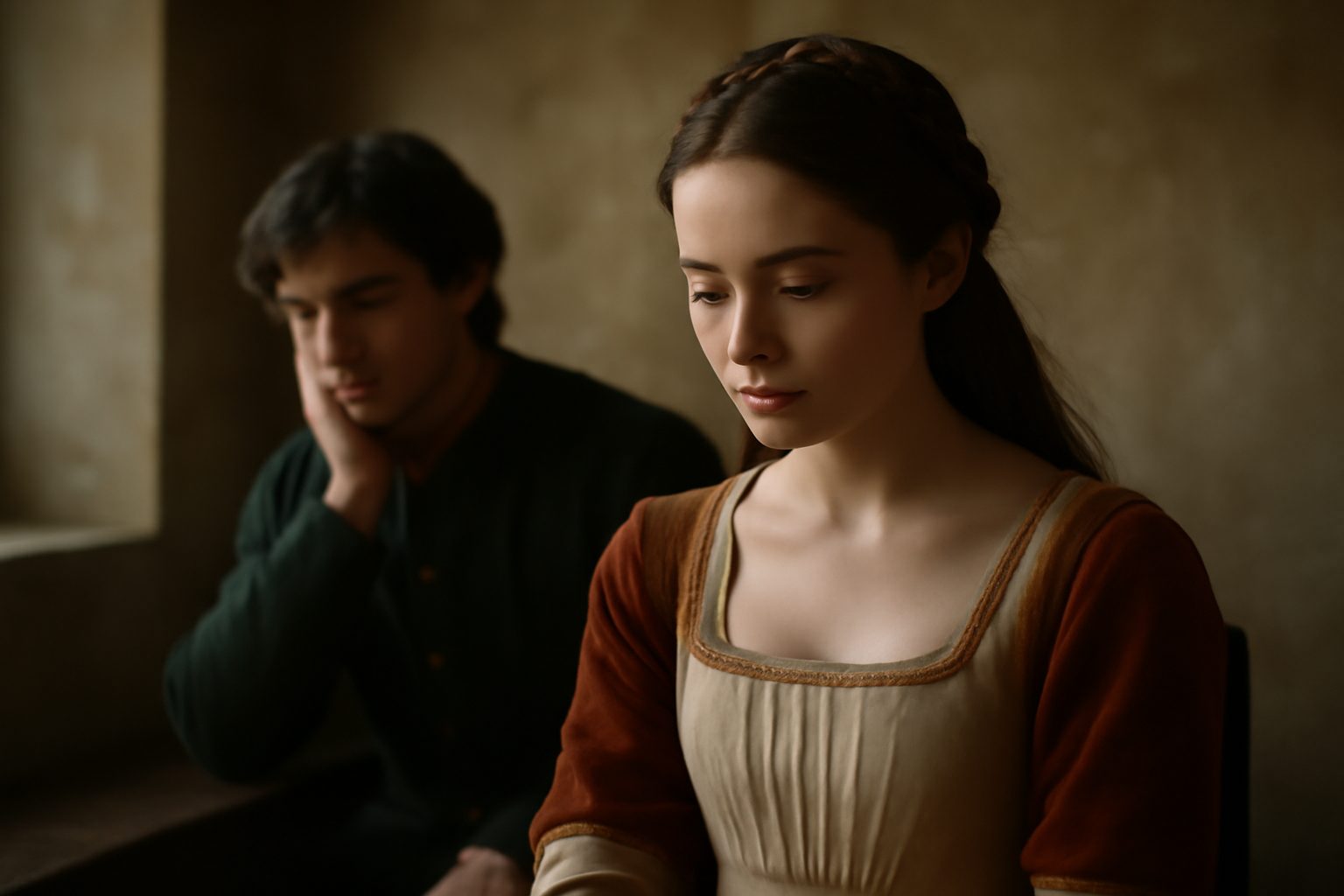
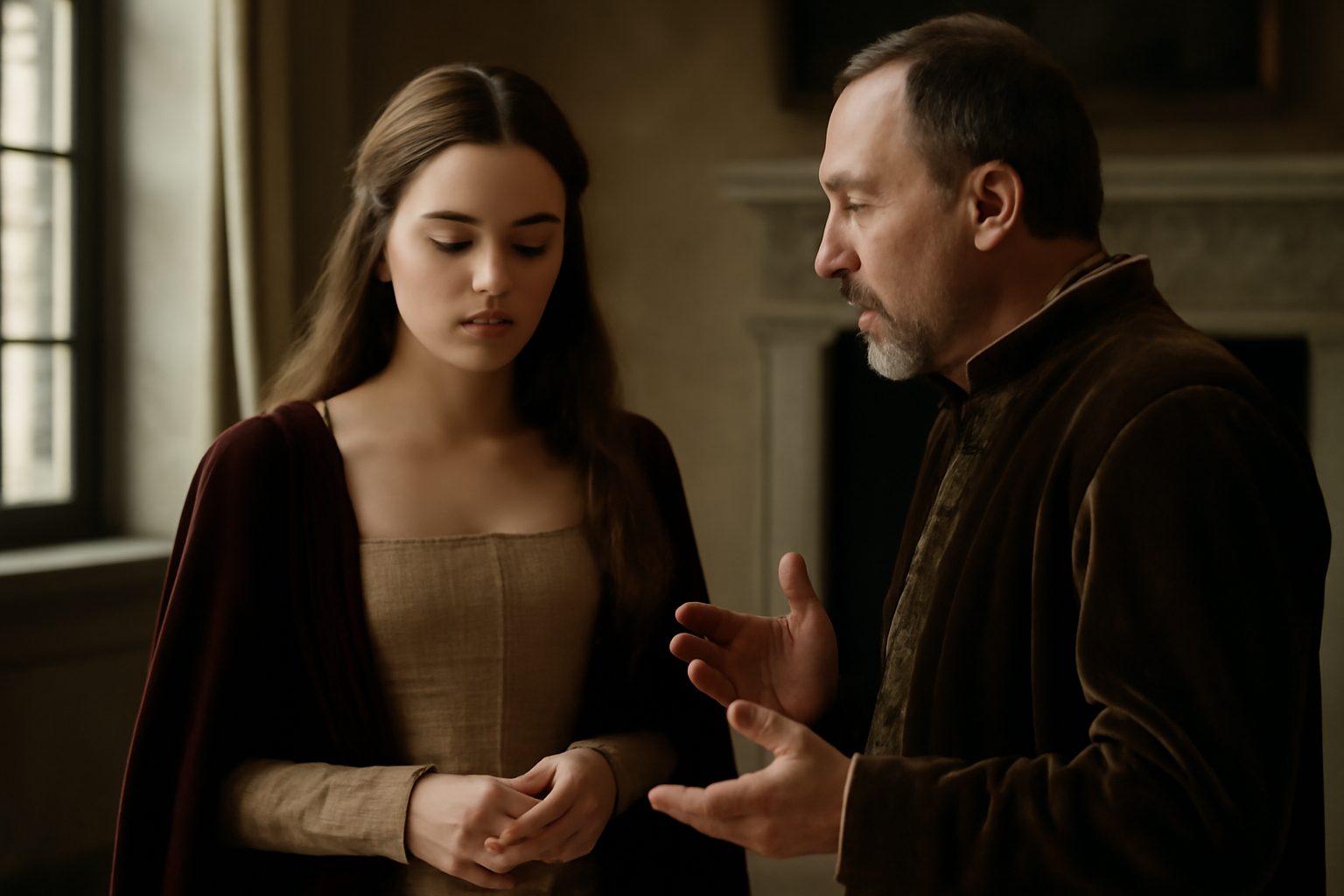
In Act 3 Scene 4 of Romeo and Juliet, Lord Capulet speaks these words as he bids goodnight to Paris, the nobleman seeking Juliet's hand in marriage. The scene takes place late at night, shortly after the violent clash between the Montagues and Capulets that resulted in Tybalt's death. Capulet, unaware of Juliet's secret marriage to Romeo, is preoccupied with arranging her wedding to Paris, believing it will lift her spirits.
Capulet: "Farewell, my lord. Light to my chamber, ho!"
In modern day english, we would say:
Goodbye, my lord. Someone bring a light to my room.
Frequently Asked Questions
What does Capulet ask for as he says goodnight?
He asks for a light to be brought to his bedroom.
Connections to other verses:
Connections to "Farewell, my lord. Light to my chamber, ho!"
This line, spoken by Lady Capulet, serves as a closing remark in the scene, signaling the end of the conversation and the late hour. It connects thematically and contextually with several other verses in Act 3, Scene 4.
References to the Late Hour
Lady Capulet's call for light to her chamber underscores the lateness of the hour, a point emphasized earlier in the scene. For instance, Capulet notes in "Afore me! it is so very very late," reinforcing the time and urgency. Similarly, Paris observes in "I would have been a-bed an hour ago," highlighting how the discussion has extended well into the night.
Preparations for Departure and the Wedding
Her farewell is part of the scene's closing exchanges, mirroring other parting words. Just before this, Capulet says "Madam, good night: commend me to your daughter," and Paris responds with "Good night," creating a sequence of goodbyes. Additionally, Capulet's instruction in "Go you to Juliet ere you go to bed," directed at Lady Capulet, ties directly to her retiring to her chamber, implying she will follow this command.
Context of Grief and Haste
The scene is dominated by plans for Juliet's marriage to Paris, set against the backdrop of Tybalt's death. Capulet's remark in "These times of woe afford no time to woo," acknowledges the grief, while the urgency in scheduling the wedding, as seen in "Will you be ready? do you like this haste?", contrasts with Lady Capulet's weary departure, highlighting the tension between mourning and forced celebration.
Finality and Resolution
Her line concludes the scene's business, much like Capulet's decisive "Well get you gone: o' Thursday be it, then," which settles the wedding date. The resolve in "She shall be married to this noble earl," underscores the parental authority that Lady Capulet supports, making her retirement a quiet endorsement of the plans discussed.