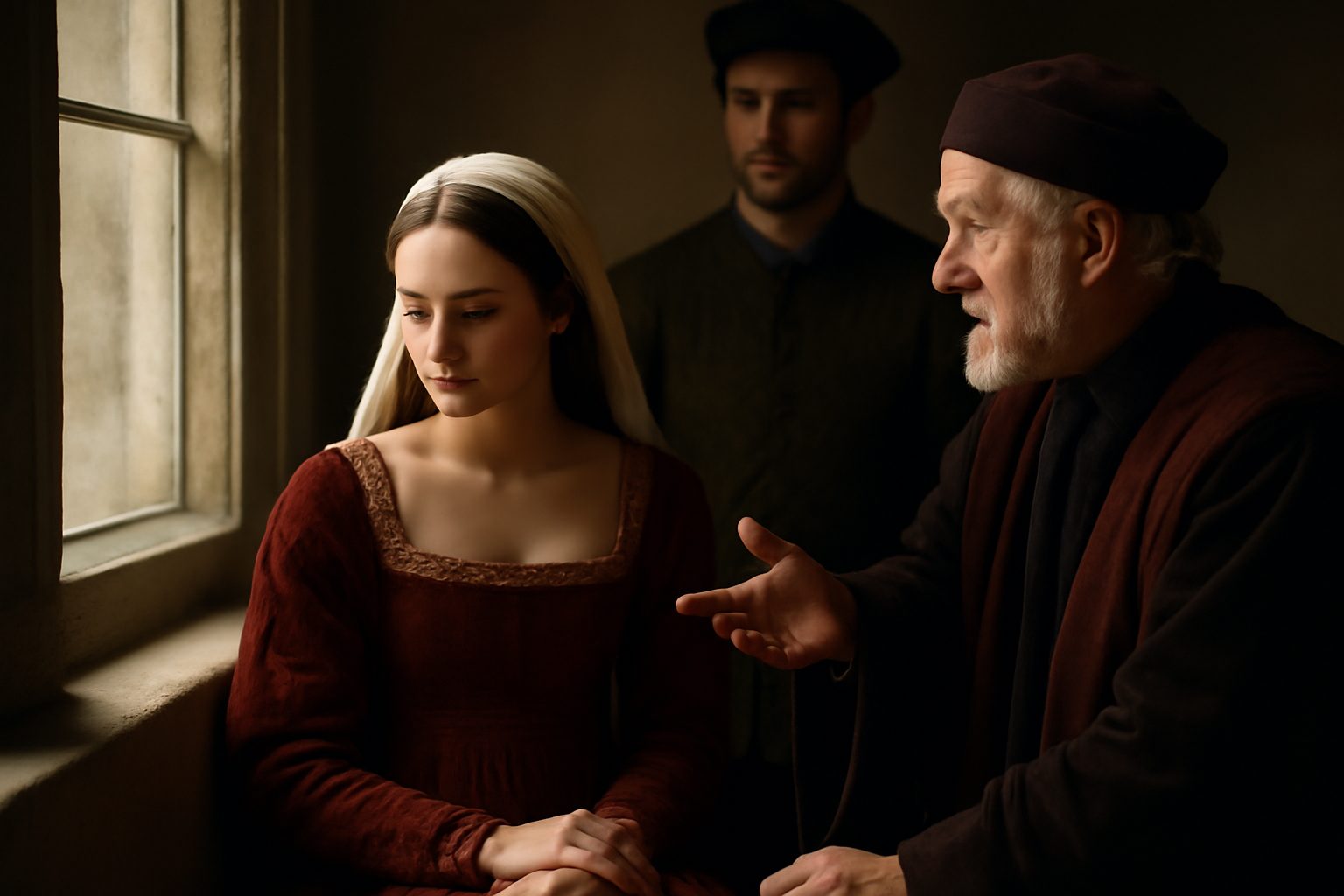
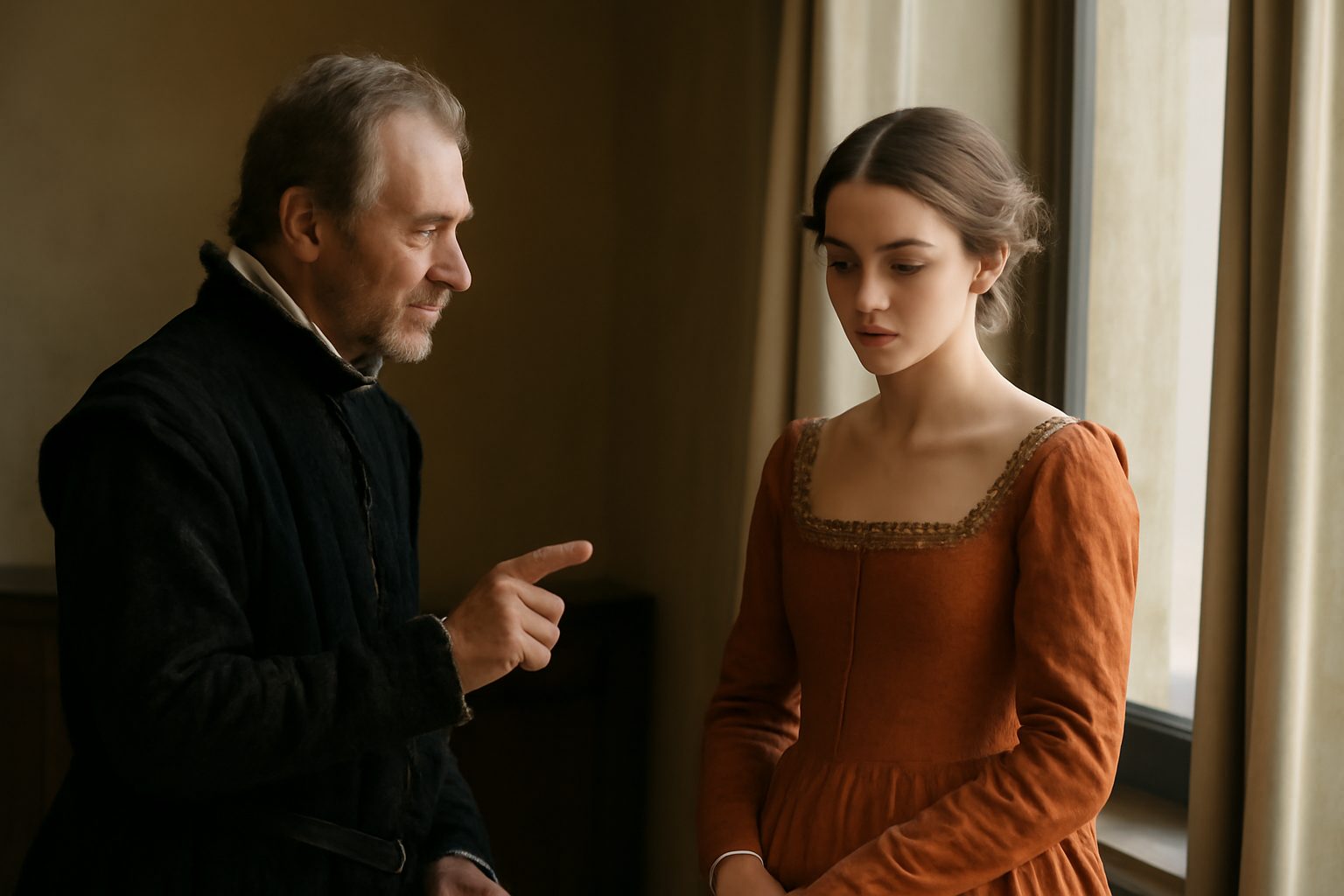
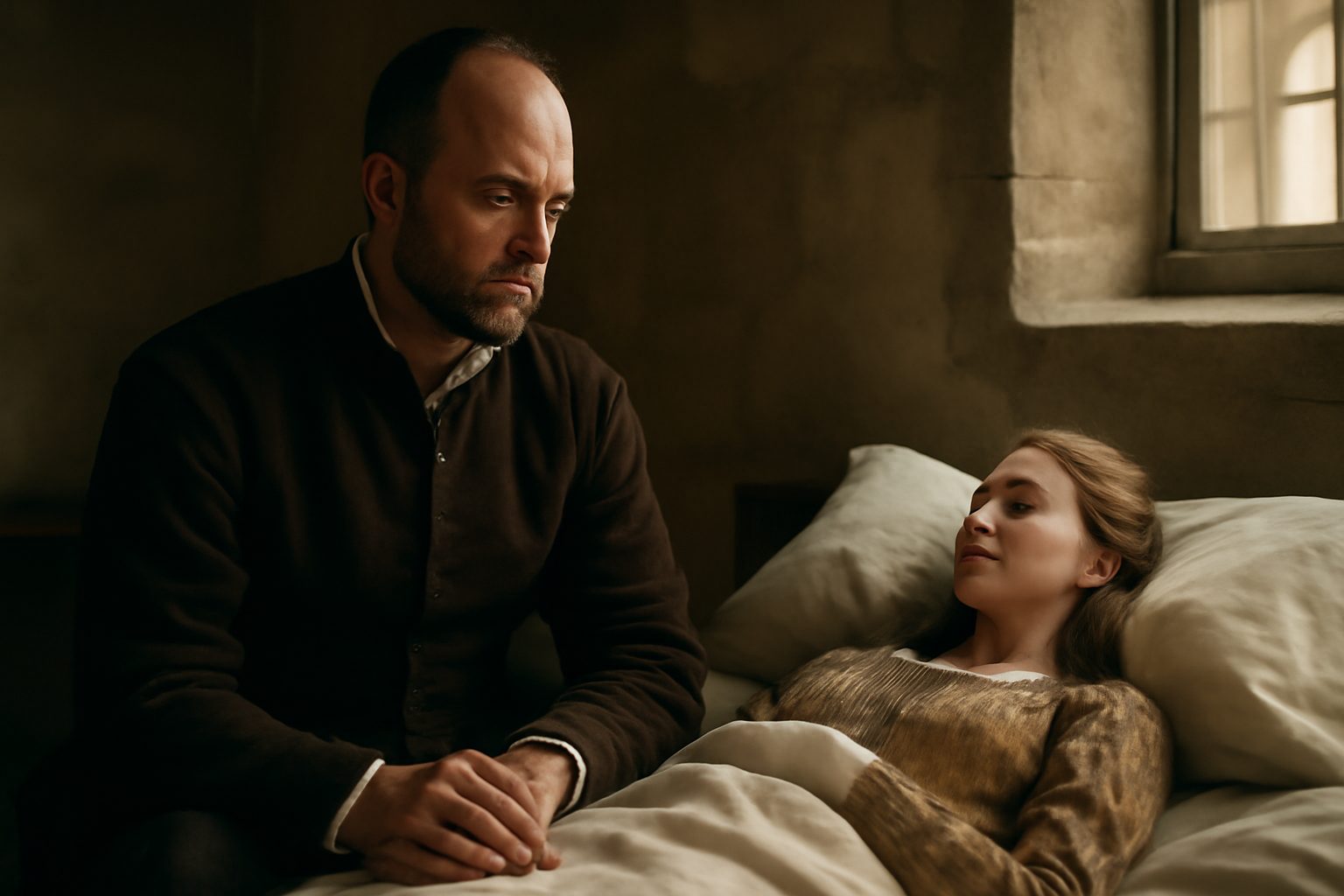
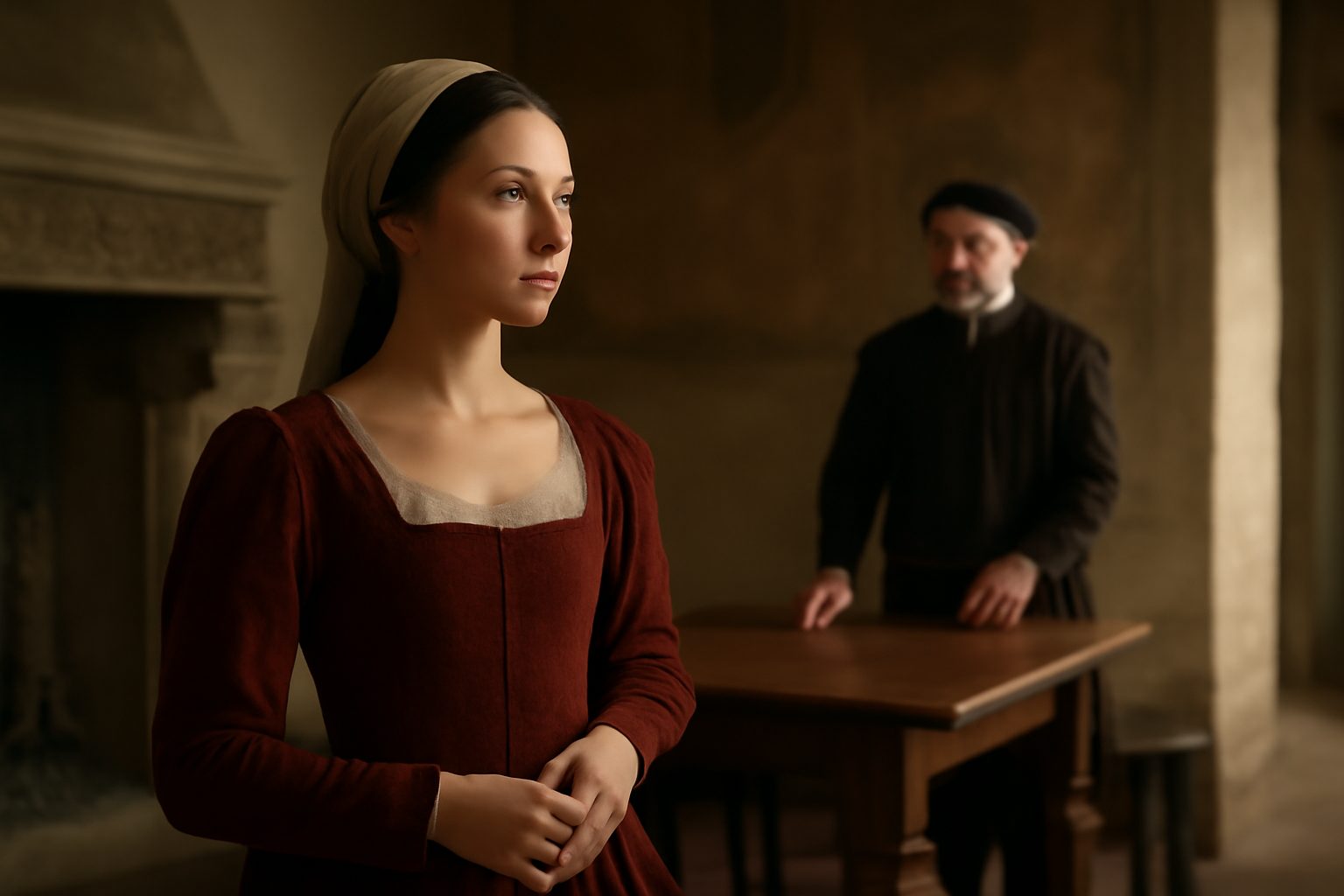
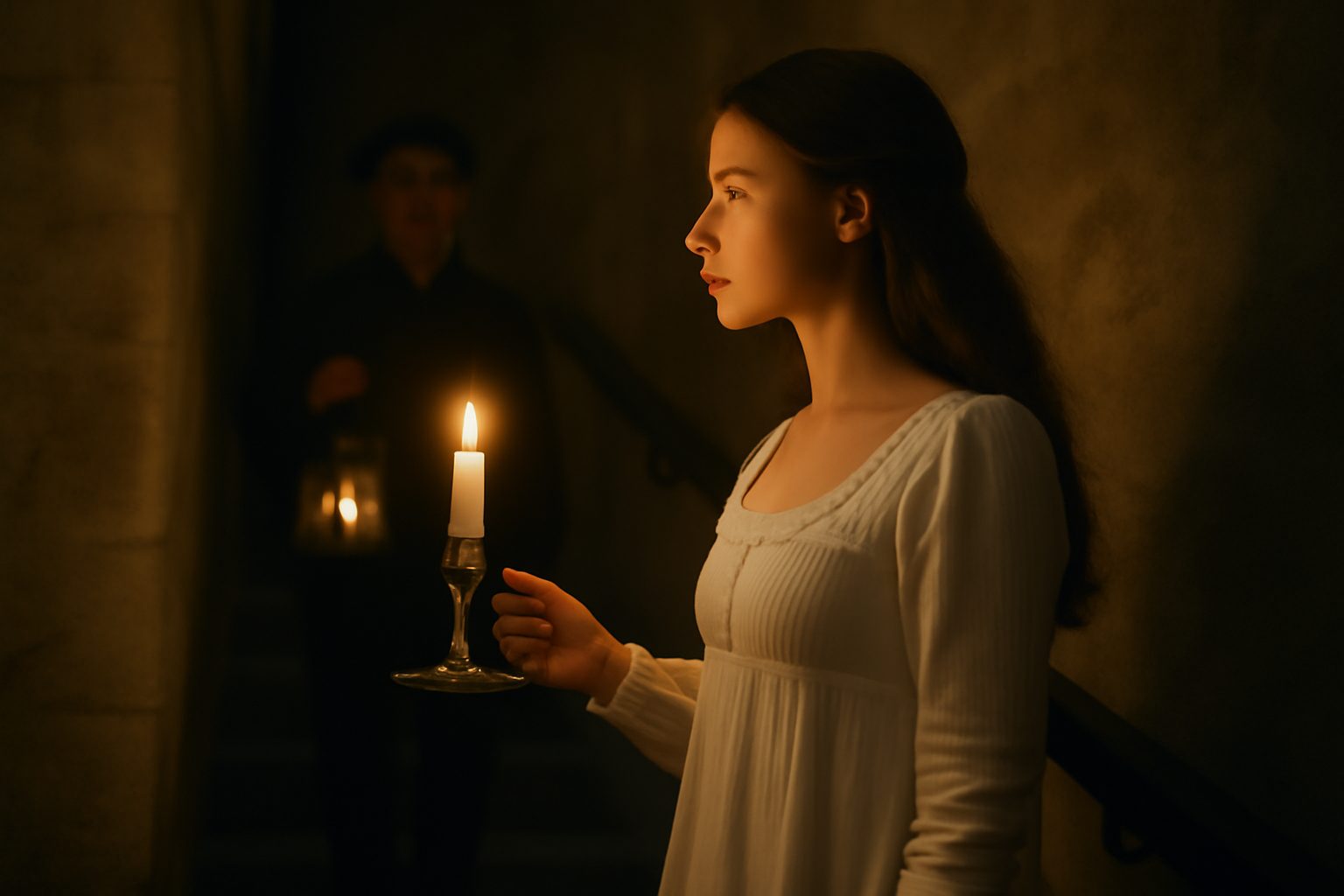
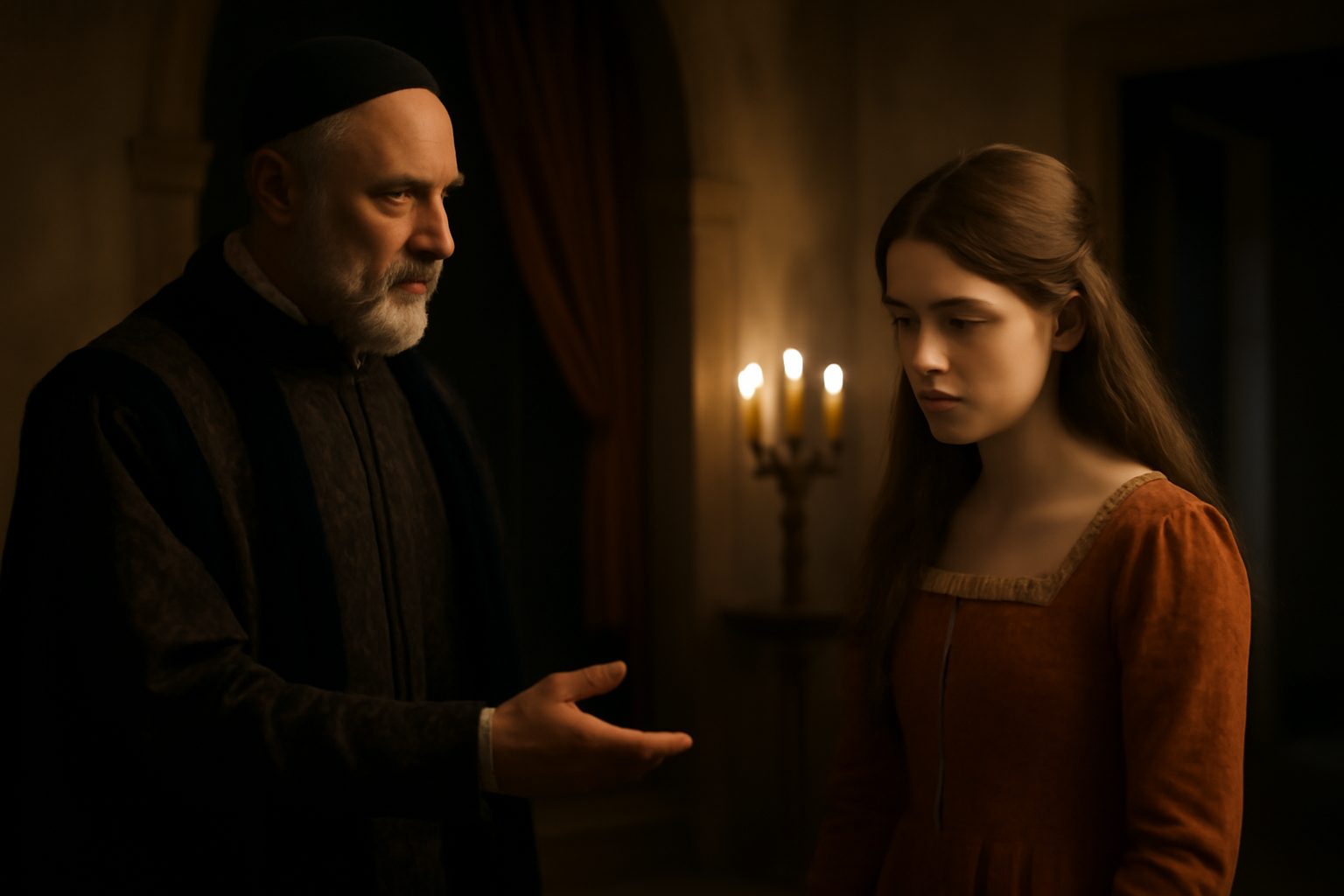
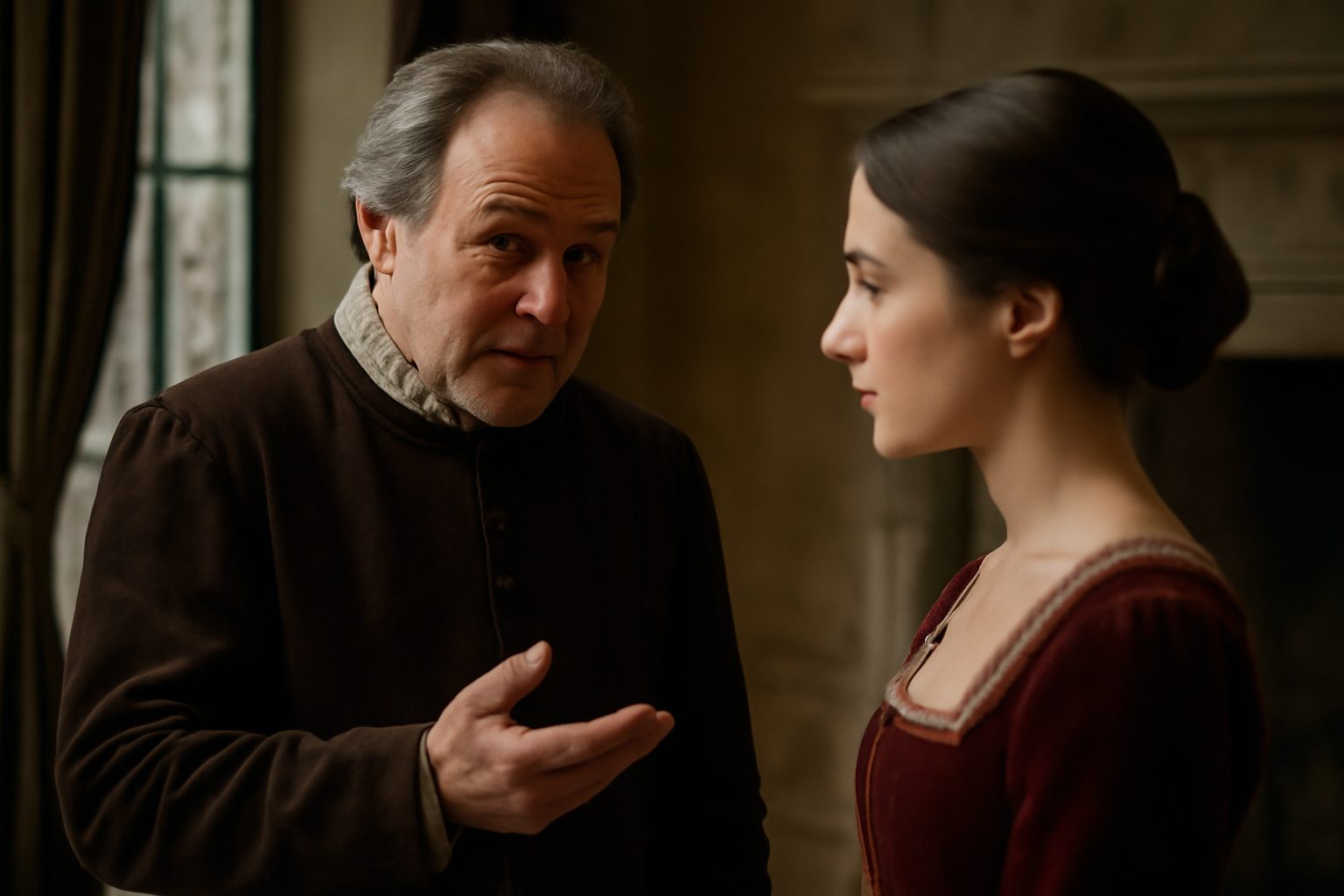
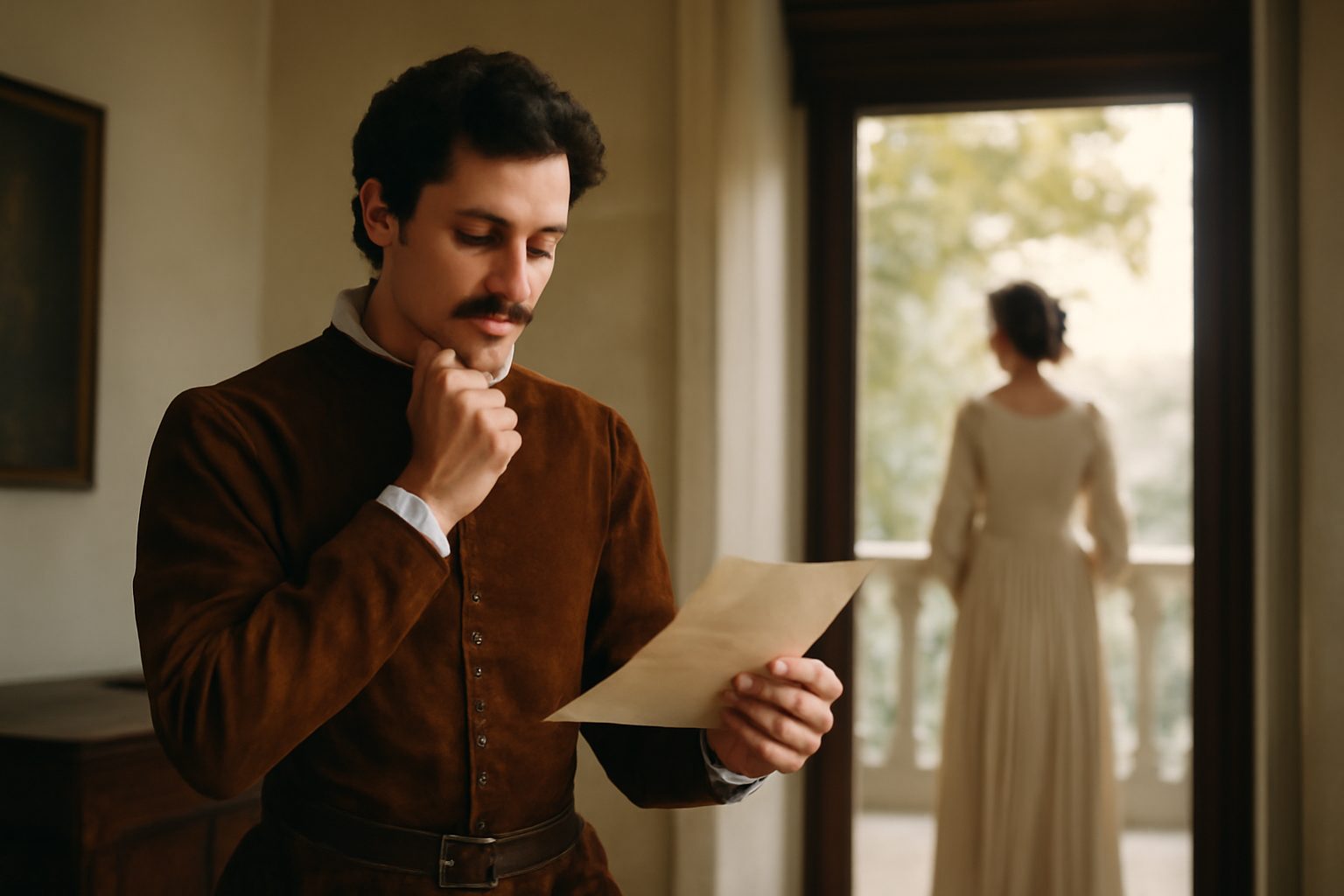
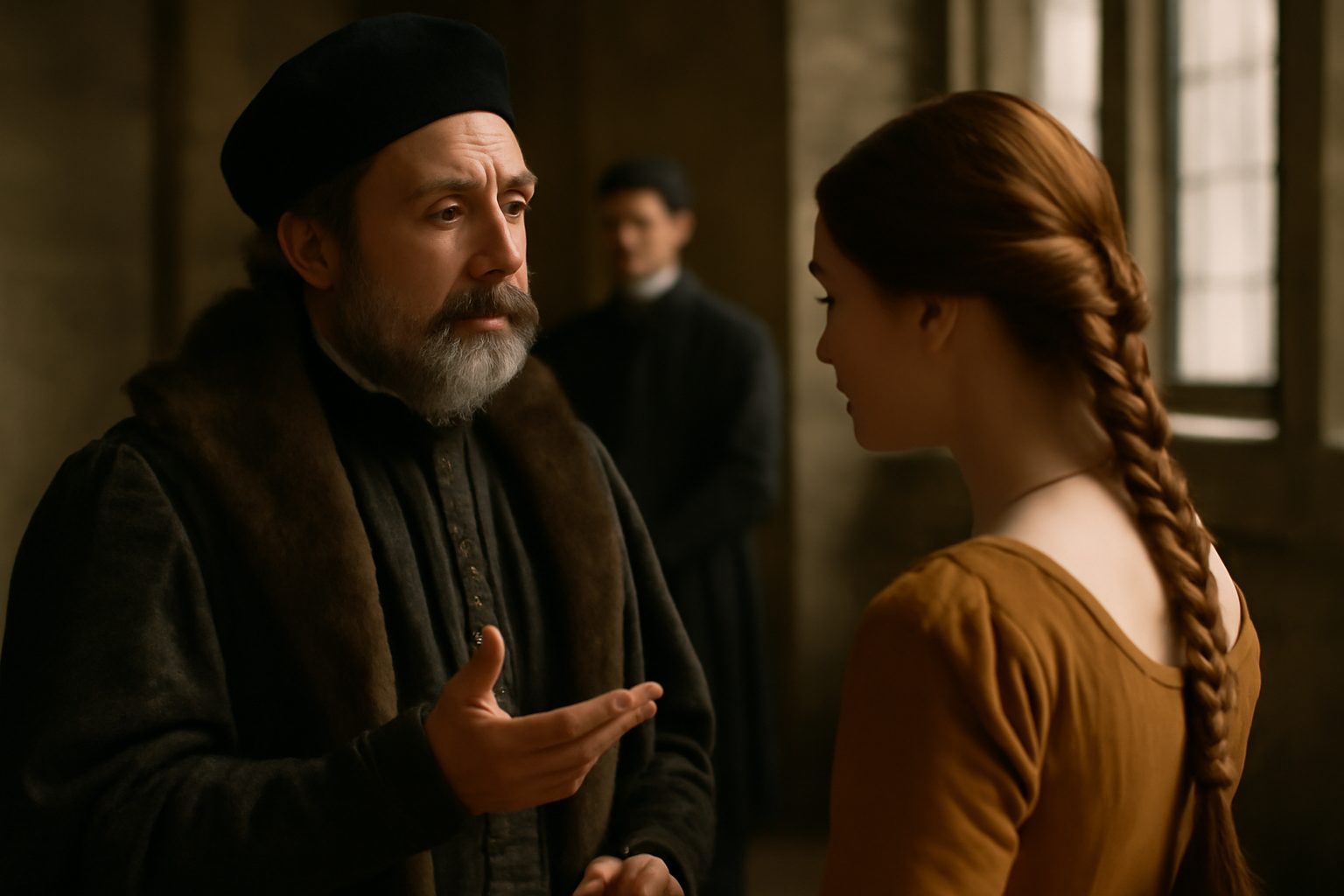
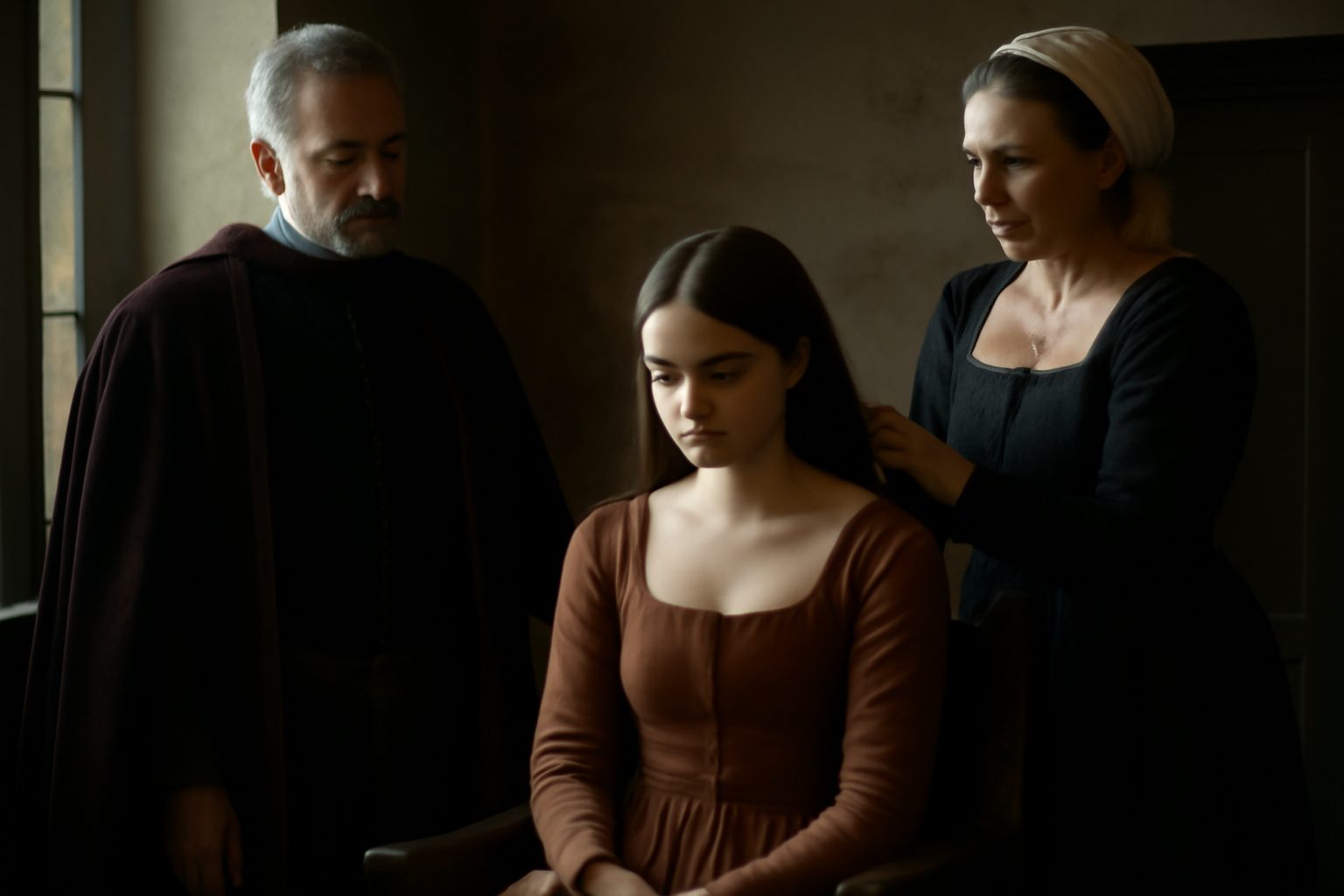
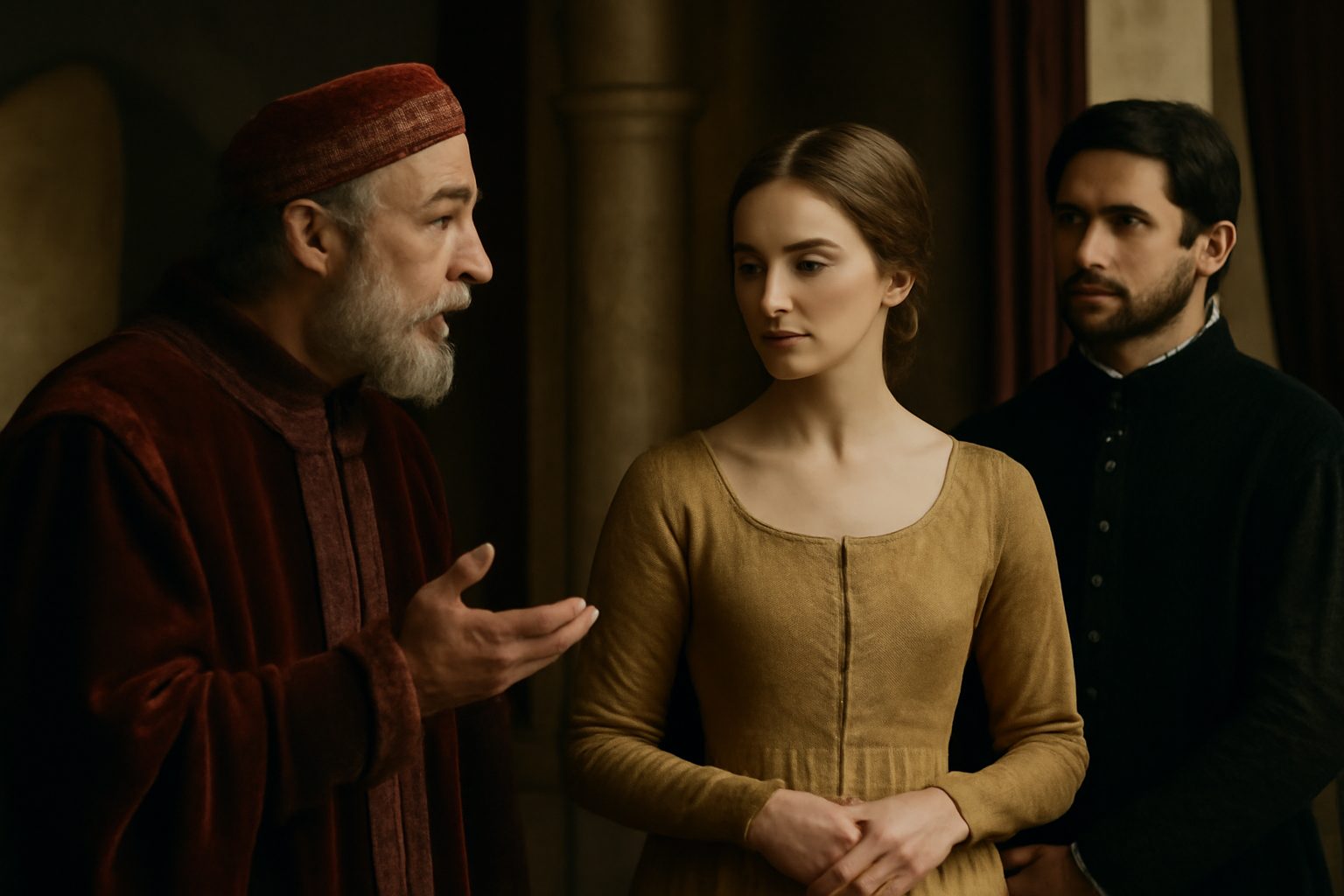
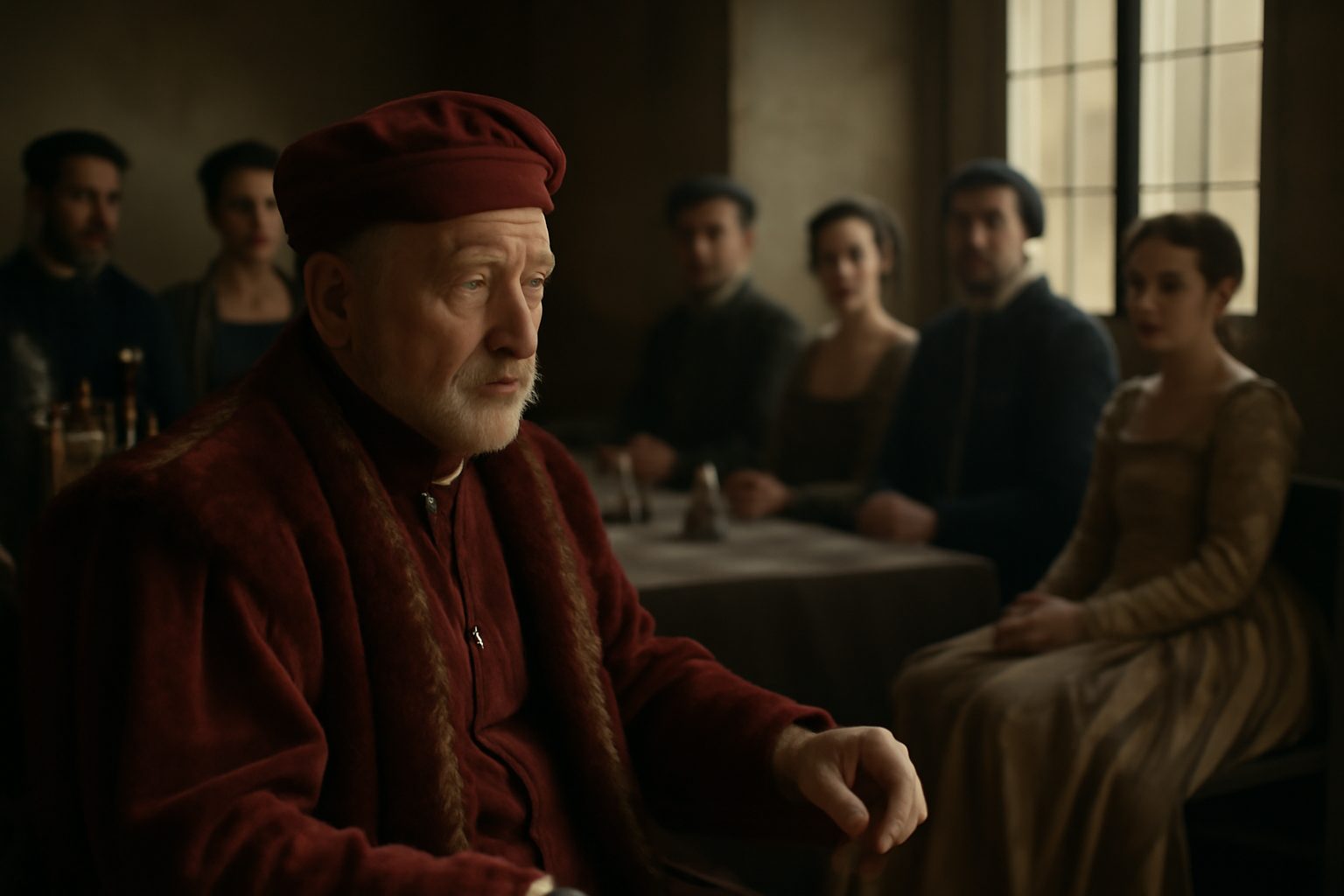
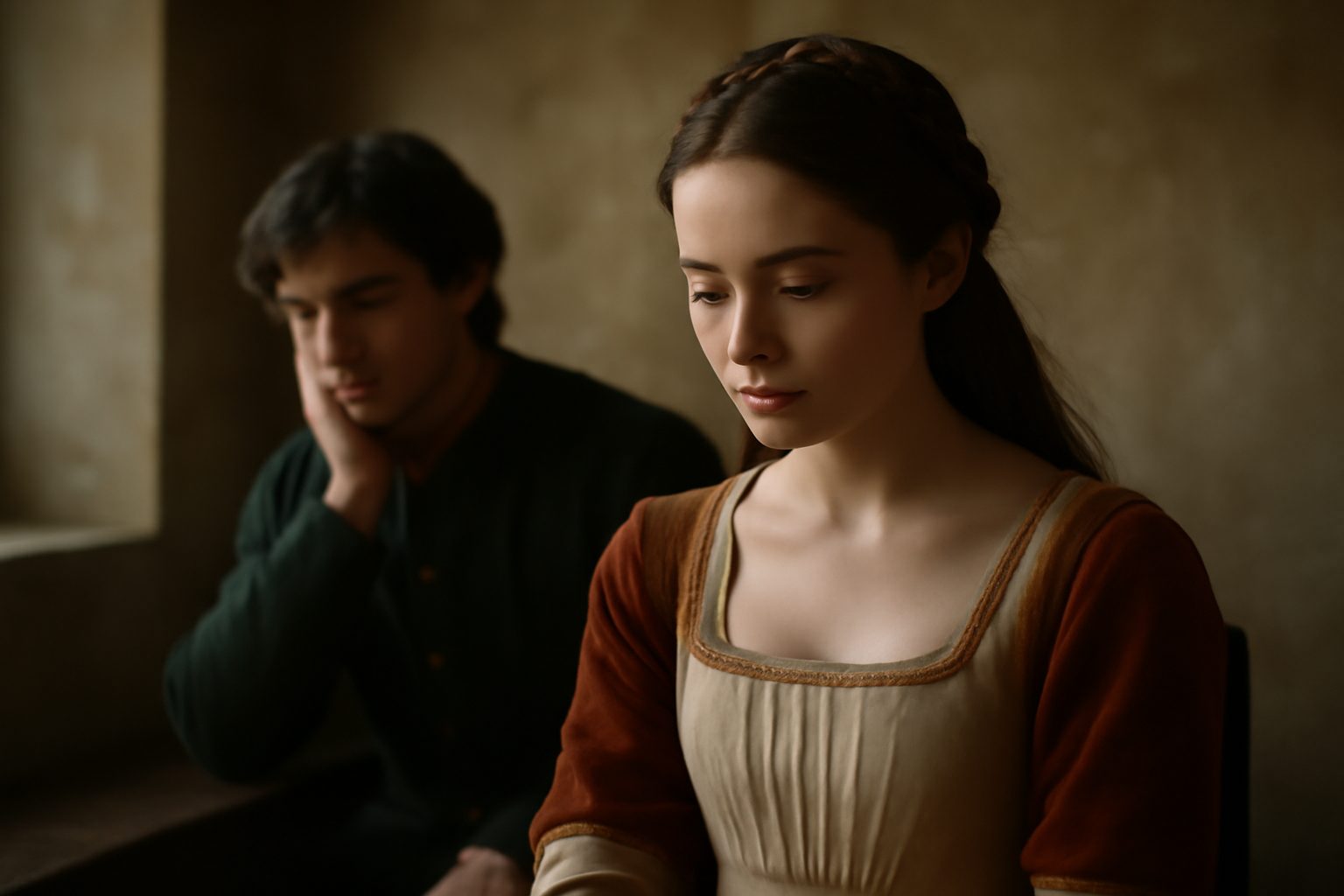
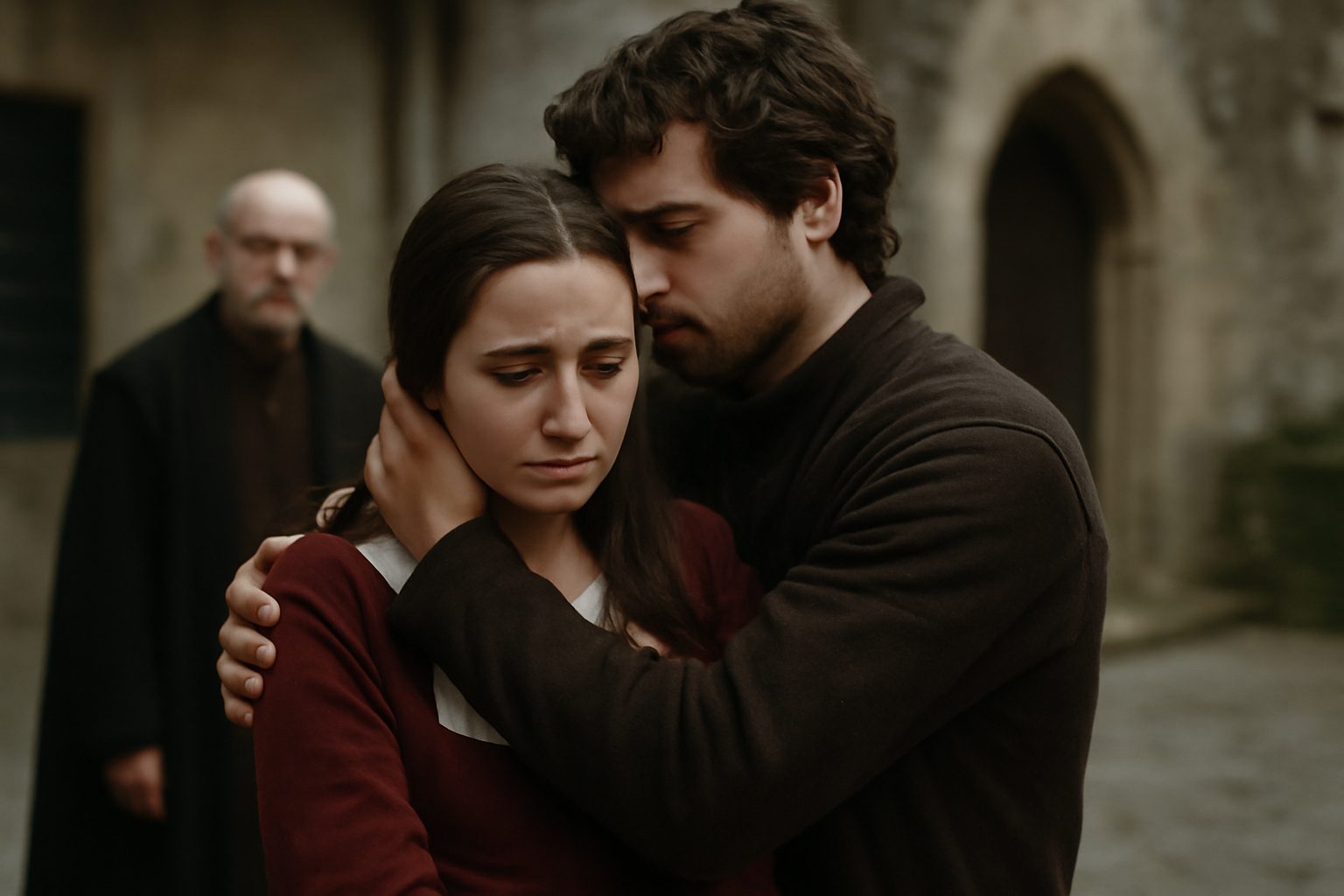
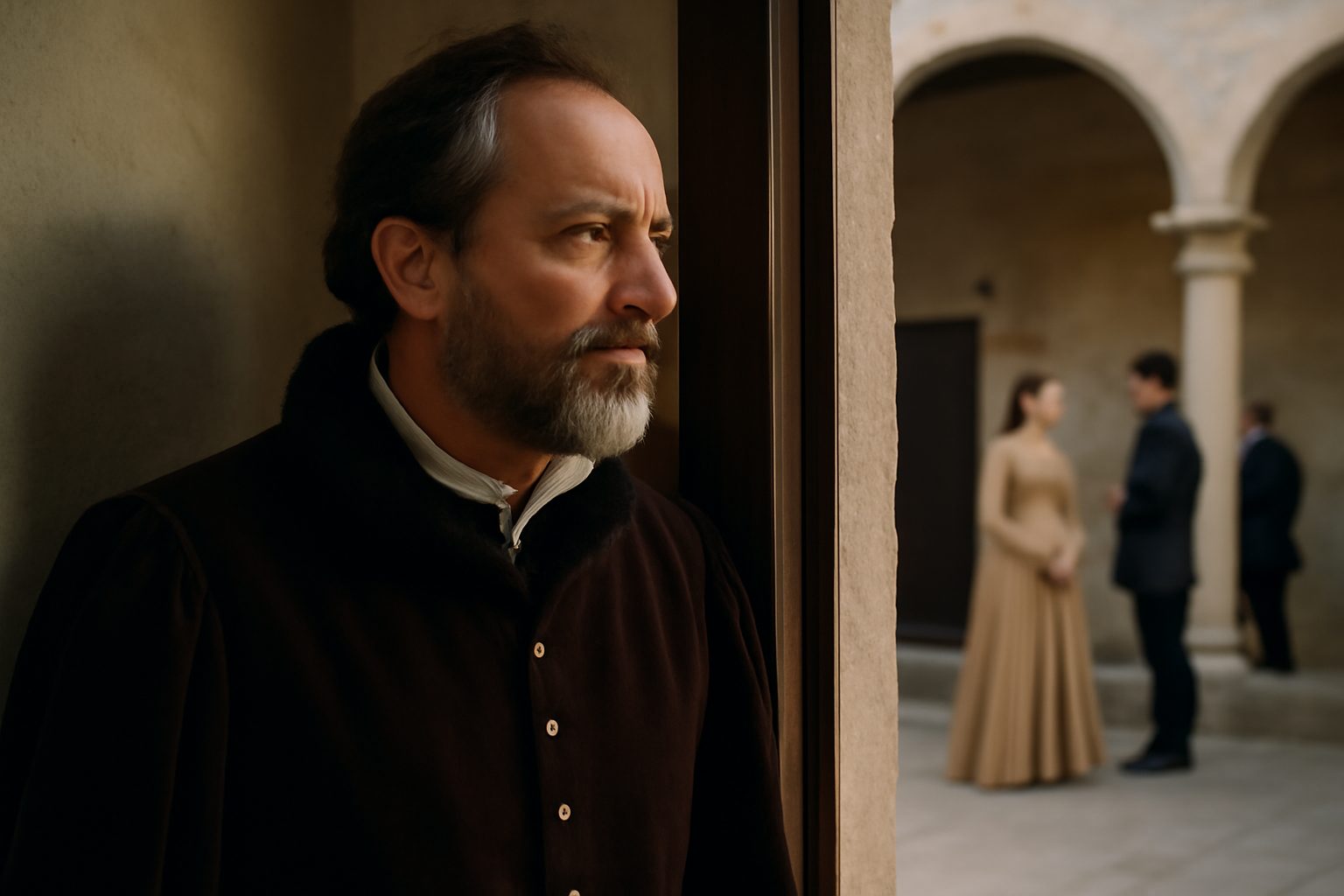
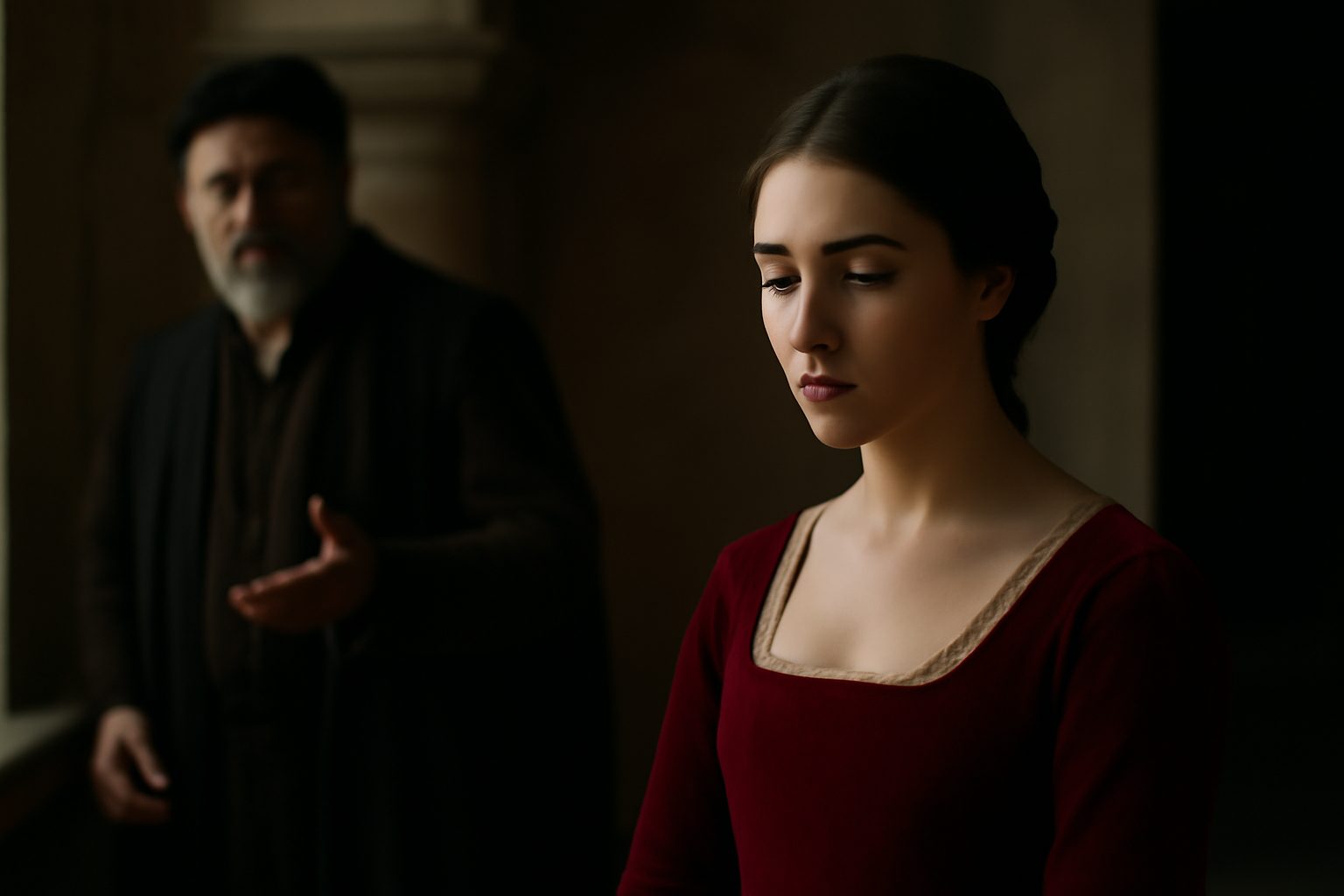
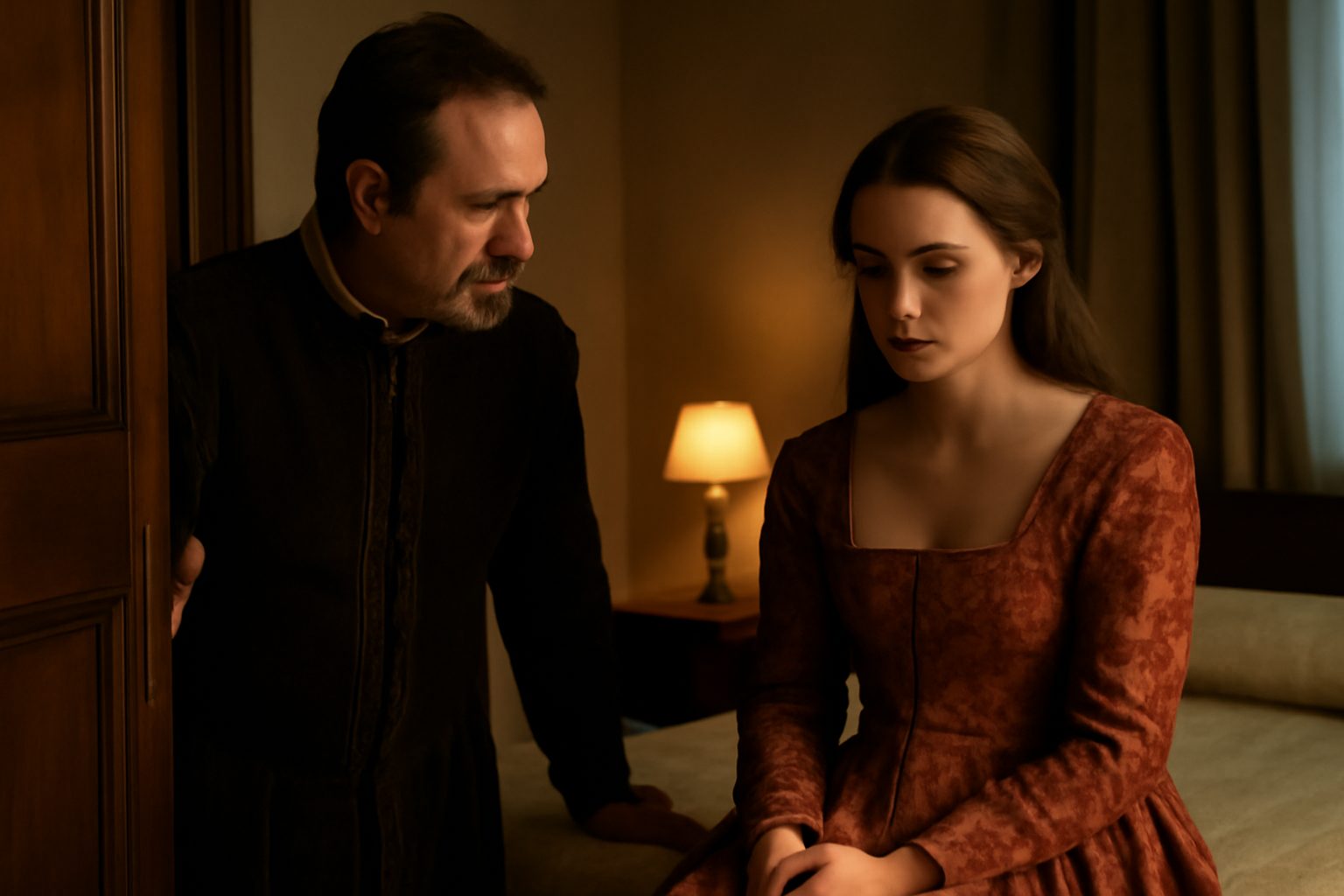
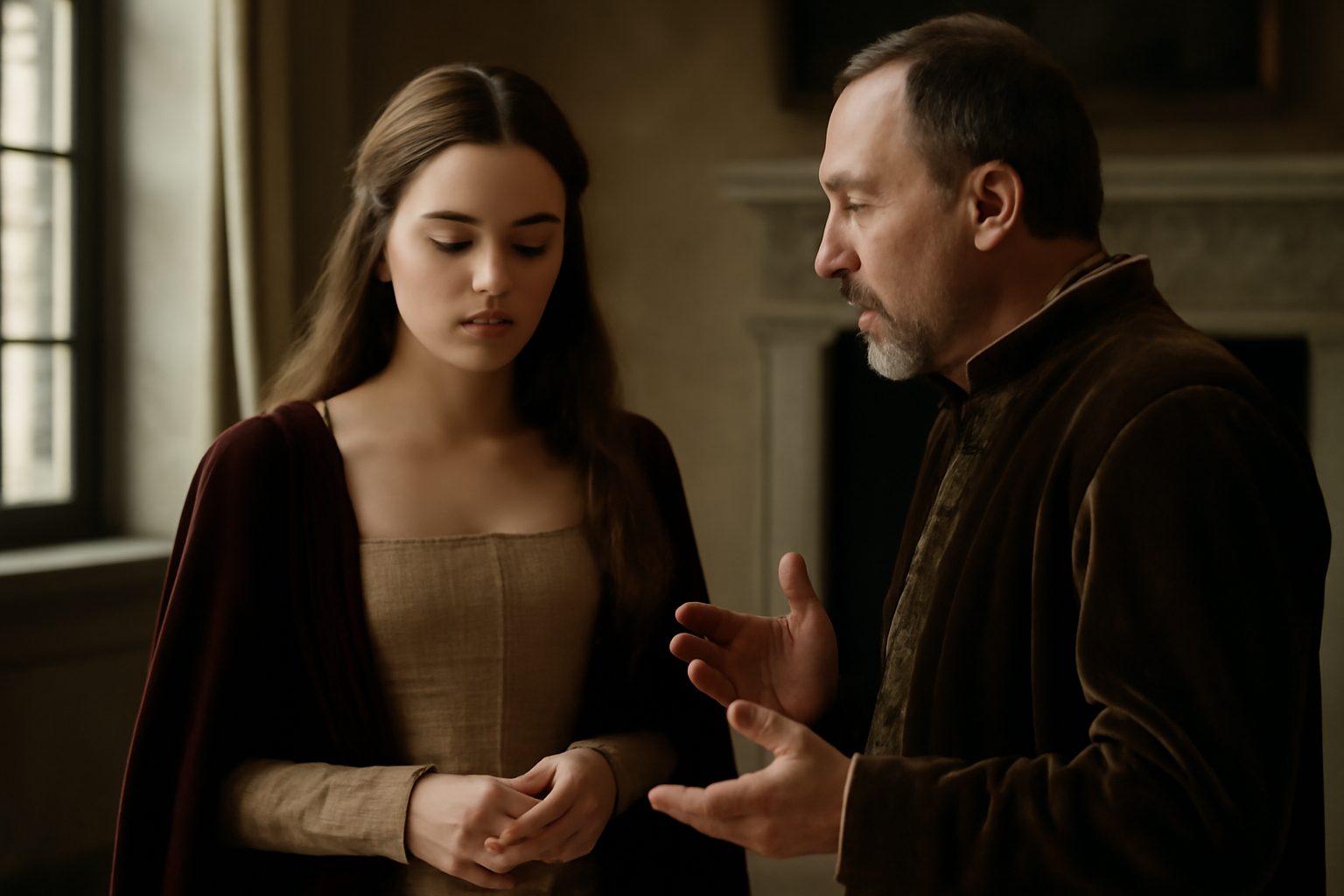
In Act 3, Scene 4 of Romeo and Juliet, Lord Capulet speaks this line while hastily arranging Juliet's marriage to Paris the following Thursday. The scene takes place late at night, shortly after Romeo has been banished for killing Tybalt, though the Capulets remain unaware of Juliet's secret marriage to Romeo. Capulet's urgency reflects his desire to resolve Juliet's grief—which he misinterprets as mourning for Tybalt—by speeding up the wedding plans.
Capulet: "That we may call it early by and by."
In modern day english, we would say:
We can say it’s still early soon.
Frequently Asked Questions
What does Capulet mean when he says they will call it early by and by?
Capulet means they will announce Juliet's wedding to Paris soon, but not right away.
Connections to other verses:
Connections to "That we may call it early by and by."
The line "That we may call it early by and by." reflects Lord Capulet's desire to hasten the wedding plans, a theme echoed throughout the scene. It connects directly to his urgency in "I will, and know her mind early to-morrow;", emphasizing his wish for prompt decisions.
Related Urgency and Time References
This sense of haste is further supported by Paris's eagerness in "My lord, I would that Thursday were to-morrow." and Capulet's agreement in "Well get you gone: o' Thursday be it, then.", both reinforcing the compressed timeline.
Contrast with Grief and Practicality
However, this urgency contrasts with the acknowledgment of recent tragedy, such as in "For, hark you, Tybalt being slain so late," and Capulet's remark in "These times of woe afford no time to woo.", highlighting the tension between mourning and expediency.
Parental Authority and Assumptions
Capulet's confidence in Juliet's compliance, noted in "Of my child's love: I think she will be ruled" and "In all respects by me; nay, more, I doubt it not.", underpins his haste, assuming her acquiescence to the early wedding.
Finality and Closure
The phrase also aligns with Capulet's decisive tone in "And there an end. But what say you to Thursday?", showcasing his push for resolution, while the late hour mentioned in "Afore me! it is so very very late," contrasts with his eagerness to label it "early" for symbolic closure.