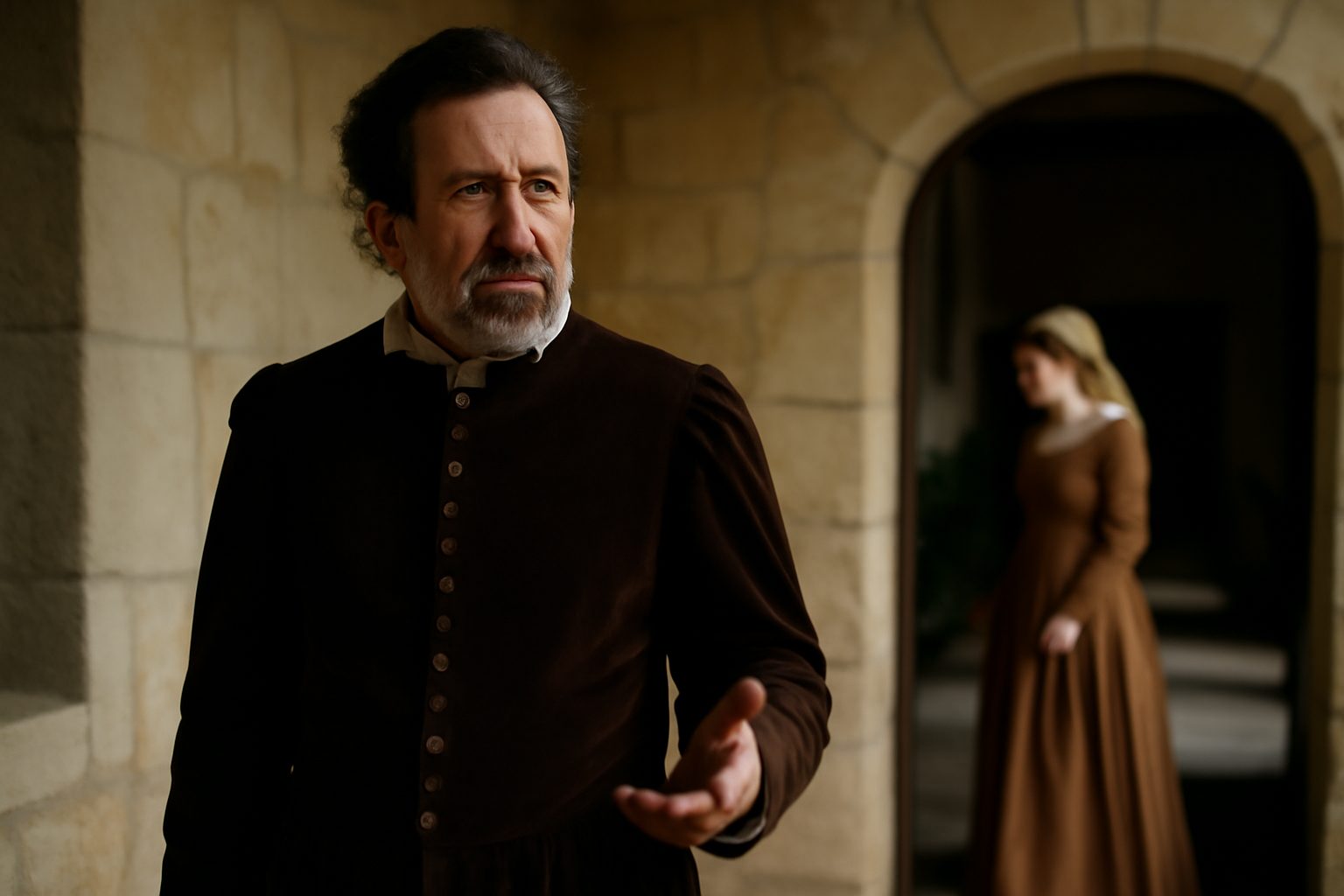
In Act 4, Scene 2 of Romeo and Juliet, Capulet speaks this line to Juliet upon her return from Friar Laurence’s cell. Unaware of her secret plan to fake her death, he chides her for being stubborn and wandering off without explanation. His tone is a mix of exasperation and relief, reflecting his concern as a father while remaining oblivious to the true gravity of her actions.
Capulet: "How now, my headstrong! where have you been gadding?"
In modern day english, we would say:
Hey, you stubborn girl, where have you been running off to?
Frequently Asked Questions
What does Capulet call Juliet in this line?
He calls her headstrong.
Connections to other verses:
Connections to "How now, my headstrong! where have you been…"
This line, spoken by Capulet to Juliet upon her return, reflects his earlier frustration with her defiance. It connects thematically to his description of her as A peevish self-will'd harlotry it is, where he chastises her stubbornness. Juliet's response in Where I have learn'd me to repent the sin / Of disobedient opposition directly addresses his accusation, showing her feigned submission.
Contextual and Emotional Shifts
Capulet's initial anger contrasts with his later joy when he believes Juliet has obeyed. This is evident when he says Why, I am glad on't; this is well: stand up:, marking a shift in his demeanor. His relief culminates in his declaration Against to-morrow: my heart is wondrous light,, showing how her compliance alleviates his earlier distress.
Plot Development and Irony
Juliet's deception drives the scene's irony, as Capulet plans the wedding with phrases like I'll have this knot knit up to-morrow morning, unaware of her true intentions. The preparations he orders, such as Sirrah, go hire me twenty cunning cooks, heighten the tension between appearance and reality, rooted in his initial confrontation with her.