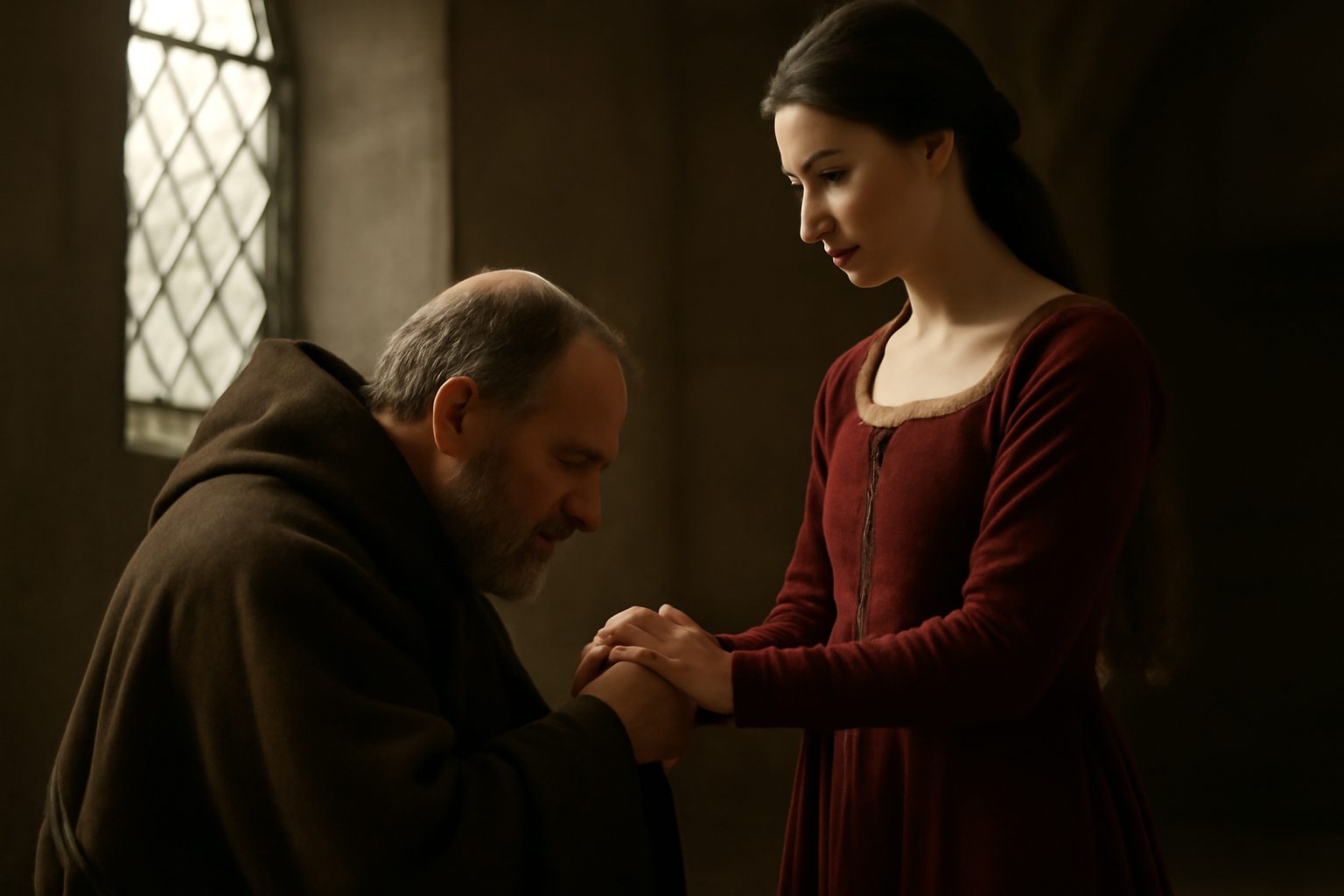
In Act 4, Scene 2 of Romeo and Juliet, Juliet returns home after secretly agreeing to marry Paris, a match arranged by her father. Speaking to her father with careful ambiguity, she claims to have shown Paris the respect and affection expected of her, while secretly plotting to avoid the marriage. This line reflects her duress as she navigates obedience to her family and her secret loyalty to Romeo.
Juliet: "And gave him what becomed love I might,"
In modern day english, we would say:
I gave him as much love as I could.
Frequently Asked Questions
What is Juliet saying about her love in this line?
Juliet is saying she gave Romeo as much love as was proper or fitting for their relationship.
Connections to other verses:
Connections to "And gave him what becomed love I might,"
This line, spoken by Juliet upon her return from Friar Laurence's cell, represents a pivotal moment of deception where she feigns obedience to her parents' wishes. It connects thematically and narratively with several other verses in Act 4, Scene 2.
Deceptive Compliance and Parental Approval
Juliet's claim of giving Paris "what becomed love I might" directly follows her father's initial harsh judgment of her as "A peevish self-will'd harlotry." Her apparent change of heart leads to Capulet's joyful exclamation "Why, I am glad on't; this is well: stand up" and his declaration that "this same wayward girl is so reclaim'd."
Friar Laurence's Involvement
Juliet's actions stem from her meeting with the Friar, as she states "I met the youthful lord at Laurence' cell." This connection is reinforced when Capulet praises "this reverend holy friar" and notes "Our whole city is much bound to him," unaware of the Friar's actual role in the deception.
The False Reconciliation
Juliet's performance of obedience includes begging "pardon, I beseech you" and promising "Henceforward I am ever ruled by you." This leads directly to Capulet's decision to move the wedding forward, declaring "I'll have this knot knit up to-morrow morning" and sending for Paris with "Send for the county; go tell him of this."
Ironic Celebration
The scene concludes with Capulet's joyful preparations for the wedding that will never happen, as he commands "Ay, marry, go, I say, and fetch him hither" and expresses that "my heart is wondrous light" while assuring everyone "all things shall be well, I warrant thee"—creating dramatic irony against Juliet's actual desperate circumstances.