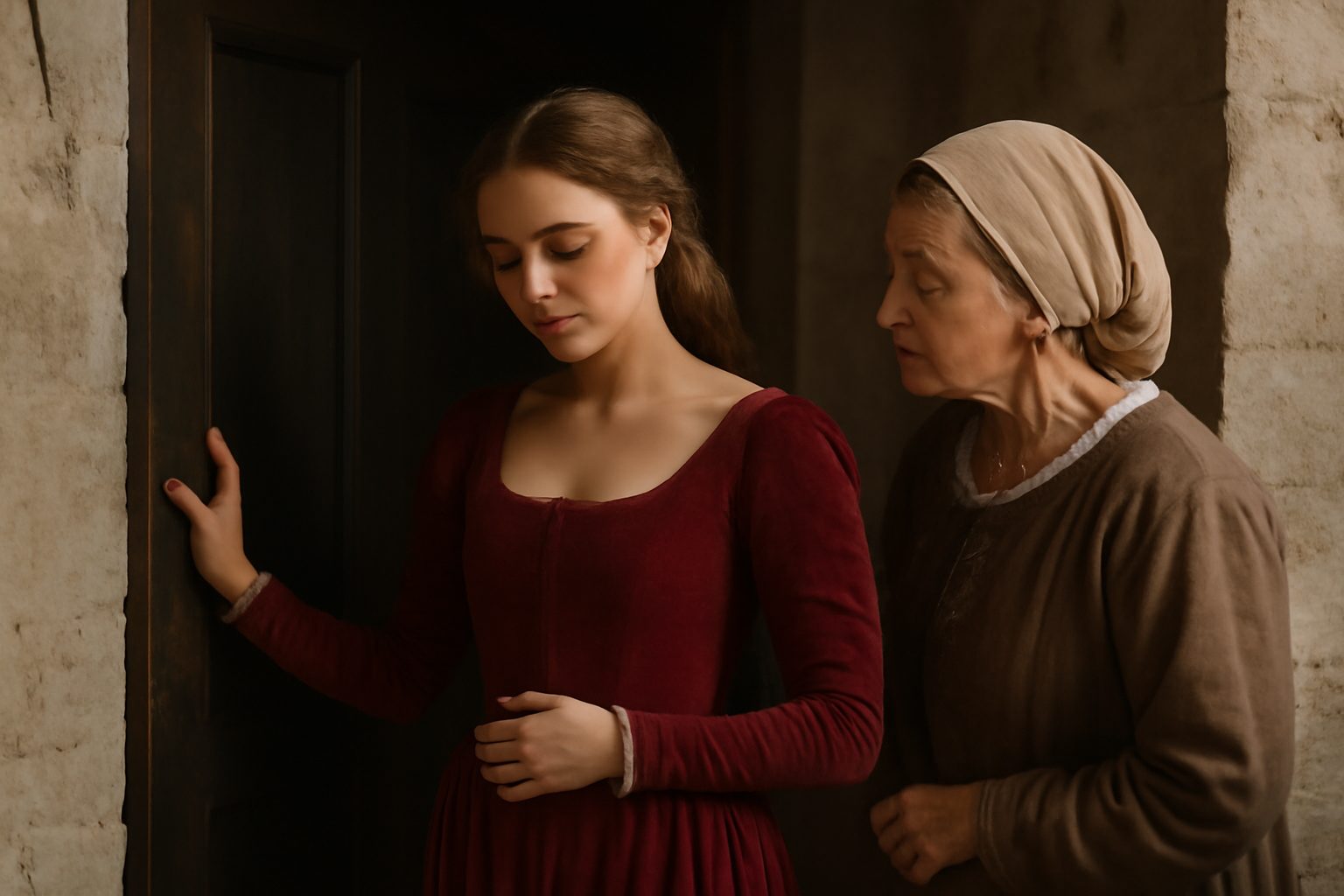
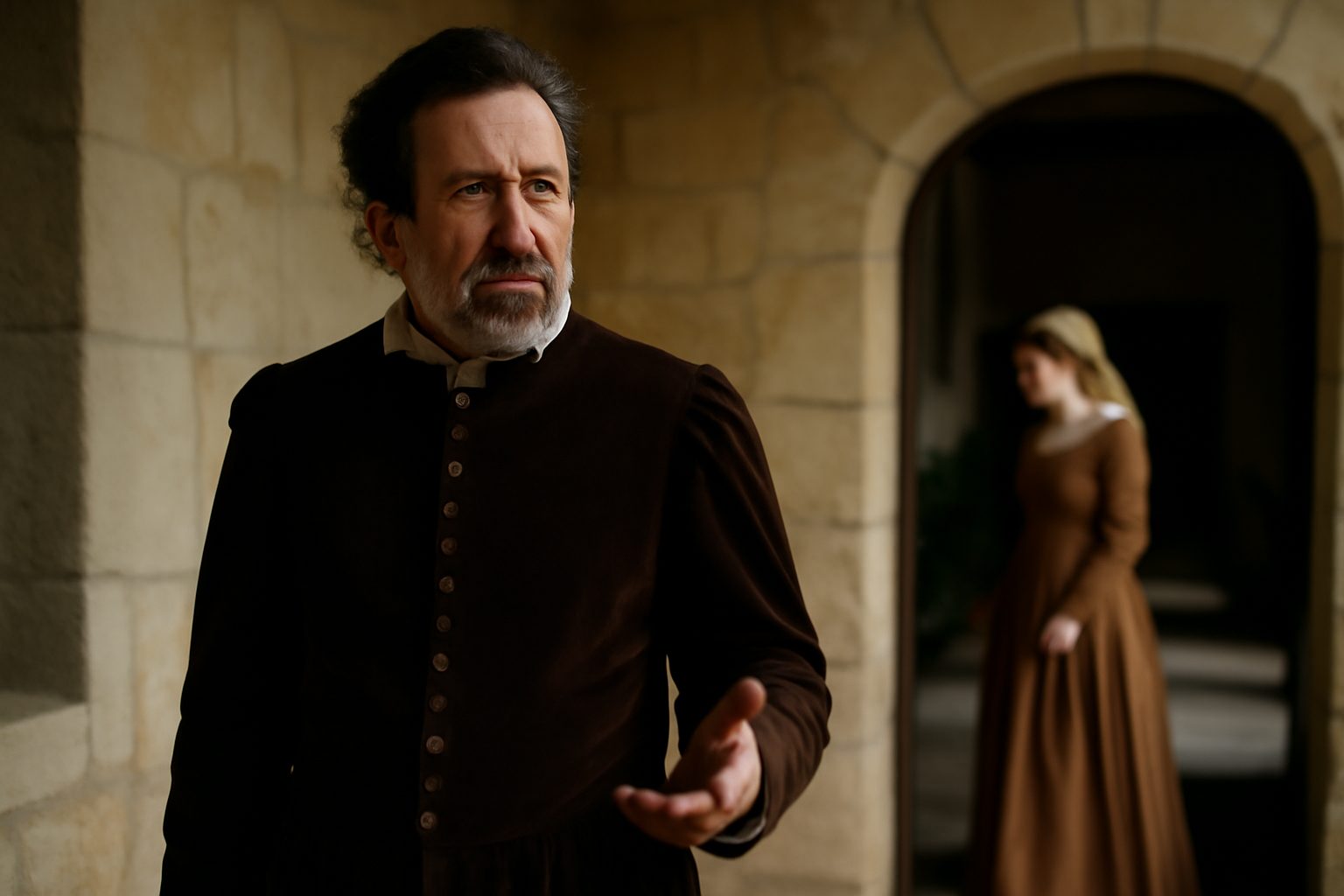
In Act 4, Scene 2 of Romeo and Juliet, Juliet returns home after secretly marrying Romeo and pretending to agree to marry Paris. Her father, Lord Capulet, is overjoyed by her apparent obedience and urges the Nurse to prepare for the wedding. When the Nurse responds with playful reluctance, Juliet cautions her not to cross the line of propriety, masking her true feelings beneath a facade of modesty.
Juliet: "Not step o'er the bounds of modesty."
In modern day english, we would say:
Don’t go beyond what’s considered proper or appropriate.
In this scene, Juliet is carefully avoiding suspicion while secretly planning to fake her death, so she’s being cautious not to act in a way that would seem unusual or disrespectful.
Frequently Asked Questions
What is Juliet saying about her behavior in this line?
Juliet is saying she will not act in a way that is improper or goes beyond what is considered appropriate.
Connections to other verses:
Connections to "Not step o'er the bounds of modesty"
In Act 4 Scene 2, line 27, Juliet's statement "Not step o'er the bounds of modesty" reflects her feigned submission to her father's will. This declaration of proper conduct directly contrasts with Capulet's earlier characterization of her as "my headstrong" and "disobedient opposition", showing her strategic shift in behavior.
Related Expressions of Compliance
This performative modesty connects to her subsequent declaration "Henceforward I am ever ruled by you", reinforcing her false submission. Her supposed repentance for "the sin of disobedient opposition" further develops this theme of fabricated conformity.
Friar Laurence's Role
Juliet attributes her change to "holy Laurence" where she learned repentance, making her modesty claim part of a carefully constructed narrative. Capulet's recognition that "this same wayward girl is so reclaim'd" shows how successfully she has presented this image of modesty.
Contrast with True Feelings
The modesty Juliet professes stands in stark contrast to her earlier actions at Laurence's cell where she actually met Paris while planning her deception. Her claim to have "gave him what becomed love I might" further develops this dichotomy between appearance and reality.