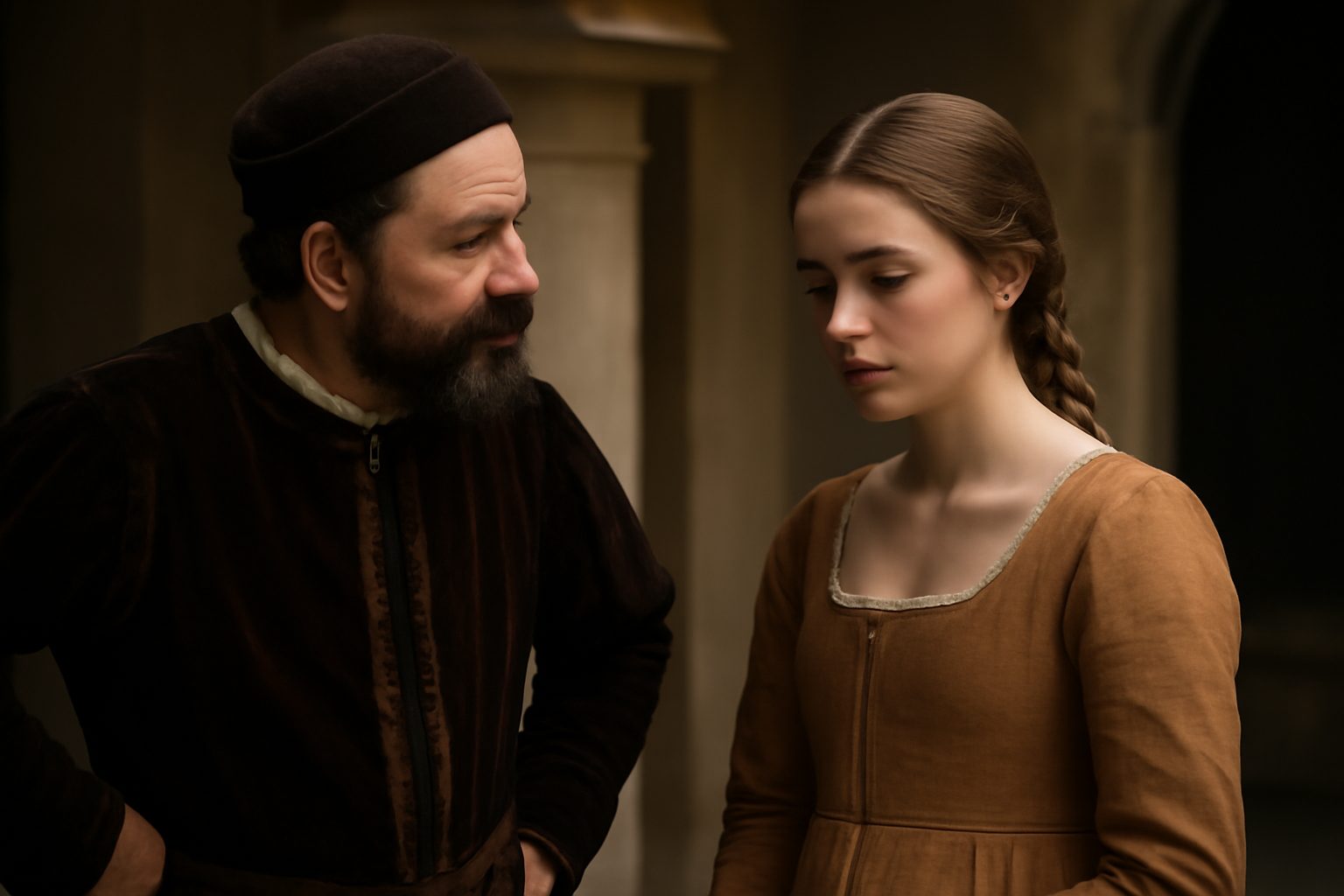
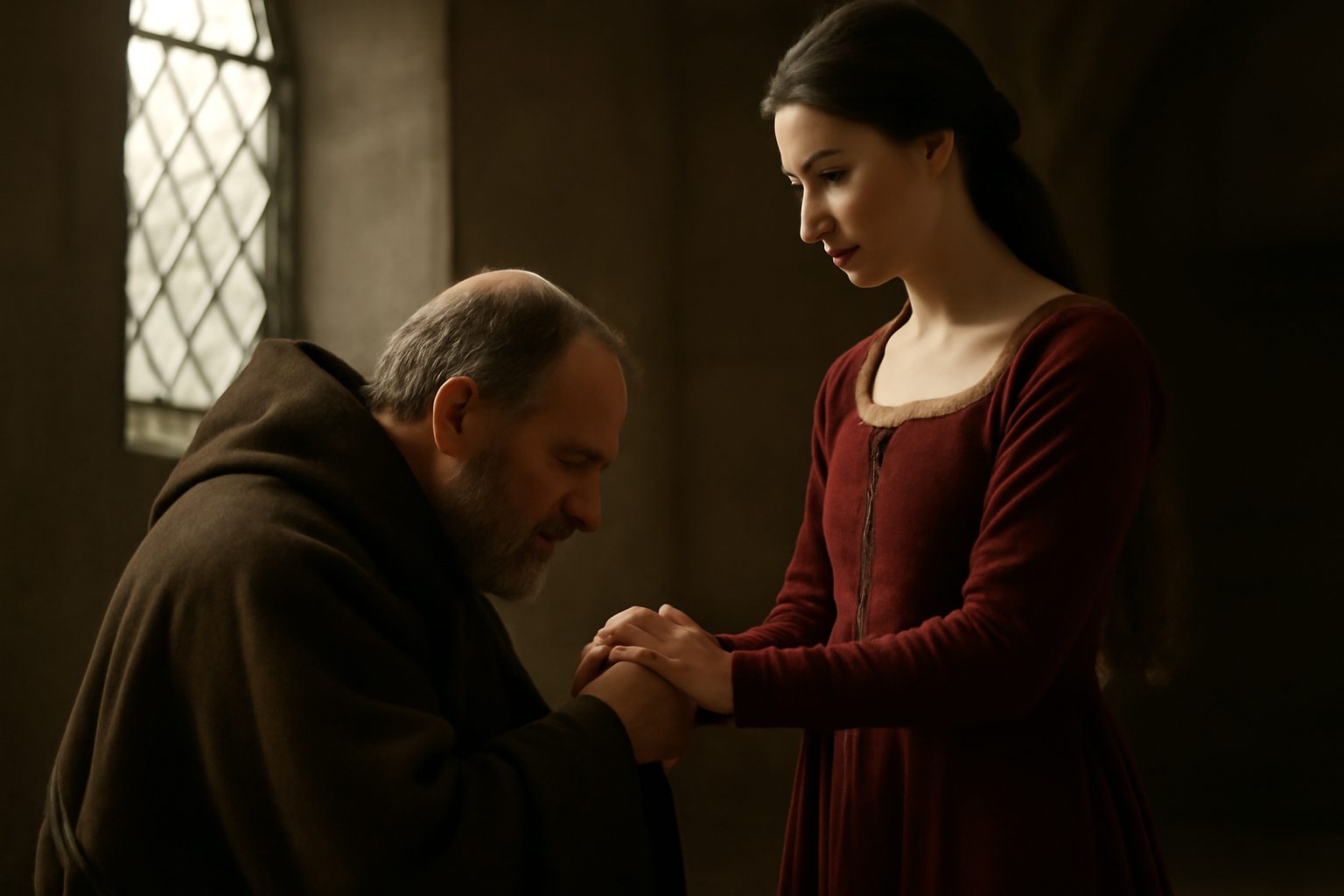
In Act 4, Scene 2 of Romeo and Juliet, Juliet returns home after secretly agreeing to marry Paris, a plan orchestrated by Friar Laurence to reunite her with Romeo. Her father, Lord Capulet, is overjoyed by her apparent obedience and prepares for the wedding, unaware of her true intentions. The line is spoken by Juliet as she kneels before her father, pretending to repent for her earlier defiance while secretly masking her desperation.
Juliet: "And beg your pardon: pardon, I beseech you!"
In modern day english, we would say:
I’m sorry, please forgive me—I’m begging you to forgive me!
Frequently Asked Questions
What is Juliet asking for in this line from Act 4 Scene 2?
Juliet is asking for forgiveness or pardon from someone.
Connections to other verses:
Connections to "And beg your pardon: pardon, I beseech you!"
This line, spoken by Juliet as she kneels before her father, represents a dramatic shift in her behavior and connects thematically and dramatically with several other verses in the scene.
Direct Context and Character Development
Juliet's plea for pardon follows immediately after her declaration "By holy Laurence to fall prostrate here", showing her performing the act of submission she describes. This moment of feigned contrition directly contrasts with Capulet's earlier characterization of her as "A peevish self-will'd harlotry", making her apparent transformation all the more striking to both her father and the audience.
Parental Response and Irony
Capulet's delighted reaction "Why, I am glad on't; this is well: stand up" shows how completely he is deceived by Juliet's performance. This moment of false reconciliation is immediately followed by his triumphant declaration "Since this same wayward girl is so reclaim'd", creating dramatic irony as the audience knows Juliet's submission is part of her desperate plan to avoid marrying Paris.
Structural and Thematic Connections
Juliet's feigned obedience here contrasts sharply with her earlier defiance, which Capulet had described as "disobedient opposition". Her subsequent promise "Henceforward I am ever ruled by you" completes this performance of transformation, convincing Capulet to accelerate the wedding preparations to "I'll have this knot knit up to-morrow morning".
Dramatic Irony and Foreshadowing
The scene's closing lines, particularly Capulet's "Against to-morrow: my heart is wondrous light" and his assurance that "all things shall be well, I warrant thee", are heavily ironic in light of Juliet's deception and the tragic events that will follow the next day.