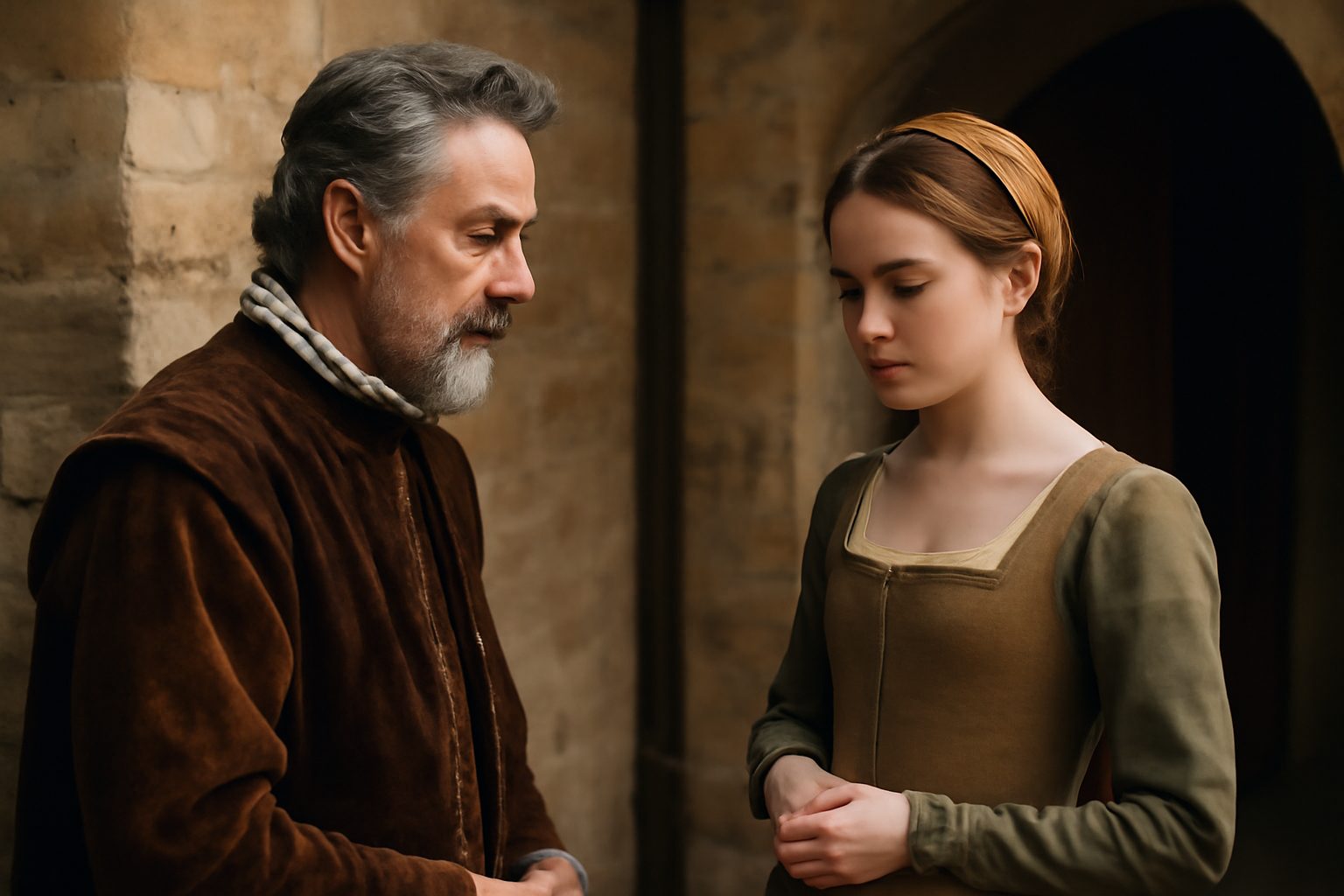
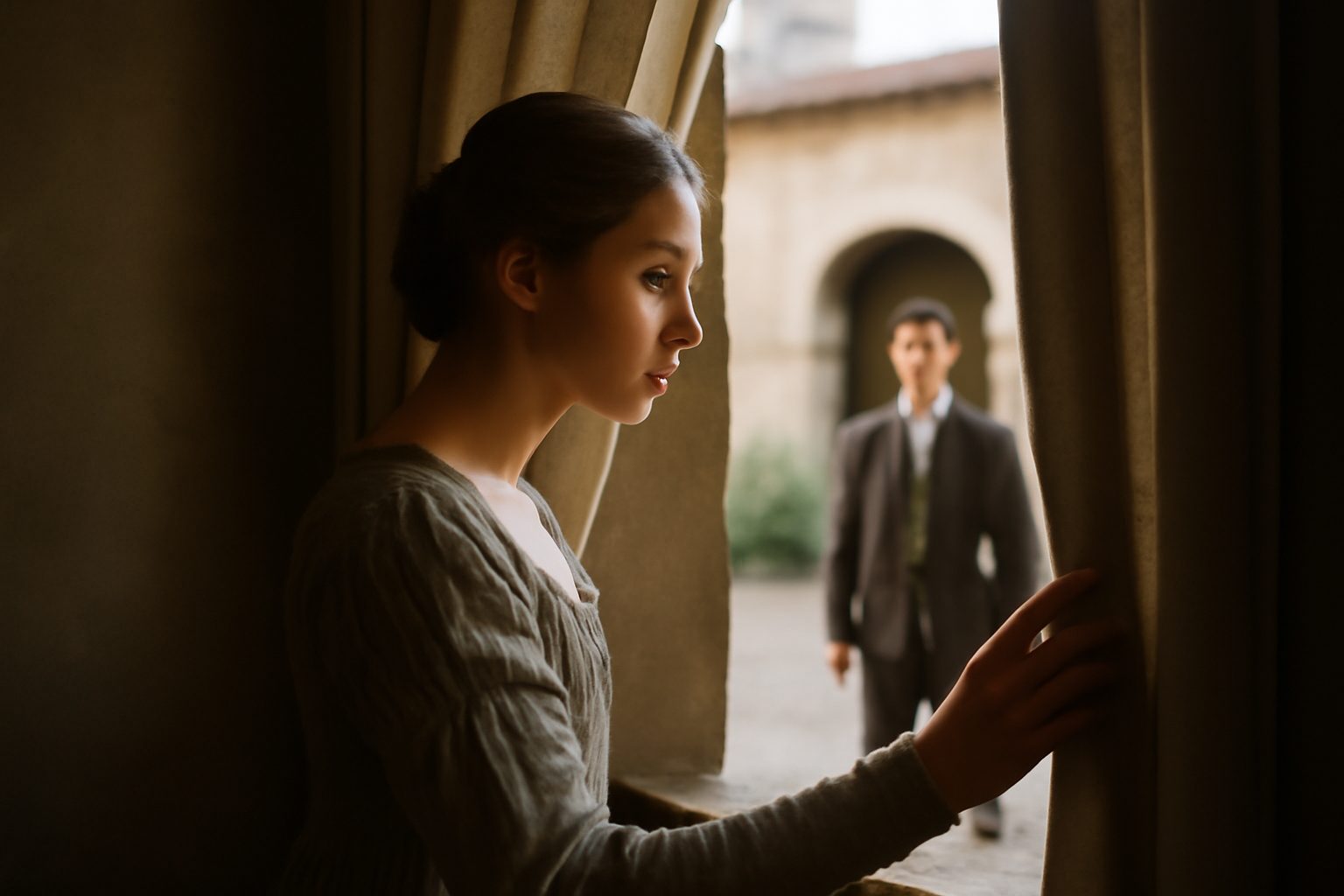
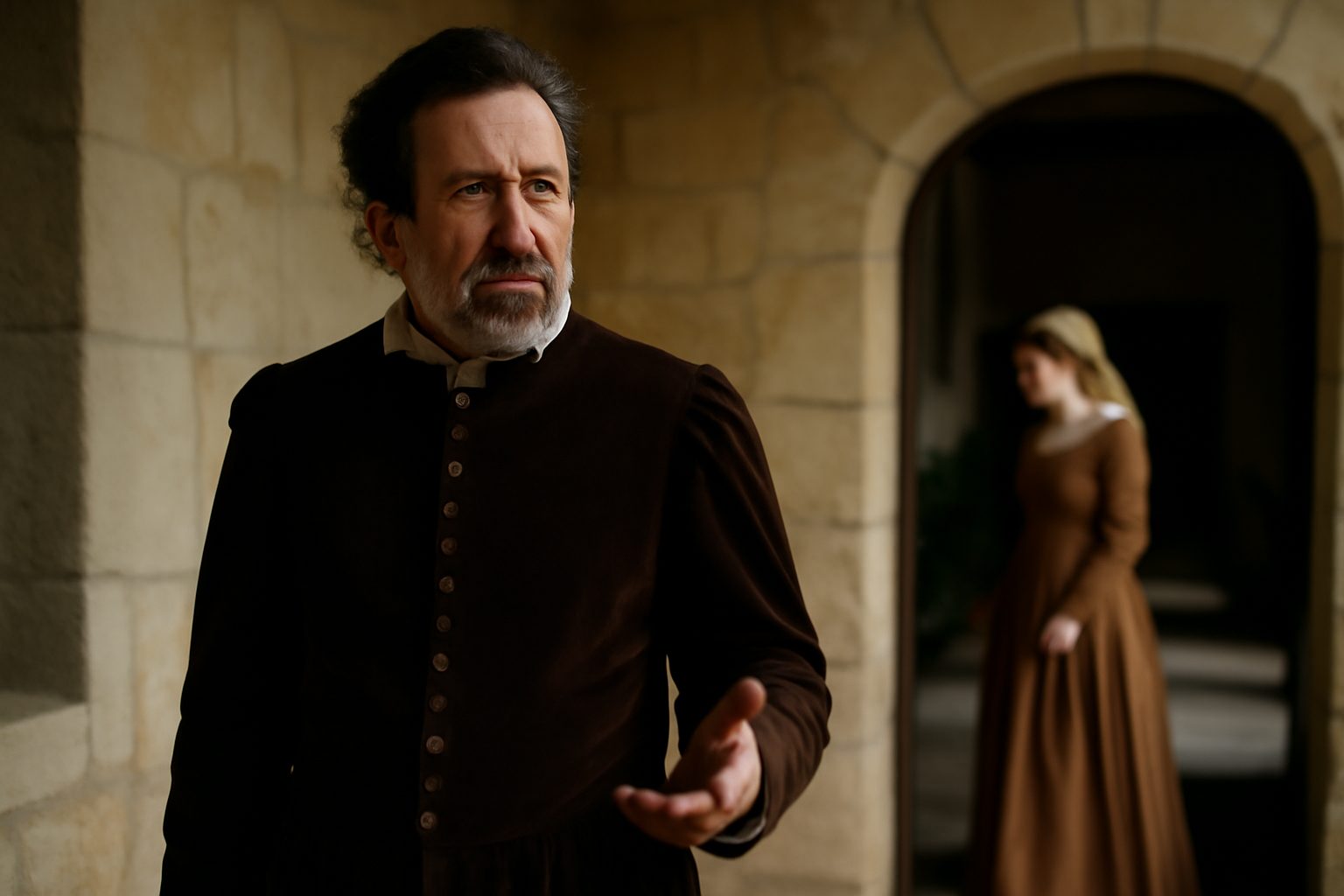
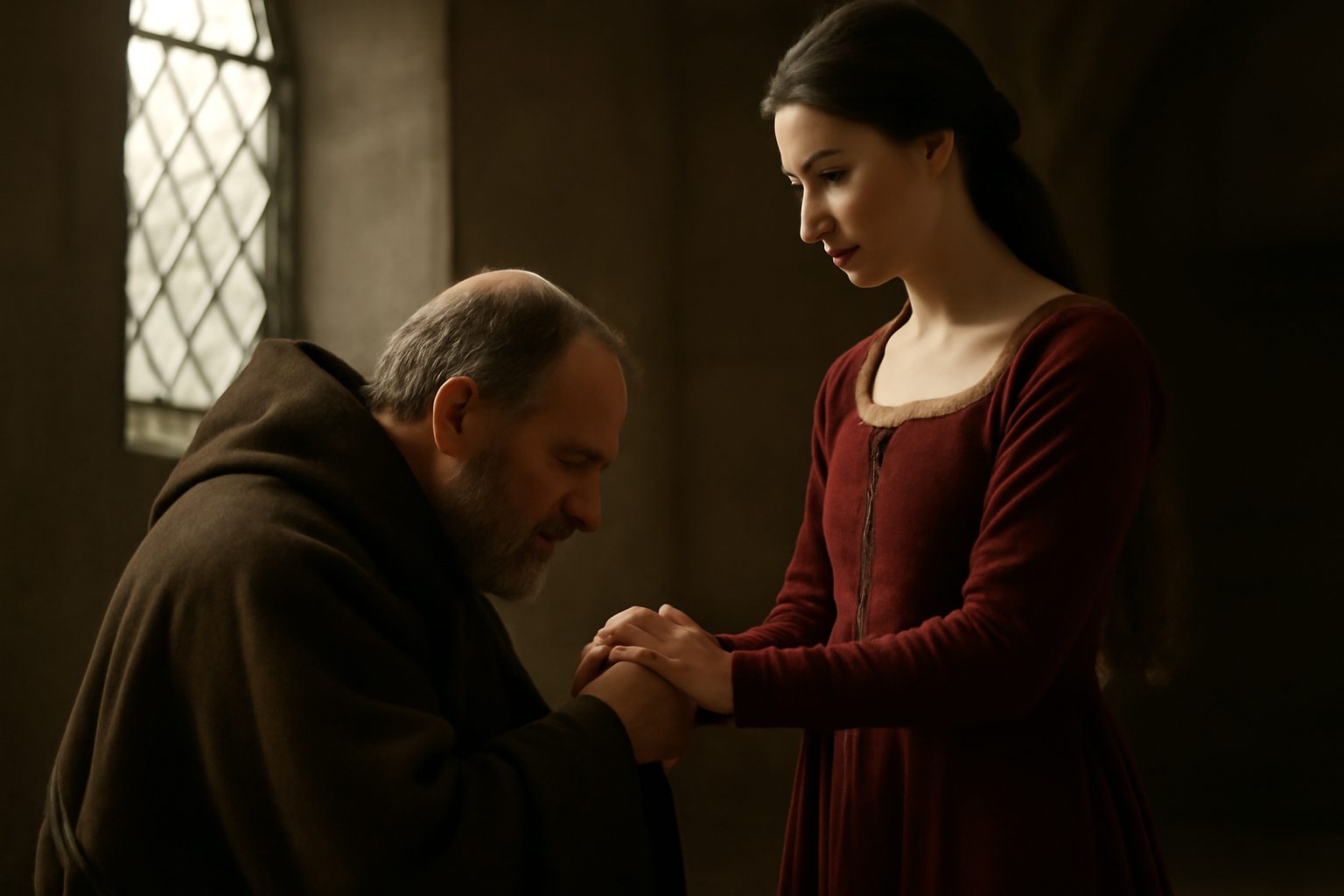
In Act 4, Scene 2 of Romeo and Juliet, Juliet has just returned from Friar Laurence, where she agreed to a desperate plan to fake her death and escape her arranged marriage to Paris. As the Capulet household bustles with wedding preparations, her father notes the approaching evening, signaling how little time remains before the forced ceremony. This simple observation underscores the urgency and tension of Juliet's precarious situation.
Lady Capulet: "Tis now near night."
In modern day english, we would say:
It’s almost nighttime now.
Frequently Asked Questions
What time of day is it when Lady Capulet says it is almost night?
It is late afternoon or early evening.
Connections to other verses:
Connections to "Tis now near night" in Act 4 Scene 2
The line Tis now near night serves as a temporal anchor in the scene, marking the transition from daytime preparations to evening activities. This reference to the approaching night connects to several other verses that discuss the urgency and timeline of the wedding preparations.
Immediate Preparations and Urgency
Capulet's declaration that I'll have this knot knit up to-morrow morning shows his rushed timeline for Juliet's marriage to Paris, directly following the temporal context established by "Tis now near night." The sense of urgency continues with his question As you think fit to furnish me to-morrow?, emphasizing how little time remains for preparations.
Contrasting Reactions to the Timeline
While Capulet pushes for haste, his servant's response No, not till Thursday; there is time enough provides a contrasting perspective on the timeline, though Capulet ultimately overrules this with his insistence on moving the wedding forward. Juliet's apparent compliance in Henceforward I am ever ruled by you further reinforces the accelerated schedule that "Tis now near night" introduces.
Evening Activities and Night Preparations
The approaching night mentioned in Tis now near night leads directly into instructions for evening preparations, such as Go thou to Juliet, help to deck up her and Juliet's own declaration I'll not to bed to-night; let me alone, showing how the characters are responding to the limited time before the morning wedding.
Optimism Amidst the Rush
Despite the rushed timeline signaled by "Tis now near night," Capulet expresses confidence with And all things shall be well, I warrant thee and Against to-morrow: my heart is wondrous light, creating dramatic irony as the audience knows Juliet's true plans for the approaching night and morning.