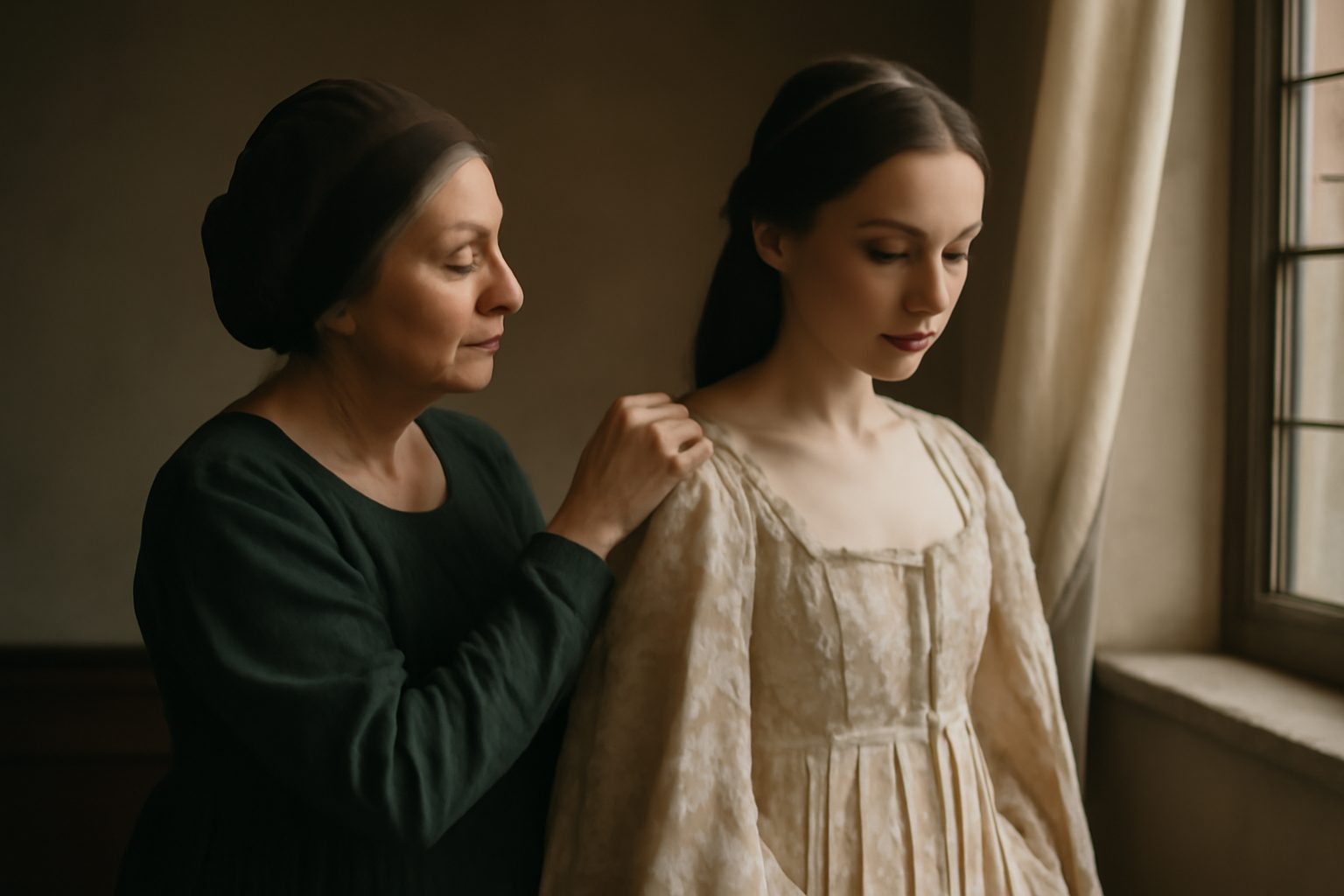
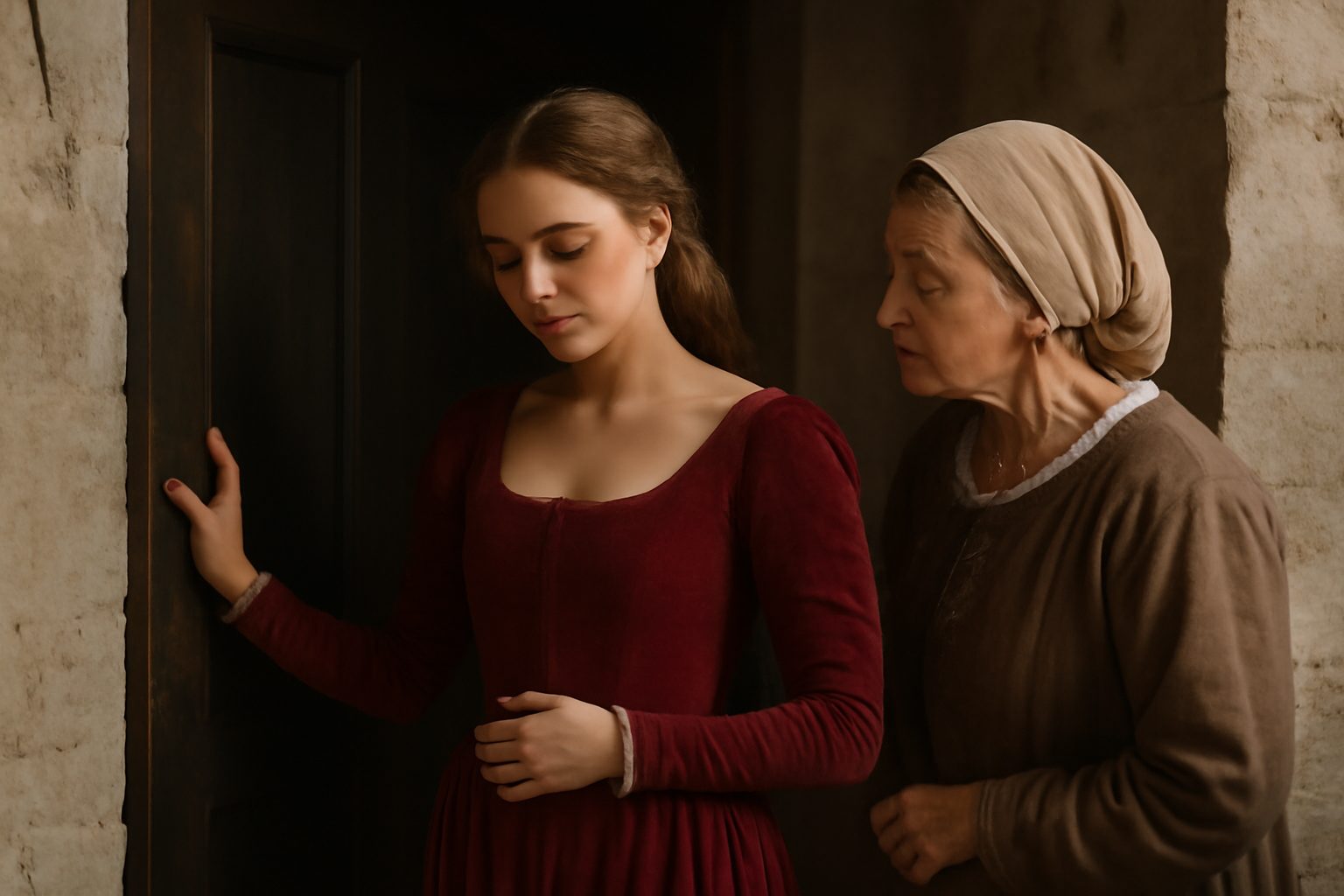
In Act 4, Scene 2 of Romeo and Juliet, Capulet is bustling with preparations for Juliet's sudden wedding to Paris, unaware of her secret plan to avoid the marriage. When the servant returns with news about the wedding arrangements, Capulet dismissively remarks that their provisions may fall short, highlighting his haste and preoccupation. This line underscores the chaotic urgency of the scene, as Capulet's excitement contrasts with Juliet's hidden desperation.
Lady Capulet: "We shall be short in our provision:"
In modern day english, we would say:
We won’t have enough food prepared.
Frequently Asked Questions
What does Lady Capulet mean when she says they will be short in their provision?
Lady Capulet means that they will not have enough food or supplies prepared for the upcoming wedding feast.
Connections to other verses:
Connections to "We shall be short in our provision:"
The line "We shall be short in our provision:" reflects Capulet's concern about the wedding preparations. This anxiety is echoed earlier when he states "We shall be much unfurnished for this time.", showing his recurring worry about insufficient arrangements.
Preparation and Urgency
Capulet's urgency is clear when he commands "Sirrah, go hire me twenty cunning cooks.", emphasizing his desire to avoid being underprepared. He further insists on immediate action with "Ay, marry, go, I say, and fetch him hither.", reinforcing the rushed nature of the preparations.
Juliet's Compliance and Its Impact
Juliet's feigned obedience, seen in "Henceforward I am ever ruled by you.", alleviates Capulet's stress, leading him to declare "I'll have this knot knit up to-morrow morning.". This change of heart accelerates the timeline, contributing to the provisioning concerns.
Confidence Amidst Concern
Despite worries, Capulet expresses optimism with "And all things shall be well, I warrant thee,…" and "Against to-morrow: my heart is wondrous light,", showing a shift from anxiety to hopeful anticipation as plans solidify.
Final Instructions
Capulet delegates tasks to ensure readiness, telling the Nurse "Go thou to Juliet, help to deck up her;" and confirming "Go, nurse, go with her: we'll to church to-morrow.", directly tying the provisioning efforts to the imminent event.