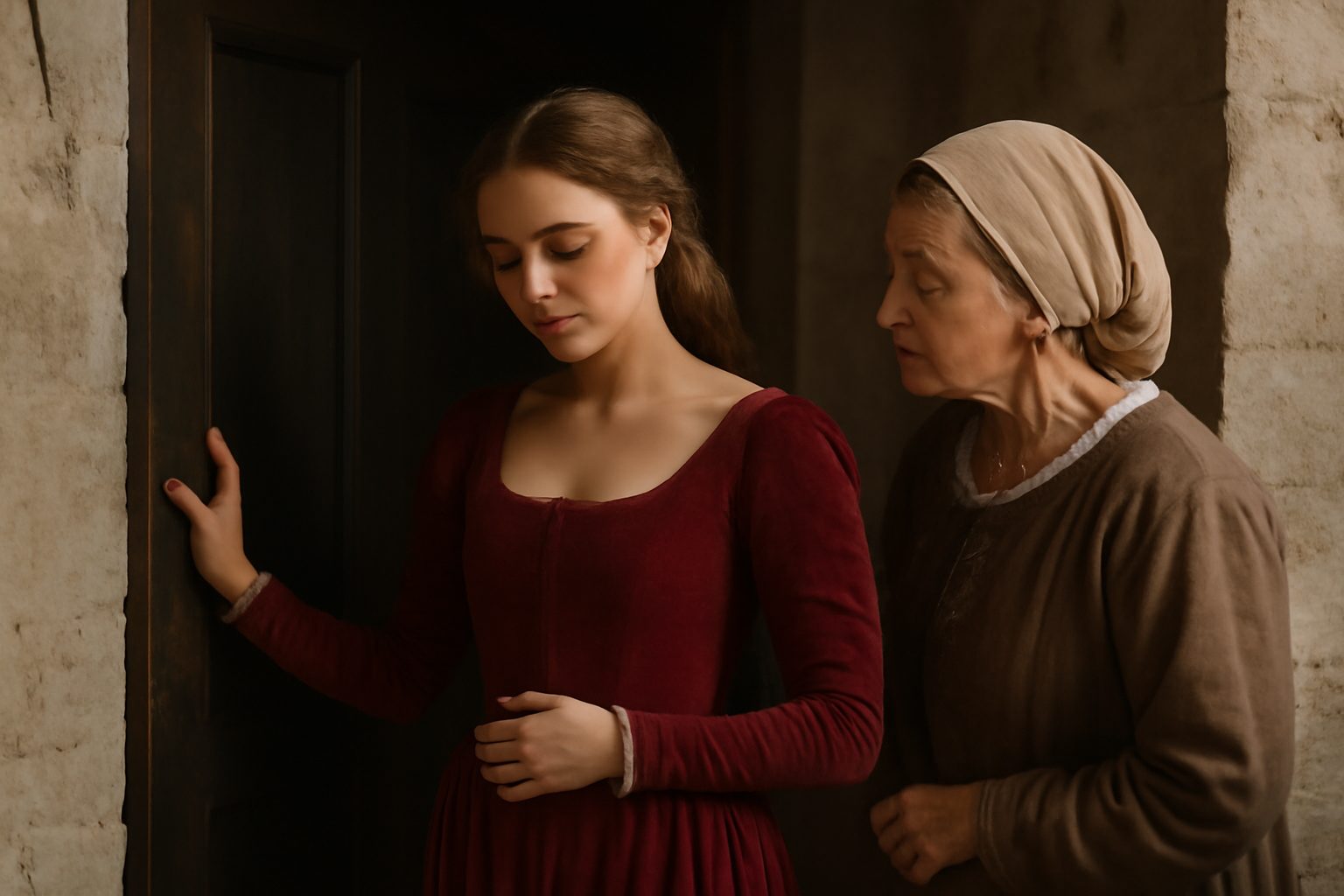
In Act 4, Scene 2 of Romeo and Juliet, Capulet is preparing for Juliet's wedding to Paris, unaware of her secret plan to avoid the marriage. When Juliet returns from Friar Laurence and pretends to submit to her father's wishes, Capulet praises her for abandoning her earlier resistance. His remark about disobedient opposition refers to her previous defiance, which he now believes has been resolved.
Juliet: "Of disobedient opposition"
In modern day english, we would say:
This line is spoken by Capulet when he’s angry about Juliet’s refusal to marry Paris, so in modern terms, it would mean going against his authority or being defiant.
Frequently Asked Questions
What does Juliet mean when she says 'Of disobedient opposition' in Act 4 Scene 2?
Juliet is referring to her previous refusal to marry Paris, which her father saw as disobedience. She is now pretending to agree to the marriage to avoid suspicion about her plan to fake her death.
Connections to other verses:
Connections to "Of disobedient opposition"
The phrase "Of disobedient opposition" from Act 4 Scene 2, Verse 18 directly responds to Capulet's earlier characterization of Juliet as "my headstrong" and "A peevish self-will'd harlotry," establishing her previous resistance to the marriage with Paris.
Juliet's Transformation
This description of past disobedience sharply contrasts with Juliet's current submission in Verse 19 where she states "To you and your behests, and am enjoin'd" and her declaration in Verse 22: "Henceforward I am ever ruled by you." This dramatic shift from opposition to obedience makes Capulet move the wedding date forward.
Capulet's Response
Convinced by her apparent change of heart, Capulet immediately commands "Send for the county; go tell him of this" and declares "I'll have this knot knit up to-morrow morning," accelerating the very marriage Juliet had previously opposed.
Friar Laurence's Role
The reference to disobedience connects to Juliet's explanation that she was "Where I have learn'd me to repent the sin" at Friar Laurence's cell, where she actually obtained the potion for her deceptive scheme rather than genuine repentance.
Dramatic Irony
Capulet's joy at her supposed reformation - "Why, I am glad on't; this is well" and his conclusion that "this same wayward girl is so reclaim'd" - creates profound dramatic irony, as the audience knows her obedience masks her desperate plan to avoid the marriage entirely.