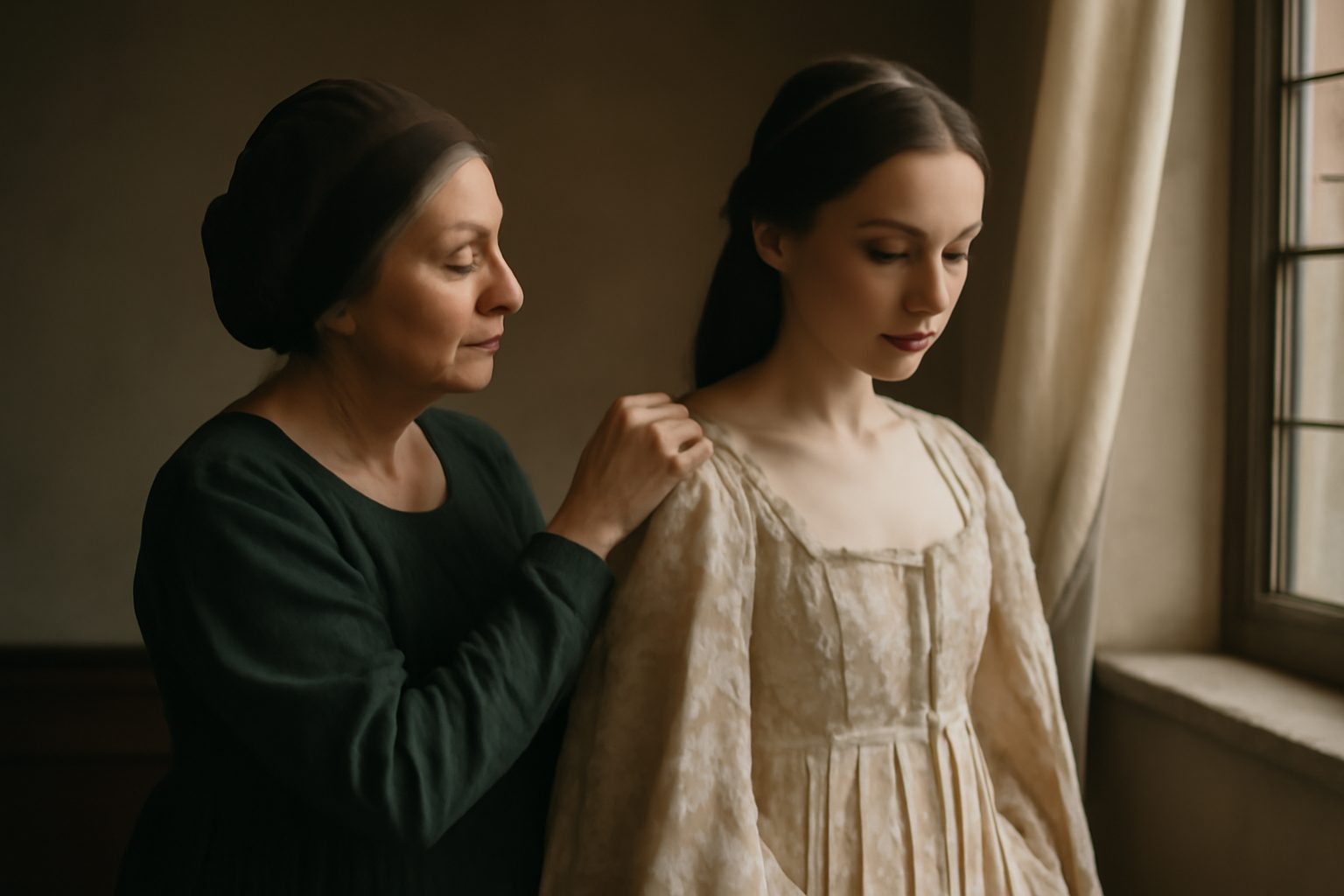
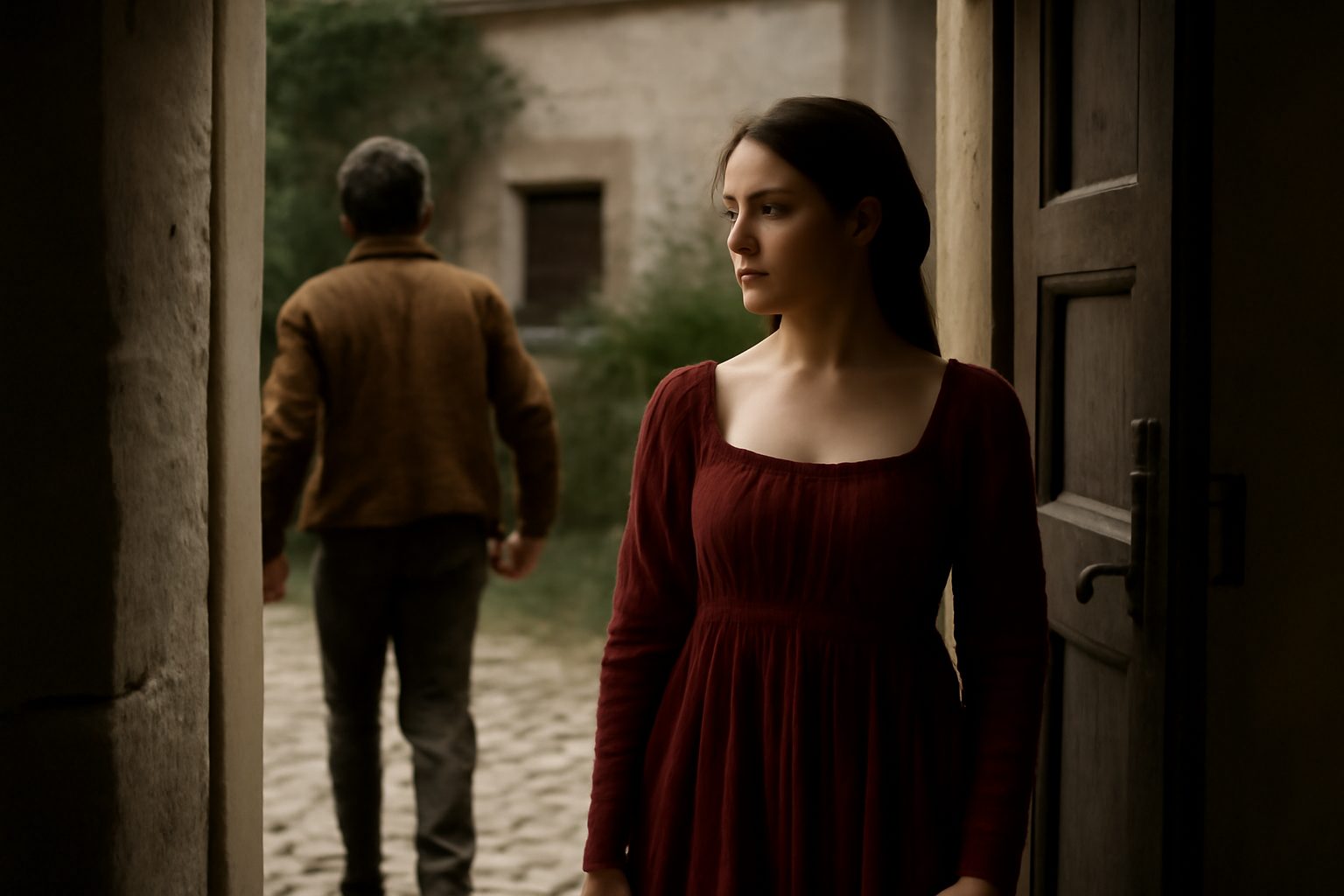
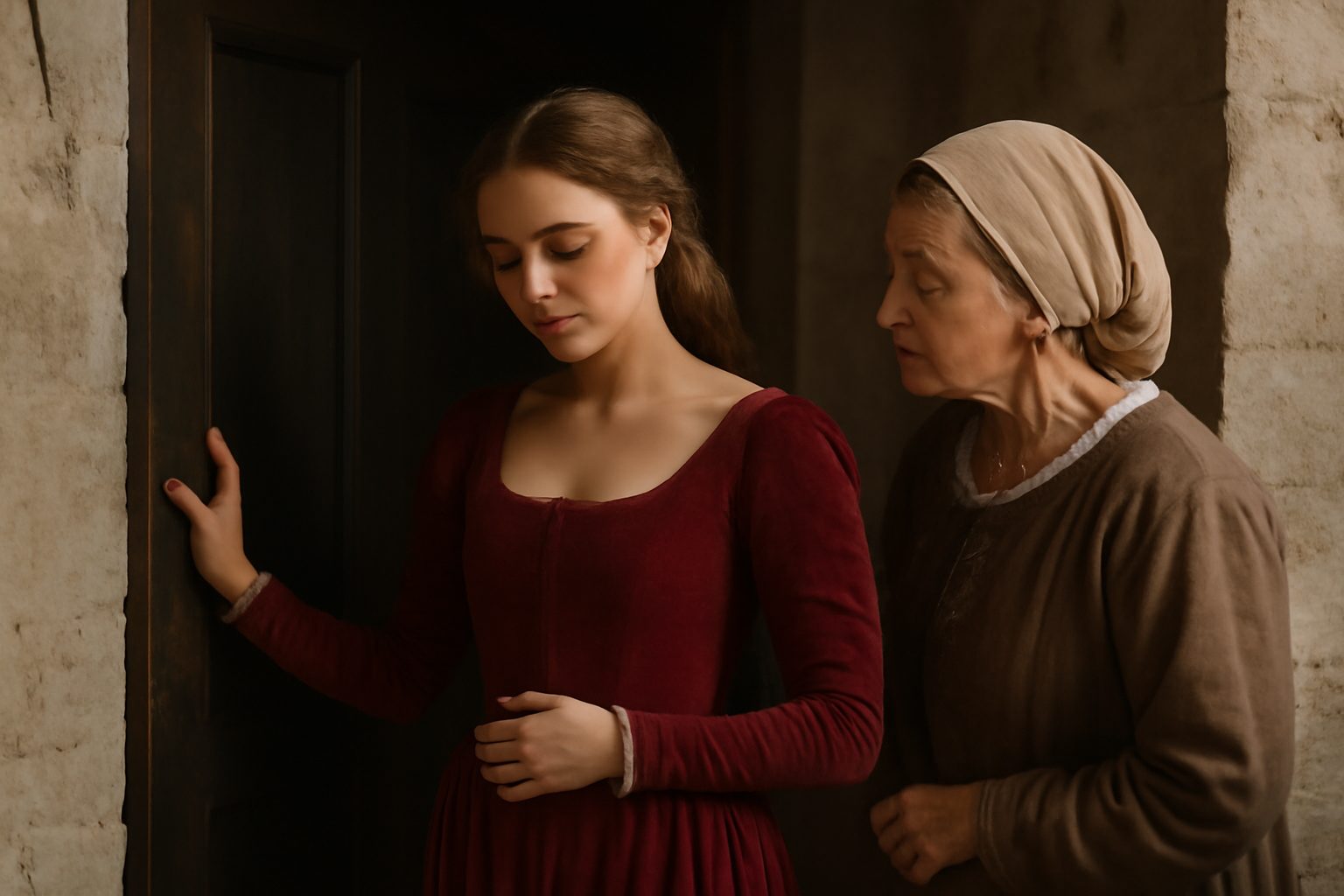
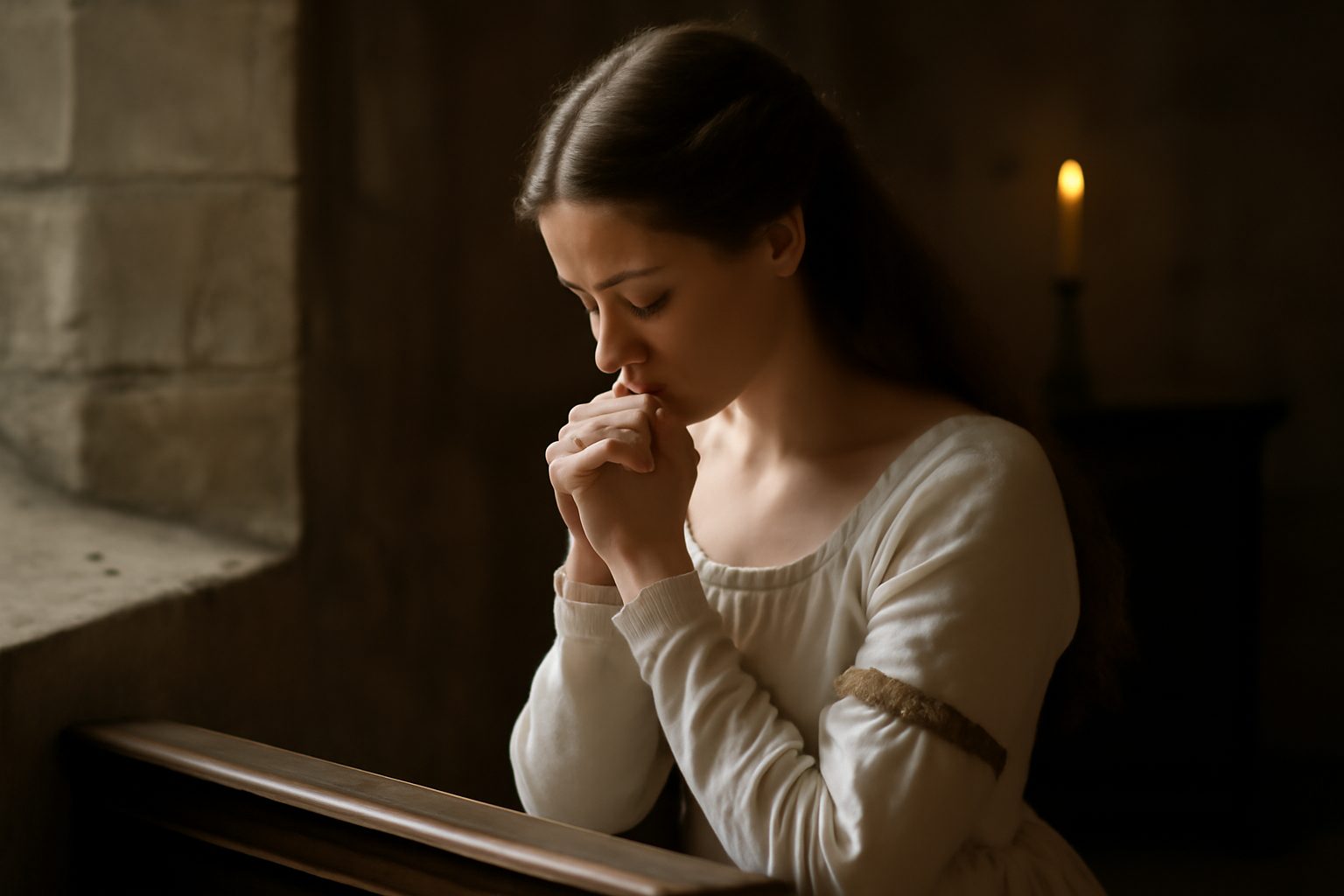
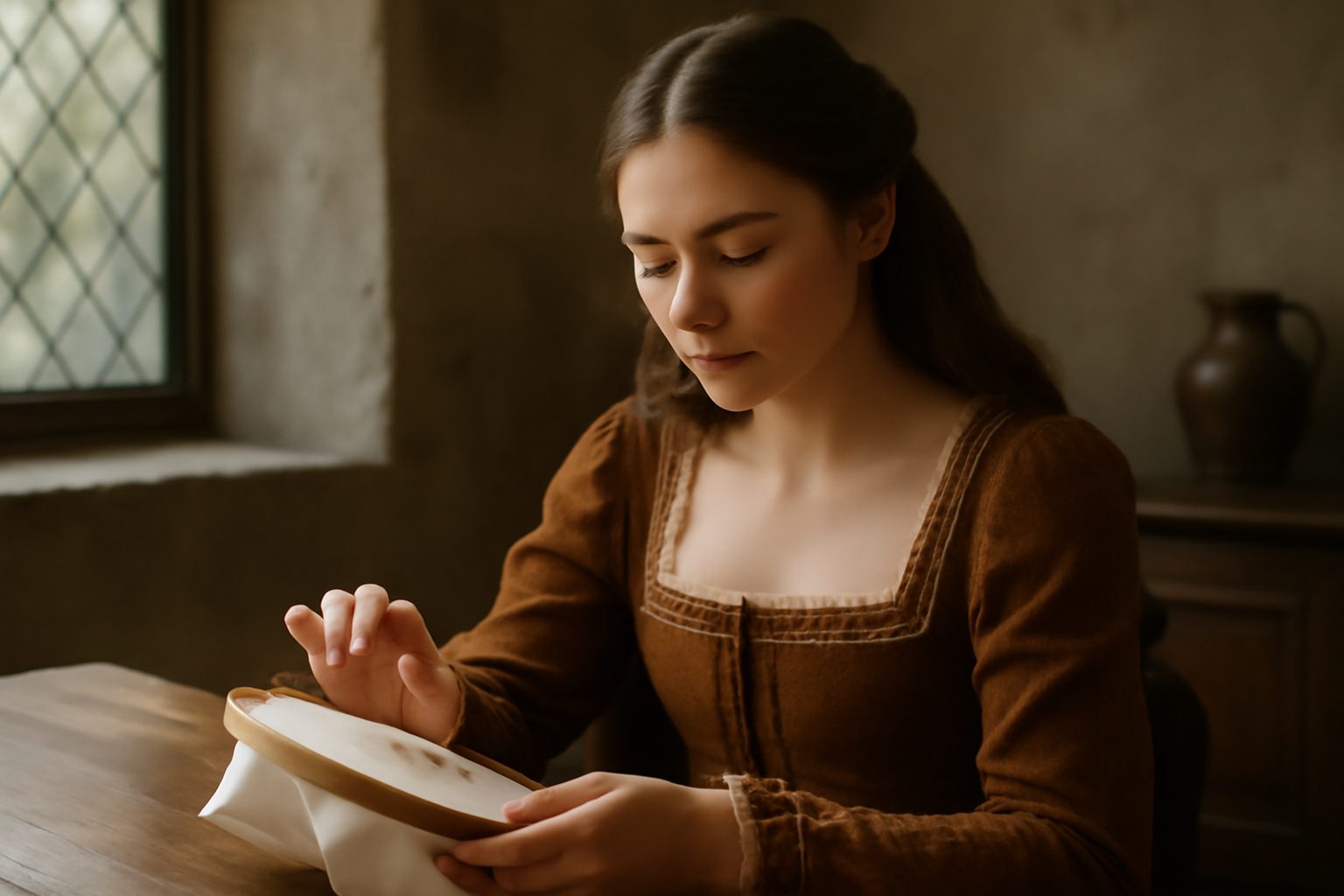
In Act 4 Scene 2 of Romeo and Juliet, Juliet returns to her father’s house after secretly agreeing to marry Paris, as part of Friar Laurence’s plan to reunite her with Romeo. She speaks this line to Lord Capulet, pretending to submit to his demands and showing false obedience to avoid suspicion. The moment highlights Juliet’s desperation and the tension between her outward compliance and her secret defiance.
Juliet: "To you and your behests, and am enjoin'd"
In modern day english, we would say:
I am ready to obey you and follow your commands.
Frequently Asked Questions
What does Juliet mean when she says she is enjoin'd to someone's behests?
She means she is obedient and will follow their commands or orders.
Connections to other verses:
Connections to "To you and your behests, and am enjoin'd"
This line, spoken by Juliet, marks a pivotal moment of feigned submission. It connects thematically and dramatically with several other verses in the scene.
Direct Context and Obedience
Juliet's declaration of obedience follows her father's harsh criticism of her earlier defiance. In How now, my headstrong! where have you been…, Capulet chastises her for her disobedience. Her response, To you and your behests, and am enjoin'd, directly counters this, showing her strategic shift to compliance.
This newfound obedience is further emphasized in Henceforward I am ever ruled by you, reinforcing her submission and calming her father's anger.
Friar Laurence's Influence
Juliet's obedience is tied to her visit to Friar Laurence, as indicated in I met the youthful lord at Laurence' cell. Her feigned compliance is part of the friar's plan, which she references in Where I have learn'd me to repent the sin / Of disobedient opposition, showing her supposed repentance.
Capulet's Reaction and Irony
Capulet's joy at her change of heart is clear in Why, I am glad on't; this is well: stand up, where he praises her transformation. This creates dramatic irony, as the audience knows her obedience is deceptive. His plans accelerate, as seen in I'll have this knot knit up to-morrow morning, moving the wedding forward—unaware of her true intentions.
Preparation and Deception
The scene shifts to wedding preparations, with Capulet organizing festivities in lines like Sirrah, go hire me twenty cunning cooks. Juliet's participation in these plans, such as in To help me sort such needful ornaments, underscores her role in maintaining the deception while secretly preparing for the potion scheme.