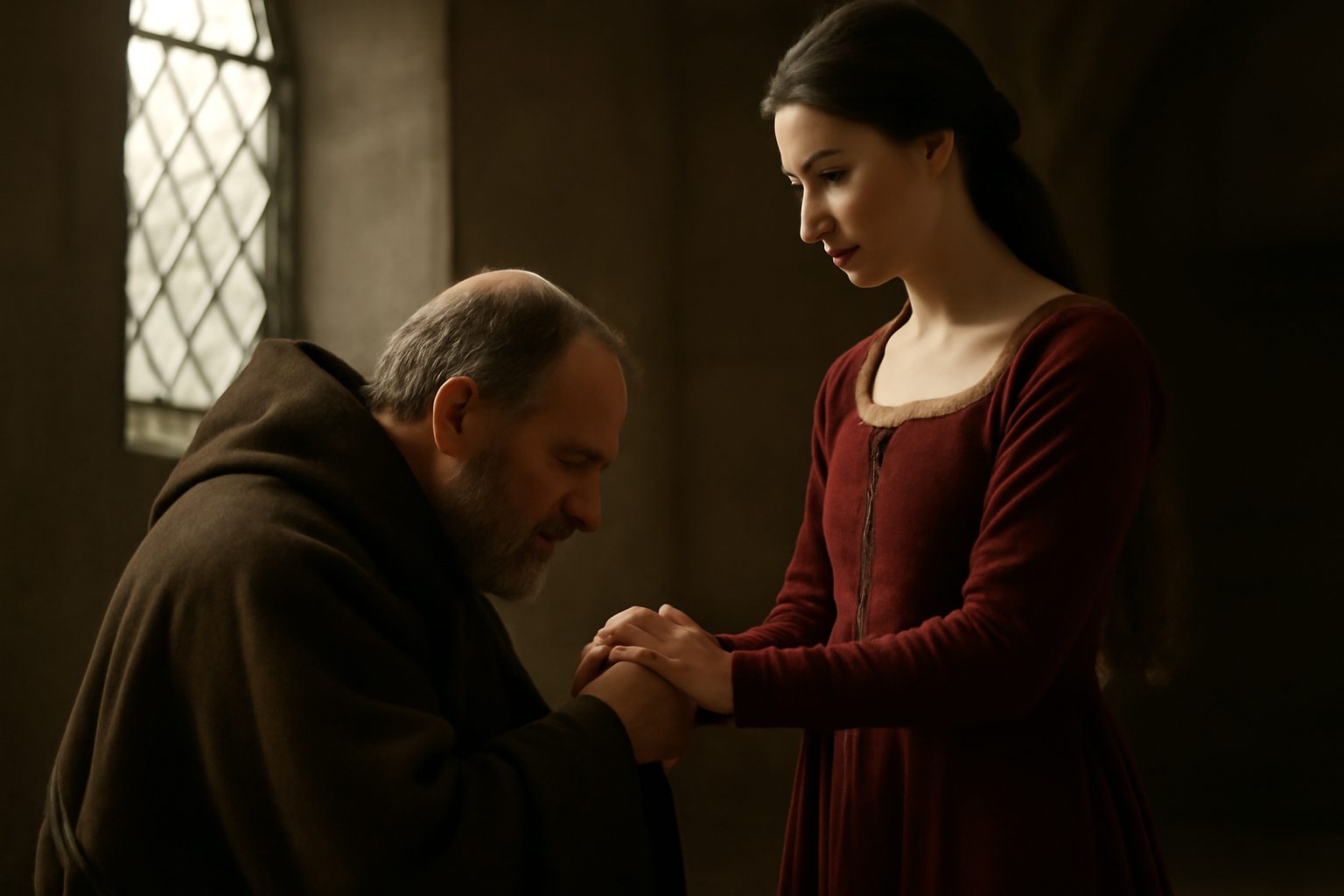
In Act 4, Scene 2 of Romeo and Juliet, Juliet returns home after secretly agreeing to Friar Laurence's desperate plan to avoid marrying Paris. Her father, unaware of her true intentions, is overjoyed by her apparent obedience and praises the Friar for his wisdom. This line captures Capulet's relieved and grateful tone as he credits the Friar for what he believes is Juliet's change of heart.
Capulet: "Now, afore God! this reverend holy friar,"
In modern day english, we would say:
By God, this respected and pious friar.
Frequently Asked Questions
Who is Capulet referring to when he mentions the holy friar?
Capulet is referring to Friar Laurence, the priest who is helping Romeo and Juliet.
Connections to other verses:
Connections to "Now, afore God! this reverend holy friar,"
This line, spoken by Capulet, expresses his newfound respect and admiration for Friar Laurence, whom he credits with Juliet's apparent change of heart. It connects thematically and narratively to several other verses in the scene.
Direct Context and Character Reactions
Capulet's praise of the Friar follows Juliet's return from confession, where she feigns repentance. When he sees her, he remarks, "See where she comes from shrift with merry look." Her joyful demeanor convinces him of her obedience, leading to his exclamation about the Friar. This shift in Capulet's attitude is further emphasized when he says, "Why, I am glad on't; this is well: stand up:", showing his relief and approval.
Juliet's Deception and Submission
Juliet's actions, orchestrated by the Friar, drive Capulet's praise. She kneels and begs forgiveness, stating, "And beg your pardon: pardon, I beseech you!" and promises, "Henceforward I am ever ruled by you." This performance directly influences Capulet's trust in the Friar's guidance.
Friar Laurence's Role and Reputation
Capulet's acknowledgment of the Friar's holiness is echoed when he notes, "Our whole city is much bound to him.", highlighting the Friar's respected status. Additionally, Juliet's visit to him is confirmed earlier when Capulet asks, "What, is my daughter gone to Friar Laurence?", to which the Nurse replies, "Ay, forsooth."
Accelerated Wedding Plans
Convinced by Juliet's transformation, Capulet moves the wedding forward, declaring, "I'll have this knot knit up to-morrow morning." He then instructs his wife, "Go, nurse, go with her: we'll to church to-morrow.", showing how the Friar's influence spurs the tragic acceleration of events.
Contrast with Earlier Criticism
Capulet's praise of the Friar contrasts sharply with his earlier anger at Juliet's defiance, when he called her "A peevish self-will'd harlotry" and accused her of "disobedient opposition". The Friar's intervention seemingly resolves this conflict, making Capulet's admiration particularly ironic given the Friar's role in the deception.