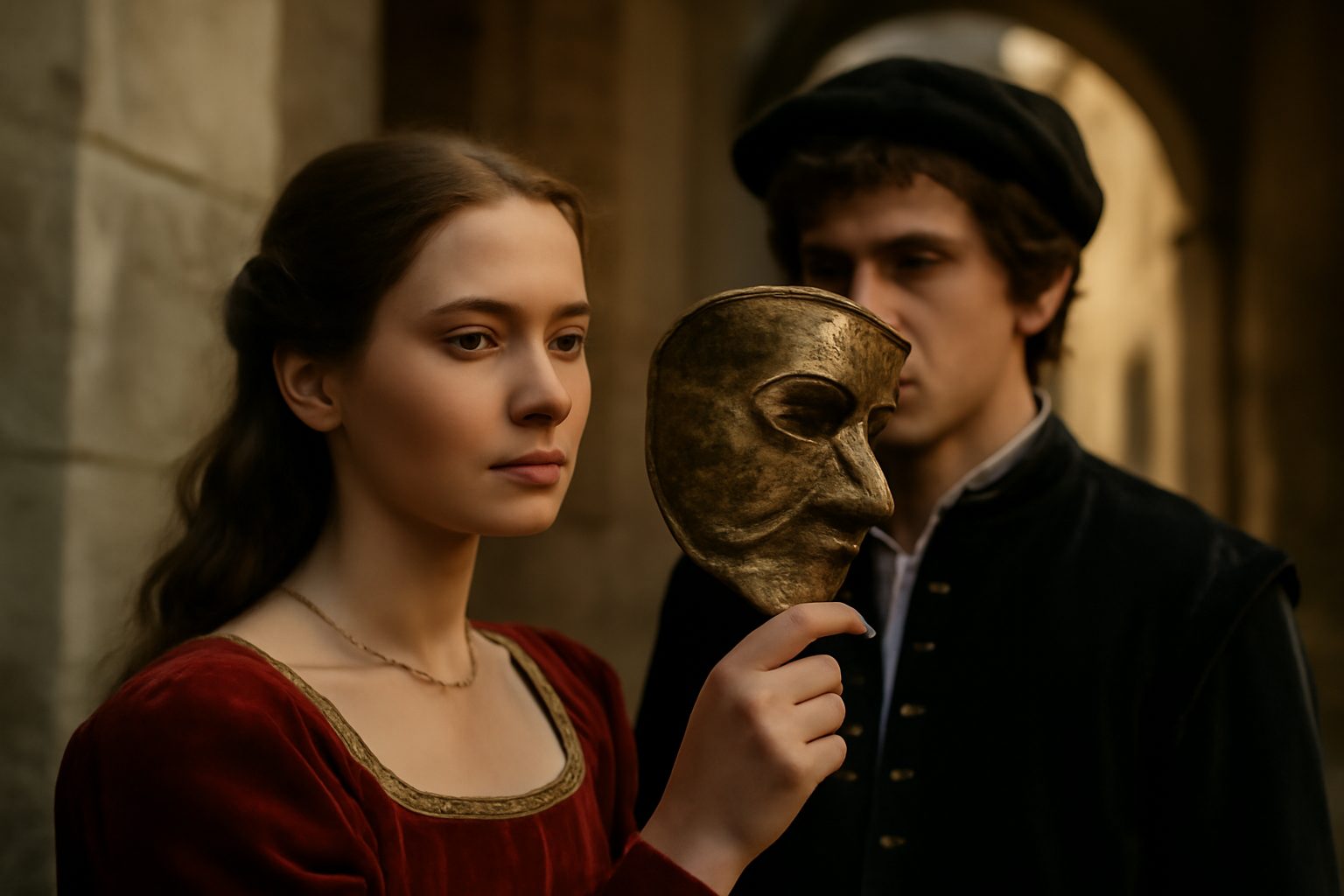
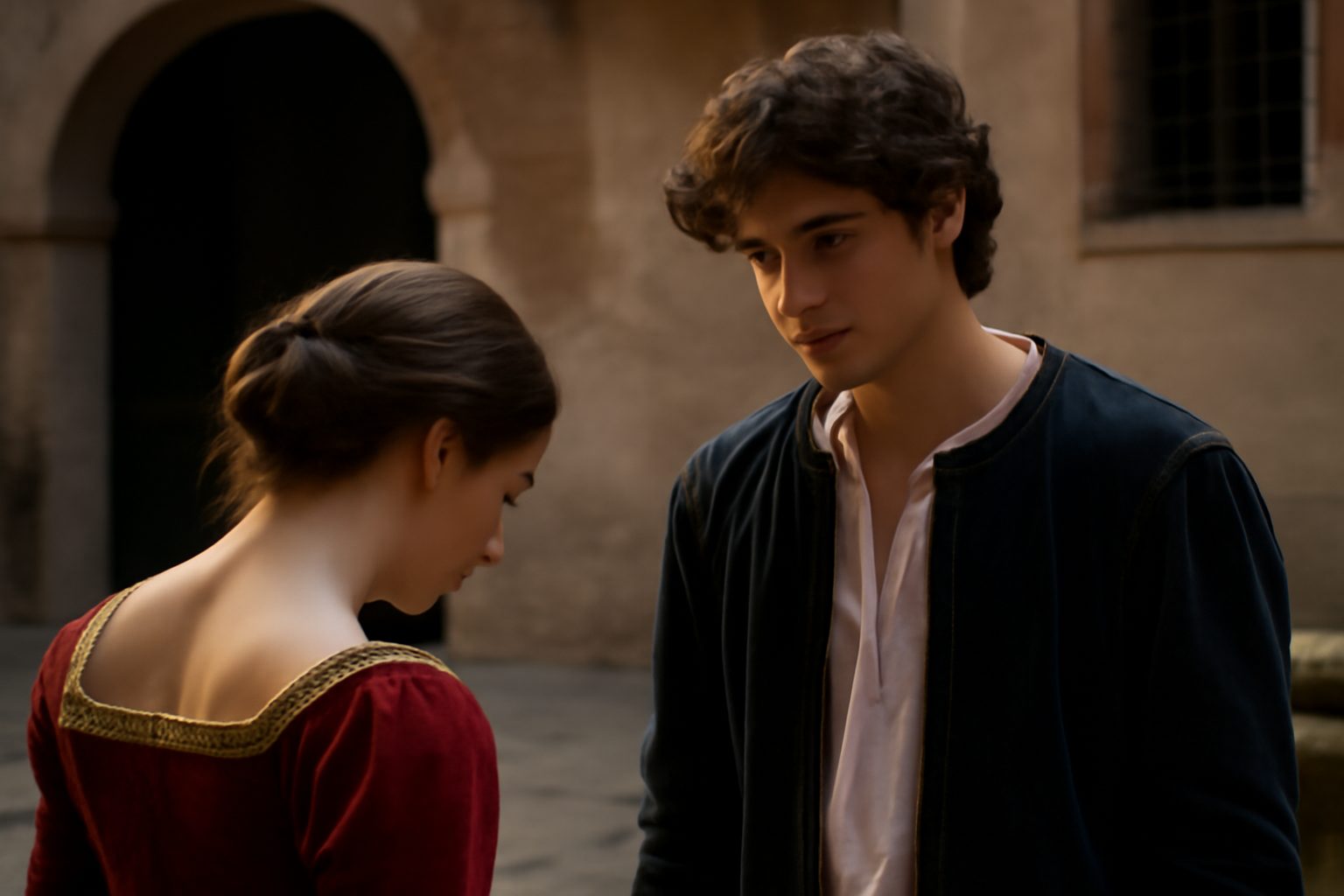
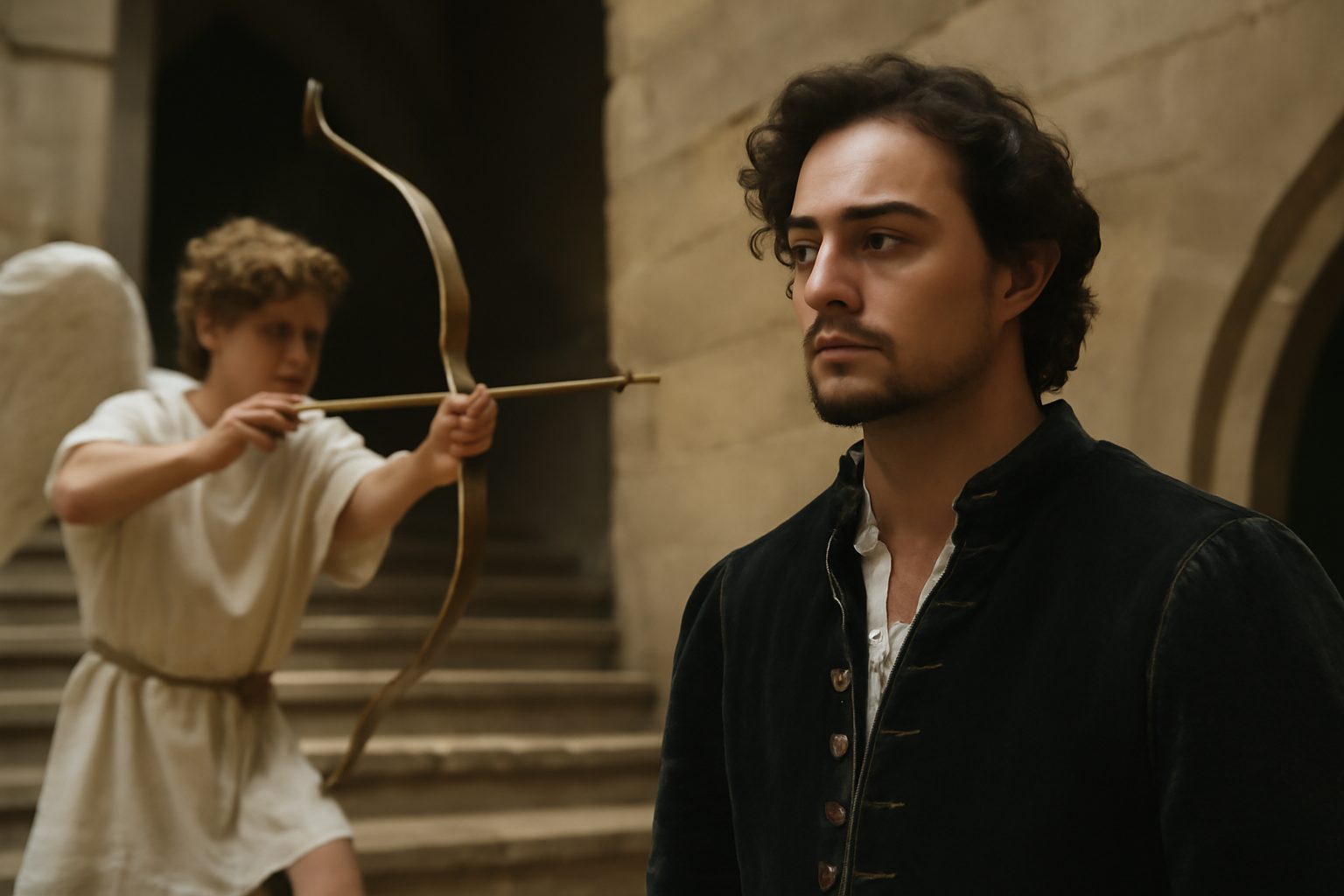
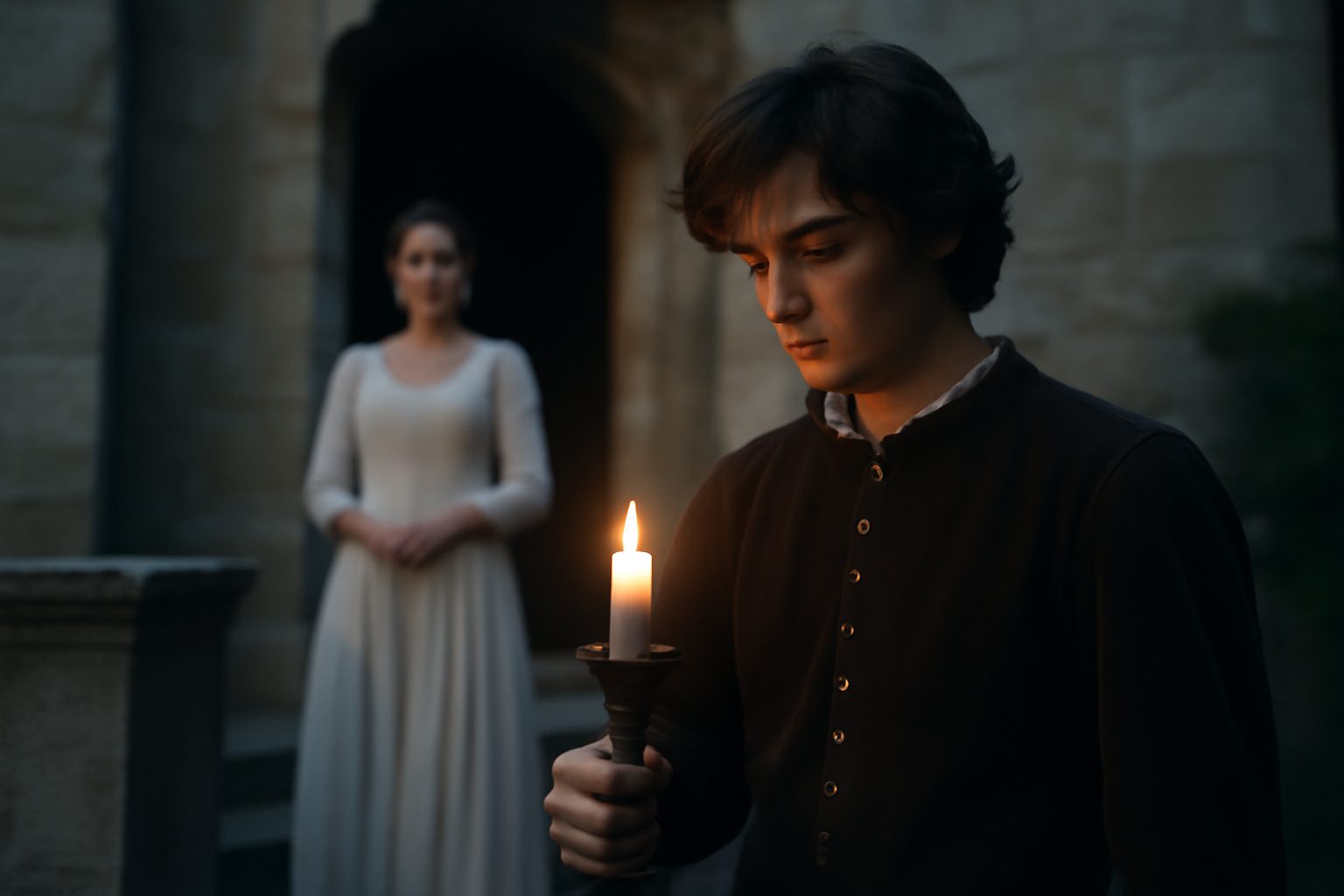
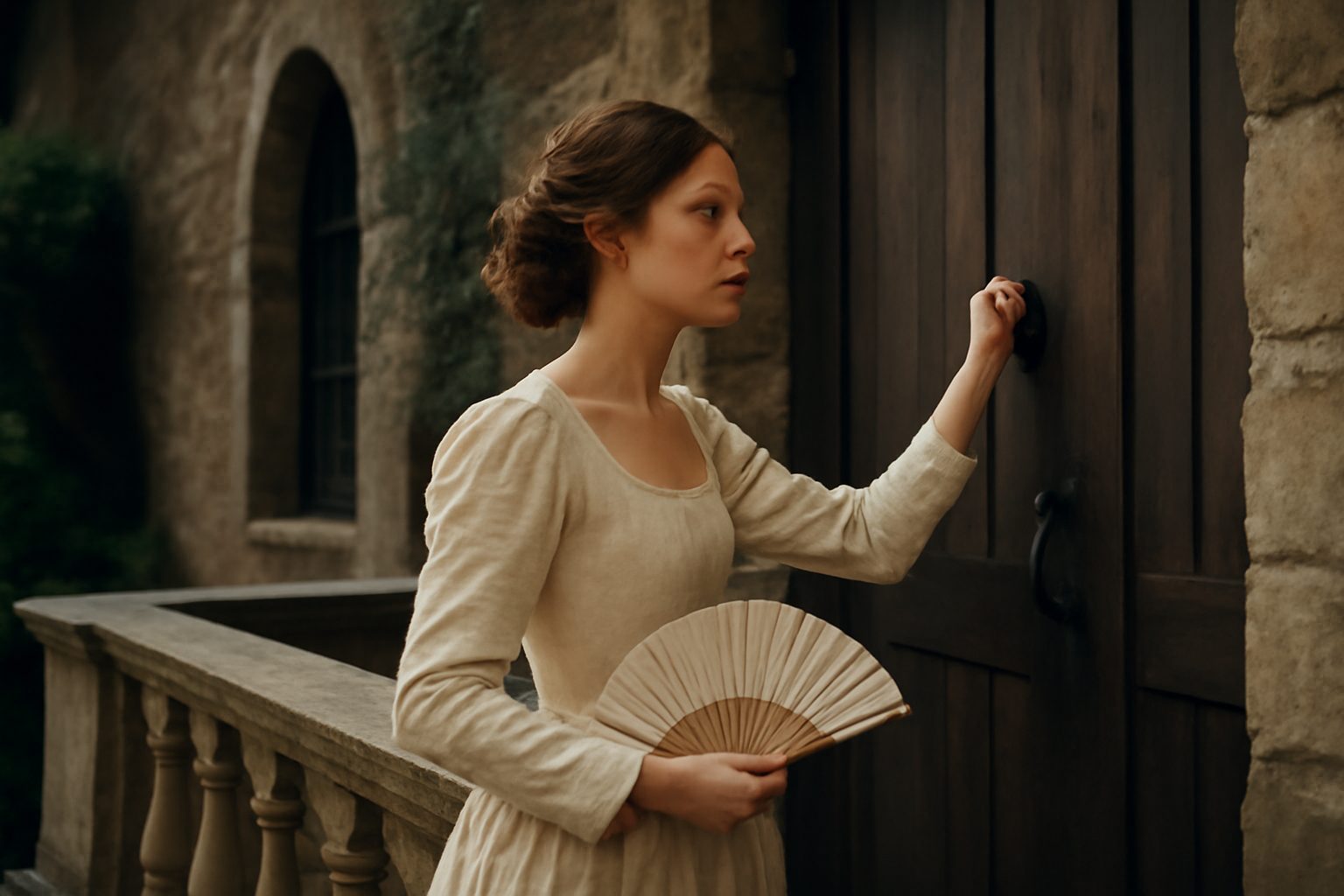
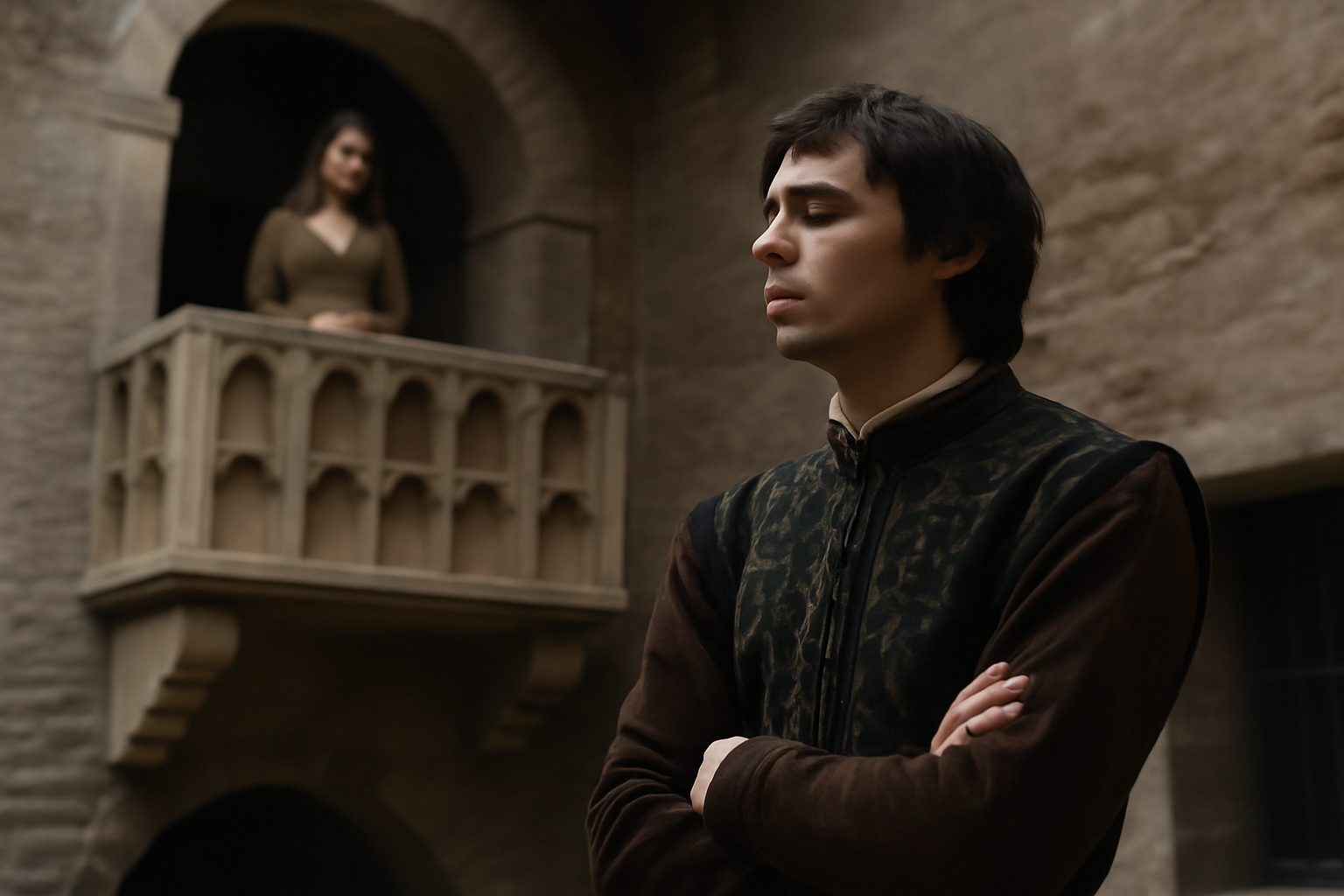
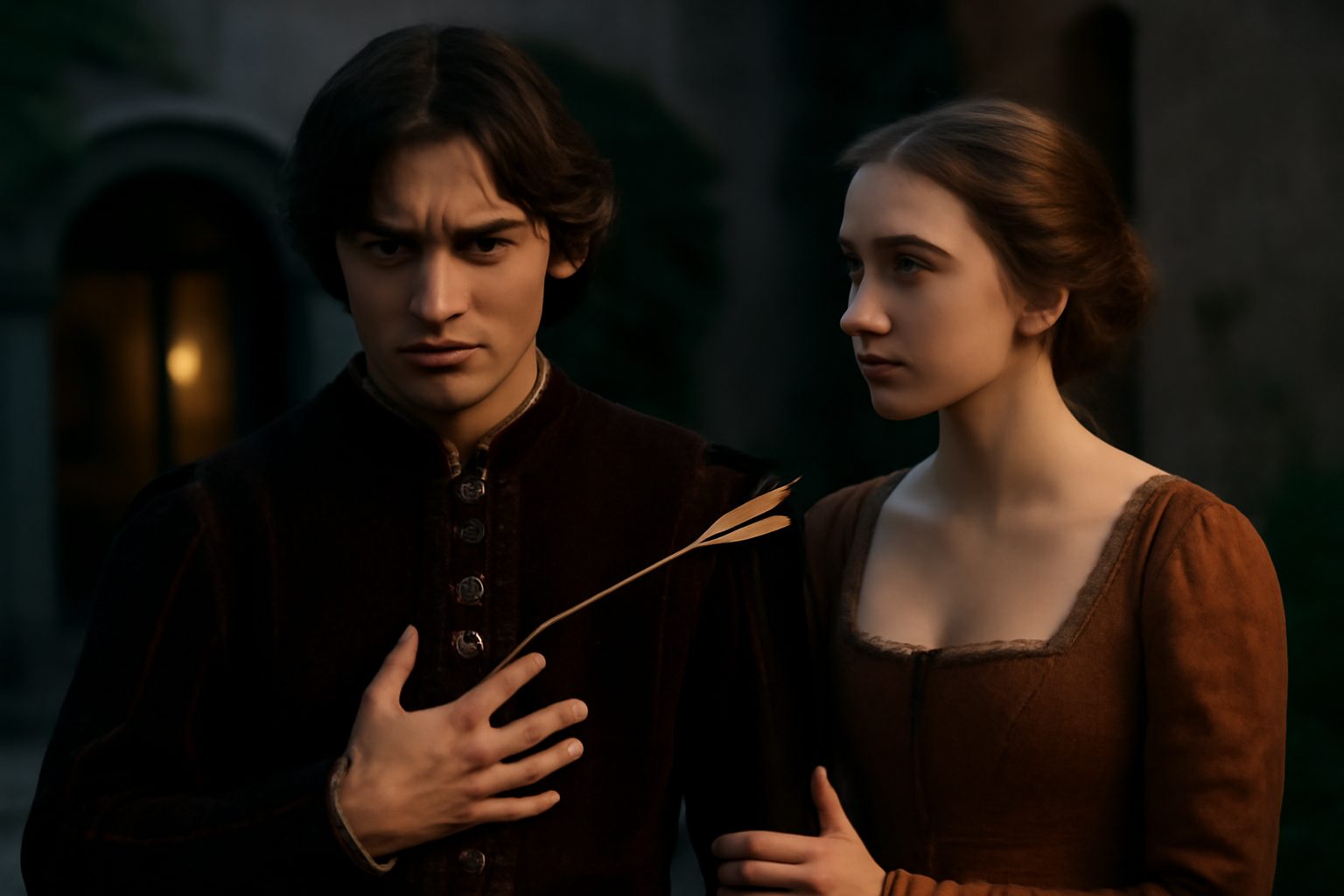
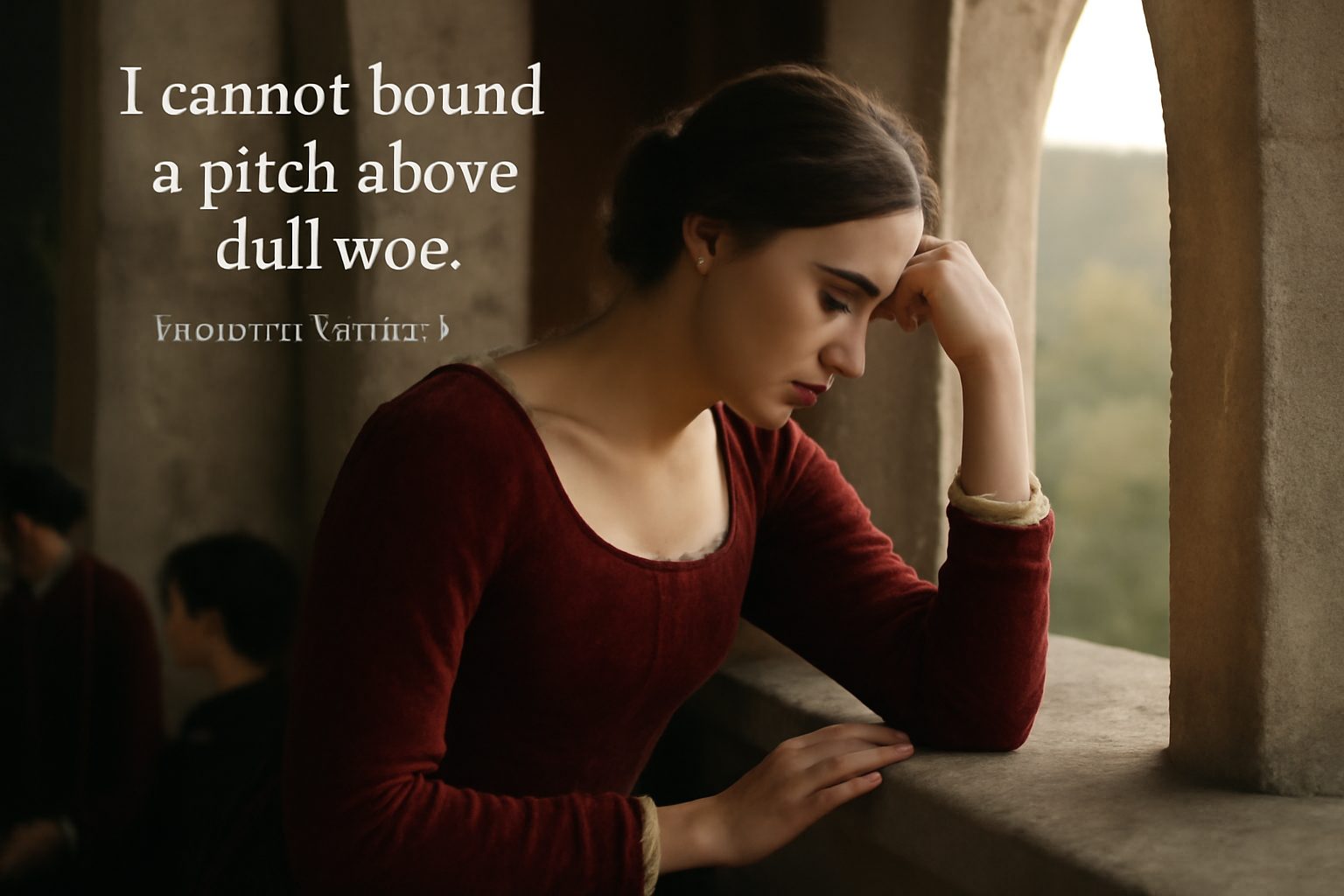
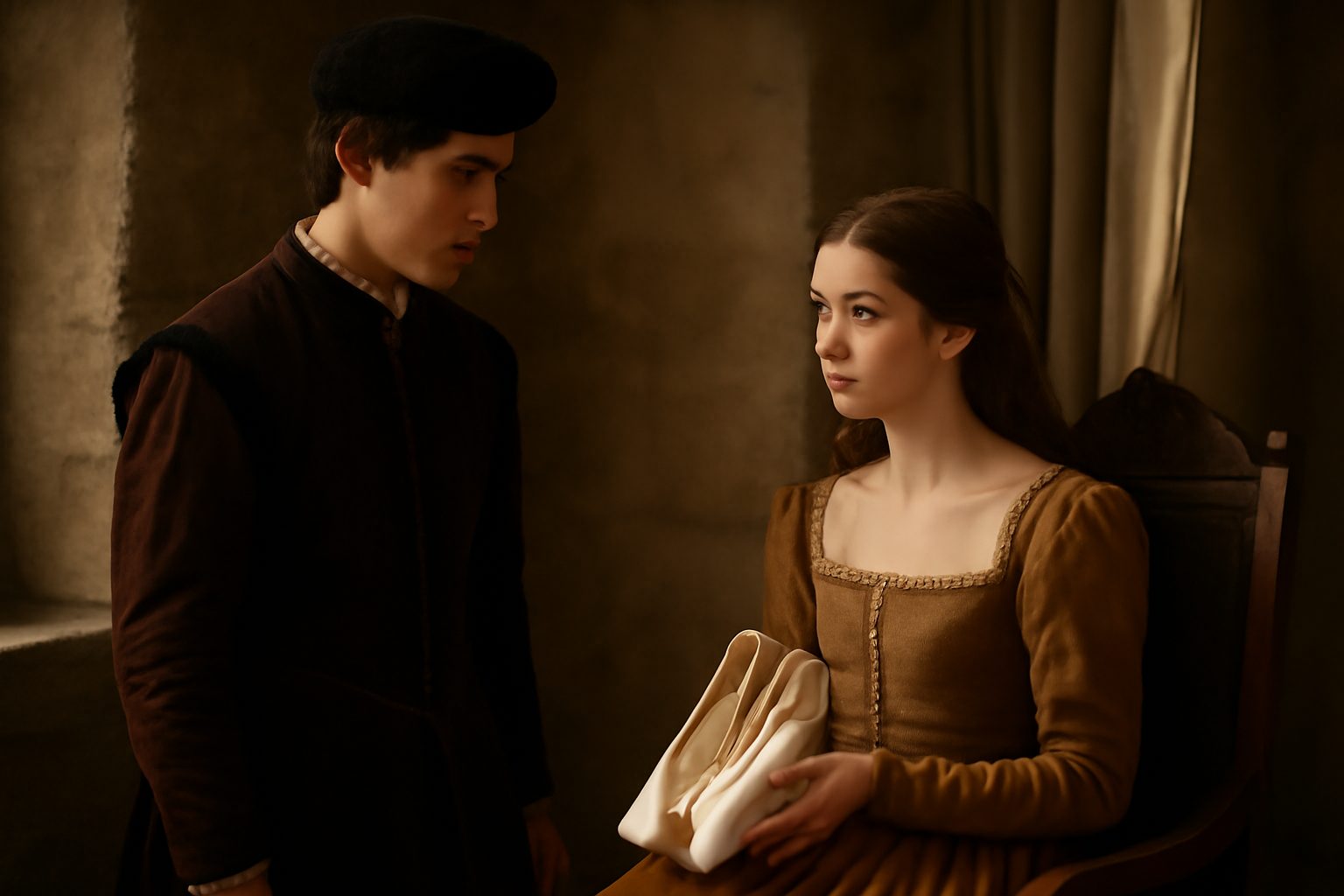
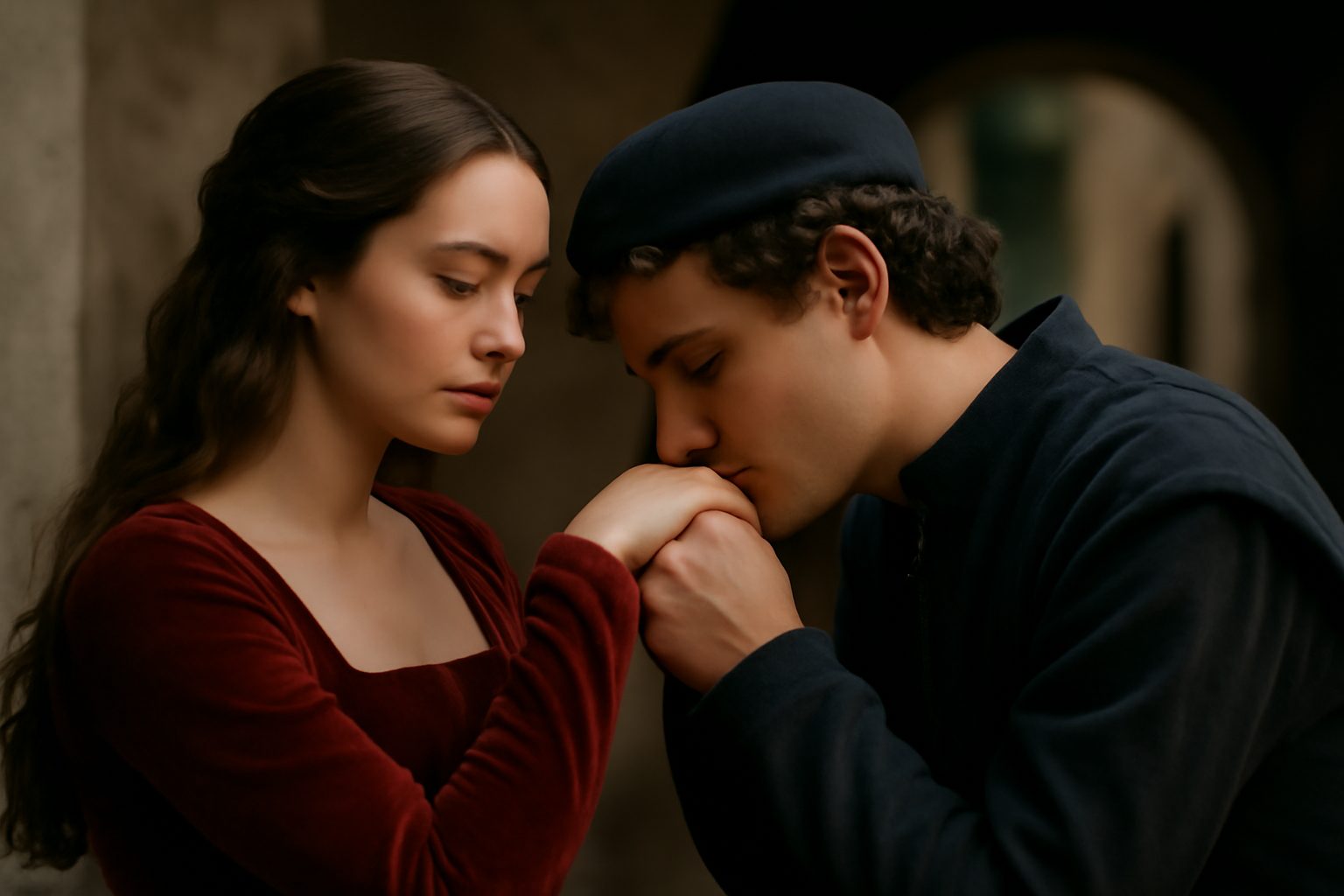
In Act 1, Scene 4 of Romeo and Juliet, Mercutio tries to lift Romeo's spirits as they prepare to crash the Capulet feast. Romeo, still pining over Rosaline, resists the lively atmosphere, prompting Mercutio to dismiss his melancholy with this line. The phrase reflects Mercutio's playful frustration, suggesting the night's revelry is too good to waste on Romeo's gloom.
Romeo: "The game was ne'er so fair, and I am done."
In modern day english, we would say:
The fun was never this good, but I’m finished with it.
Frequently Asked Questions
What does Romeo mean when he says the game was never so fair and he is done?
Romeo means that the fun or excitement of the party (the game) has never been better, but he feels too sad to enjoy it and wants to leave.
Connections to other verses:
Connections to "The game was ne'er so fair, and I am done."
This line, spoken by Mercutio, serves as a playful yet resigned conclusion to his banter about love and revelry. It connects thematically and contextually to several other verses in the scene.
Connection to Lightheartedness and Revelry
Mercutio's declaration that "the game was ne'er so fair" echoes the scene's earlier emphasis on merriment and masking. For instance, Benvolio's encouragement to "We'll measure them a measure, and be gone" reflects the group's intent to enjoy the festivities briefly. Similarly, Romeo's initial reluctance, expressed in "Give me a torch: I am not for this ambling", contrasts with Mercutio's spirited but final participation in the "game."
Connection to Dreams and Fantasy
Mercutio's line also ties into the broader discourse on dreams and imagination within the scene. His subsequent shift to discussing Queen Mab—"O, then, I see Queen Mab hath been with you"—highlights how fantasies, like the "game" of love or revelry, are fleeting. This idea is reinforced by Romeo's somber acknowledgment in "Some consequence yet hanging in the stars", suggesting that such lighthearted pursuits may have serious outcomes.
Connection to Wordplay and Wit
The phrase "I am done" showcases Mercutio's characteristic wit, which appears throughout the scene. For example, his earlier retort in "Tut, dun's the mouse, the constable's own word" demonstrates similar wordplay. Additionally, his mocking advice to Romeo in "If love be rough with you, be rough with love" parallels the playful yet dismissive tone of "the game was ne'er so fair."
Connection to Foreshadowing and Fate
Mercutio's resignation in this line subtly foreshadows the darker turns of the play. Romeo's foreboding in "I fear, too early: for my mind misgives" and his acceptance of fate in "But He, that hath the steerage of my course" echo the transient nature of the "game" Mercutio describes, hinting that such joys are short-lived amid impending tragedy.