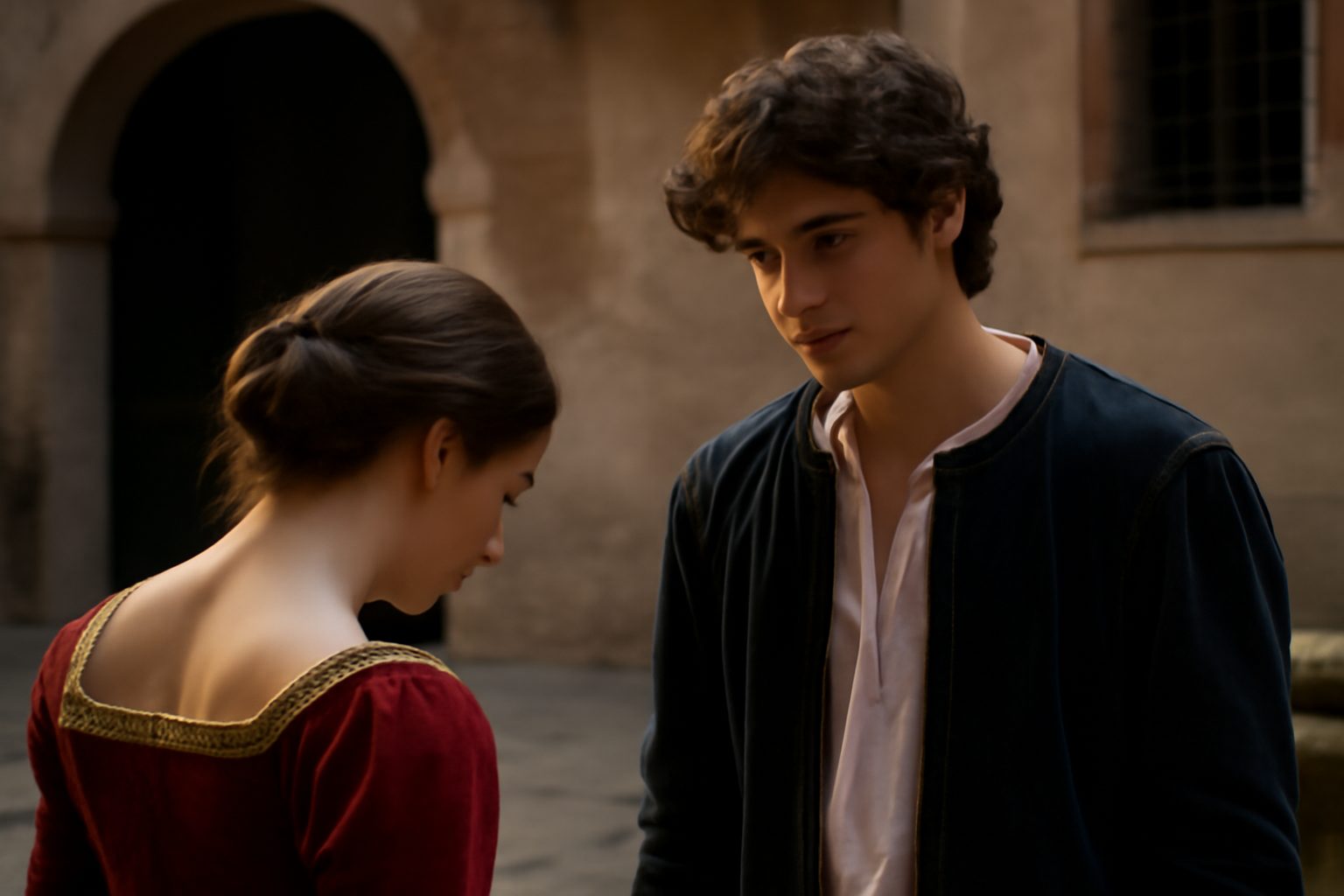
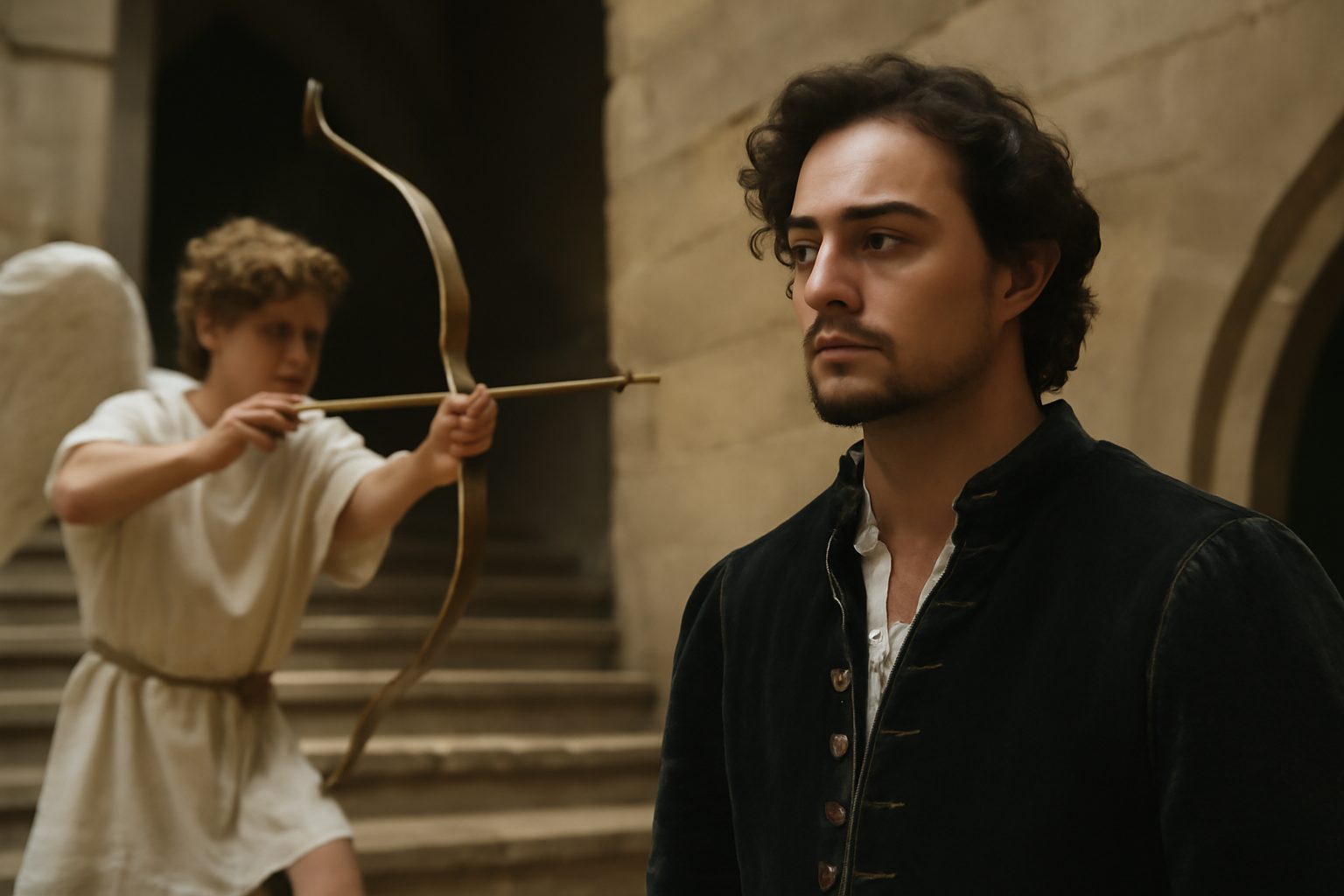
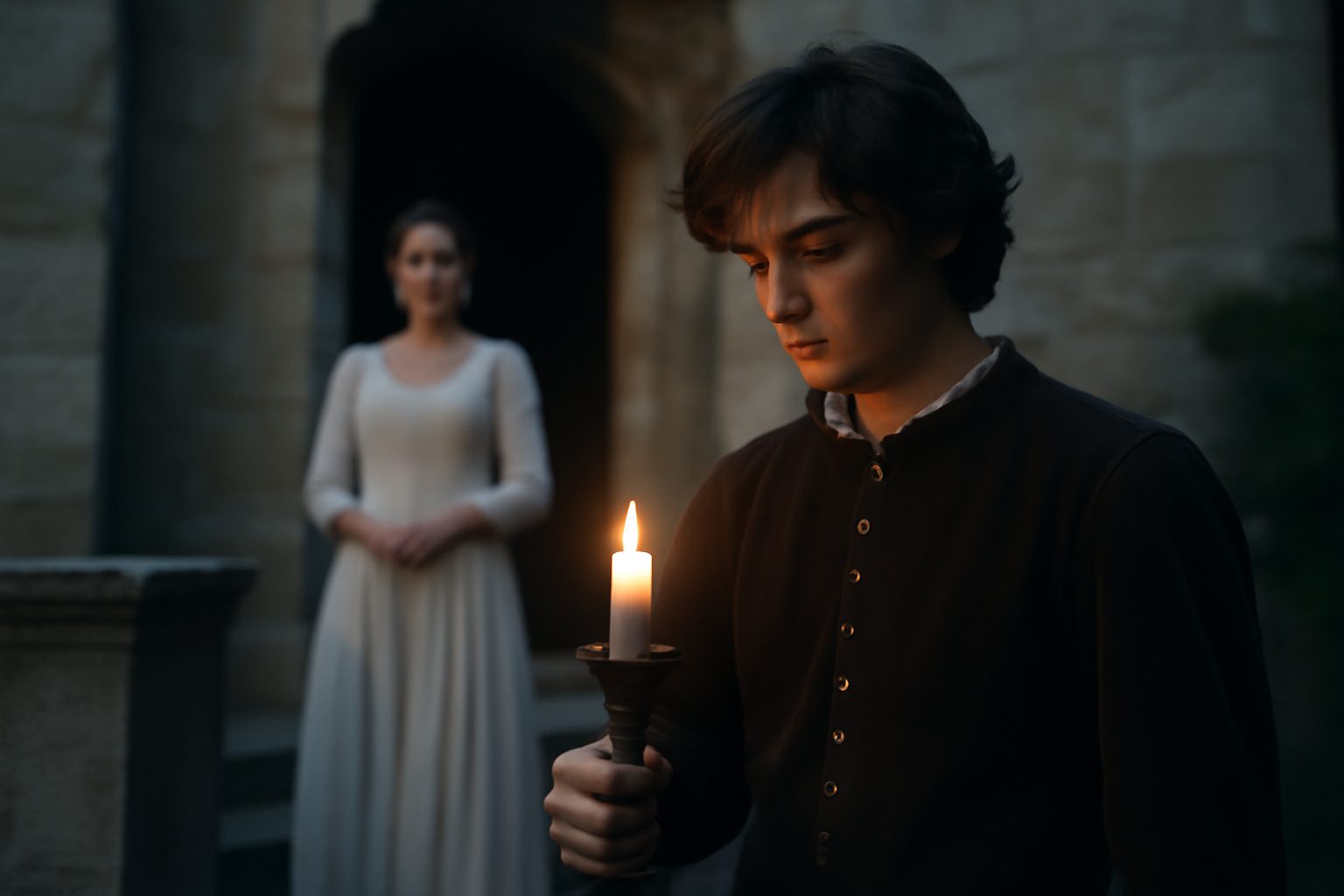
In Act 1, Scene 4 of Romeo and Juliet, Romeo and his friends are preparing to crash the Capulet's masquerade ball. As they jest and exchange witty remarks, Romeo resists their playful teasing by referencing an old saying, suggesting he’s heard enough clichéd advice from his elders. This moment highlights Romeo’s reluctance to engage in the evening’s revelry, foreshadowing his deeper preoccupation with love.
Romeo: "For I am proverb'd with a grandsire phrase;"
In modern day english, we would say:
I’m being fed some old saying, like a grandparent’s tired advice.
Frequently Asked Questions
What does Romeo mean when he says he is 'proverb'd with a grandsire phrase'?
Romeo means that he has been given advice or a saying that is old-fashioned, like something a grandfather would say.
Connections to other verses:
Connections to "For I am proverb'd with a grandsire phrase"
Romeo's line, "For I am proverb'd with a grandsire phrase", reflects his feeling of being weighed down by old sayings or conventional wisdom, which connects thematically and tonally to several other verses in the scene.
Resistance to Conventional Expectations
Romeo's reluctance to engage in the festivities is echoed in his earlier request, "Give me a torch: I am not for this ambling", where he rejects the lighthearted mood. Similarly, Mercutio's playful urging in "Nay, gentle Romeo, we must have you dance" highlights the contrast between Romeo's melancholy and the others' exuberance.
Metaphorical and Emotional Weight
Romeo's sense of burden is further emphasized in "Under love's heavy burden do I sink", linking the "grandsire phrase" to the weight of his unrequited love. This imagery of heaviness recurs in "I have a soul of lead", reinforcing his emotional state.
Rejection of Frivolity
Romeo's declaration in "I'll be a candle-holder, and look on" aligns with his desire to remain an observer rather than a participant, tying back to his resistance to proverbial wisdom. The group's acknowledgment of their intentions in "And we mean well in going to this mask" contrasts with Romeo's personal misgivings.
Foreshadowing and Fate
Romeo's ominous feeling in "I fear, too early: for my mind misgives" introduces the theme of fate, which culminates in his acceptance of destiny in "But He, that hath the steerage of my course". This progression from proverbial constraint to fatalistic resolve deepens the connection to his initial line.