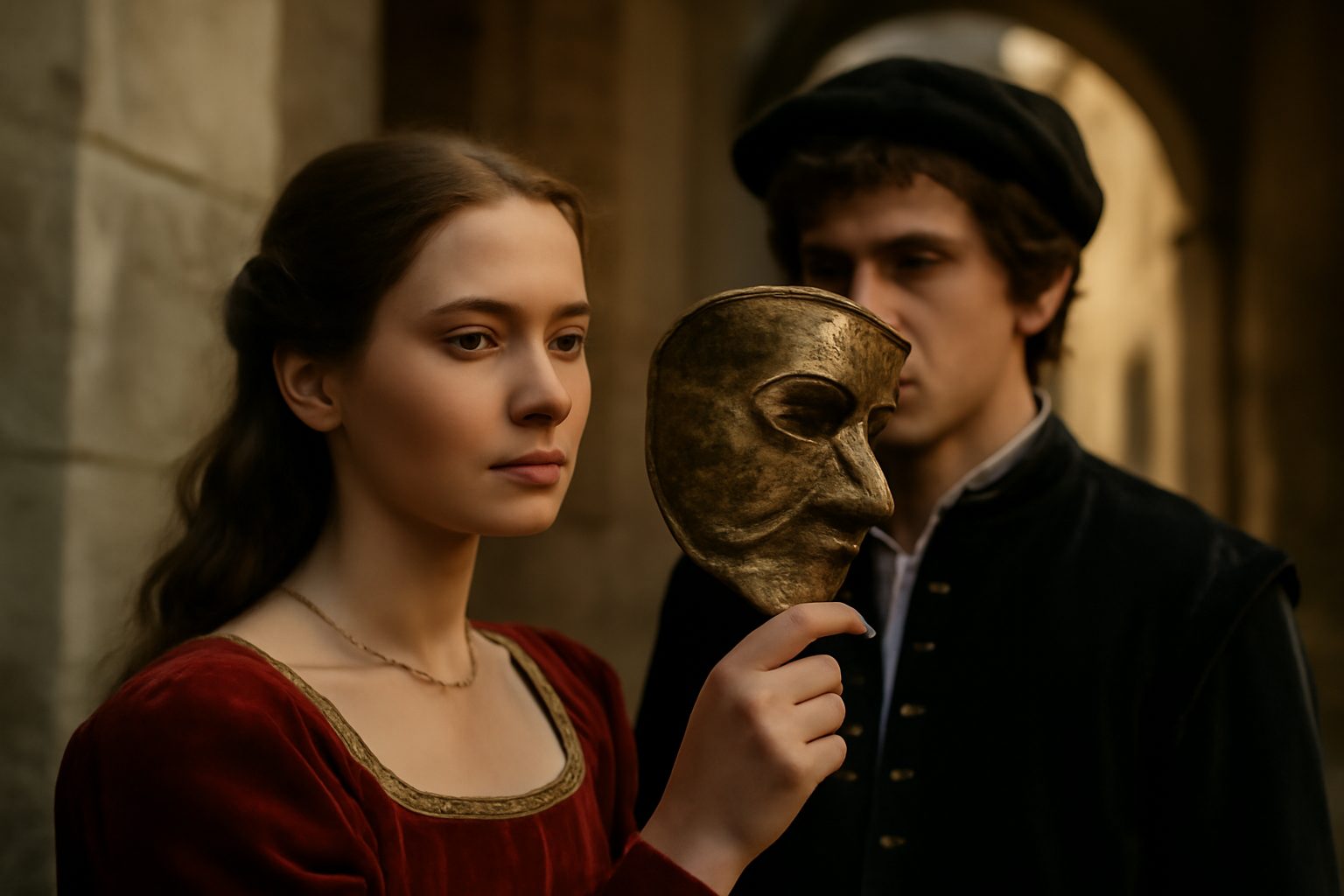
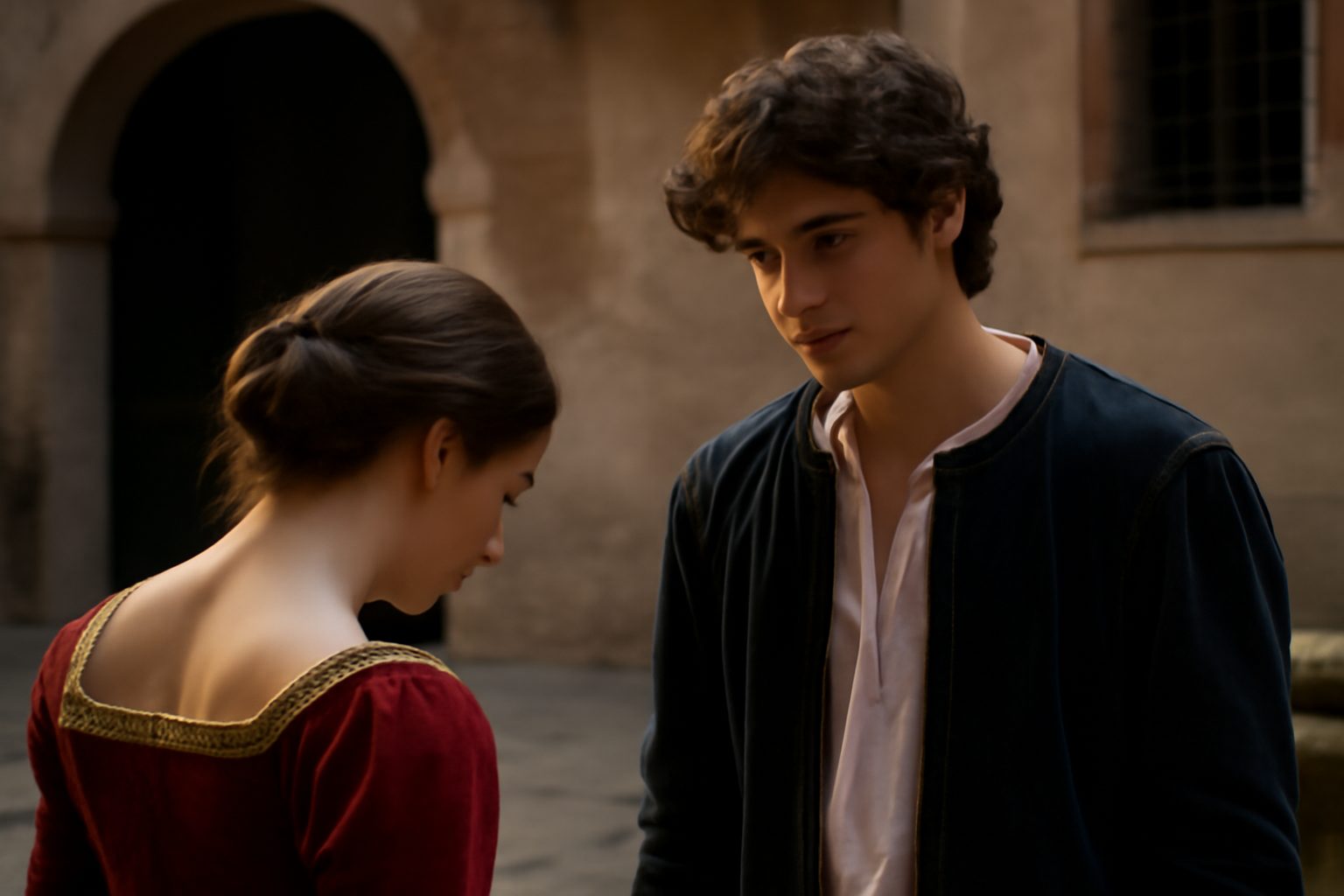
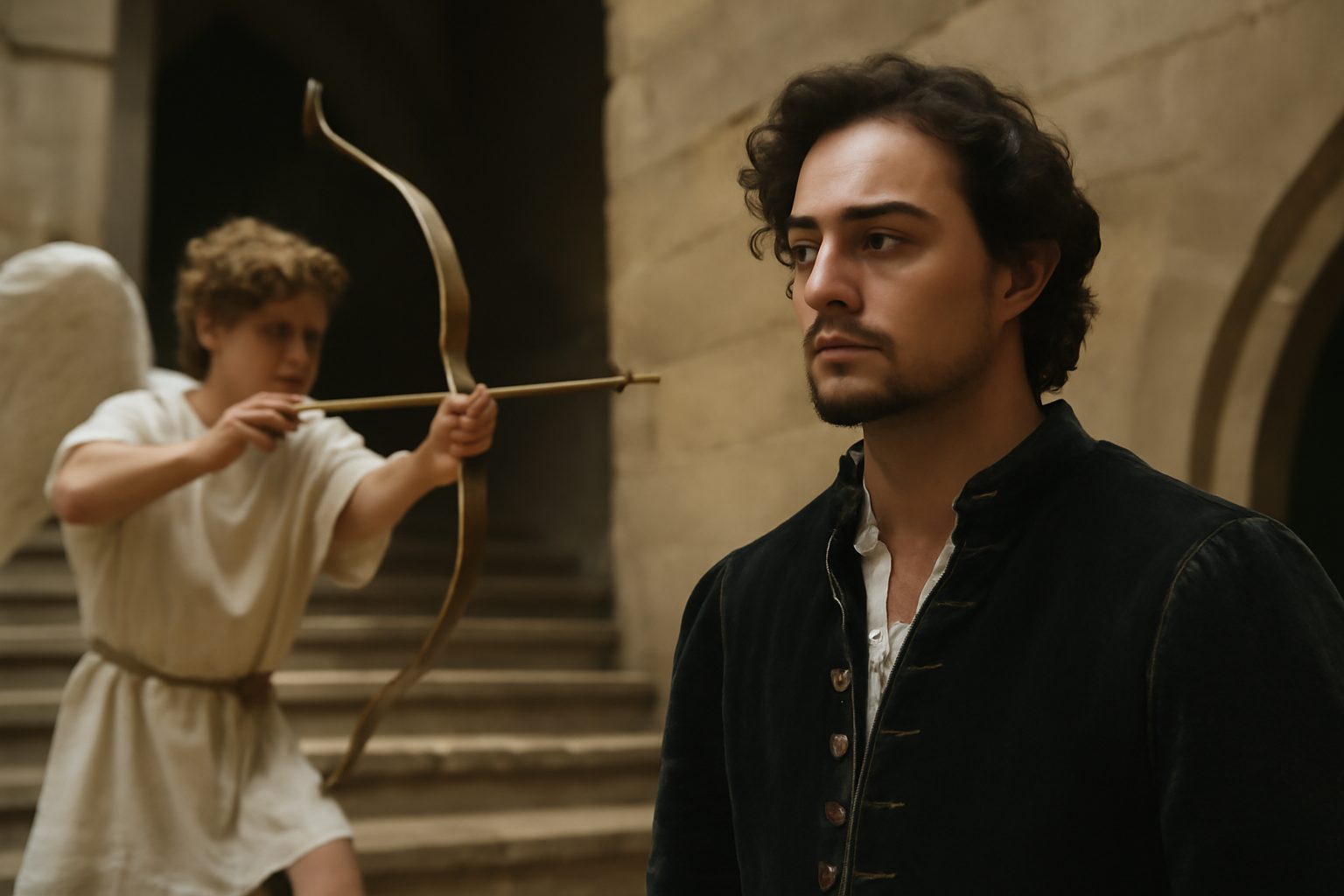
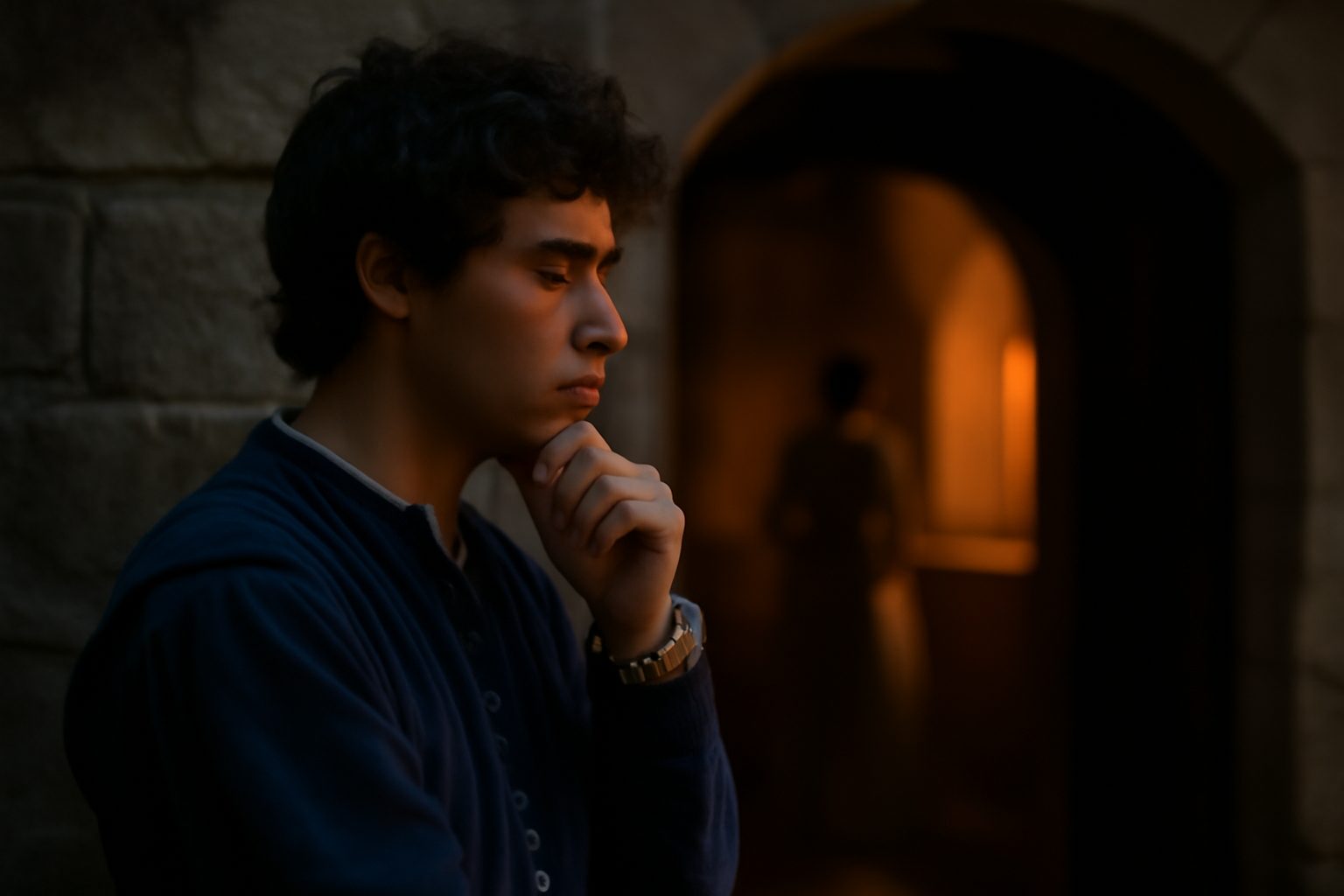
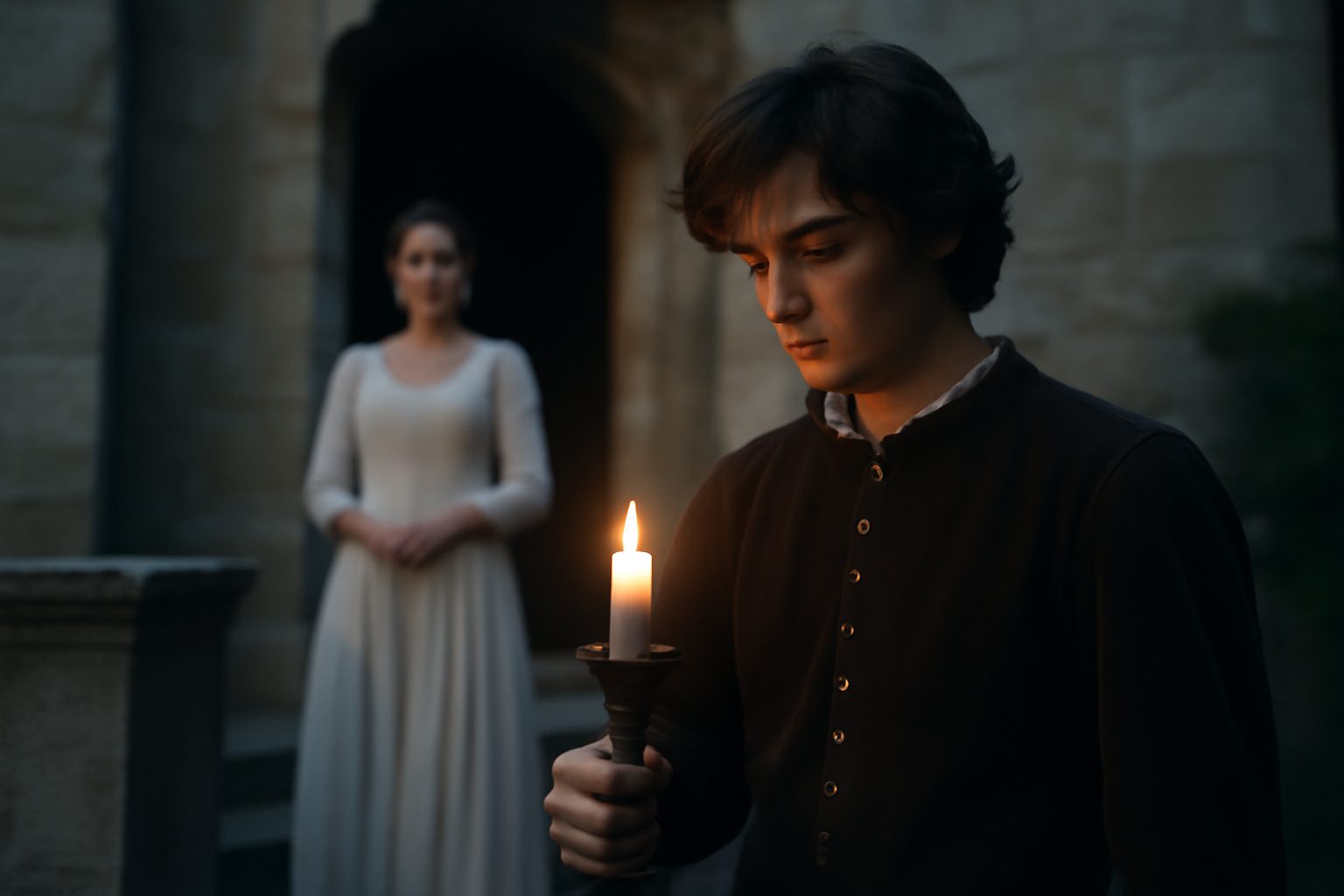
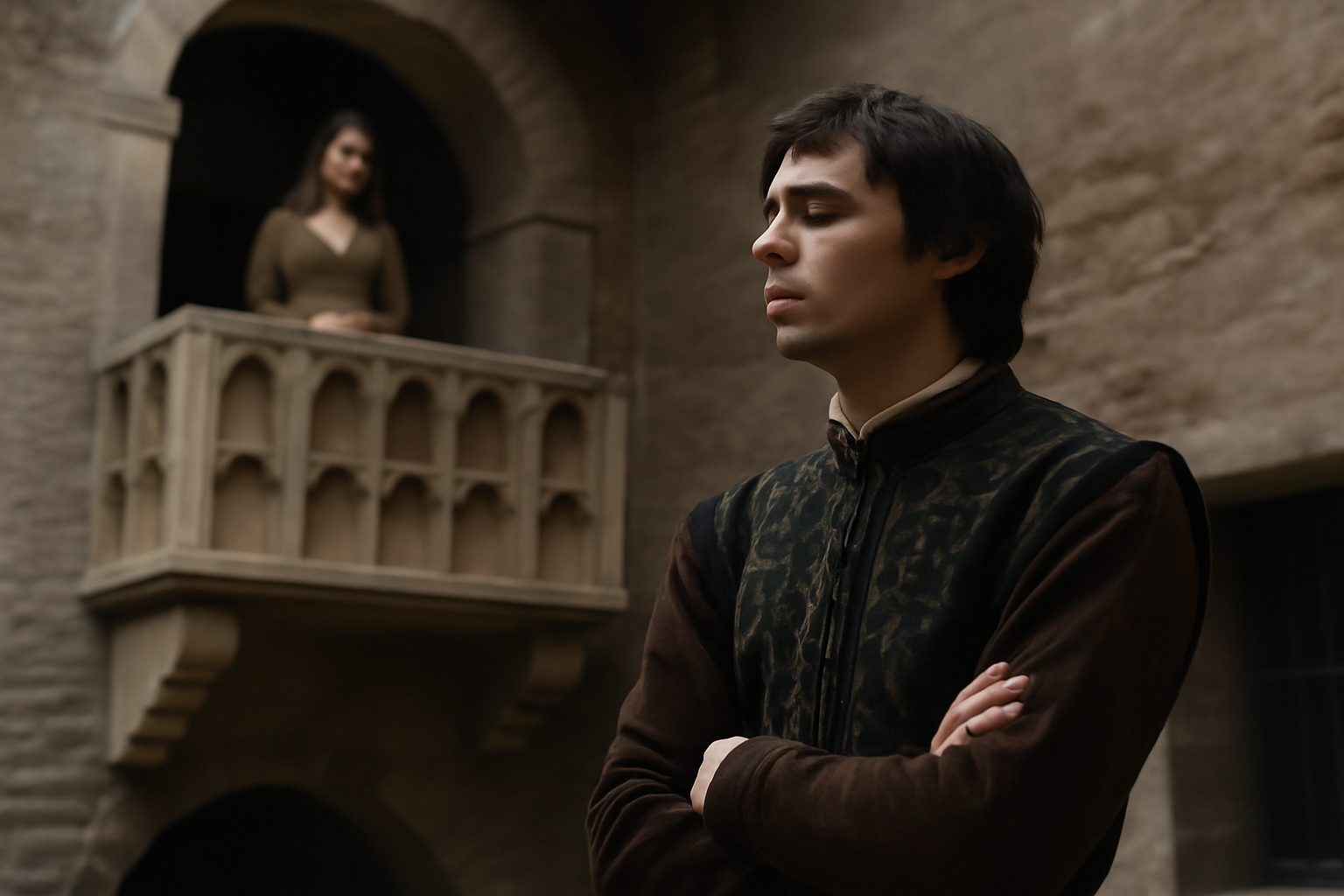
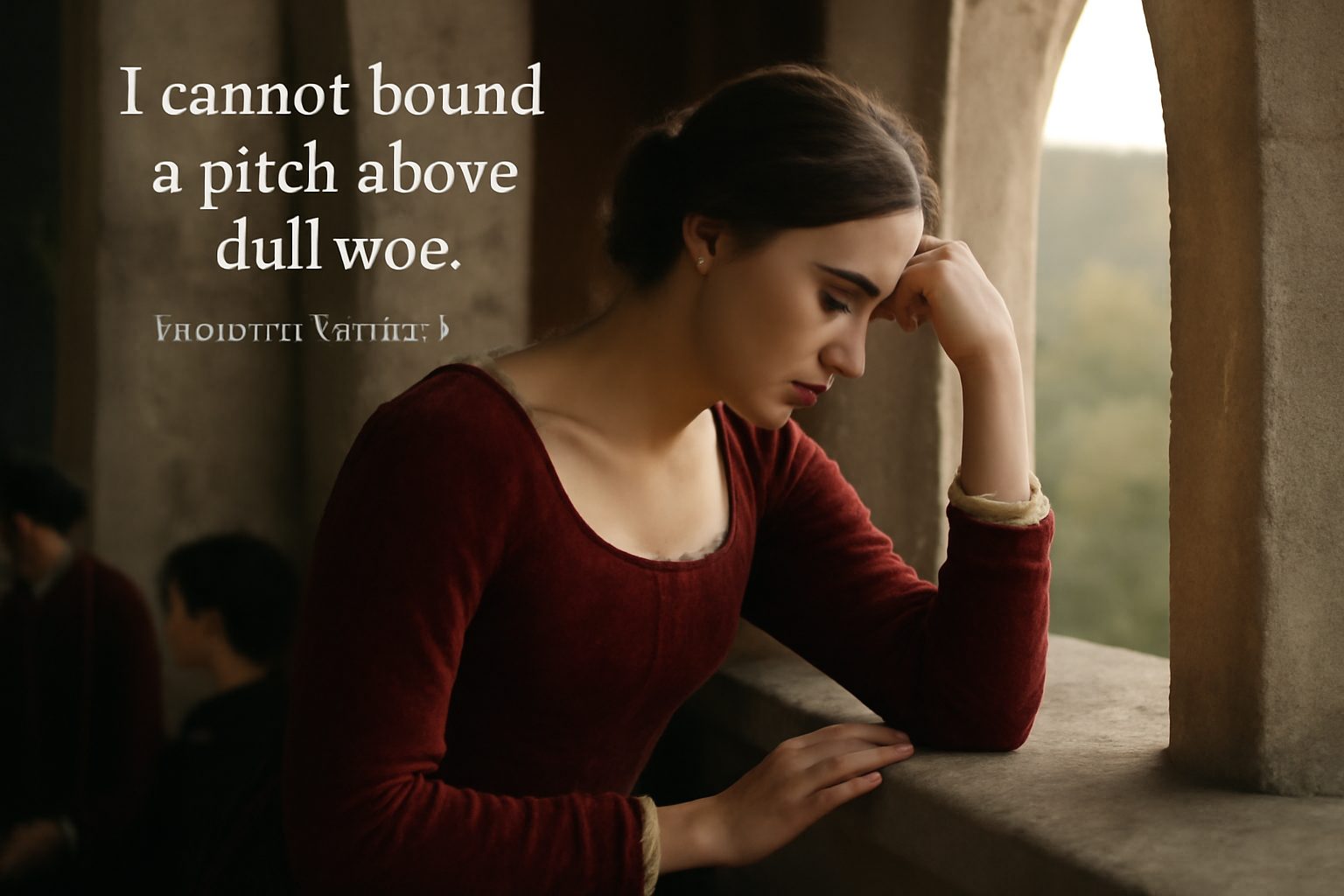
In Act 1, Scene 4 of Romeo and Juliet, Romeo and his friends are preparing to sneak into the Capulet's masquerade ball. As the group jokes and plans to dance, Romeo resists the festive mood, feeling weighed down by his unrequited love for Rosaline. His request for a torch instead of joining the revelry reflects his melancholy and reluctance to engage in the evening's frivolity.
Romeo: "Give me a torch: I am not for this ambling;"
In modern day english, we would say:
Hand me a torch—I’m not in the mood for this lighthearted dancing around.
Frequently Asked Questions
What does Romeo ask for at the beginning of the scene?
Romeo asks for a torch.
How does Romeo feel about the dancing at the party?
Romeo does not want to dance and says he is not in the mood for it.
Connections to other verses:
Connections to "Give me a torch: I am not for this ambling"
Romeo's line, Give me a torch: I am not for this ambling, reflects his melancholy and reluctance to engage in the lighthearted festivities. This sentiment is echoed in his earlier statement, With nimble soles: I have a soul of lead, where he contrasts the physical agility of his friends with his own emotional heaviness. His desire to hold a torch rather than dance aligns with his later declaration, I'll be a candle-holder, and look on, reinforcing his role as an observer rather than a participant.
Contrast with Other Characters
Mercutio's response to Romeo's mood is dismissive and playful, as seen in Nay, gentle Romeo, we must have you dance, urging him to join the revelry. Similarly, Benvolio's pragmatic advice in And we mean well in going to this mask highlights the group's intention to lift Romeo's spirits, contrasting with his resistance.
Thematic Links to Love and Fate
Romeo's heaviness is further explained in Under love's heavy burden do I sink, connecting his reluctance to his unrequited love for Rosaline. This foreshadows his later foreboding in I fear, too early: for my mind misgives, where he senses impending doom, ultimately leading to his resigned acceptance in But He, that hath the steerage of my course, acknowledging fate's control over his actions.