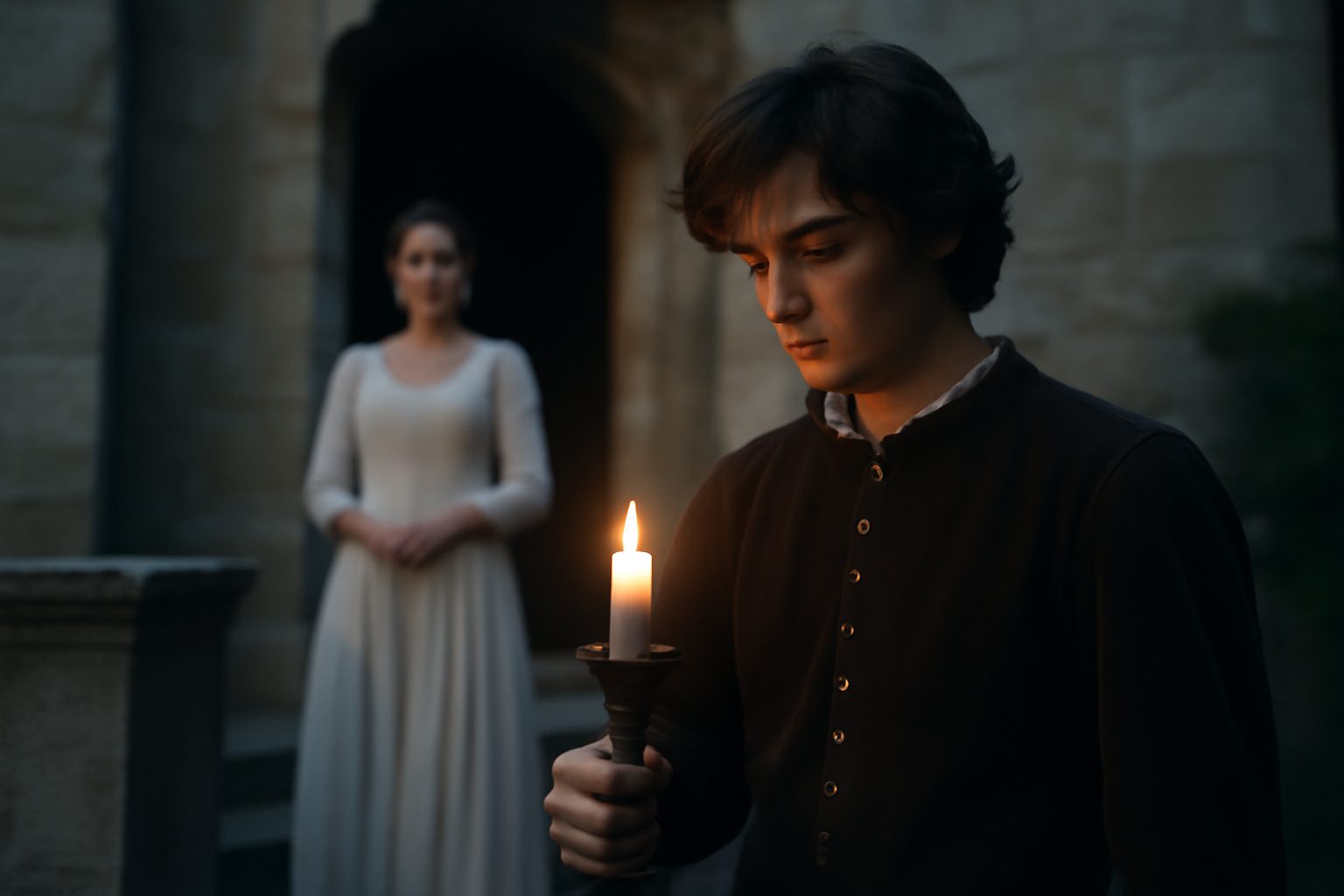
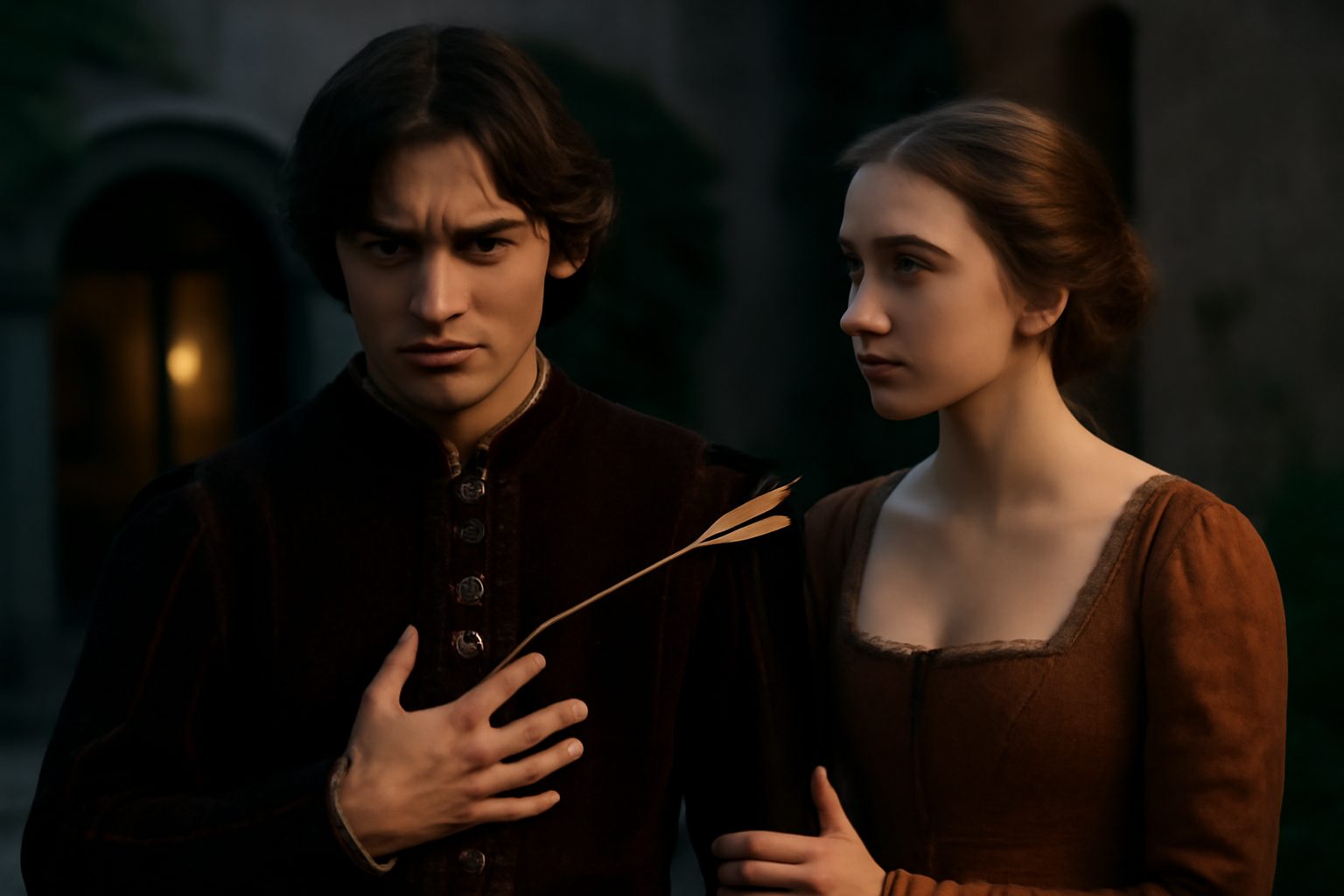
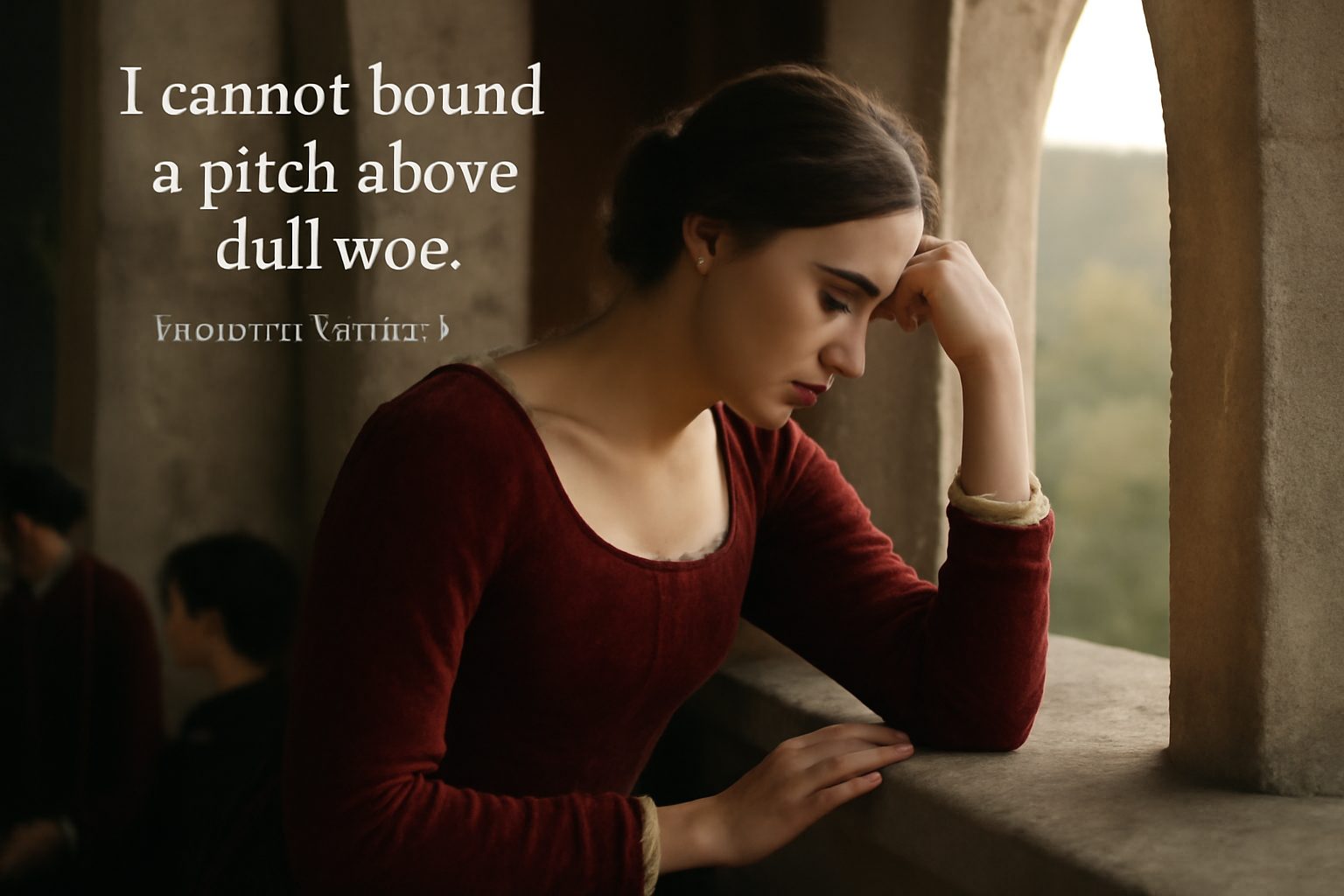
In Act 1, Scene 4 of Romeo and Juliet, Mercutio mocks the conventions of courtly love and theatrical traditions as he and Romeo prepare to crash the Capulet feast. This line dismisses the idea of a rehearsed, overly formal introduction, reflecting Mercutio's playful irreverence and disdain for pretension. It comes as he teases Romeo for his lovesick melancholy, urging him to abandon seriousness and embrace the spontaneity of the moment.
Benvolio: "Nor no without-book prologue, faintly spoke"
In modern day english, we would say:
They won’t give some memorized introduction, mumbled halfheartedly.
Frequently Asked Questions
What does Benvolio mean when he says he won't give a memorized speech?
Benvolio is saying that he won't recite a prepared or rehearsed introduction, implying he will speak naturally and from the heart.
Connections to other verses:
Connections to "Nor no without-book prologue, faintly spoke"
The verse Nor no without-book prologue, faintly spoke is part of a dialogue about the group's approach to entering the Capulet feast. It dismisses the need for a memorized, insincere introduction, reflecting a theme of authenticity versus artifice that runs through the scene.
Rejection of Formality
This idea is immediately reinforced by The date is out of such prolixity, which declares such elaborate customs outdated. Both lines advocate for spontaneity over contrived speeches.
Contrast with Theatrical Imagery
Mercutio later picks up on this theatrical language in After the prompter, for our entrance, humorously framing their entry as a performance, yet subverting the formality that Romeo's friends initially considered.
Connection to Romeo's Reluctance
Romeo's melancholy state, expressed in I have a soul of lead, contrasts with the dismissive attitude toward pretense. His emotional heaviness makes him resistant to any performance, aligning with the rejection of "without-book" prologues.
Mercutio's Emphatic Agreement
The sentiment is echoed by Mercutio's declaration in We'll have no Cupid hoodwink'd with a scarf, rejecting symbolic disguises and further emphasizing their preference for straightforwardness over affected gestures.