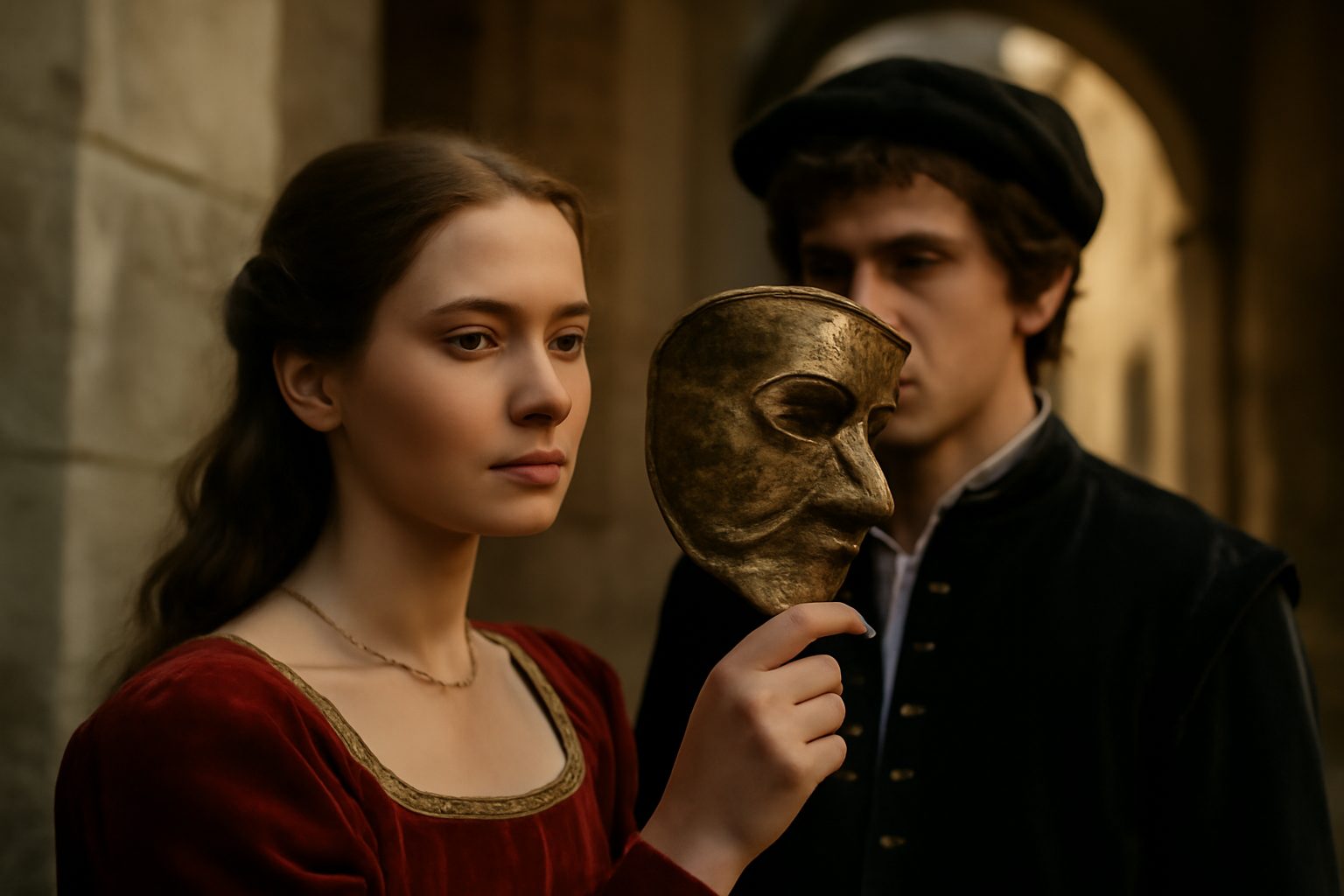
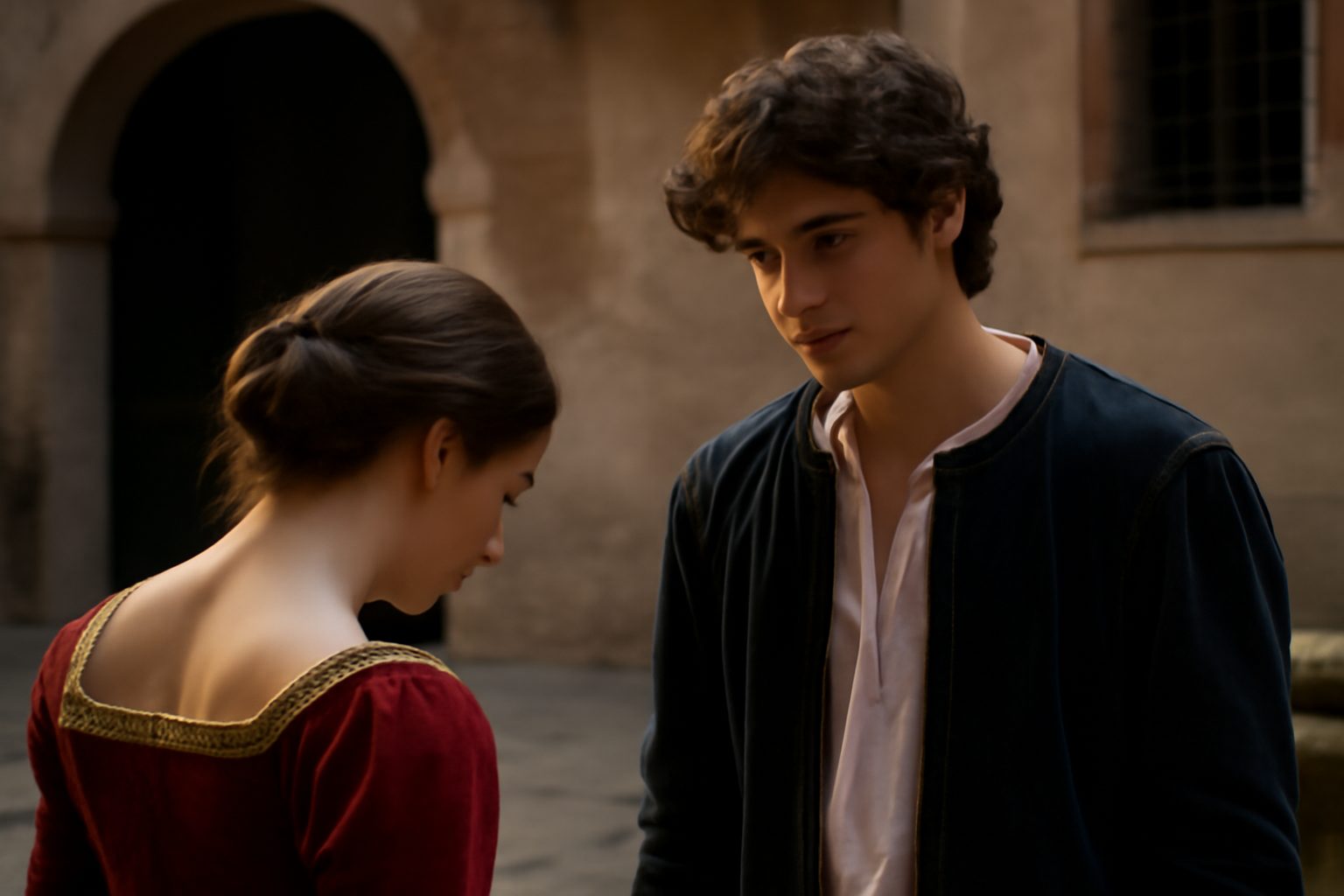
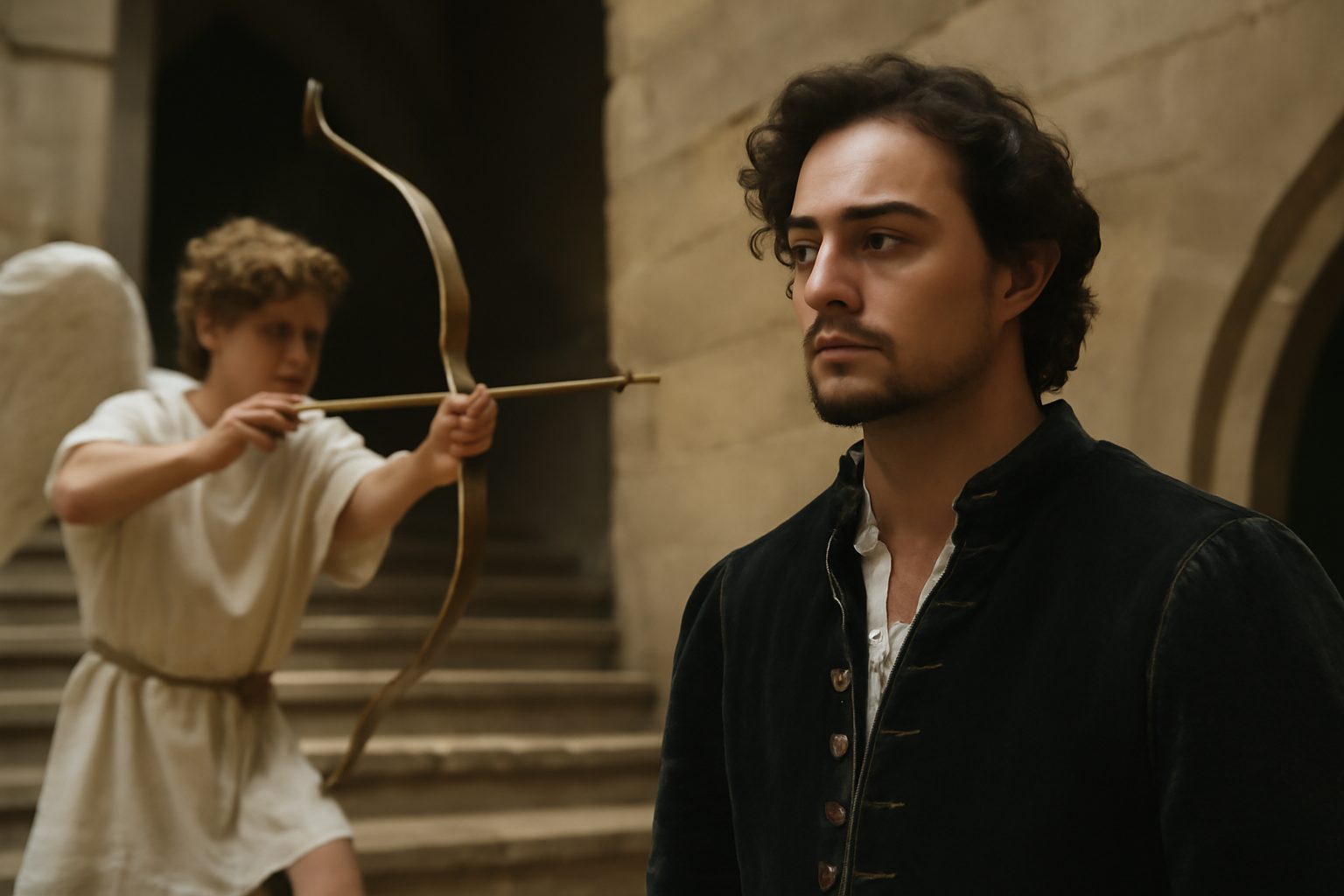
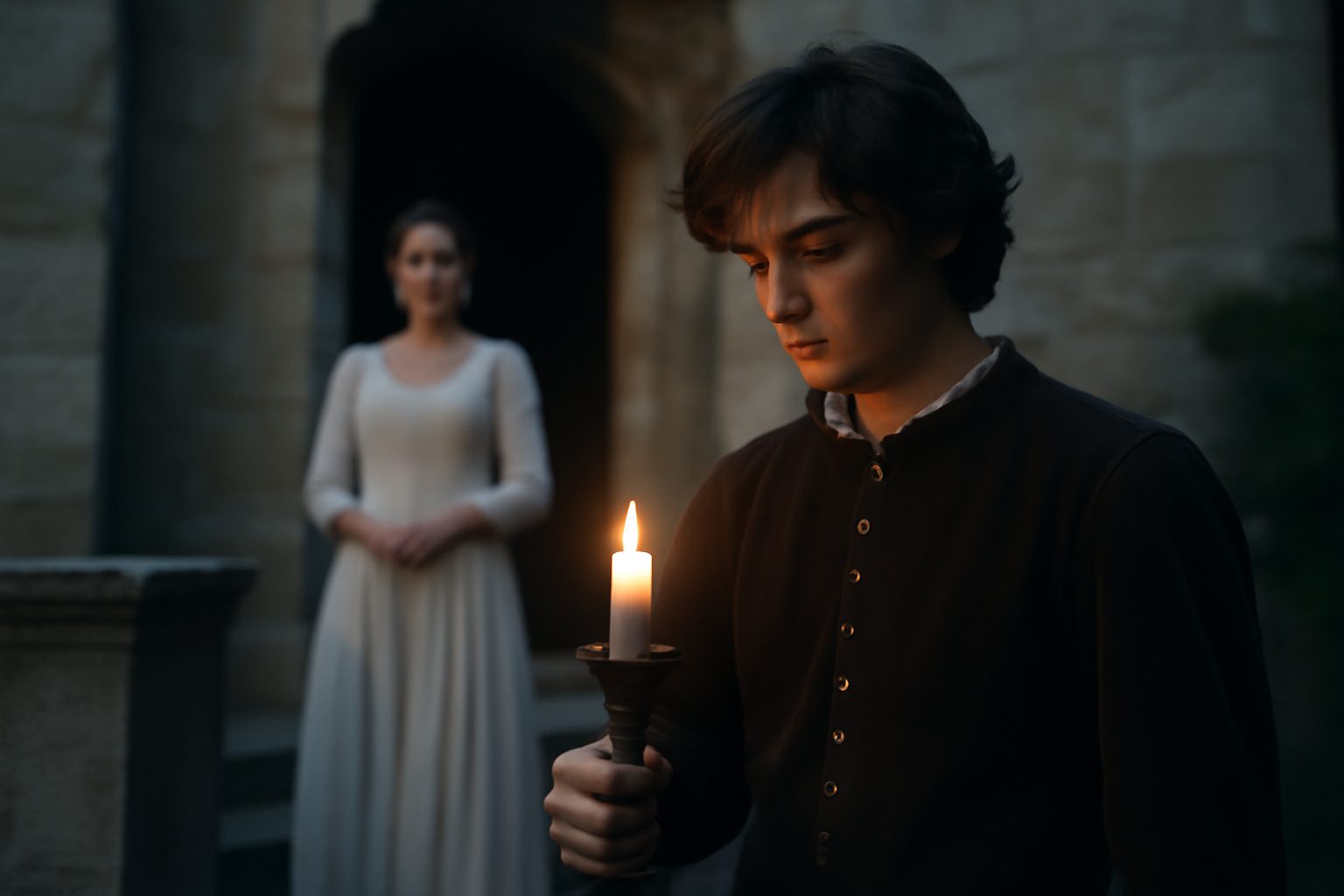
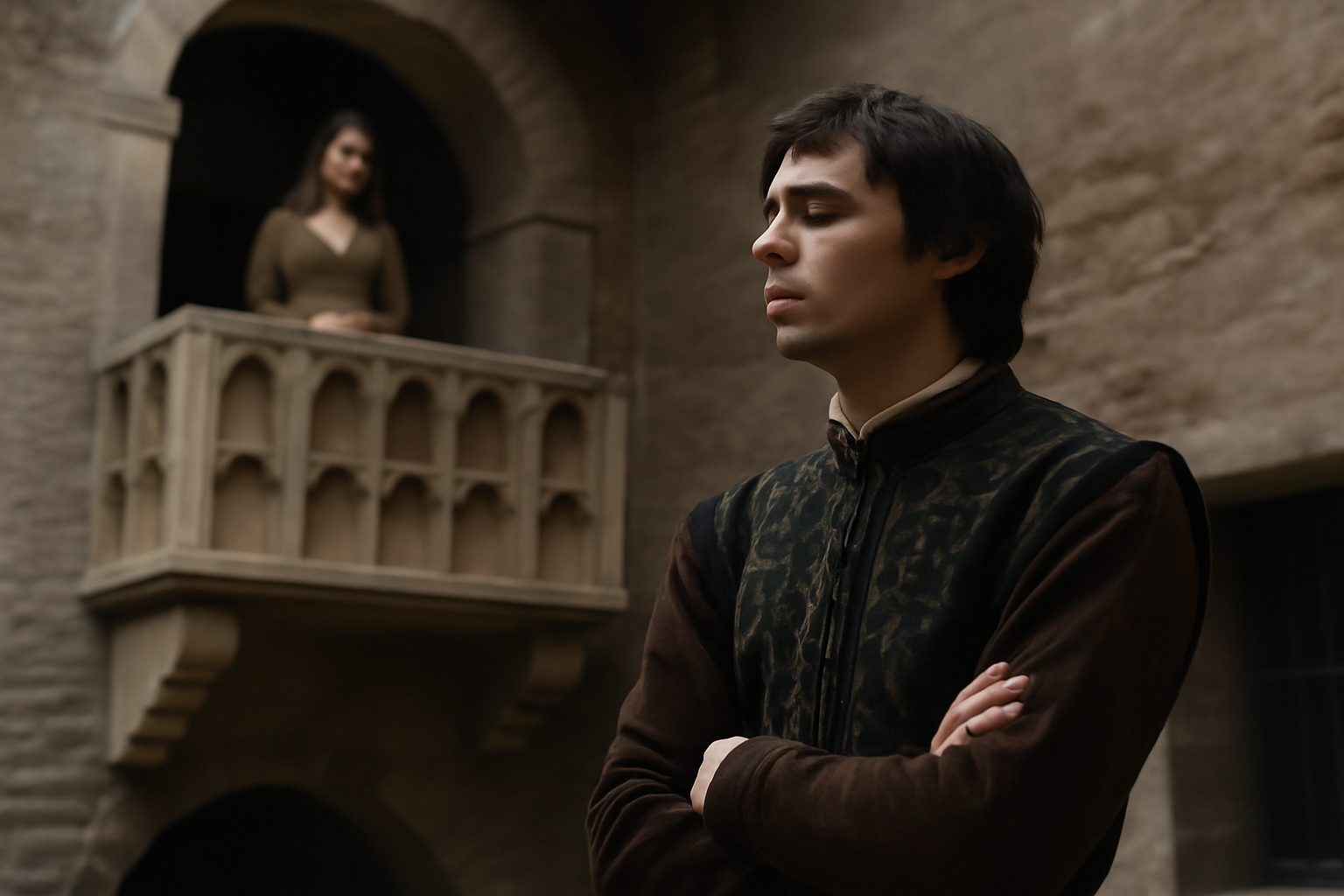
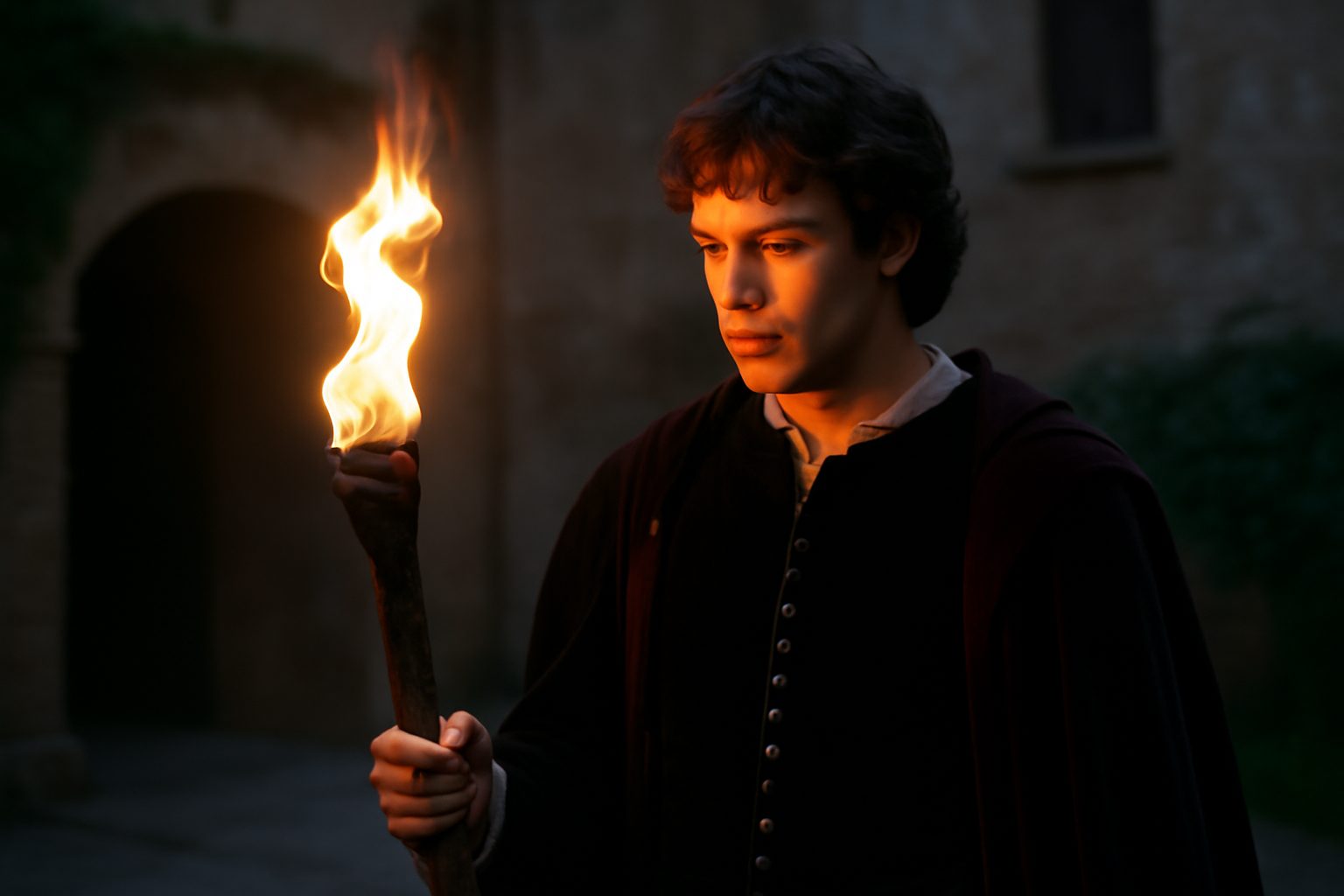
In Act 1, Scene 4 of Romeo and Juliet, Romeo speaks these words as he and his friends prepare to crash the Capulet's feast. Still pining for Rosaline, he questions the nature of love, expressing doubt about its gentle reputation as he grapples with his own heartache. The line captures his conflicted feelings before he meets Juliet, which will soon transform his understanding of love entirely.
Romeo: "Is love a tender thing? it is too rough,"
In modern day english, we would say:
Romeo is questioning whether love is gentle, saying it feels too harsh and painful.
Frequently Asked Questions
What is Romeo questioning about love in this line?
Romeo is questioning whether love is gentle or harsh, as he feels it is too rough.
Connections to other verses:
Connections to "Is love a tender thing? it is too rough,"
Romeo's questioning of love's nature in this verse reflects his melancholic state and introduces a central theme of love's duality—tender yet painful. This idea resonates with several other lines in the scene.
Direct Responses and Echoes
Mercutio immediately counters Romeo's sentiment with playful advice in "If love be rough with you, be rough with love;", suggesting a more aggressive, less sentimental approach to love. He further elaborates with "Prick love for pricking, and you beat love down.", reinforcing his view that love should be met with defiance rather than sorrow.
Romeo's Burden of Love
Romeo's feeling that love is "too rough" is part of a larger expression of his lovesick heaviness. He states, "Under love's heavy burden do I sink.", and worries that this weight is "Too great oppression for a tender thing.", directly echoing his initial question and emphasizing love's oppressive side.
Contrast with Lightness and Revelry
Romeo's somber mood contrasts with the scene's overall tone of merriment and masking. He refuses to engage in the festivities, asking for "Give me a torch: I am not for this ambling;" and declaring he will "I'll be a candle-holder, and look on.", reinforcing his isolation due to love's "rough" nature.
Dreams and Fantasy
The discussion of love leads into Mercutio's Queen Mab speech, which explores dreams and fantasies—themes closely tied to Romeo's idealistic yet painful view of love. Mercutio describes dreams as "the children of an idle brain," and "Begot of nothing but vain fantasy,", subtly critiquing the kind of lofty, impractical love that Romeo is suffering from.
Foreshadowing and Fate
Romeo's sense of foreboding about love culminates in his fear that "Some consequence yet hanging in the stars" will begin at the feast and lead to "some vile forfeit of untimely death.", tying his personal anguish to the play's tragic destiny.