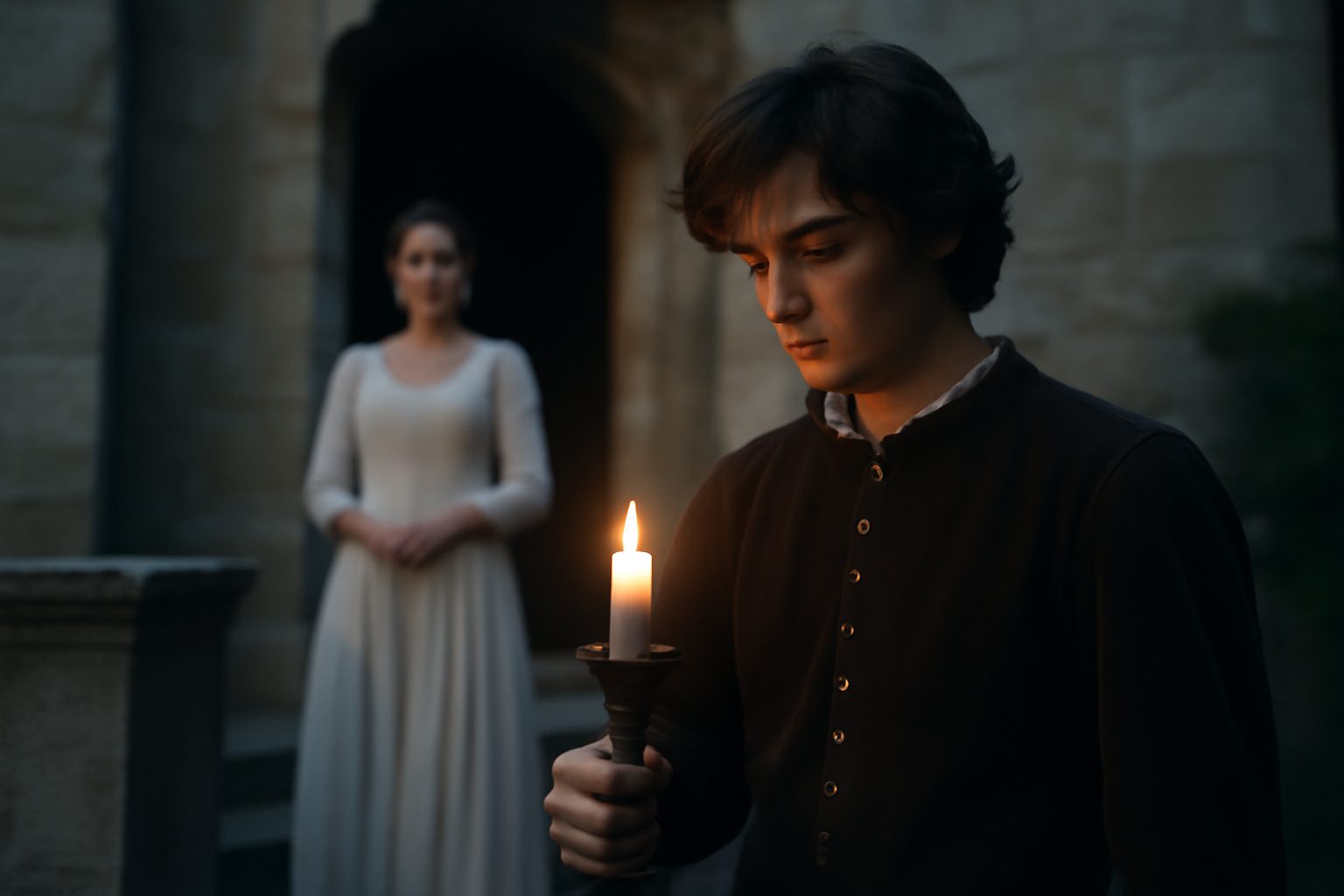
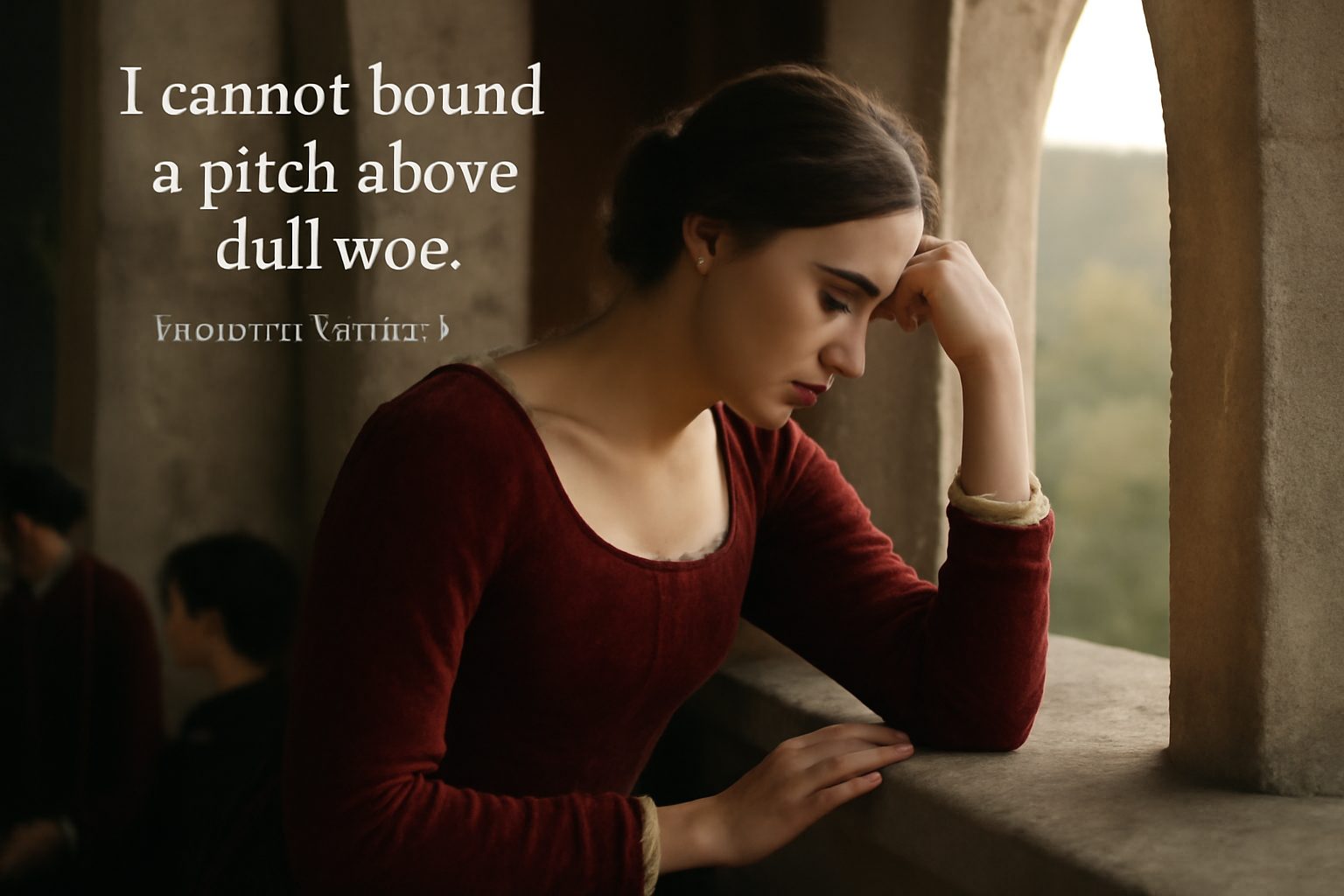
In Act 1, Scene 4 of Romeo and Juliet, Mercutio mocks Romeo's lovesick demeanor as they prepare to crash the Capulet feast. This line follows Mercutio's playful teasing about love's weight, suggesting that taking romance too seriously would only drag one down. The remark underscores Mercutio's skepticism toward Romeo's idealized view of love, contrasting their perspectives.
Mercutio: "And, to sink in it, should you burden love;"
In modern day english, we would say:
By getting too deep into love, you’d only weigh it down.
Frequently Asked Questions
What does Mercutio mean when he says that love should not be a burden?
Mercutio is suggesting that love should be lighthearted and fun, not something that weighs you down or causes stress.
Connections to other verses:
Connections to "And, to sink in it, should you burden love"
This line, spoken by Mercutio, directly responds to Romeo's lament about the weight of love. It connects thematically and structurally to several other verses in the scene.
Immediate Context: Romeo's Despair
The verse is part of a dialogue where Romeo expresses his emotional heaviness. In Under love's heavy burden do I sink, Romeo uses similar sinking imagery, reinforcing the idea of love as an oppressive force. Mercutio's retort mocks this perspective, suggesting that to dwell on such burdens is to exacerbate them unnecessarily.
Contrast with Lightness and Freedom
Mercutio's advice contrasts with earlier encouragement for Romeo to embrace love's exhilaration. In You are a lover; borrow Cupid's wings, Benvolio urges Romeo to adopt a lighter, more joyful approach. Similarly, And soar with them above a common bound advocates transcending sorrow through love's potential elevation, opposing the "sinking" metaphor.
Mercutio's Pragmatic View of Love
Mercutio consistently dismisses Romeo's melancholic take on love. In If love be rough with you, be rough with love, he advises defiance rather than submission, aligning with his warning against burdening love. His jesting tone in Prick love for pricking, and you beat love down further emphasizes active resistance over passive suffering.
Foreshadowing and Deeper Implications
Romeo's foreboding sense of doom, expressed in I fear, too early: for my mind misgives, echoes the "burden" he feels, hinting at the tragic consequences to come. The idea of love leading to a "vile forfeit of untimely death" from By some vile forfeit of untimely death underscores the gravity that Mercutio lightly warns against.
Dreams and Illusions
Mercutio's Queen Mab speech, beginning with She is the fairies' midwife, and she comes, explores how fantasies shape desires and fears. His assertion that dreams are "the children of an idle brain" from Which are the children of an idle brain parallels his view that Romeo's love-sorrow is self-imposed, reinforcing the caution against burdening love with excessive seriousness.