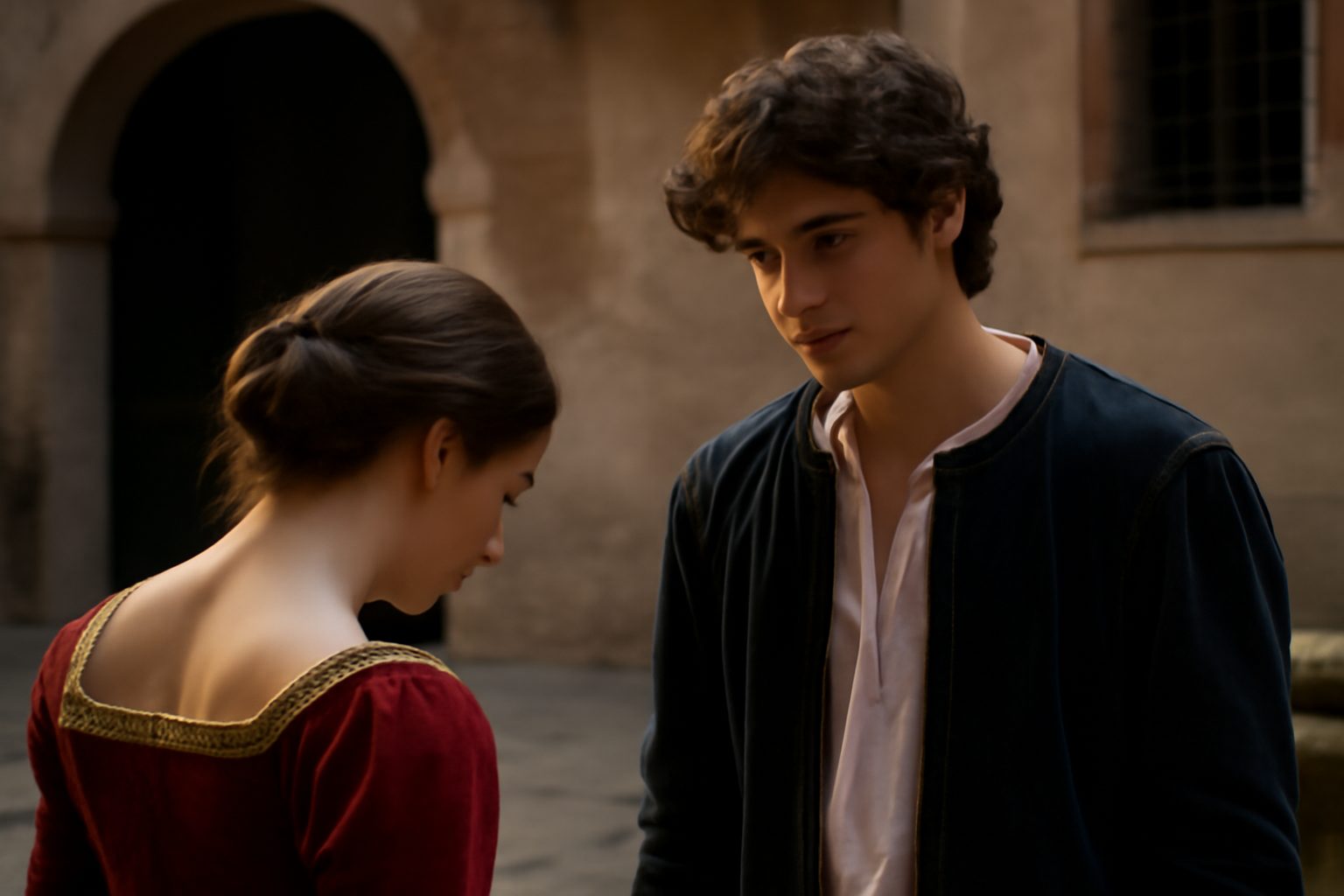
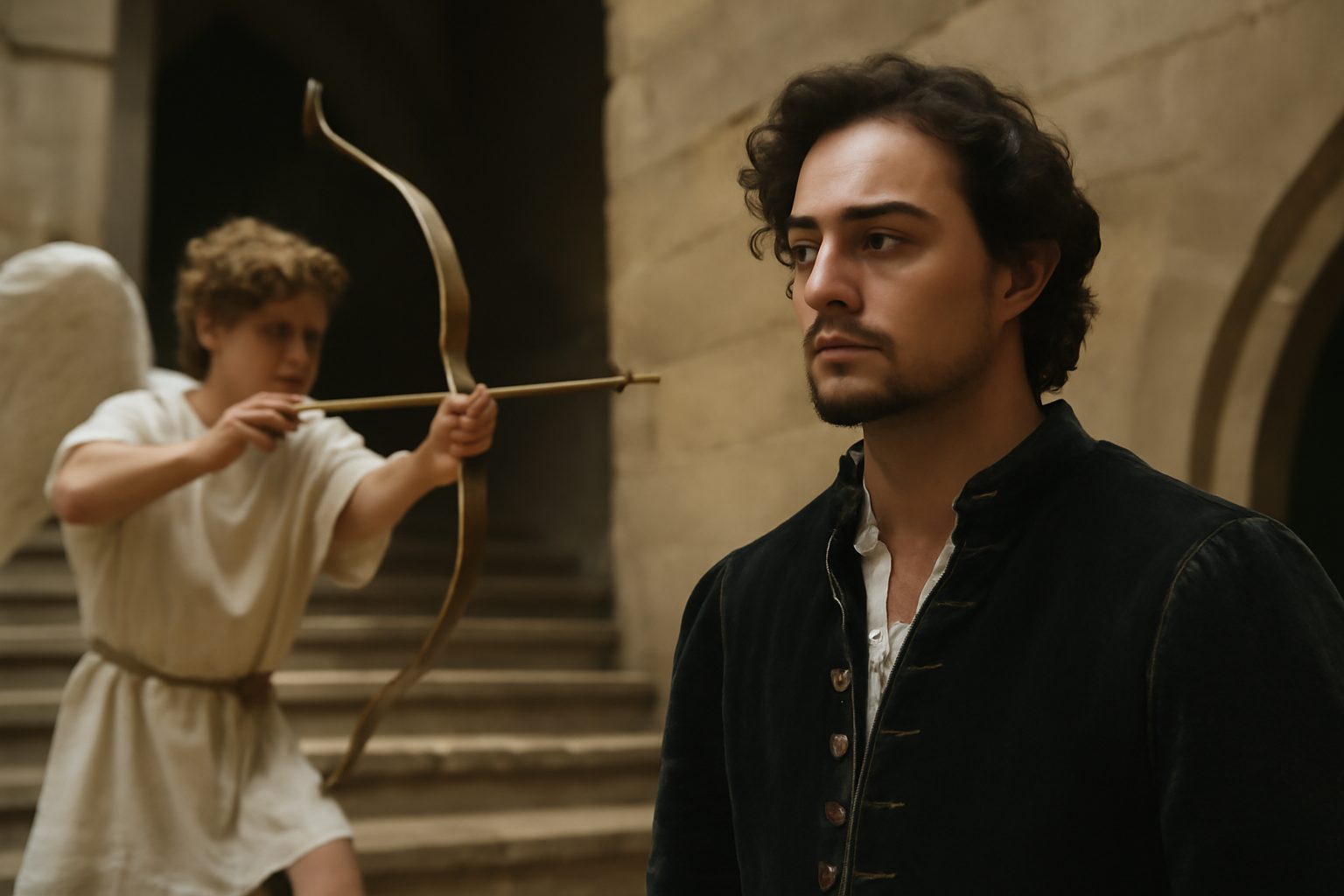
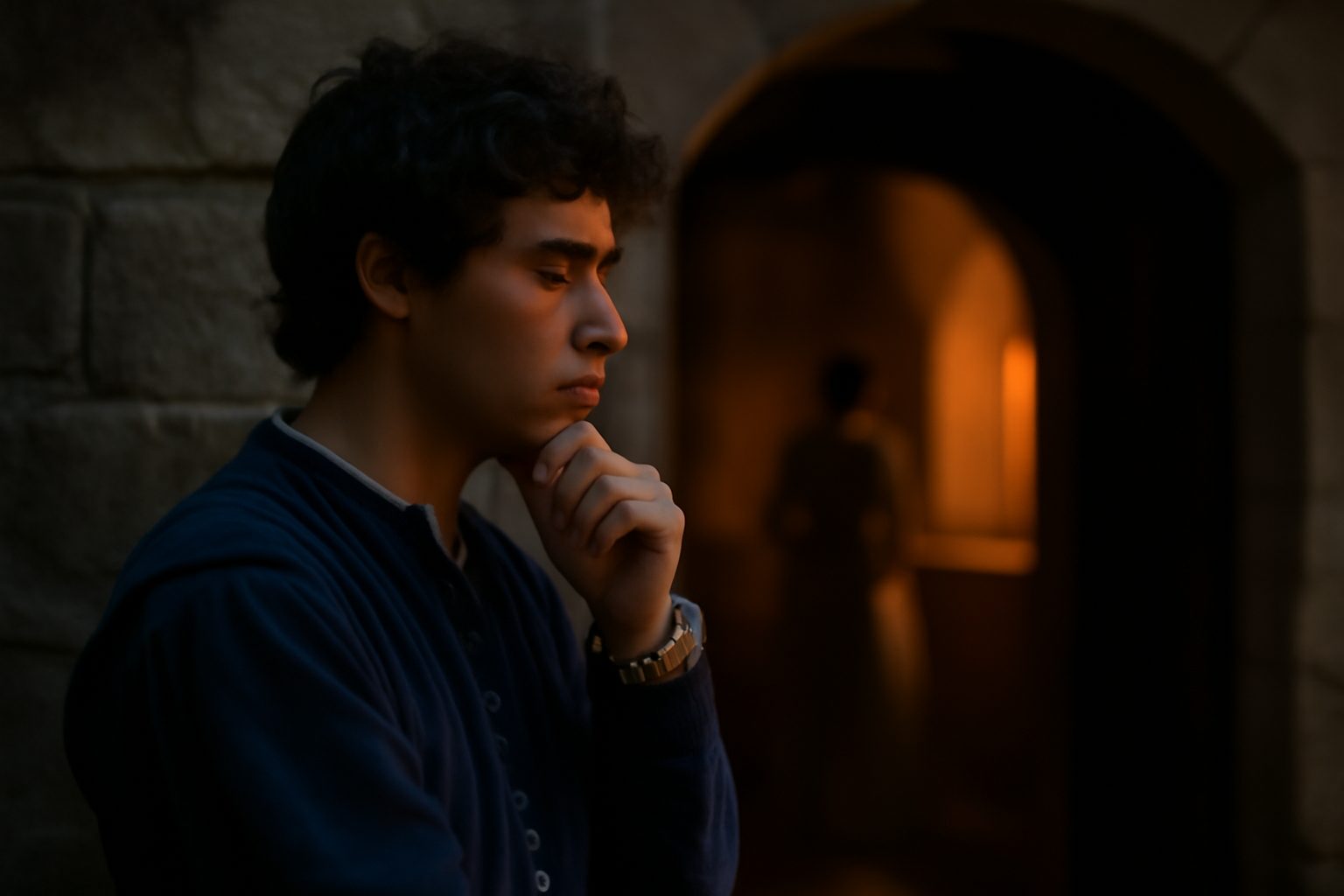
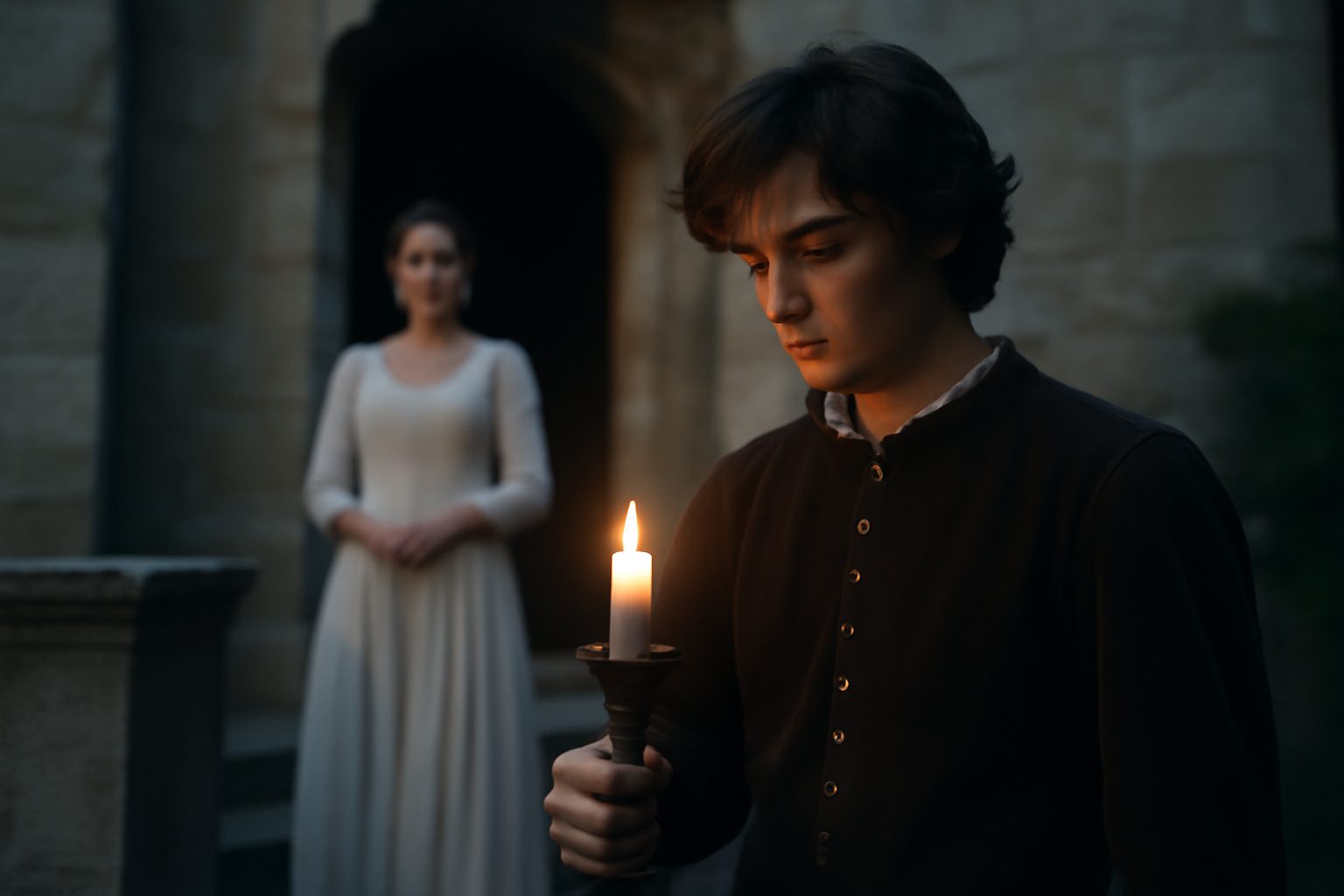
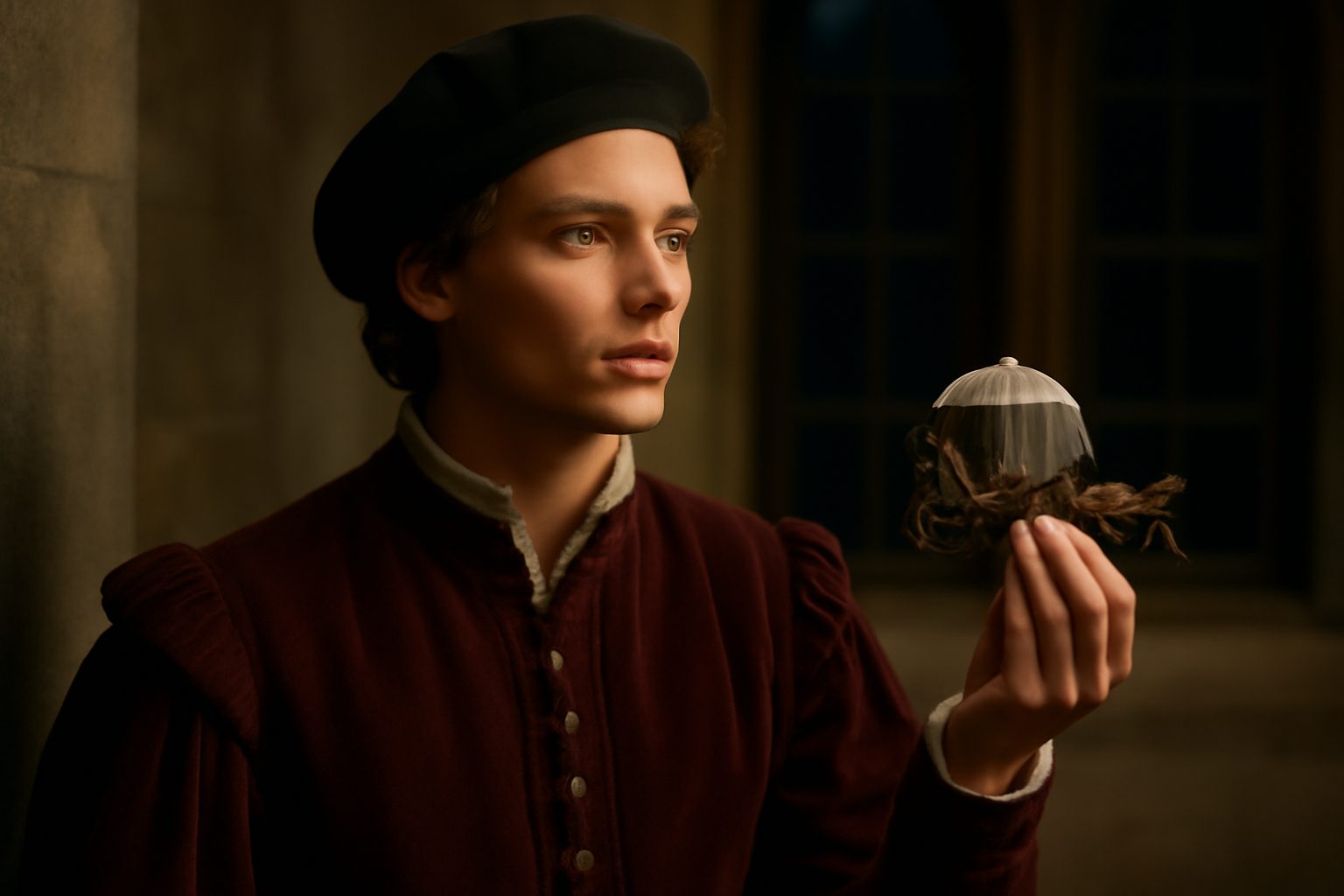
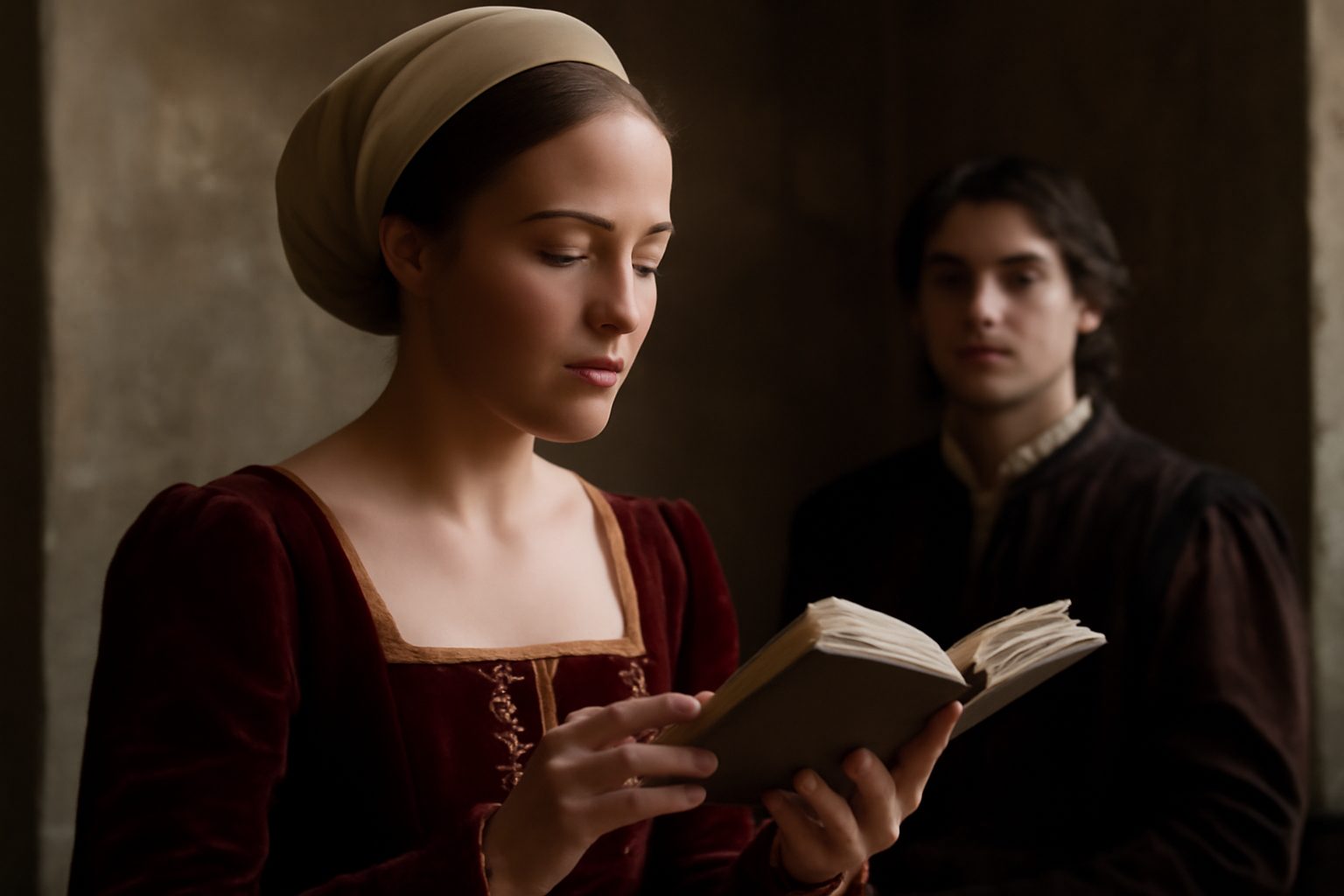
In Act 1, Scene 4 of Romeo and Juliet, Romeo speaks these words as he and his friends prepare to crash the Capulet's masquerade ball. He has just shared a vivid dream that weighs heavily on his mind, hinting at foreboding about the night ahead. This moment captures Romeo's melancholy and superstition, setting the tone for the fateful events to come.
Romeo: "I dream'd a dream to-night."
In modern day english, we would say:
I had a dream last night.
Frequently Asked Questions
What does Romeo say he did in his dream?
He dreamed a dream.
Connections to other verses:
Connections to "I dream'd a dream to-night"
Romeo's line, I dream'd a dream to-night, serves as a catalyst for Mercutio's famous Queen Mab speech and ties into several thematic and narrative threads within the scene.
Mercutio's Response and Queen Mab
Mercutio immediately seizes on Romeo's mention of a dream, replying with And so did I, which prompts Romeo to ask Well, what was yours?. This exchange leads directly into Mercutio's elaboration on Queen Mab, beginning with O, then, I see Queen Mab hath been with you. Mercutio's entire speech—describing Mab's influence on dreams—frames Romeo's simple statement within a larger, fantastical context, emphasizing the theme of dreams as products of vain fantasy.
Dreams as Deception
Romeo's dream also connects to his earlier melancholy and reluctance to join the festivities. He states I have a soul of lead, underscoring his heaviness of heart. His dream, rather than offering solace, seems to deepen his sense of foreboding, hinted at later when he says I fear, too early: for my mind misgives some consequence yet hanging in the stars. This aligns with Mercutio's assertion that dreamers often lie, suggesting dreams are unreliable and potentially deceptive.
Contrast with Other Characters
Romeo's introspective focus on his dream contrasts with the lively, pragmatic dialogue of his companions. For instance, Benvolio's urging Come, we burn daylight, ho! and Mercutio's earlier jest If thou art dun, we'll draw thee from the mire highlight Romeo's detachment from the group's merriment, further emphasized by his dream-related preoccupation.
Foreshadowing and Fate
Ultimately, Romeo's dream subtly foreshadows the tragic events to come. His apprehension about the night's events (With this night's revels and expire the term of a despised life) suggests his dream may be a premonition, though he dismisses it as fantasy. This tension between fate and free will is encapsulated in his closing lines: But He, that hath the steerage of my course, Direct my sail!