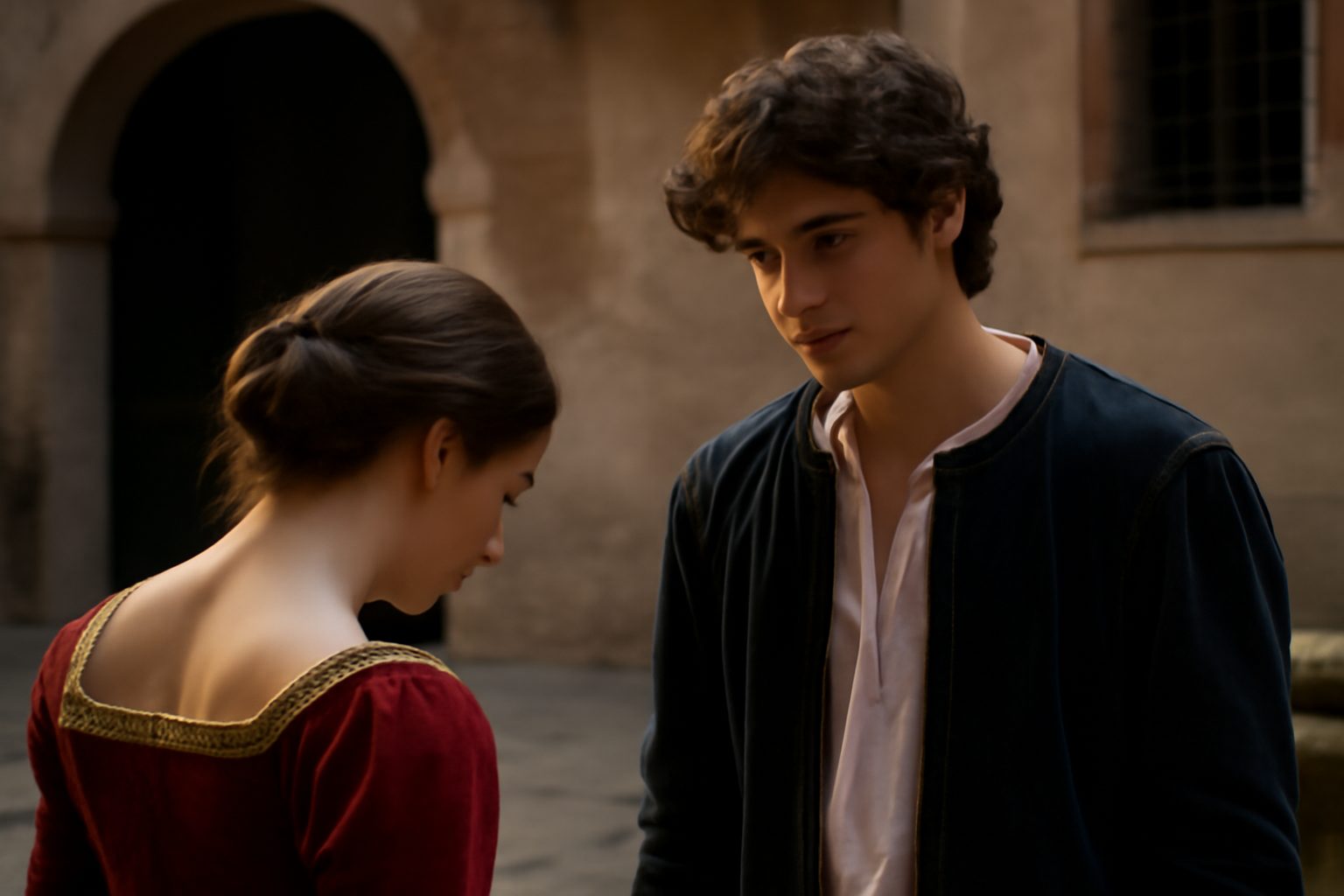
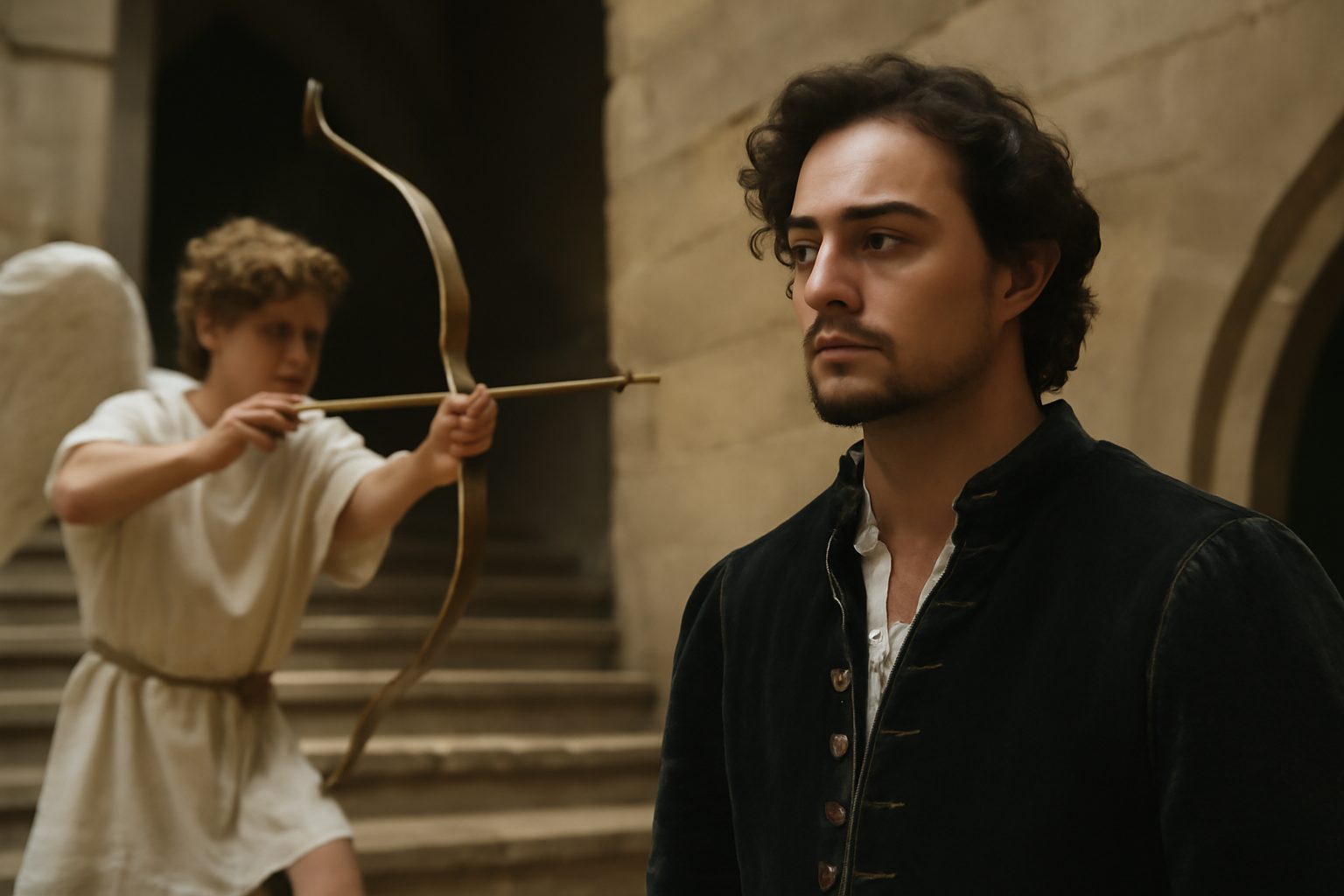
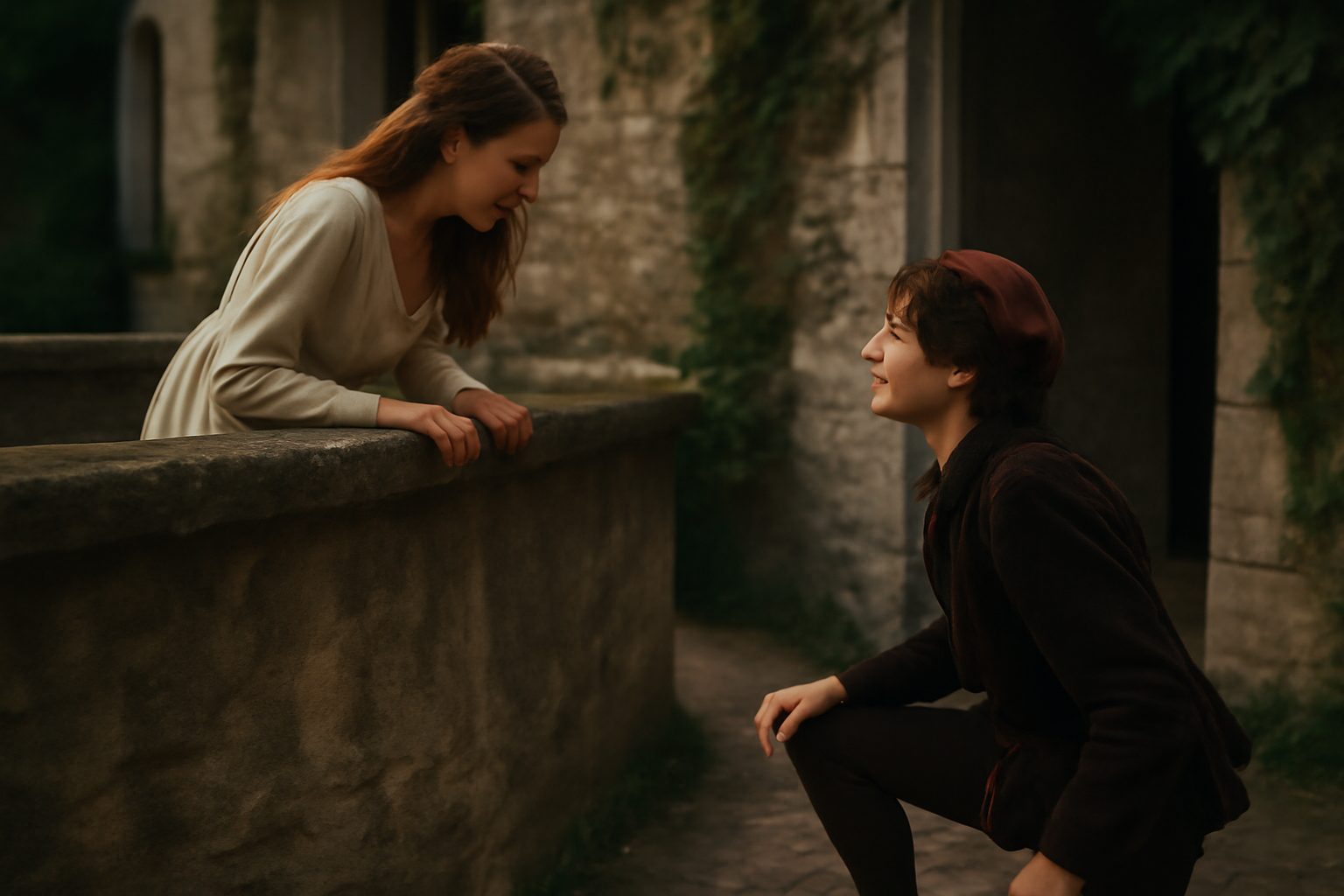
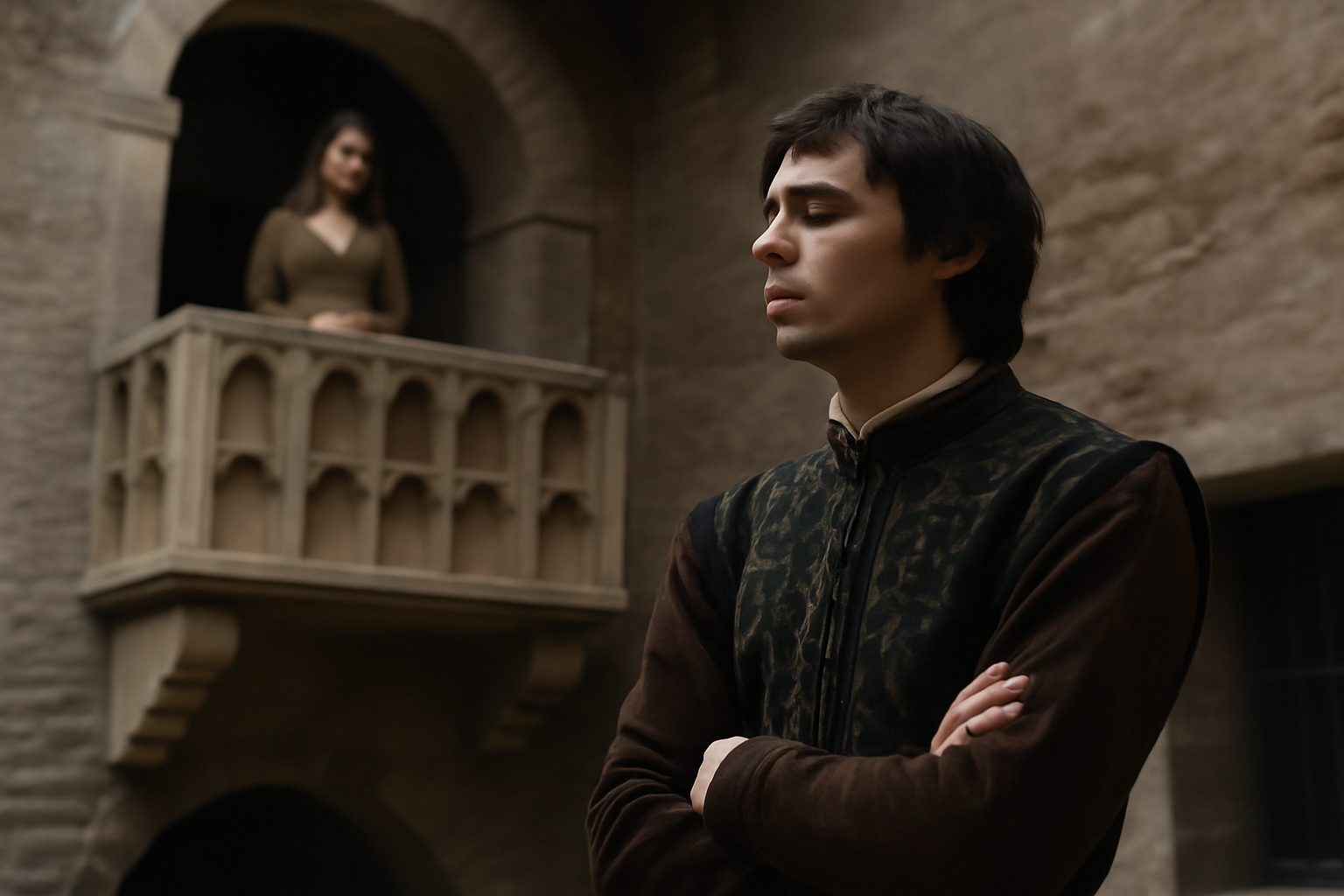
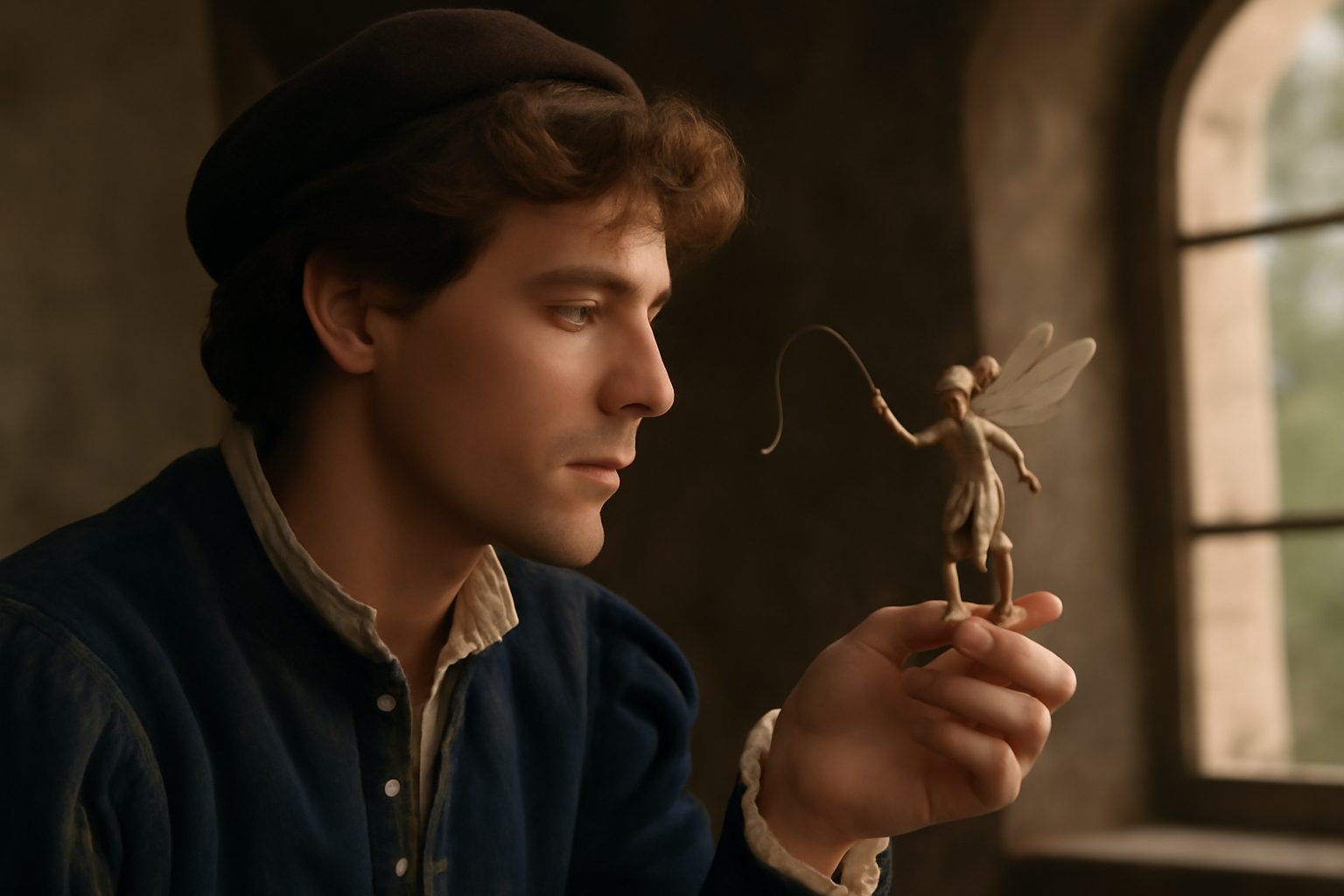
In Act 1, Scene 4 of Romeo and Juliet, Mercutio mocks the pretenses of courtly life as he, Romeo, and their friends prepare to crash the Capulet feast. This line reflects Mercutio's cynical wit, dismissing the shallow dreams of courtiers who obsess over empty gestures of respect. His speech contrasts with Romeo's lovesick melancholy, highlighting the tension between fantasy and reality.
Mercutio: "O'er courtiers' knees, that dream on court'sies straight,"
In modern day english, we would say:
Courtiers dream of bowing and politeness even as they sleep, bending their knees out of habit.
Frequently Asked Questions
What does Mercutio say courtiers dream about?
Mercutio says courtiers dream about bowing and showing respect.
Connections to other verses:
Connections to "O'er courtiers' knees, that dream on court'sies…"
The verse O'er courtiers' knees, that dream on court'sies… is part of Mercutio's vivid Queen Mab speech, which explores how dreams reflect the desires and anxieties of different people. This line specifically connects to several other verses in the same speech, illustrating the theme of dreams as manifestations of waking preoccupations.
Parallel Dream Imagery
This verse shares a structural and thematic pattern with other lines describing Mab's influence over various professions. For instance, O'er lawyers' fingers, who straight dream on fees, and O'er ladies ' lips, who straight on kisses dream, follow the same formula, emphasizing how Mab's visits lead each group to dream of their deepest concerns—courtiers of courtesy, lawyers of fees, and ladies of romance.
Context within Mab's Description
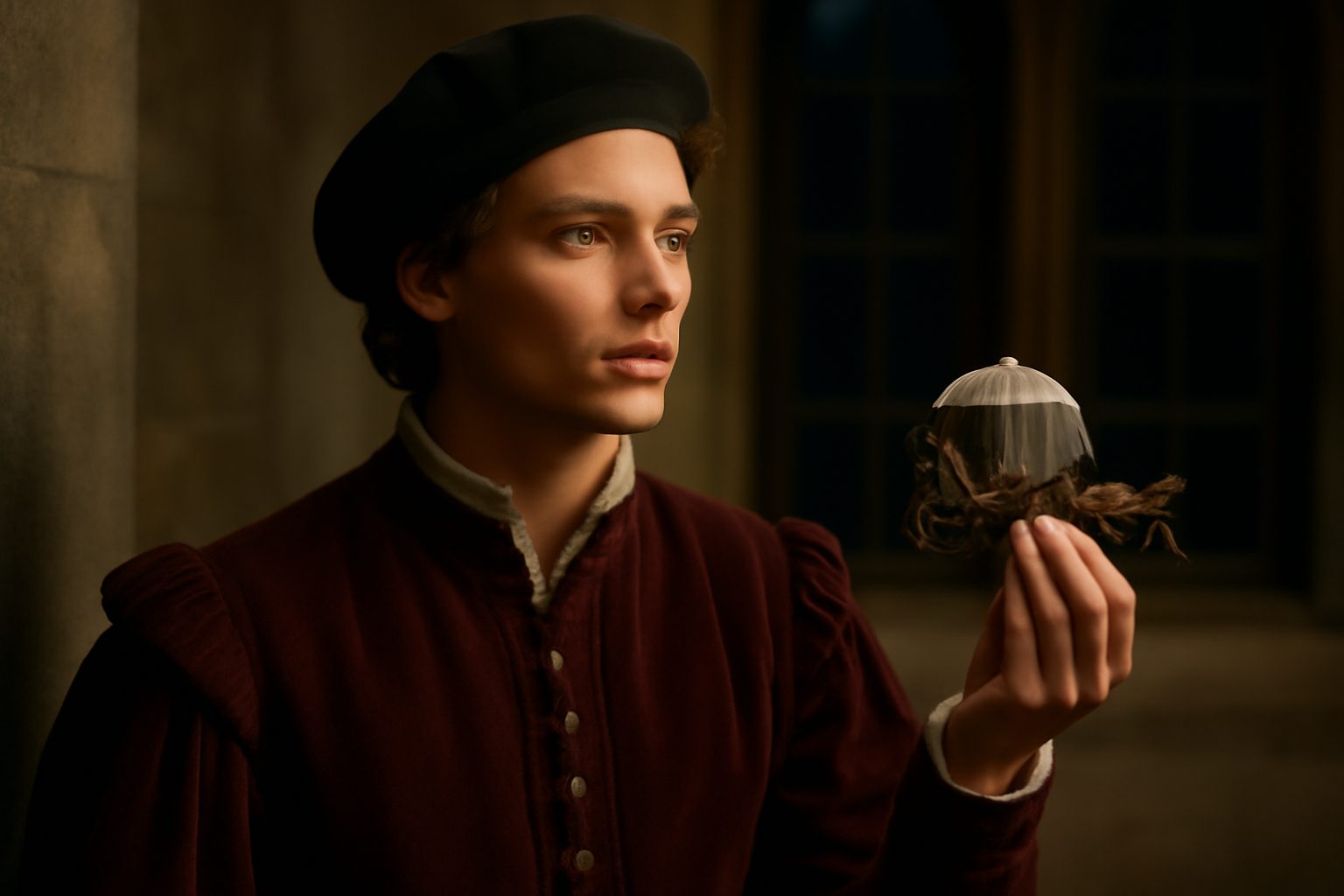
The imagery in this verse is preceded by details of Mab's chariot and actions, such as Her chariot is an empty hazel-nut and And in this state she gallops night by night, setting the fantastical stage for her encounters with sleepers. It also relates to Sometime she gallops o'er a courtier's nose, which directly references the courtier, reinforcing the idea of Mab provoking dreams tied to social status and etiquette.
Dreams as Central Theme
This verse contributes to the broader discourse on dreams in the scene, echoing Romeo's earlier line I dream'd a dream to-night. and Mercutio's assertion that dreams are the children of an idle brain, highlighting the contrast between Romeo's ominous premonitions and Mercutio's playful, cynical view of dreams as meaningless fantasies.