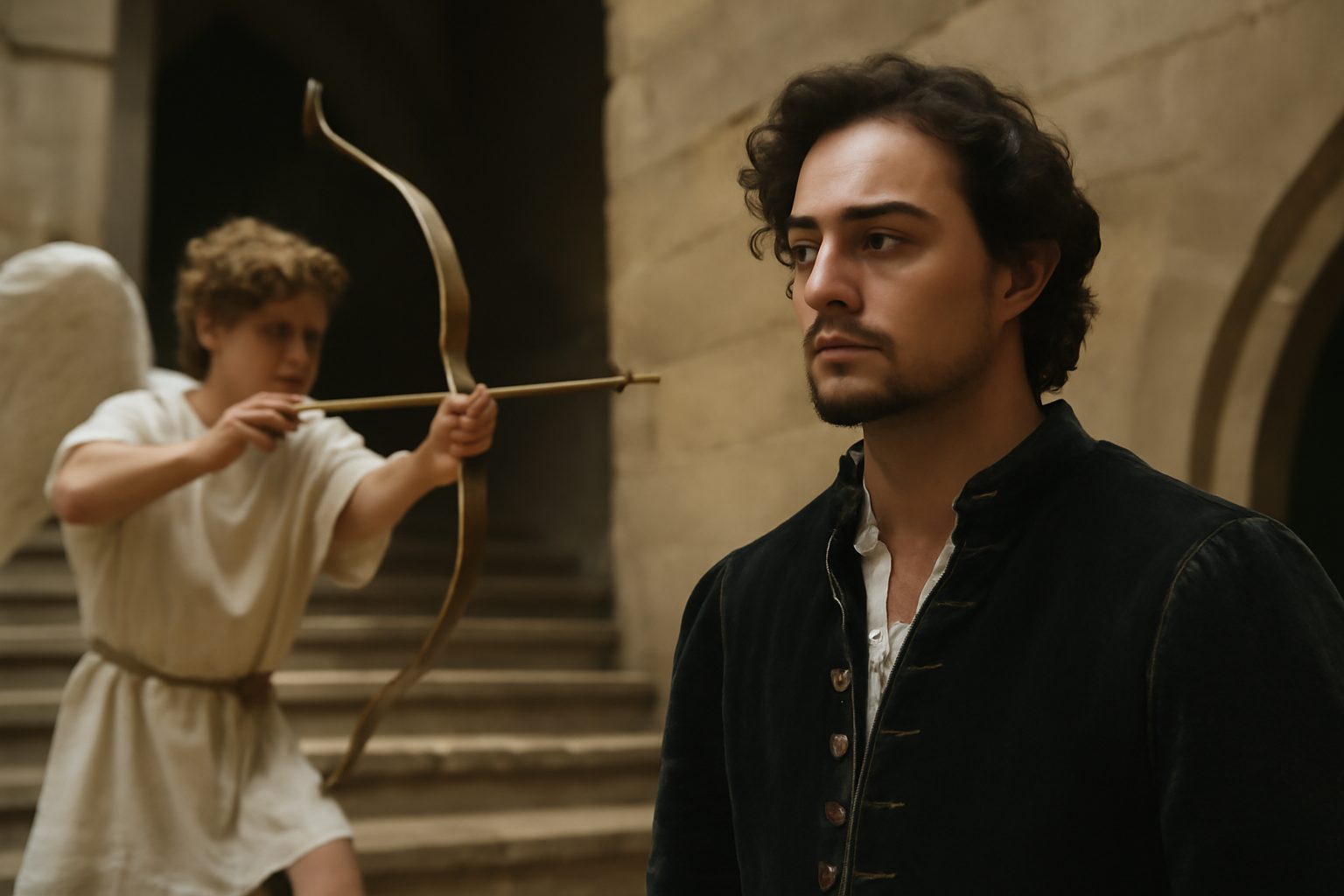
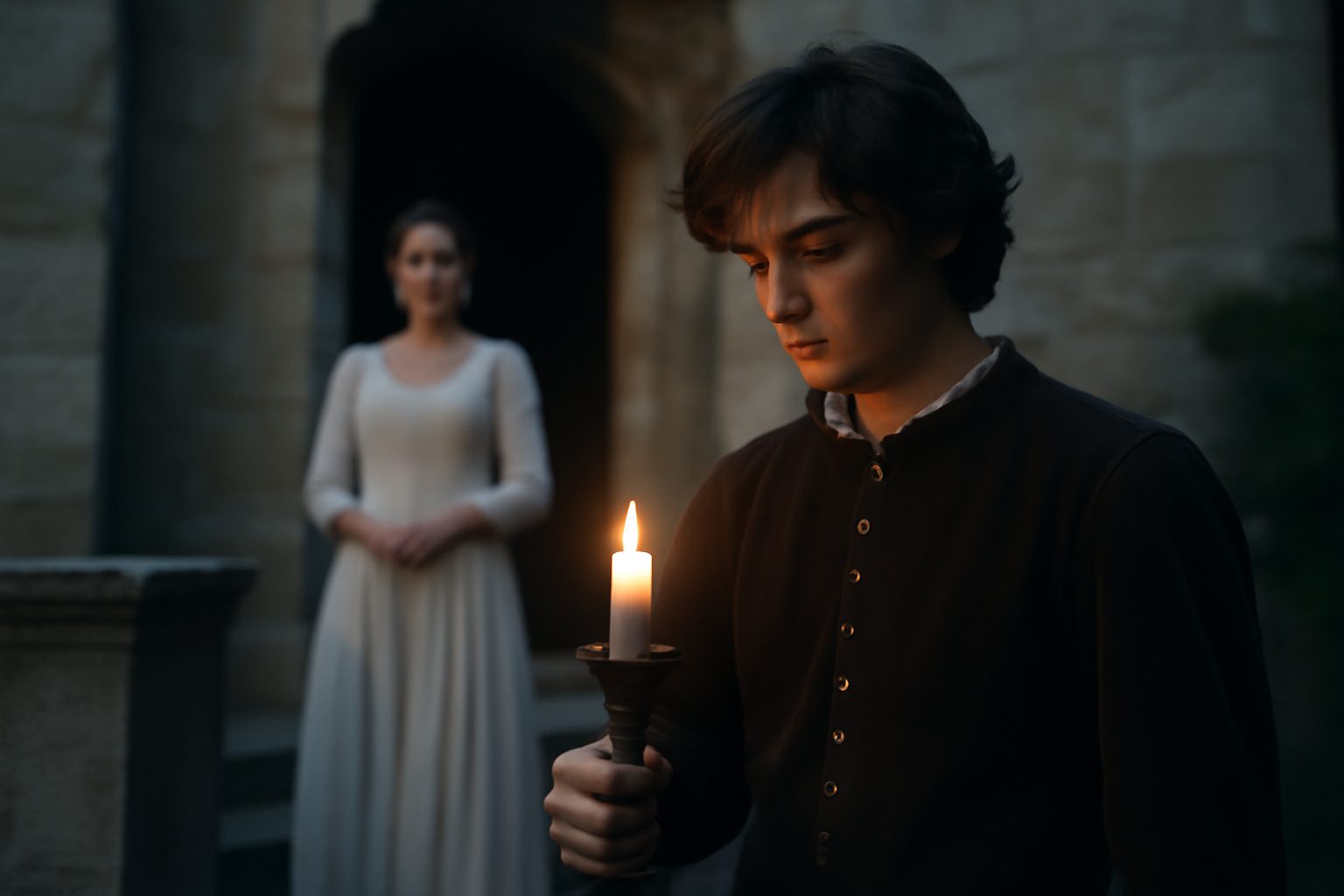
In Act 1, Scene 4 of Romeo and Juliet, Mercutio and Romeo are on their way to the Capulet feast, where Romeo hopes to see Rosaline. Mercutio, ever the wit, mocks Romeo's lovesick demeanor and suggests they should arrive fashionably late with a playful excuse. This line reflects Mercutio's teasing nature as he questions whether their tardiness needs justification at all.
Romeo: "What, shall this speech be spoke for our excuse?"
In modern day english, we would say:
Are we going to use this as our excuse for showing up?
Frequently Asked Questions
What is Romeo asking about in this line from Act 1, Scene 4?
Romeo is asking whether the speech they prepared will be enough to justify their presence at the party.
Connections to other verses:
Connections to "What, shall this speech be spoke for our excuse?"
This line, spoken by Romeo, questions the need for a formal excuse or prologue before entering the Capulet feast. It reflects his reluctance and sets the tone for his melancholic state.
Related Verses on Formality and Excuses
Romeo's query about a spoken excuse connects to Benvolio's earlier suggestion in After the prompter, for our entrance, which implies a rehearsed or formal introduction. Mercutio dismisses such formalities in Nor no without-book prologue, faintly spoke, emphasizing their spontaneity. The group's collective attitude is further captured in The date is out of such prolixity, where they agree that lengthy apologies are outdated.
Romeo's Reluctance and Emotional State
Romeo's resistance to the festivities is evident in Give me a torch: I am not for this ambling, where he prefers to carry light rather than dance. His heaviness of heart is echoed in With nimble soles: I have a soul of lead, highlighting his emotional burden. This contrasts with Mercutio's lively encouragement in Nay, gentle Romeo, we must have you dance.
Foreshadowing and Ominous Undertones
Romeo's hesitation foreshadows his later premonition in I fear, too early: for my mind misgives, where he senses impending doom. This connects to Some consequence yet hanging in the stars, hinting at fate's role. His acceptance of destiny is clear in But He, that hath the steerage of my course, surrendering to a higher power.
Mercutio's Contrasting Energy
Mercutio's response to Romeo's gloom includes playful taunts like If thou art dun, we'll draw thee from the mire, urging Romeo to lighten up. His famous Queen Mab speech, beginning with O, then, I see Queen Mab hath been with you, serves as a distraction from Romeo's solemnity, emphasizing fantasy over formality.