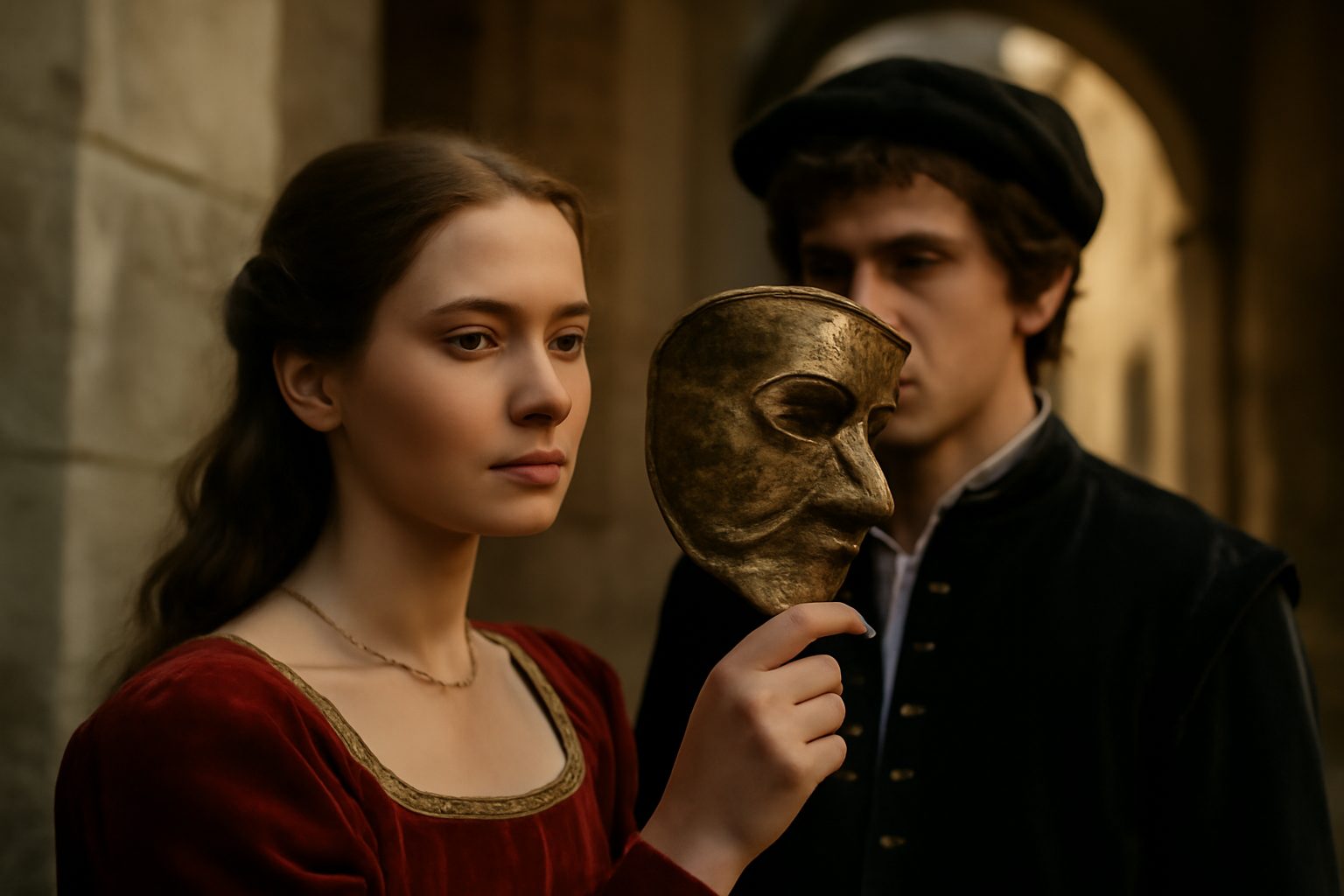
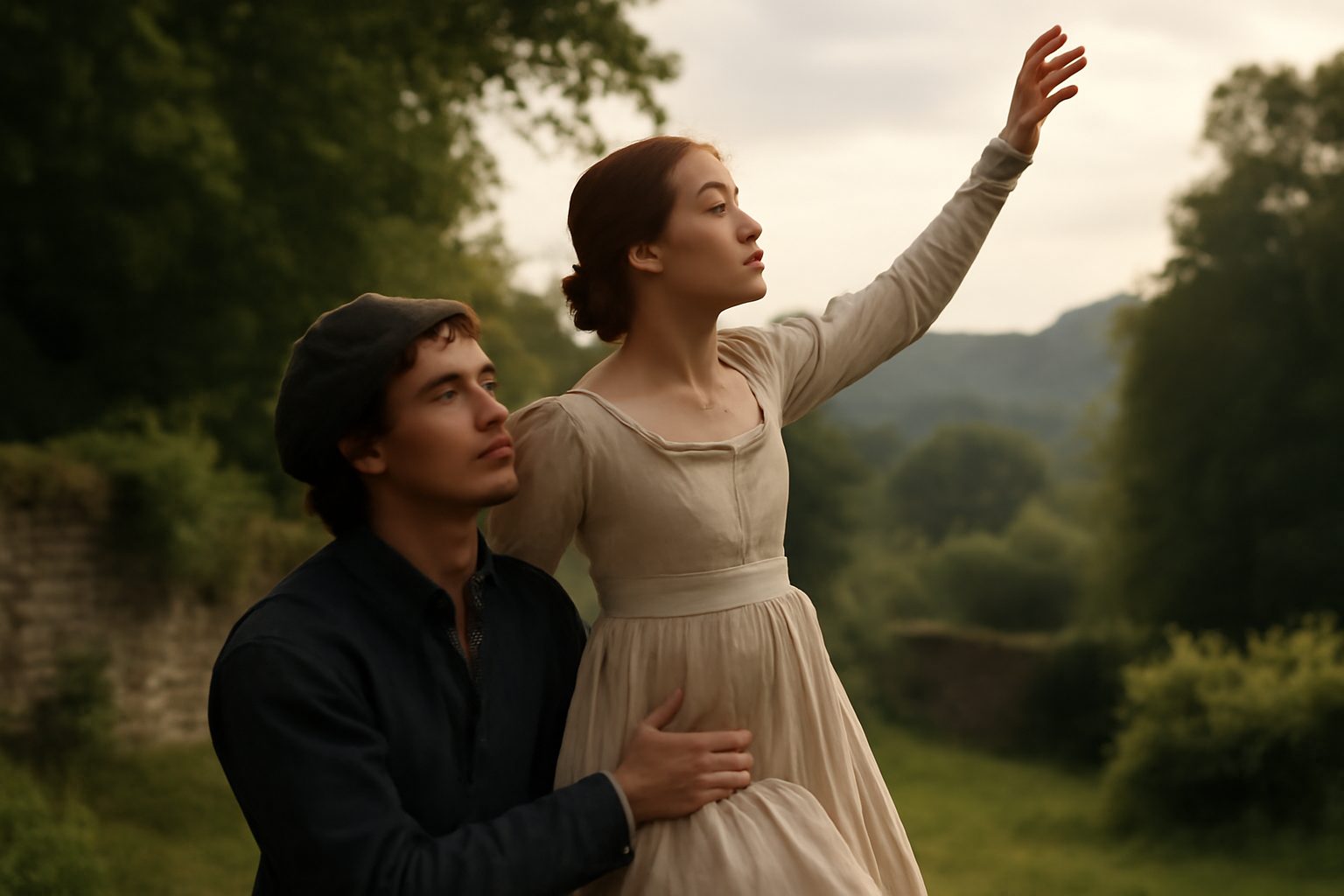
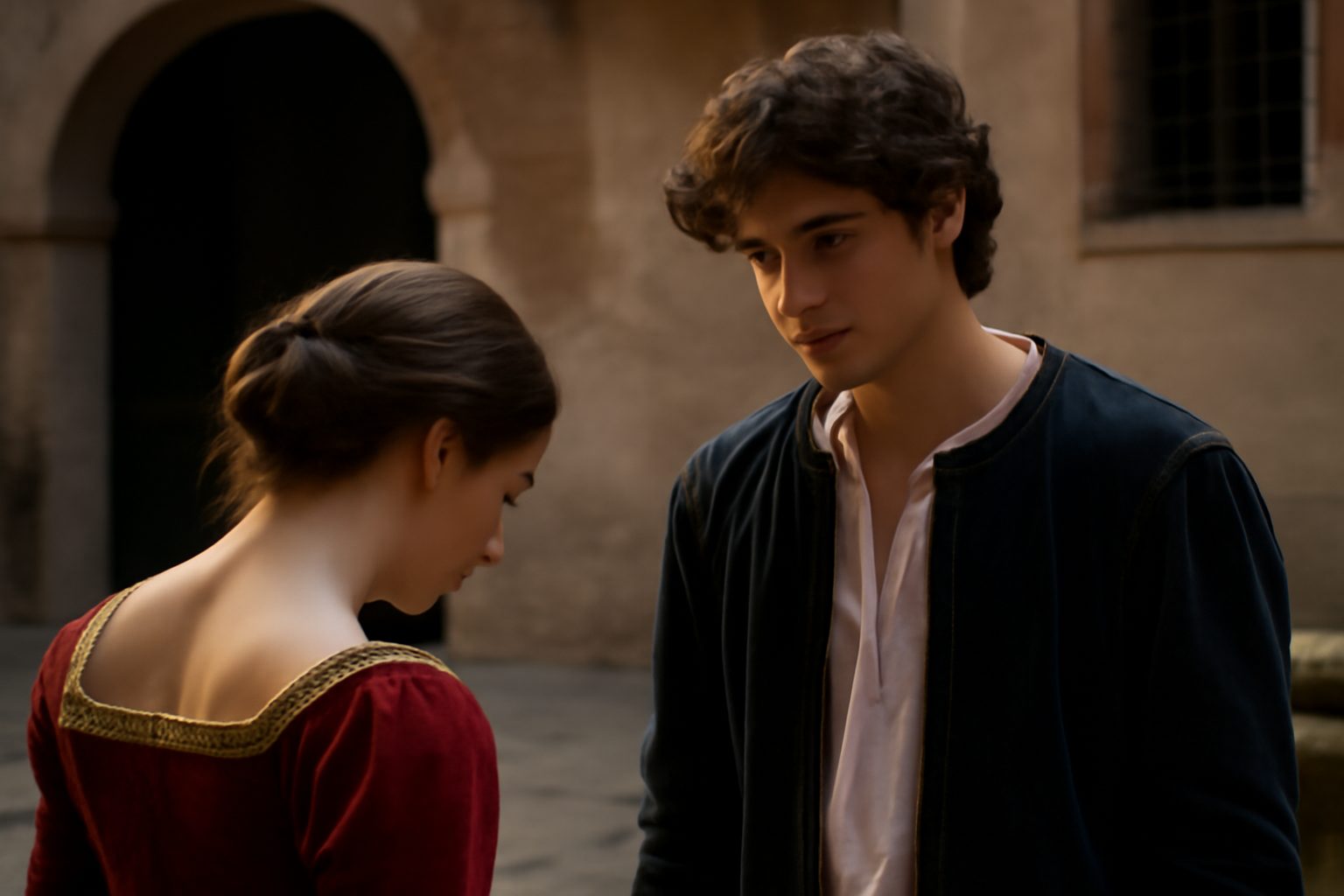
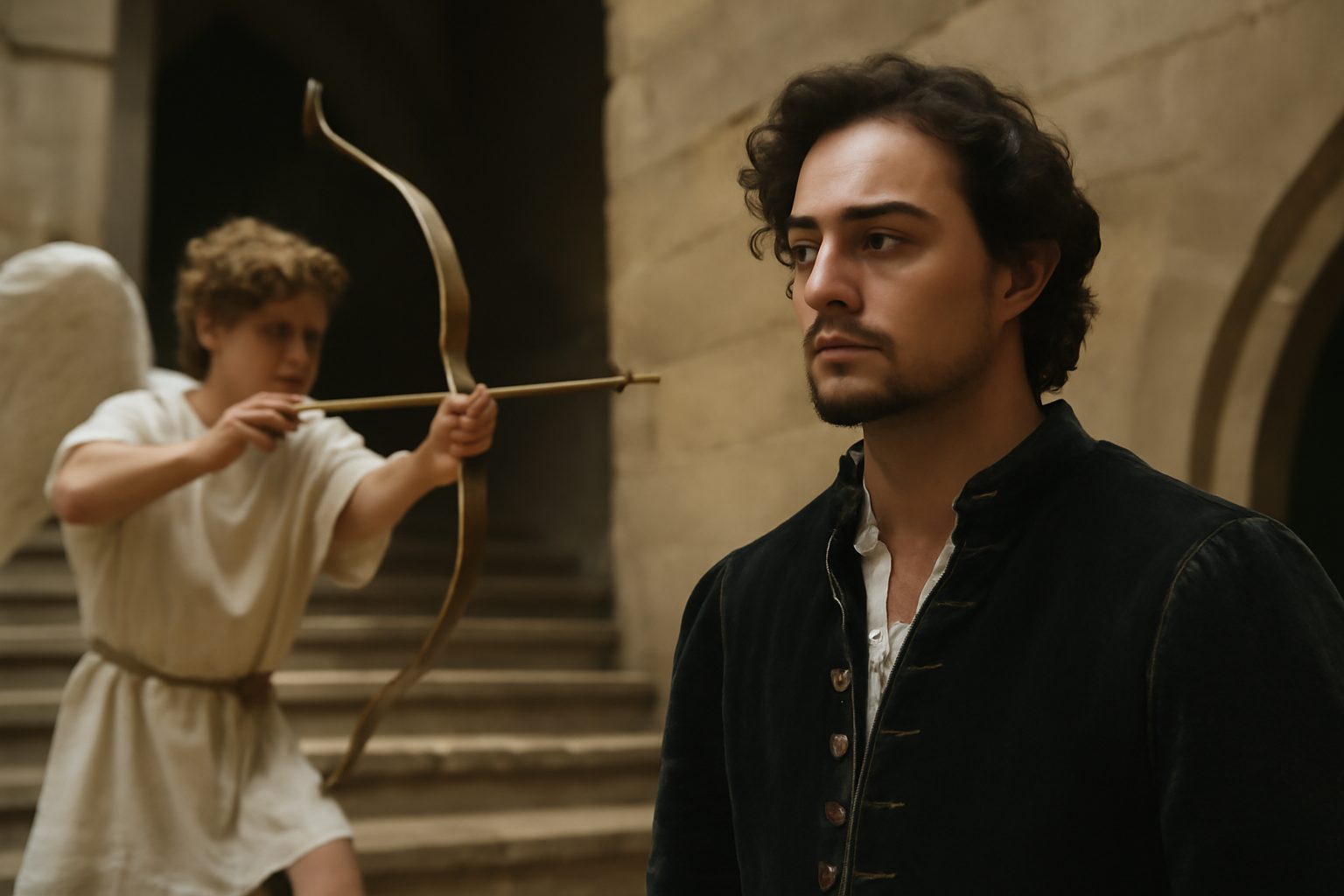
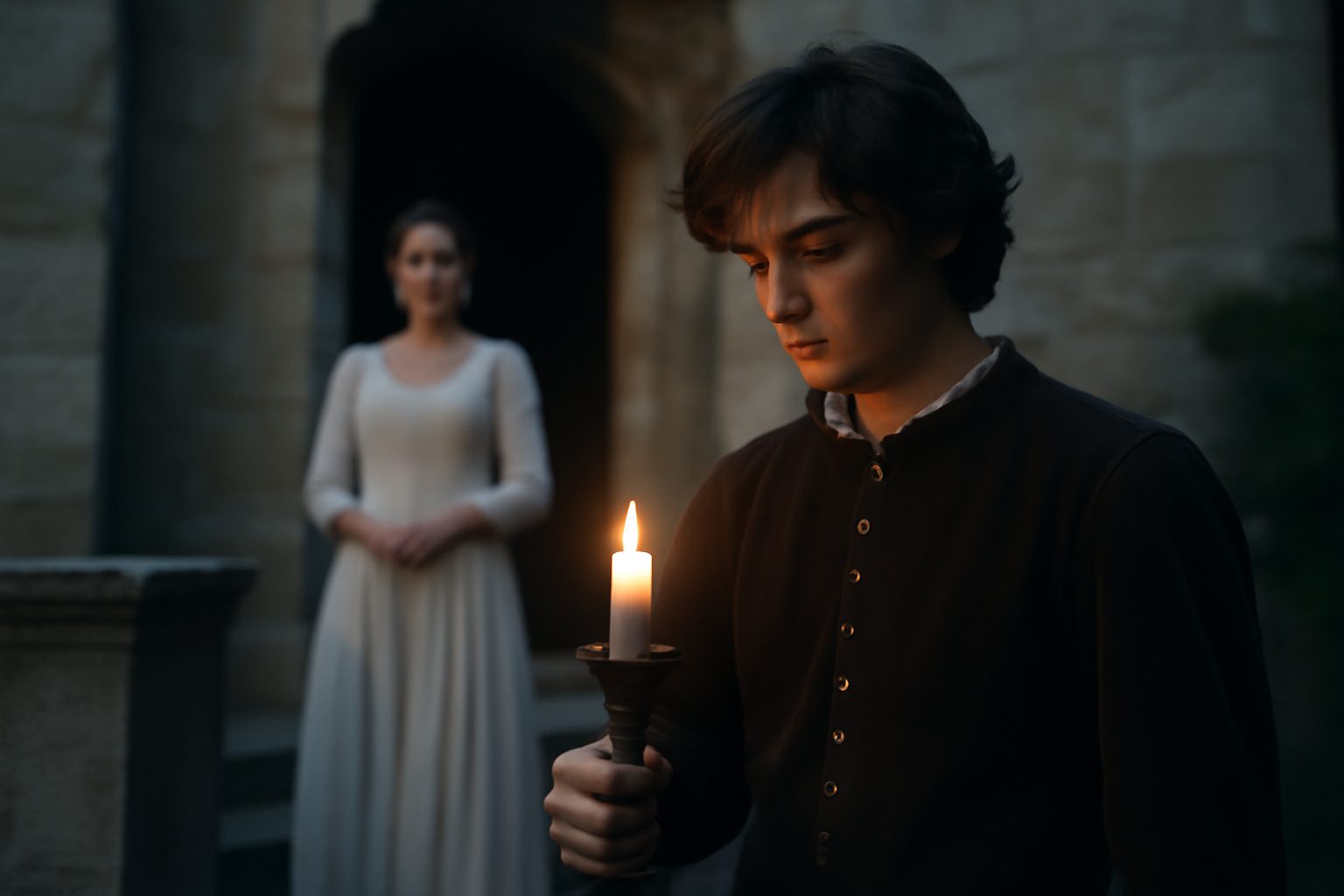
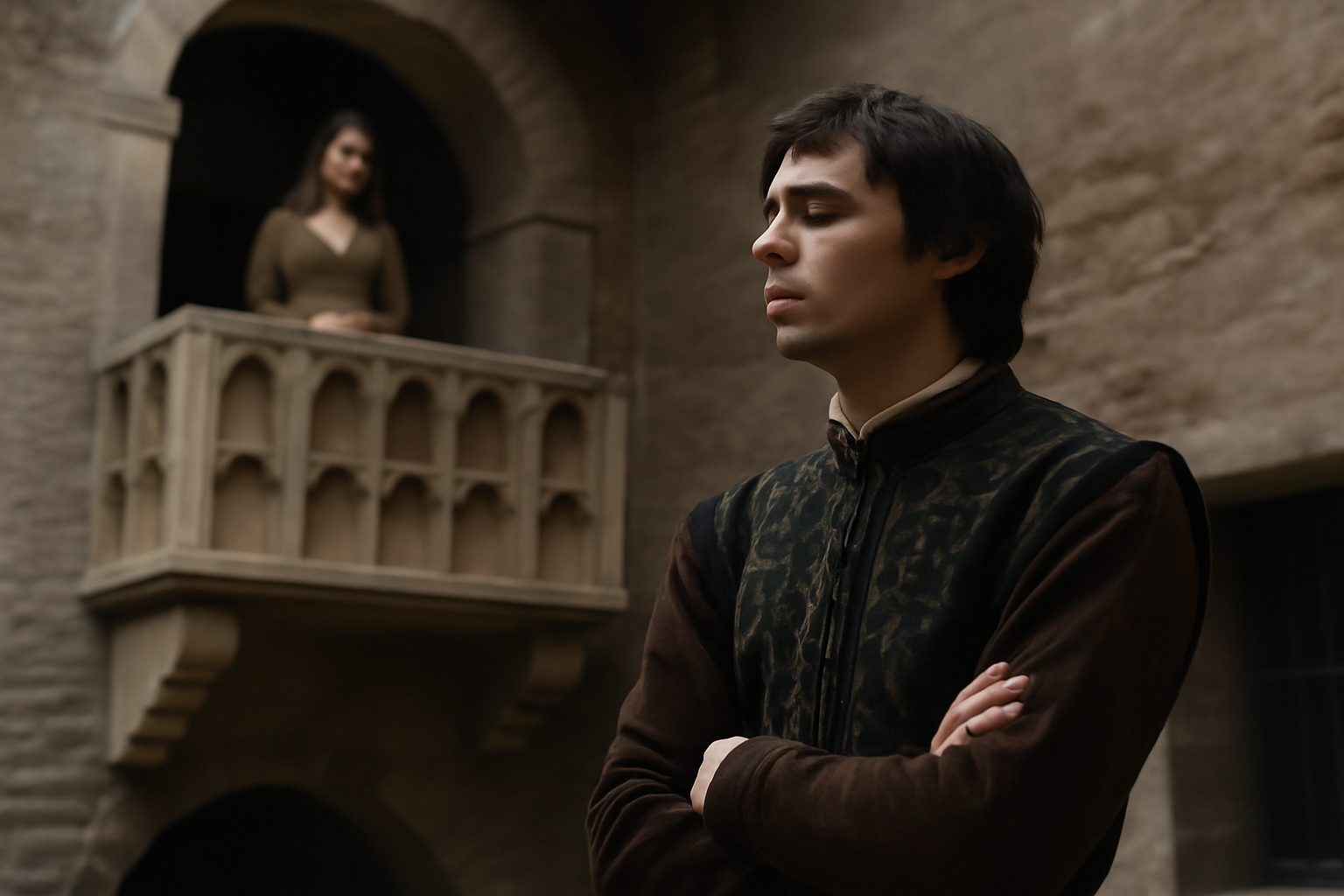
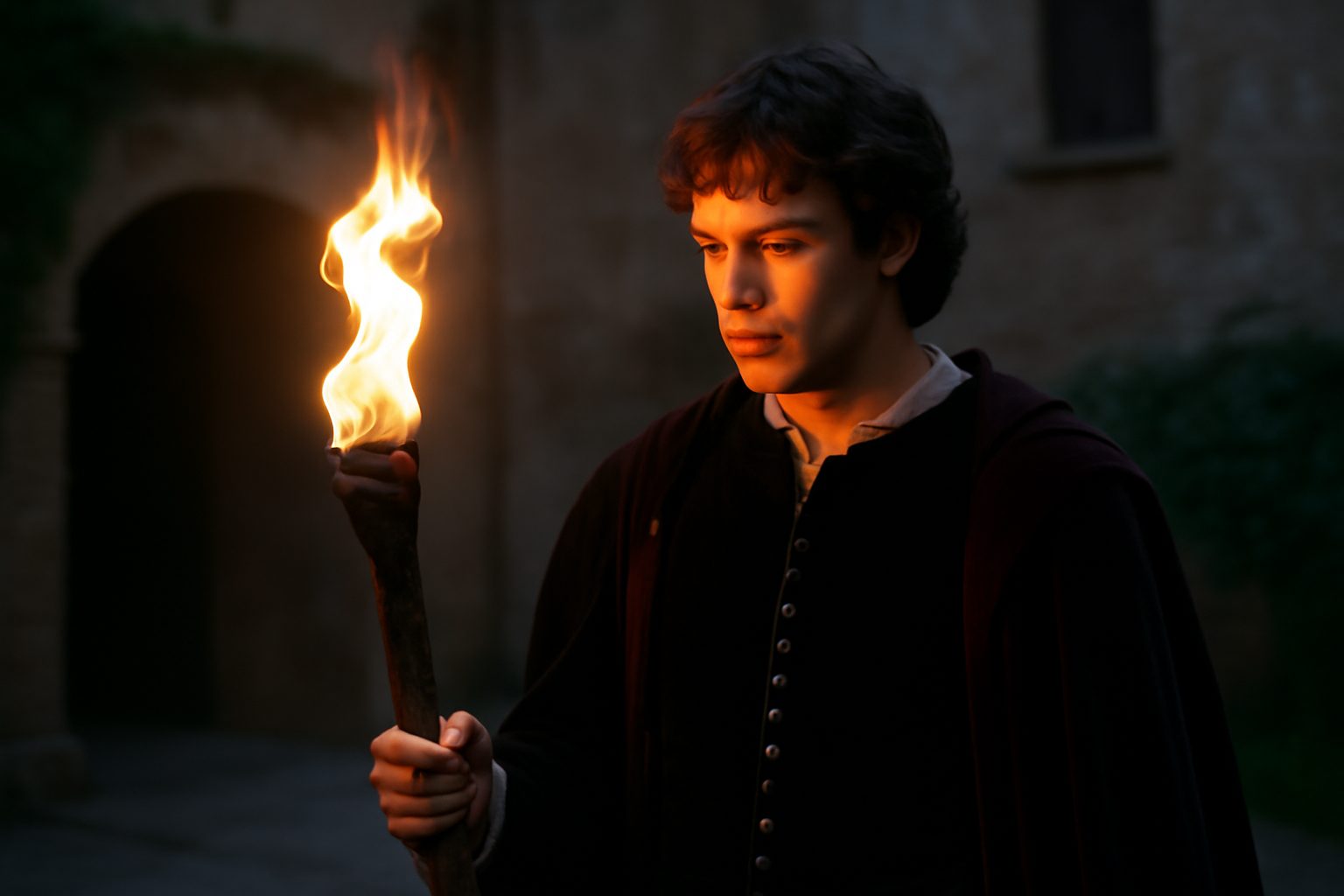
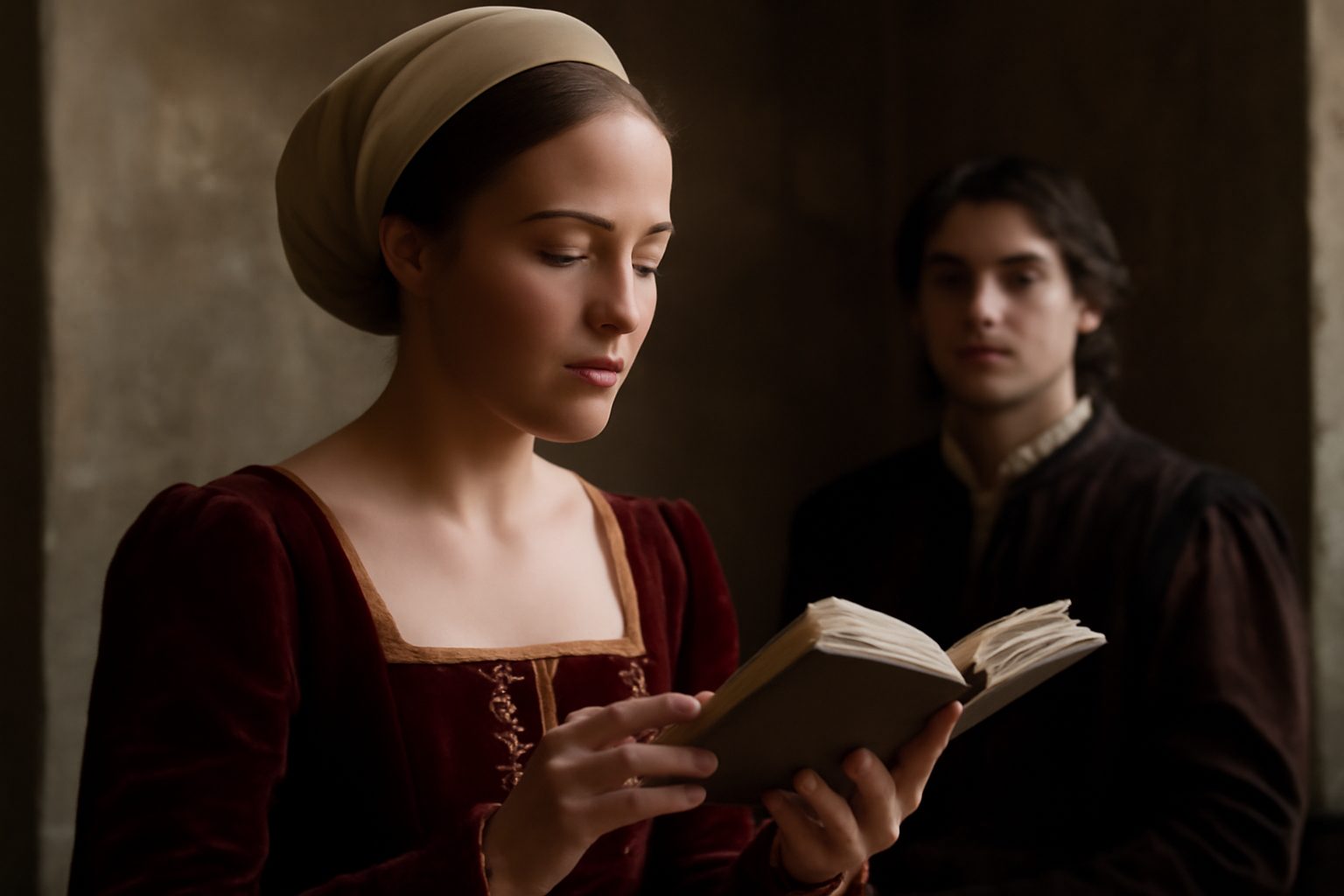
In Act 1, Scene 4 of Romeo and Juliet, Romeo and his friends are preparing to crash the Capulet's masquerade ball. As they joke about dancing and merriment, Romeo, lovesick over Rosaline, contrasts his friends' lightheartedness with his own heavy heart. The line captures his emotional weight, comparing his sluggish spirit to the lively steps of others.
Romeo: "With nimble soles: I have a soul of lead"
In modern day english, we would say:
Romeo is saying that while his feet are quick and light, his heart feels heavy and weighed down.
Frequently Asked Questions
What does Romeo mean when he says his soul is like lead?
He means he feels very heavy and sad, unlike his light and quick feet.
Connections to other verses:
Connections to "With nimble soles: I have a soul of lead"
Romeo's line, "With nimble soles: I have a soul of lead", uses a pun on "soles" and "soul" to contrast physical lightness with emotional heaviness. This duality is echoed in other parts of the scene.
Contrast with Lightness and Dancing
Mercutio urges Romeo to dance, saying "Nay, gentle Romeo, we must have you dance", highlighting the expectation of joy that Romeo resists. Romeo further emphasizes his reluctance by requesting "Give me a torch: I am not for this ambling", preferring to carry light rather than partake in the revelry. He reinforces this with "I'll be a candle-holder, and look on", underscoring his desire to remain an observer rather than a participant.
Emotional Weight and Love's Burden
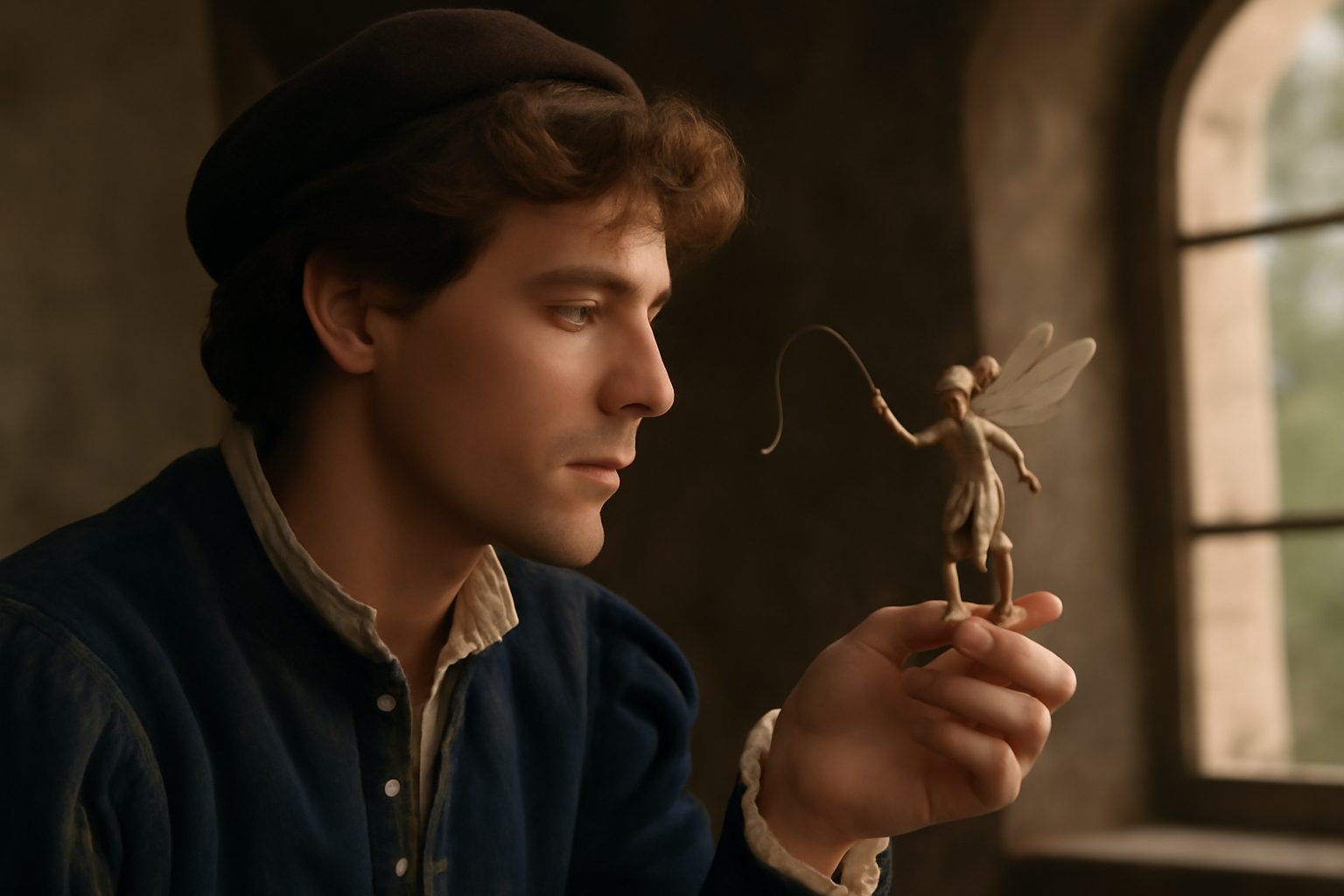
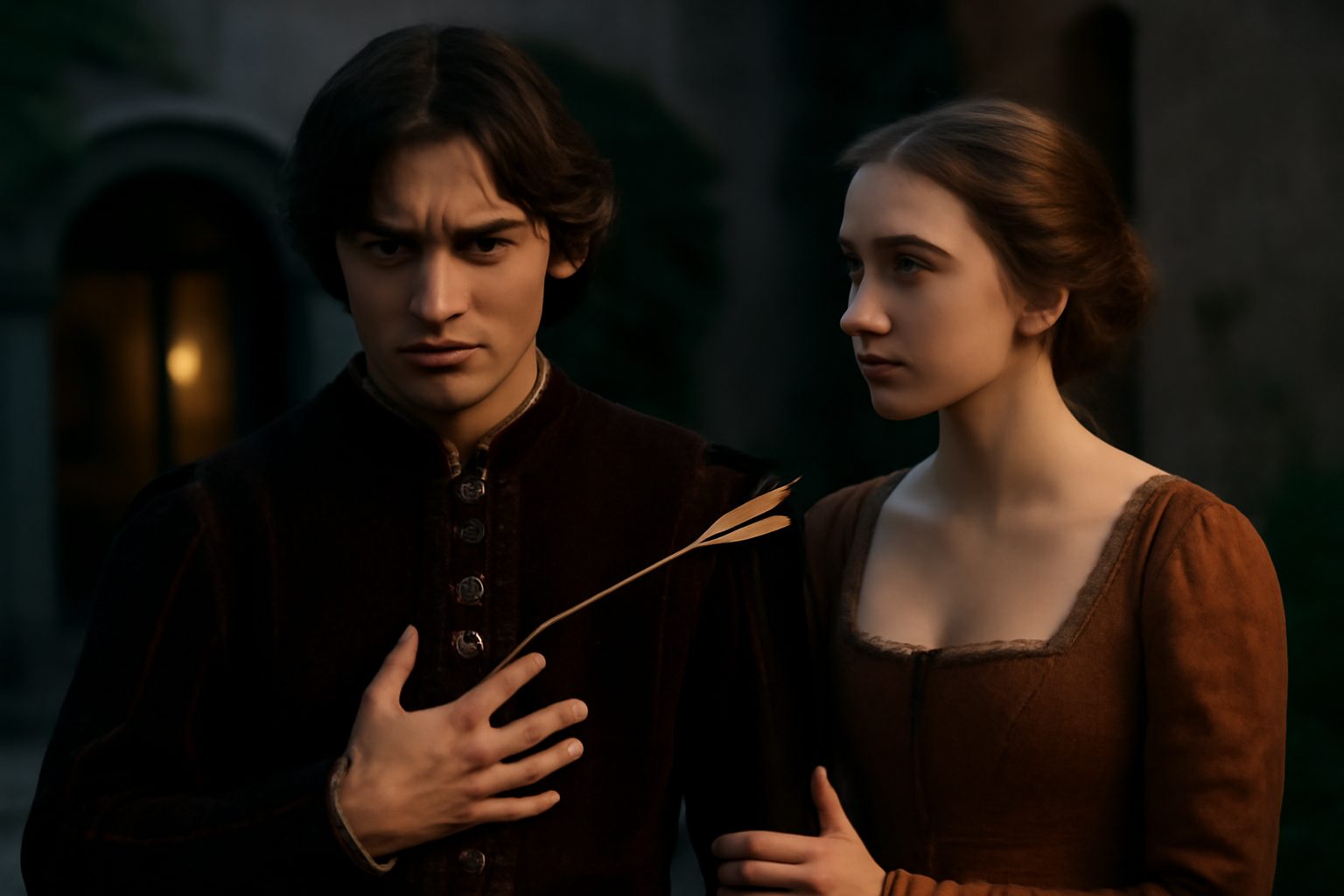
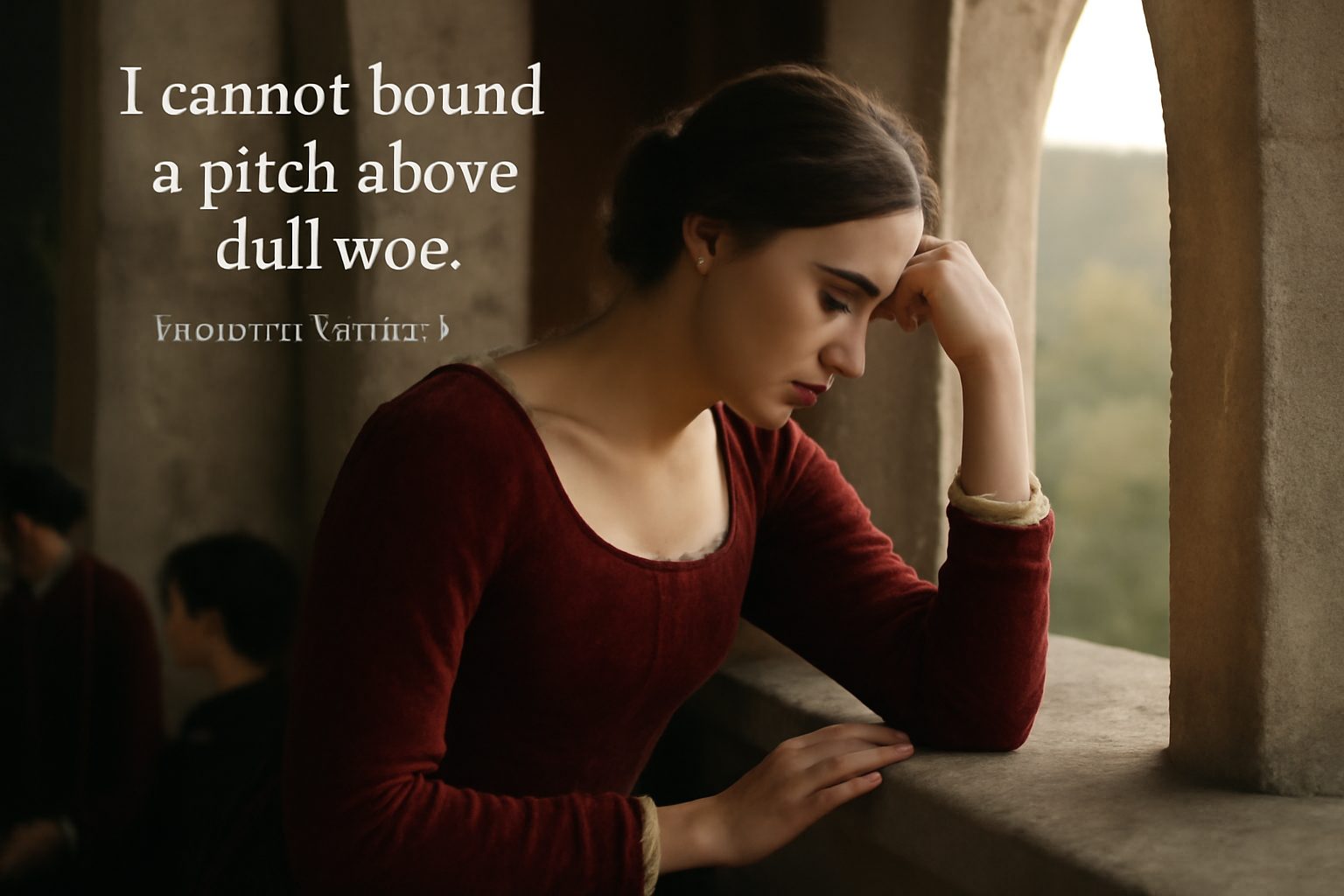
Romeo's heaviness stems from his lovesick state, as noted when Benvolio encourages him to "borrow Cupid's wings, / And soar with them above a common bound", a direct contrast to Romeo's leaden soul. Romeo admits his inability to rise above sorrow in "I cannot bound a pitch above dull woe". He feels weighed down by love, stating "Under love's heavy burden do I sink", and later, "So stakes me to the ground I cannot move", reinforcing the imagery of immobility and emotional weight.
Foreshadowing and Foreboding
This heaviness also foreshadows Romeo's sense of impending doom. He expresses misgivings before entering the feast: "I fear, too early: for my mind misgives / Some consequence yet hanging in the stars", and fears "some vile forfeit of untimely death". This dread contrasts with the carefree attitude of others, like Mercutio's playful description of Queen Mab, which begins with "O, then, I see Queen Mab hath been with you", highlighting the difference between Romeo's somber mood and the scene's lighter elements.