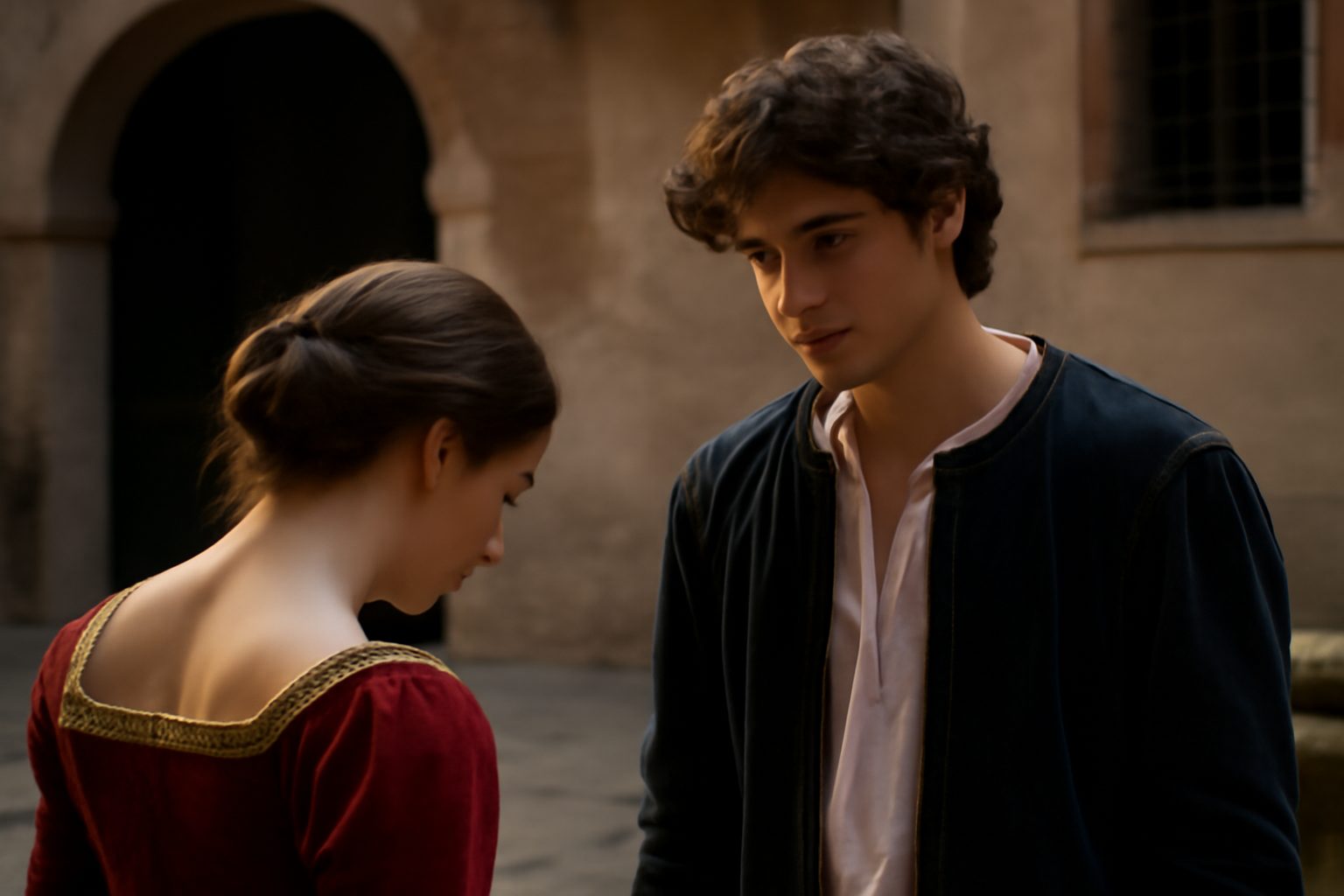
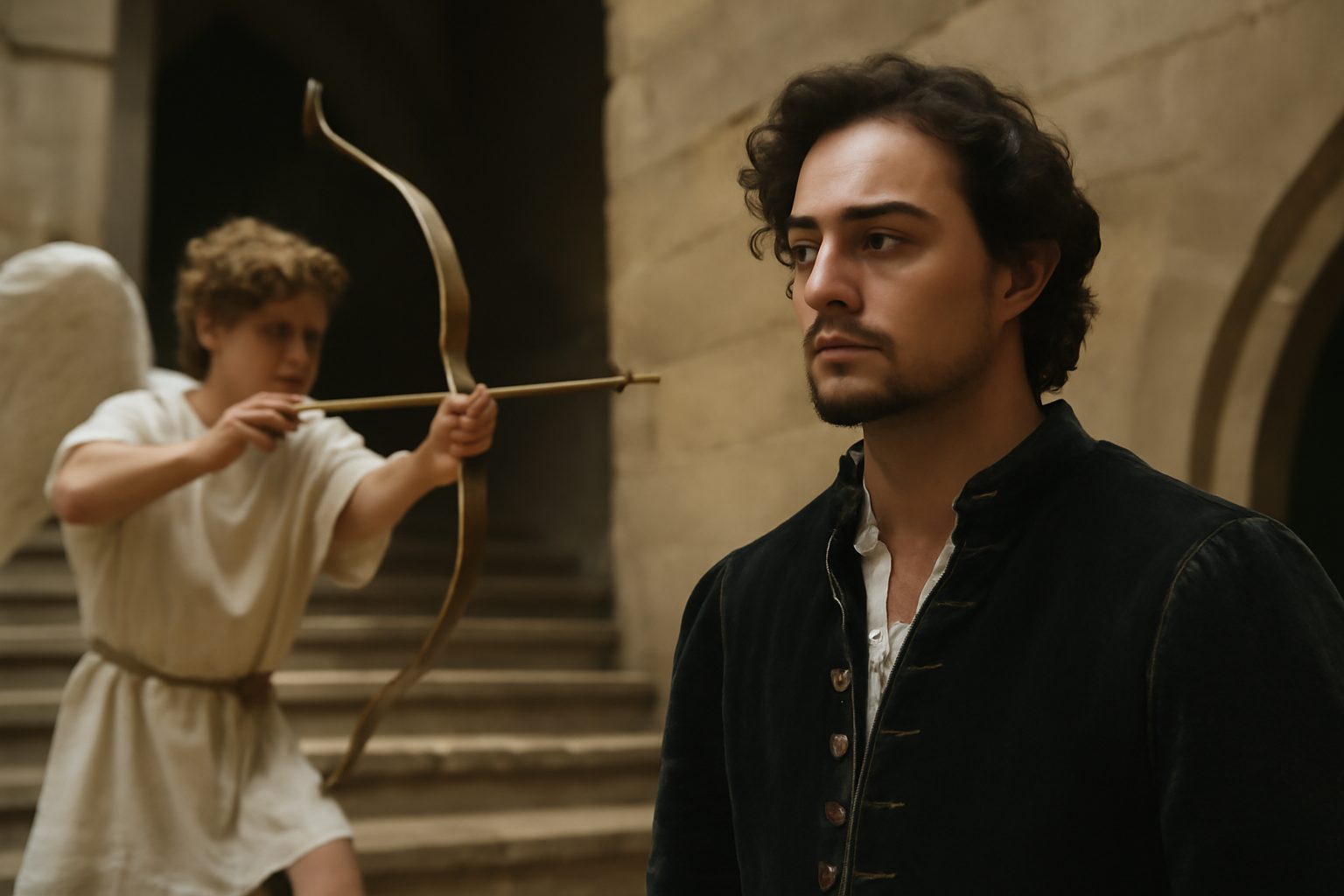
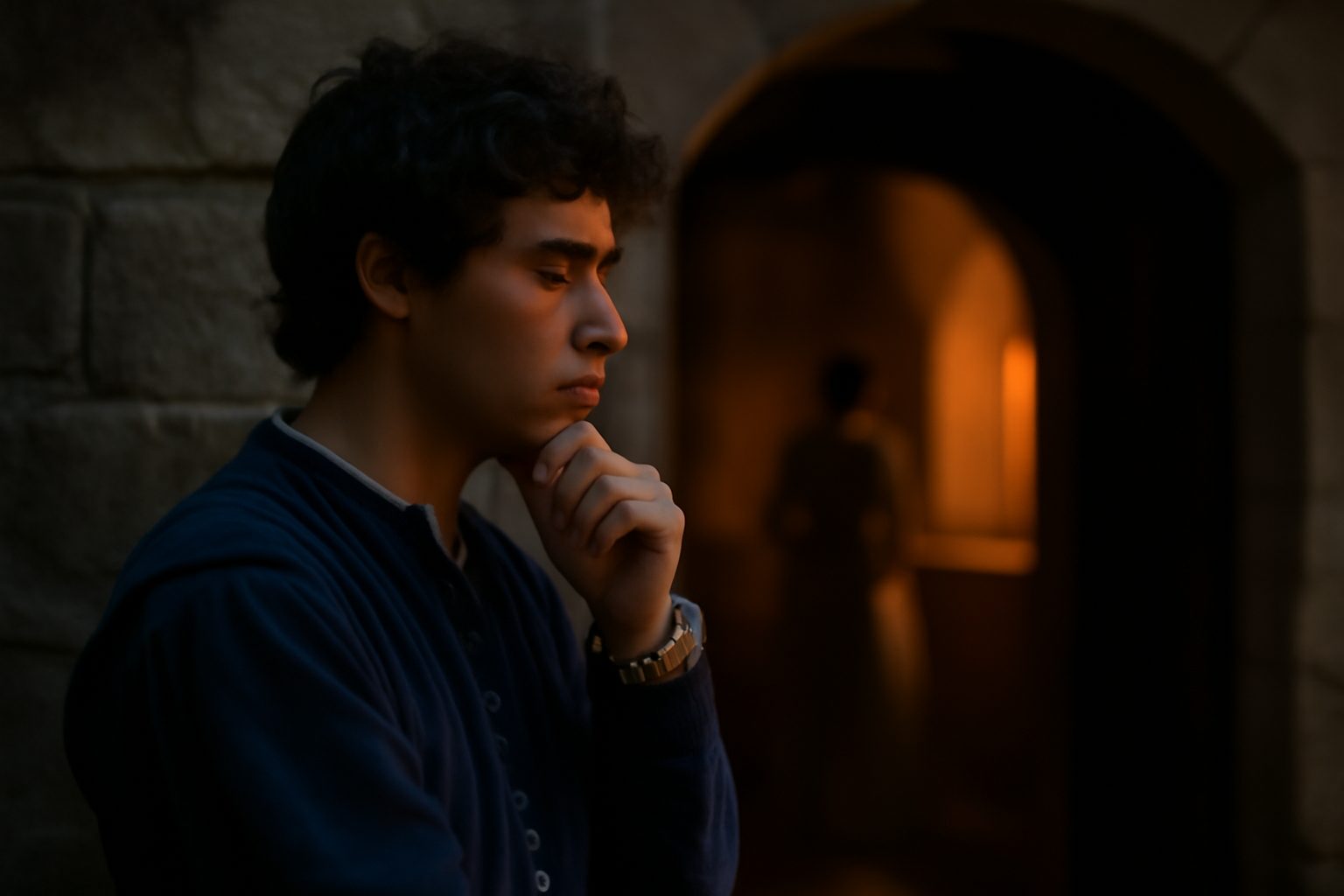
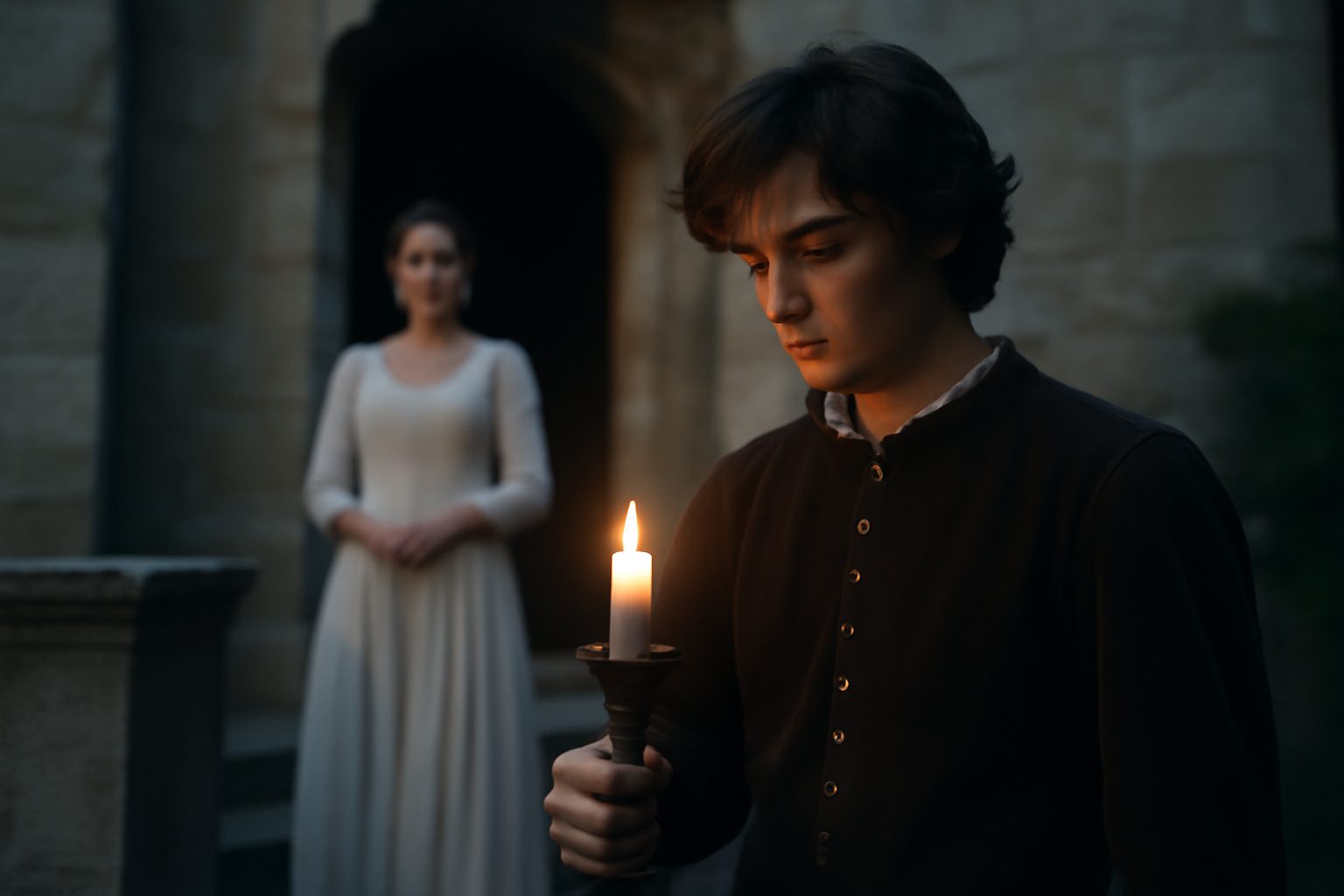
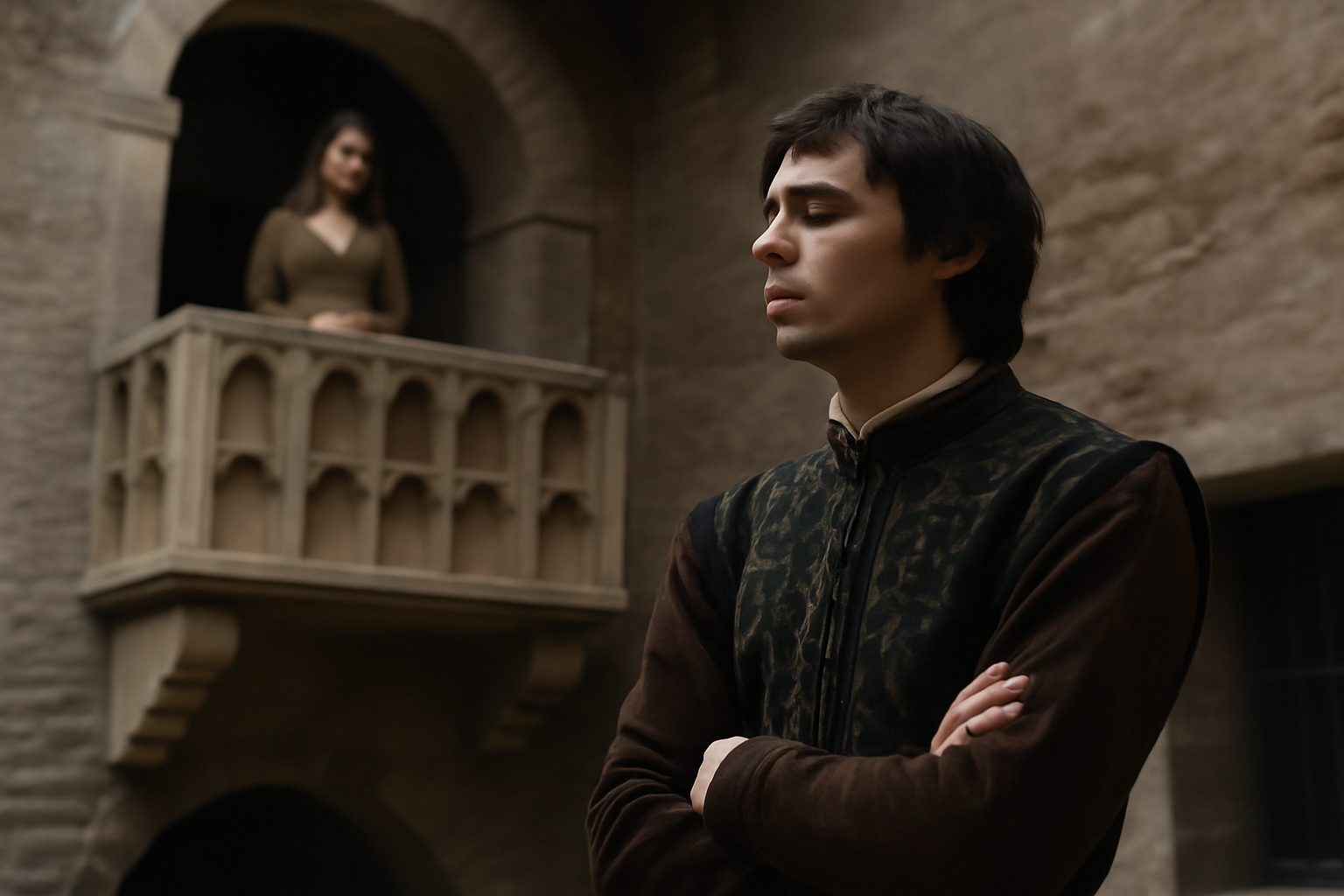
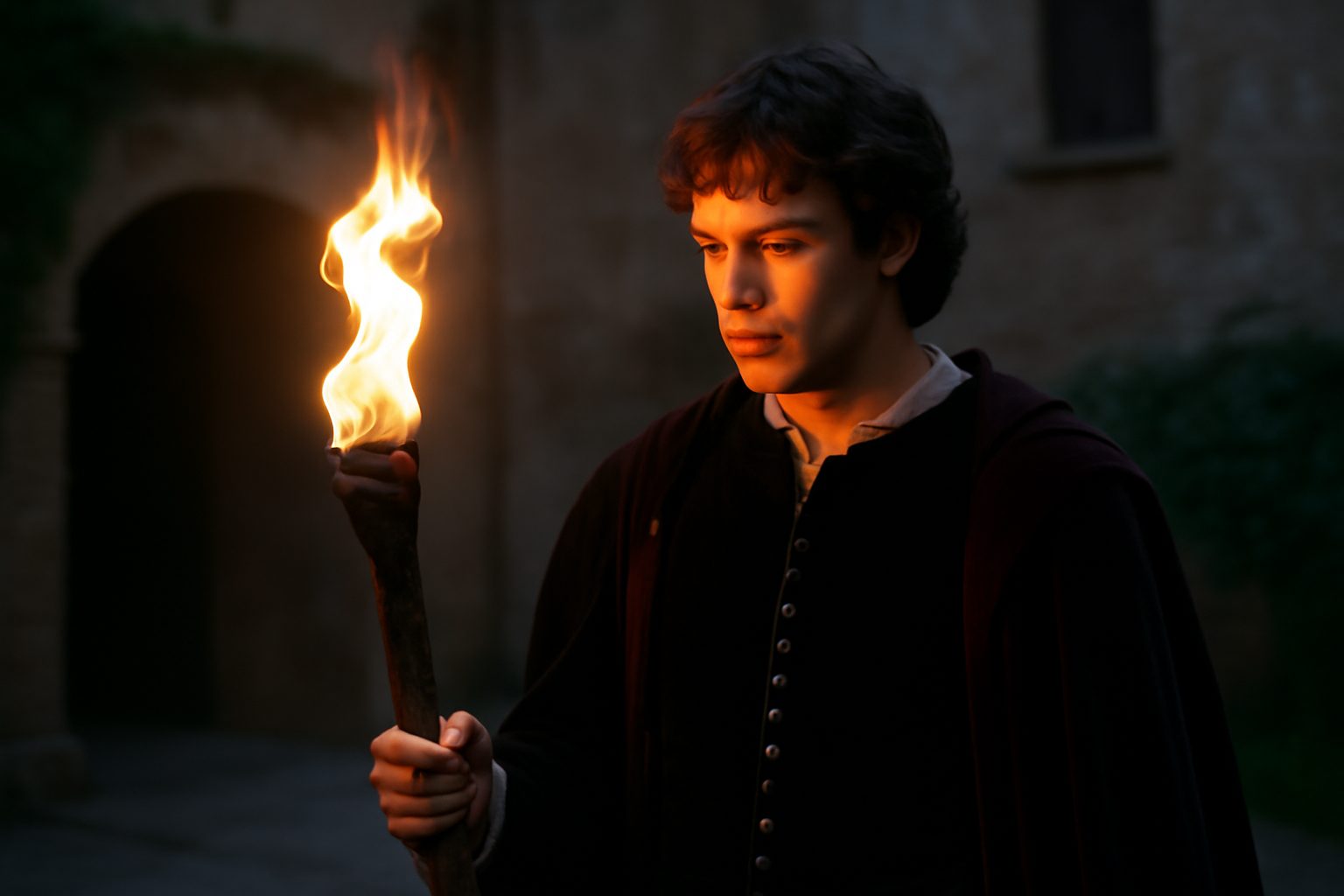
In Act 1, Scene 4 of Romeo and Juliet, Mercutio and Romeo are on their way to the Capulet feast, where Romeo hopes to see Rosaline. Mercutio, full of wit and energy, tries to lift Romeo's spirits with playful banter and teasing. When Romeo resists joining in the revelry, Mercutio quips that he will simply observe, suggesting he will take a passive role while others take the lead in the night's festivities.
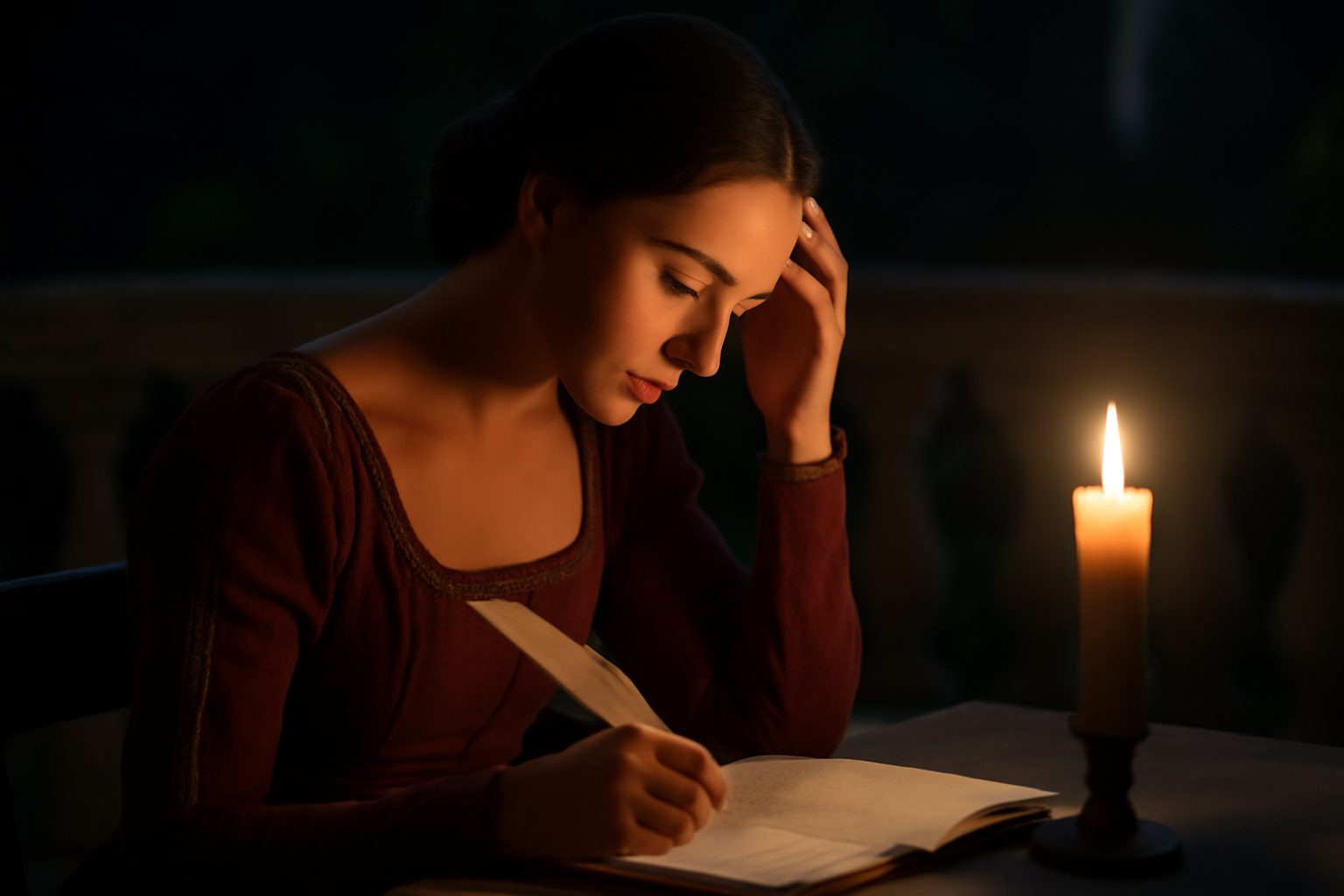
Romeo: "I'll be a candle-holder, and look on."
In modern day english, we would say:
I’ll just stand by and watch what happens.
Frequently Asked Questions
What does Romeo mean when he says he will be a candle-holder and look on?
Romeo means he will stay on the sidelines and observe rather than actively participate in the festivities.
Connections to other verses:
Romeo's Reluctance and Withdrawal
Romeo's declaration, "I'll be a candle-holder, and look on", reflects his melancholic state and reluctance to participate in the festivities. This sentiment is echoed earlier when he states, "Give me a torch: I am not for this ambling", emphasizing his desire to remain an observer rather than engage in the revelry. His heaviness of heart is further highlighted in "I have a soul of lead", underscoring his emotional burden.
Contrast with Mercutio's Energy
Mercutio's lively and provocative nature contrasts sharply with Romeo's passivity. In "If love be rough with you, be rough with love", Mercutio encourages a more aggressive approach to love, opposing Romeo's withdrawn stance. Similarly, "Tickle the senseless rushes with their heels" depicts the energetic dancing Romeo avoids, reinforcing the dichotomy between their attitudes.
Dreams and Premonitions
Romeo's role as an observer connects to the theme of dreams and foreboding. His mention of a dream in "I dream'd a dream to-night" introduces the idea of subconscious fears, which Mercutio expands upon with his Queen Mab speech. Romeo's later premonition in "I fear, too early: for my mind misgives" ties back to his initial reluctance, suggesting a fateful awareness that justifies his desire to "look on" rather than partake.
Symbolism of Light and Observation
The imagery of light in Romeo's line parallels other references, such as "We waste our lights in vain, like lamps by day", which critiques frivolity. Additionally, "What curious eye doth quote deformities?" touches on the idea of observation and judgment, aligning with Romeo's role as a passive witness to the events unfolding.