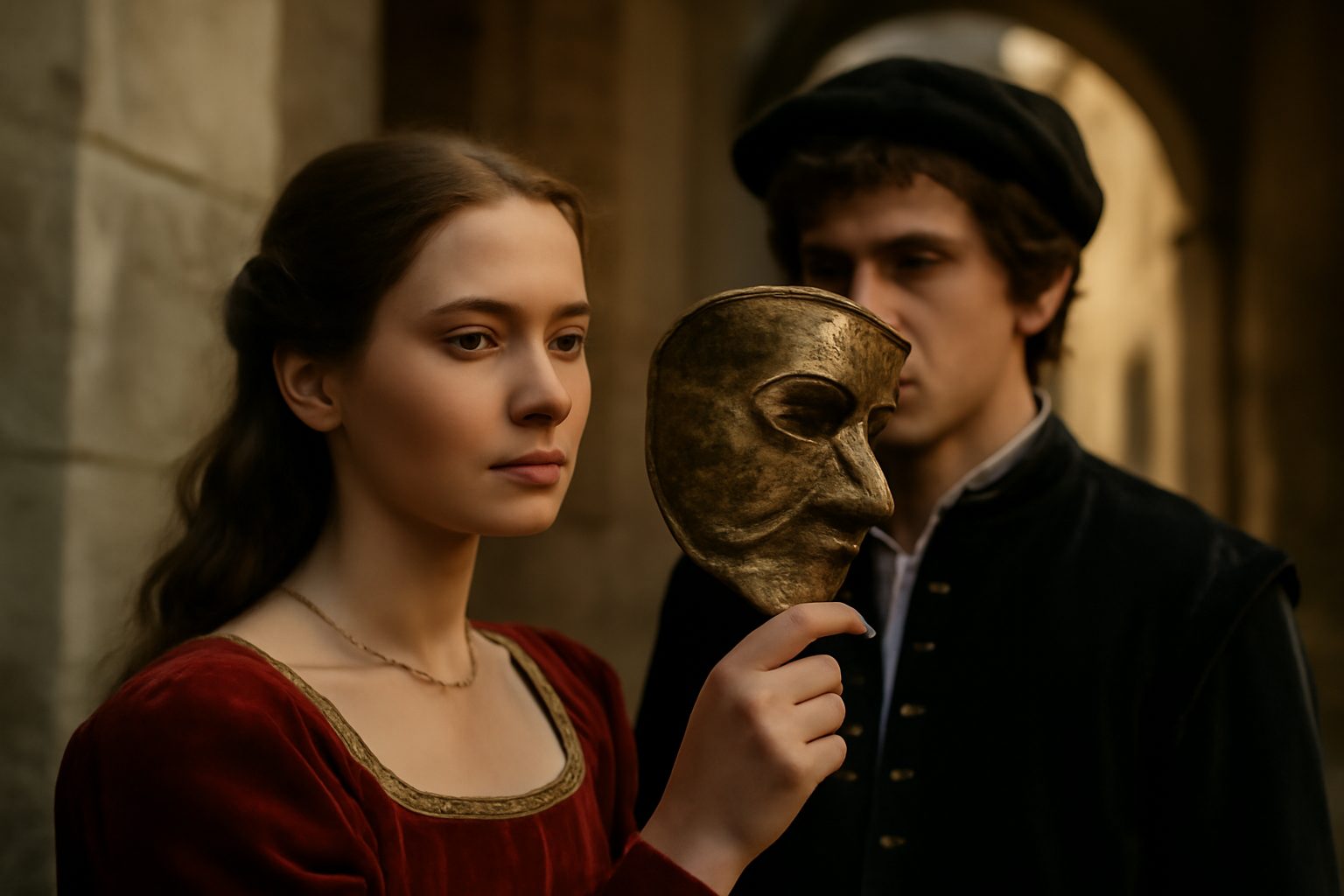
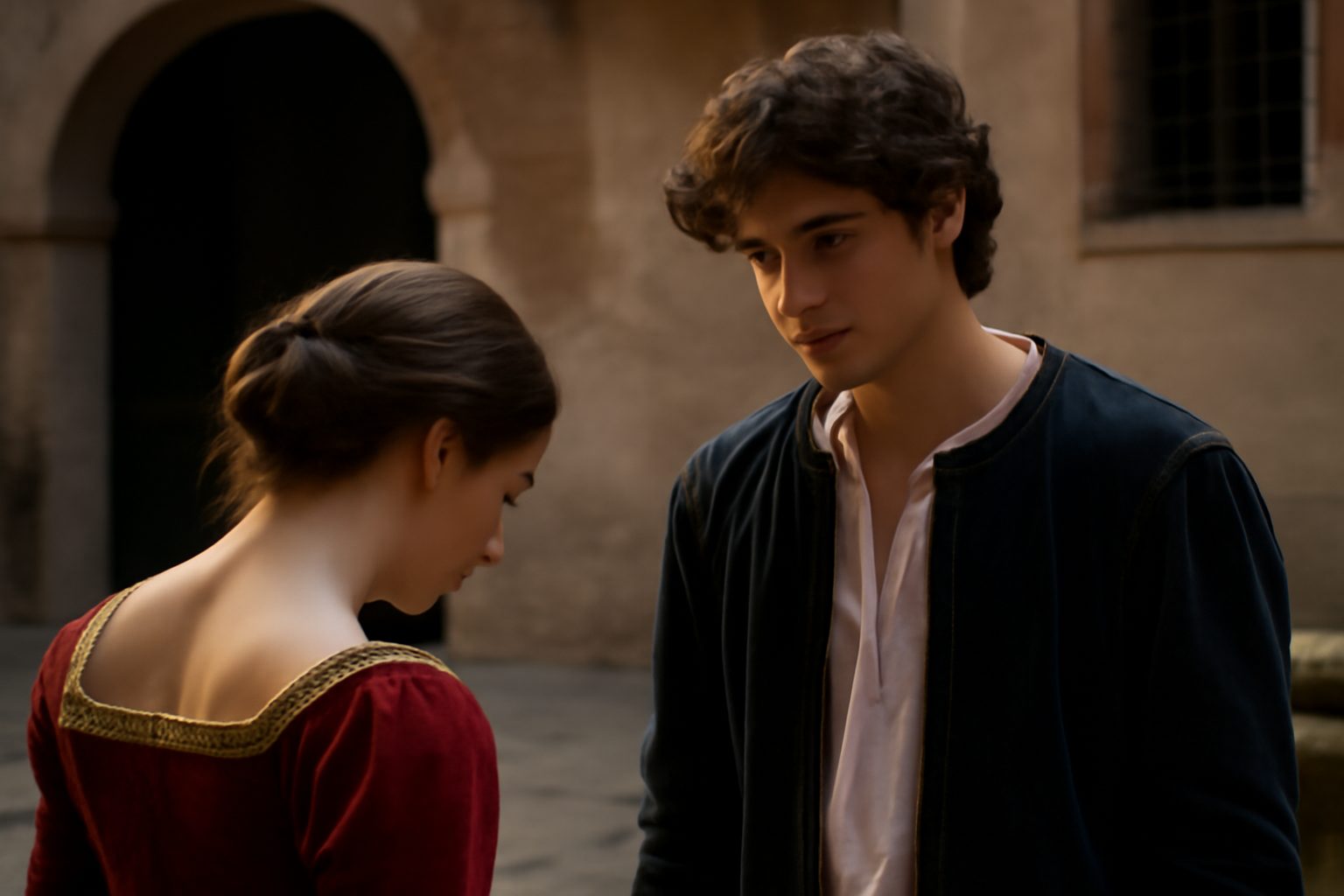
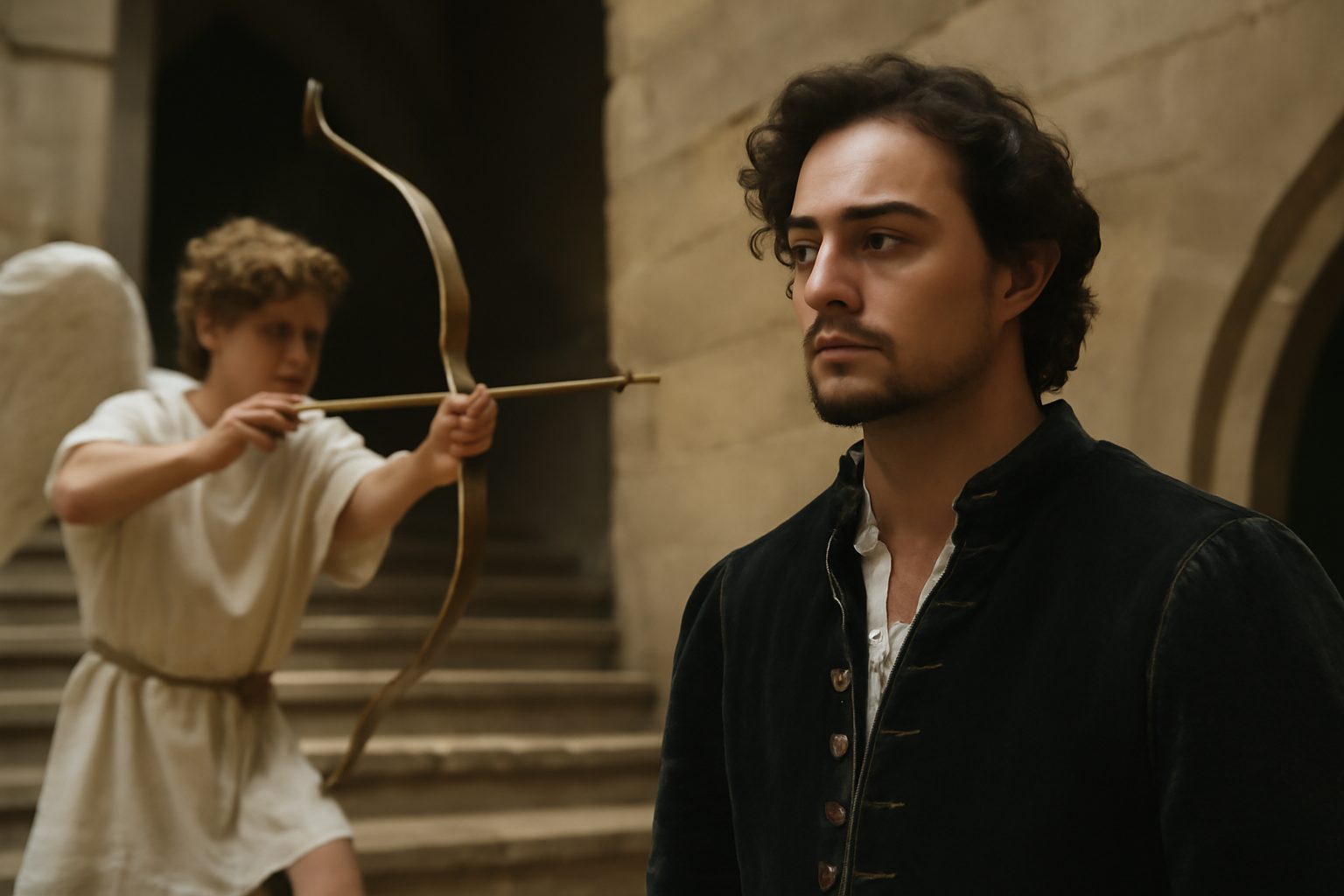
In Act 1, Scene 4 of Romeo and Juliet, Mercutio mocks Romeo's lovesick melancholy as they prepare to crash the Capulet feast. This line reflects Mercutio's sharp wit, as he jests about those who dwell on flaws rather than embracing revelry. It underscores the contrast between Romeo's romantic idealism and Mercutio's playful cynicism.
Mercutio: "What curious eye doth quote deformities?"
In modern day english, we would say:
Who is staring at us and pointing out our flaws?
Frequently Asked Questions
What is Mercutio asking in this line from Romeo and Juliet?
Mercutio is asking who is looking closely at their flaws or imperfections.
Connections to other verses:
Connections to "What curious eye doth quote deformities?"
The line What curious eye doth quote deformities? reflects the theme of appearance versus reality and the scrutiny of social masks, which is echoed throughout the scene.
Masks and Disguises
This verse connects to the discussion of masks and disguises, such as in Give me a case to put my visage in: and A visor for a visor! what care I, where characters prepare to hide their identities, raising the question of who might detect their true selves.
Judgment and Perception
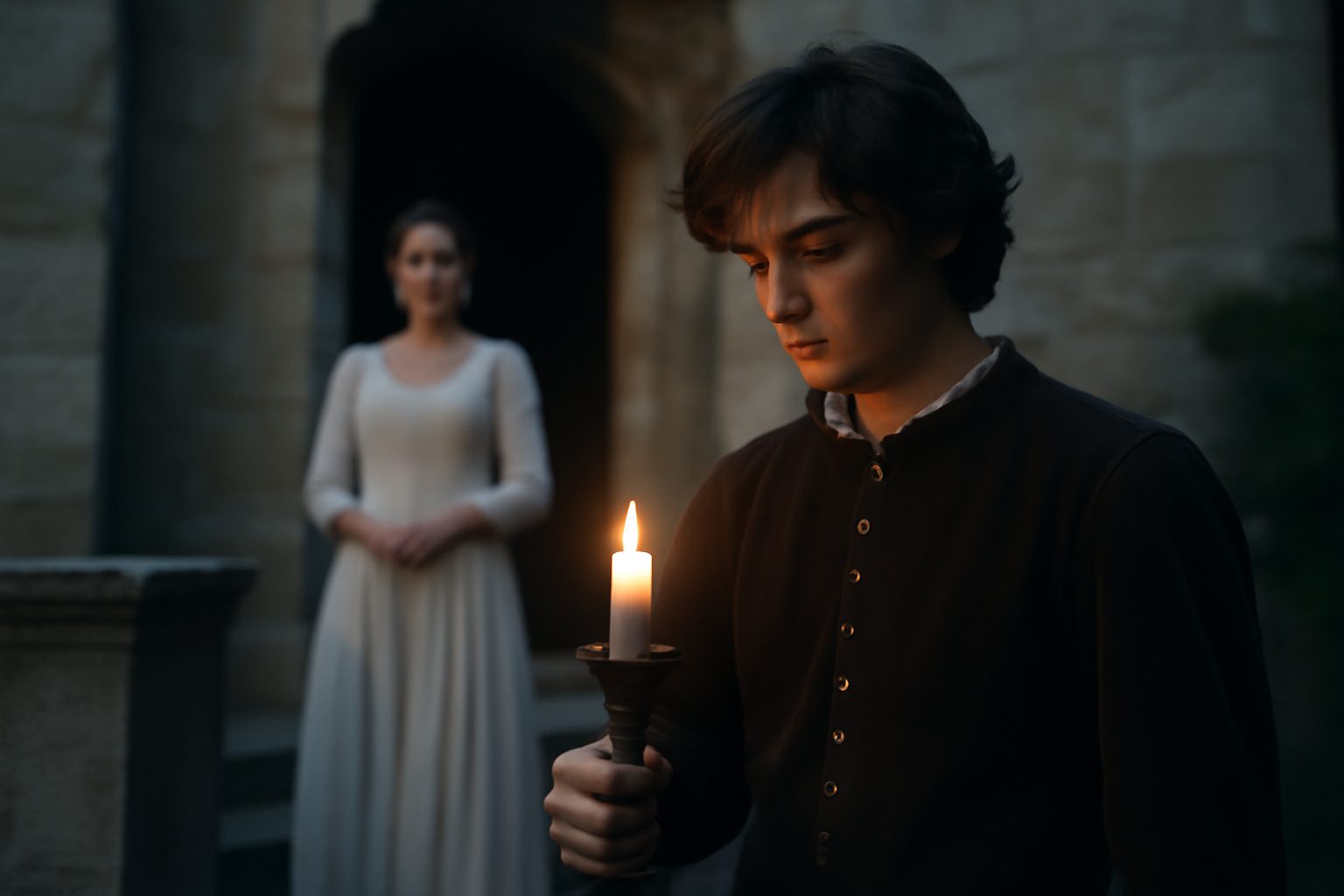
It also ties to Mercutio’s earlier remark in But let them measure us by what they will;, emphasizing how others may judge them based on outward appearances, and to Romeo’s reluctance to engage in revelry in I'll be a candle-holder, and look on., highlighting his self-consciousness.
Dreams and Illusions
Furthermore, it relates to the theme of dreams and illusions explored in Mercutio’s Queen Mab speech, particularly Which are the children of an idle brain,, suggesting that what is perceived as deformity or flaw may be a product of imagination or misinterpretation.