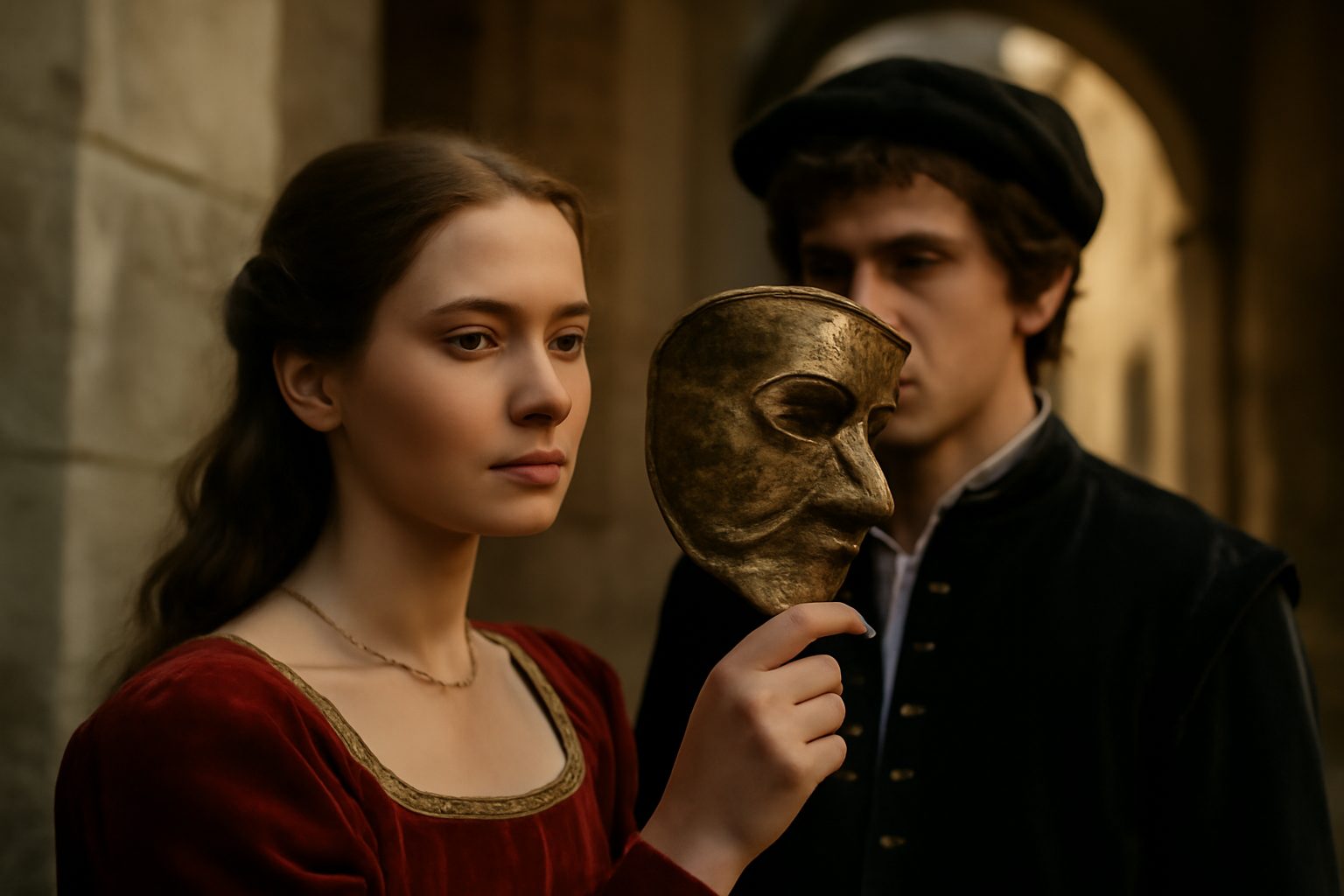
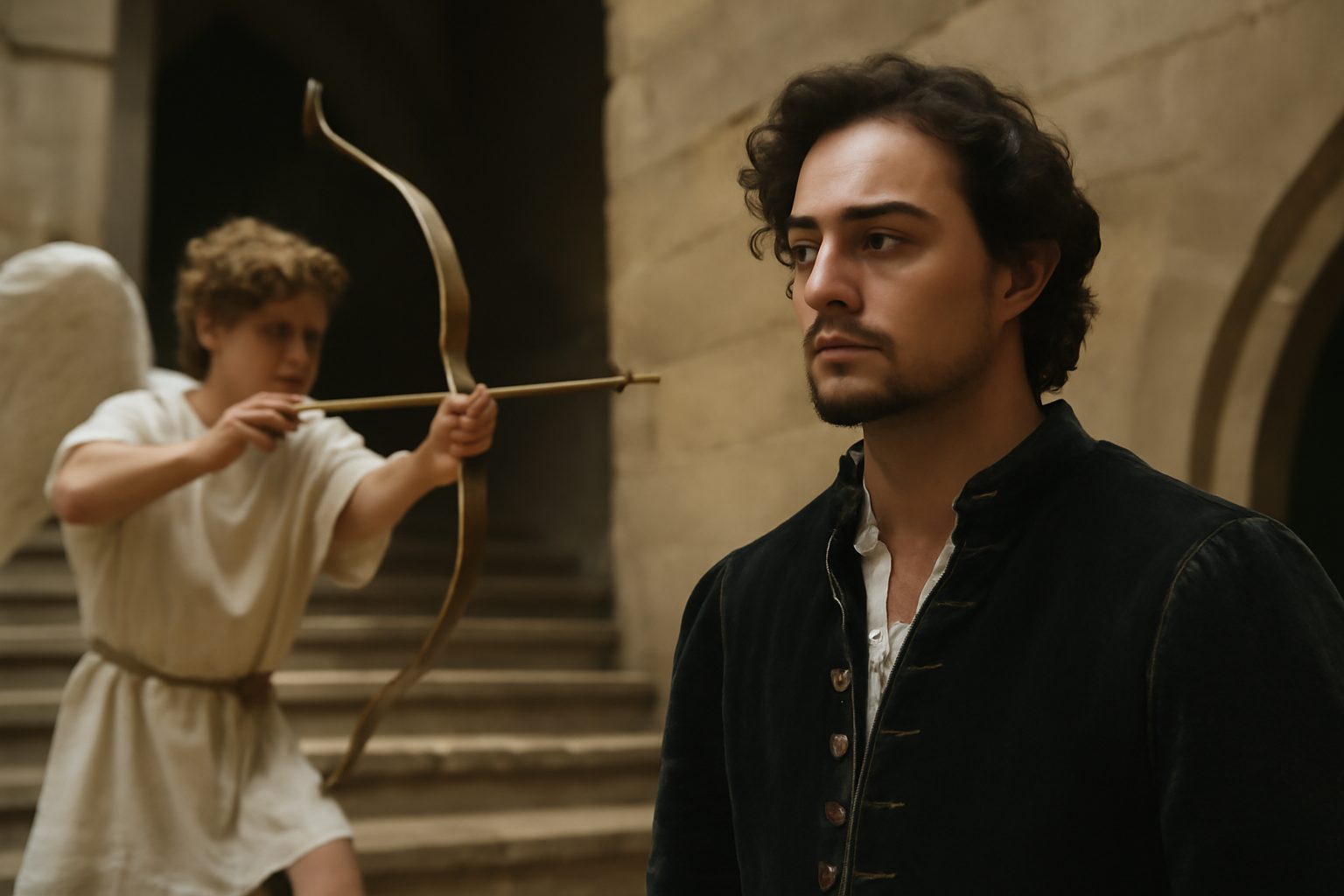
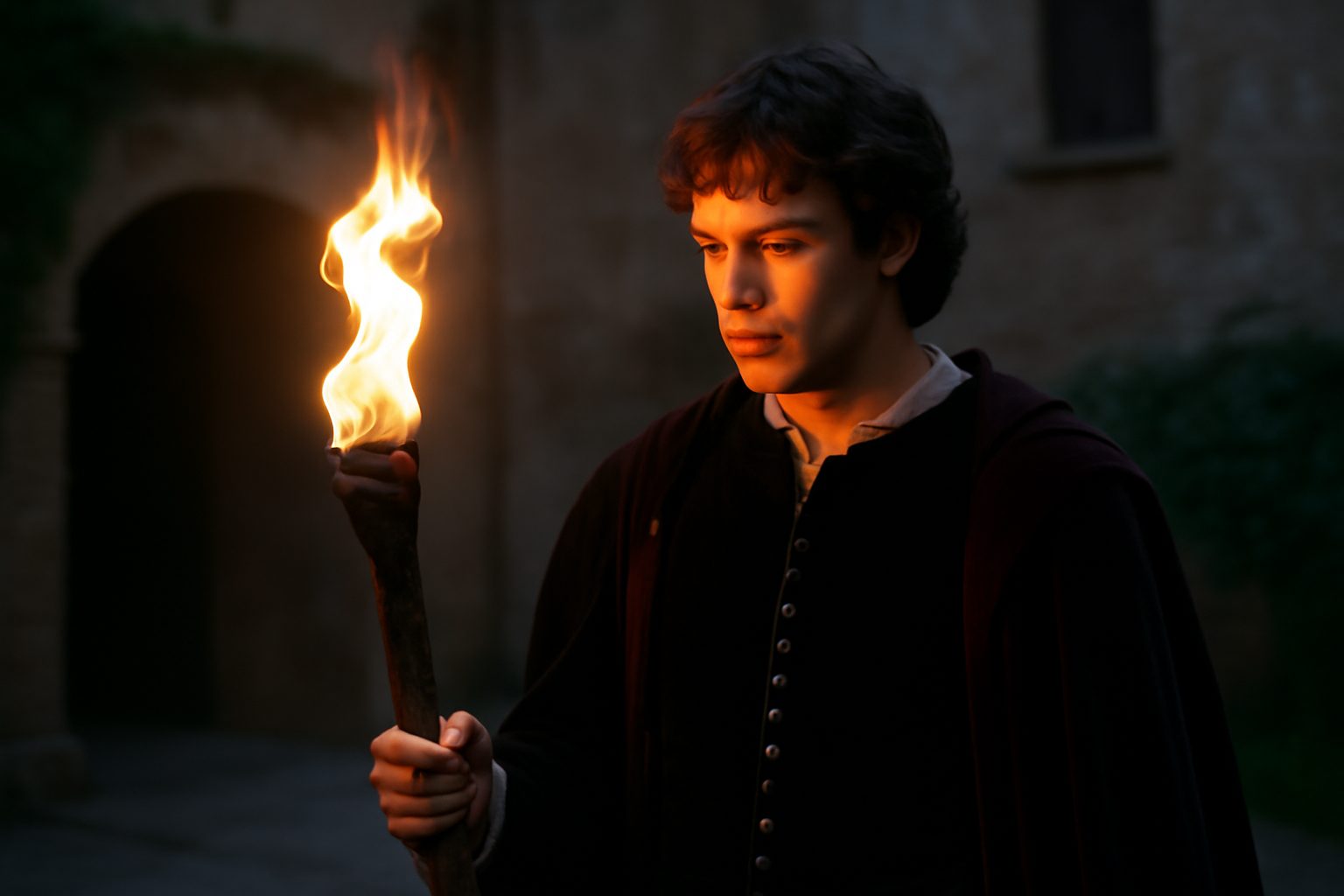
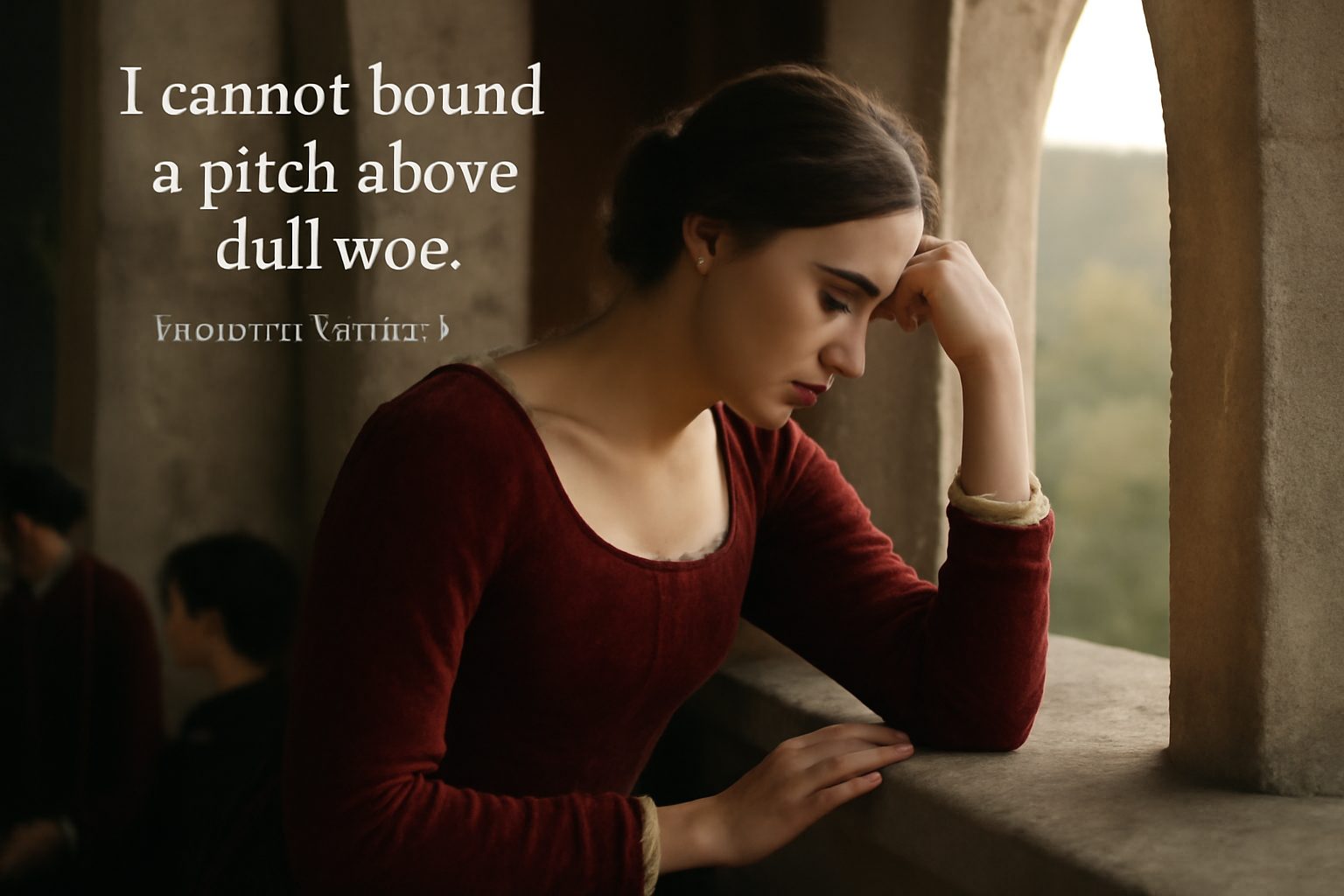
In Act 1, Scene 4 of Romeo and Juliet, Mercutio tries to lighten the mood as Romeo and their friends prepare to crash the Capulet feast. This line, filled with playful wordplay, mocks Romeo's lovesick melancholy by referencing a proverb about stillness and evasion. Mercutio's jest reflects his witty, irreverent nature, contrasting with Romeo's earnest romanticism.
Mercutio: "Tut, dun's the mouse, the constable's own word:"
In modern day english, we would say:
Come on, be as quiet as a mouse—that’s what the constable would say.
Frequently Asked Questions
What does Mercutio mean when he says dun's the mouse in Romeo and Juliet?
Mercutio is making a joke or playful comment, referring to being quiet or still like a mouse to avoid trouble, similar to how a constable (police officer) might expect people to behave.
Connections to other verses:
Connections to "Tut, dun's the mouse, the constable's own word:"
This line, spoken by Mercutio, is part of a playful exchange with Romeo about love and dreams. It connects thematically and contextually to several other verses in the scene.
Playful Banter and Wordplay
Mercutio's quip about "dun's the mouse" reflects his tendency toward witty wordplay, similar to his earlier remark: "If thou art dun, we'll draw thee from the mire", where he continues the "dun" pun. This jesting tone is also evident when he says "A visor for a visor! what care I", showcasing his carefree attitude.
Dreams and Fantasies
The line ties into the broader discussion of dreams initiated by Romeo's statement: "I dream'd a dream to-night". Mercutio responds with his famous Queen Mab speech, beginning with "O, then, I see Queen Mab hath been with you", elaborating on the whimsical and deceptive nature of dreams.
Contrast with Romeo's Melancholy
Mercutio's lightheartedness contrasts sharply with Romeo's somber mood, expressed in lines like "Under love's heavy burden do I sink" and "I have a soul of lead". This juxtaposition highlights their differing perspectives on love and revelry.
Foreshadowing and Ominous Undertones
Despite the humor, Mercutio's speech contains subtle warnings, echoed in Romeo's foreboding sense: "I fear, too early: for my mind misgives" and his fear of "some vile forfeit of untimely death". These elements foreshadow the tragedy to come.