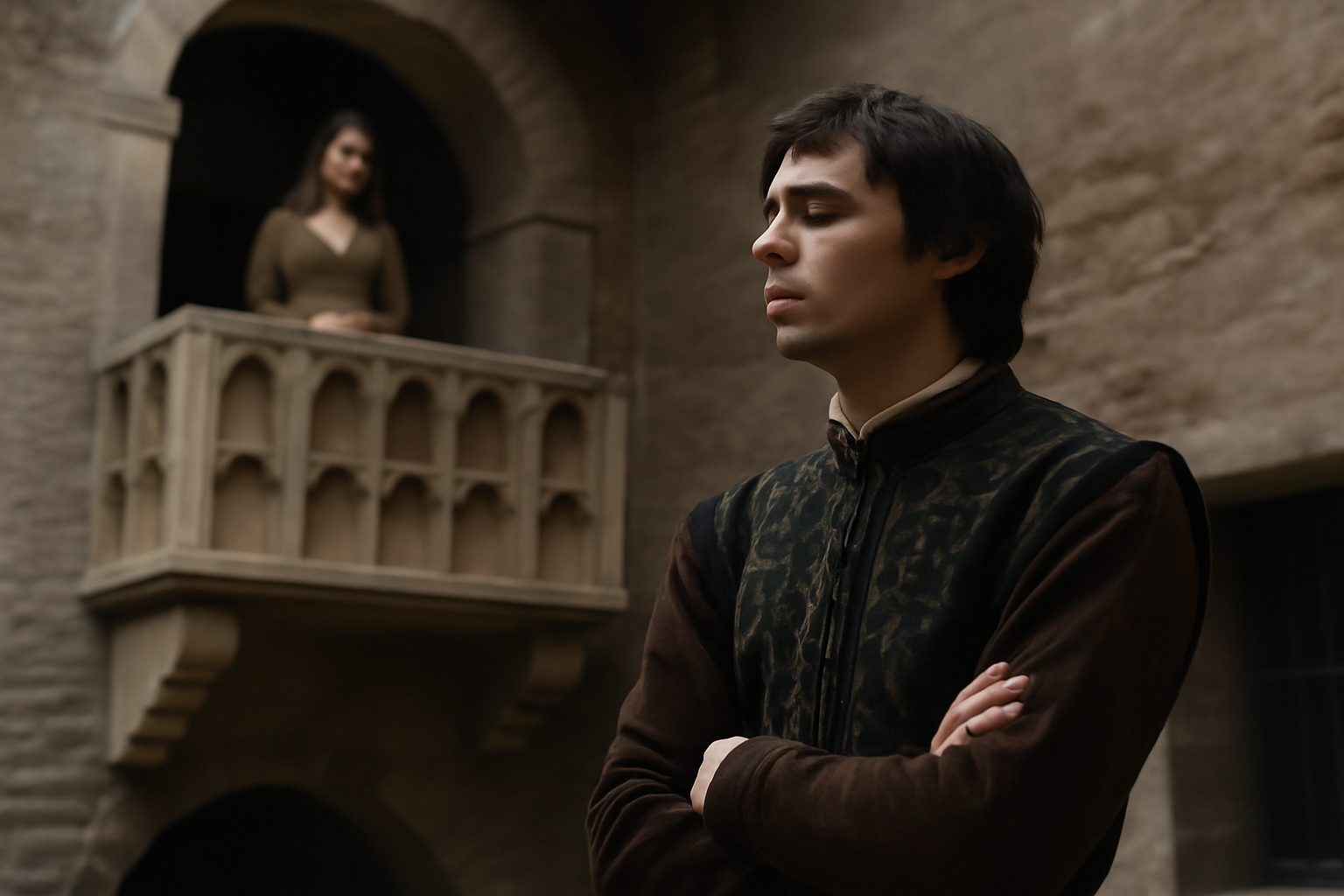
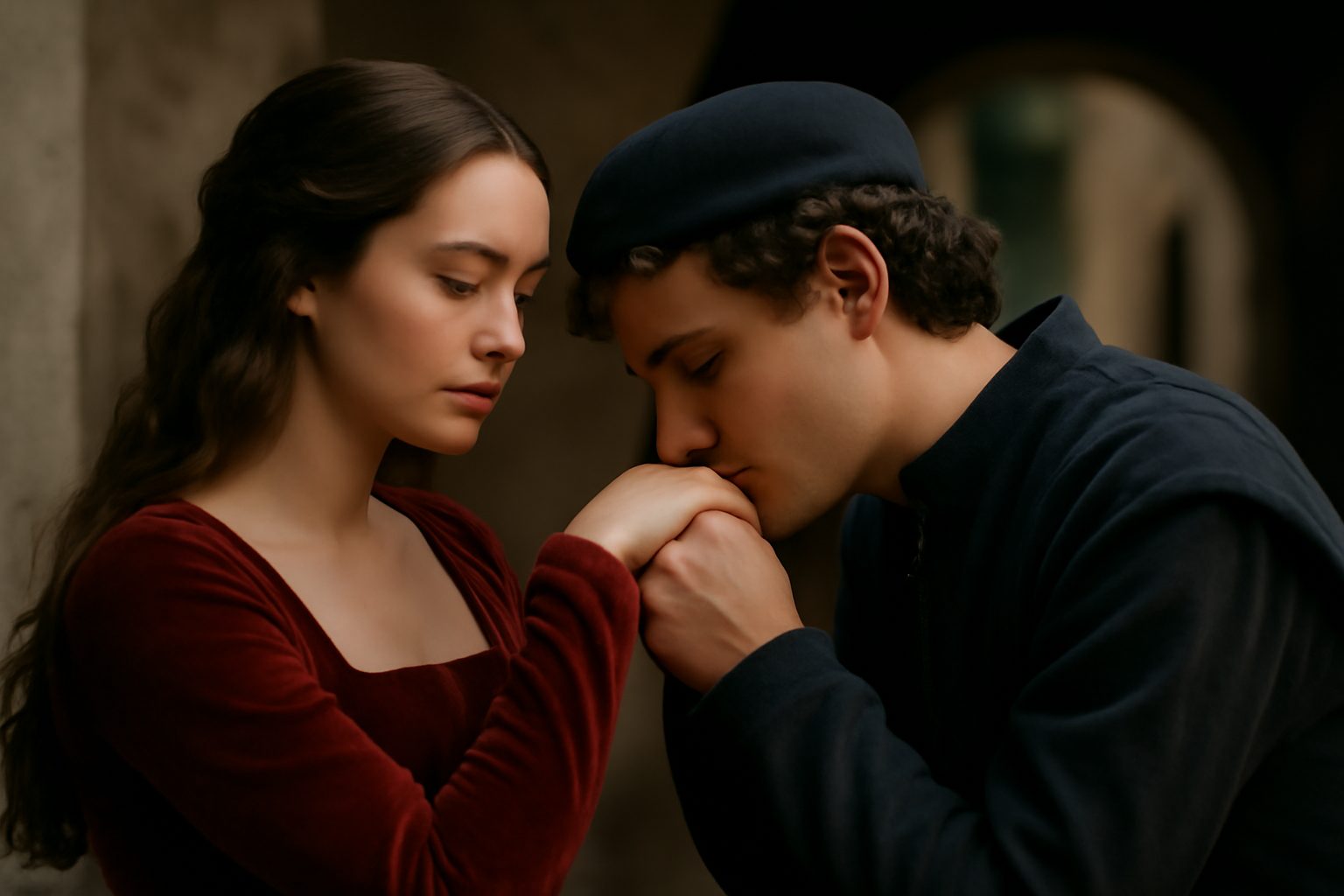
In Act 1, Scene 4 of Romeo and Juliet, Romeo speaks these words as he reluctantly joins his friends on their way to the Capulet feast. He is lovesick over Rosaline, and the weight of unrequited love makes him feel weary and reluctant to engage in the evening's festivities. The line captures his melancholy and resistance to merriment, setting the stage for his dramatic shift in affection when he later meets Juliet.
Romeo: "Under love's heavy burden do I sink."
In modern day english, we would say:
I feel weighed down by love’s pressure.
Frequently Asked Questions
What does Romeo mean when he says he sinks under love's heavy burden?
Romeo means that the strong feelings of love he has are overwhelming him, making him feel weighed down and exhausted.
Connections to other verses:
Connections to "Under love's heavy burden do I sink"
Romeo's lament about love's oppressive weight connects thematically and linguistically with several other verses in this scene, revealing his melancholic state and foreshadowing the play's tragic trajectory.
Direct Echoes and Parallel Imagery
The phrase "And, to sink in it, should you burden love" directly mirrors Romeo's sinking under love's burden, creating a parallel between Mercutio's cynical warning and Romeo's current emotional state. Both verses employ the metaphor of love as a weight that causes sinking or drowning.
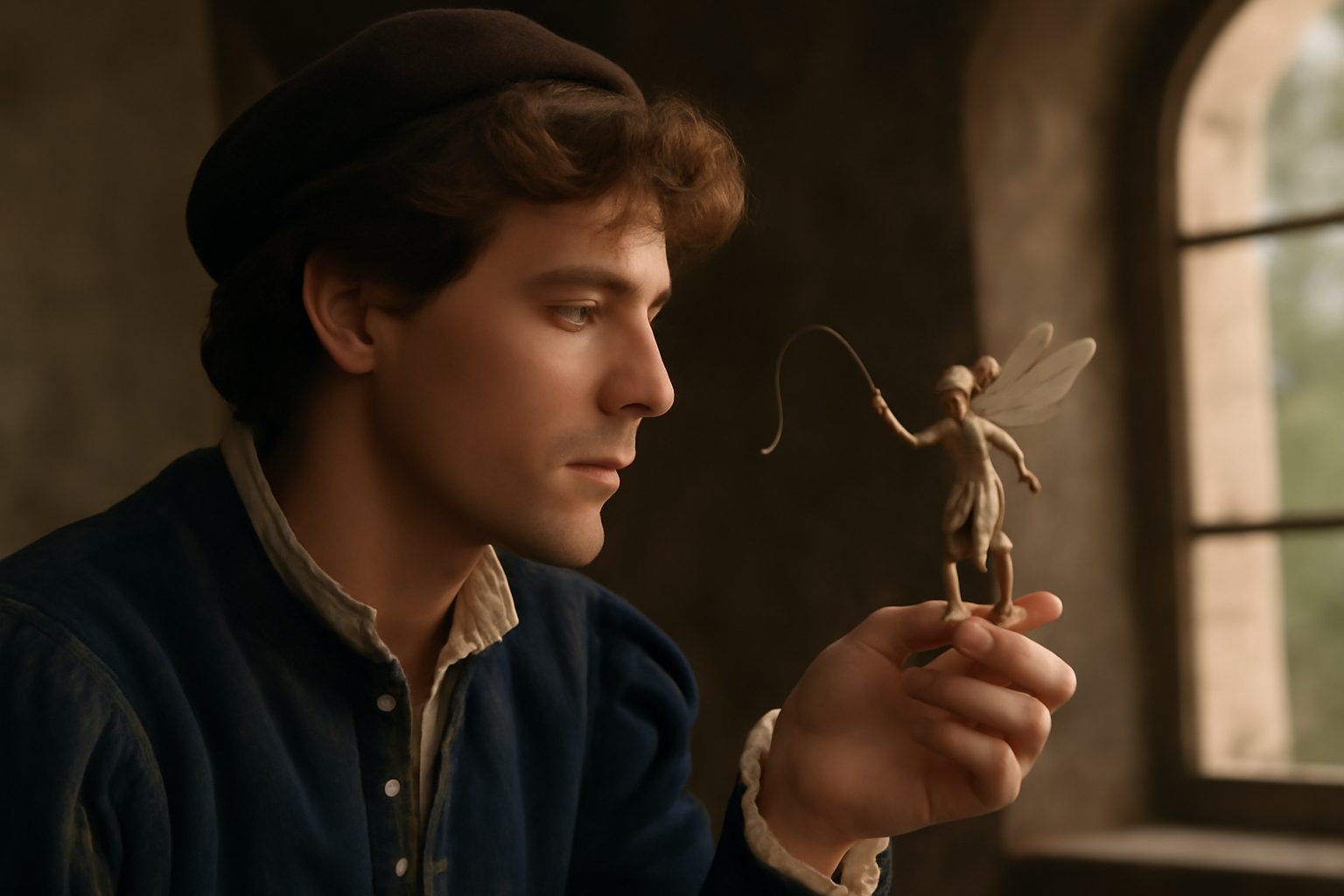
Romeo's heaviness contrasts sharply with Mercutio's earlier suggestion to "borrow Cupid's wings, And soar with them above a common bound". Where Mercutio proposes elevation through love, Romeo experiences the opposite effect of being weighed down.
Contrasting States of Being
Romeo's declaration that he has "a soul of lead" directly explains why he sinks under love's burden, creating a causal relationship between his heavy spirit and his inability to bear love's weight.
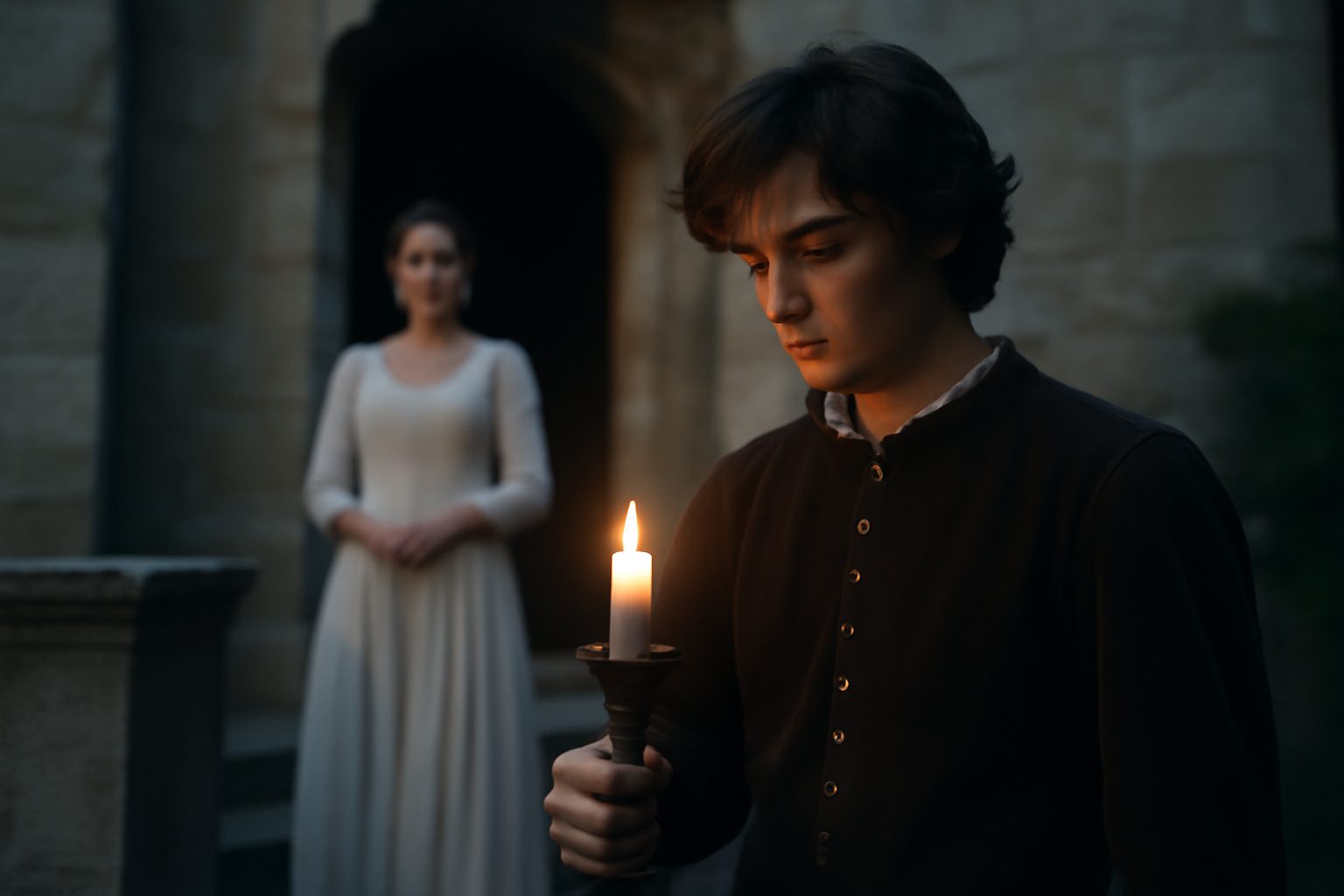
This heaviness prevents him from joining the revelry, as seen when he requests "Give me a torch: I am not for this ambling" and declares "I'll be a candle-holder, and look on", preferring to remain a spectator rather than participate in the light-hearted festivities.
Love's Nature and Effects
The conversation about love's nature surrounding Romeo's lament provides context for his feelings. When asked "Is love a tender thing?", Romeo responds that it is "too rough, Too rude, too boisterous" and "Too great oppression for a tender thing", directly explaining why he feels burdened by it.
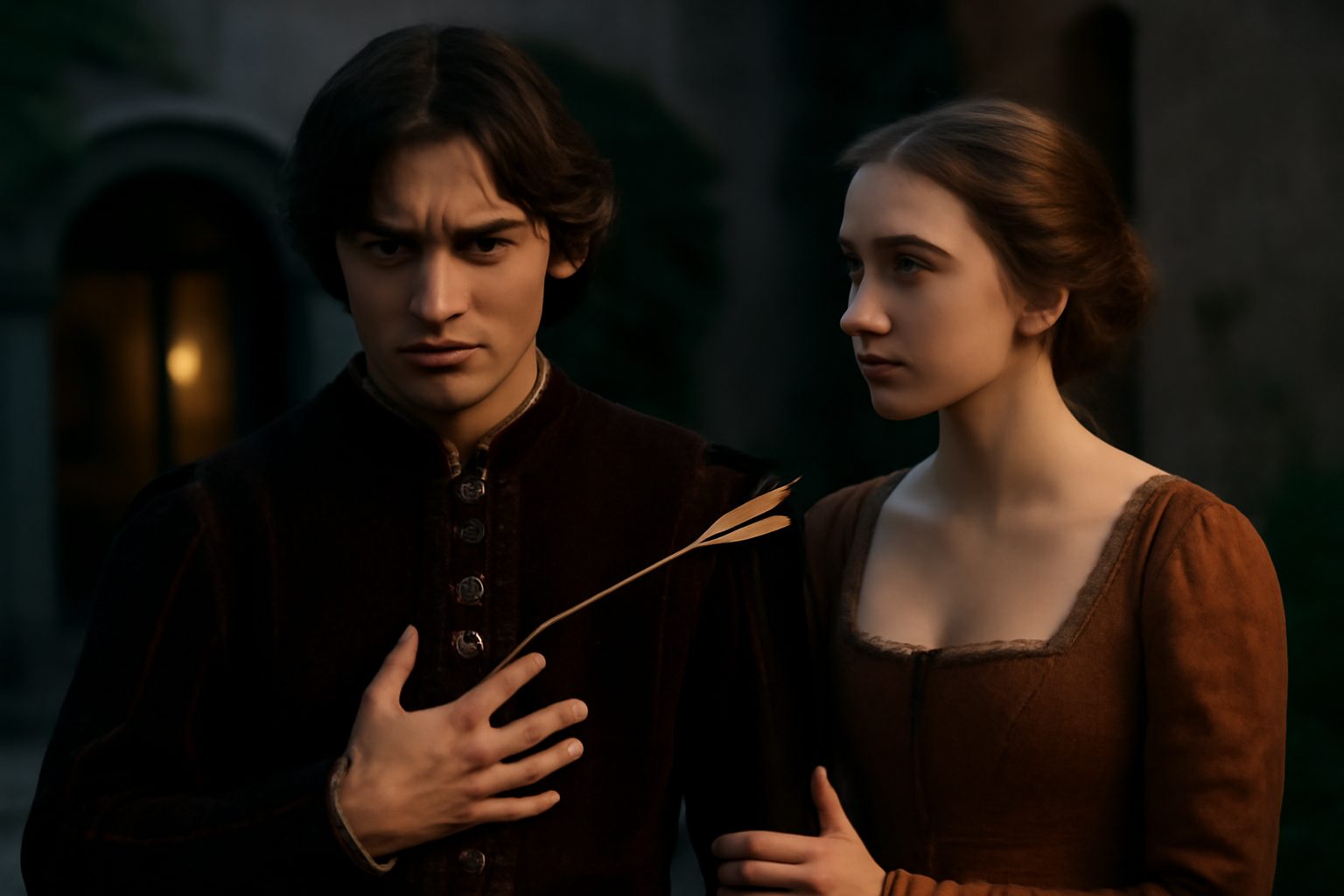
Mercutio's advice to "If love be rough with you, be rough with love" and "Prick love for pricking" offers an alternative approach to love's burdens that Romeo cannot embrace in his current state.
Foreshadowing and Dream Imagery
Romeo's heavy burden connects to his ominous premonition that "my mind misgives Some consequence yet hanging in the stars" that will "bitterly begin his fearful date With this night's revels" and potentially lead to "some vile forfeit of untimely death".
This sense of foreboding weight contrasts with Mercutio's Queen Mab speech, which describes dreams as "the children of an idle brain, Begot of nothing but vain fantasy" and "as thin of substance as the air" - the complete opposite of the heavy substance weighing on Romeo.
Resolution and Acceptance
Despite his heavy burden, Romeo ultimately resolves to proceed, acknowledging "He, that hath the steerage of my course, Direct my sail!" This acceptance of fate's guidance provides a counterpoint to his initial sinking under love's burden, showing his movement toward accepting whatever consequences may come.