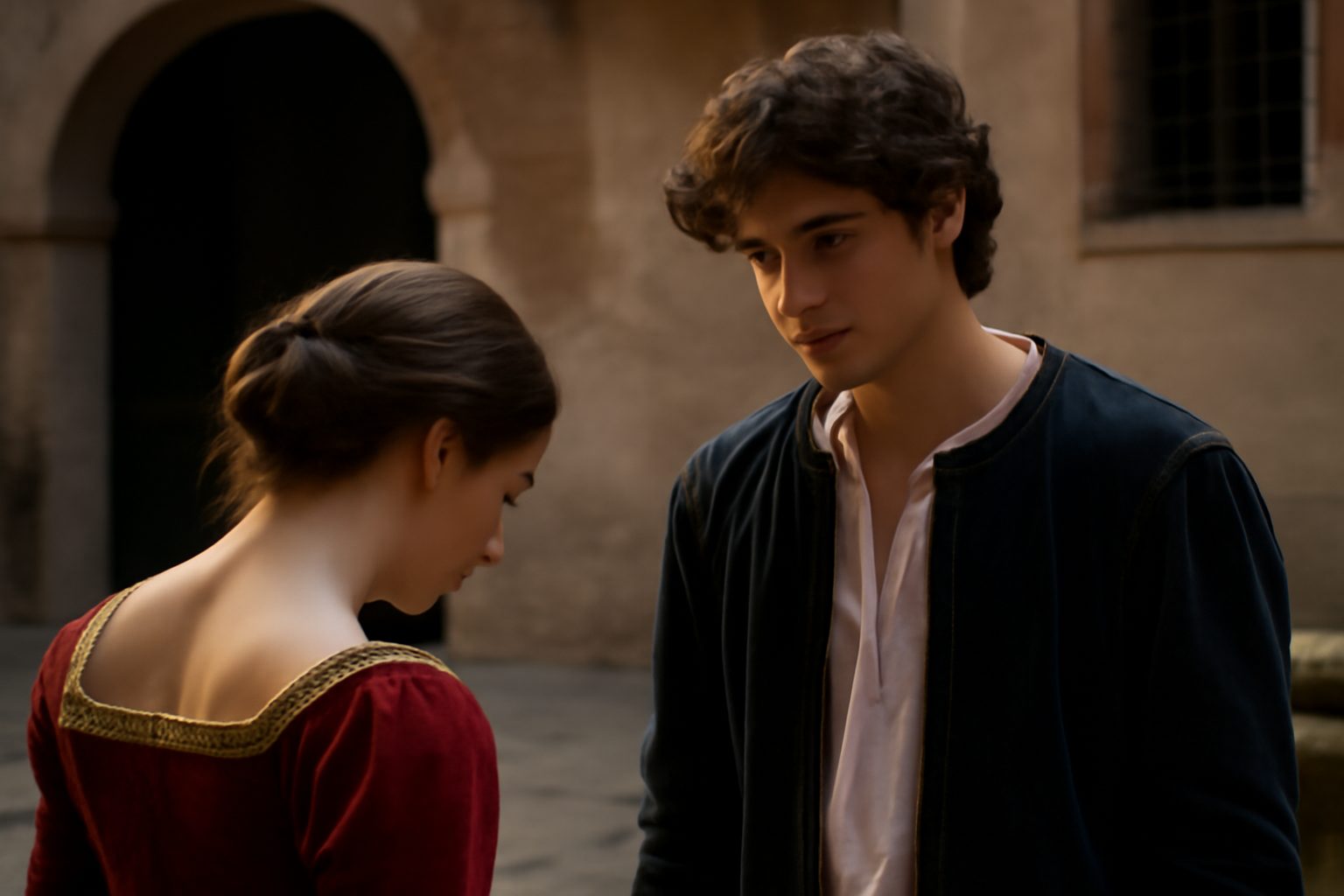
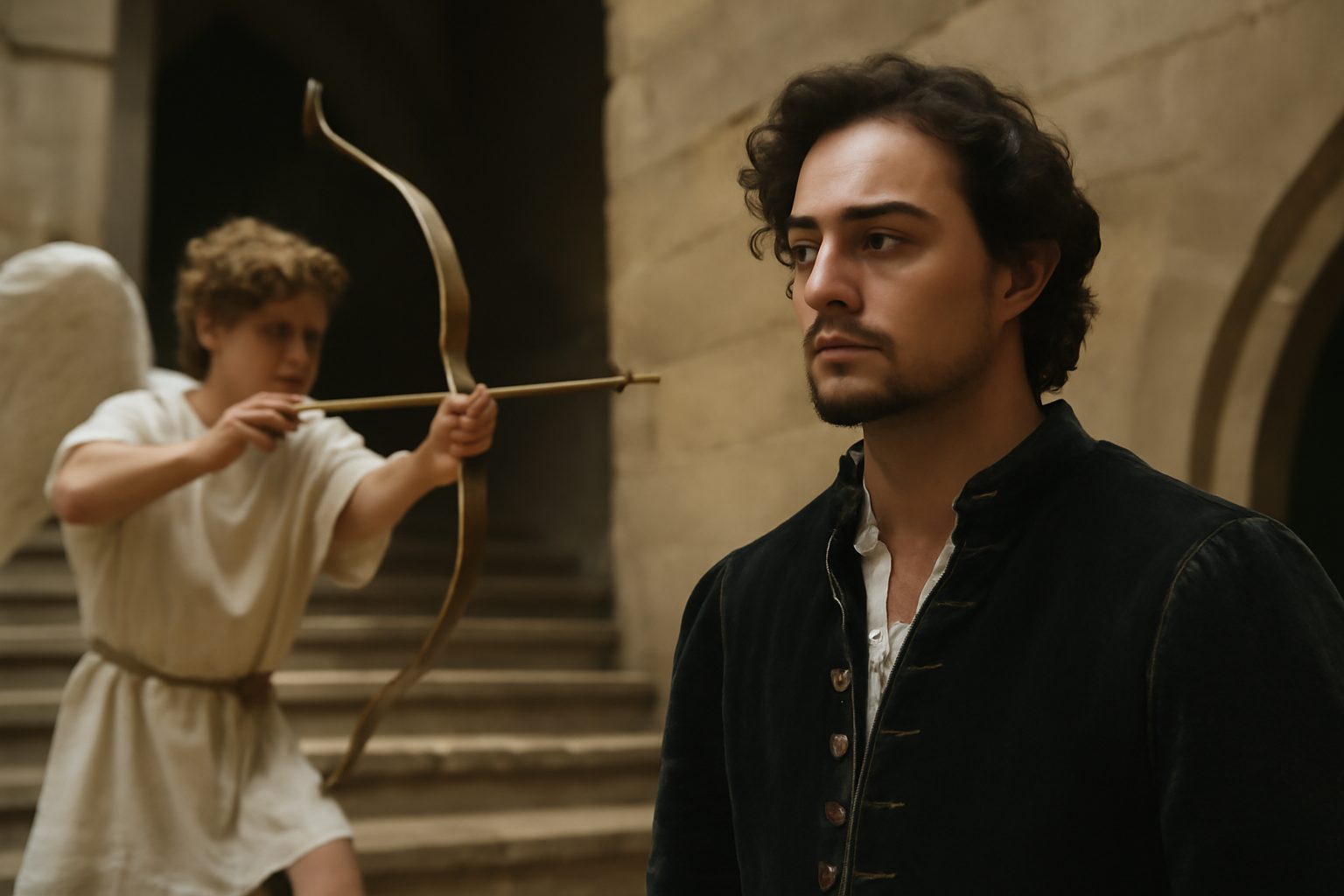
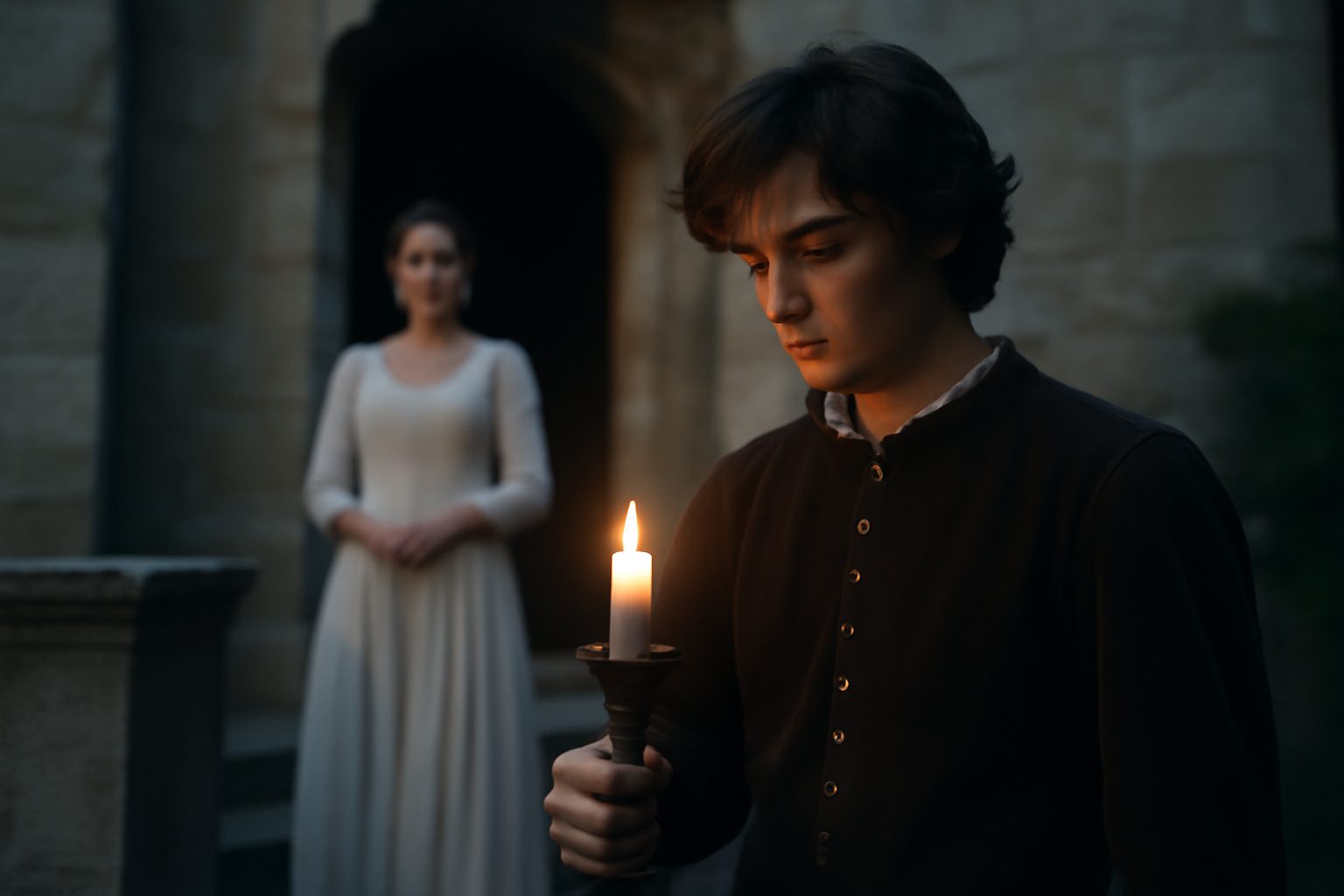
In Act 1, Scene 4 of Romeo and Juliet, Mercutio teases Romeo as they approach the Capulet feast. The line refers to a playful pun on the word "dun," suggesting both a dull color and a stuck horse, as Mercutio urges Romeo to lighten up and join in the merriment. This moment highlights Mercutio's quick wit and sets a contrast with Romeo's lovesick mood.
Mercutio: "If thou art dun, we'll draw thee from the mire"
In modern day english, we would say:
If you’re stuck like a dull, sluggish horse, we’ll pull you out of the mud.
Frequently Asked Questions
What does Mercutio mean when he says this line to Romeo?
Mercutio is teasing Romeo, suggesting that if he is feeling dull or stuck (like a donkey in mud), they will help cheer him up or get him moving.
Connections to other verses:
Connections to "If thou art dun, we'll draw thee from the mire"
The line "If thou art dun, we'll draw thee from the mire" is spoken by Mercutio to Romeo, using wordplay on "dun" (a dull color or a horse's name) and "mire" (mud) to tease Romeo about his lovesick melancholy. This connects thematically and verbally to several other verses in the scene.
Wordplay and Teasing Tone
Mercutio's playful taunt is echoed in "Tut, dun's the mouse, the constable's own word", where he continues the "dun" pun, reinforcing the lighthearted mockery of Romeo's mood. Similarly, "Of this sir-reverence love, wherein thou stick'st" refers to Romeo being stuck in love's mud, directly tying back to the "mire" imagery.
Romeo's Melancholy and Resistance
Romeo's heavy-heartedness, which Mercutio addresses, is expressed in lines like "I have a soul of lead" and "Under love's heavy burden do I sink", emphasizing his emotional weight that Mercutio tries to "draw" him from. The offer to help Romeo is contrasted with Romeo's own refusal to engage in merriment, as seen in "Give me a torch: I am not for this ambling".
Mercutio's Encouragement and Imagery
Mercutio's efforts to lift Romeo's spirits include urging him to "borrow Cupid's wings" and "be rough with love", advocating for a more active, less sorrowful approach to love. The idea of being "drawn from the mire" parallels Mercutio's later assertion that dreams and love are "begot of nothing but vain fantasy", suggesting that Romeo's woes are self-created.
Foreshadowing and Deeper Themes
While Mercutio's tone is jesting, Romeo's response hints at foreboding, such as "I fear, too early: for my mind misgives", indicating that he cannot be easily drawn from his solemn mood. This sets up the contrast between Mercutio's lively worldview and Romeo's fate-driven anxiety, culminating in Romeo's resignation to "He, that hath the steerage of my course".