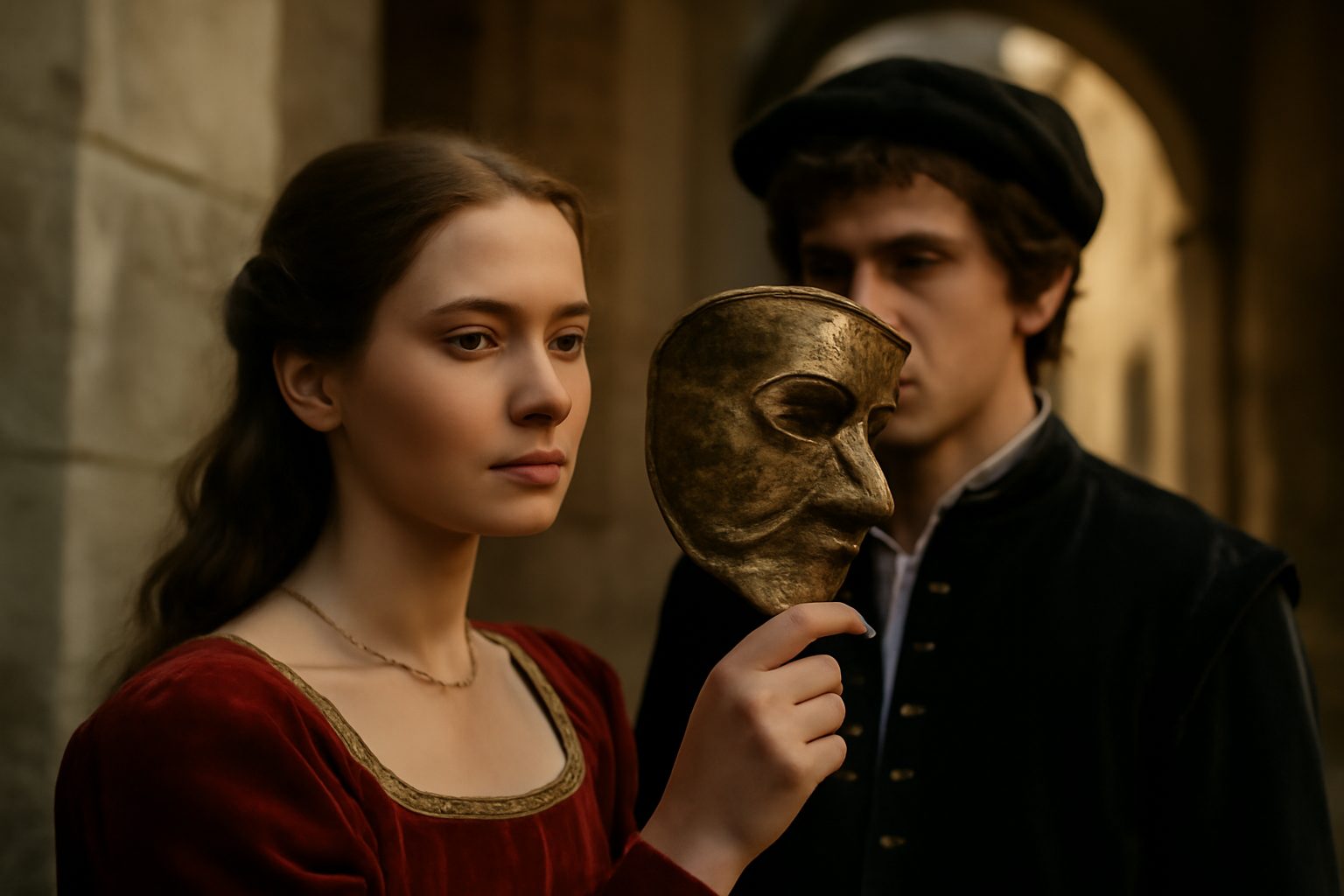
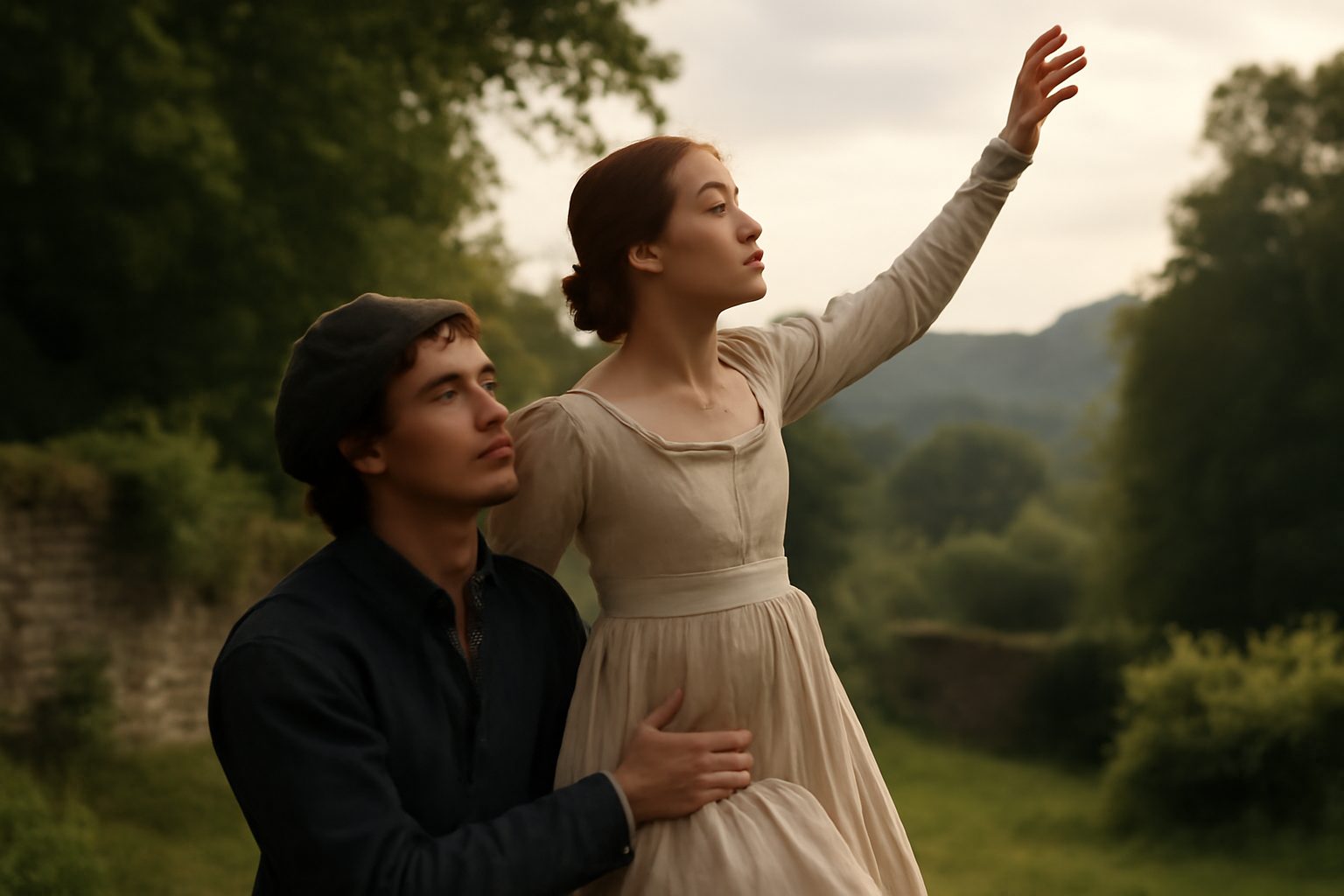
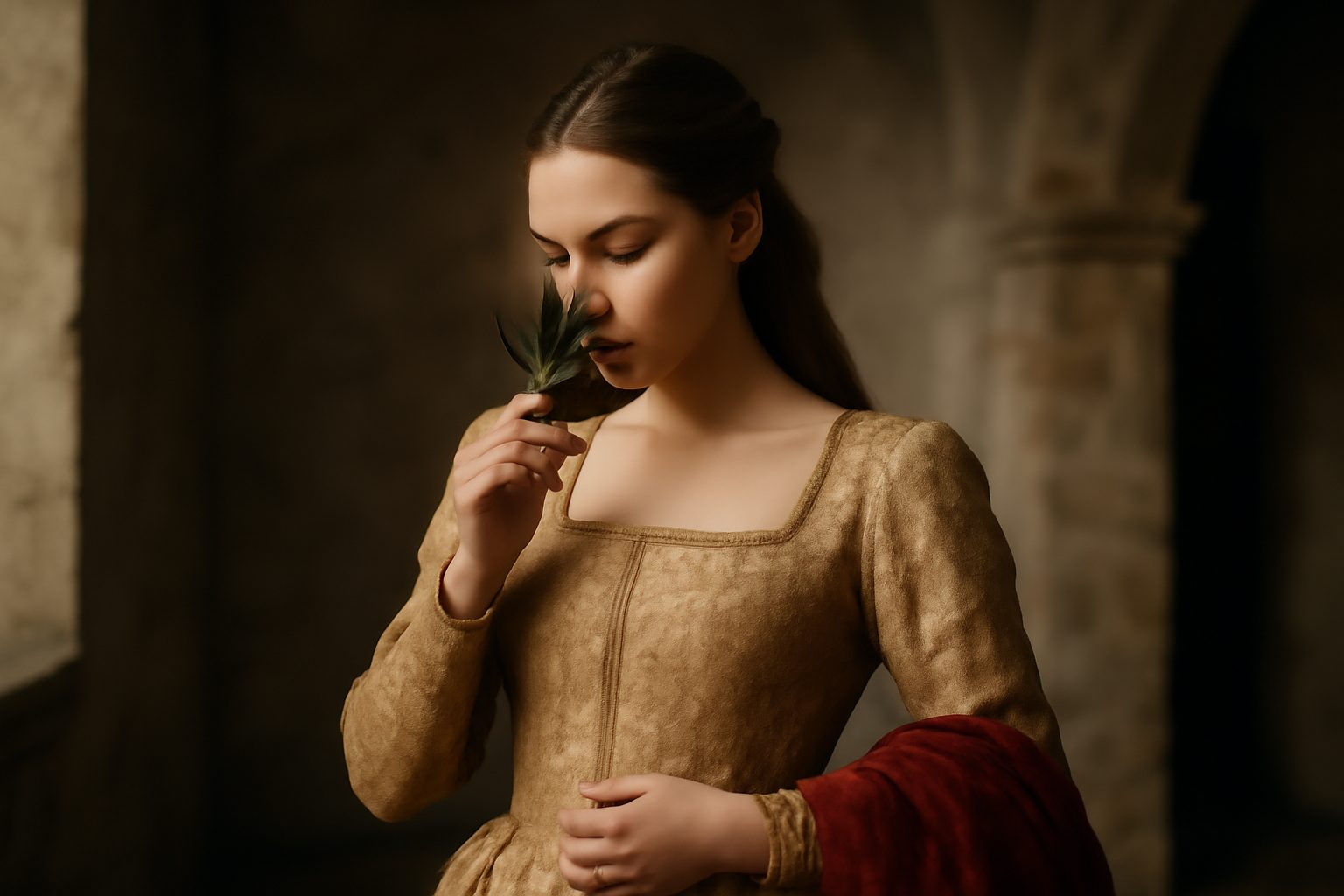
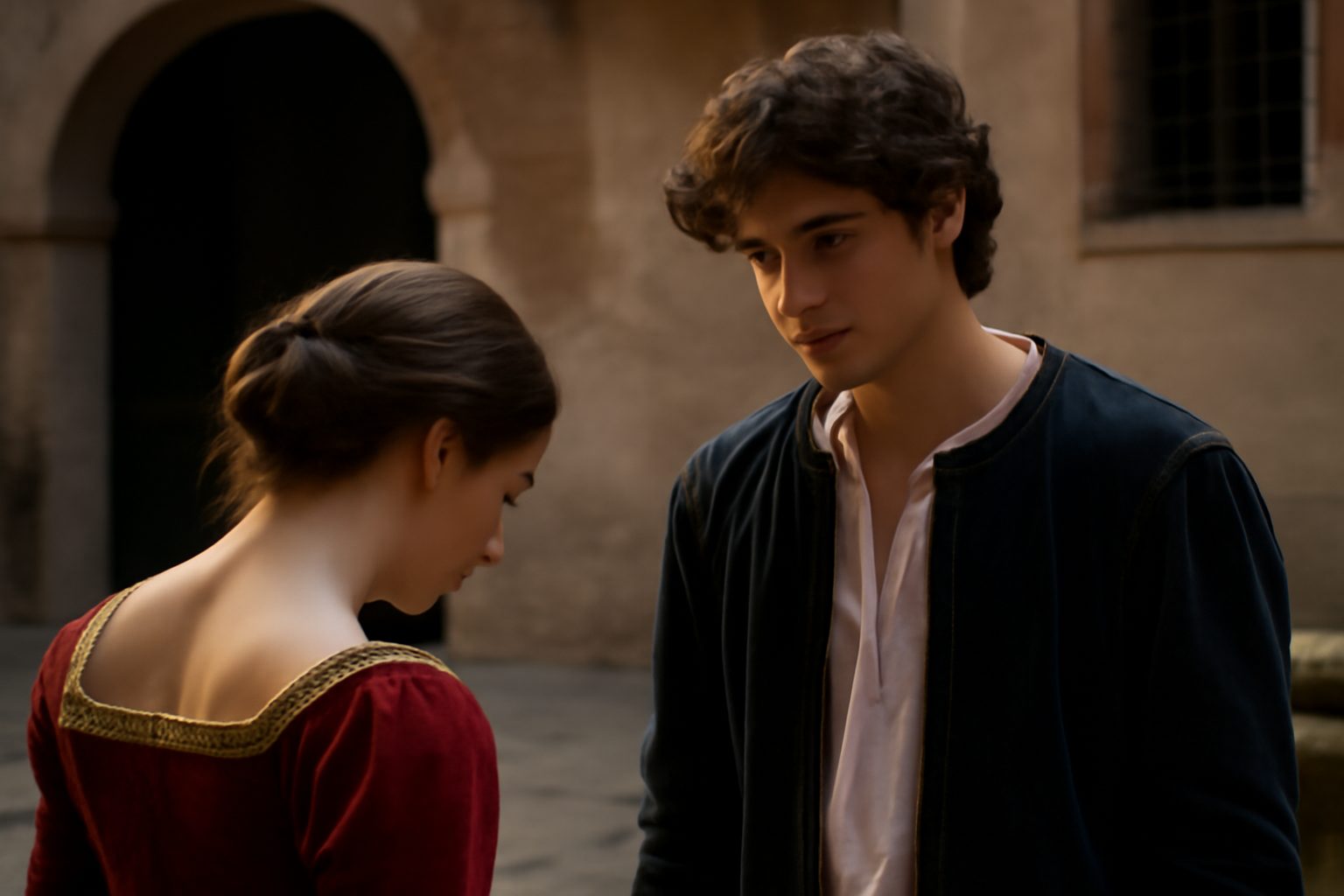
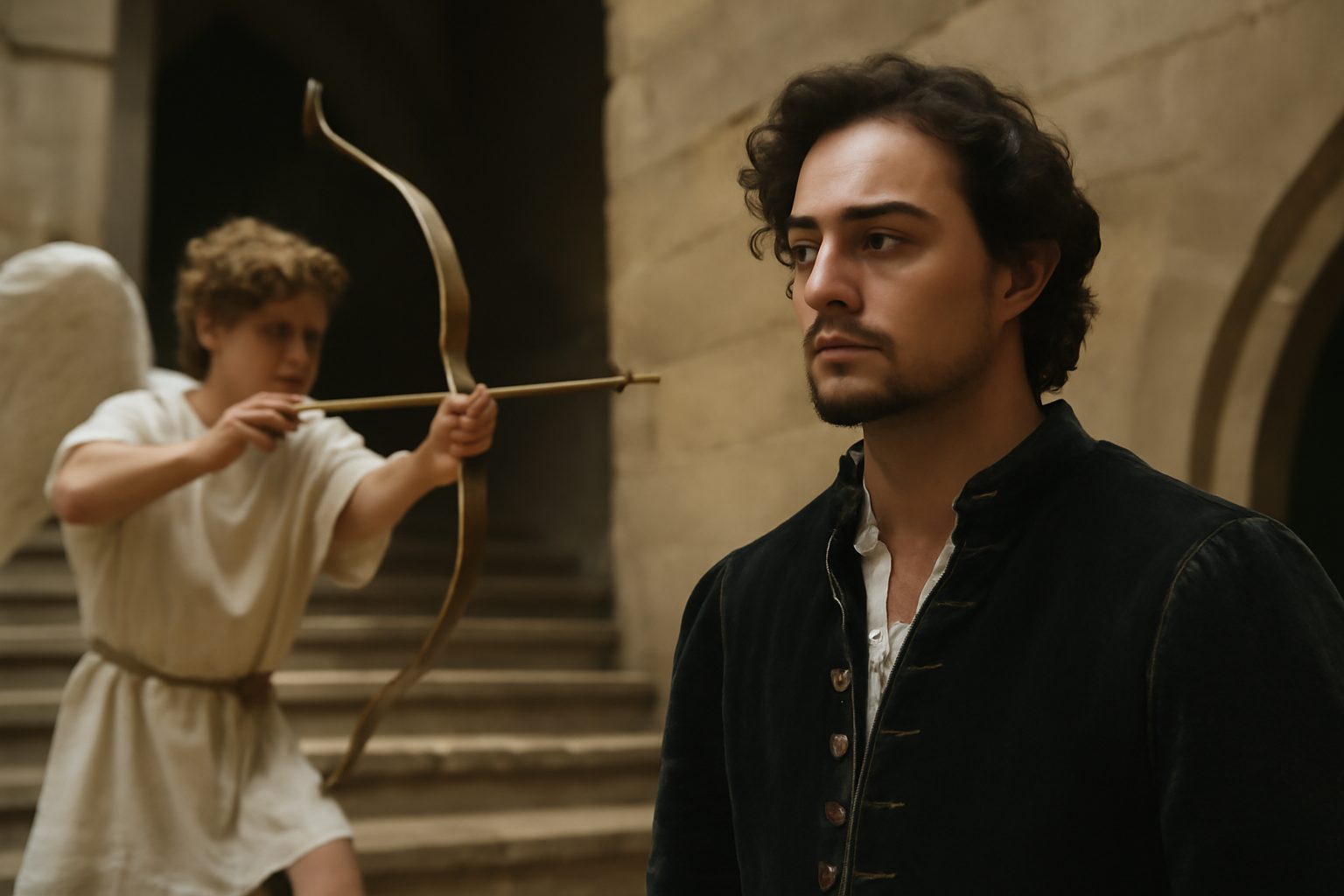
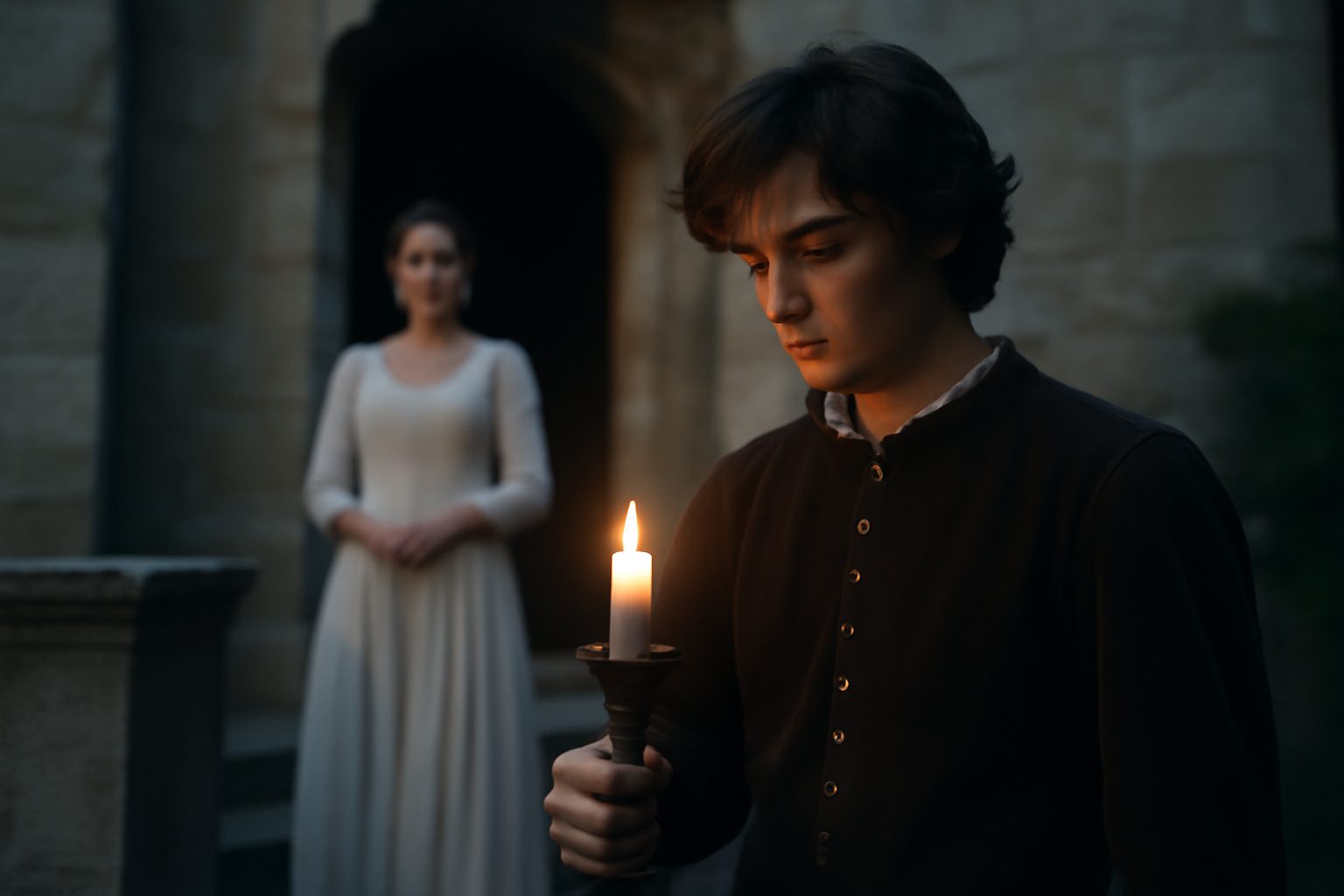
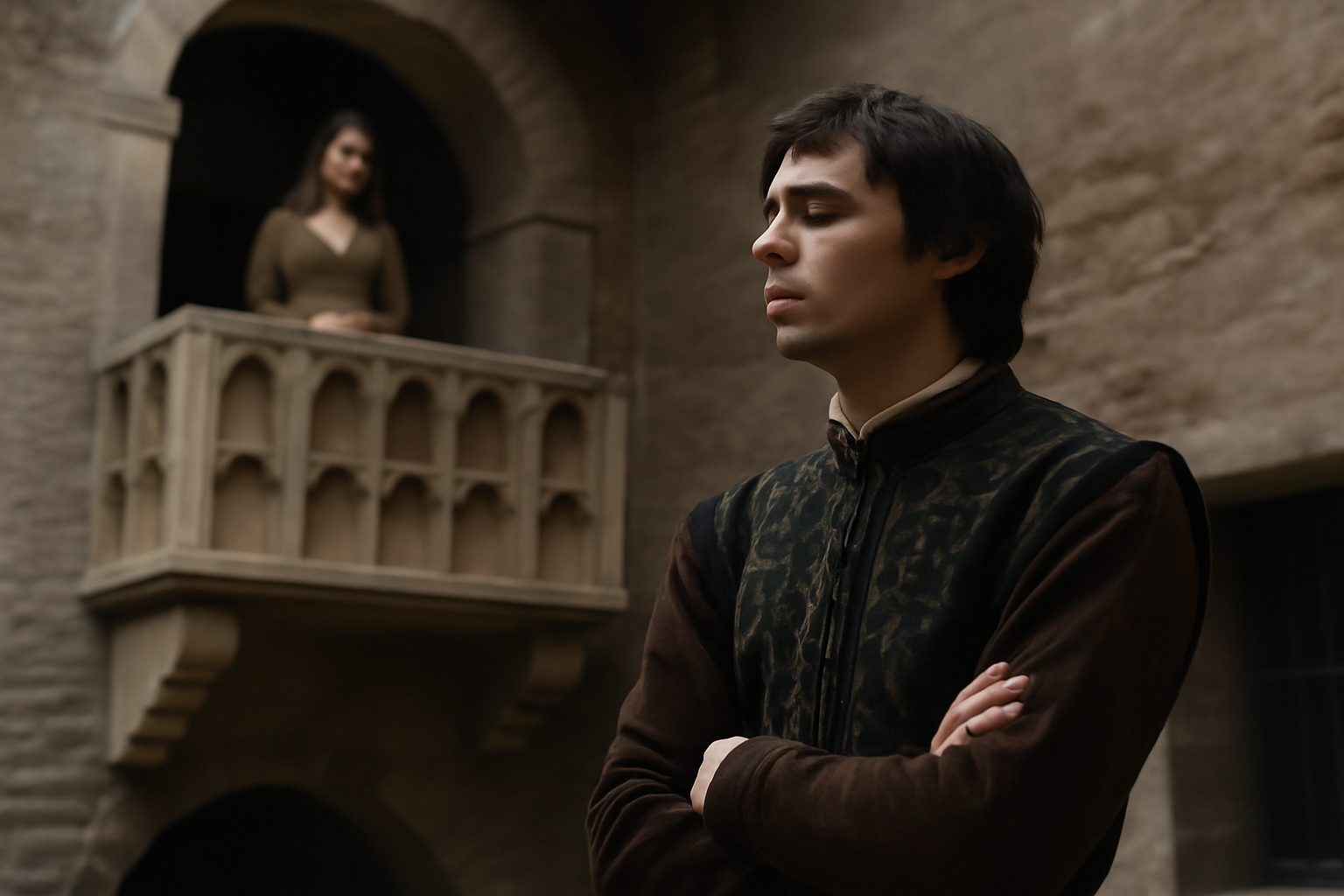
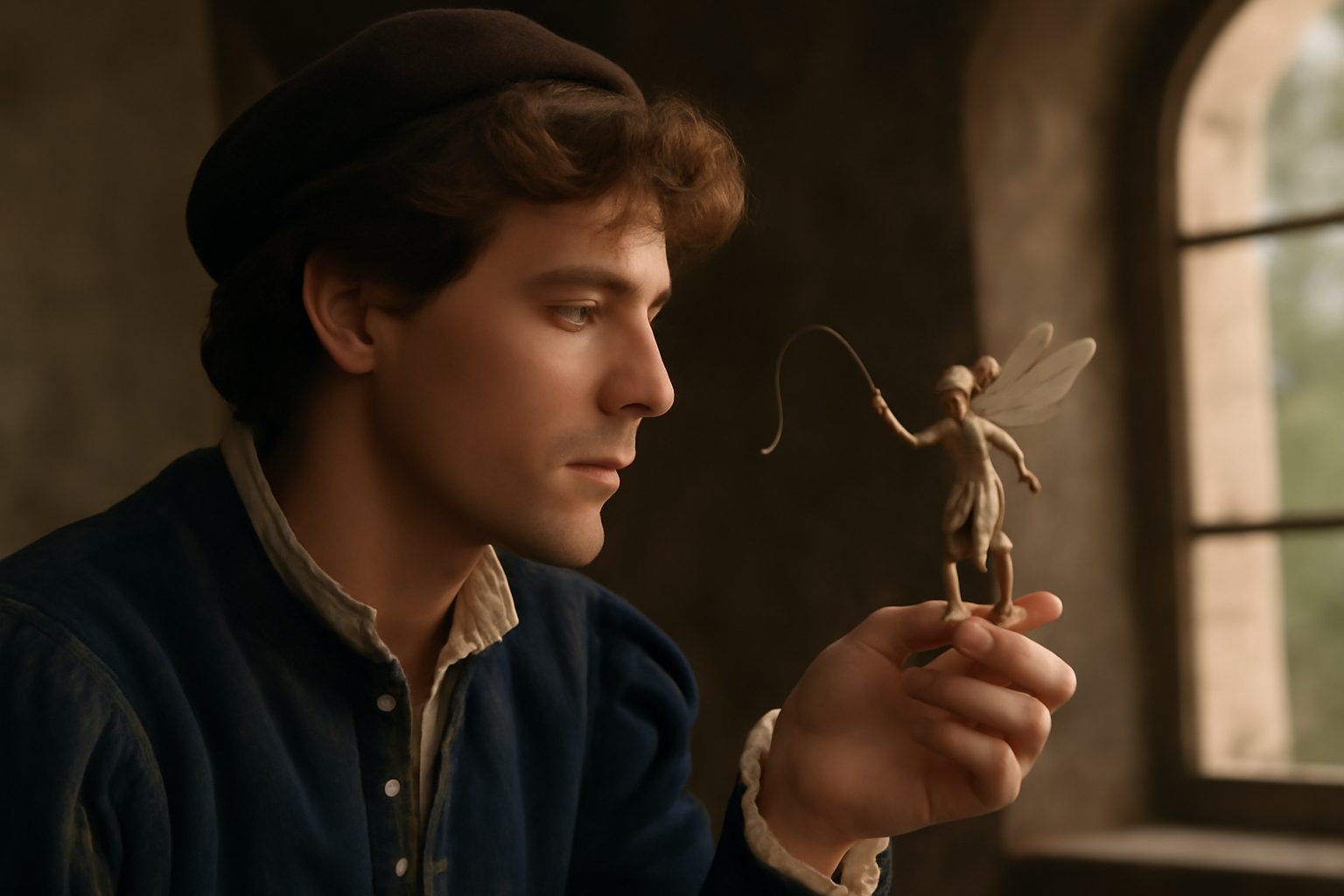
In Act 1, Scene 4 of Romeo and Juliet, Mercutio delivers a whimsical speech about Queen Mab, the fairy who influences people's dreams. As he describes her mischief, he explains how she drives fantasies into lovers' minds, shaping their dreams of romance. This line captures the playful yet poignant idea that love itself can be as fleeting and illusory as a dream.
Mercutio: "Through lovers' brains, and then they dream of love;"
In modern day english, we would say:
When love affects people’s thoughts, they start dreaming about romance.
Frequently Asked Questions
What does Mercutio say lovers dream about?
Mercutio says that lovers dream of love.
Connections to other verses:
Connections to "Through lovers' brains, and then they dream of…"
The verse "Through lovers' brains, and then they dream of…" is part of Mercutio's famous Queen Mab speech, which explores how dreams are influenced by one's waking preoccupations. This line specifically addresses lovers' dreams, linking directly to other verses in the same speech that detail how Mab visits different people and shapes their dreams based on their desires and fears.
Direct Context within the Queen Mab Speech
This verse is immediately preceded by "And in this state she gallops night by night", which introduces Queen Mab's nocturnal journeys. It is followed by verses describing her effect on other figures: "O'er courtiers' knees, that dream on court'sies…", "O'er lawyers' fingers, who straight dream on fees", and "O'er ladies' lips, who straight on kisses dream", all illustrating how Mab's influence manifests in profession- or role-specific dreams.
Dreams and Their Nature
Mercutio's speech dismisses dreams as frivolous, linking to "Which are the children of an idle brain" and "Begot of nothing but vain fantasy", emphasizing that dreams, including those of lovers, are insubstantial and imaginary. This contrasts with Romeo's earlier mention of dreaming in "I dream'd a dream to-night", to which Mercutio responds with his Queen Mab elaboration.
Contrast with Romeo's Love-Burdened State
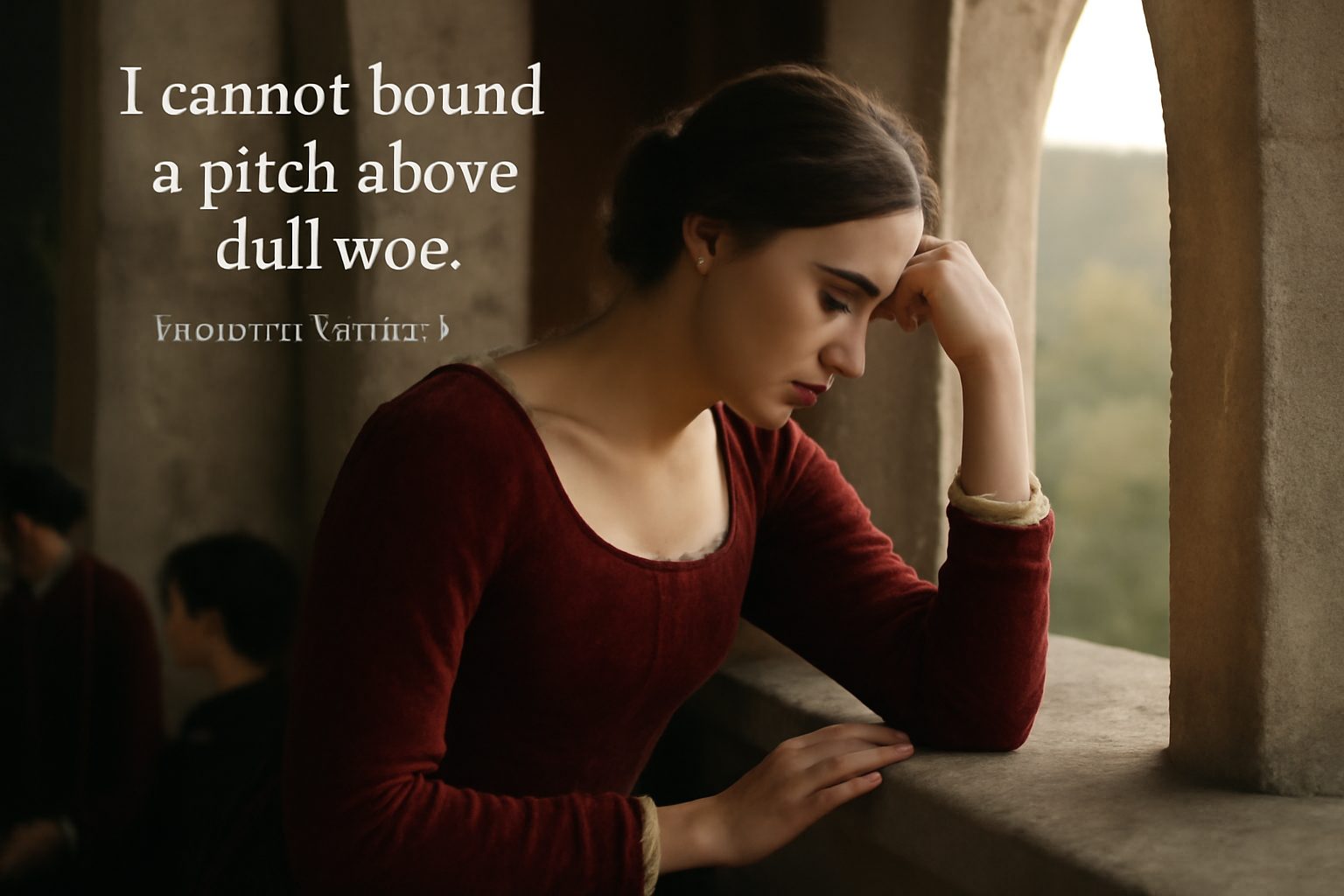
Romeo's melancholic attitude toward love and dreams is established earlier in the scene, such as in "Under love's heavy burden do I sink" and "I cannot bound a pitch above dull woe". Mercutio's speech, including the lovers' dreams verse, serves to mock Romeo's earnestness by reducing romantic aspirations to mere fantasy.
Foreshadowing and Tone
While Mercutio treats dreams lightly, Romeo's response in "I fear, too early: for my mind misgives" hints at foreboding, suggesting that dreams may carry more weight than Mercutio acknowledges. This tension between Mercutio's jest and Romeo's apprehension adds depth to the lovers' dreams motif introduced in the verse.