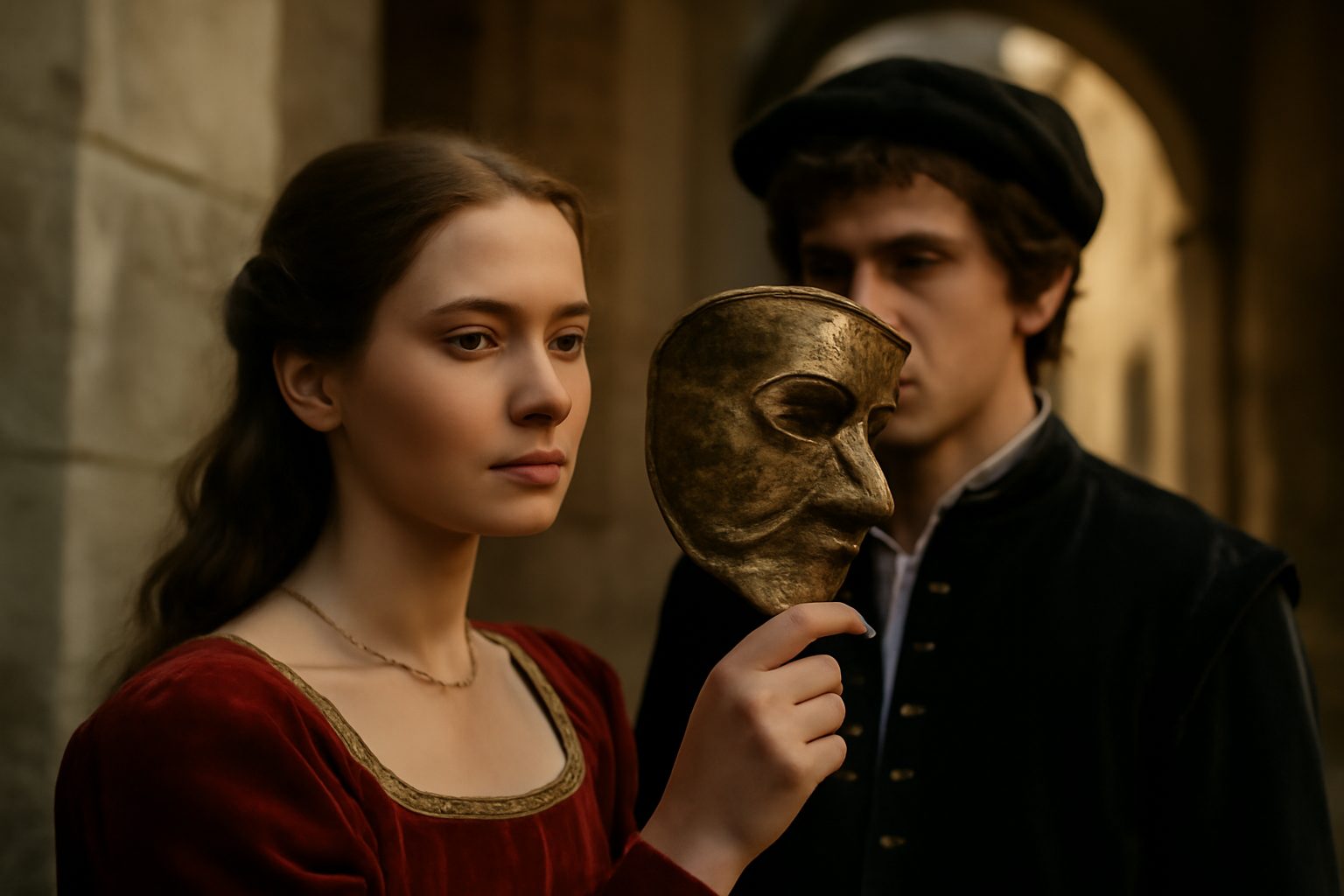
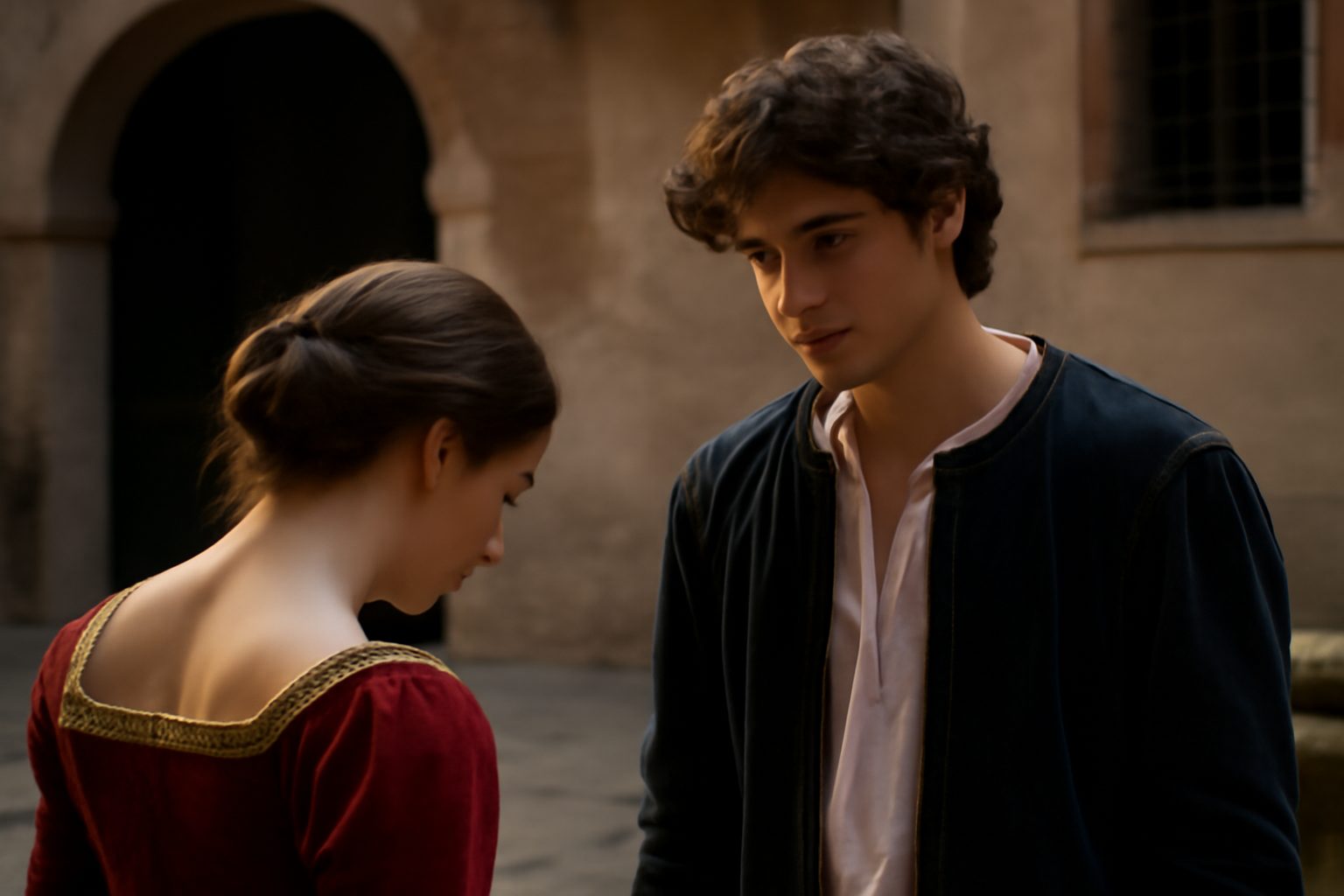
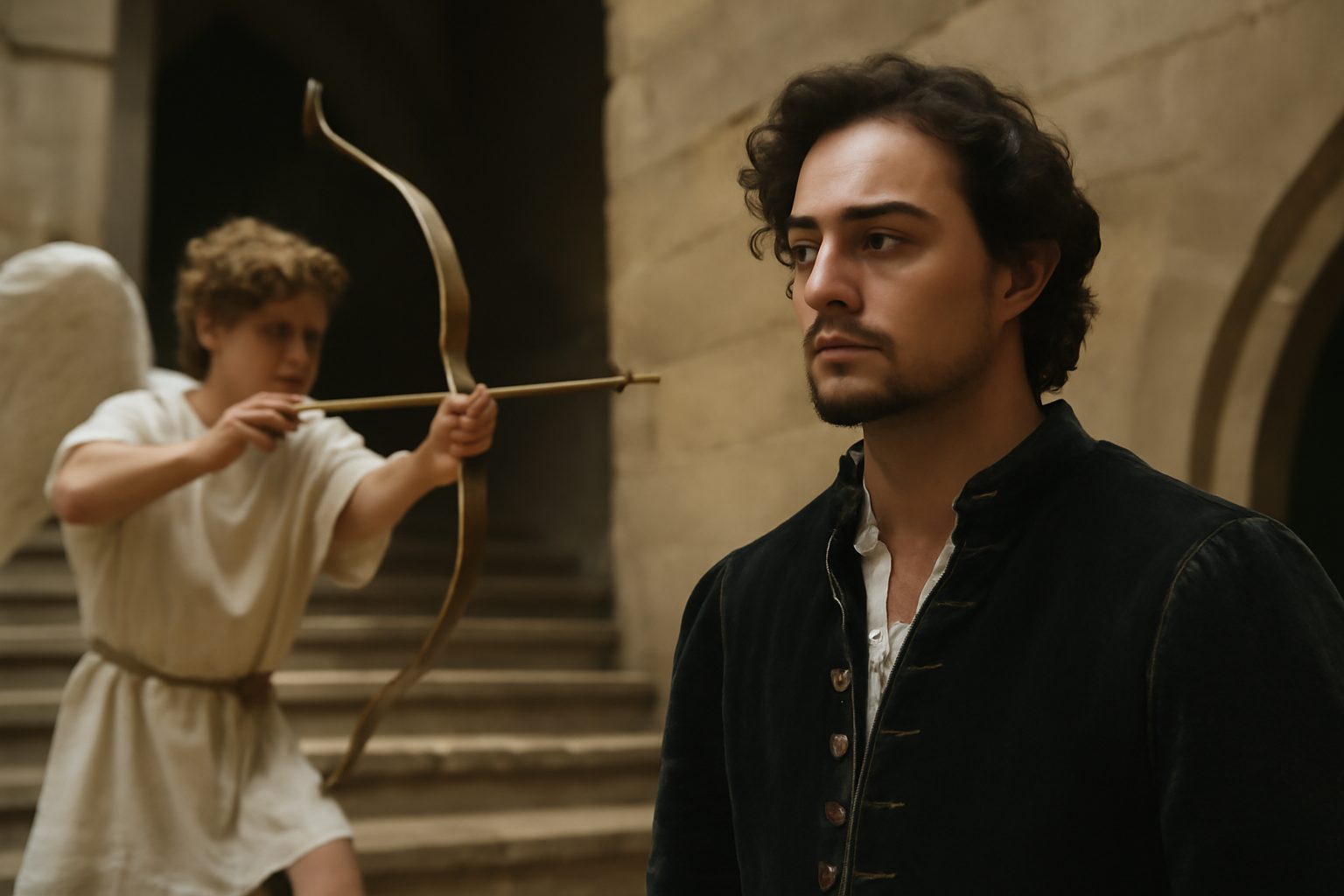
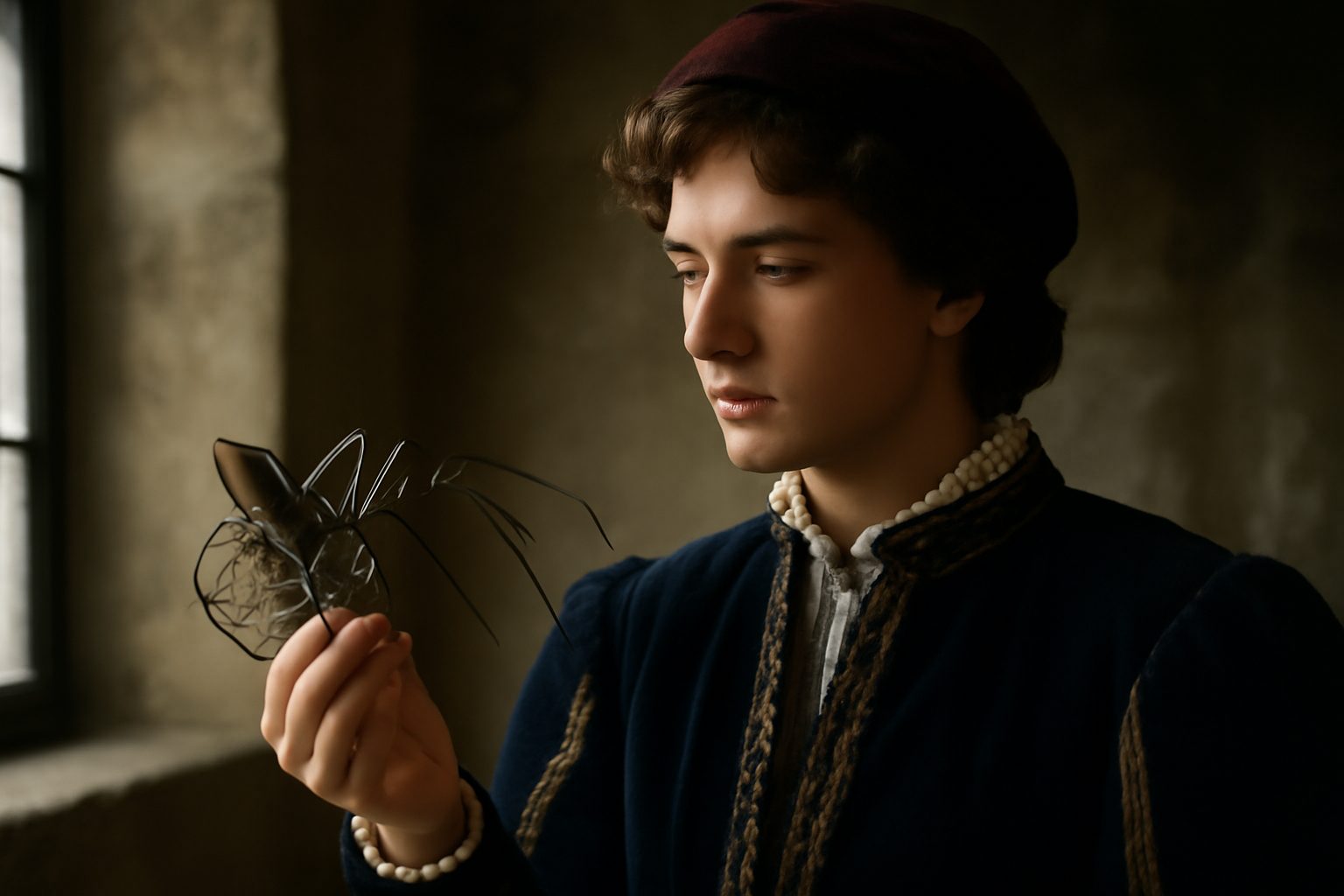
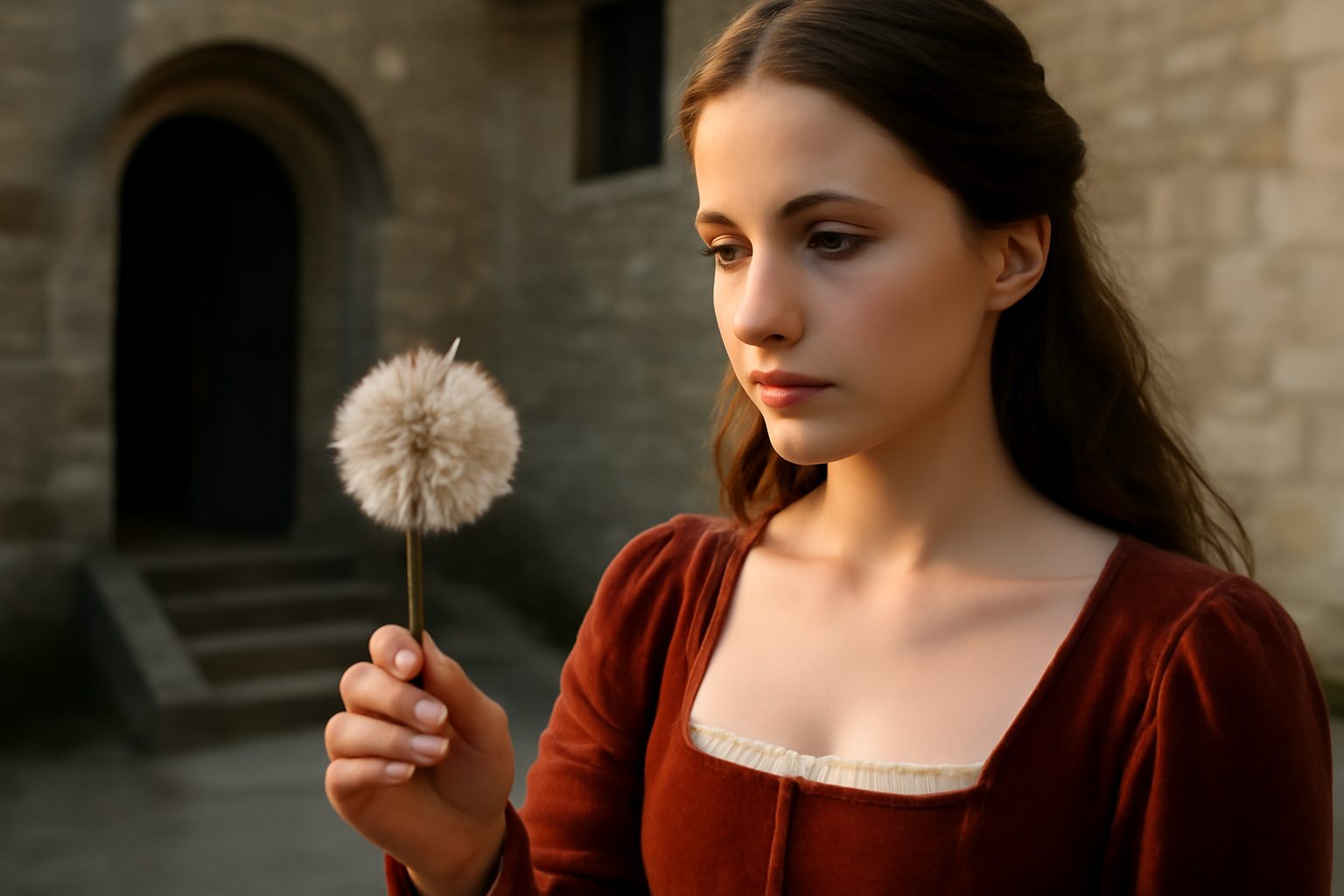
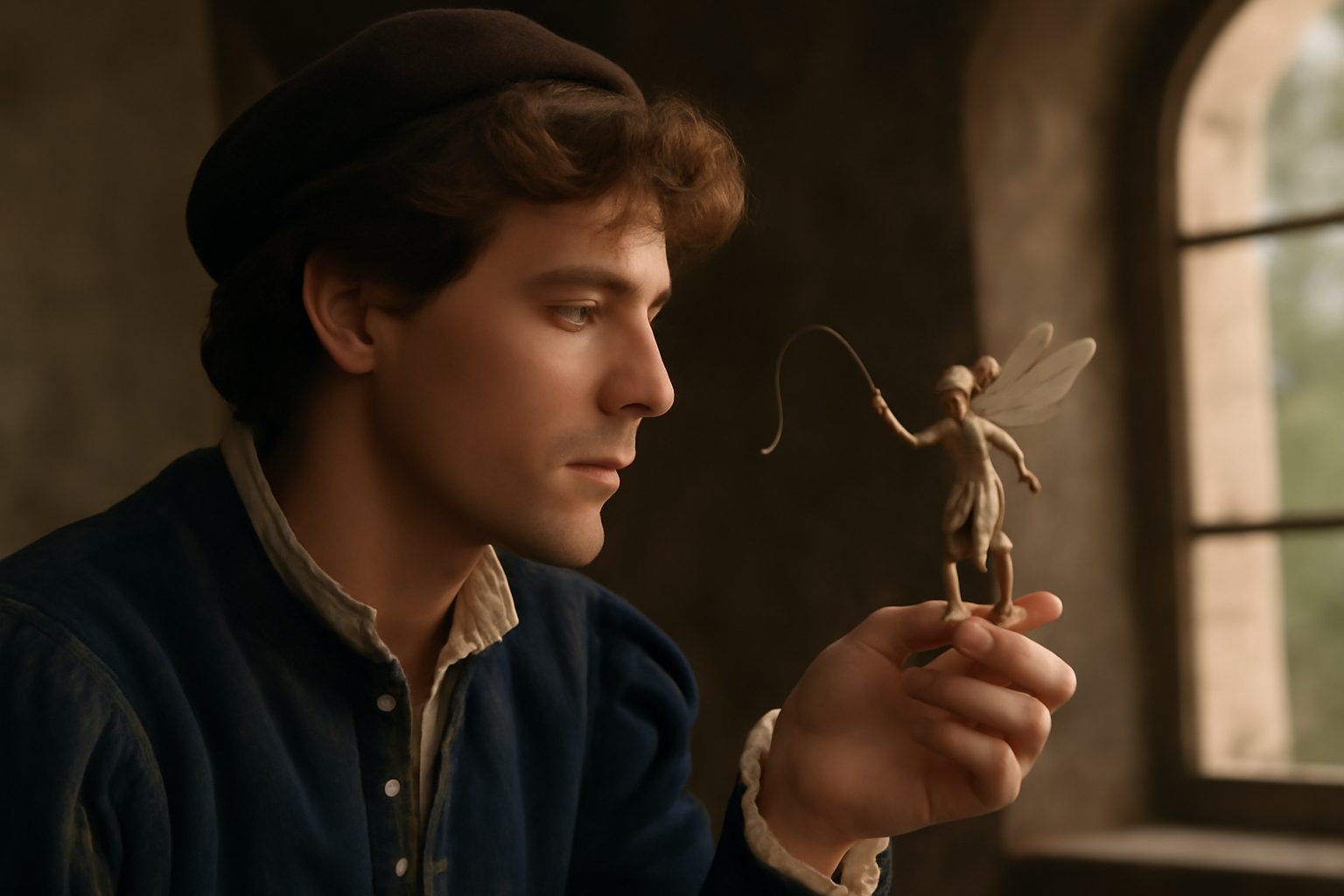
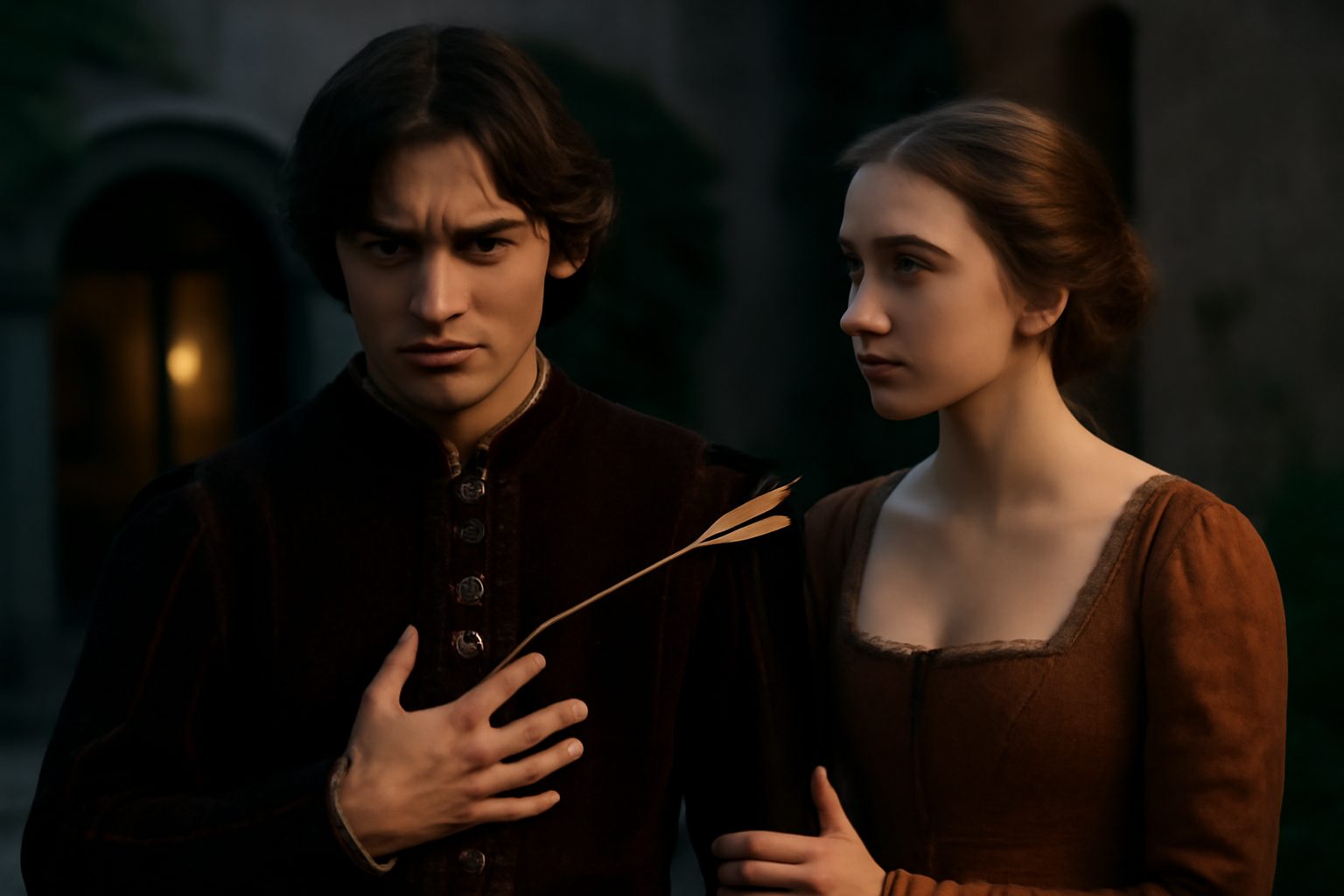
In Act 1, Scene 4 of Romeo and Juliet, Mercutio mocks Romeo's lovesick demeanor as they prepare to crash the Capulet feast. This line follows Mercutio's playful teasing about Queen Mab, as he jests that those startled by dreams of her quickly turn to prayer out of fear. The remark highlights Mercutio's wit and skepticism, contrasting with Romeo's more earnest and romantic nature.
Mercutio: "And being thus frighted swears a prayer or two"
In modern day english, we would say:
Scared by the strange dream, he quickly mumbles a couple of prayers.
Frequently Asked Questions
What does Mercutio say someone does when they are scared?
He says they say a prayer or two.
Connections to other verses:
Connections to "And being thus frighted swears a prayer or two"
This verse appears within Mercutio's Queen Mab speech, describing how a soldier, startled from dreams of battle, instinctively turns to prayer upon waking. It connects thematically and structurally to several other passages in the scene.
Immediate Context in the Queen Mab Speech
The line follows Drums in his ear, at which he starts and wakes, which directly triggers the frightened reaction. It precedes And sleeps again. This is that very Mab, completing the cycle of dream interruption and return to sleep. The soldier's experience is part of a larger pattern where Mab influences various dreamers, including Sometime she driveth o'er a soldier's neck, emphasizing her capricious impact on human fears.
Dreams and Their Consequences
The idea of dreams provoking real reactions ties to Romeo's earlier statement I dream'd a dream to-night, highlighting the scene's focus on dreams as omens or reflections of inner states. Mercutio dismisses such notions with Which are the children of an idle brain, suggesting dreams (and prayers born from them) are meaningless fantasies.
Foreshadowing and Fate
The involuntary prayer hints at vulnerability and foreshadows later themes of fate. Romeo's foreboding in I fear, too early: for my mind misgives and Some consequence yet hanging in the stars echoes the soldier's sudden fear, suggesting unexpected events will compel characters toward actions with grave outcomes, much like the prayer uttered in fright.
Contrast with Lightheartedness
This moment of fear contrasts with the scene's earlier joviality, such as Mercutio's quip If love be rough with you, be rough with love and the group's eager anticipation to We'll measure them a measure, and be gone. The prayer introduces a darker, more serious tone that undermines the merry atmosphere.