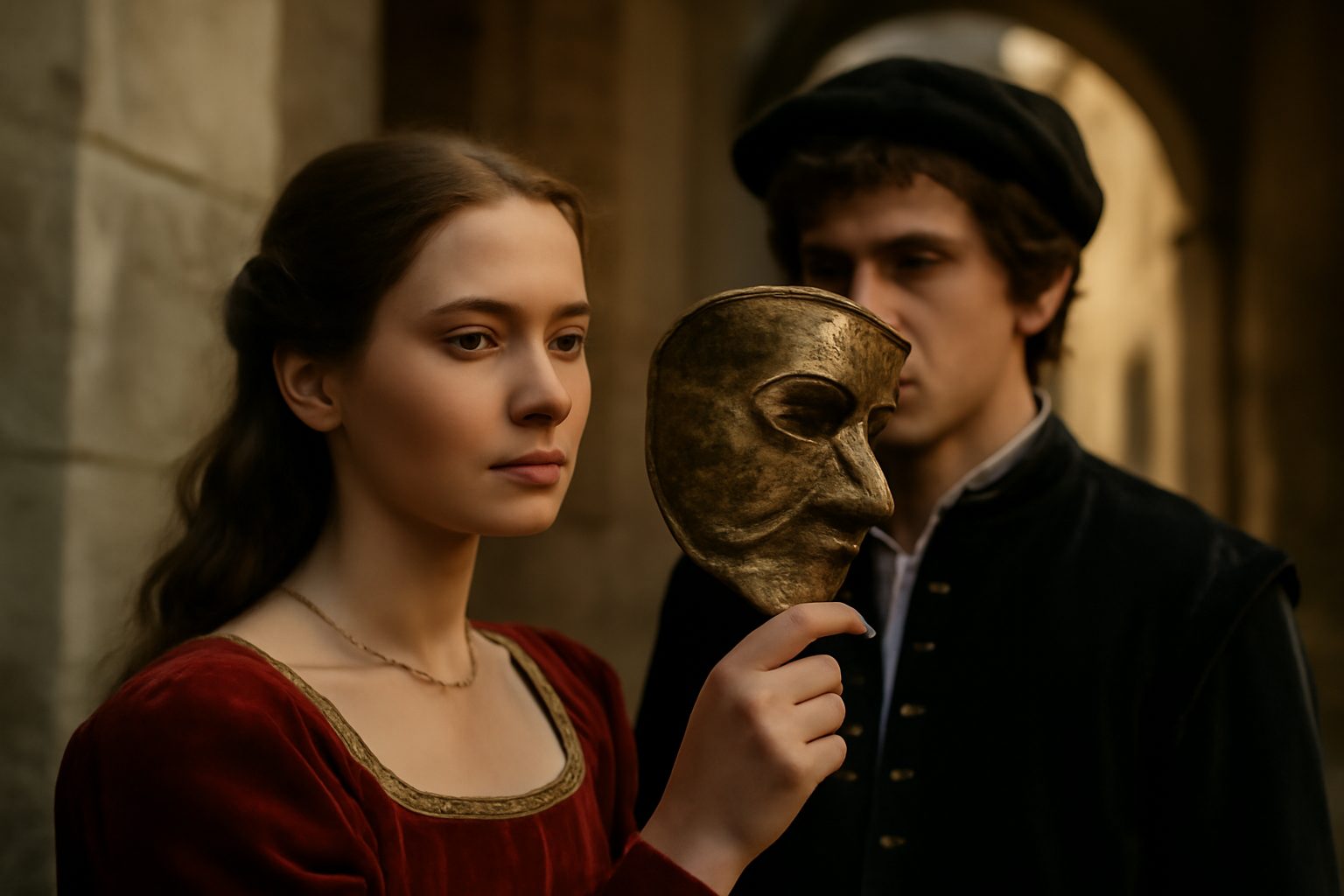
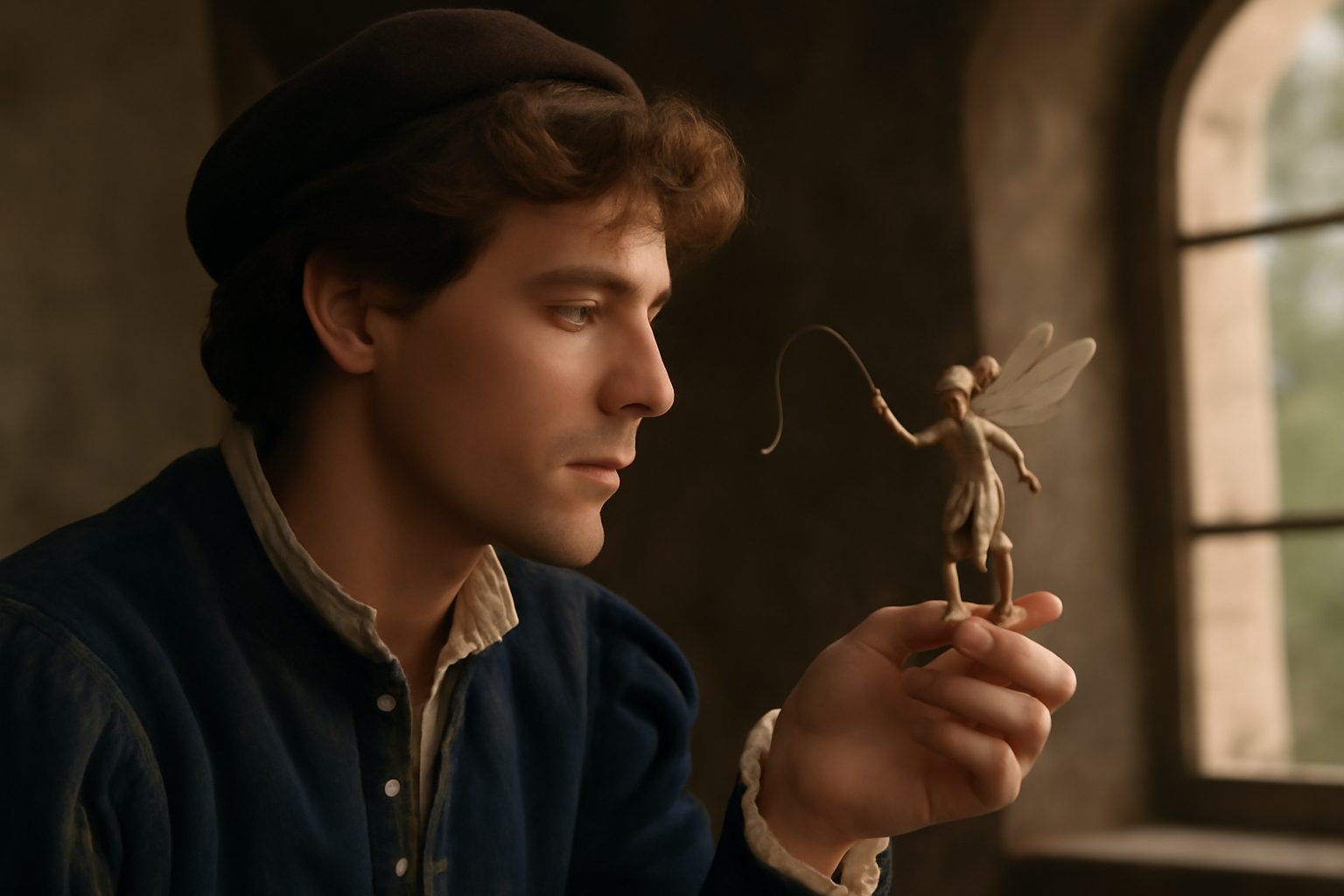
In Act 1, Scene 4 of Romeo and Juliet, Mercutio mocks Romeo's preoccupation with love and fate as they head to the Capulet feast. When Romeo expresses unease about attending, Mercutio dismisses his worries as mere fantasies, brushing them off as the foolishness of dreams. This line captures Mercutio's playful skepticism, contrasting Romeo's earnest foreboding.
Mercutio: "True, I talk of dreams,"
In modern day english, we would say:
I admit, I’m just talking about foolish dreams.
Frequently Asked Questions
What is Mercutio talking about in this line from Romeo and Juliet?
Mercutio is talking about dreams and their meaning.
Connections to other verses:
Connections to "True, I talk of dreams"
The verse True, I talk of dreams is spoken by Mercutio in response to Romeo's interruption of his Queen Mab speech. It serves as a direct acknowledgment of the fantastical and imaginative nature of his monologue, linking it to earlier and later references to dreams and their significance in the scene.
Links to Other Dream-Related Verses
Mercutio's admission connects thematically to his earlier question, I dream'd a dream to-night, which prompts his elaborate description of Queen Mab. It also reinforces Romeo's skeptical remark, That dreamers often lie, highlighting the contrast between Mercutio's playful imagination and Romeo's somber outlook.
The phrase further ties to Mercutio's conclusion about dreams being children of an idle brain, emphasizing their frivolous and insubstantial nature, as well as to Begot of nothing but vain fantasy, which dismisses dreams as mere illusions.
Contrast with Romeo's Foreboding
Mercutio's lighthearted discourse on dreams stands in stark contrast to Romeo's ominous premonition, expressed in I fear, too early: for my mind misgives, where Romeo senses impending doom. This juxtaposition deepens the thematic tension between fate and fantasy in the scene.
Response and Resolution
Romeo's interjection, Peace, peace, Mercutio, peace!, attempts to curb Mercutio's exuberance, leading to Mercutio's retort in "True, I talk of dreams." Ultimately, Romeo's resignation to fate in But He, that hath the steerage of my course provides a sober counterpoint to Mercutio's whimsical narrative.