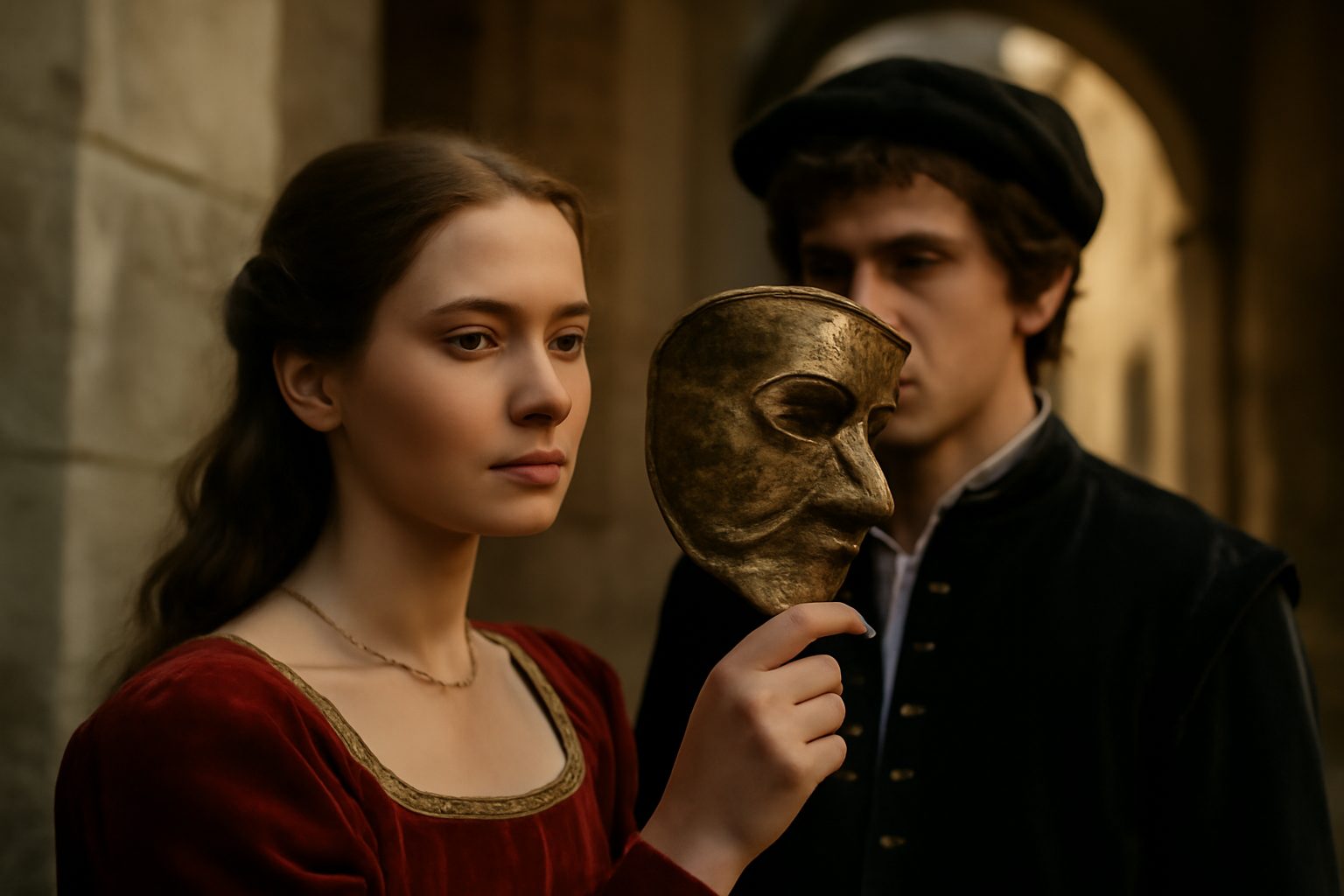
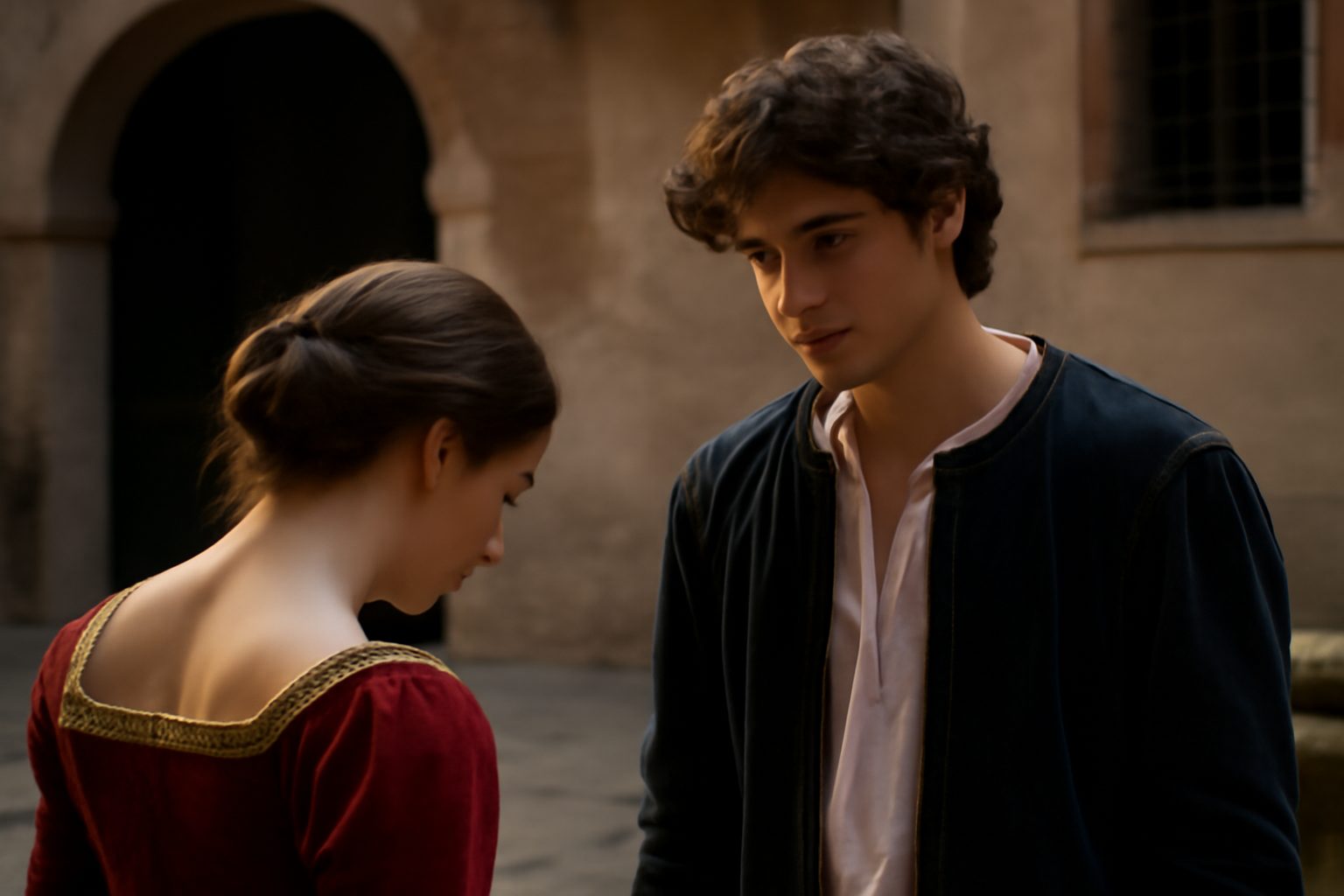
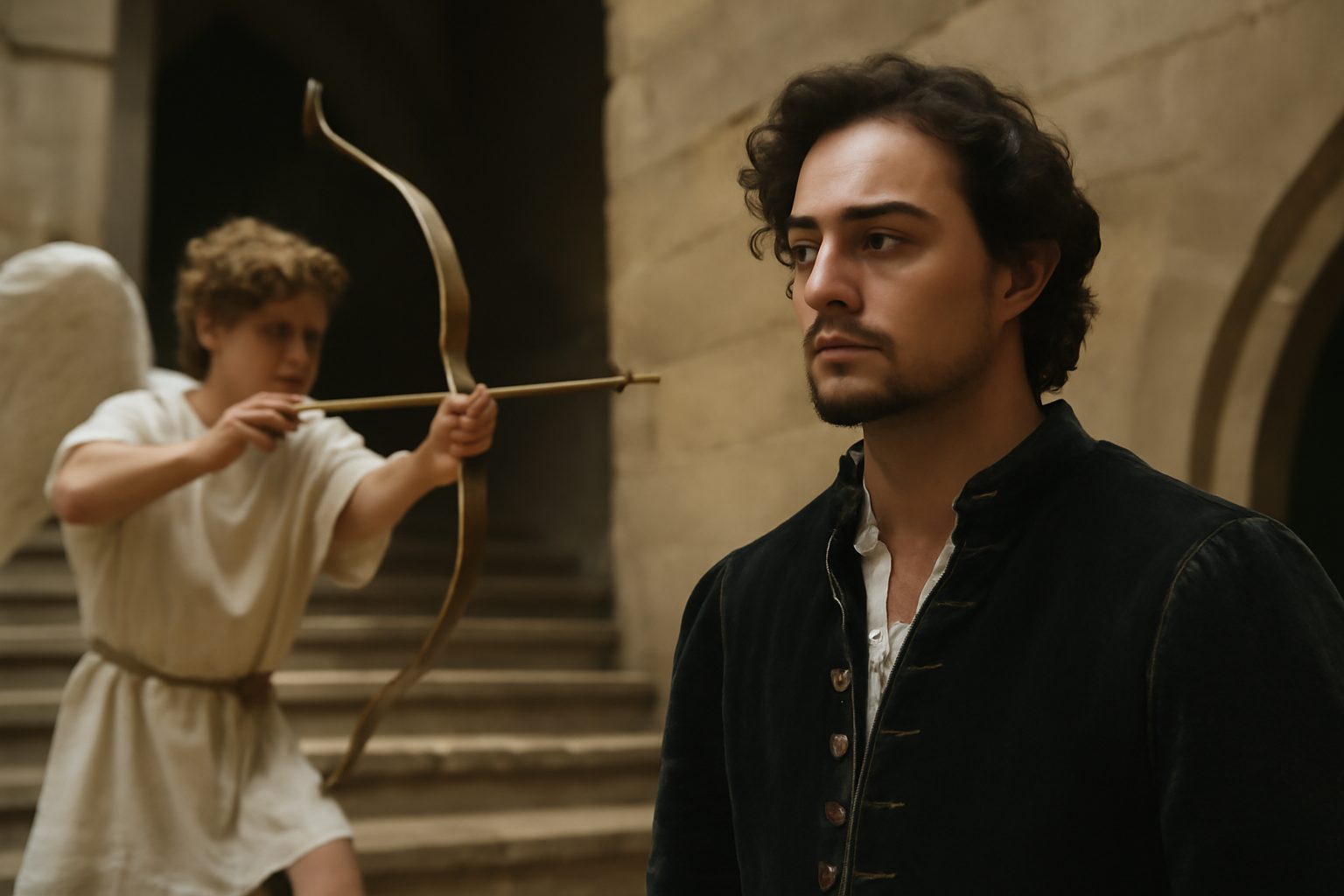
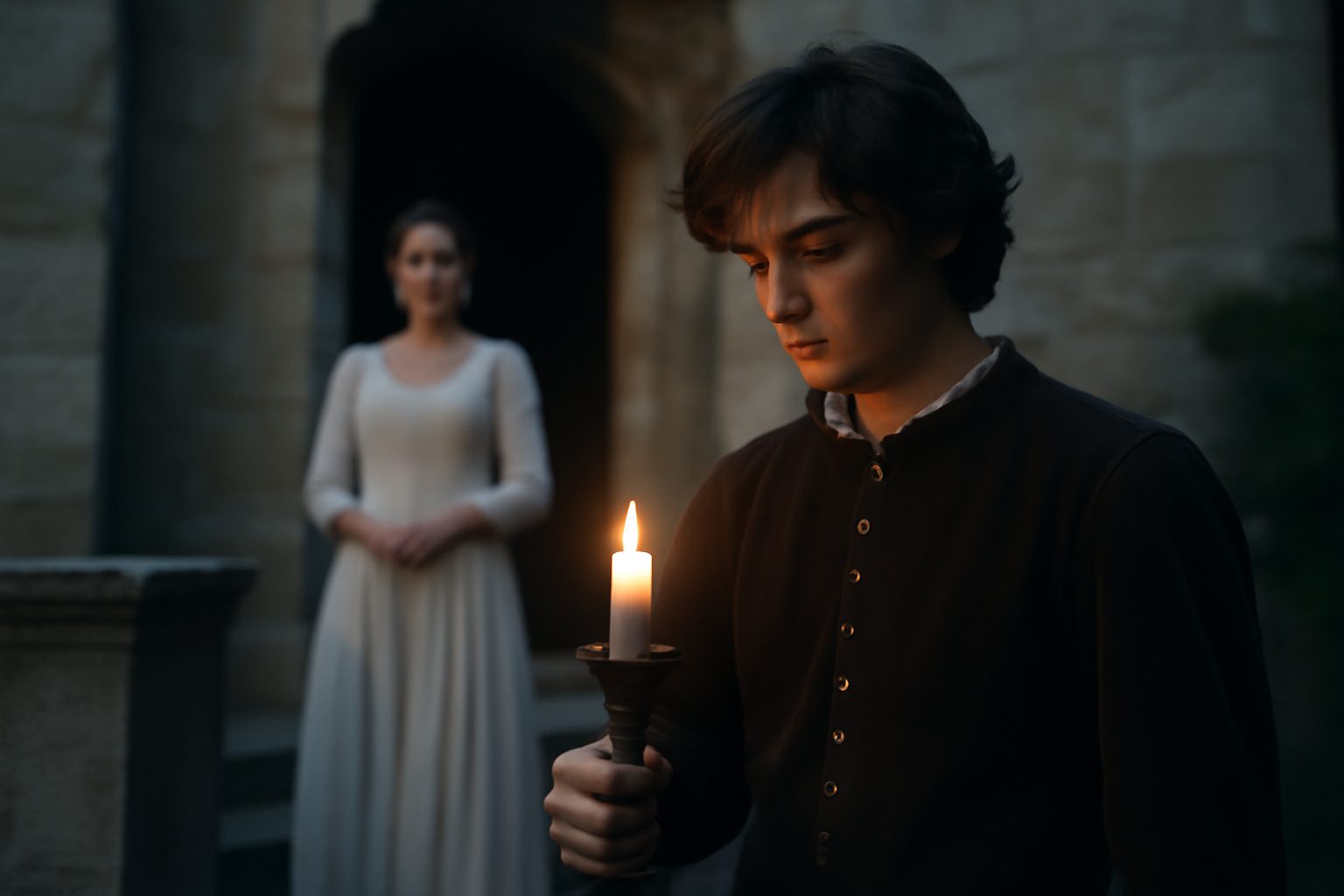
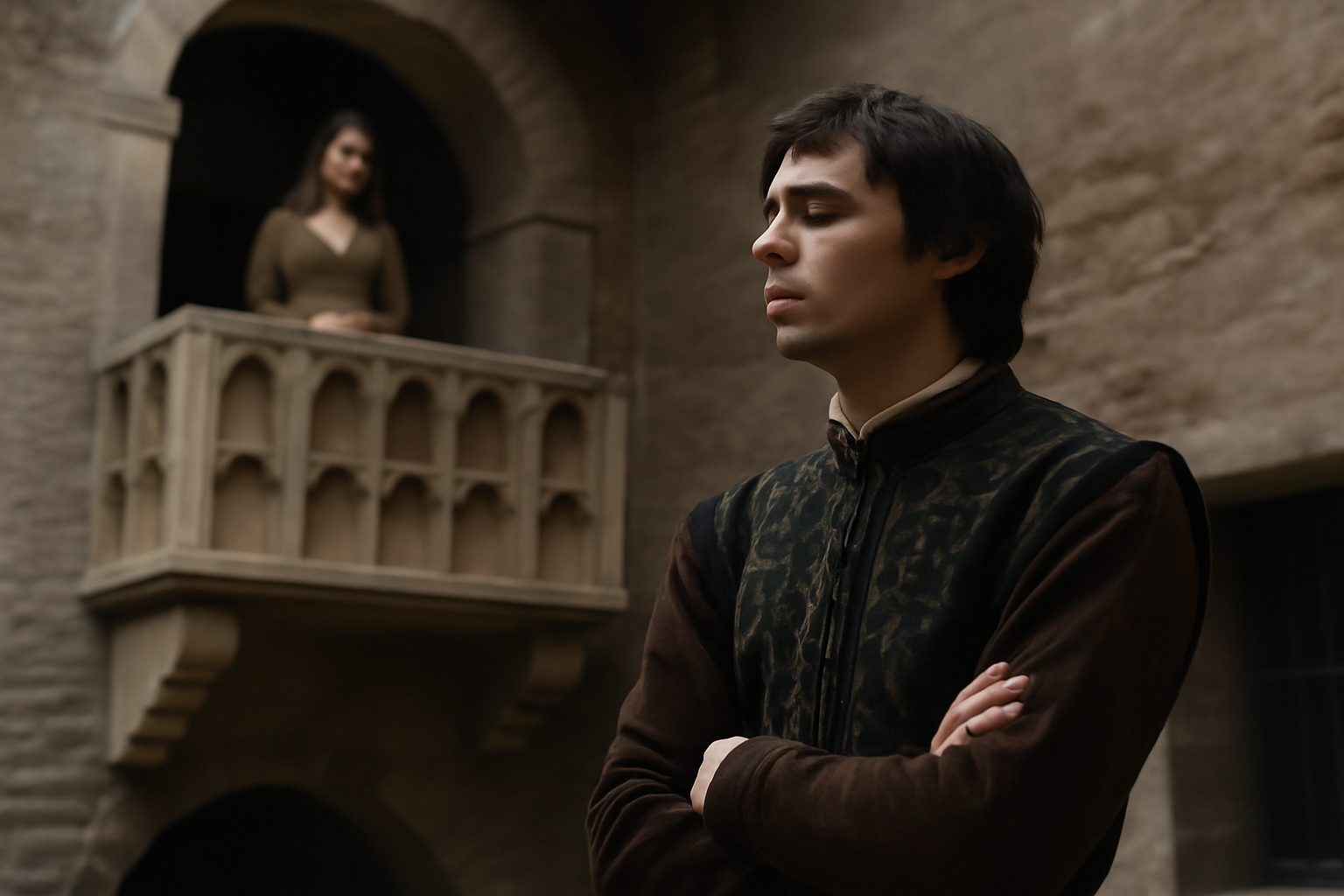
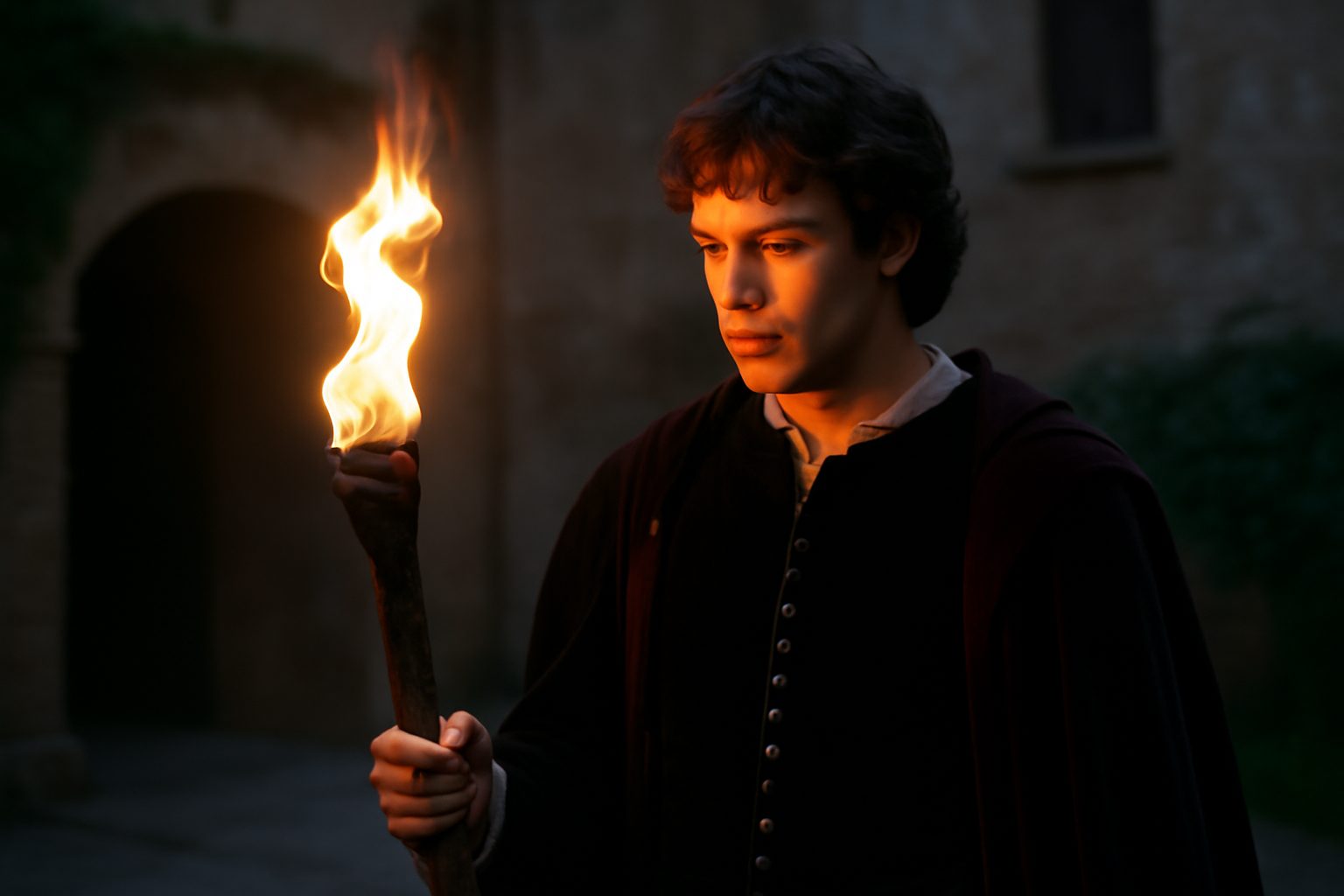
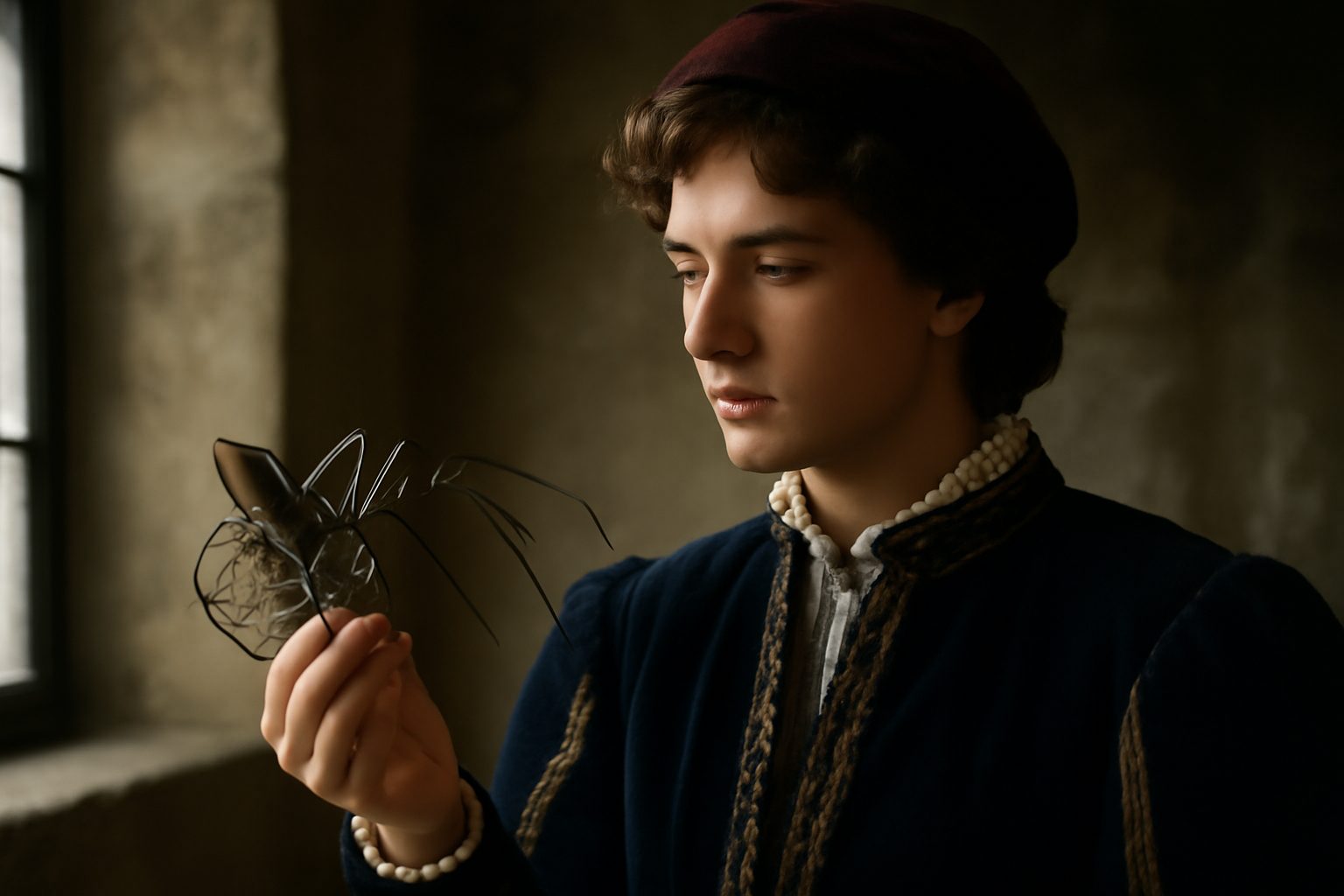
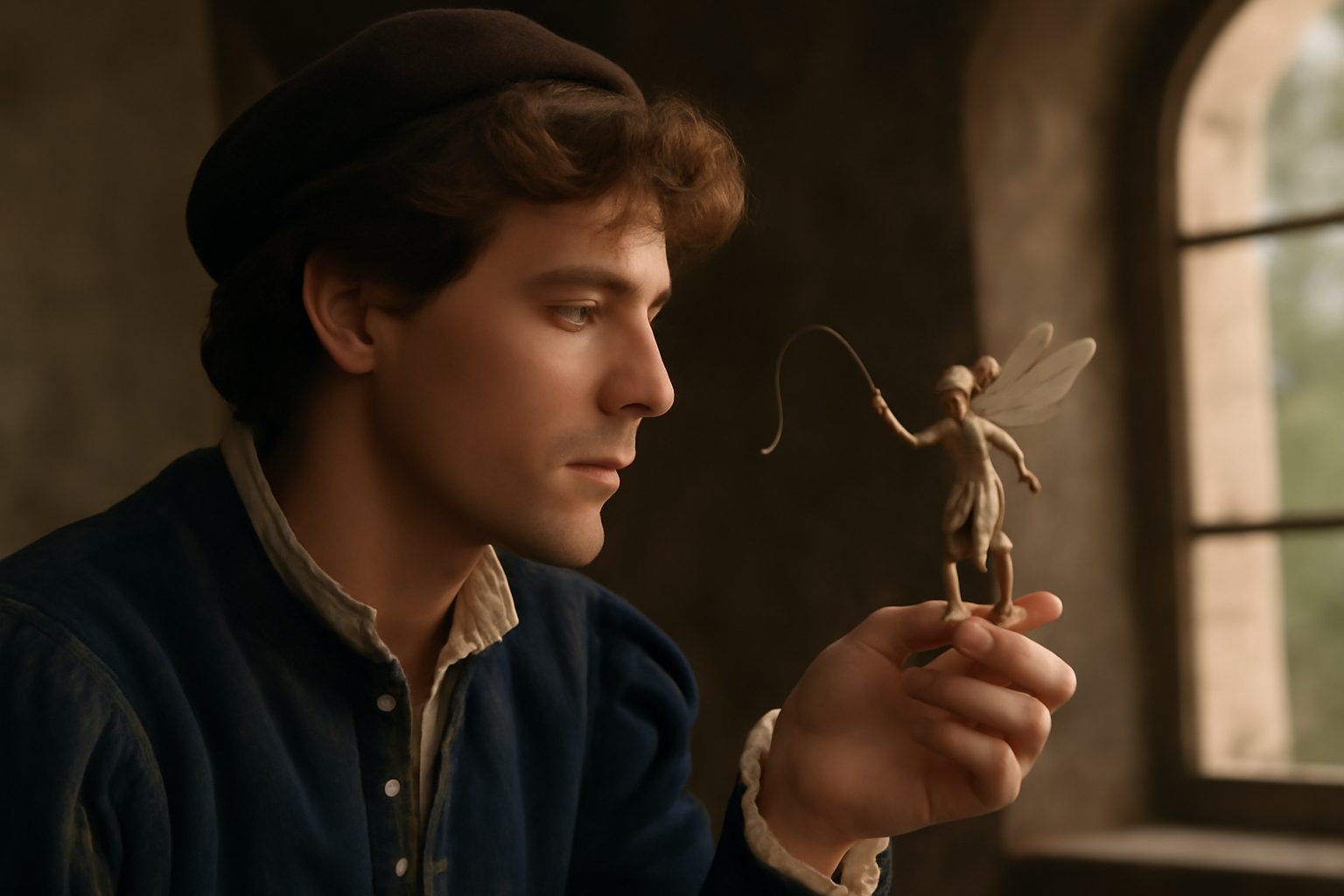
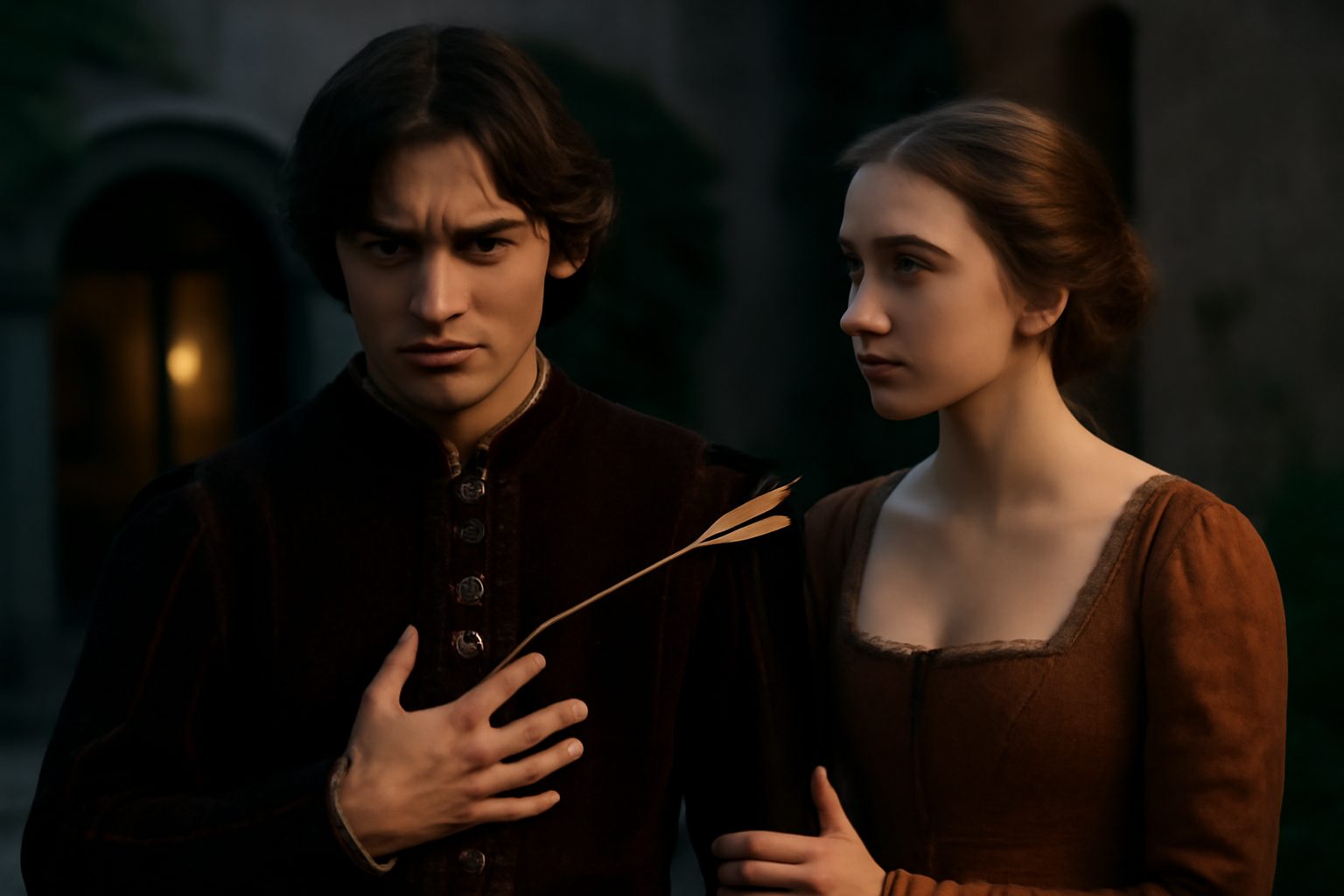
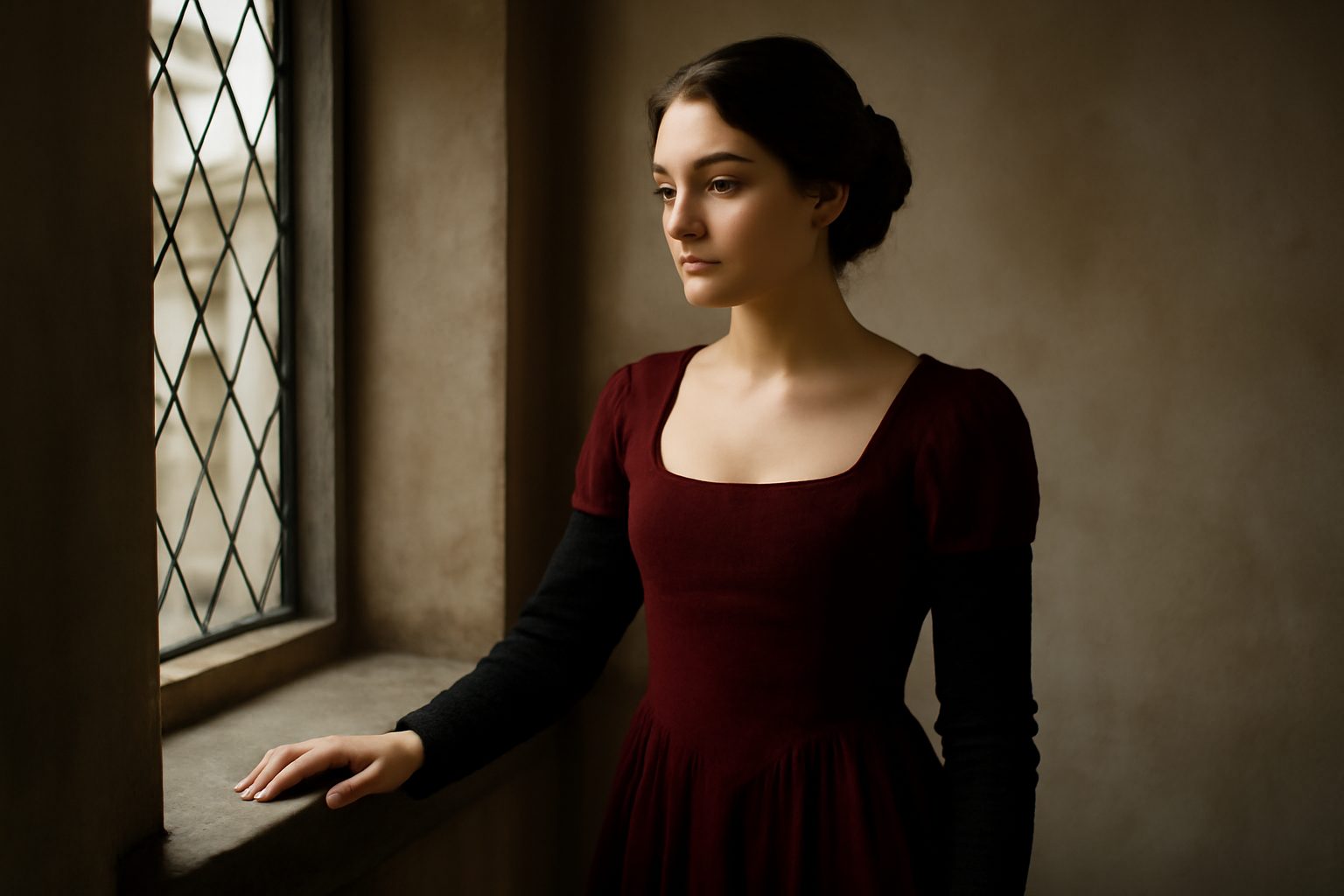
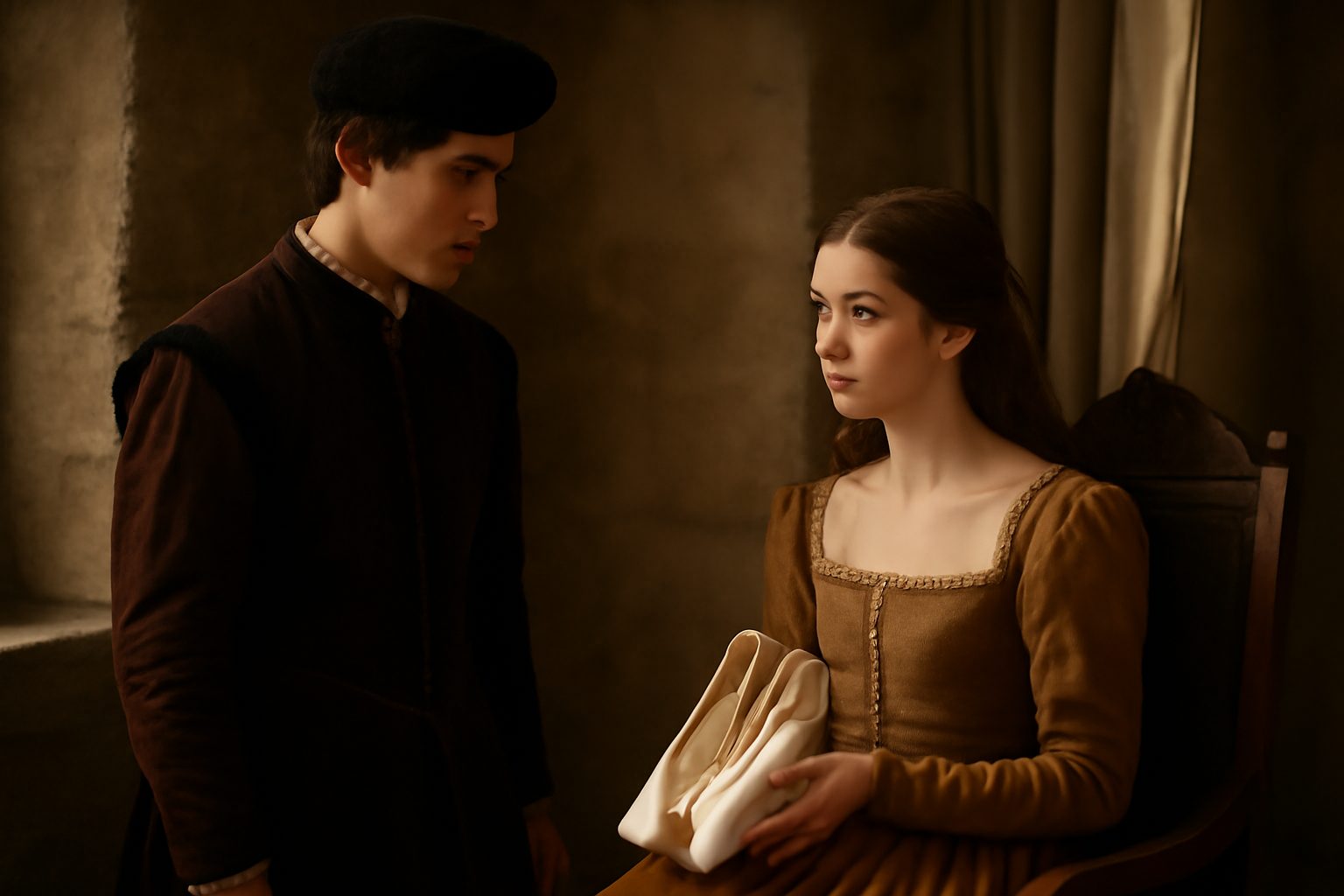
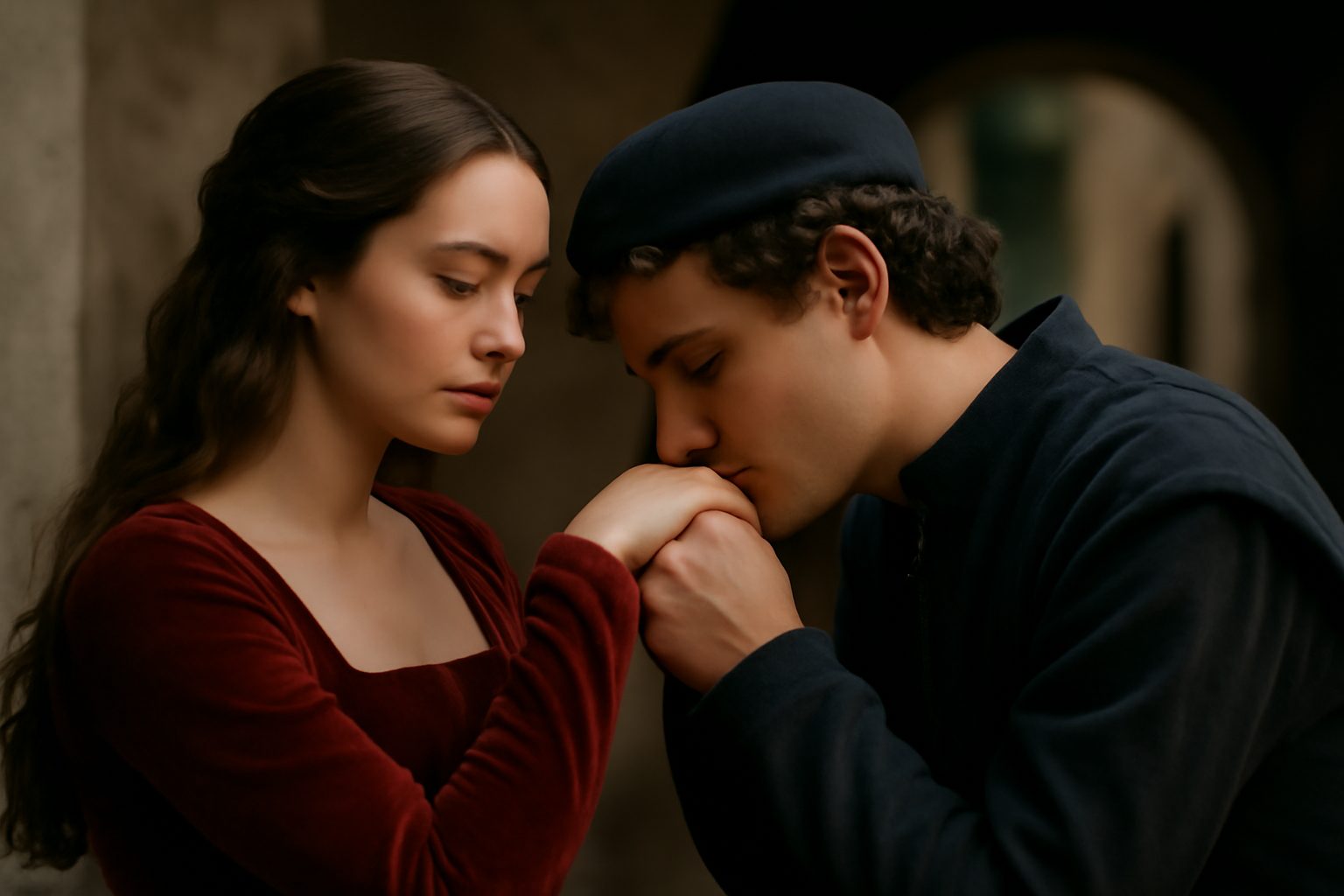
In Act 1, Scene 4 of Romeo and Juliet, Romeo and his friends are on their way to the Capulet's masquerade ball when Mercutio begins teasing Romeo about his lovesick mood. As Mercutio's playful jests grow more extravagant, Romeo tries to calm him down, urging him to be quiet so they can proceed without drawing attention. This moment highlights the contrast between Romeo's subdued melancholy and Mercutio's lively, unrestrained wit.
Romeo: "Peace, peace, Mercutio, peace!"
In modern day english, we would say:
Calm down, Mercutio, just relax.
Frequently Asked Questions
What is Romeo trying to tell Mercutio in this line?
Romeo is asking Mercutio to calm down and stop being so loud or aggressive.
Connections to other verses:
Connections to "Peace, peace, Mercutio, peace!"
The line "Peace, peace, Mercutio, peace!" serves as a direct interruption to Mercutio's fanciful and lengthy Queen Mab speech, which begins with "O, then, I see Queen Mab hath been with you." Romeo's plea for peace highlights his impatience with Mercutio's imaginative but irrelevant digression, as he earlier expressed a desire to move on from such talk in "Thou talk'st of nothing."
Context of Urgency and Premonition
Romeo's call for peace contrasts with his own sense of foreboding, as seen in "I fear, too early: for my mind misgives" and his fear of "some vile forfeit of untimely death." This urgency is echoed in Benvolio's earlier line, "Up to the ears. Come, we burn daylight, ho!" emphasizing their need to proceed to the Capulet feast.
Mercutio's Response and Themes
Mercutio's speech, which Romeo interrupts, explores dreams and fantasies, such as in "Which are the children of an idle brain," underscoring the tension between Mercutio's whimsy and Romeo's sober apprehension. The interruption also ties to Romeo's earlier reluctance to engage in merriment, as in "I have a soul of lead," highlighting his emotional weight versus Mercutio's levity.