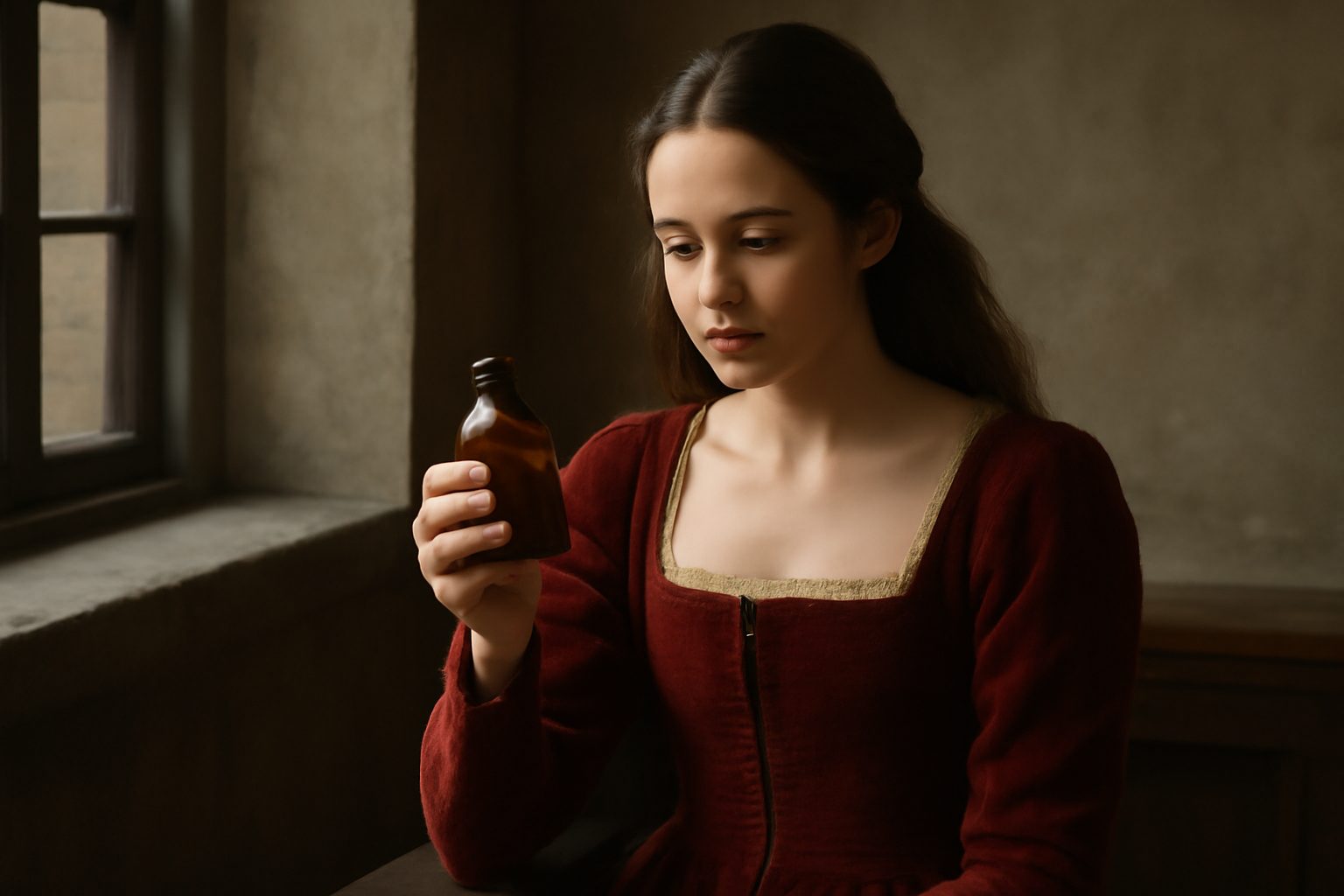
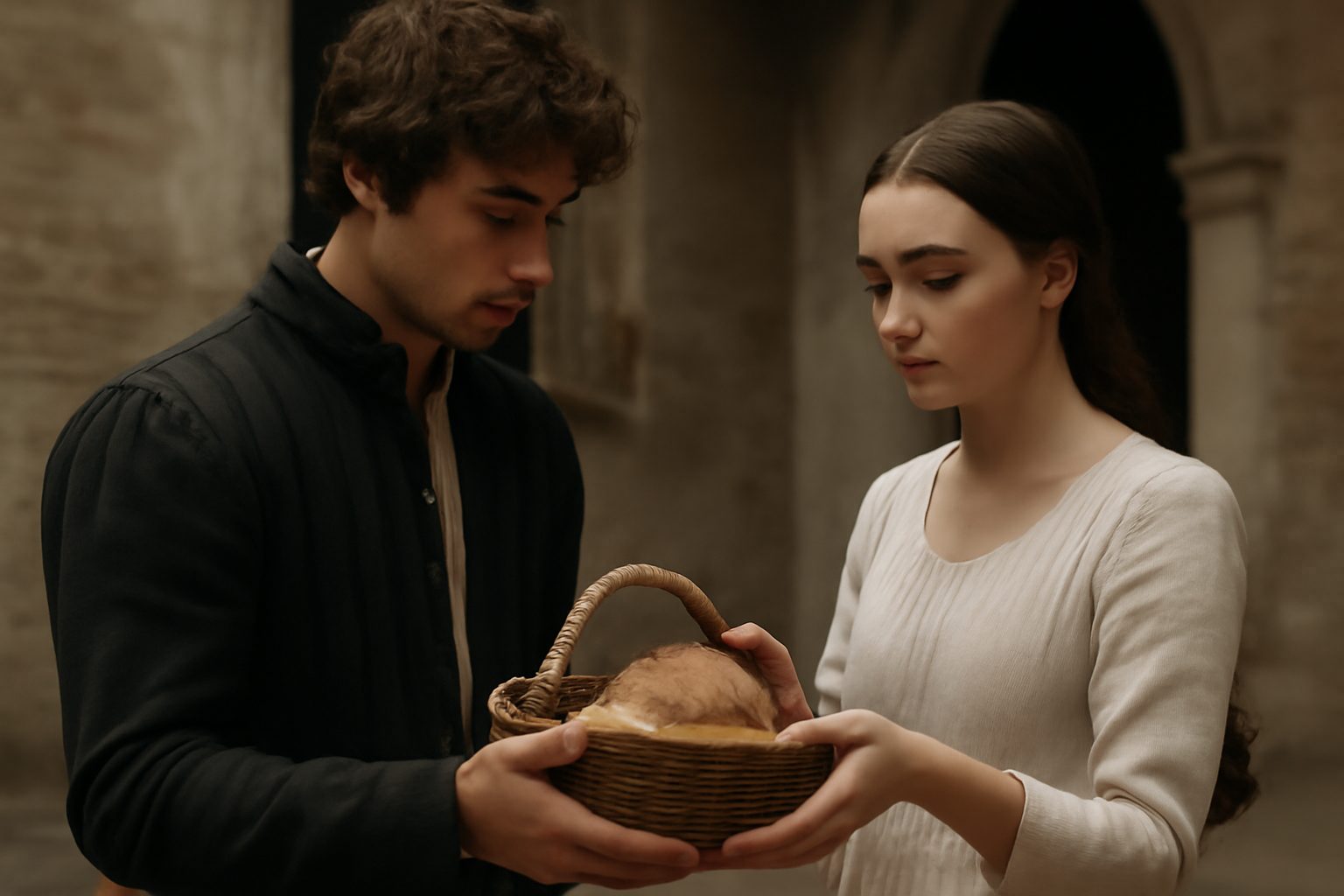
In Act 5, Scene 1 of Romeo and Juliet, Romeo speaks these words upon hearing news from Verona. Misinformed about Juliet's death, he clings to hope, believing that as long as she is well, no true harm can come to him. This moment captures his desperate optimism before the tragic revelation that follows.
Romeo: "For nothing can be ill, if she be well."
In modern day english, we would say:
If she is okay, then nothing can be wrong.
Frequently Asked Questions
What does Romeo mean when he says that nothing can be wrong if Juliet is okay?
Romeo is expressing that as long as Juliet is safe and well, he feels that everything else in his life is fine, showing how much he cares for her.
Connections to other verses:
Connections to "For nothing can be ill, if she be well."
This line reflects Romeo's belief that Juliet's well-being is the sole determinant of his own happiness and the state of the world around him. It is immediately preceded by his anxious inquiry, "How fares my Juliet? that I ask again", underscoring his fixation on her condition. When Balthasar delivers the tragic news of Juliet's apparent death, Romeo's conviction is shattered, leading to his defiant cry, "Is it even so? then I defy you, stars!", marking a drastic shift from hope to despair.
Contrast with Earlier Optimism
Romeo's statement stands in stark contrast to his earlier mood in the scene. He begins with joyful anticipation, noting "My dreams presage some joyful news at hand" and feeling that "Lifts me above the ground with cheerful thoughts". The news of Juliet's death dismantles this optimism, exposing the fragility of his conditional worldview.
Descent into Action
Once Romeo accepts Juliet's fate, his focus turns to joining her in death. He resolves, "Well, Juliet, I will lie with thee to-night", and seeks the means to achieve this, remembering "an apothecary" from whom he procures poison. His declaration that "Come, cordial and not poison, go with me / To Juliet's grave" redefines the poison as a welcome remedy, illustrating how his perception of "ill" and "well" has been inverted by tragedy.
Thematic Irony
The line carries deep irony, as Juliet is, in fact, alive—though Romeo believes otherwise. Balthasar's report that "Her body sleeps in Capel's monument" and that "her immortal part with angels lives" confirms Romeo's misinterpretation. His conclusion that "nothing can be ill, if she be well" becomes tragically meaningless in the face of this misunderstanding, driving the action toward the play's devastating conclusion.