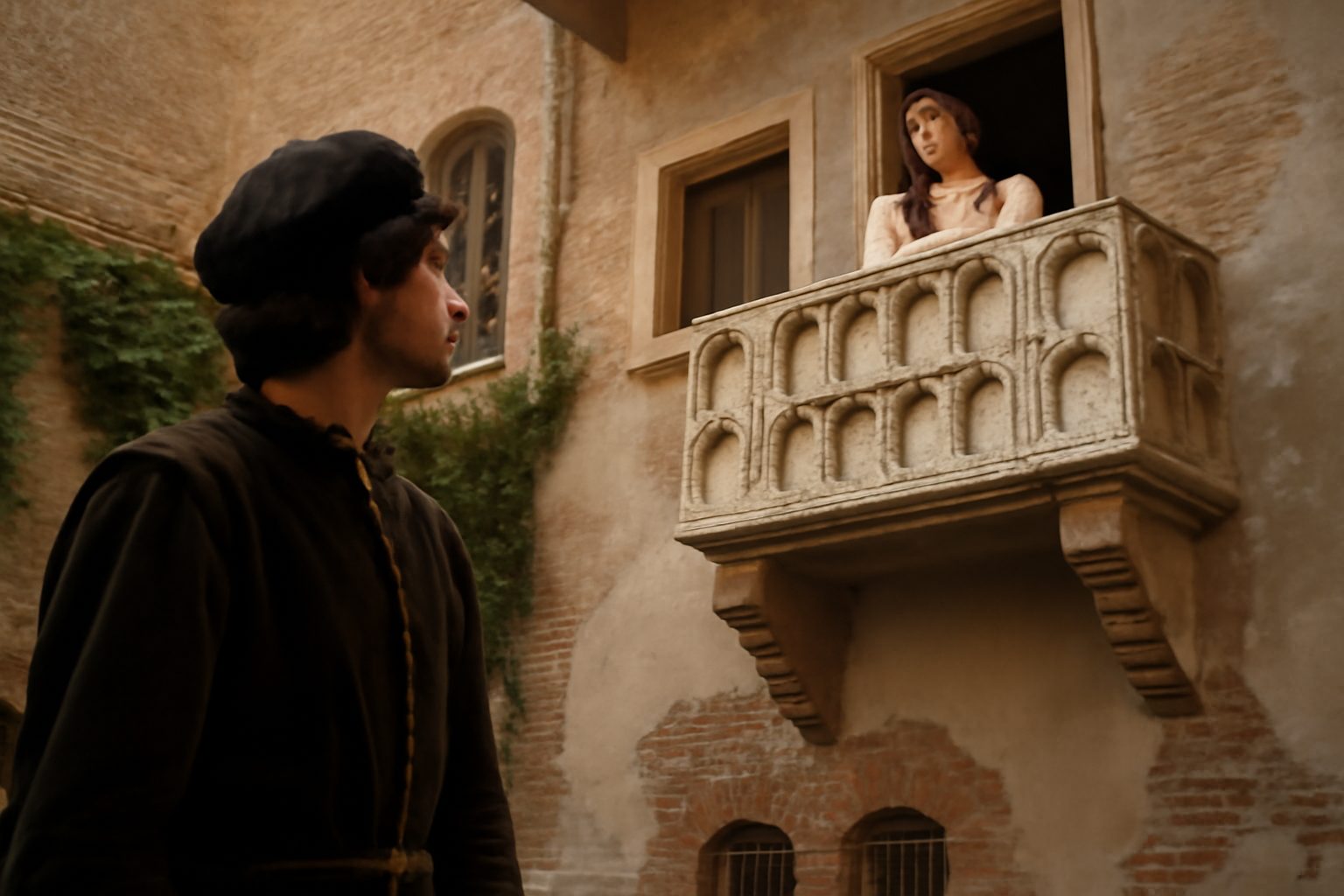
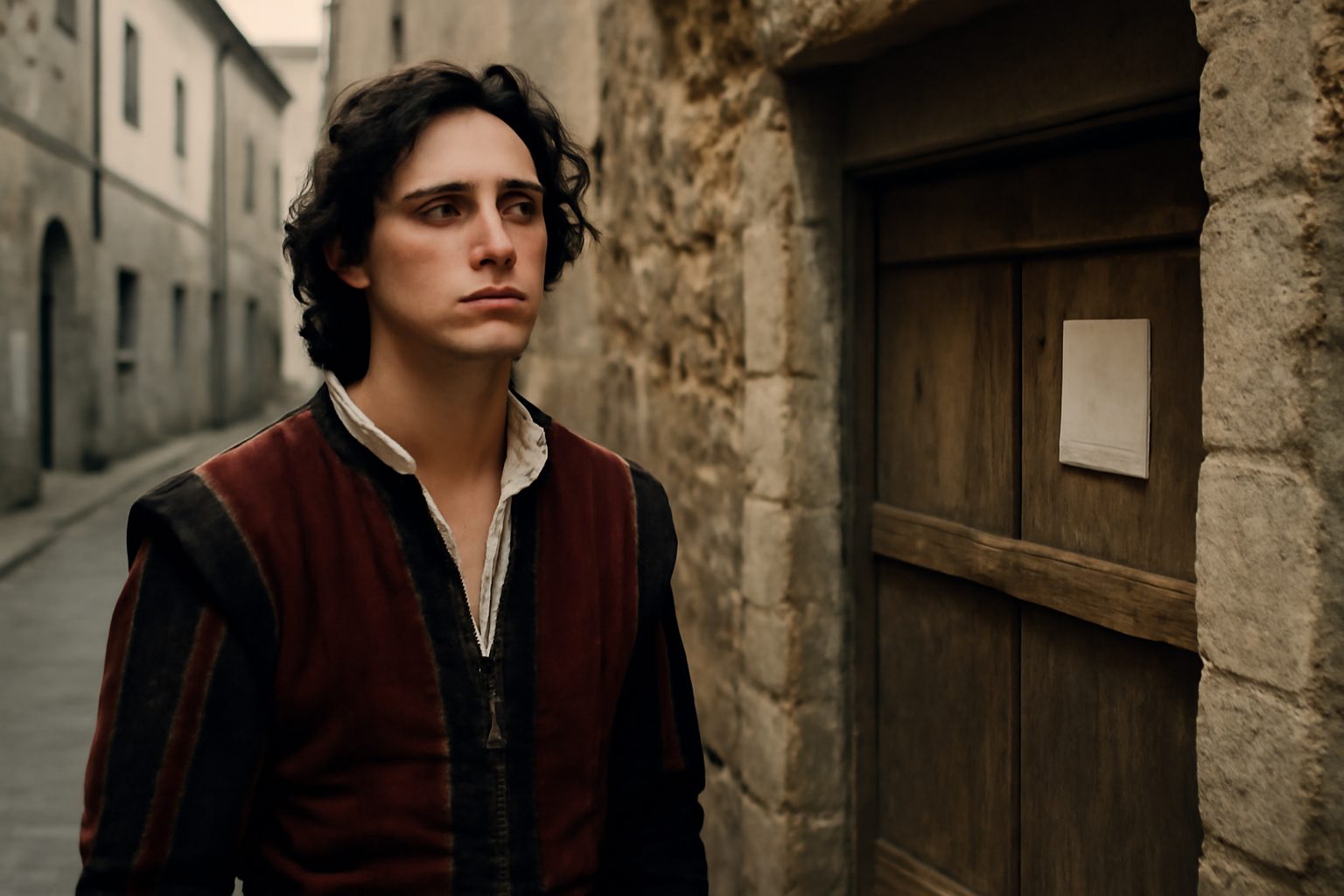
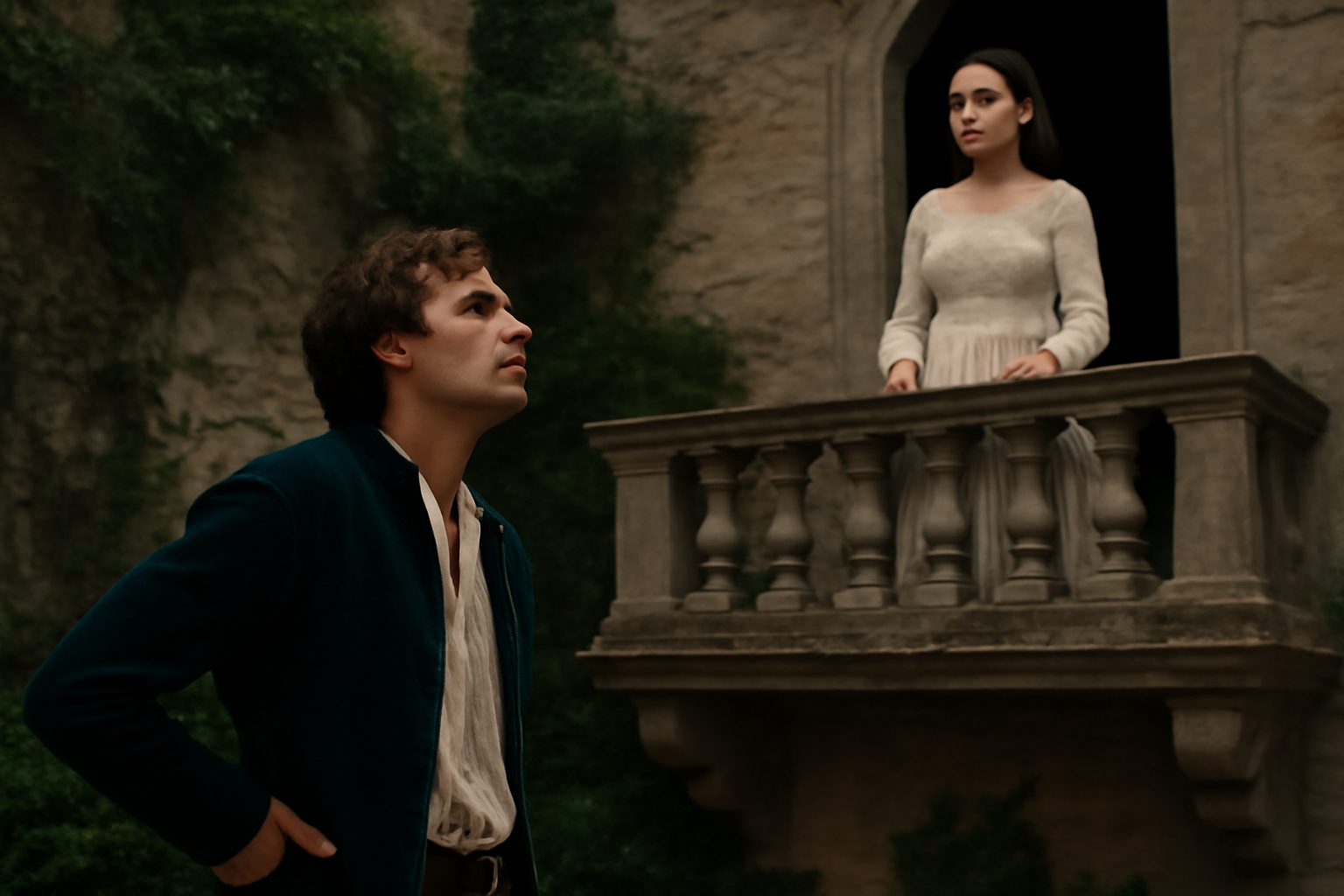
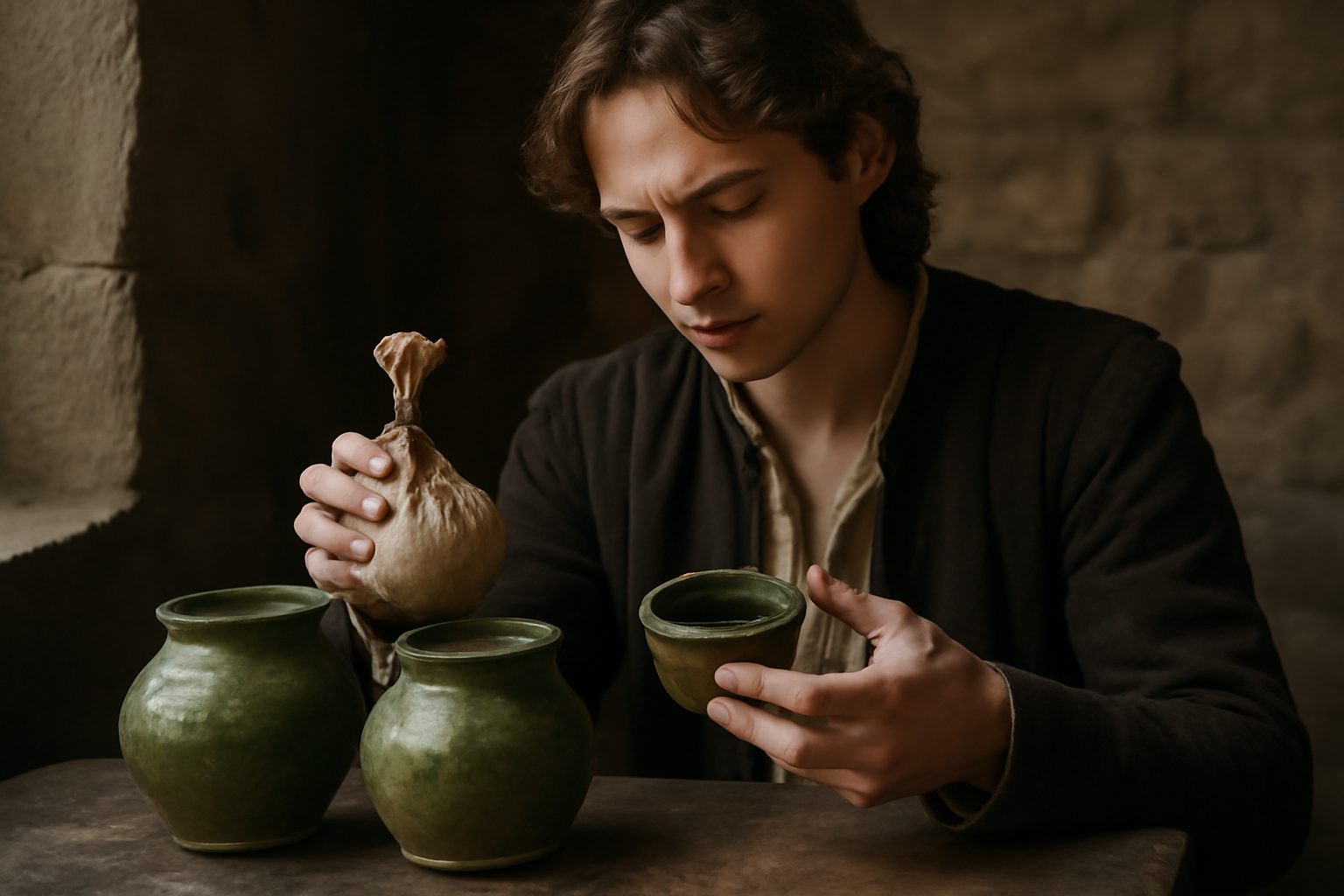
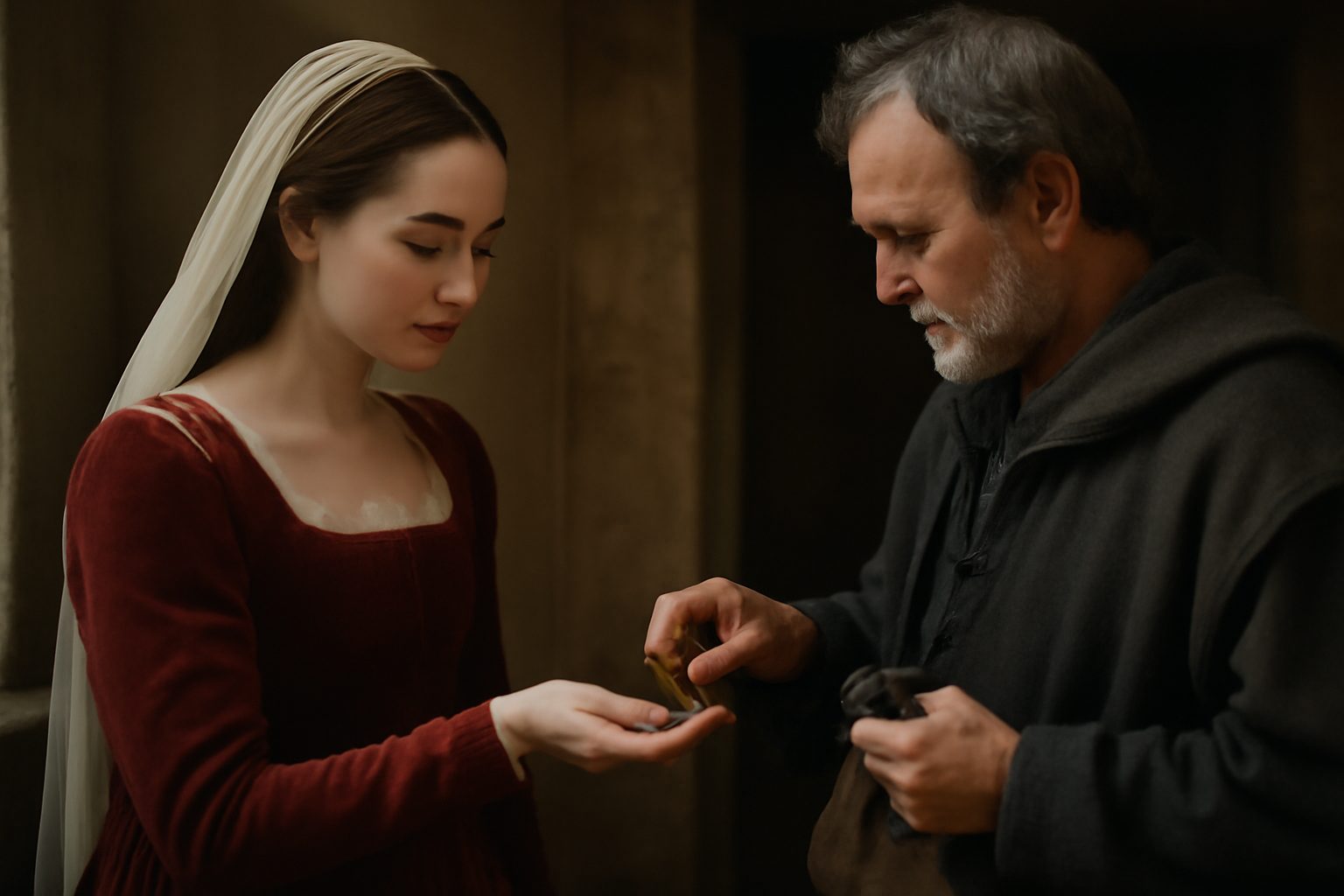
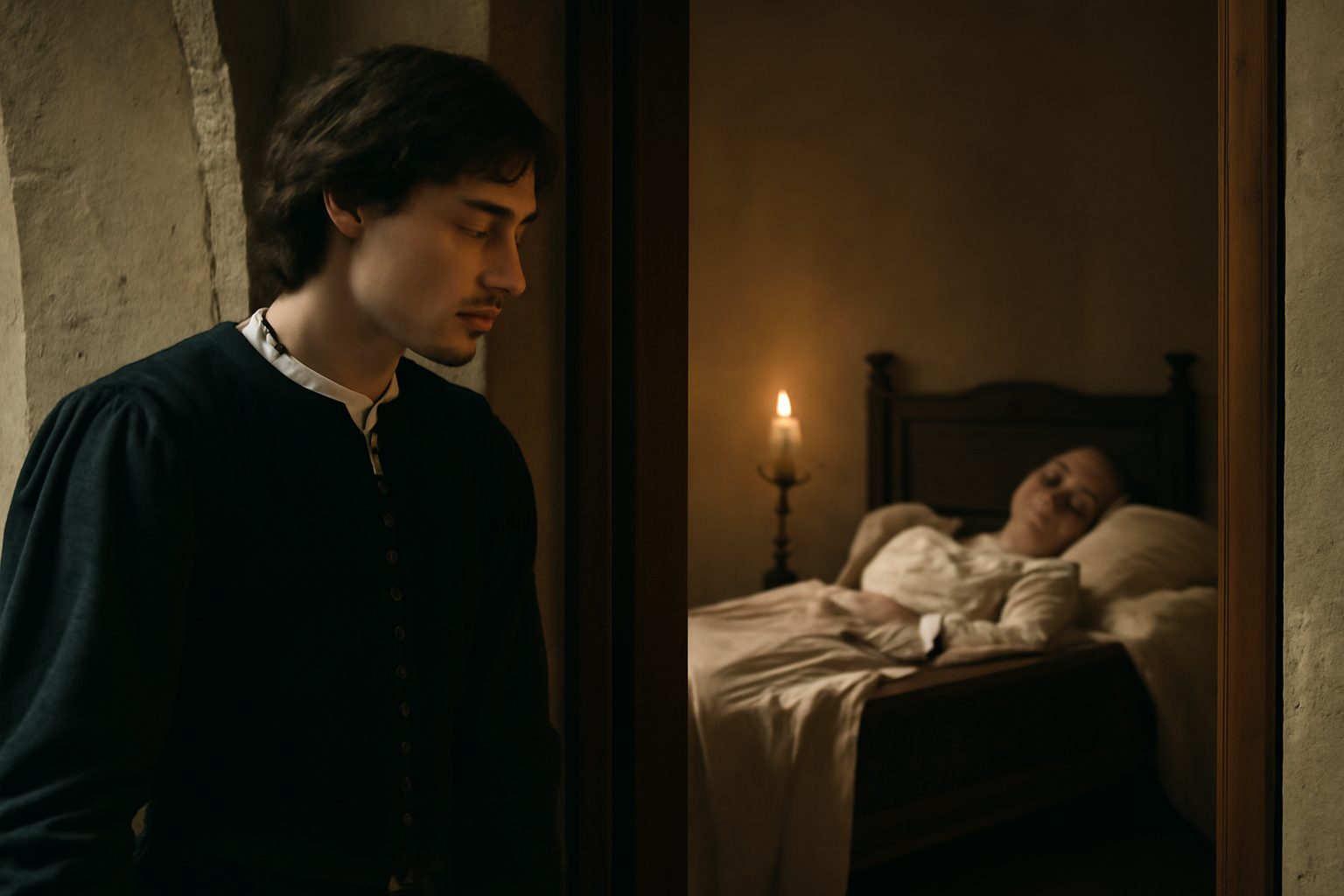
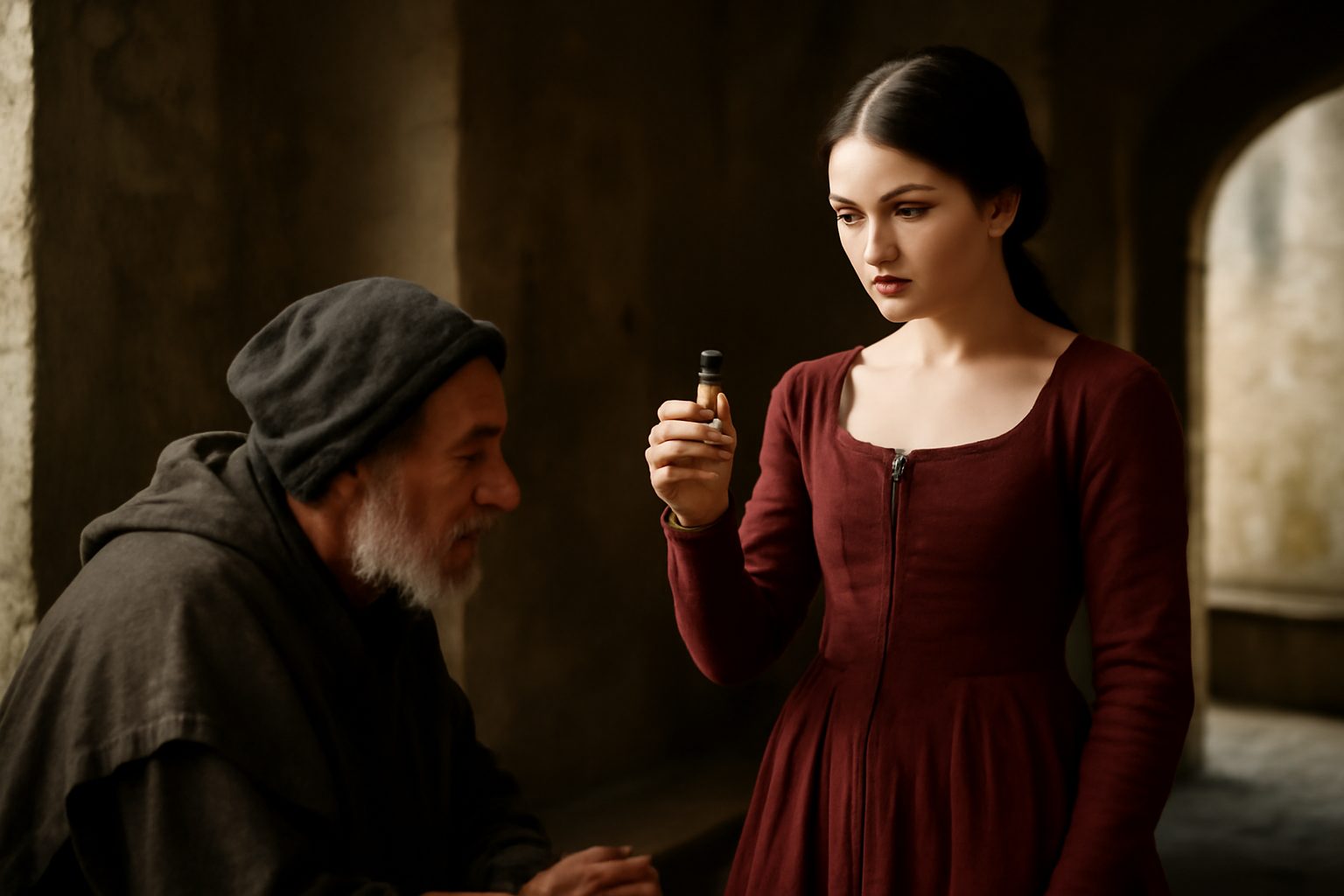
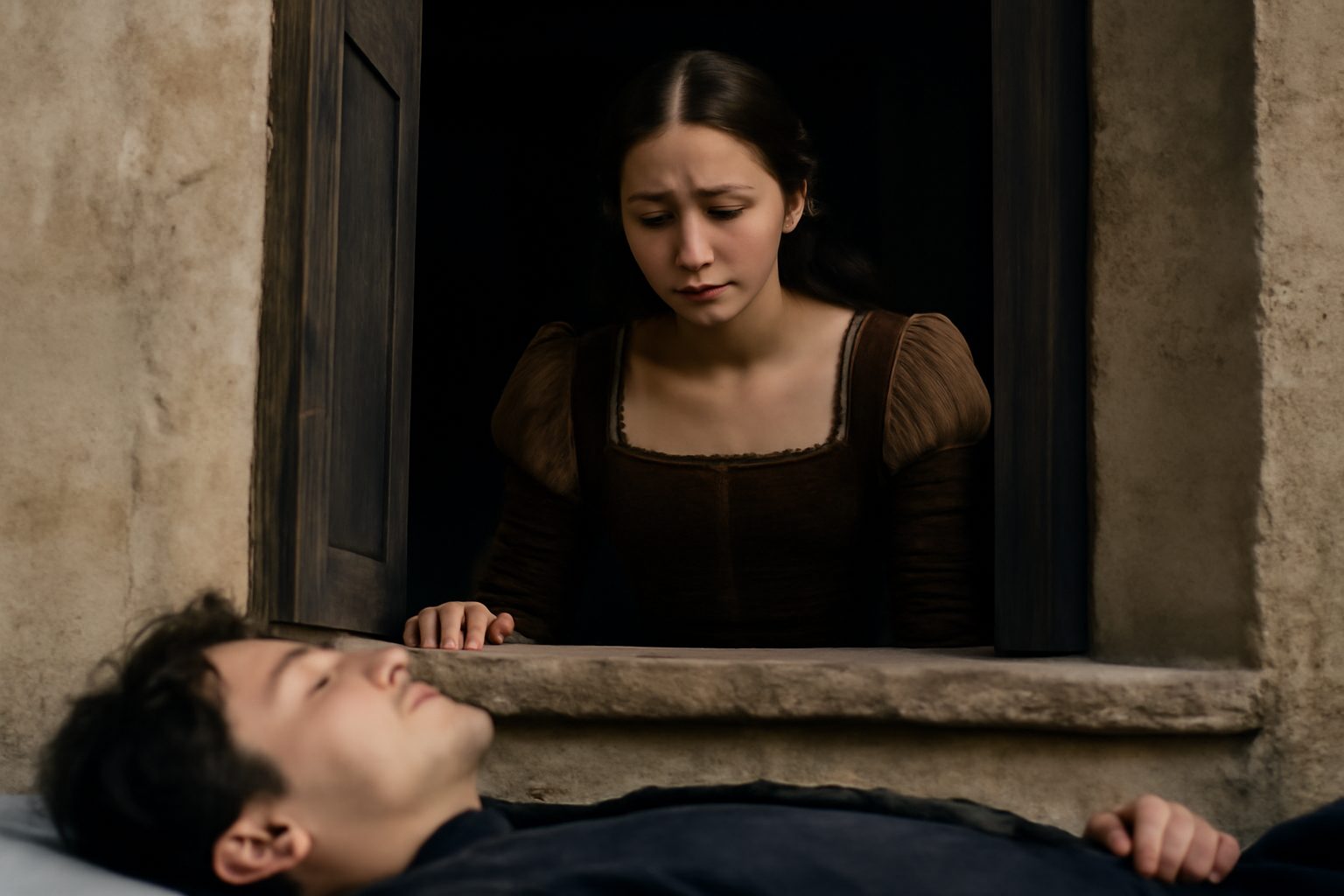
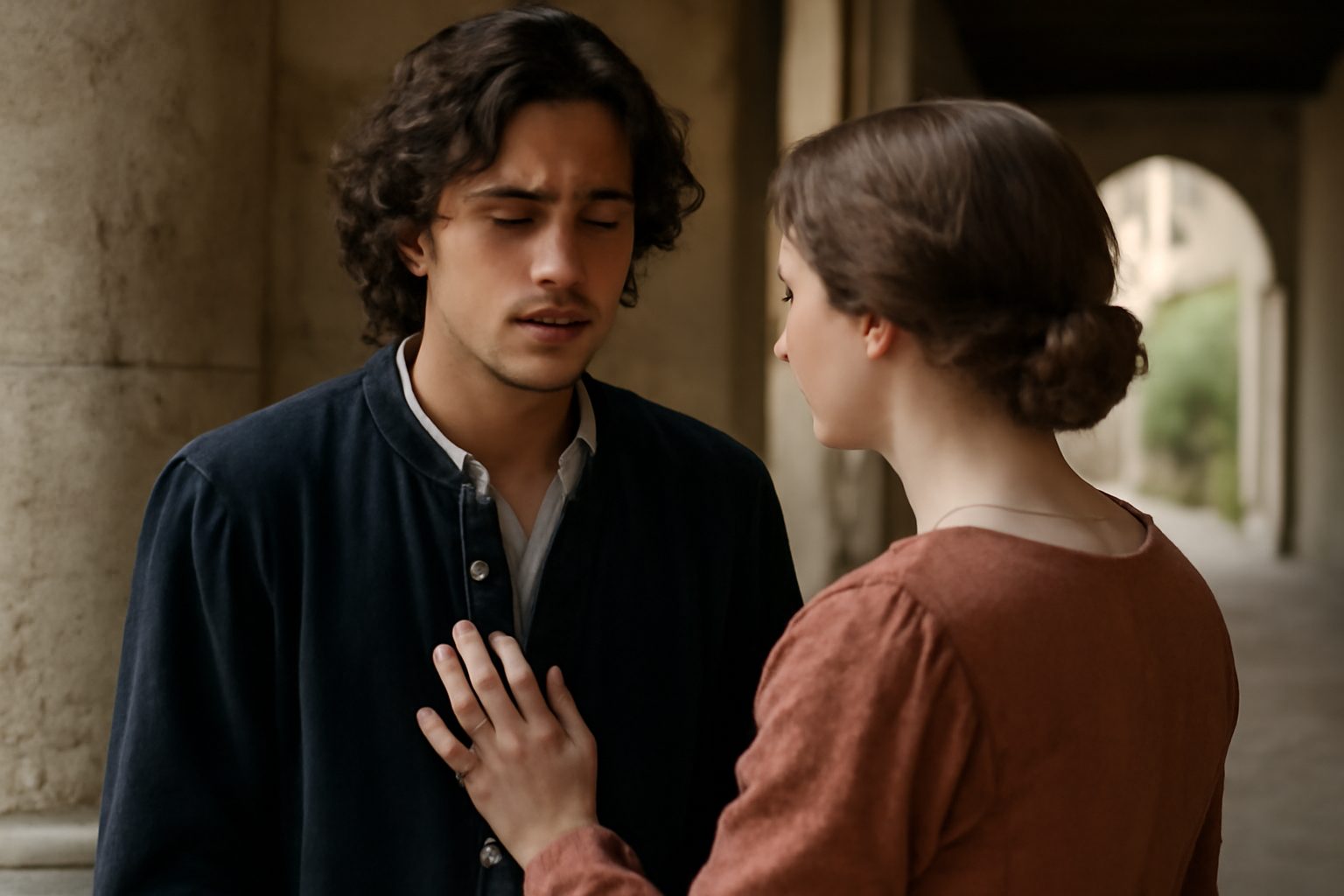
In Act 5, Scene 1 of Romeo and Juliet, Romeo, exiled in Mantua, has just learned of Juliet's supposed death. Overcome with grief, he resolves to return to Verona and join her in death, recalling the presence of an apothecary whose poverty might make him willing to sell poison. This moment marks Romeo's desperate turn toward tragedy as he seeks the means to end his life.
Romeo: "I do remember an apothecary,--"
In modern day english, we would say:
I remember a pharmacist.
Frequently Asked Questions
Who does Romeo remember in this line?
Romeo remembers an apothecary.
Connections to other verses:
Connections to "I do remember an apothecary,--"
Romeo's recollection of the apothecary in Act 5 Scene 1, Verse 40 is immediately preceded by his observation of the apothecary's dwelling place in Verse 41, where he notes, "And hereabouts he dwells,--which late I noted." This connection establishes the physical presence of the apothecary in Romeo's memory and the setting.
Descriptive Details of the Apothecary
Romeo's memory is enriched by vivid descriptions of the apothecary's impoverished state and shop. In Verse 42, he recalls the apothecary's appearance: "In tatter'd weeds, with overwhelming brows," while Verse 43 adds, "Culling of simples; meagre were his looks." These details emphasize the apothecary's desperation, which Romeo will later exploit.
Poverty and Need
The theme of poverty is central to Romeo's interaction with the apothecary. In Verse 52, Romeo reflects, "Noting this penury, to myself I said," which directly ties to his recollection in Verse 40. This observation leads him to conclude in Verse 57, "And this same needy man must sell it me," highlighting the apothecary's vulnerability.
Acquisition of Poison
Romeo's memory of the apothecary is the catalyst for his plan to acquire poison. In Verse 53, he thinks, "An if a man did need a poison now," which directly follows his recollection. This need is fulfilled when he obtains "a dram of poison, such soon-speeding gear" in Verse 64, underscoring the tragic outcome of his desperation.
Foreshadowing and Irony
Romeo's earlier lines in Verse 37, "Well, Juliet, I will lie with thee to-night," foreshadow his intent, which is realized through the apothecary's poison. The irony is deepened in Verse 87, where the apothecary states, "I sell thee poison; thou hast sold me none," highlighting the moral and transactional complexities of their exchange.