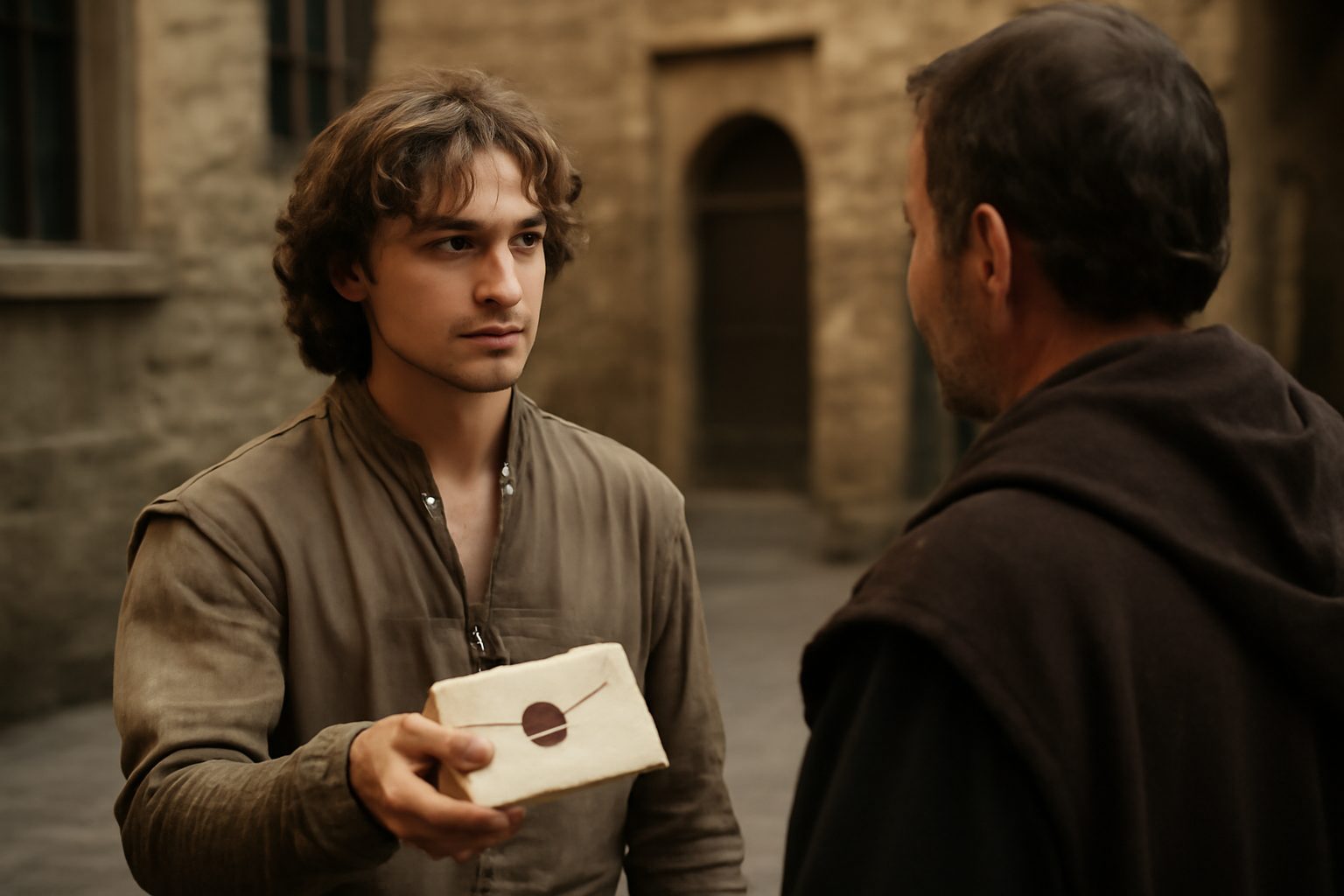
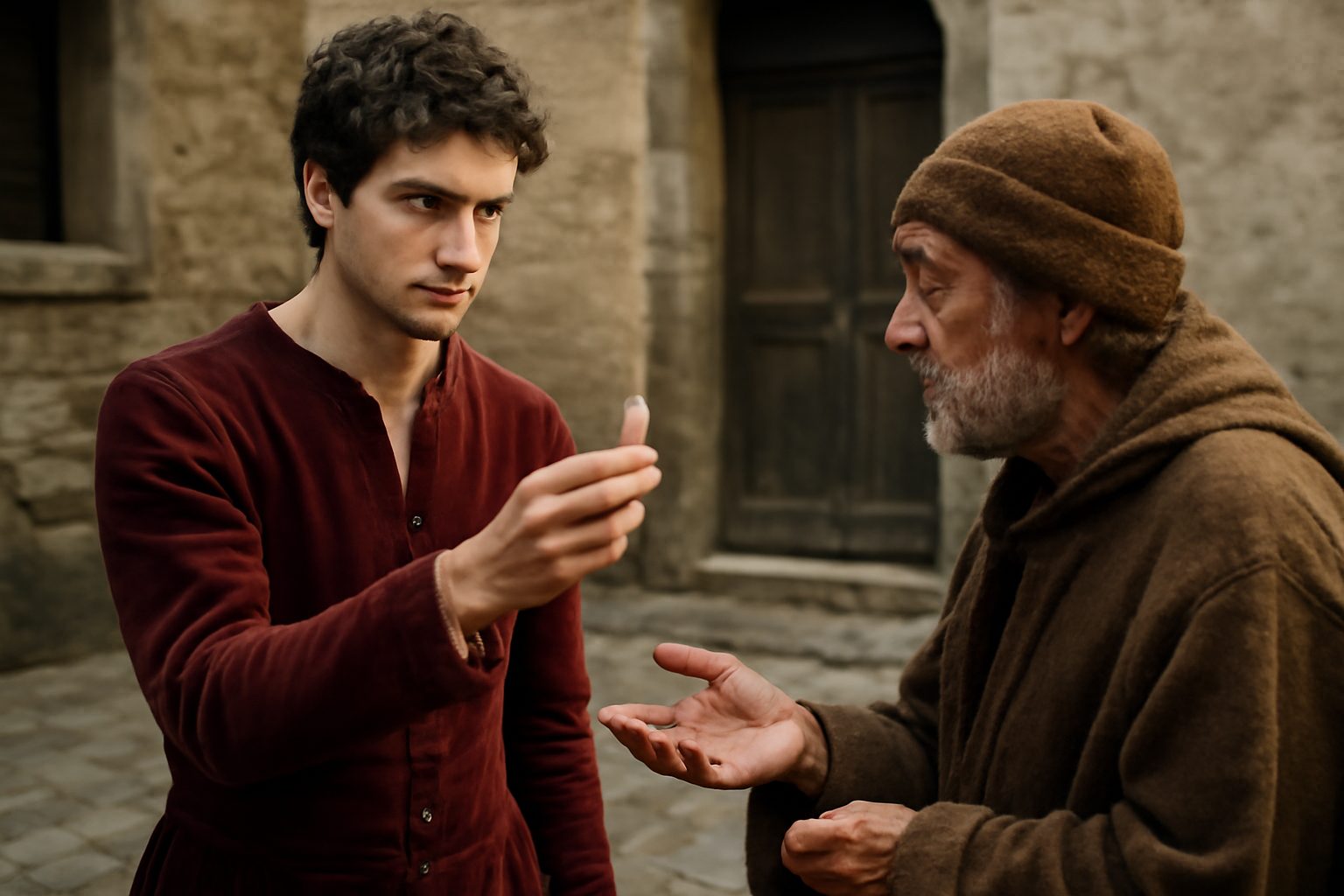
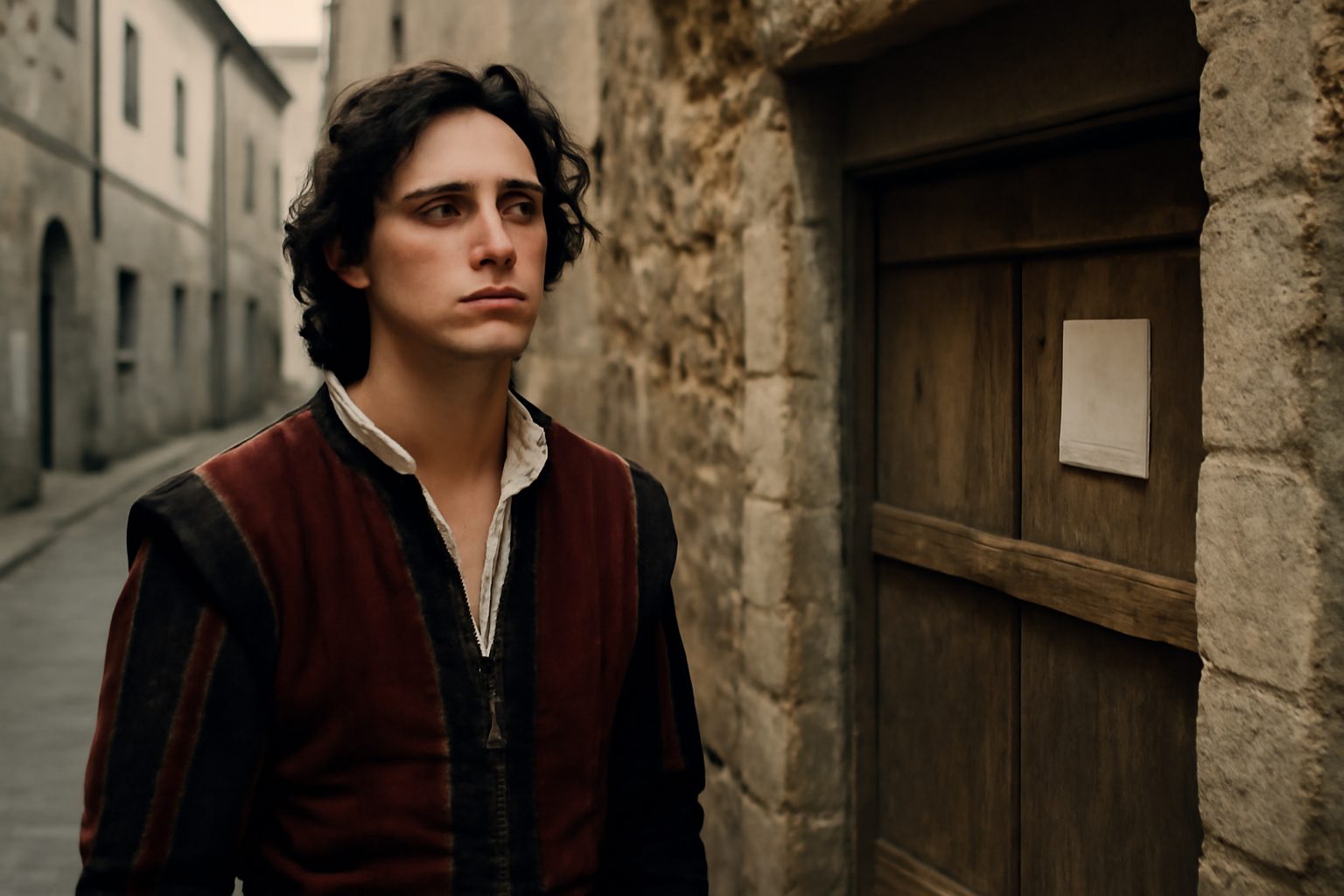
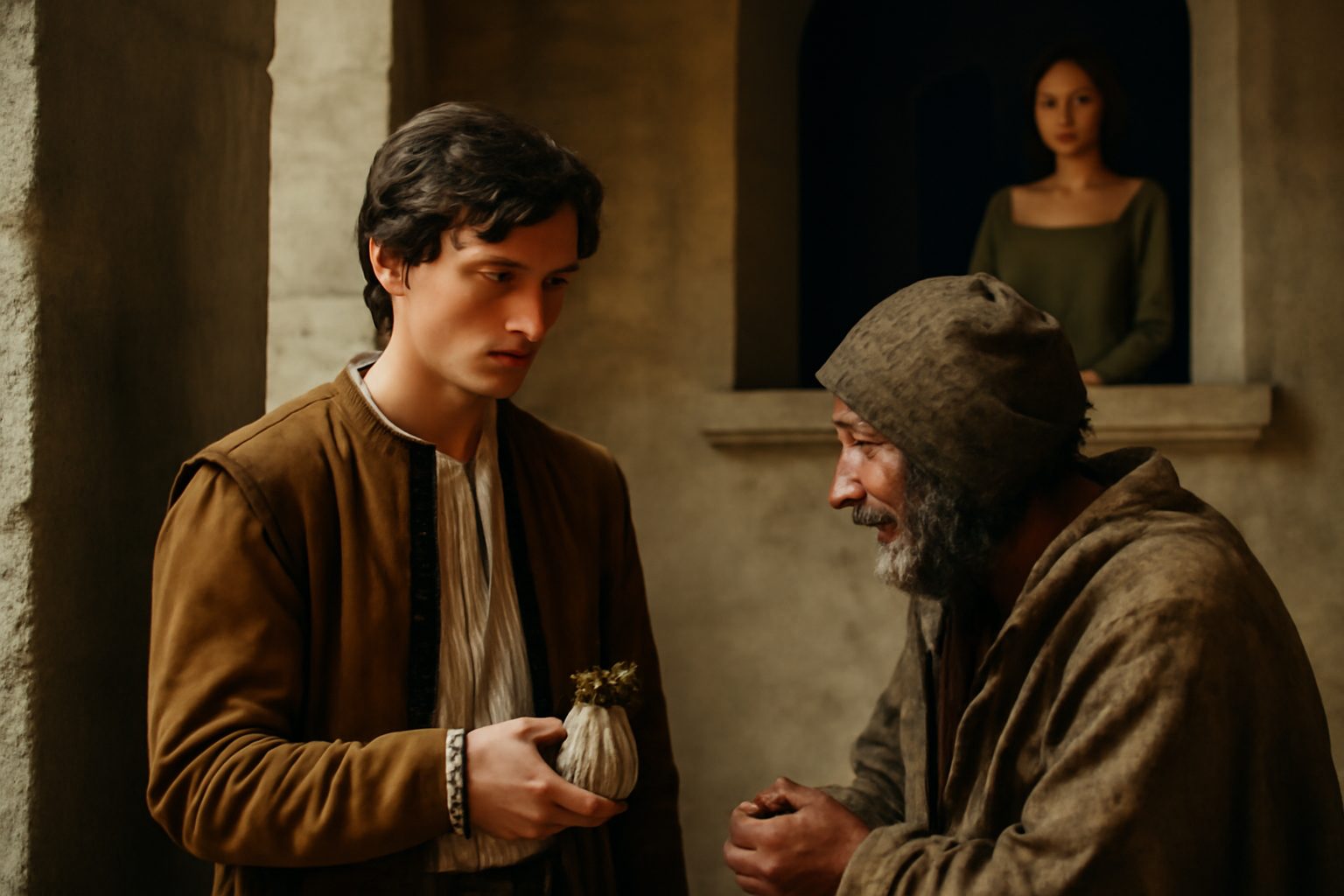
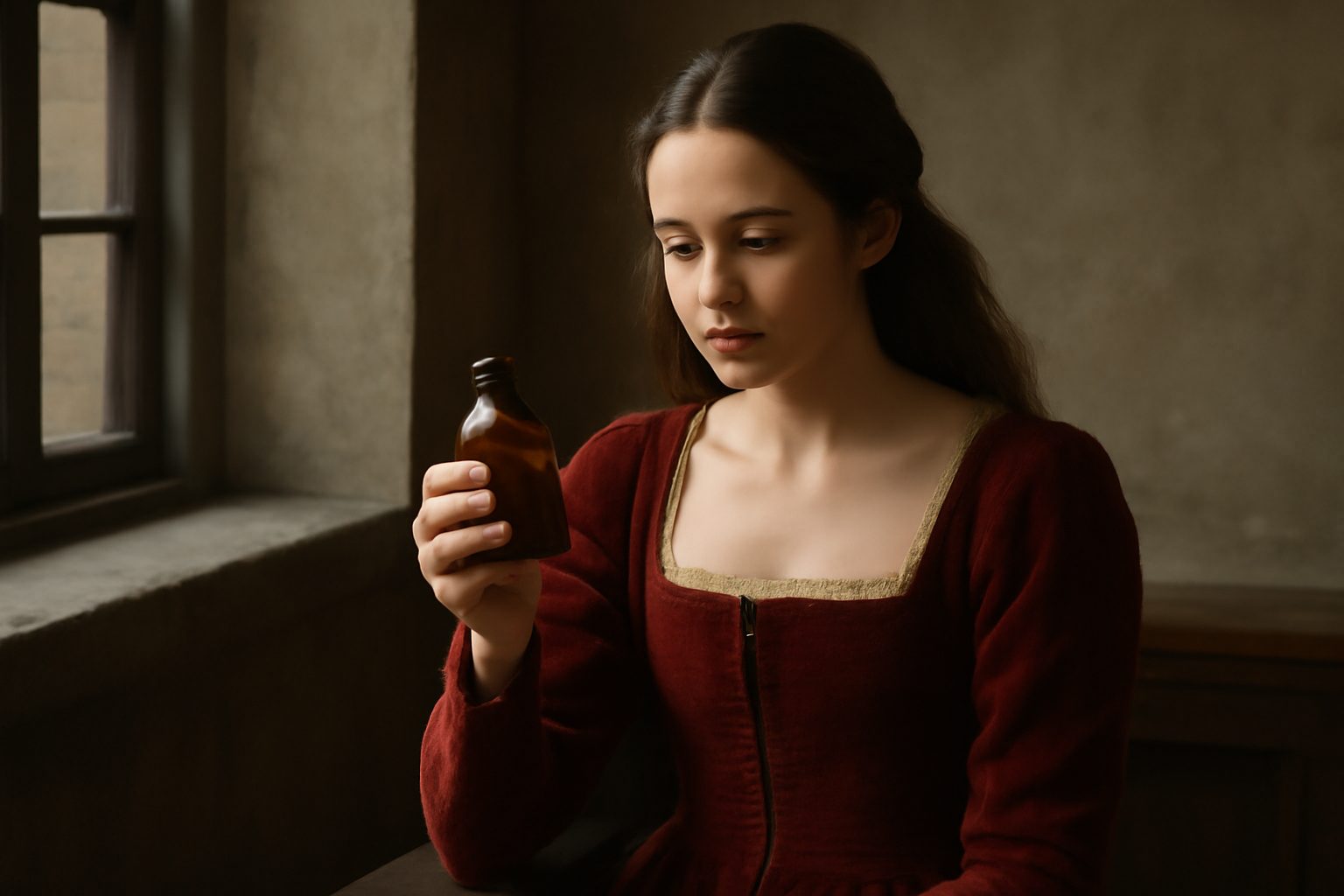
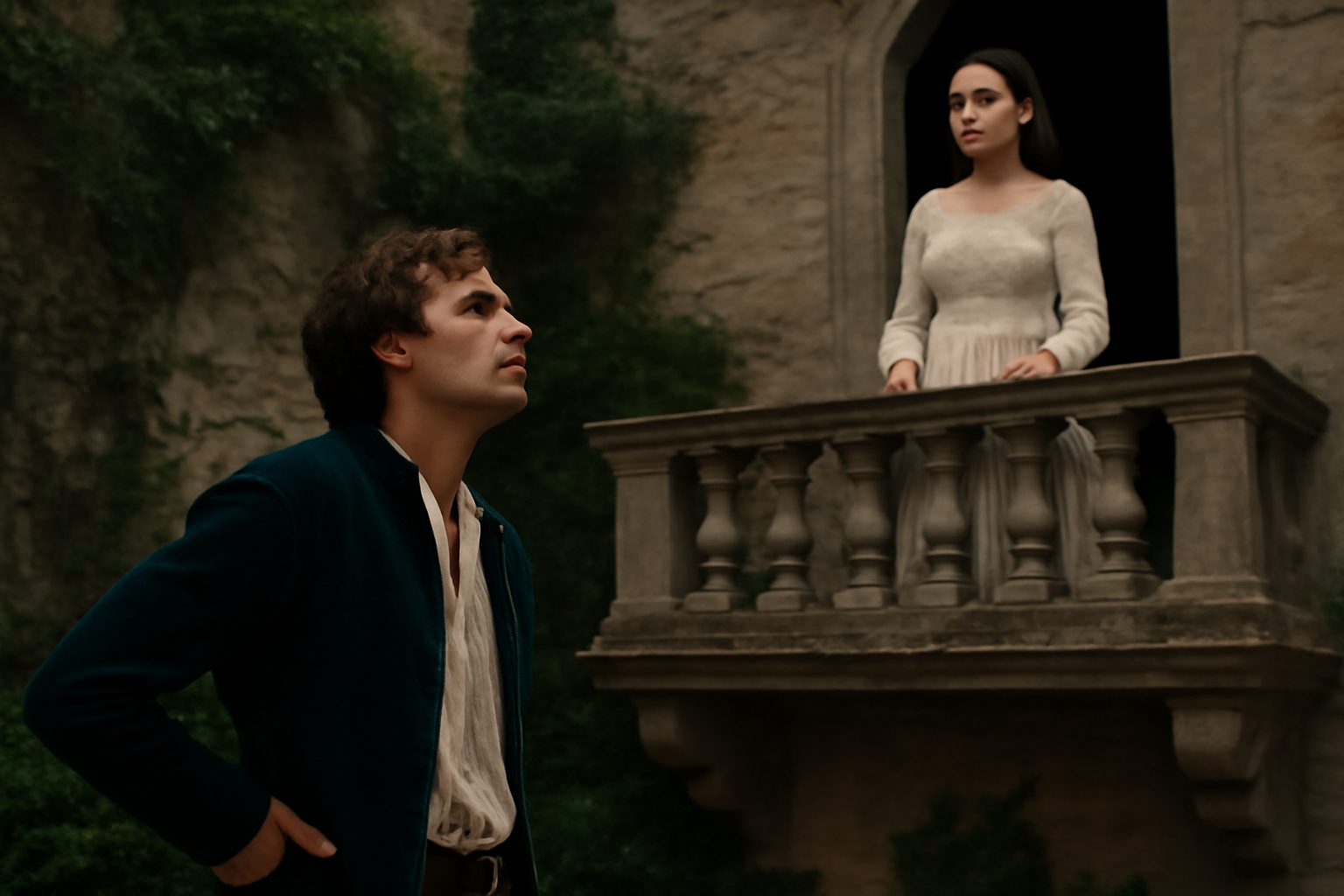
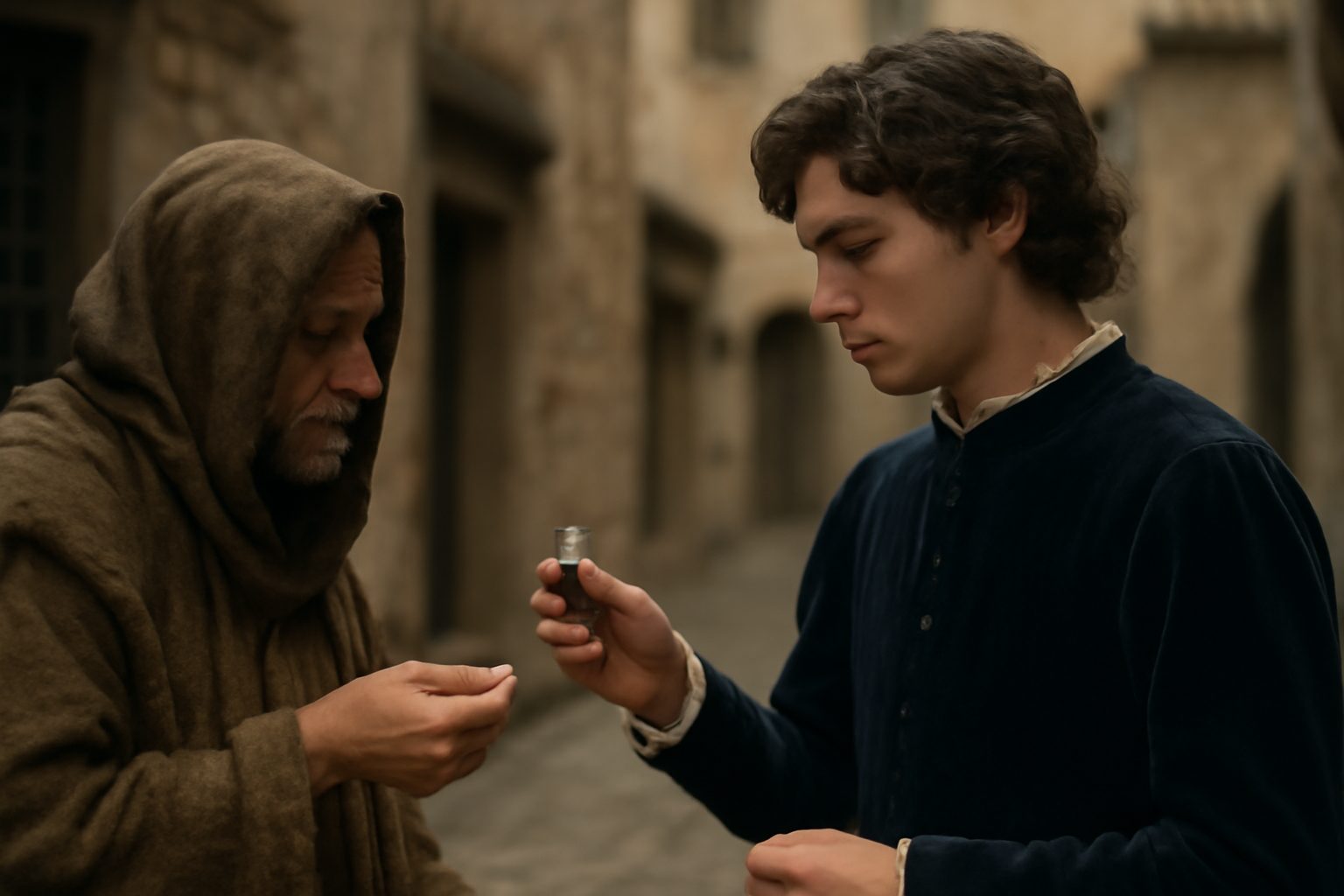
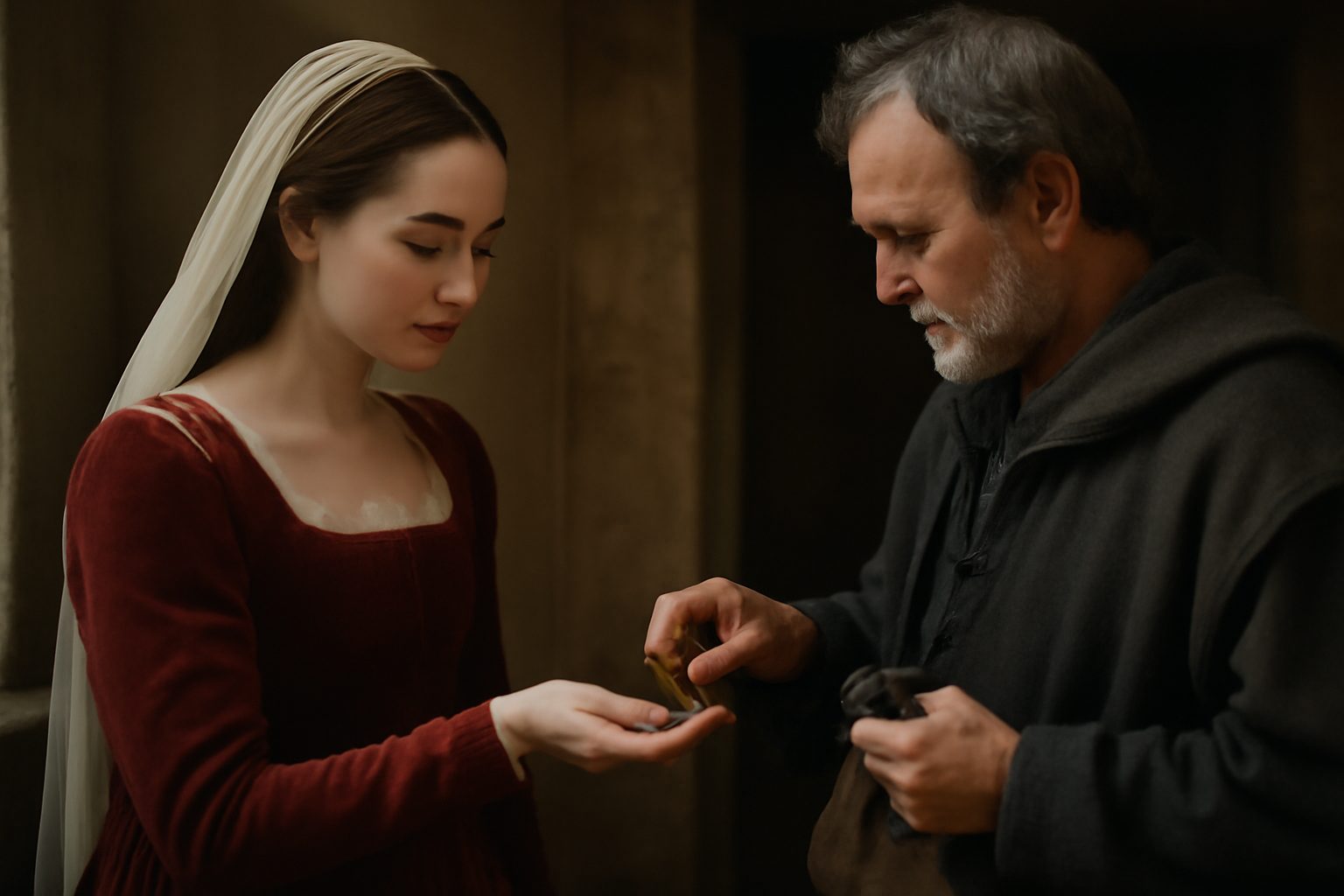
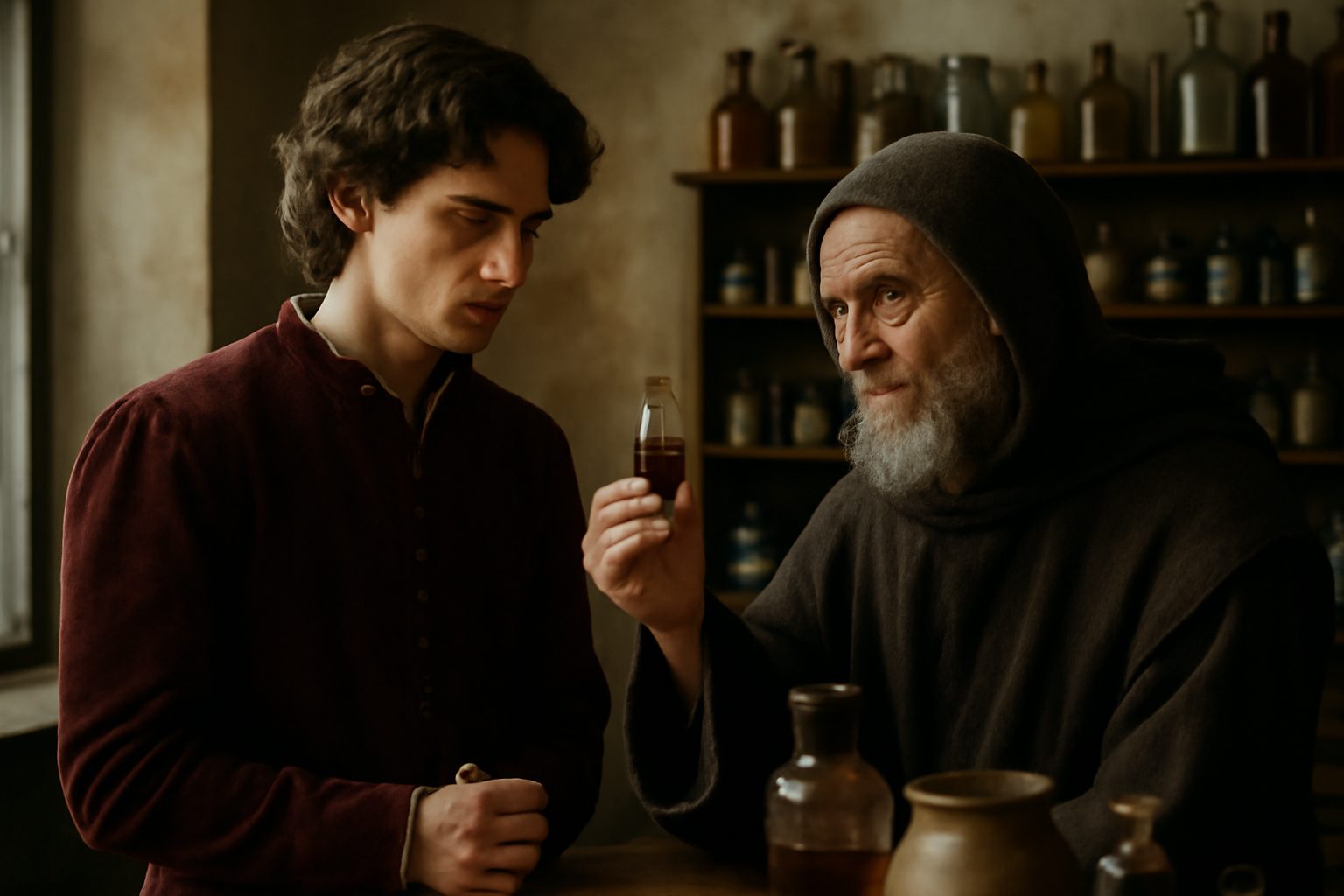
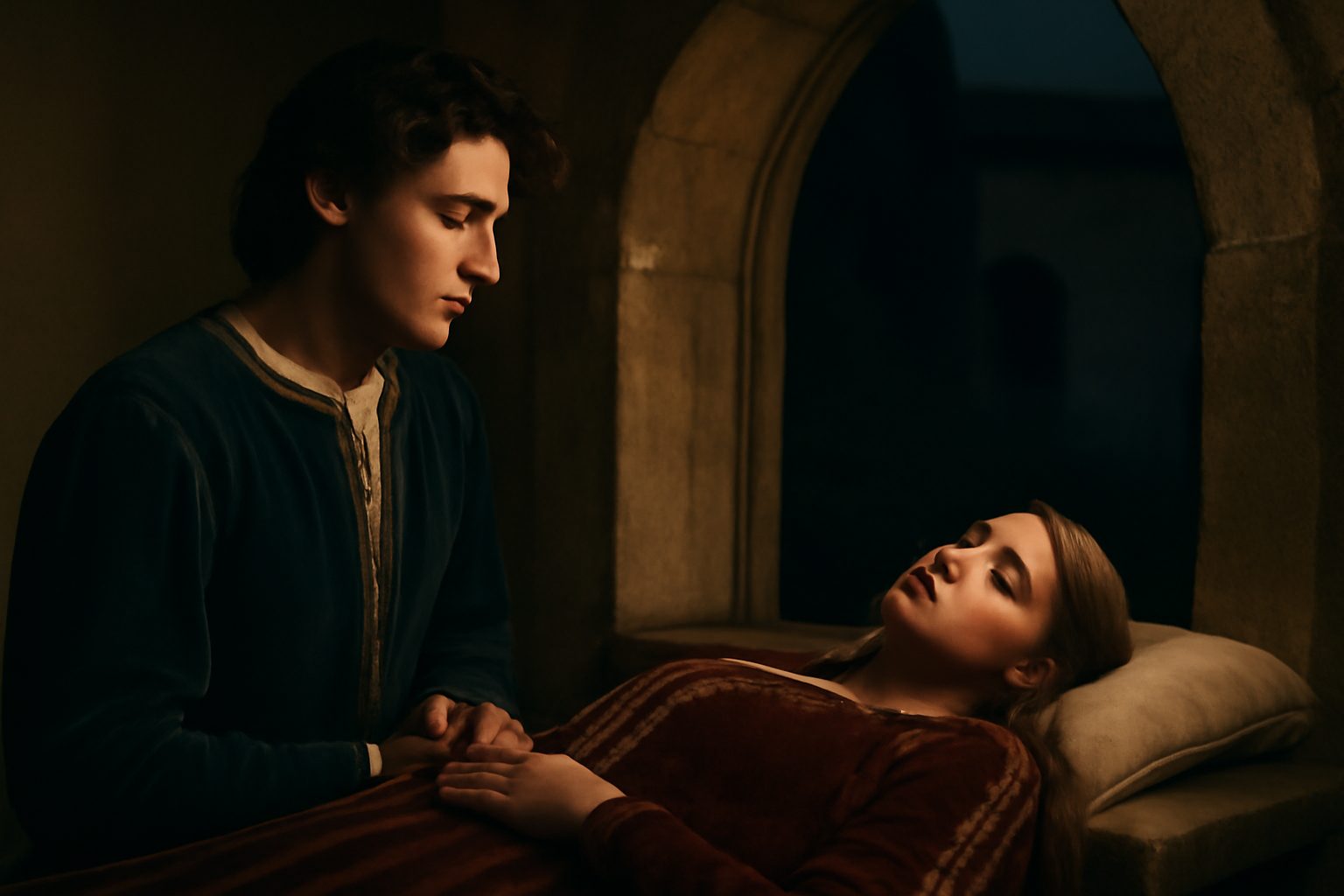
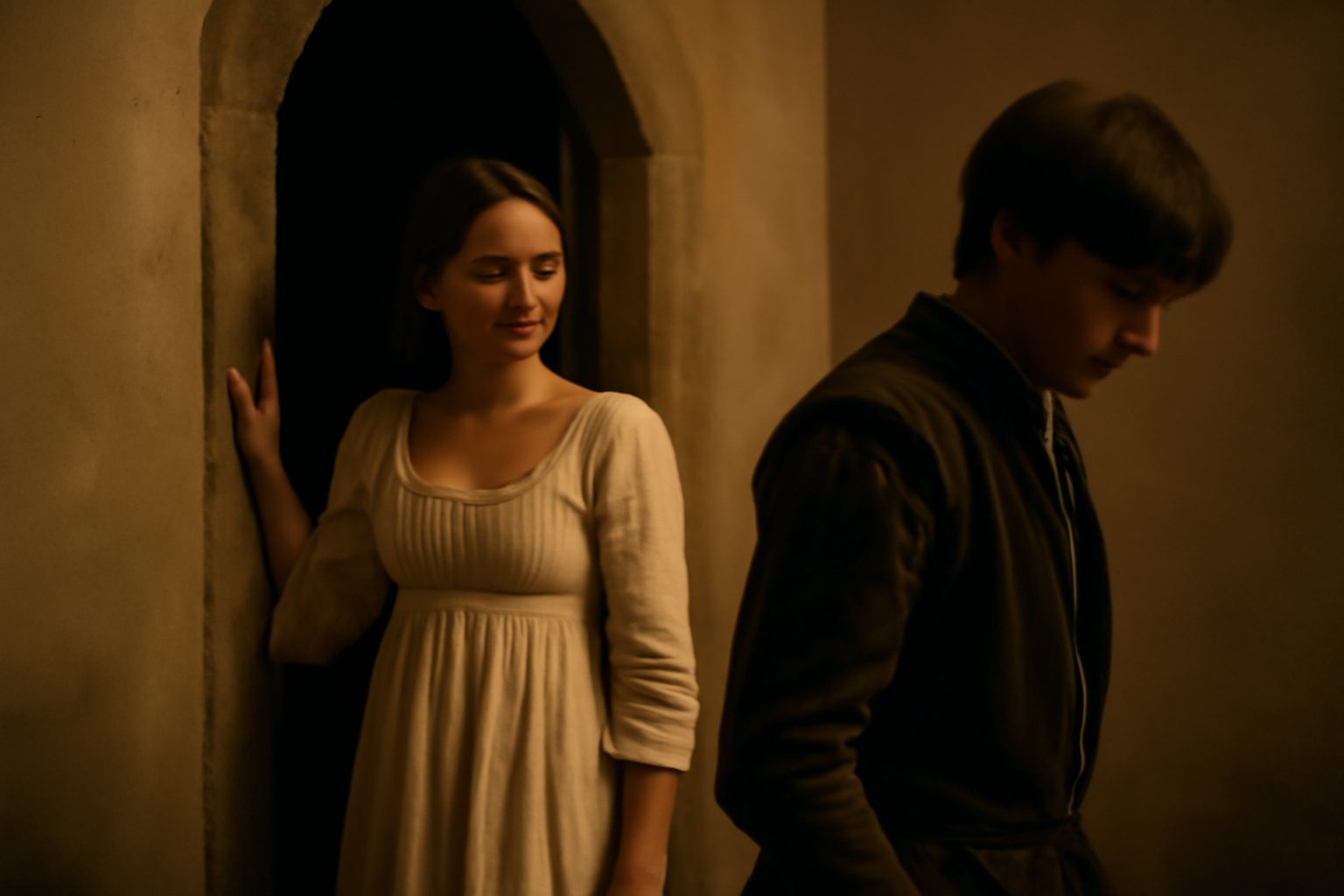
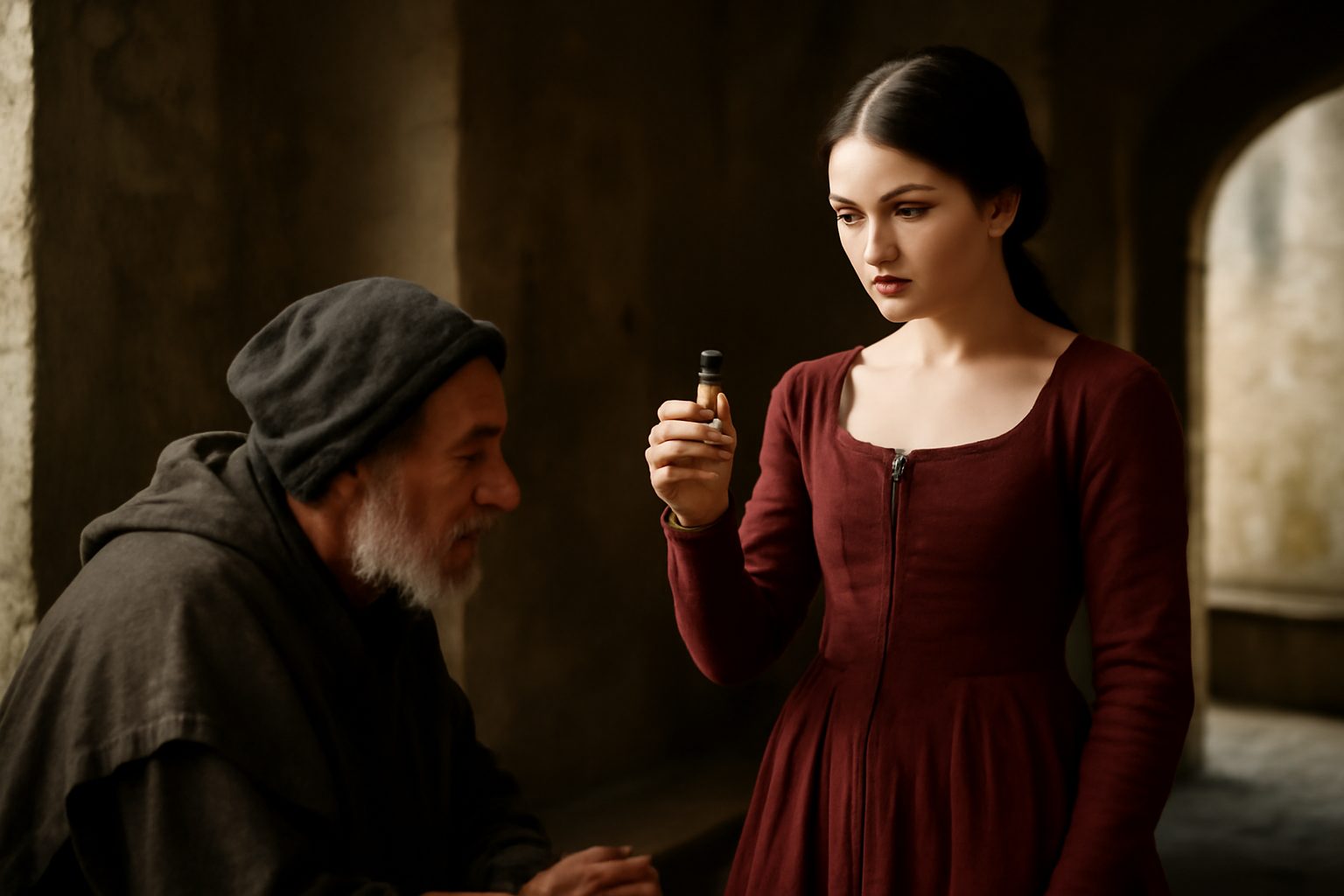
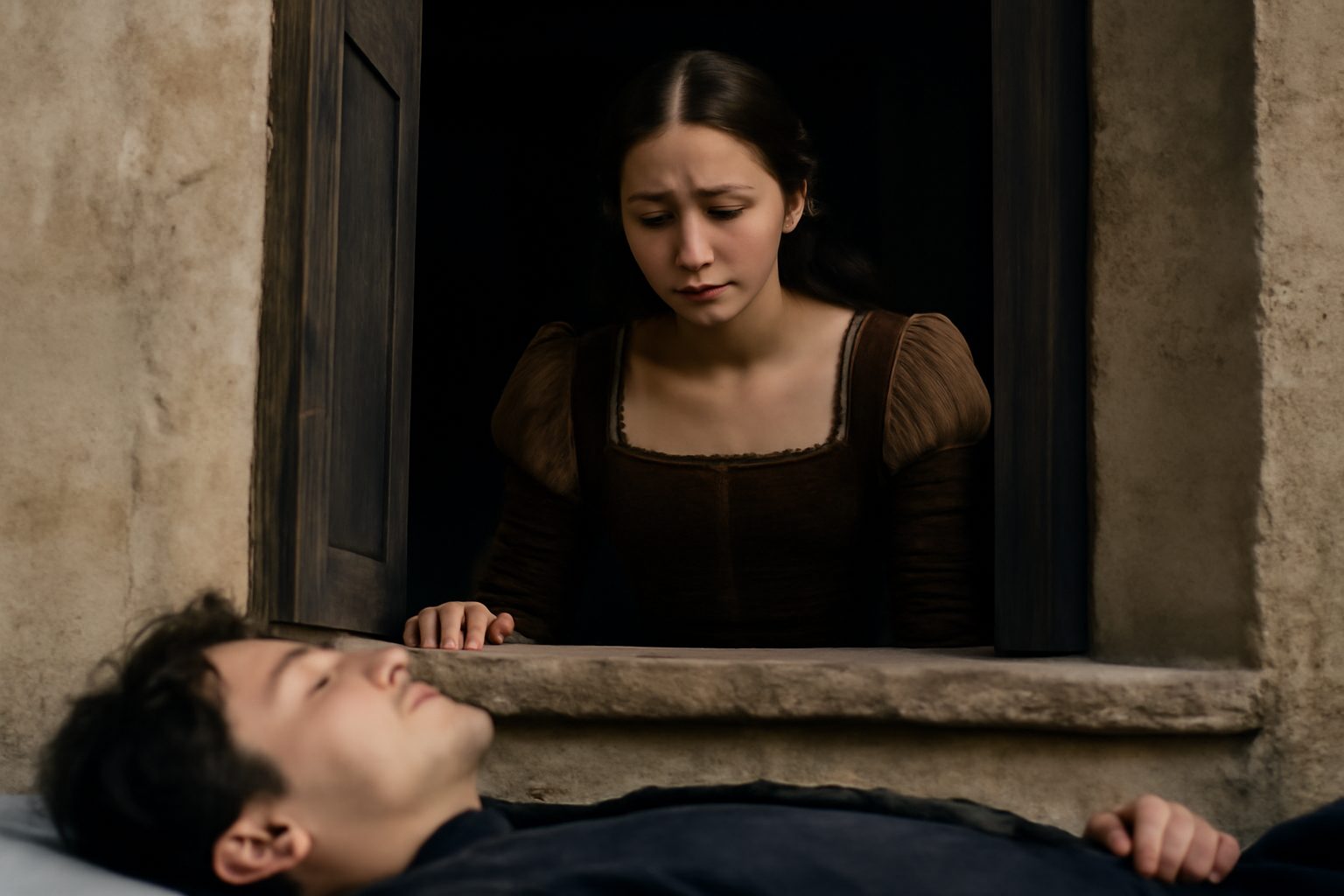
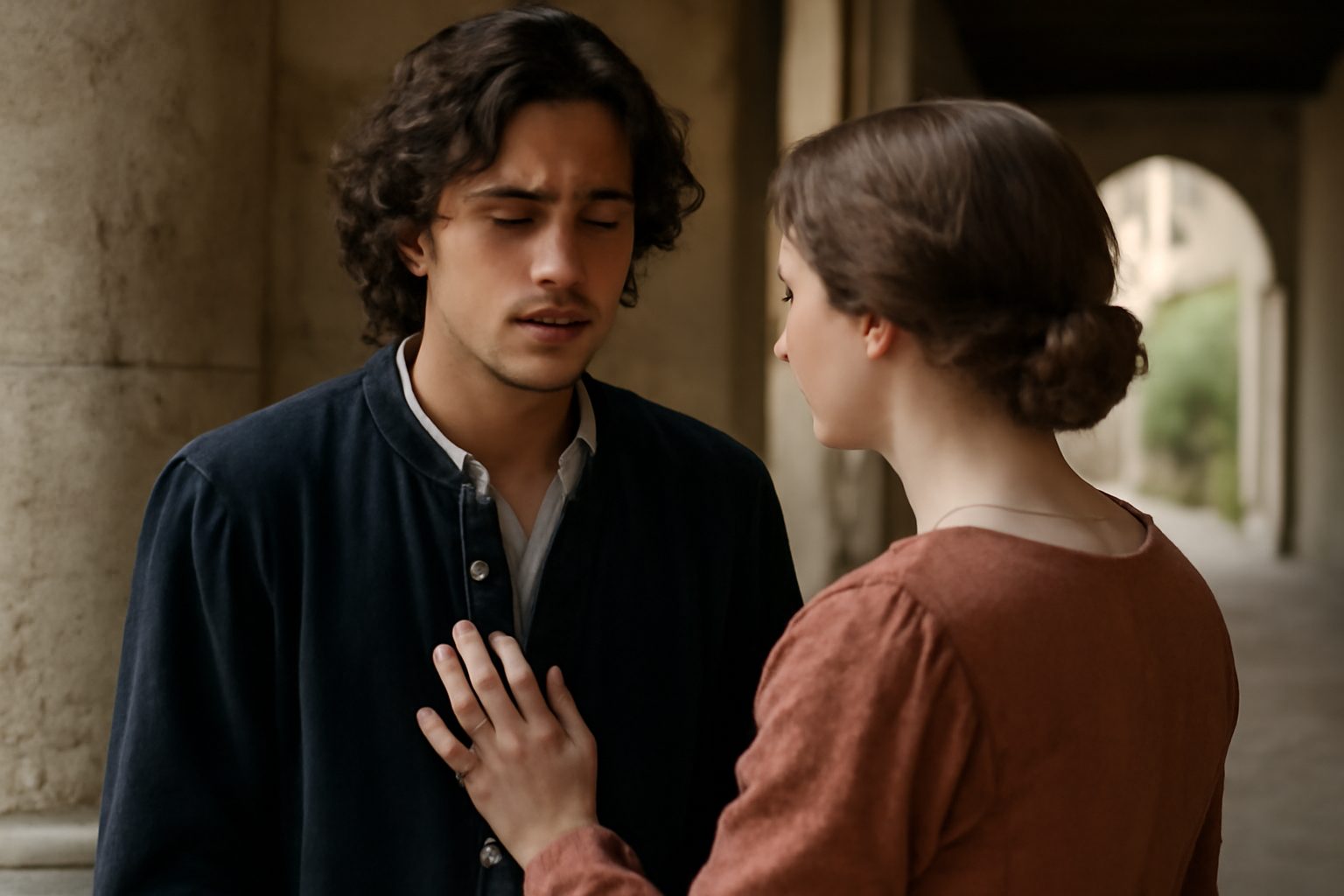
In Act 5, Scene 1 of Romeo and Juliet, Romeo, believing Juliet is dead, seeks out an apothecary to buy poison. Desperate and grief-stricken, he convinces the reluctant apothecary to sell him the lethal substance, despite its illegality. This line captures Romeo's bitter reflection on their exchange, contrasting the tangible poison he purchases with the intangible suffering the apothecary has inflicted by selling it.
Romeo: "I sell thee poison; thou hast sold me none."
In modern day english, we would say:
I provide you poison, but you have given me nothing in return.
Frequently Asked Questions
What is Romeo saying about poison in this line?
Romeo is saying that he is the one providing poison, not the other person.
Connections to other verses:
Connections to "I sell thee poison; thou hast sold me none."
This verse, spoken by Romeo to the Apothecary, reflects a transactional and moral paradox. It connects thematically and narratively to several other verses in Act 5, Scene 1.
Economic and Moral Transactions
Romeo's statement underscores the interplay of poverty and desperation. It echoes "I pay thy poverty, and not thy will", where Romeo acknowledges that the Apothecary's consent is driven by need rather than desire. Similarly, the Apothecary's own admission in "My poverty, but not my will, consents" reinforces this dynamic of economic coercion.
Poison as a Means to an End
The acquisition of poison is central to Romeo's plan. This connects to "A dram of poison, such soon-speeding gear", which describes the potency of the substance Romeo seeks. The verse also ties to "As will disperse itself through all the veins", illustrating the lethal efficiency Romeo requires for his tragic intent.
Desperation and Fate
Romeo's resolve to use the poison is foreshadowed by his defiance of fate in "Is it even so? then I defy you, stars!". His declaration in "Well, Juliet, I will lie with thee to-night" confirms his commitment to joining Juliet in death, with the poison serving as the instrument of this fate.
Gold as a Corrosive Force
The transactional nature of the scene highlights the corrupting power of money, as seen in "There is thy gold, worse poison to men's souls". Here, Romeo explicitly compares gold to poison, suggesting that wealth enables moral decay—a theme encapsulated in the original verse's contrast between selling poison and being sold none.
The Apothecary's Context
The Apothecary's impoverished state, described in verses like "And in his needy shop a tortoise hung" and "A beggarly account of empty boxes", provides the backdrop for Romeo's assertion. His willingness to sell despite the law ("Whose sale is present death in Mantua") underscores the desperation that makes the transaction possible.