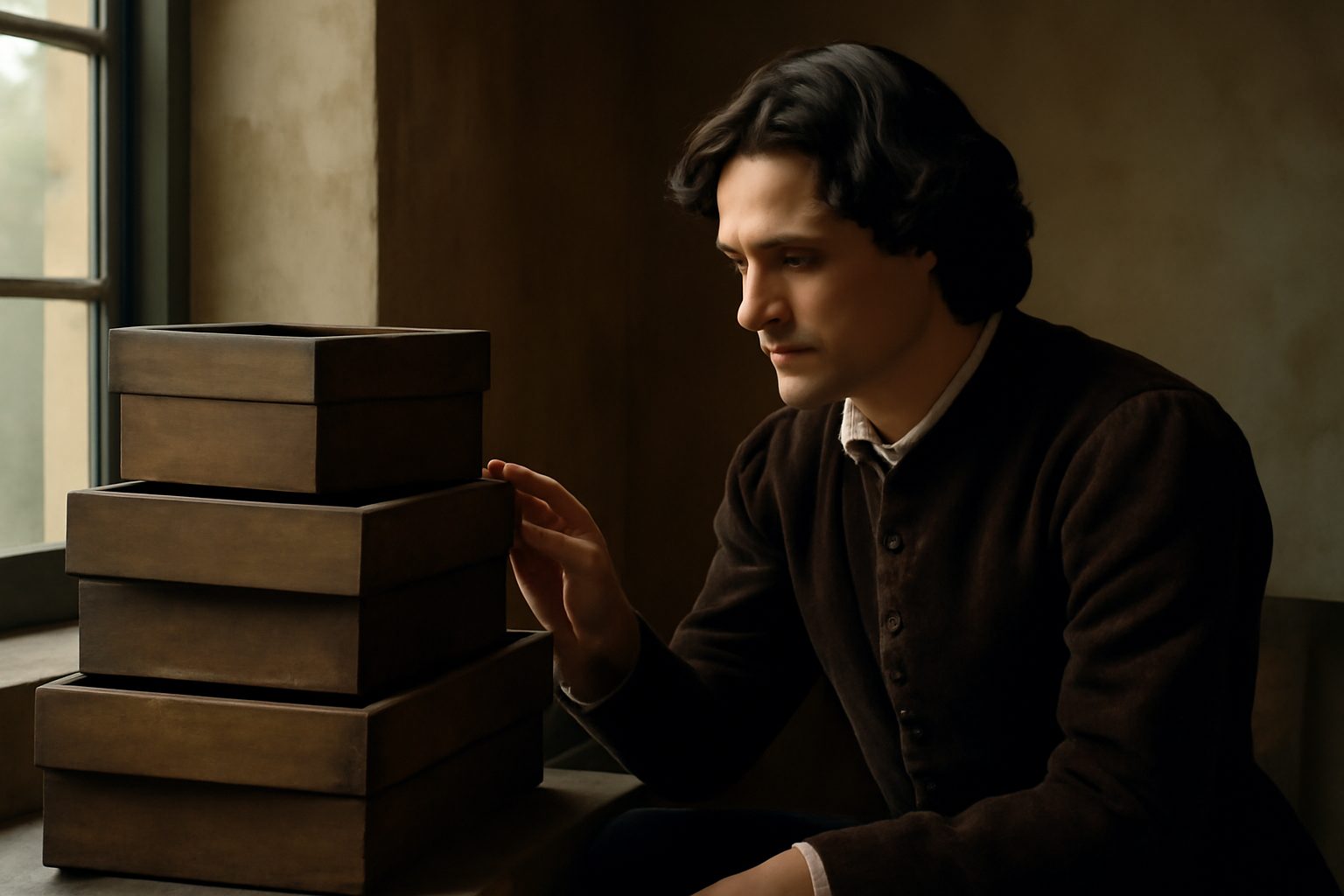
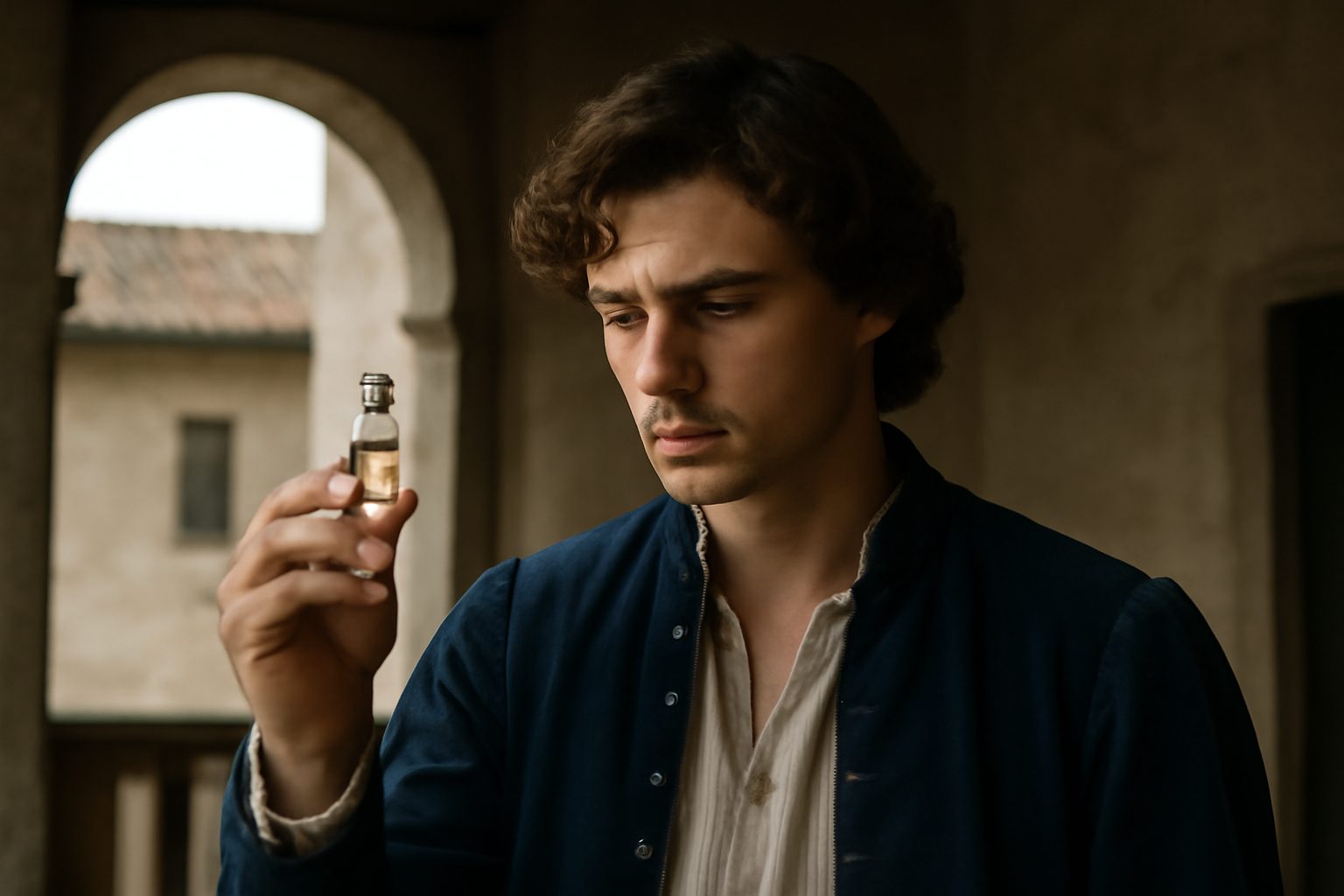
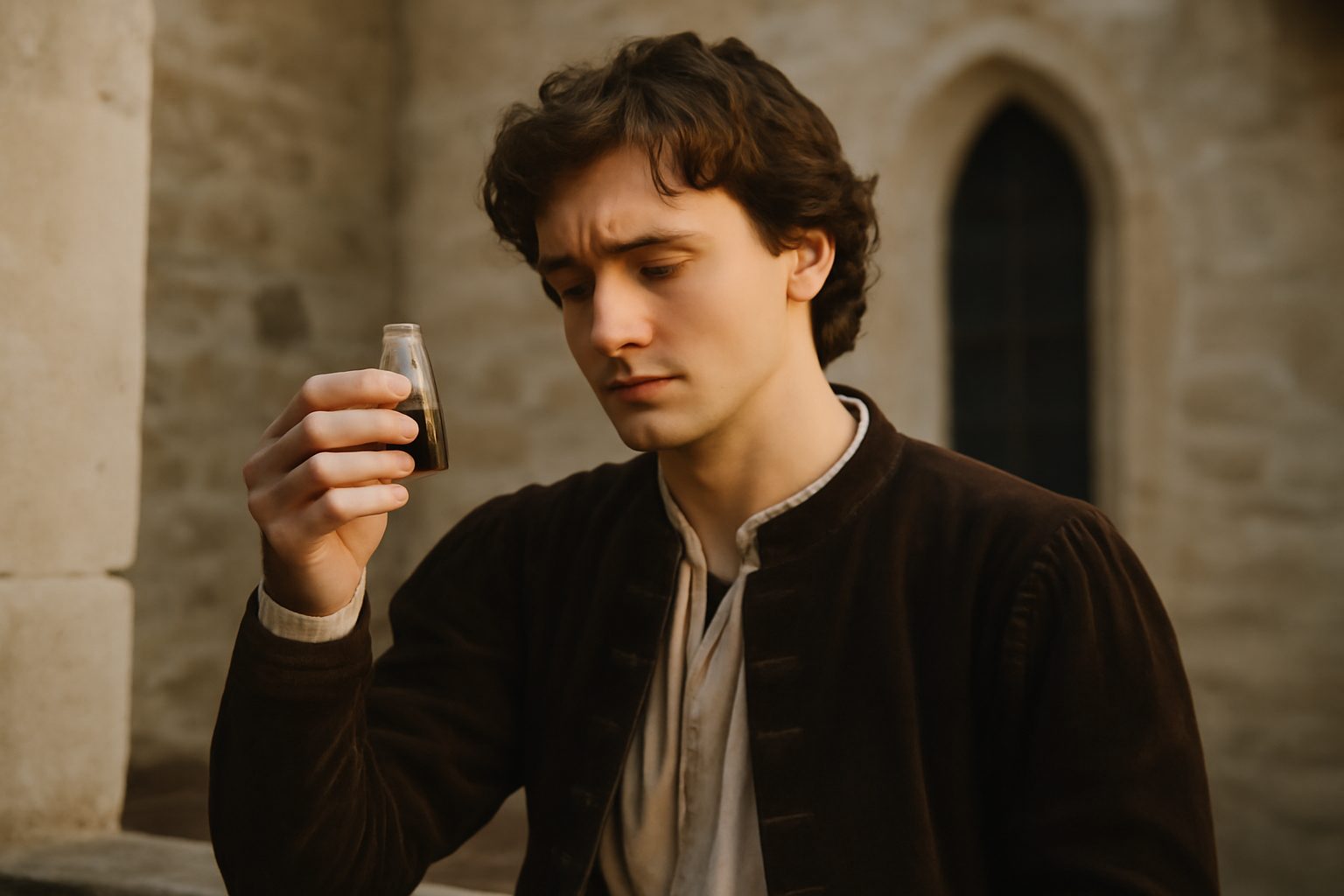
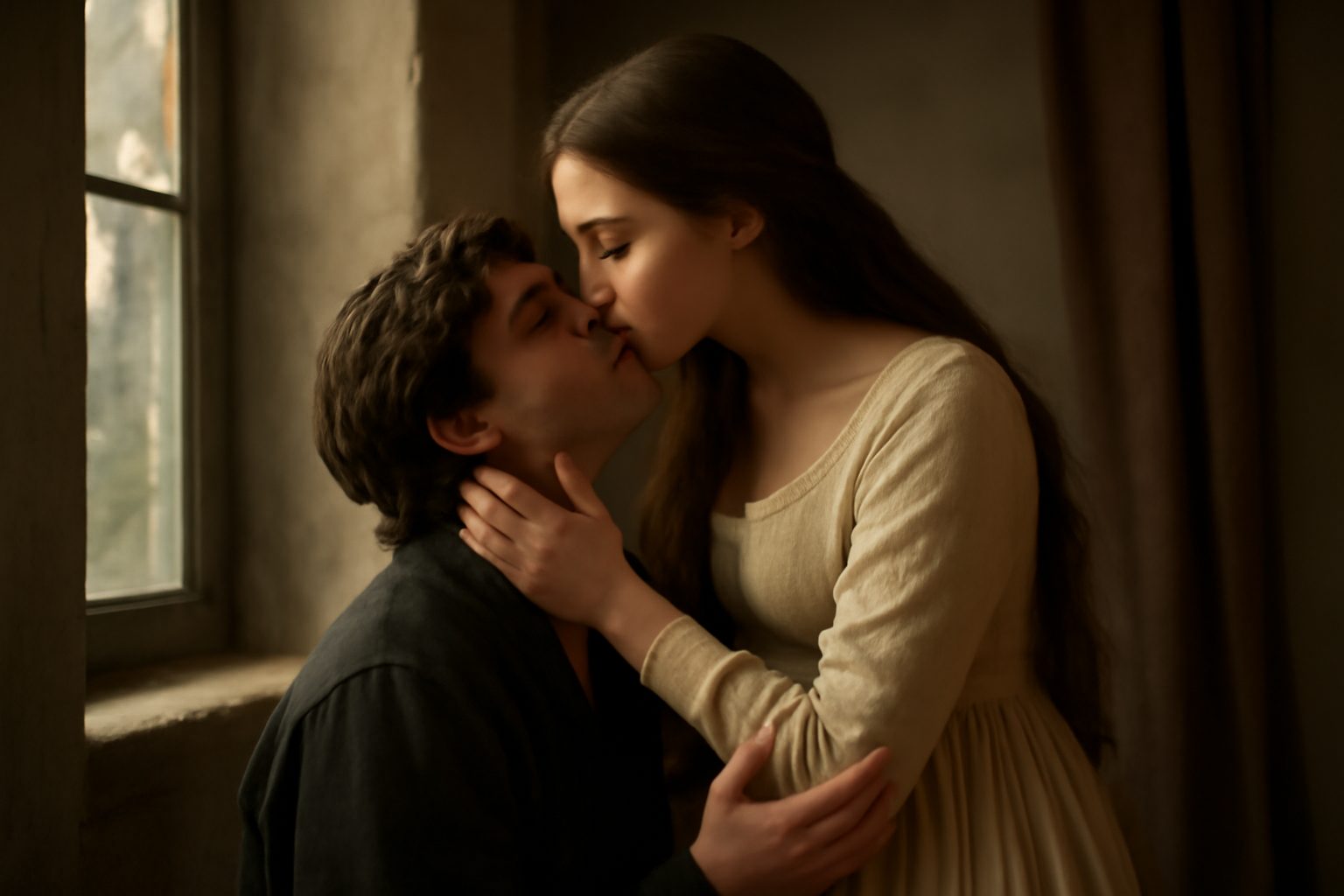
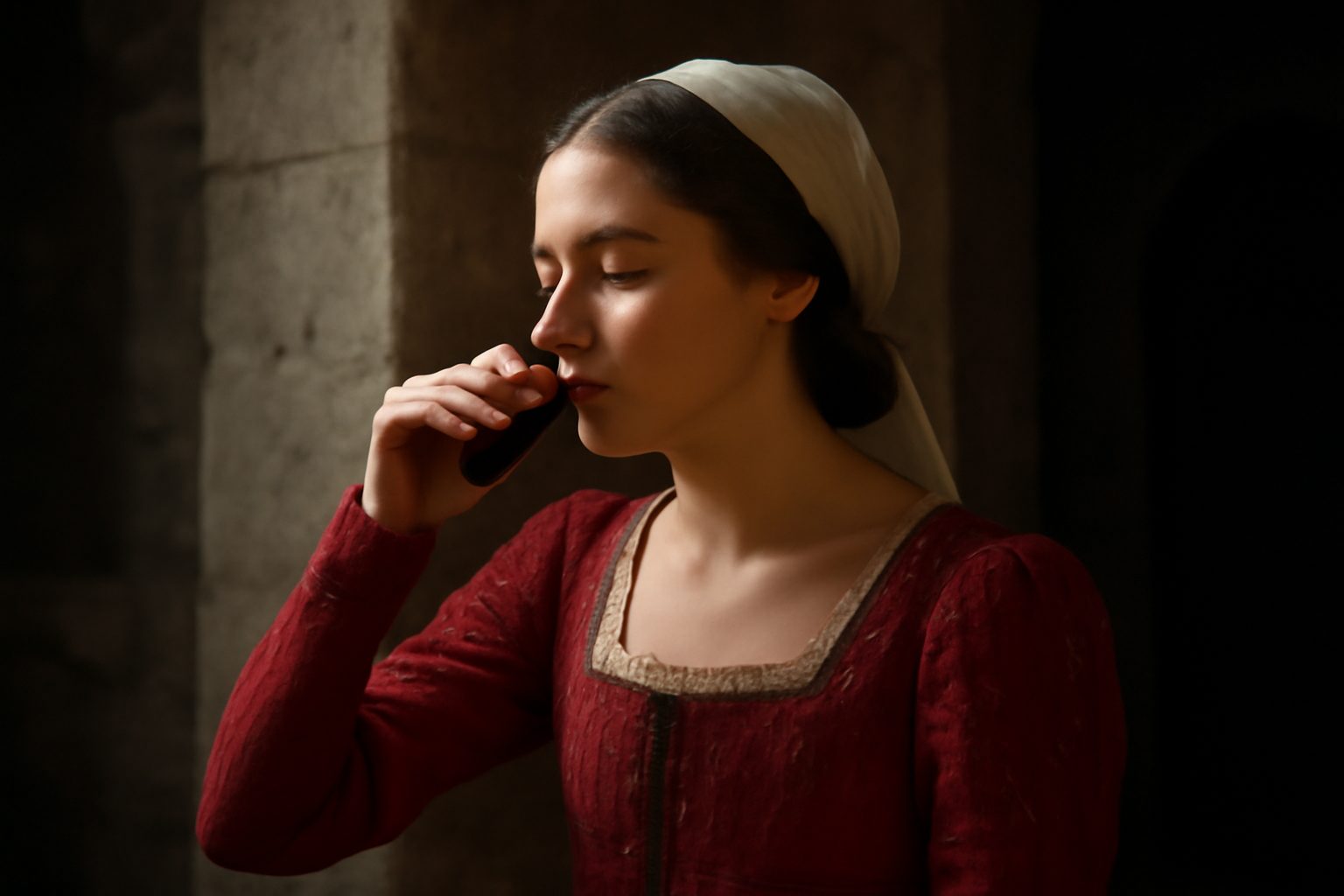
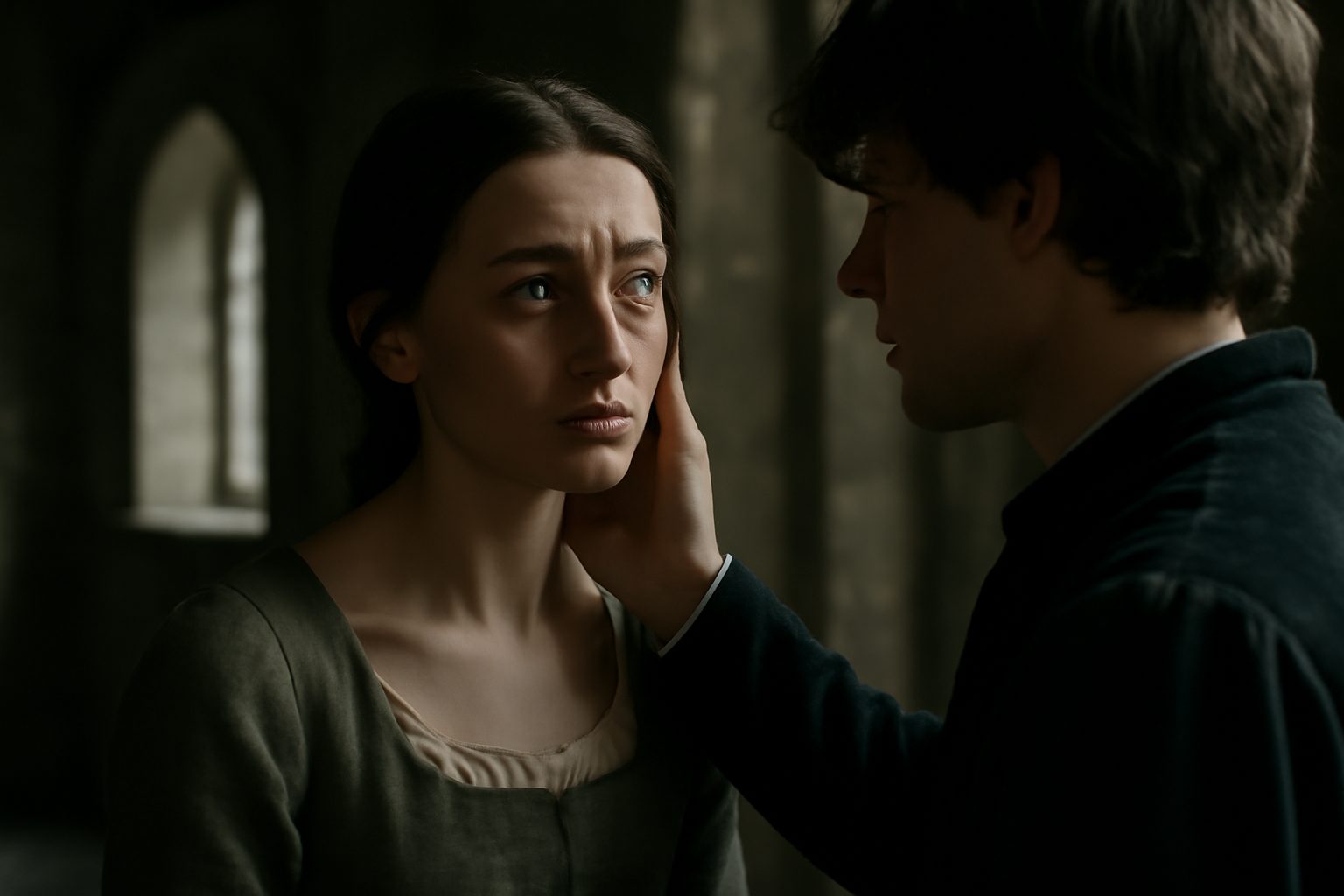
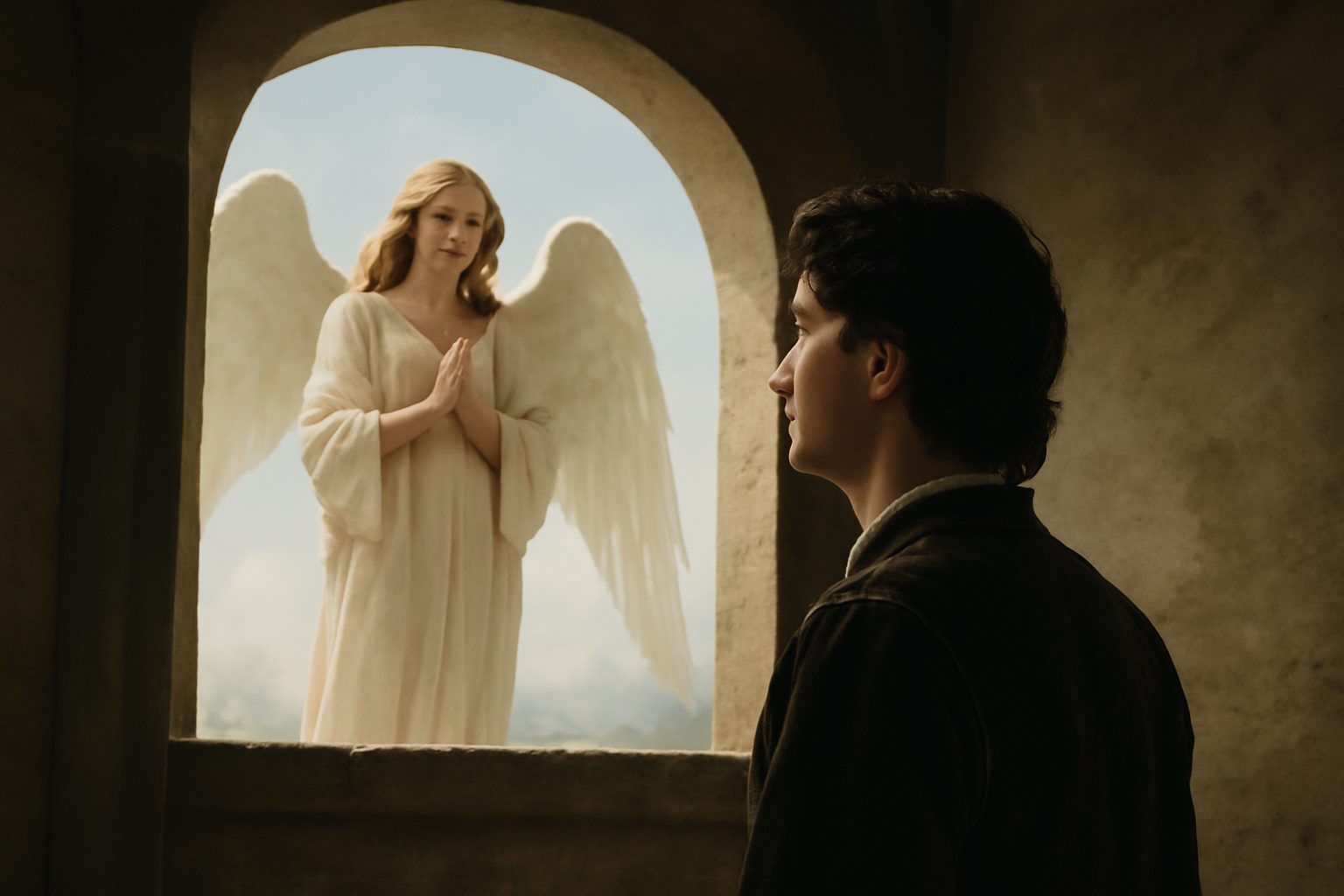
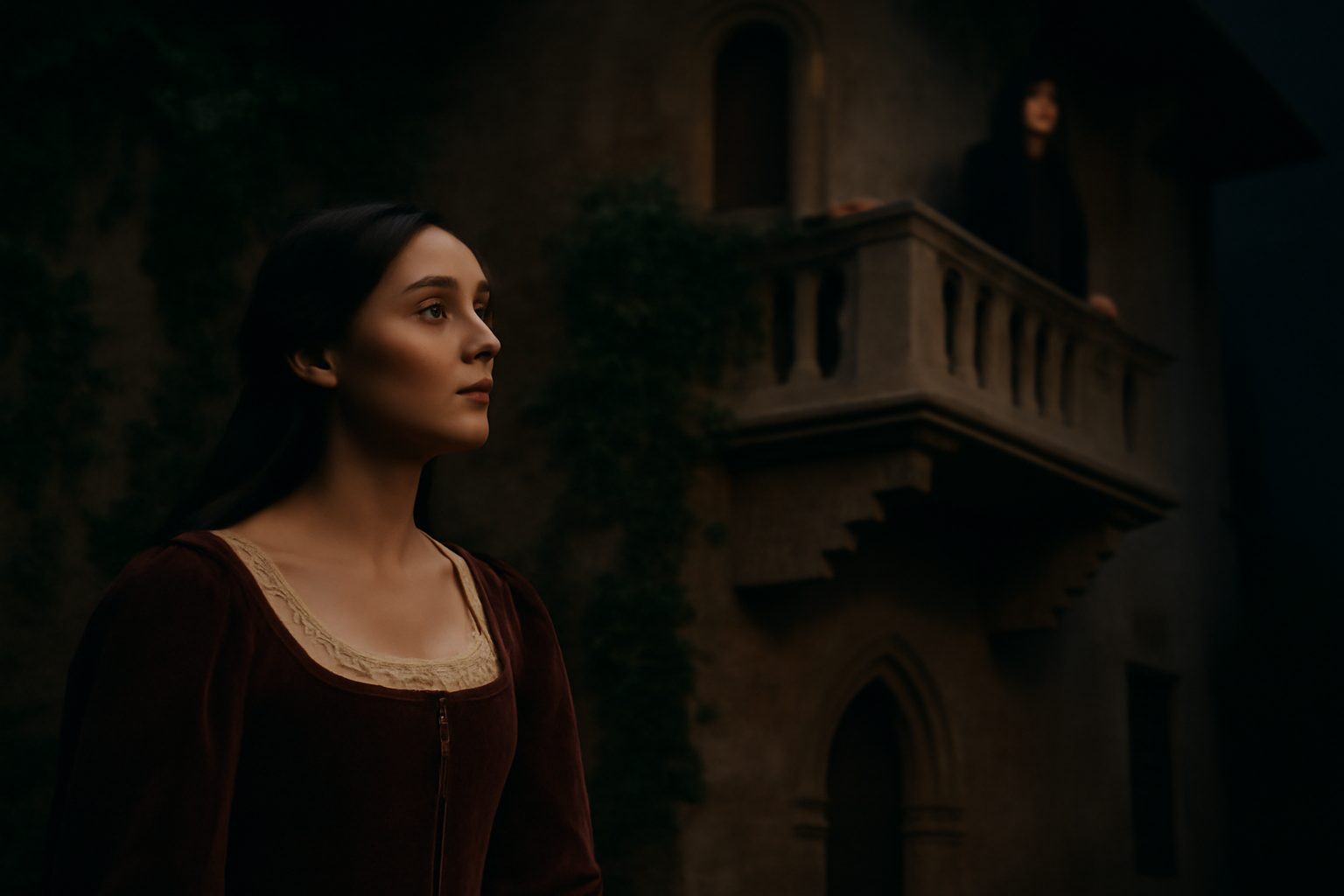
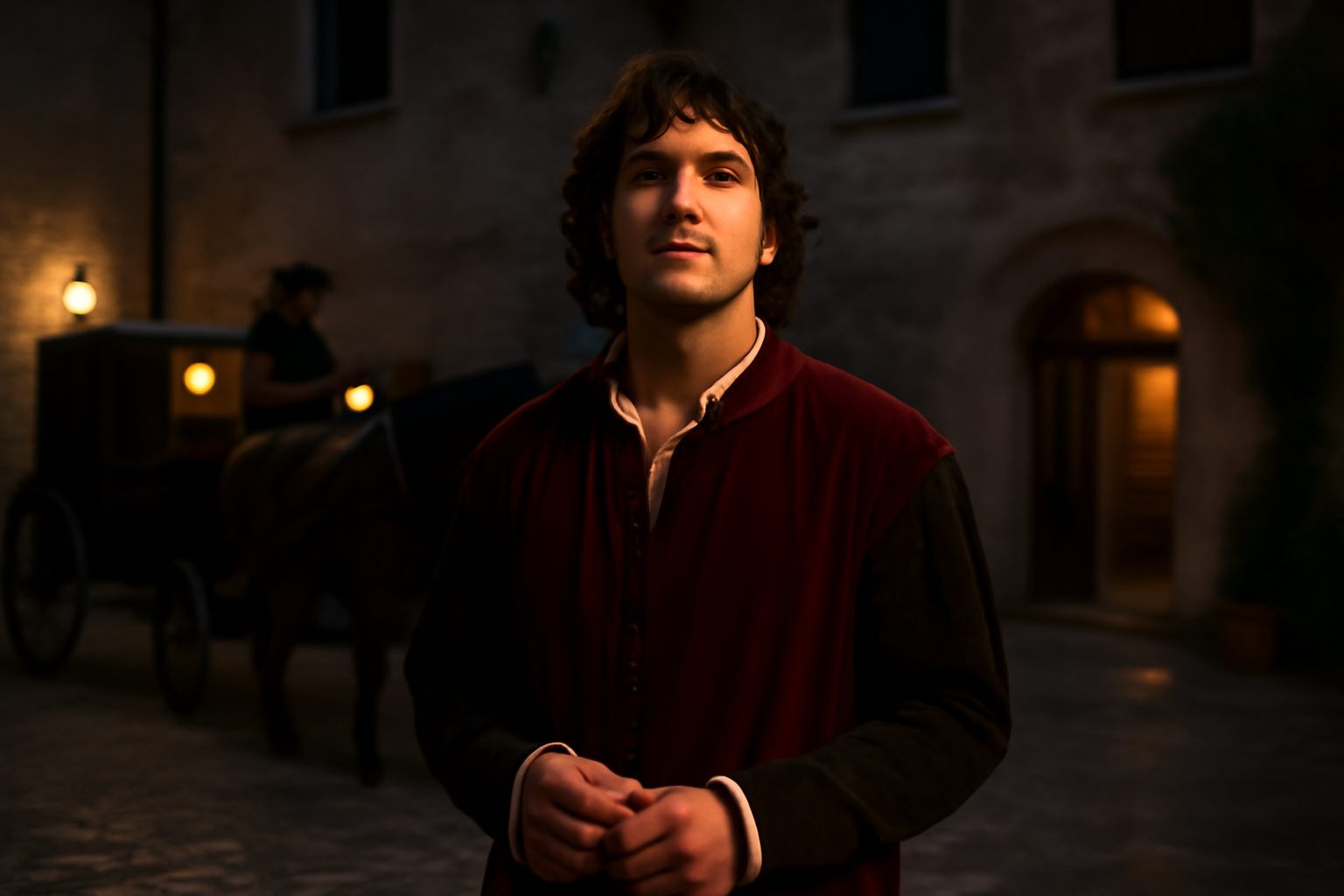
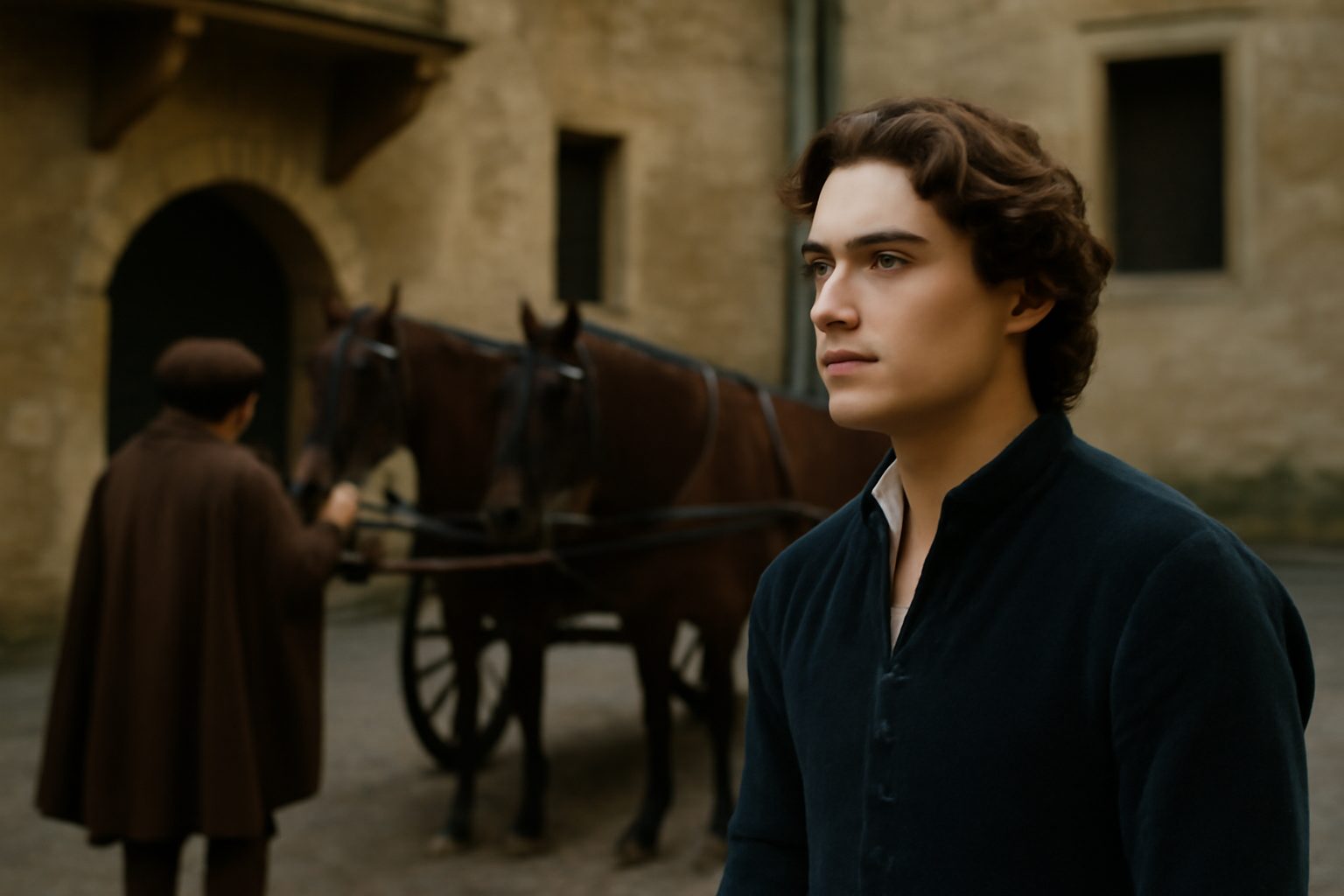
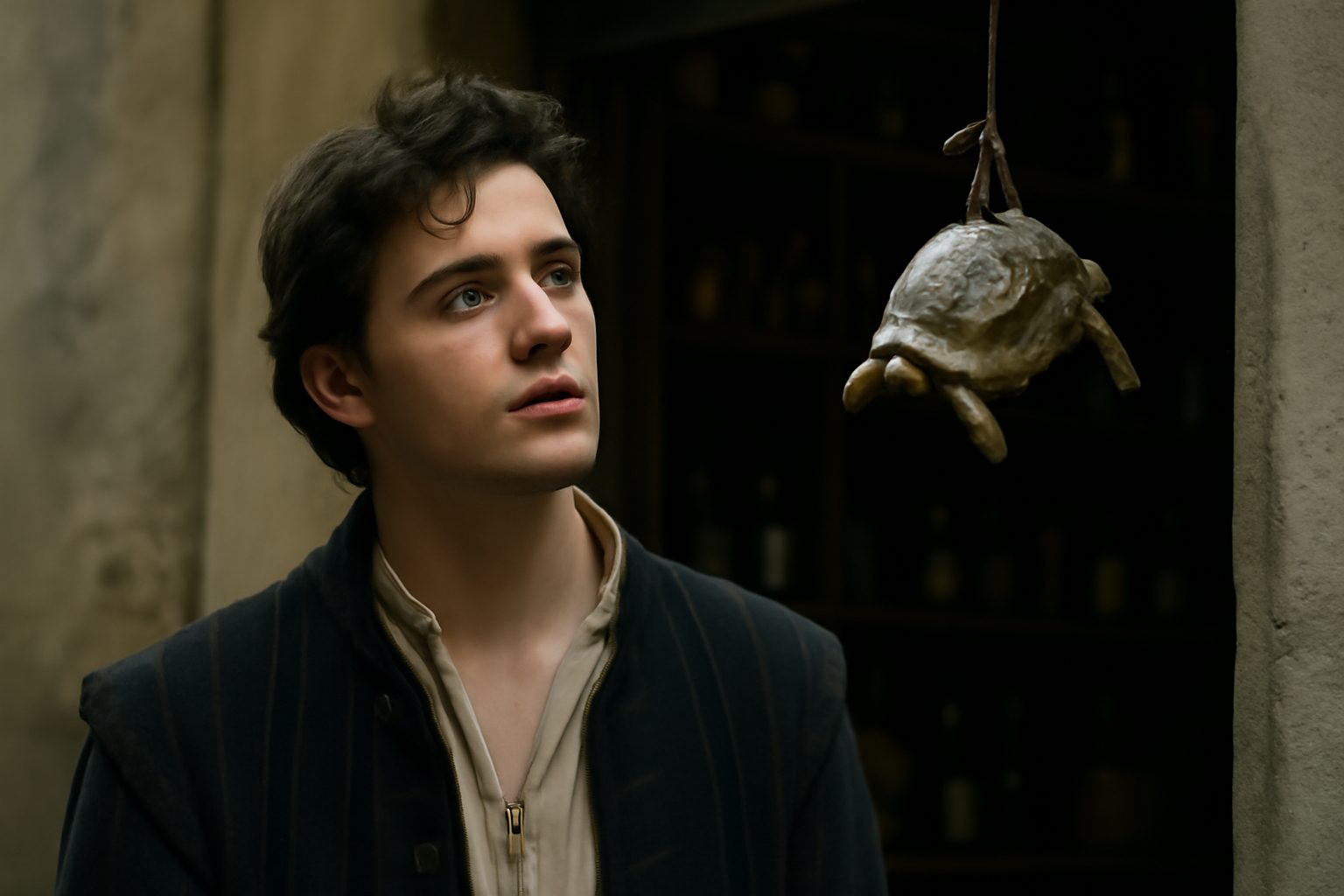
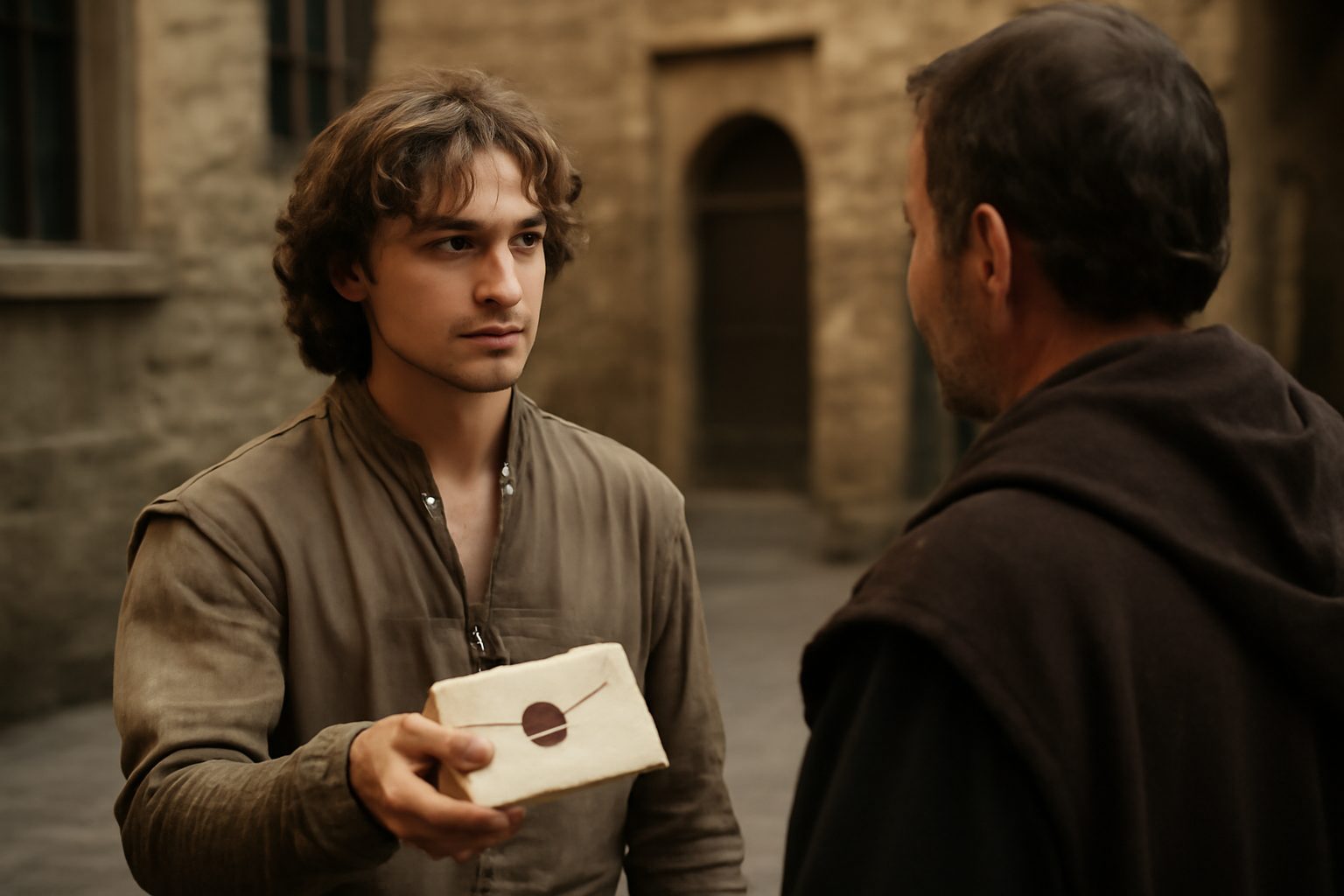
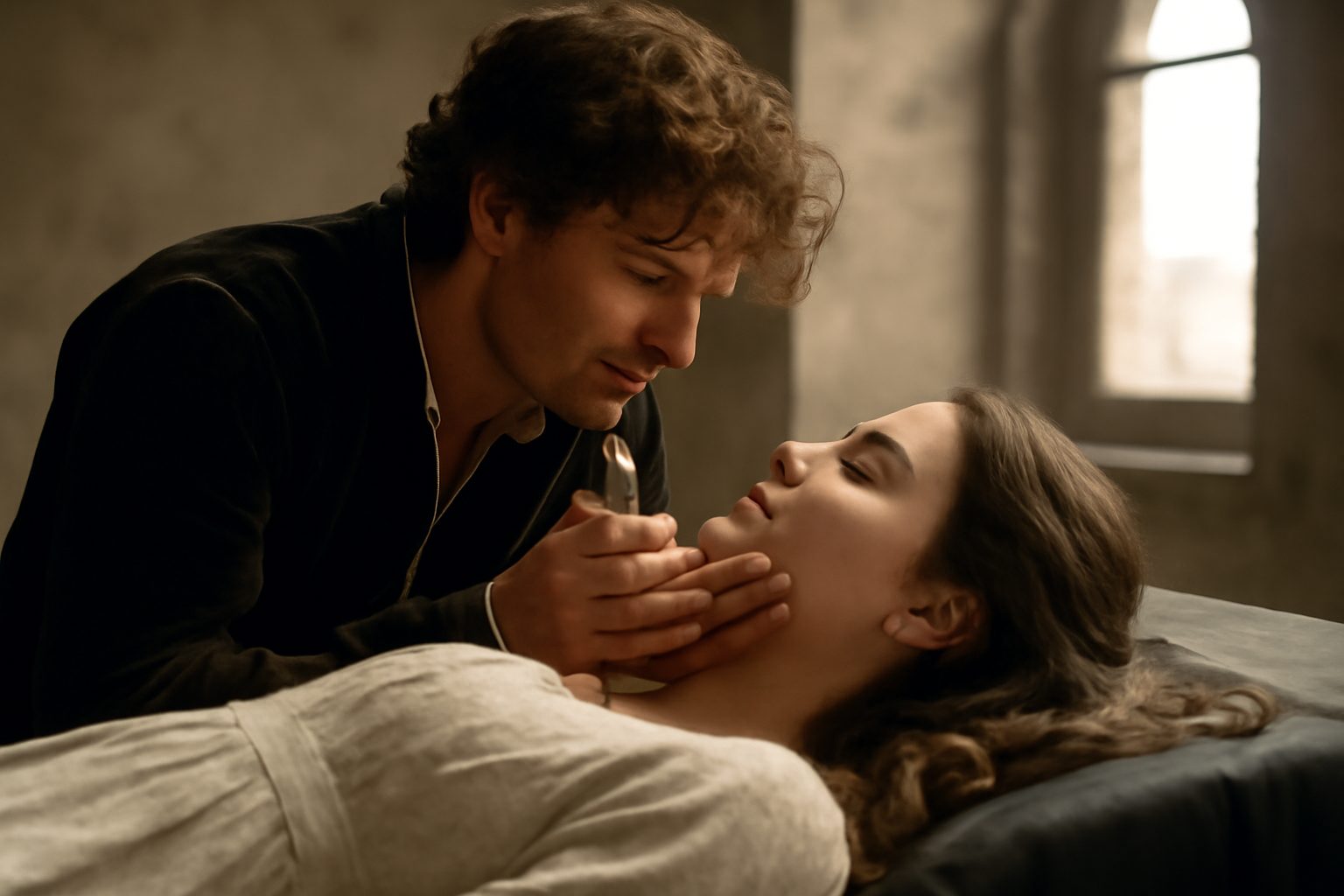
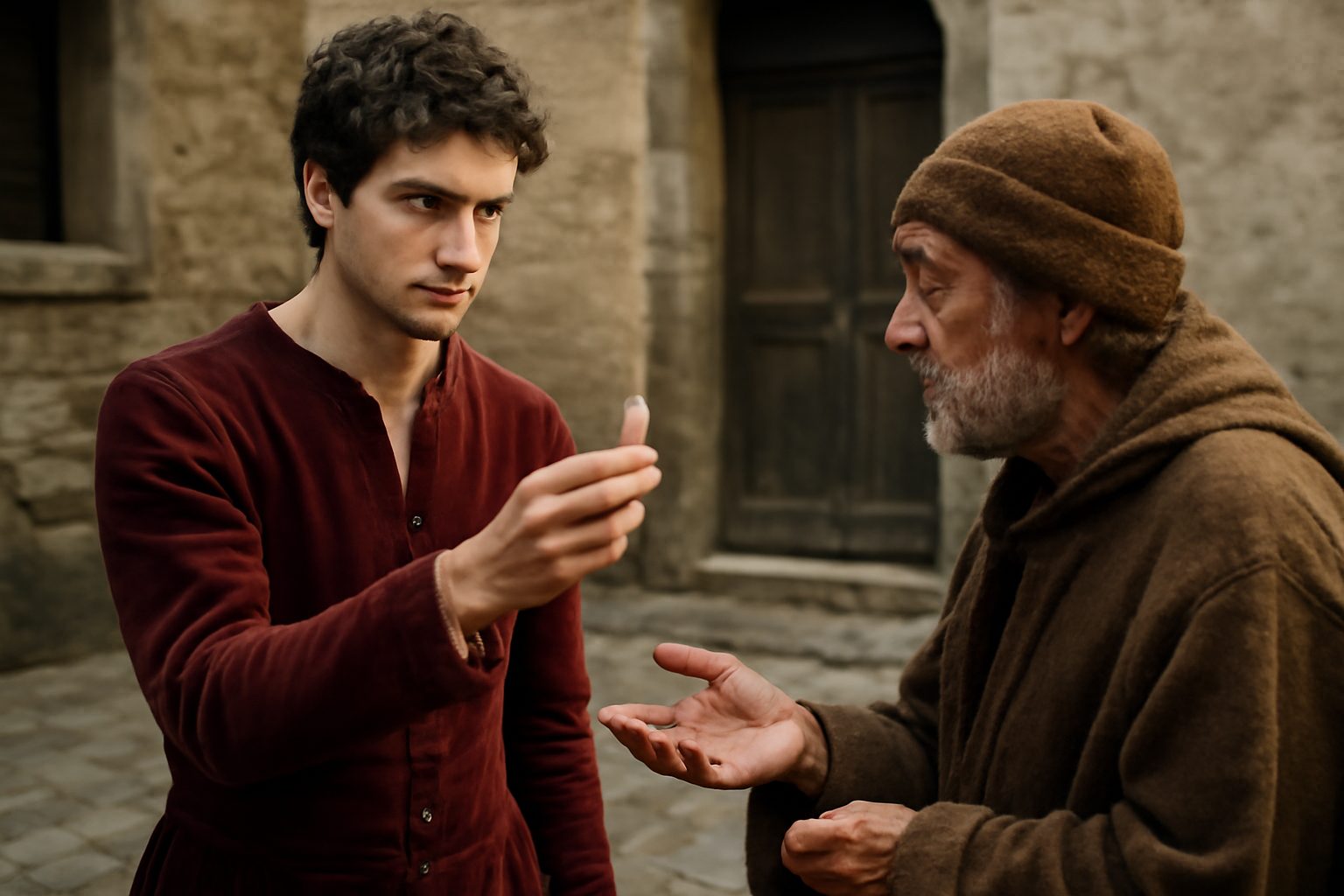
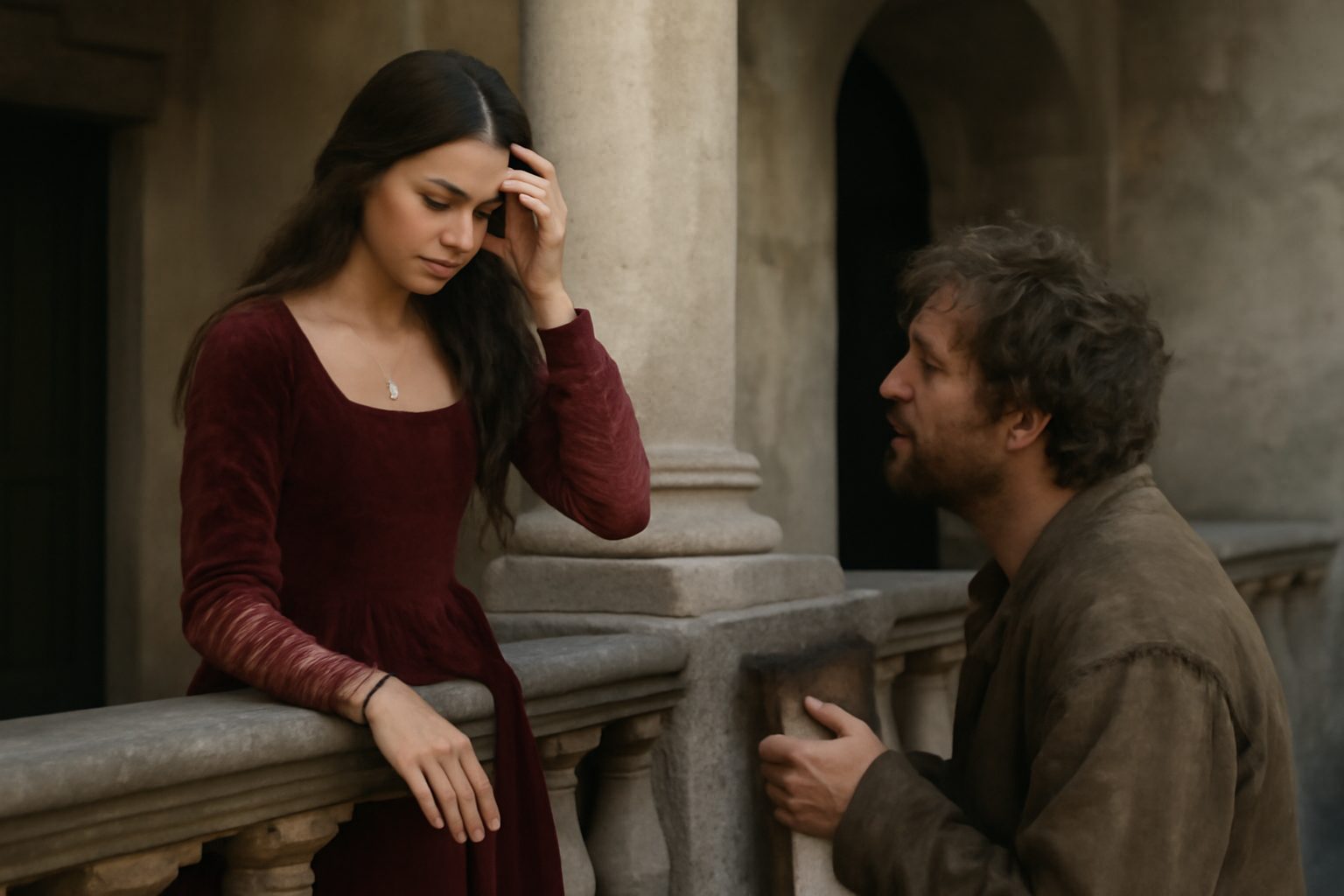
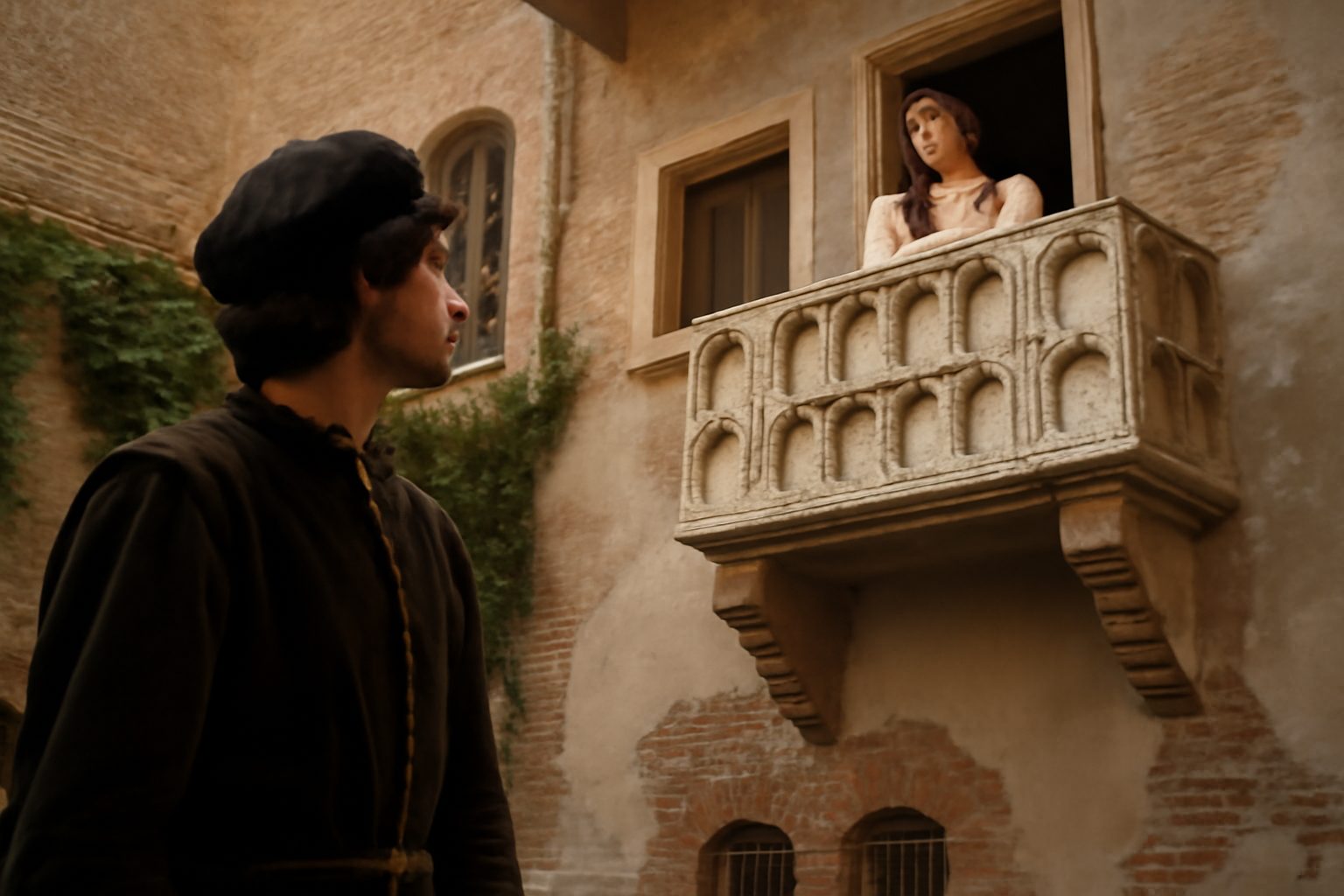
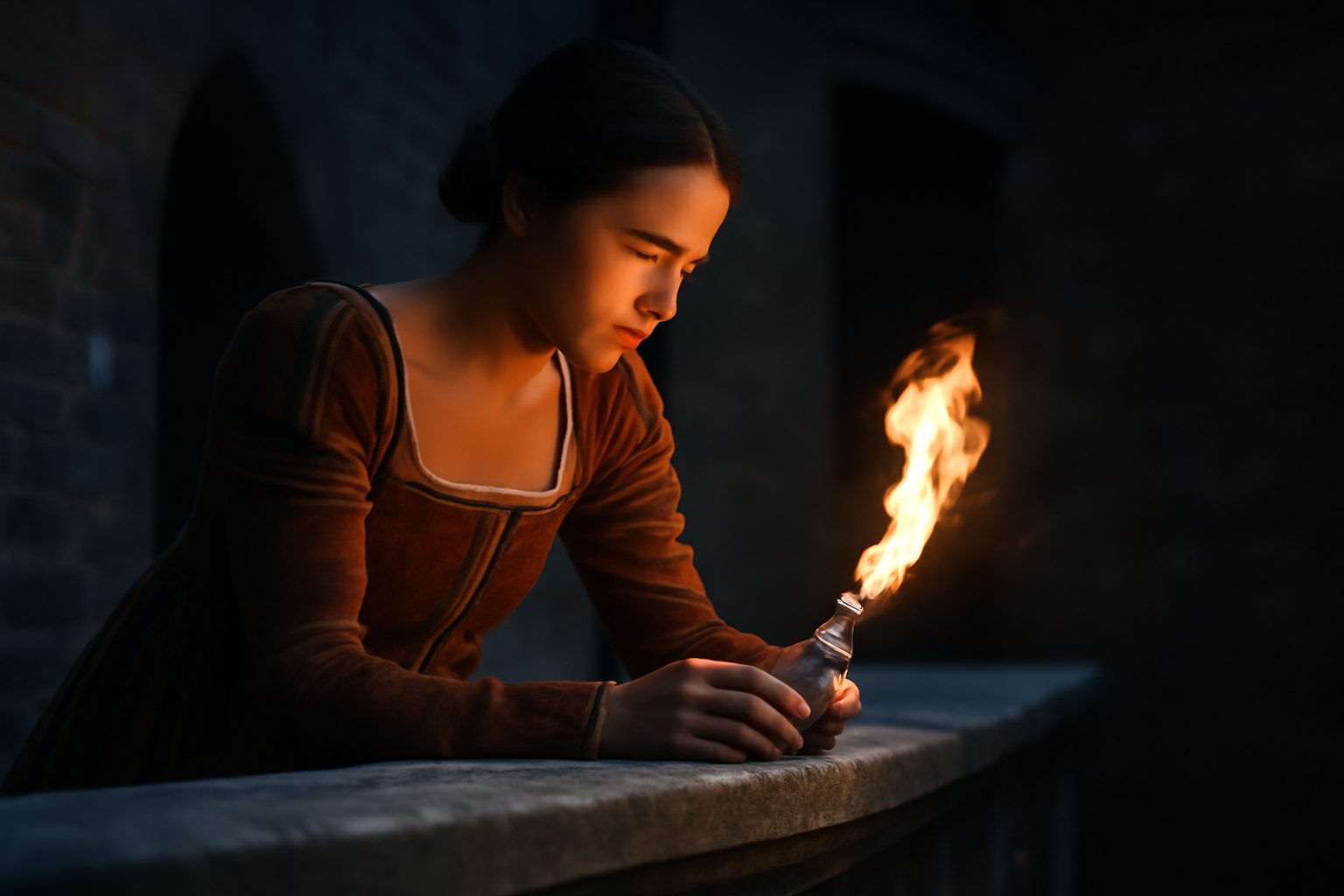
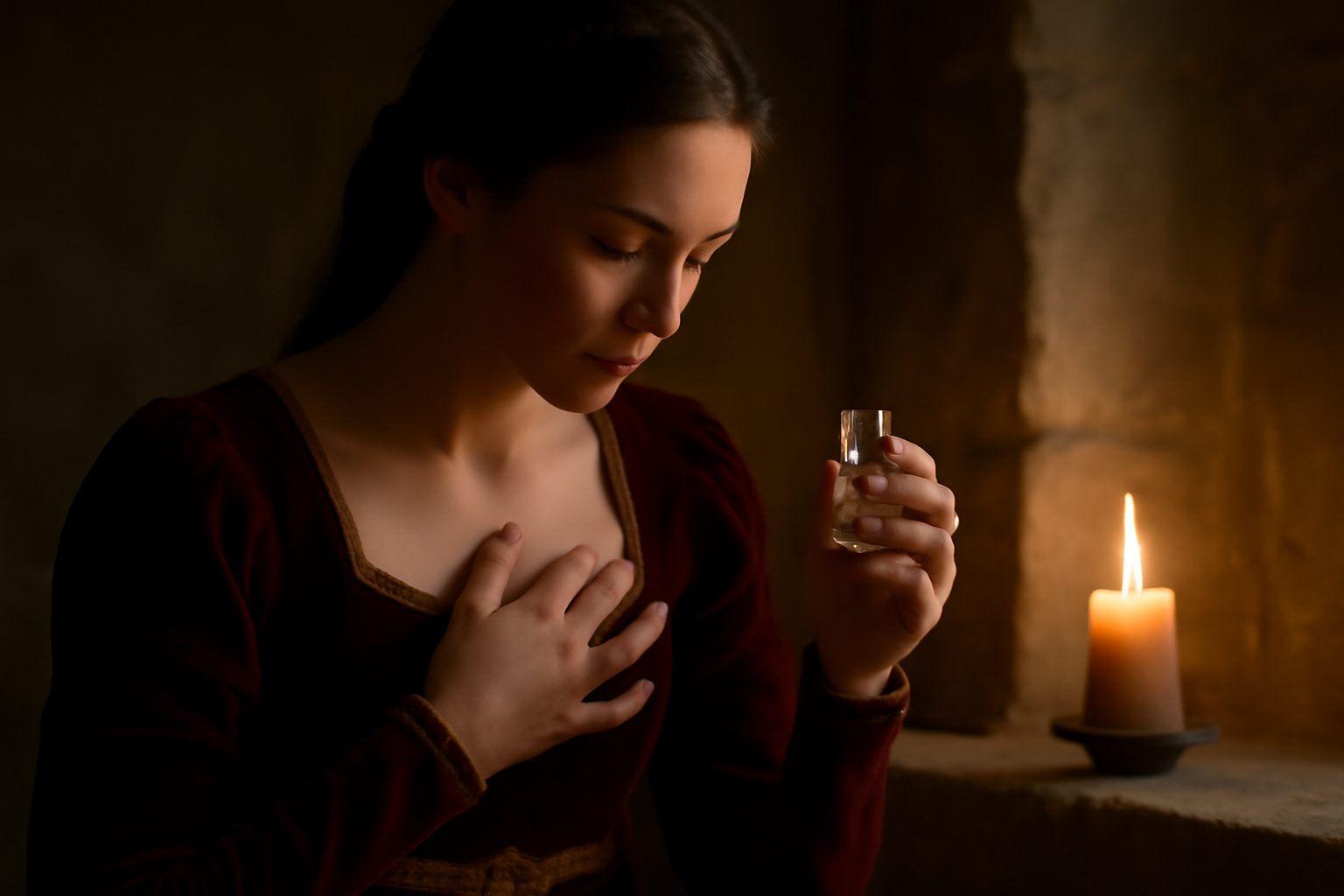
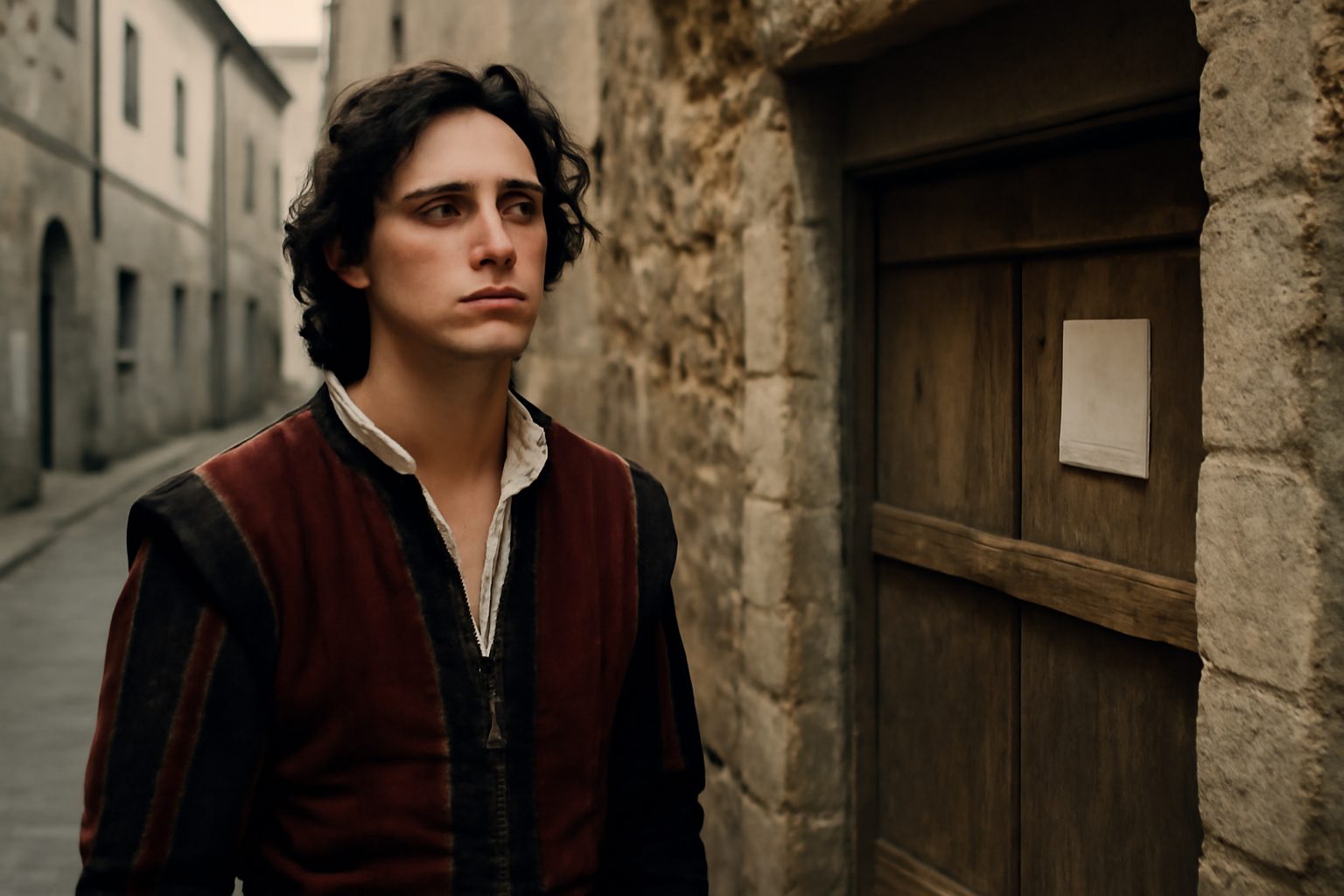
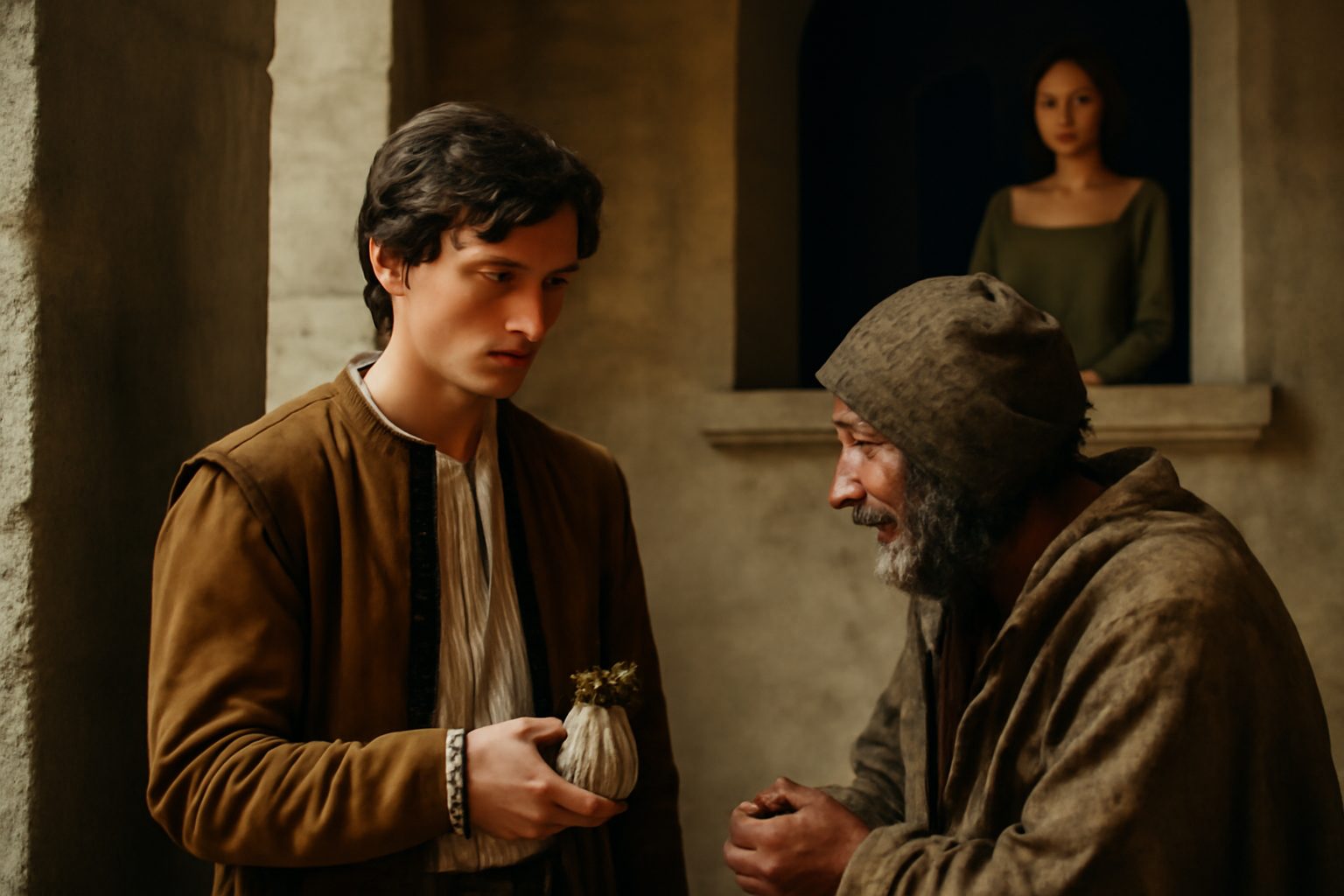
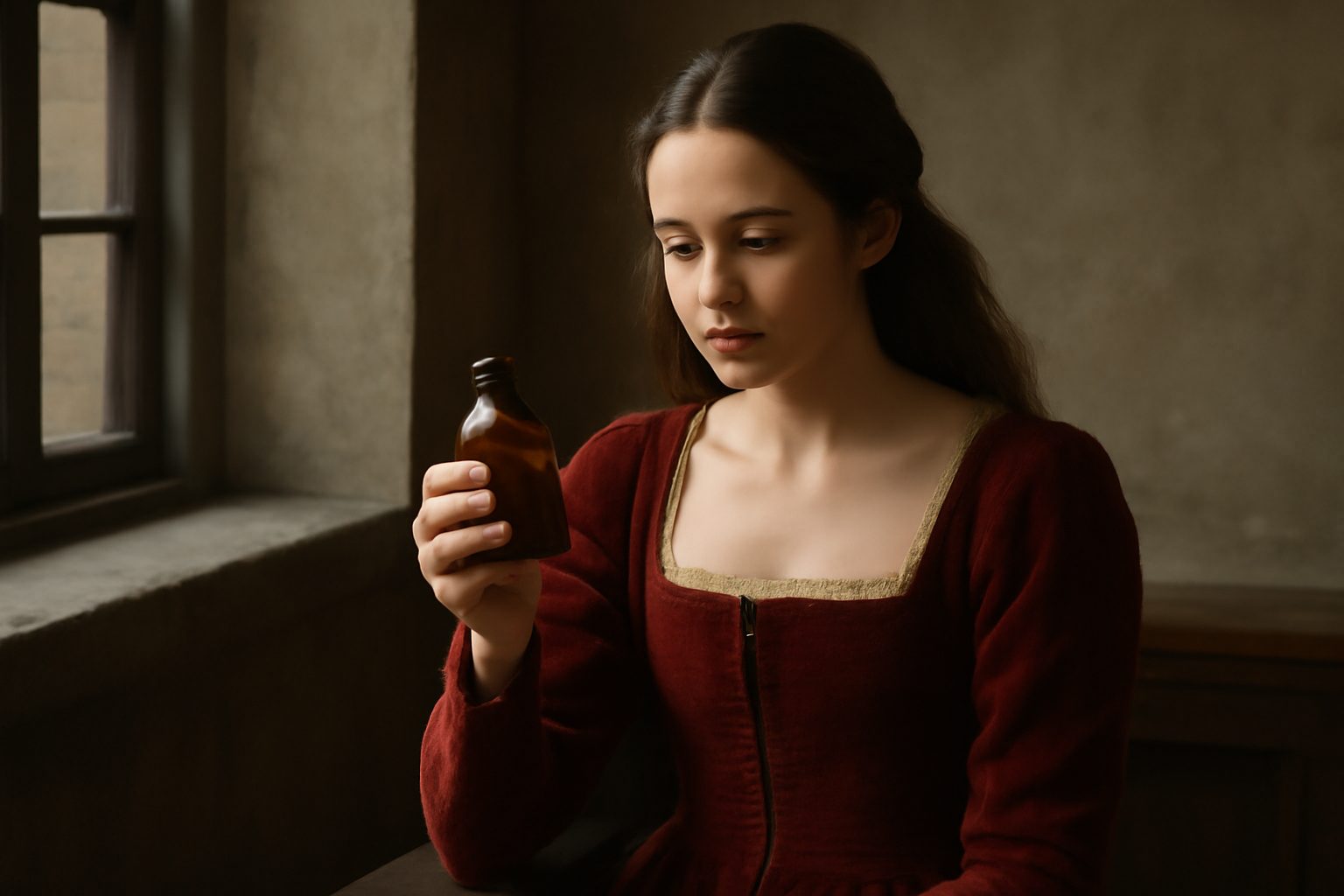
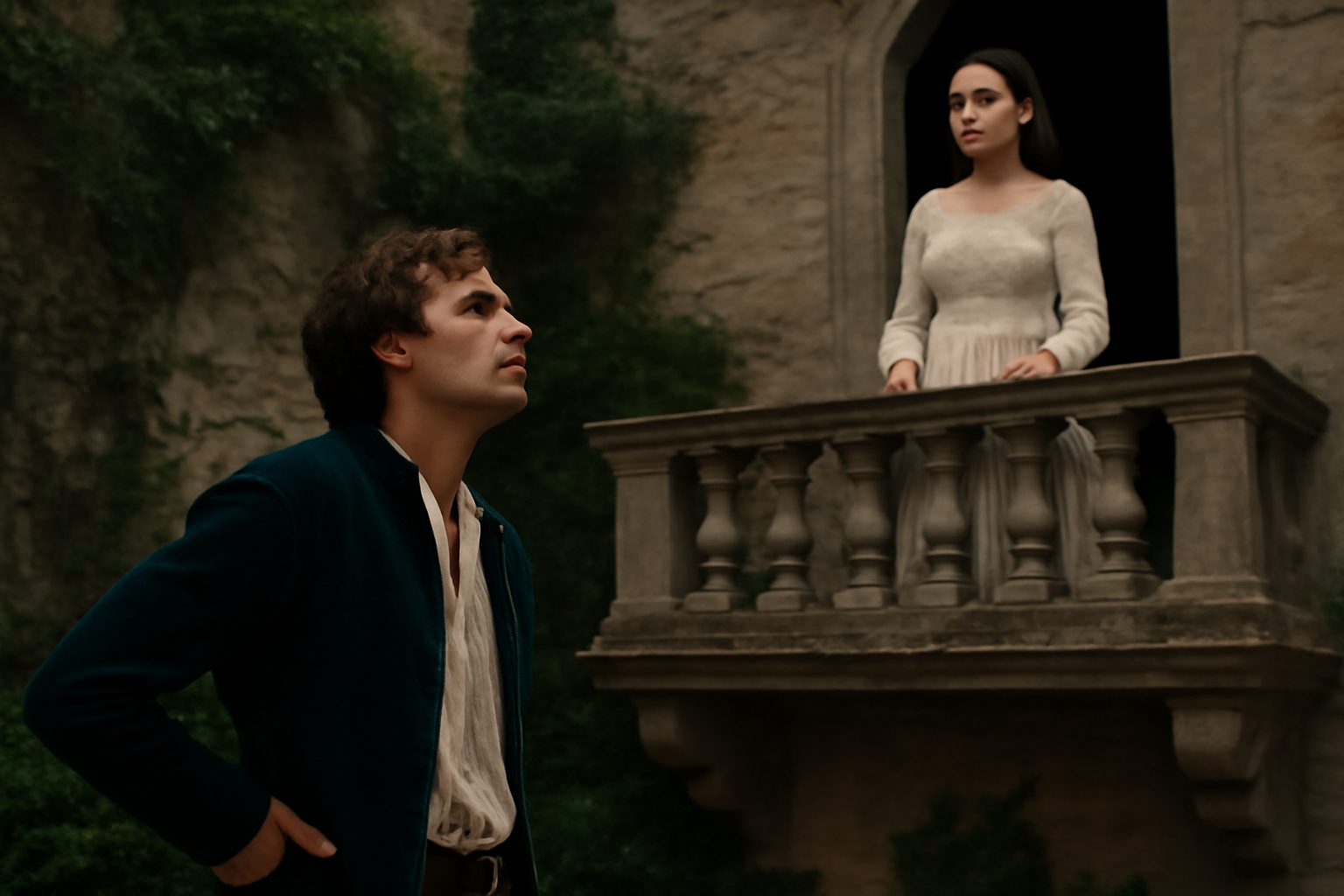
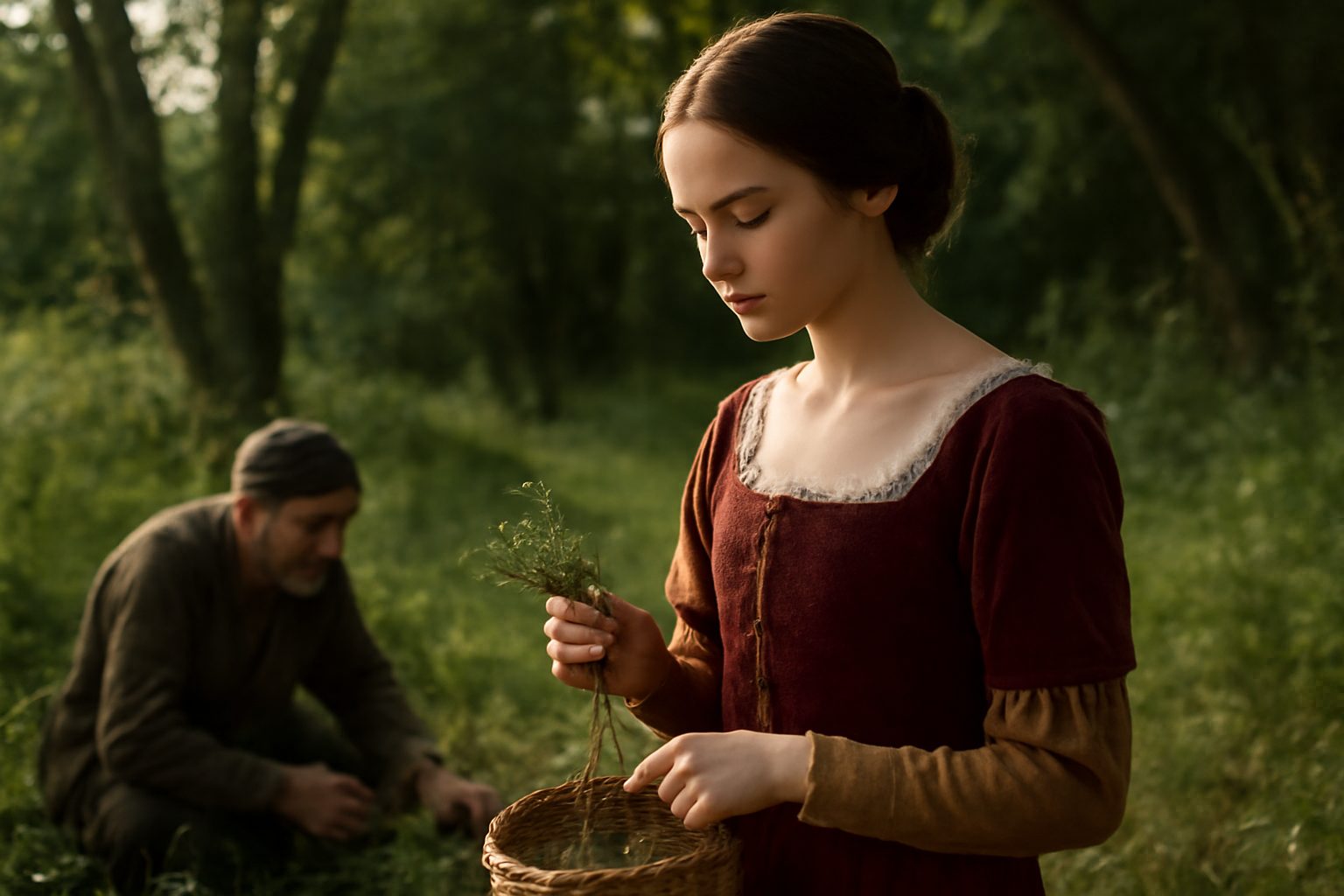
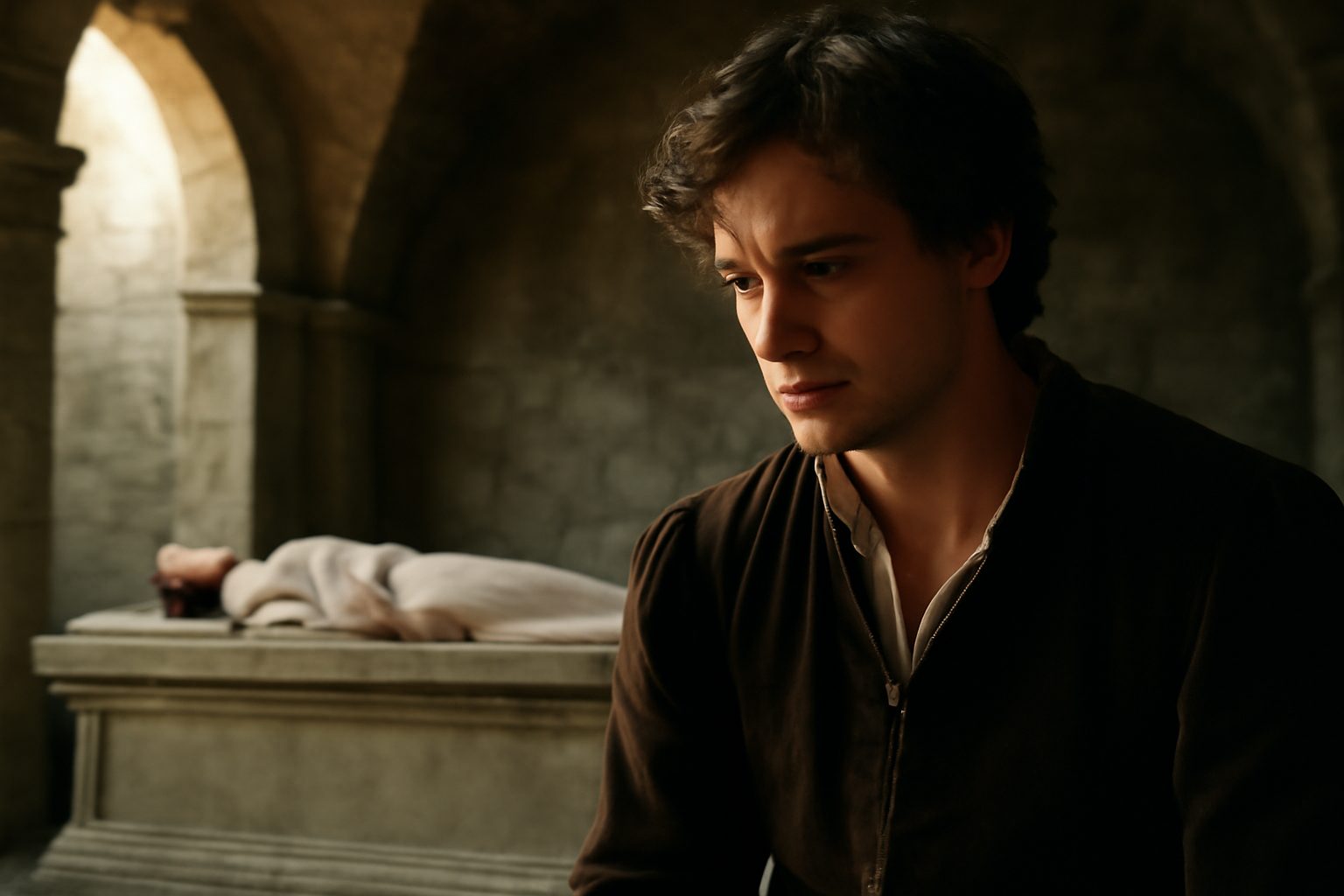
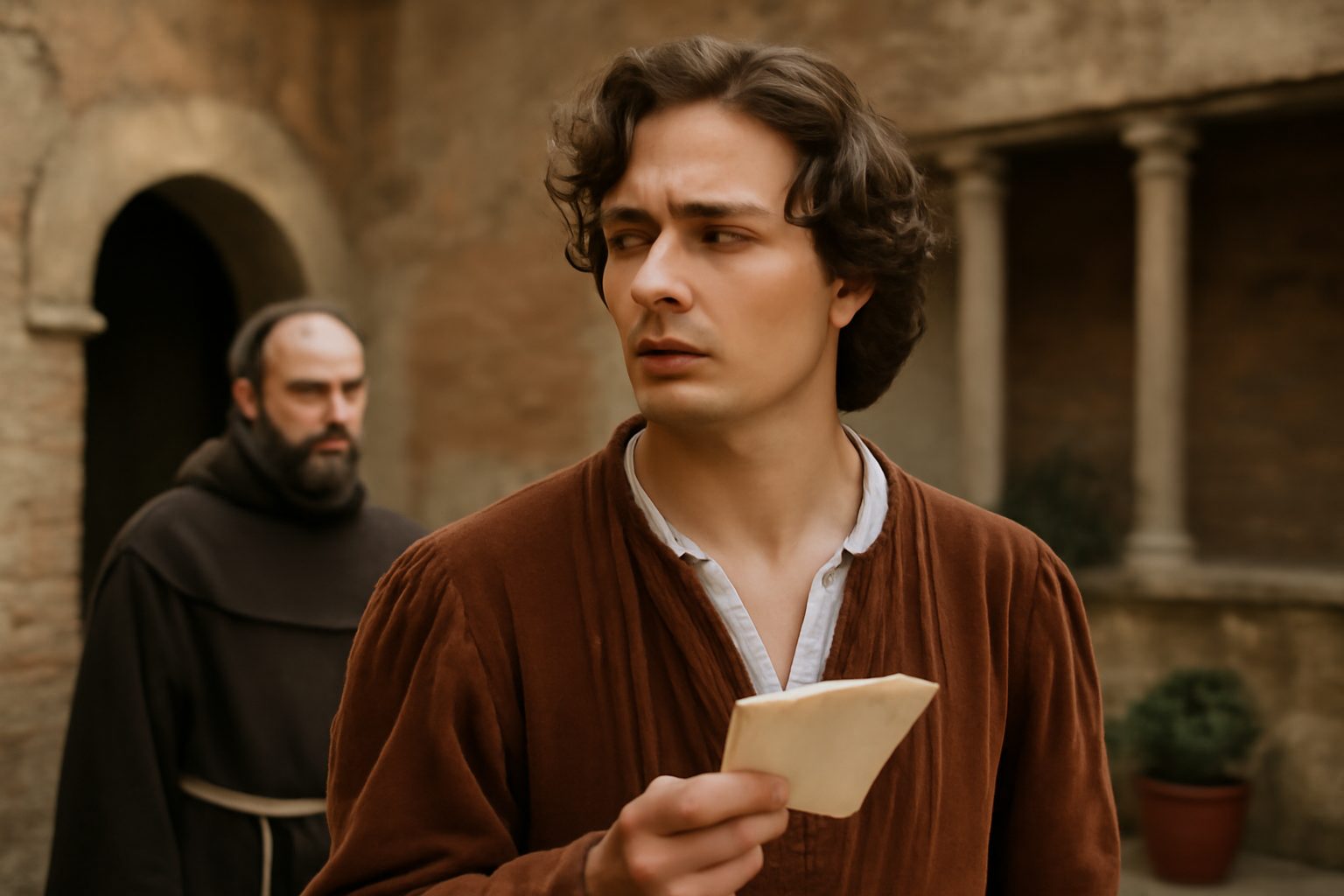
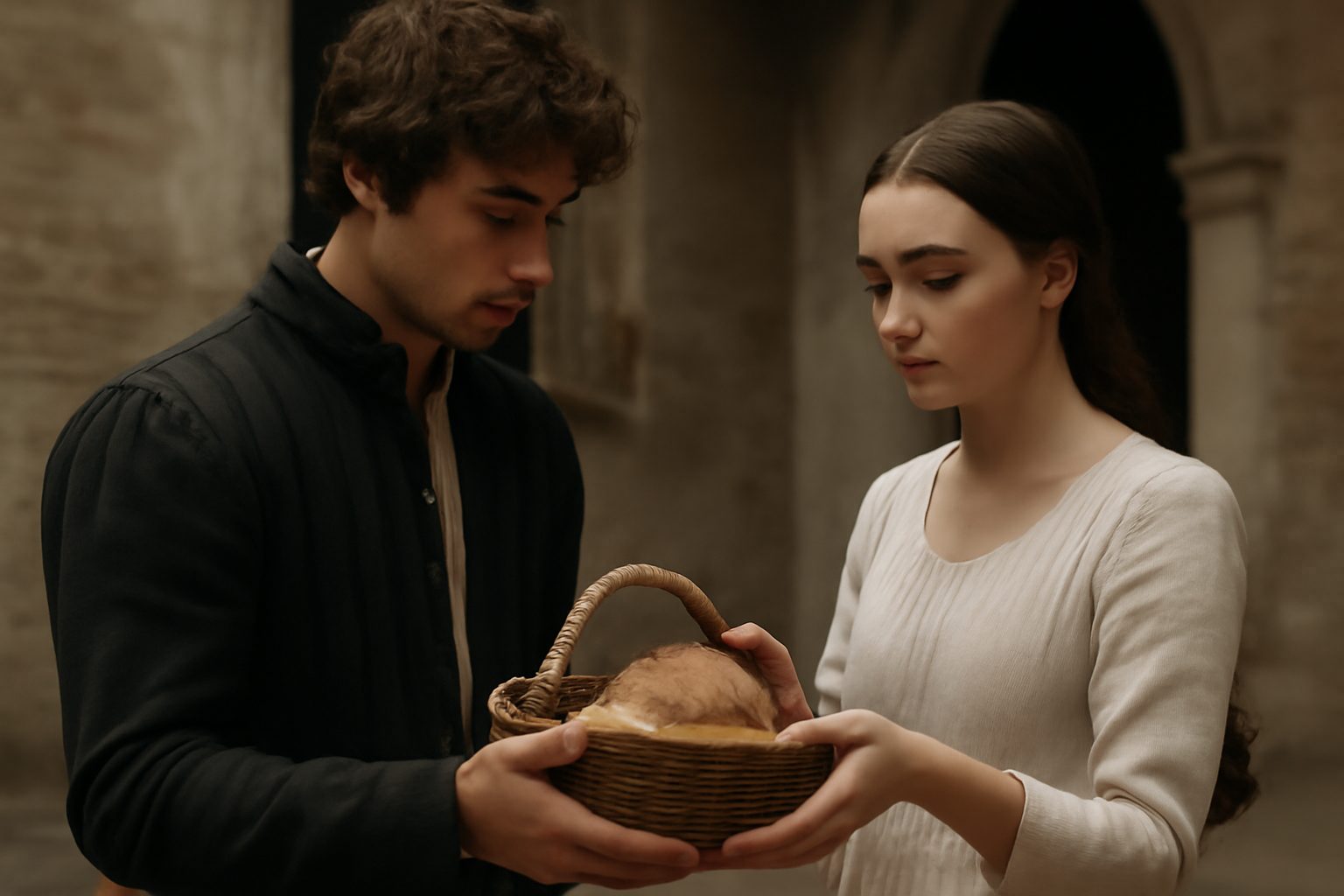
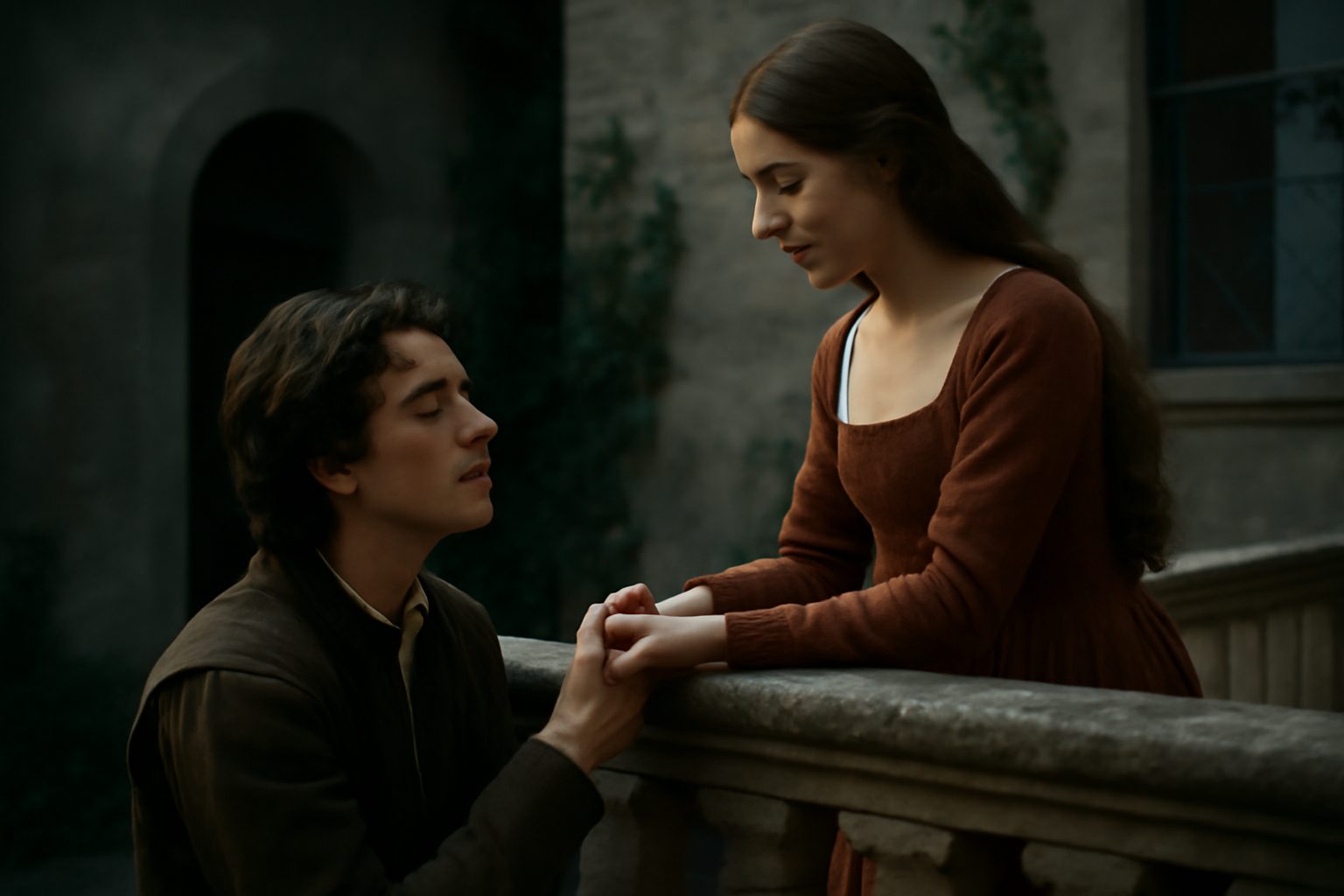
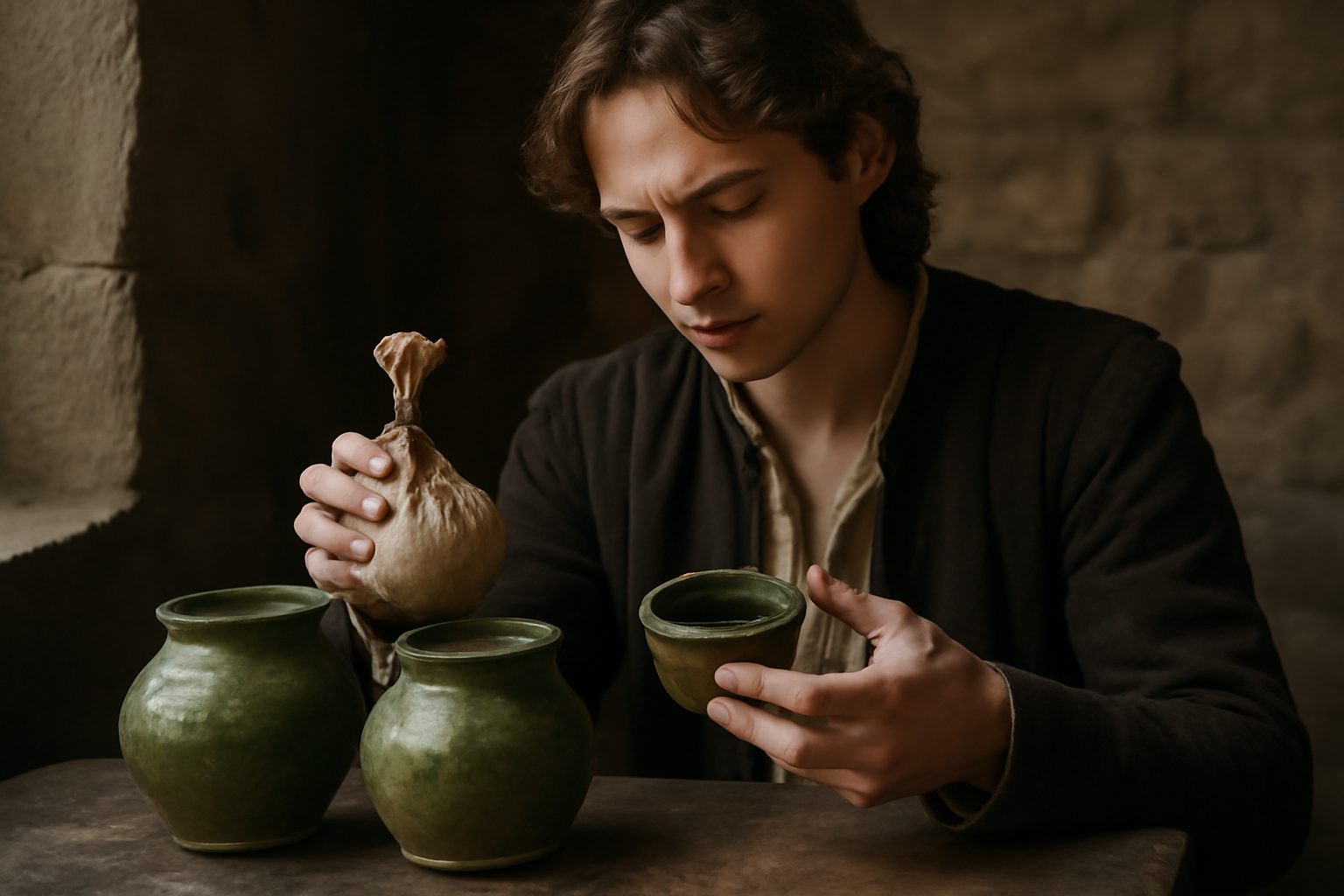
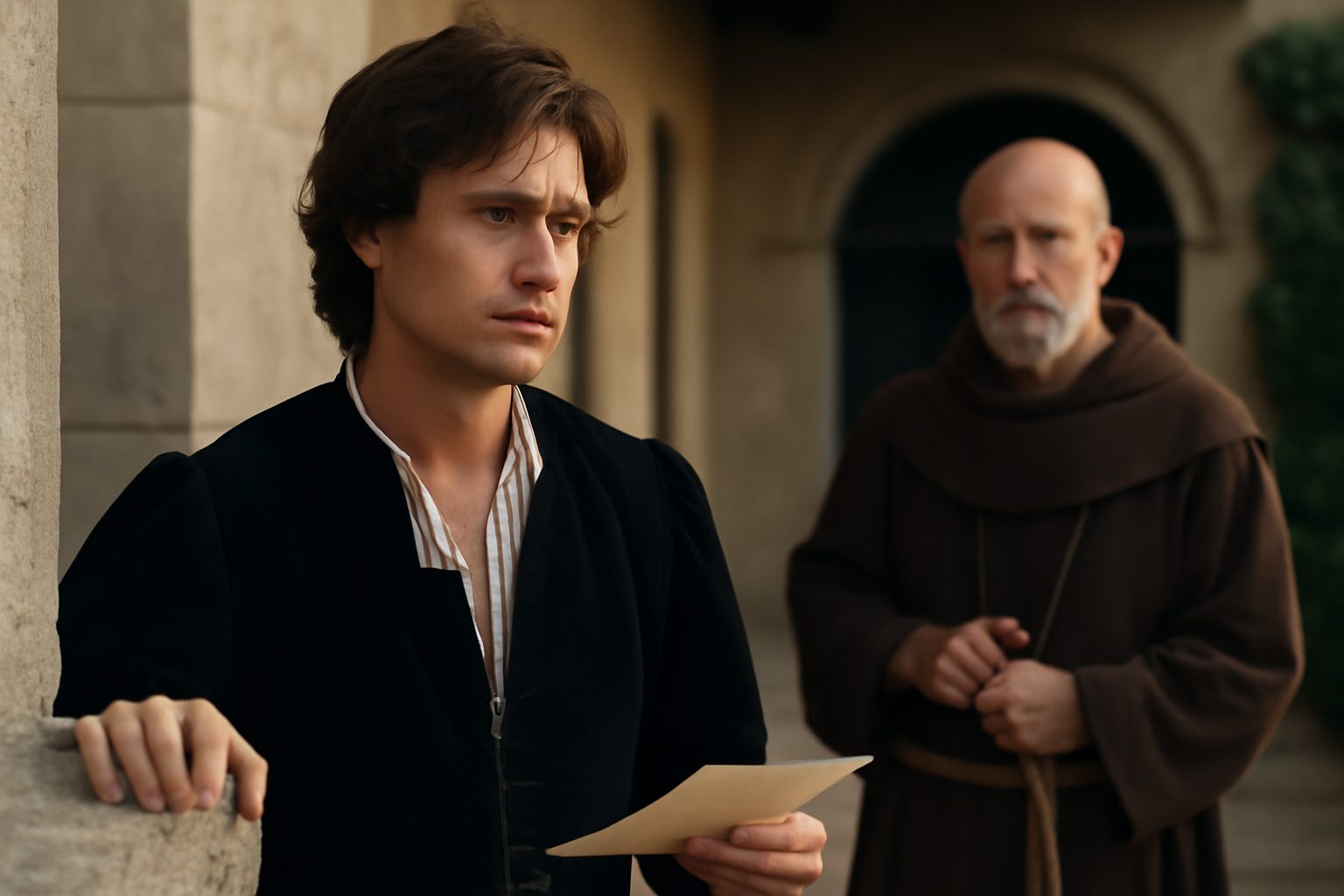
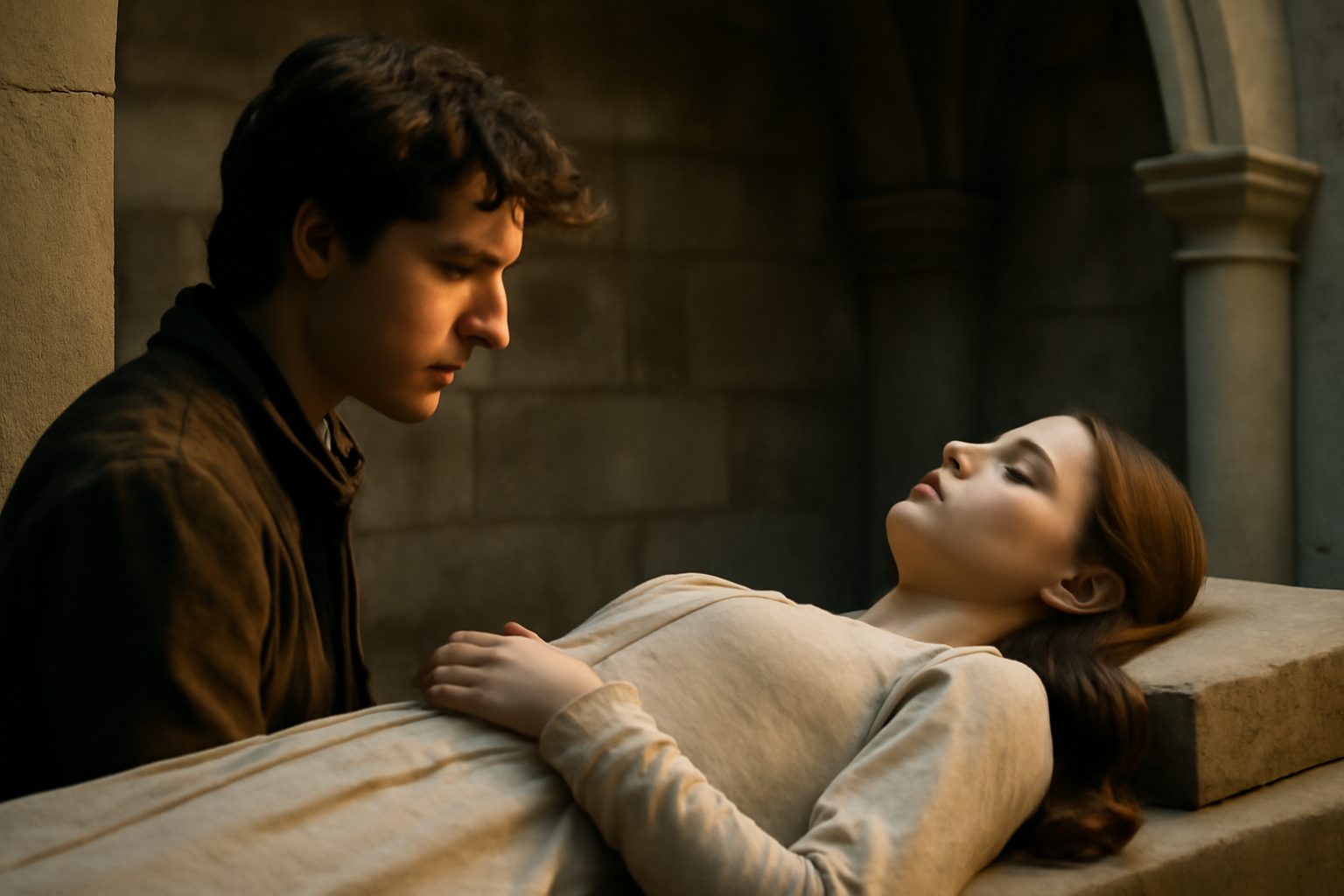
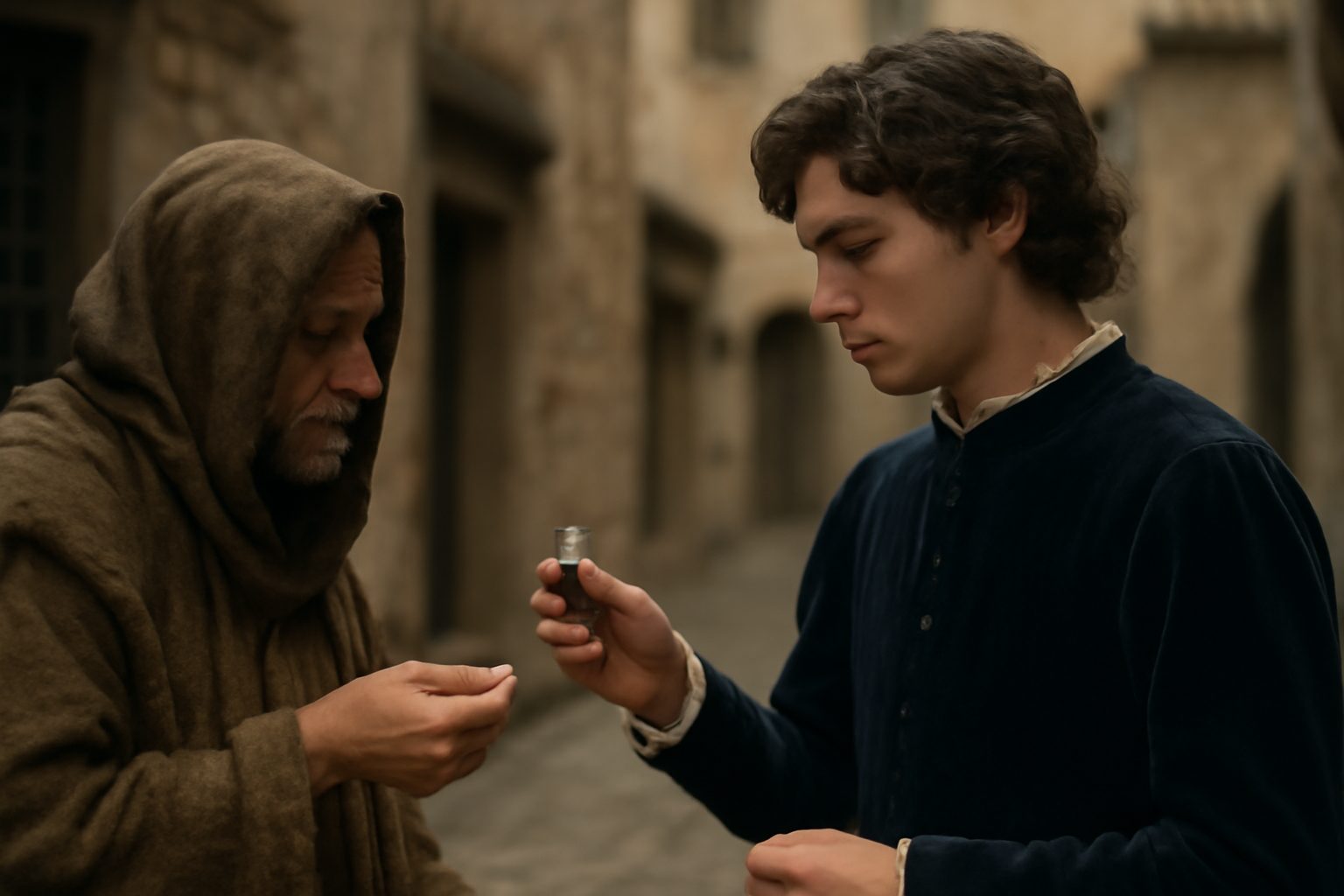
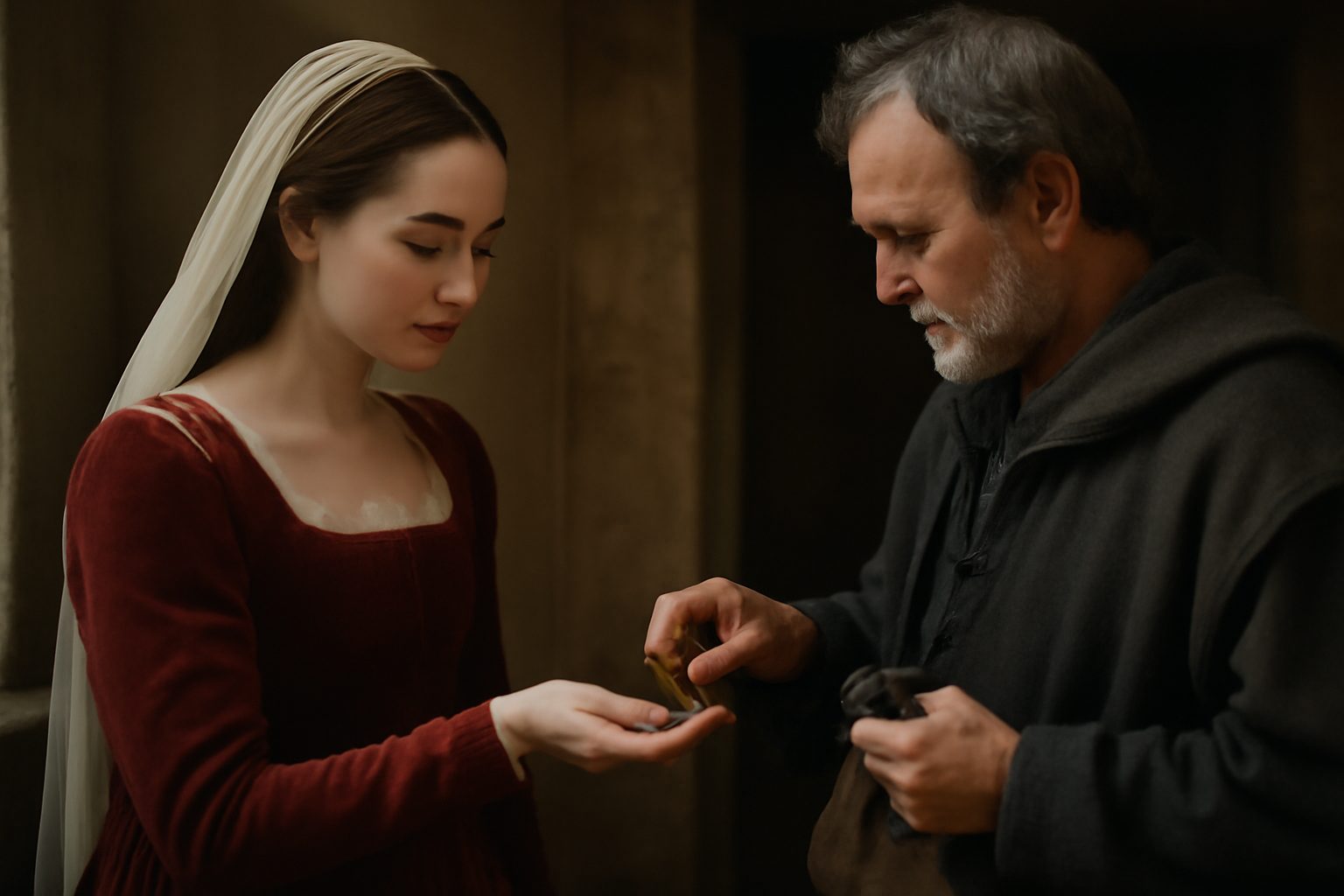
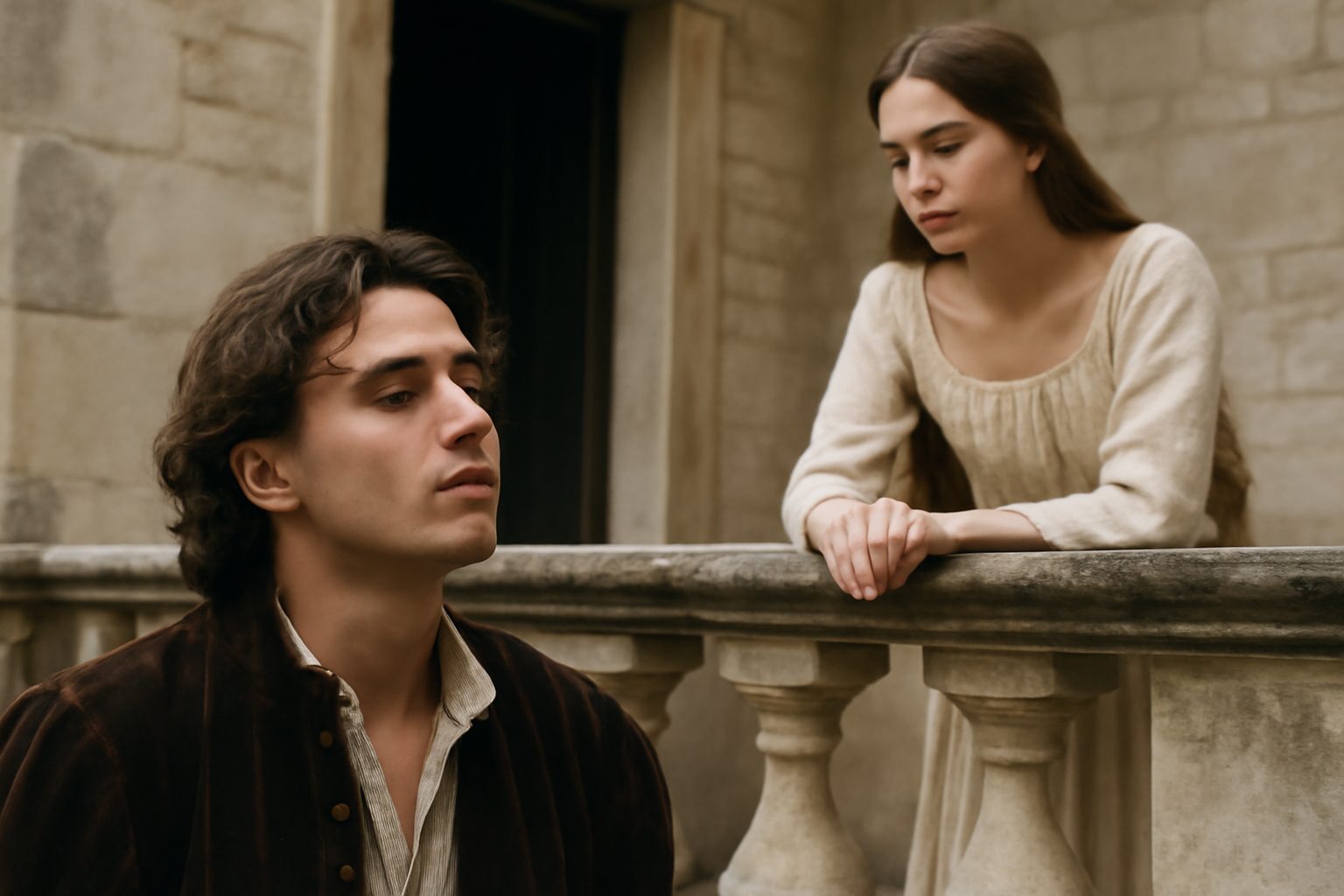
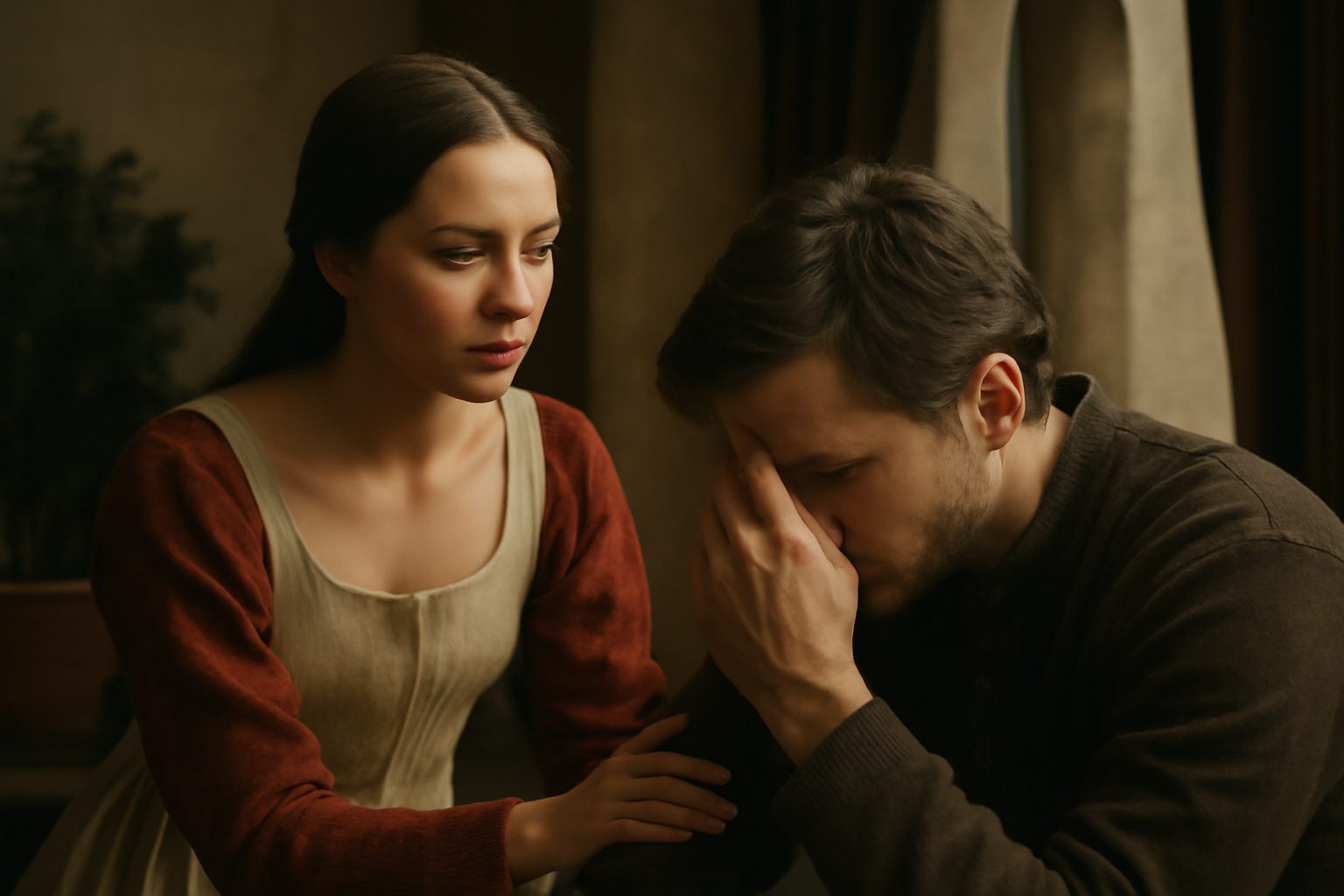
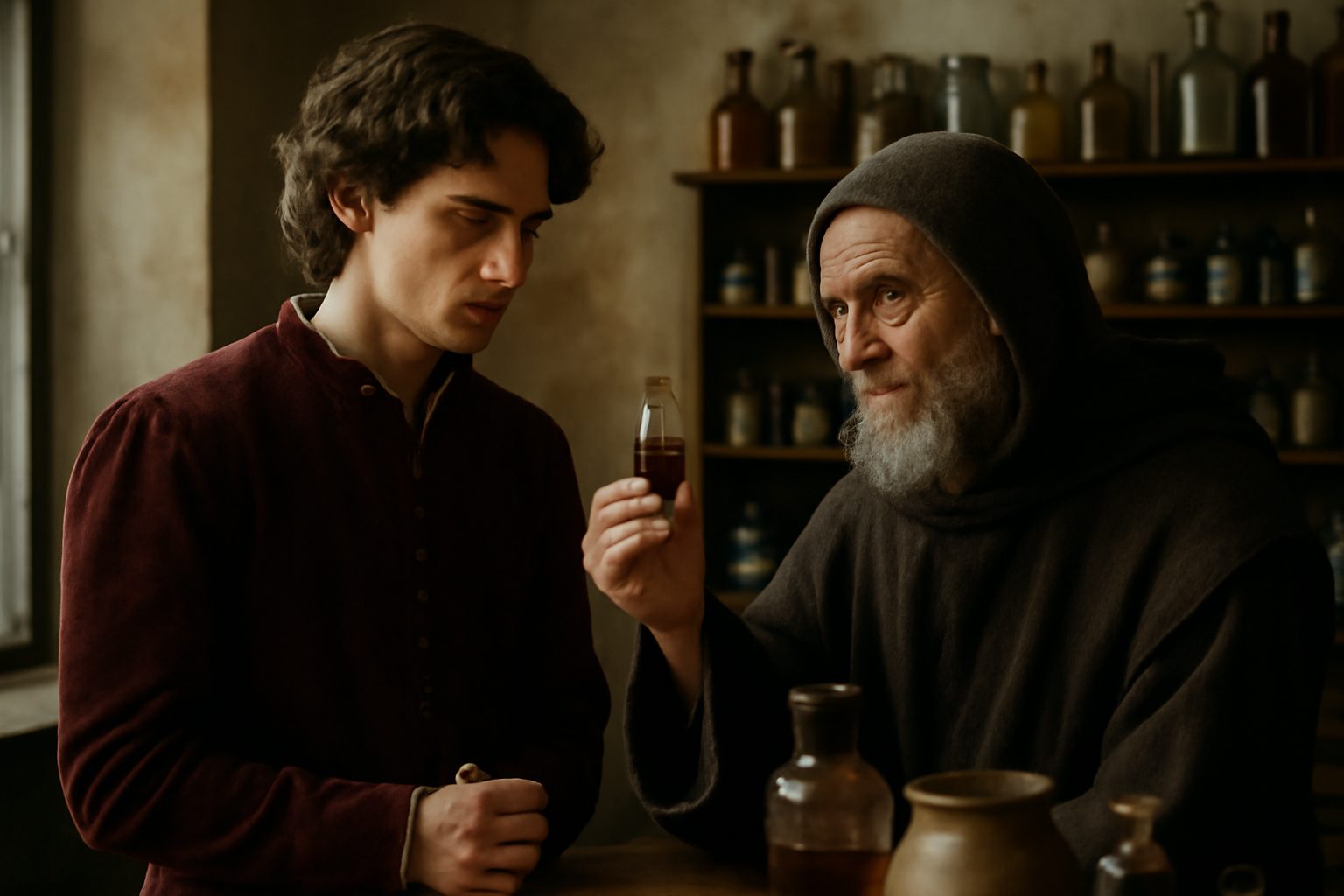
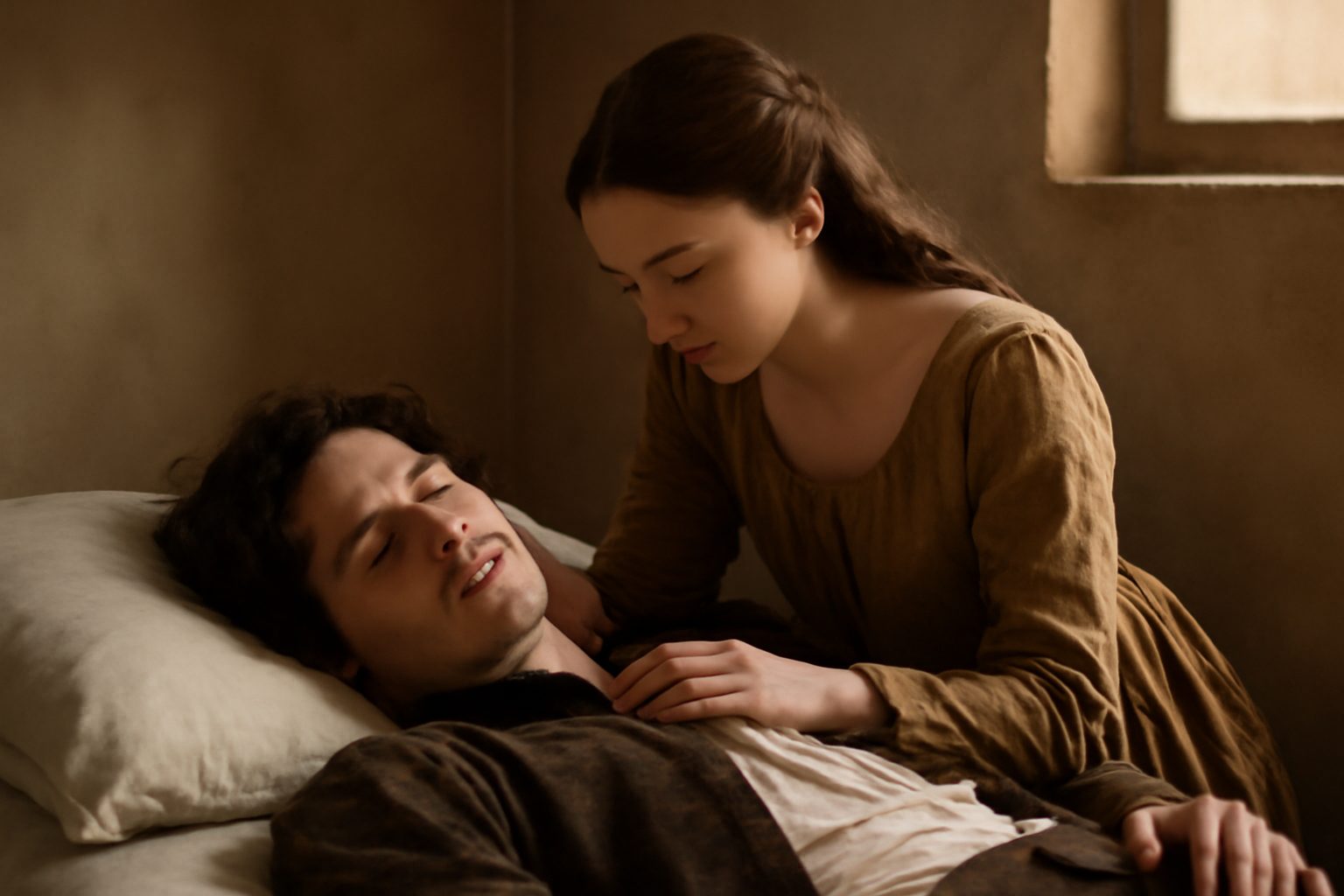
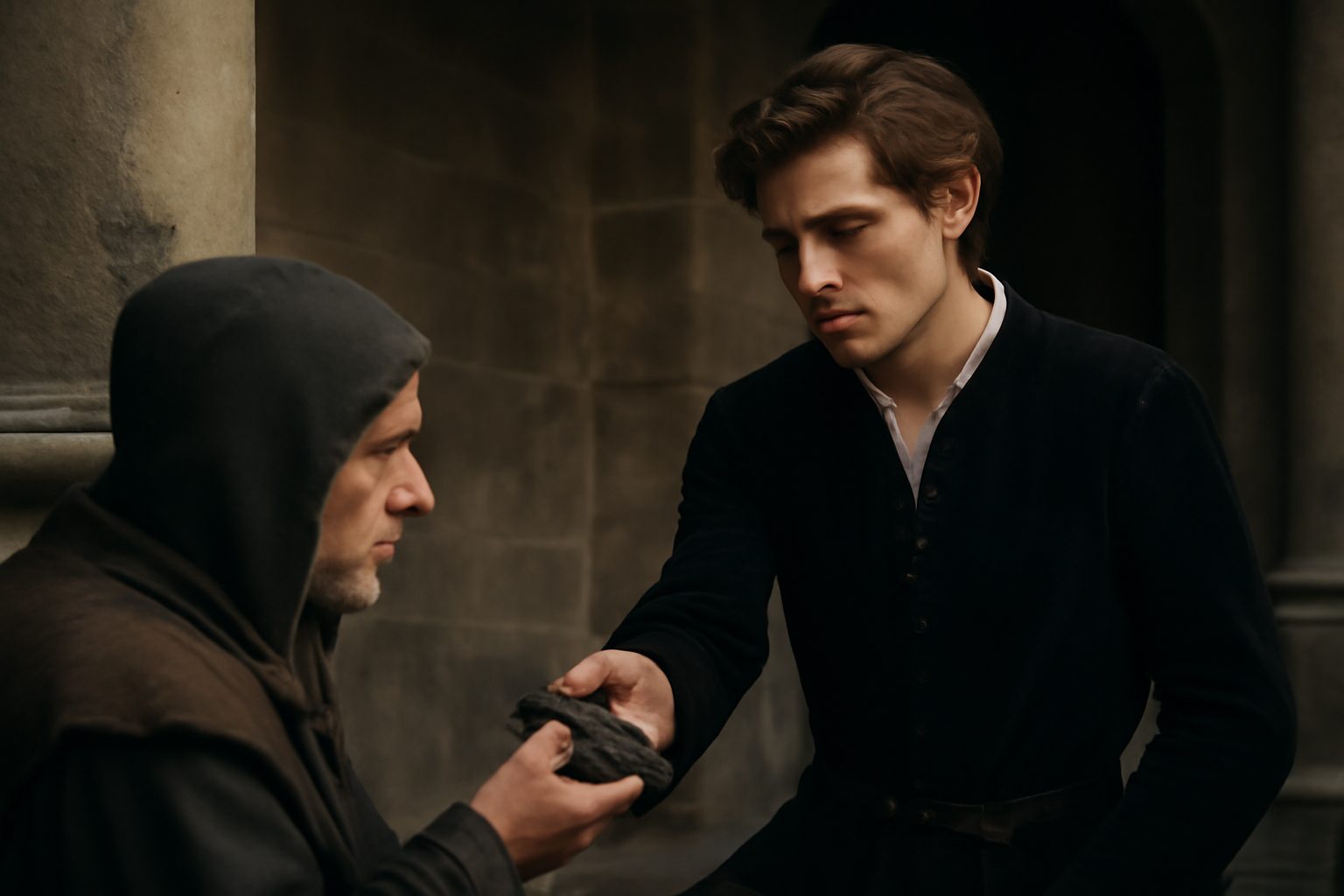
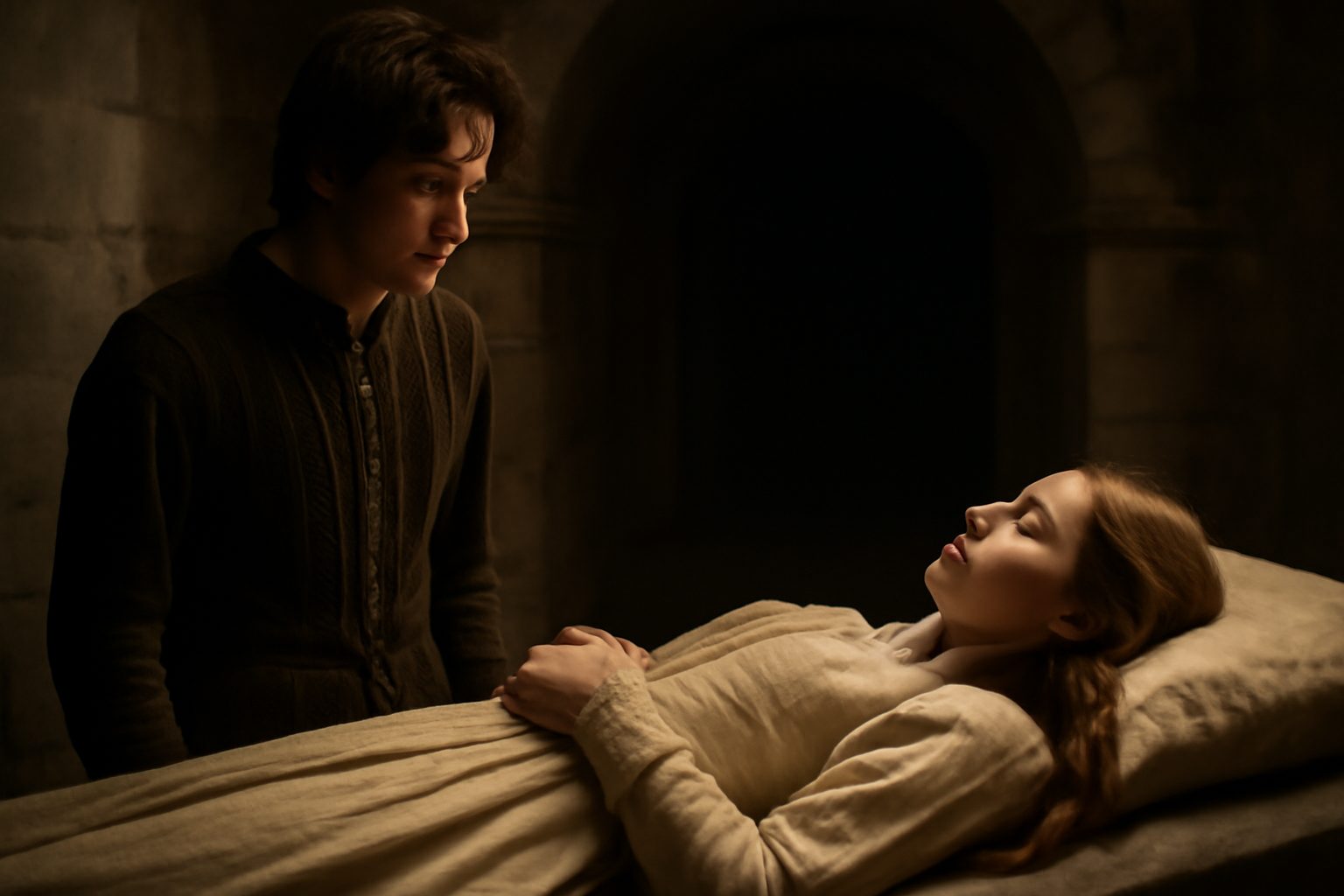
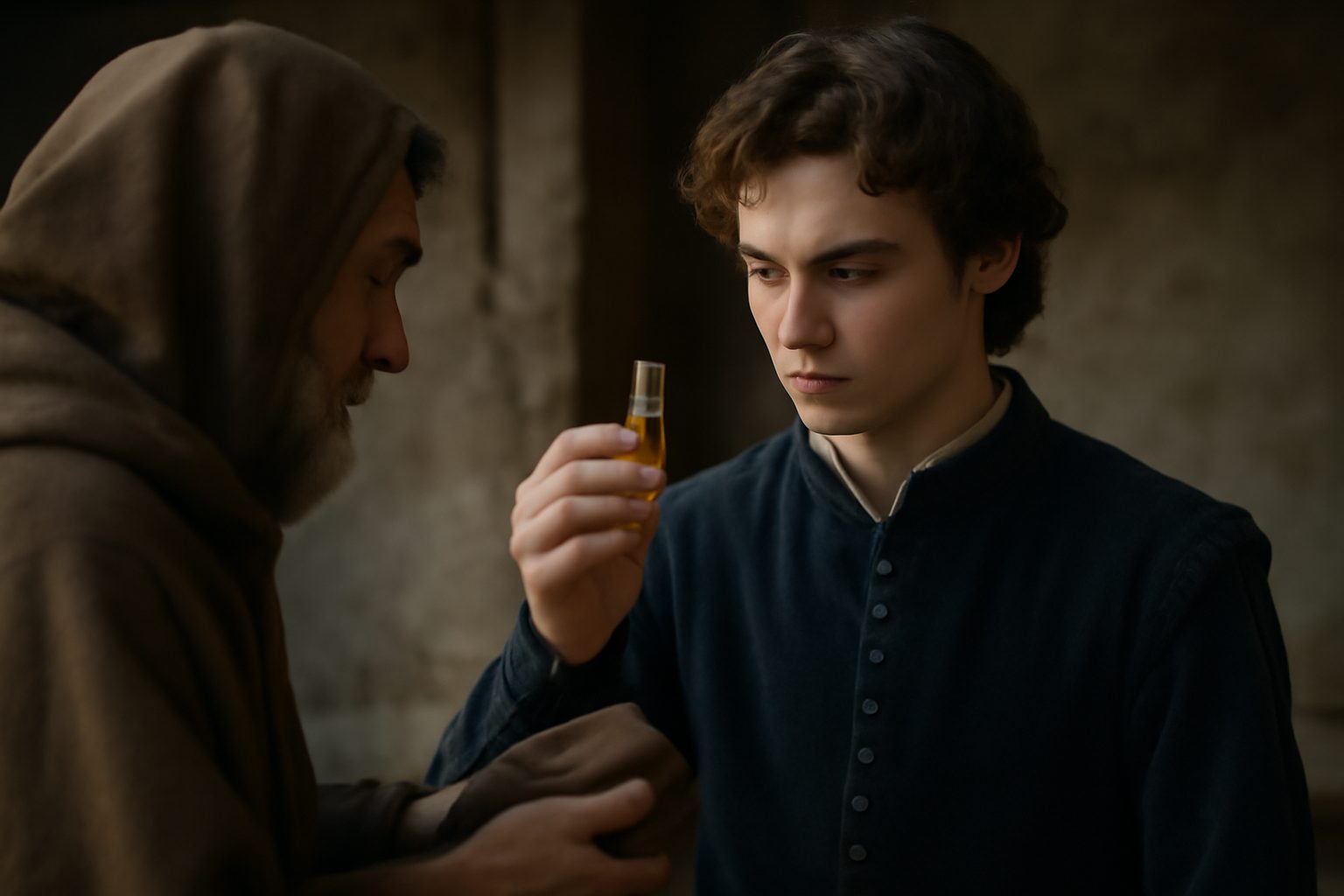
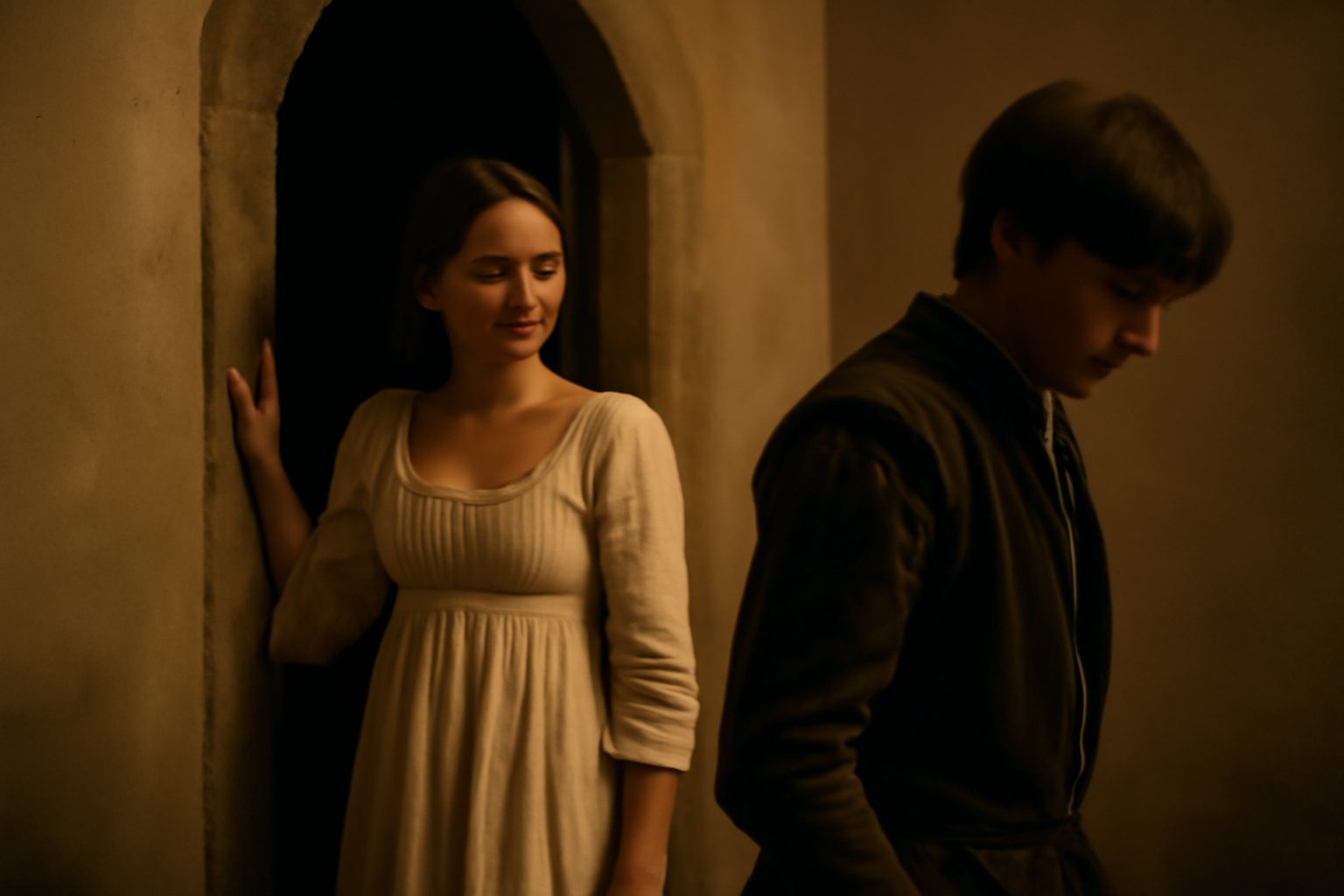
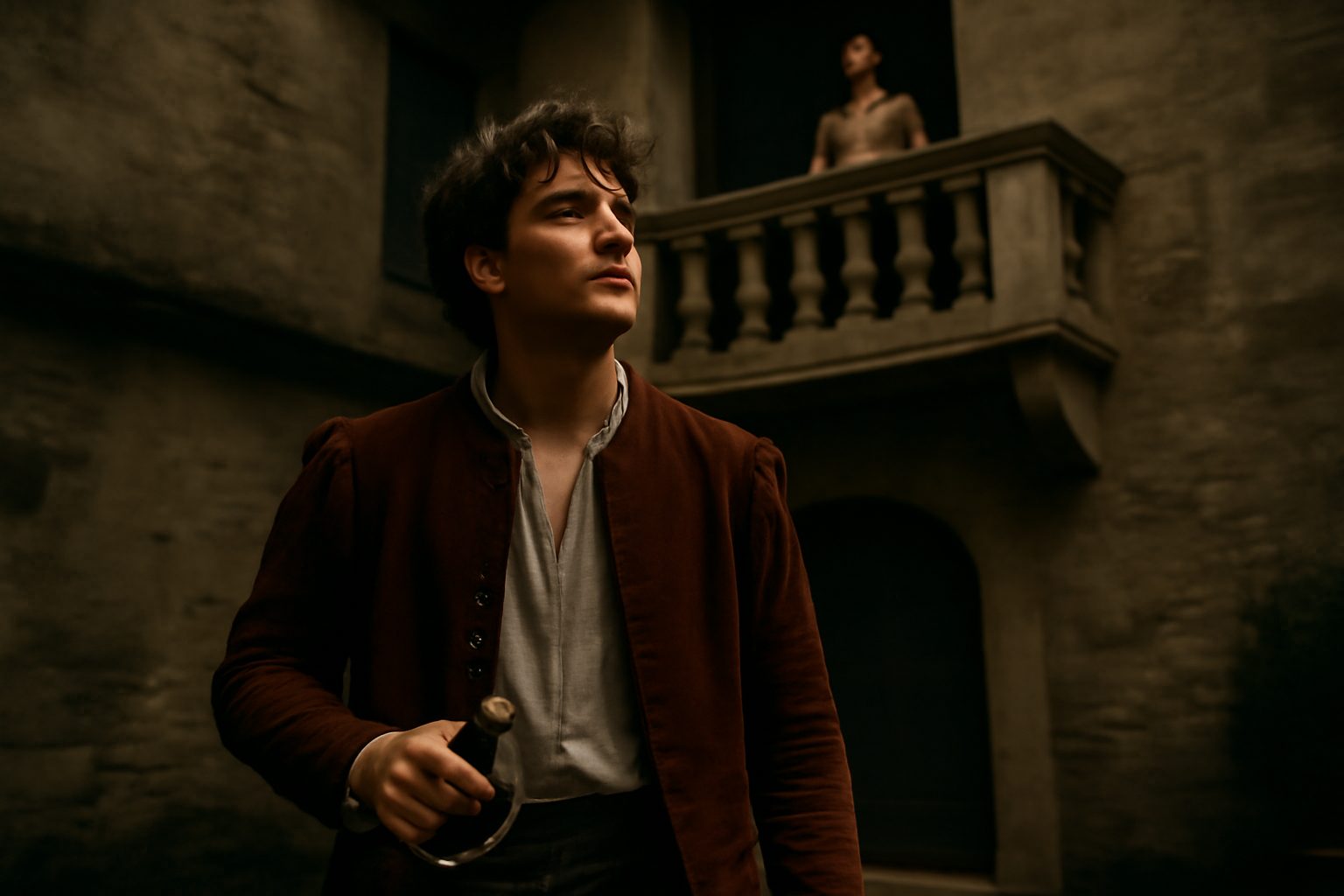
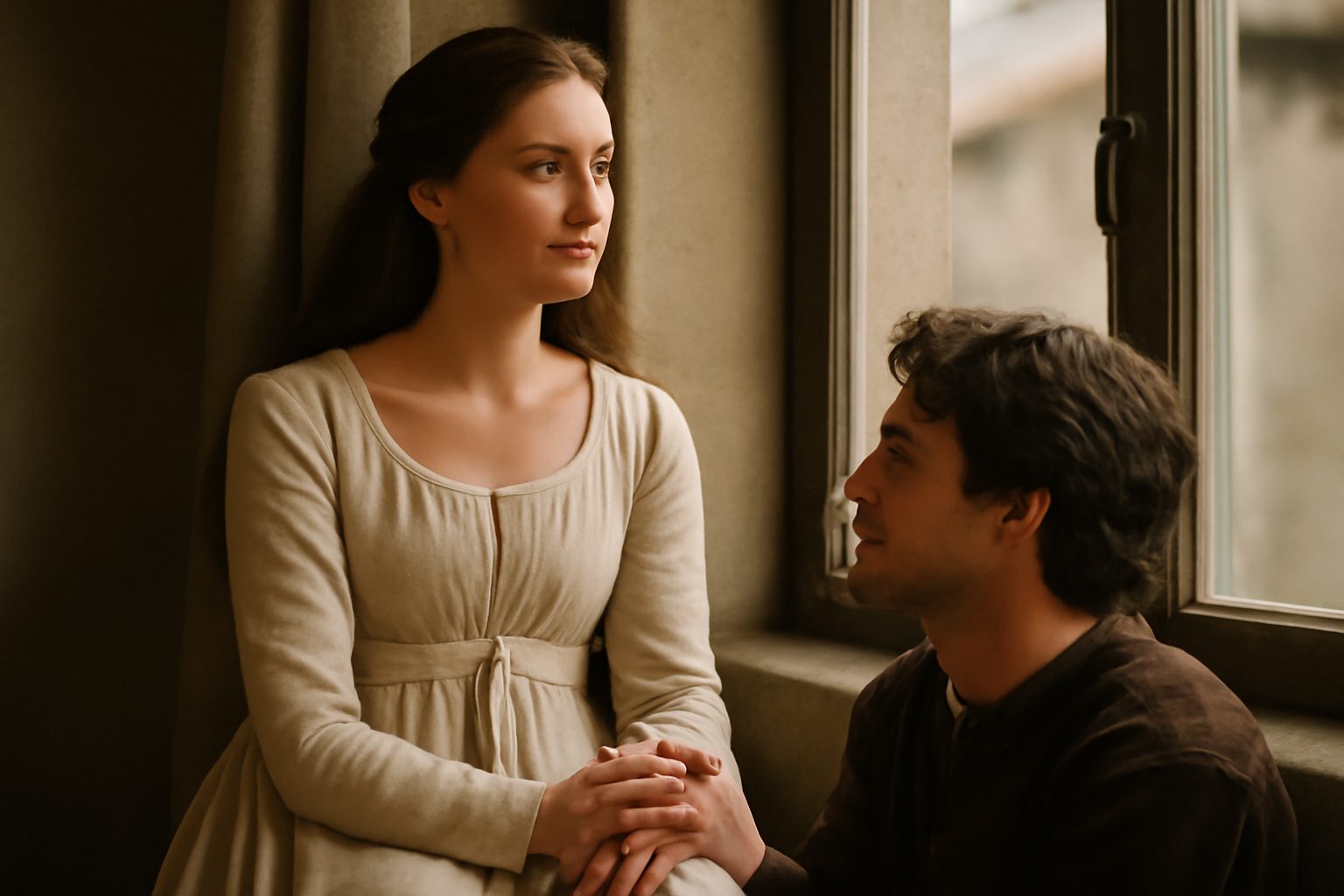
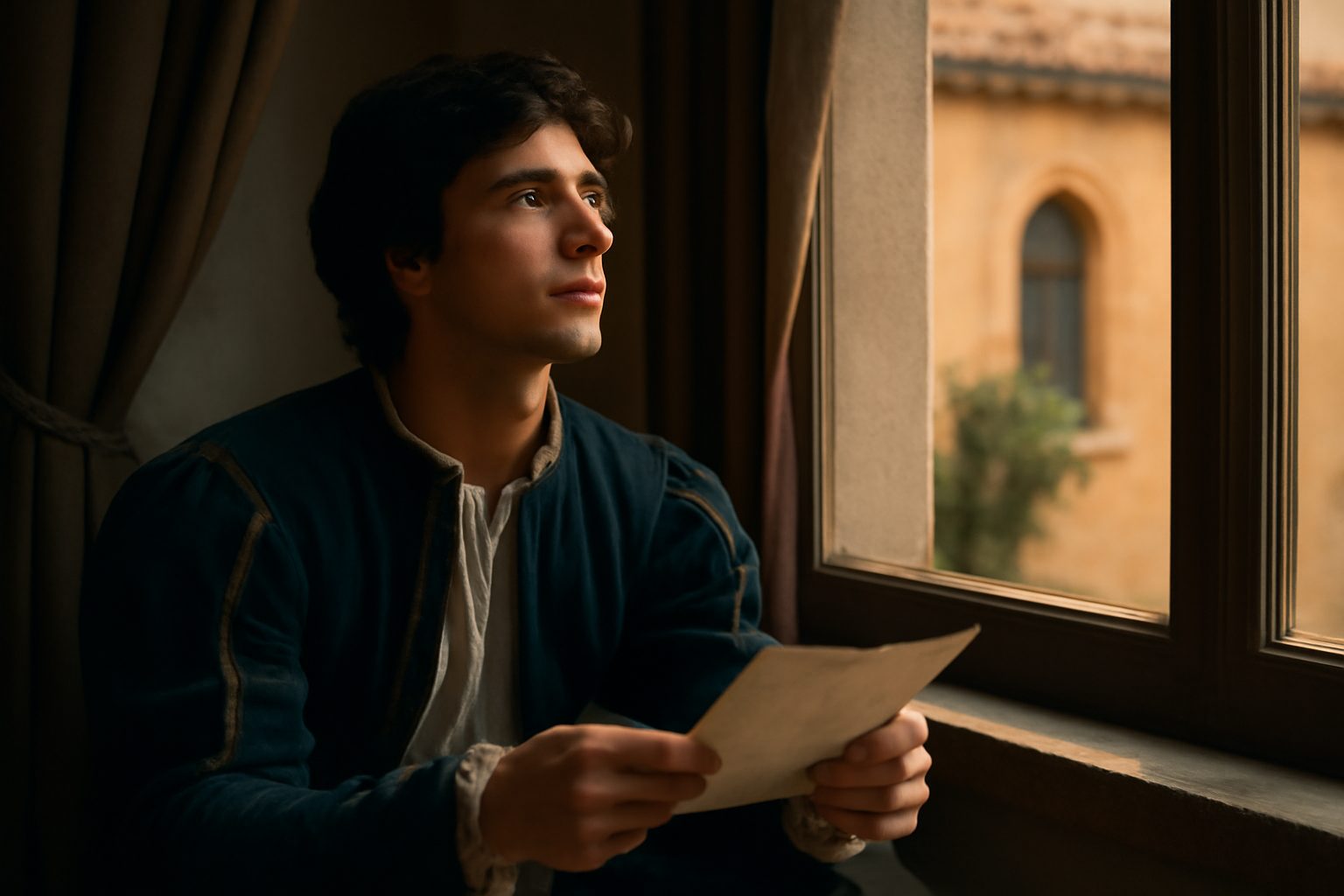
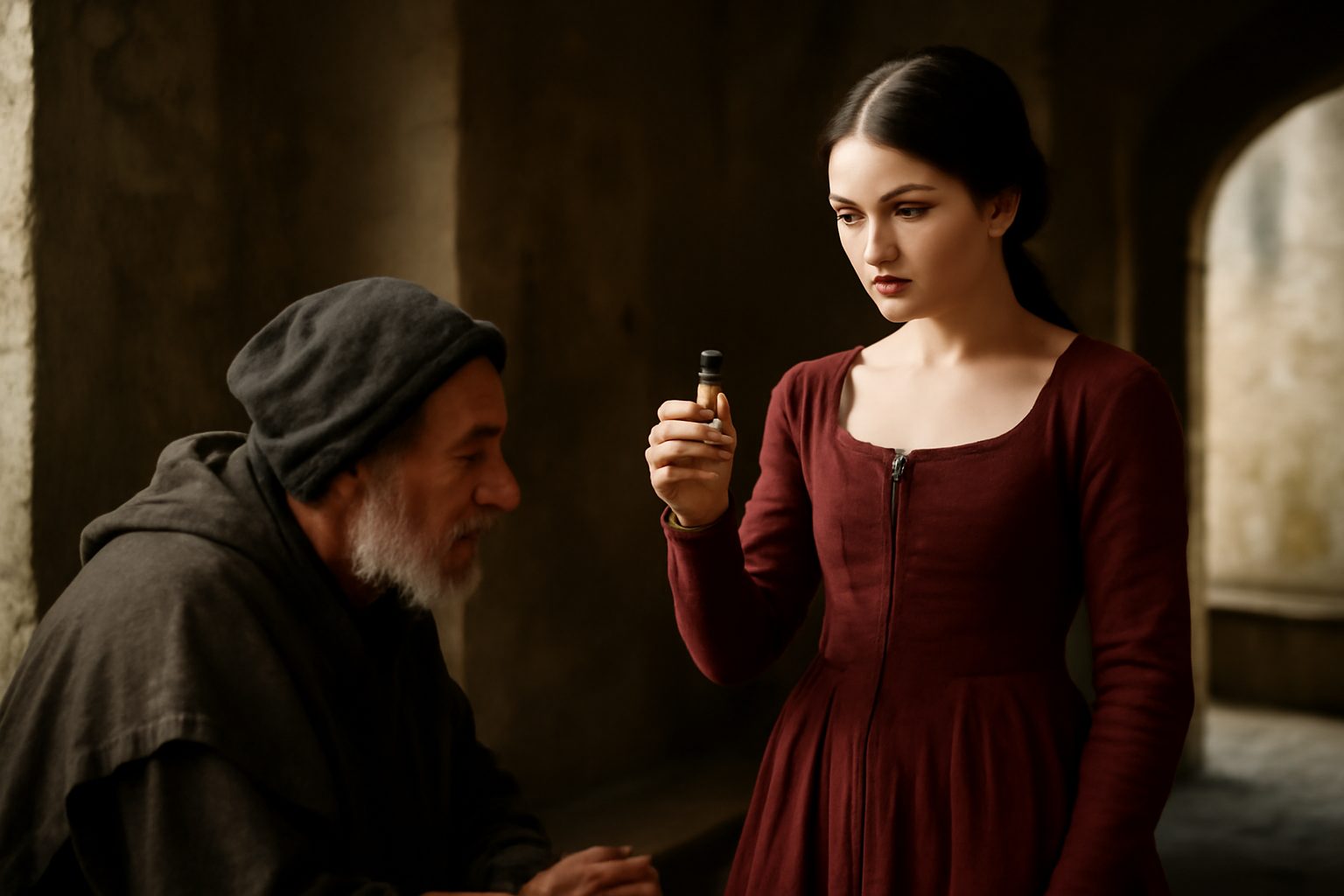
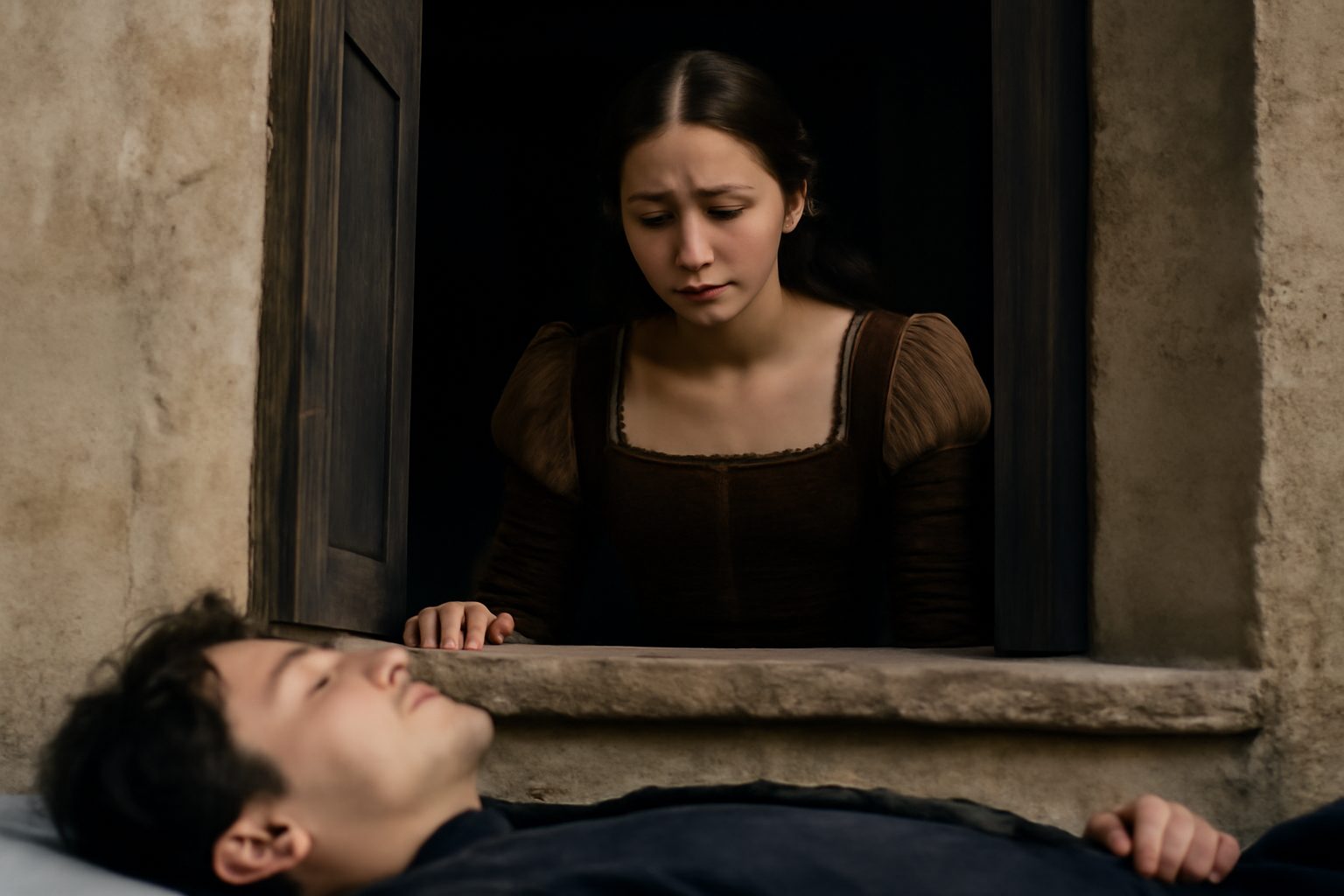
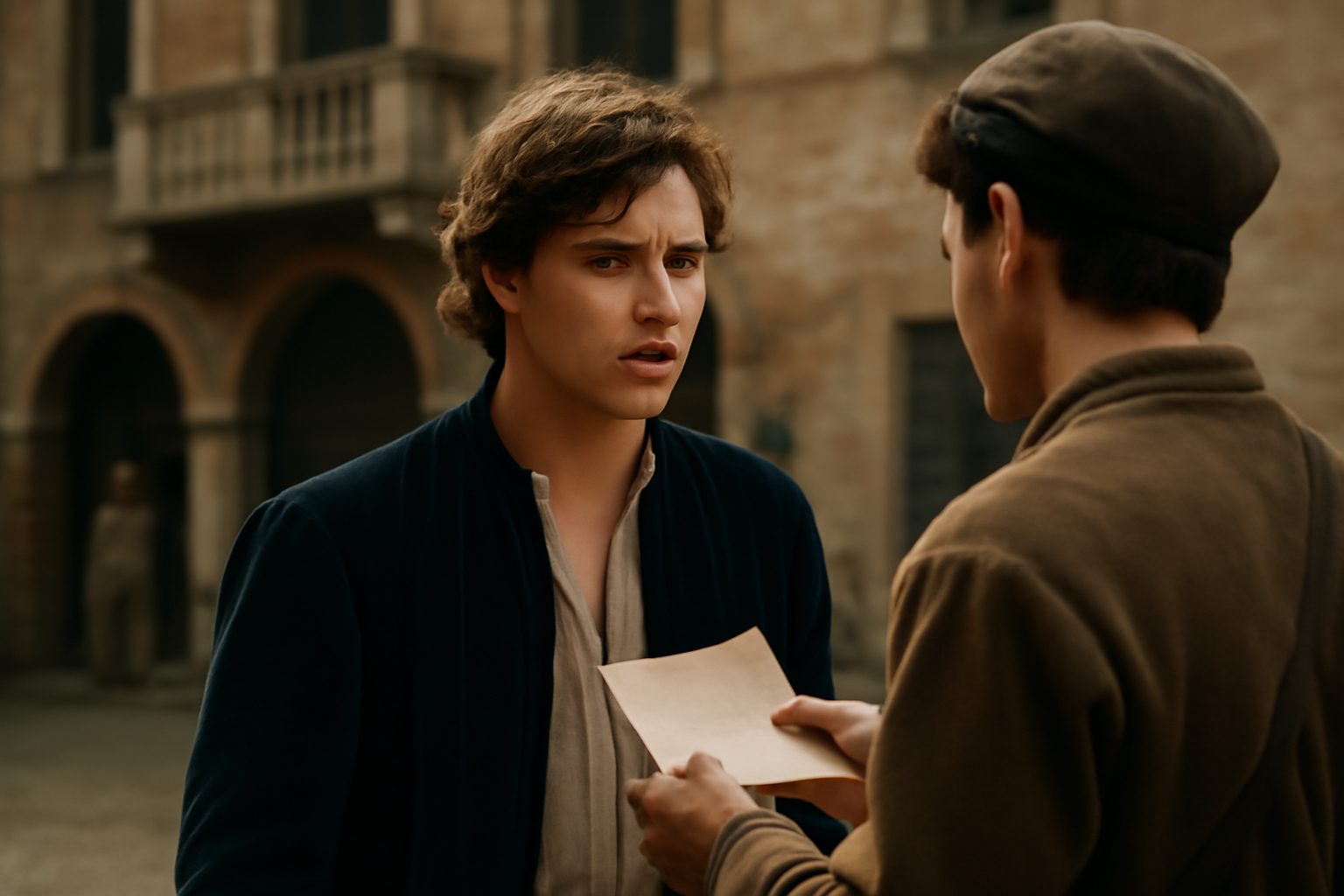
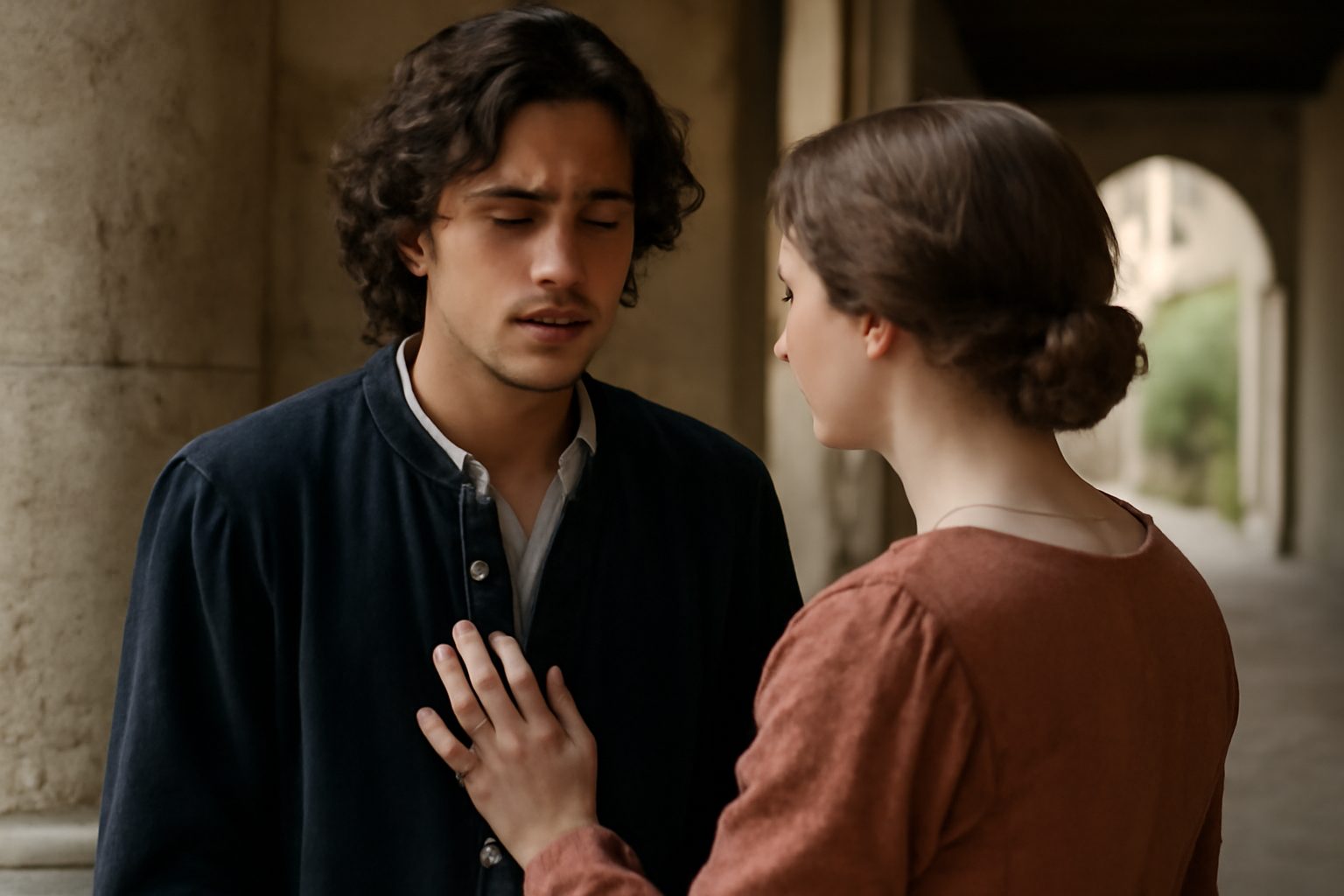
In Act 5, Scene 1 of Romeo and Juliet, Romeo, exiled in Mantua, has just dreamed of Juliet reviving him with a kiss when Balthasar arrives with news of her death. Overcome by grief, Romeo resolves to return to Verona and die beside her. As he describes his desperate plan to seek poison from a destitute apothecary, he paints a vivid image of the man’s poverty—his threadbare clothes and furrowed brow—highlighting the bleakness of Romeo’s own fate.
Romeo: "In tatter'd weeds, with overwhelming brows,"
In modern day english, we would say:
He looks ragged and worn, with a face full of sorrow.
Frequently Asked Questions
What does Romeo mean when he says someone is dressed in tattered clothes with a sad expression?
Romeo is describing someone who looks poor and very unhappy, wearing old, torn clothing and with a face full of sorrow.
Connections to other verses:
Connections to "In tatter'd weeds, with overwhelming brows"
The verse "In tatter'd weeds, with overwhelming brows" describes the apothecary's impoverished and haggard appearance, a detail that Romeo recalls from a previous observation. This imagery is directly tied to "Sharp misery had worn him to the bones", reinforcing the apothecary's desperate state due to poverty and suffering.
Links to Poverty and Desperation
Romeo’s description connects to his later interaction where he notes the apothecary’s "Noting this penury", emphasizing the man's extreme need. This theme of destitution is further echoed in "Art thou so bare and full of wretchedness" and "Contempt and beggary hangs upon thy back", highlighting how poverty makes the apothecary vulnerable to Romeo's offer.
Connection to the Apothecary’s Shop and Items
The apothecary’s disheveled appearance is contextualized by the description of his shop in "And in his needy shop a tortoise hung" and "An alligator stuff'd, and other skins", painting a picture of decay and scarcity. The "A beggarly account of empty boxes" and scattered items like "Green earthen pots, bladders and musty seeds" further illustrate his poverty, making Romeo’s observation of his "tatter'd weeds" part of a broader depiction of neglect.
Romeo’s Reflection and Action
Romeo’s memory of the apothecary’s appearance leads him to seek poison, as indicated in "I do remember an apothecary" and "O, this same thought did but forerun my need". This connects to his resolution in "Well, Juliet, I will lie with thee to-night", showing how the apothecary’s despair mirrors Romeo’s own desperate state and facilitates his tragic plan.