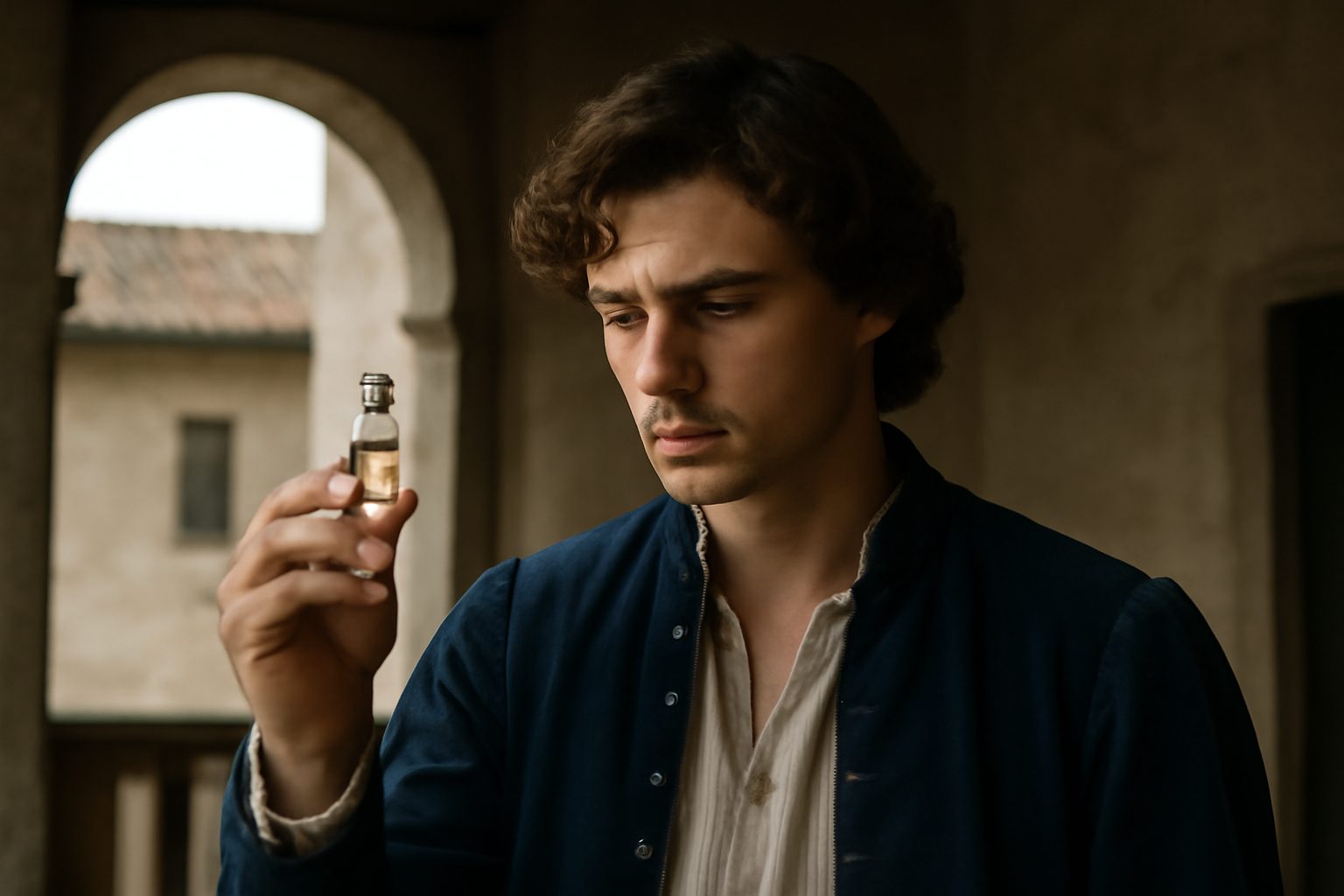
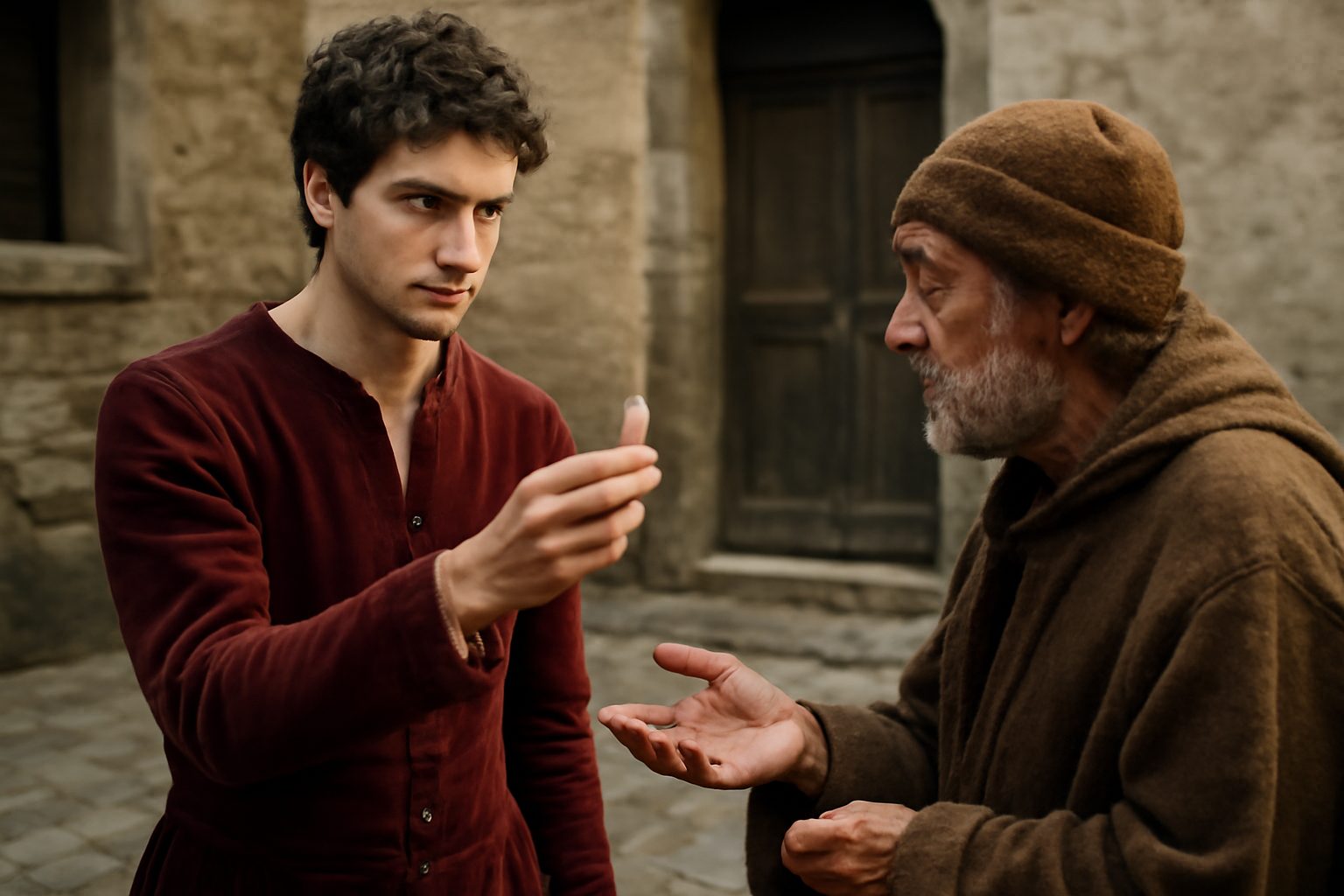
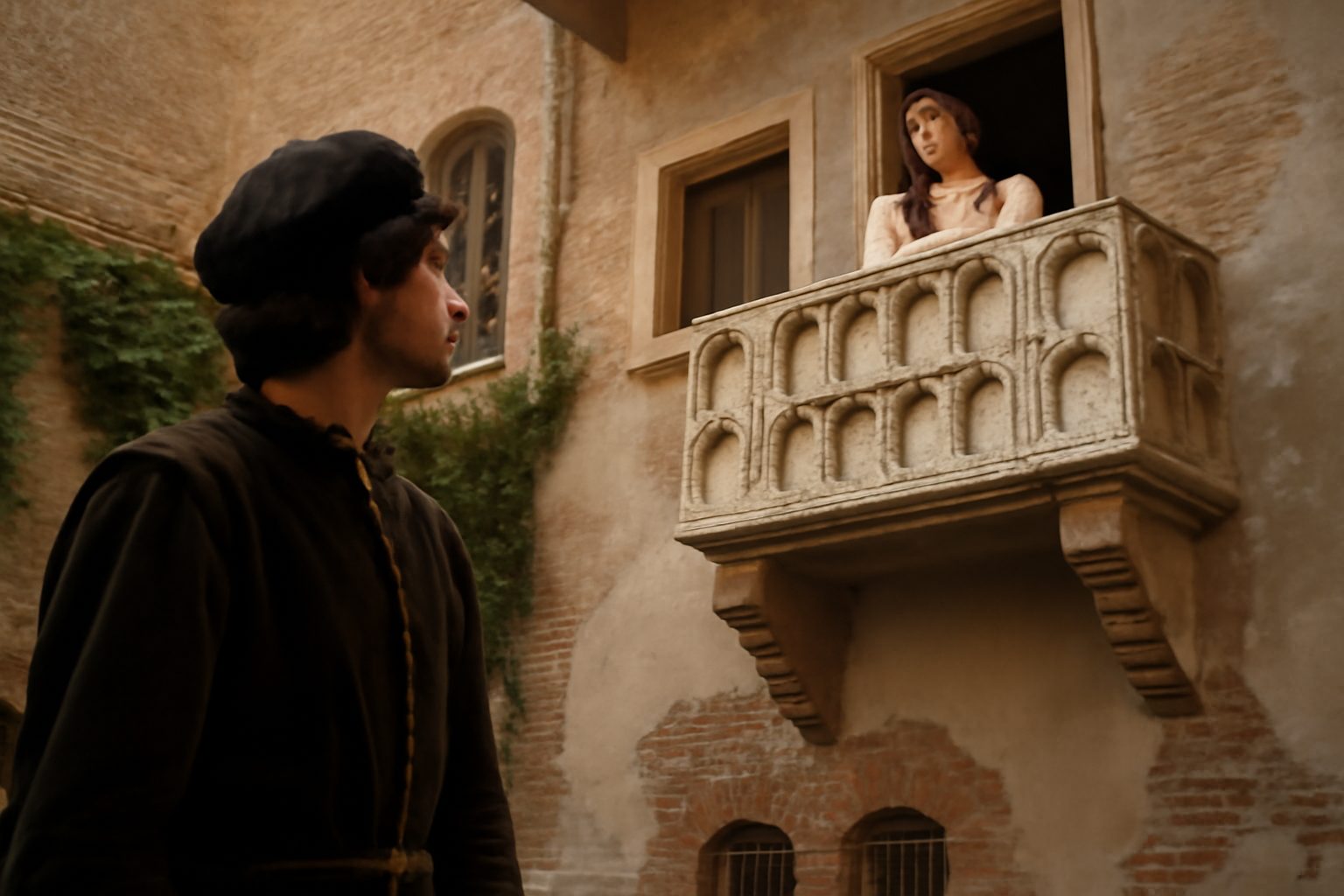
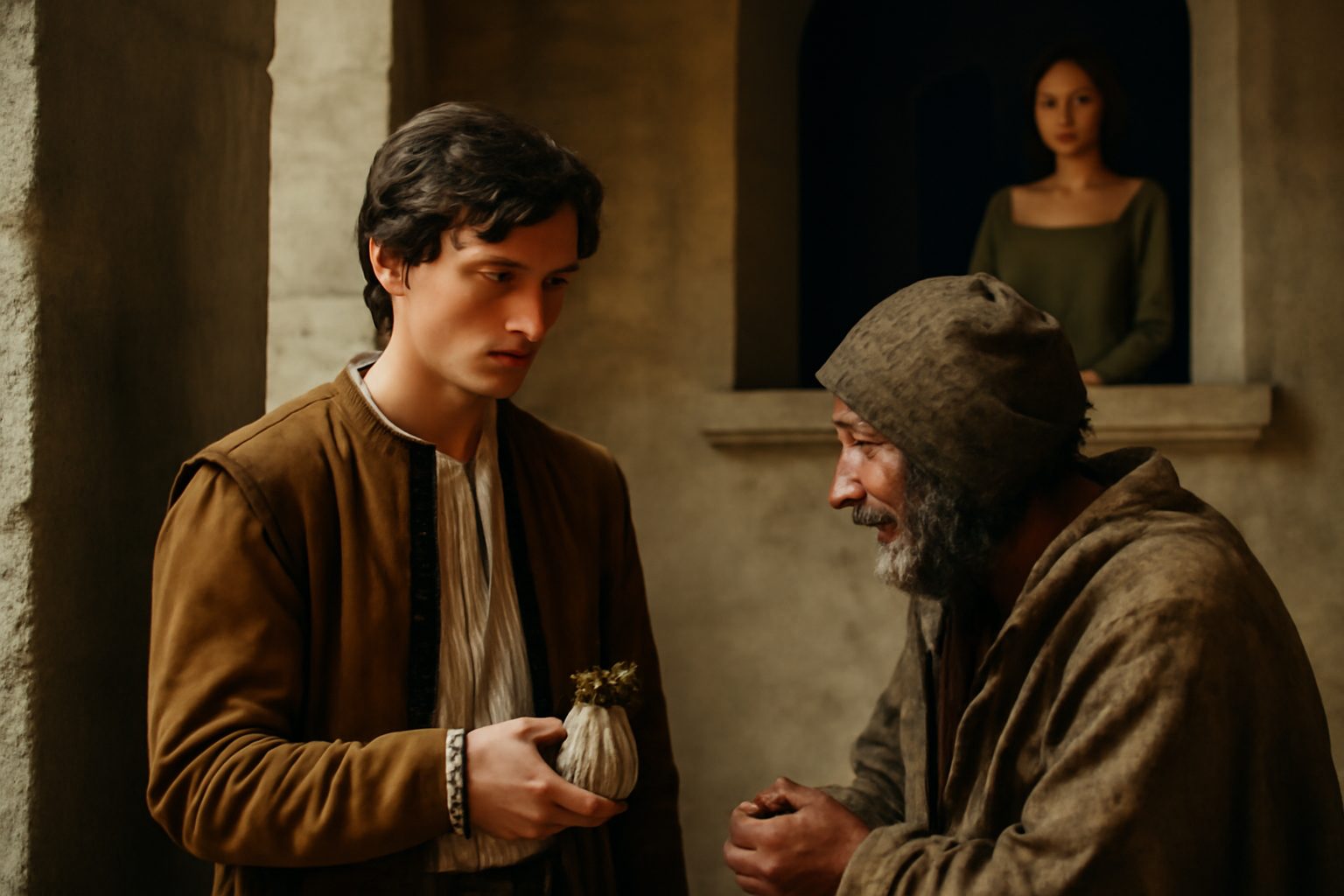
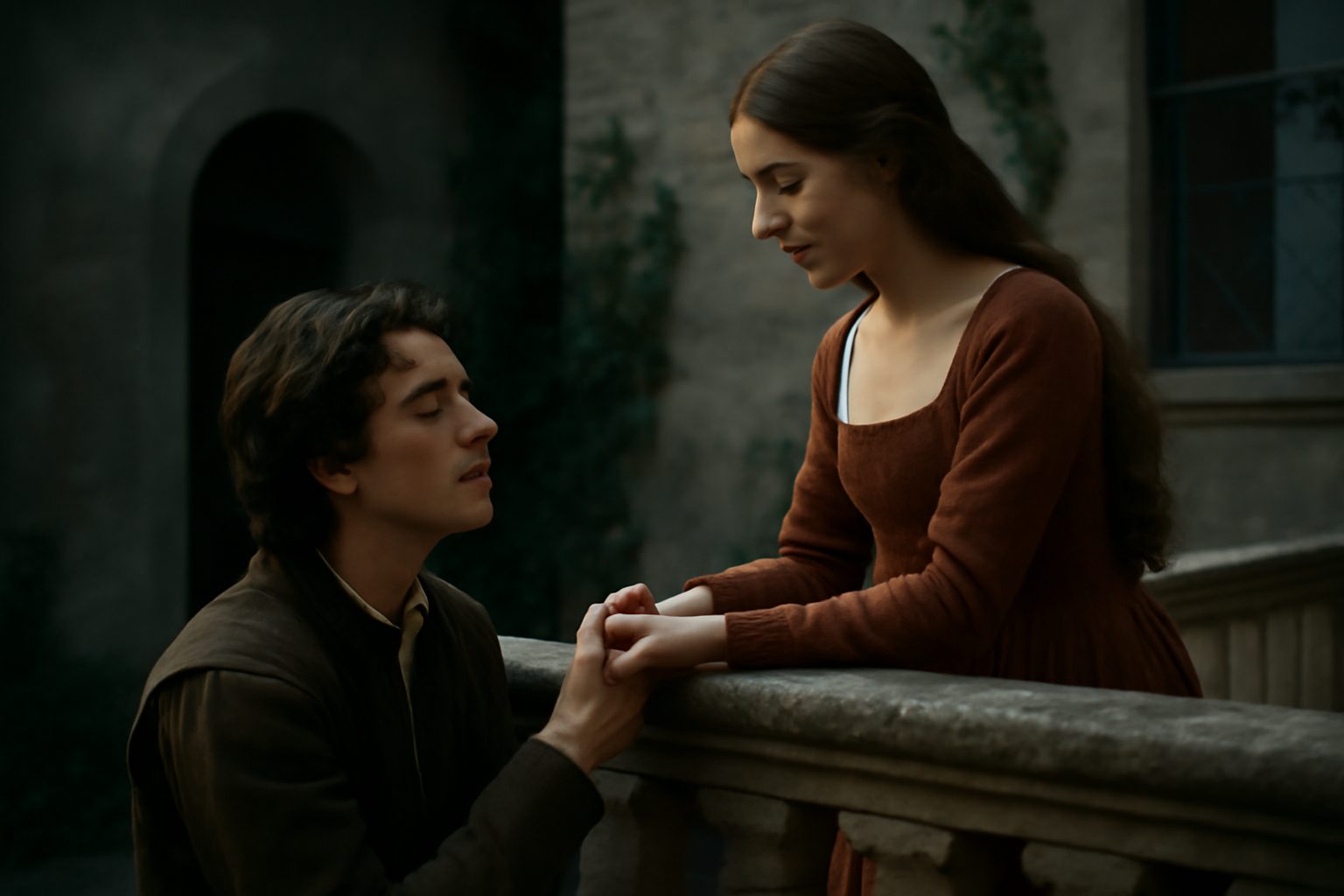
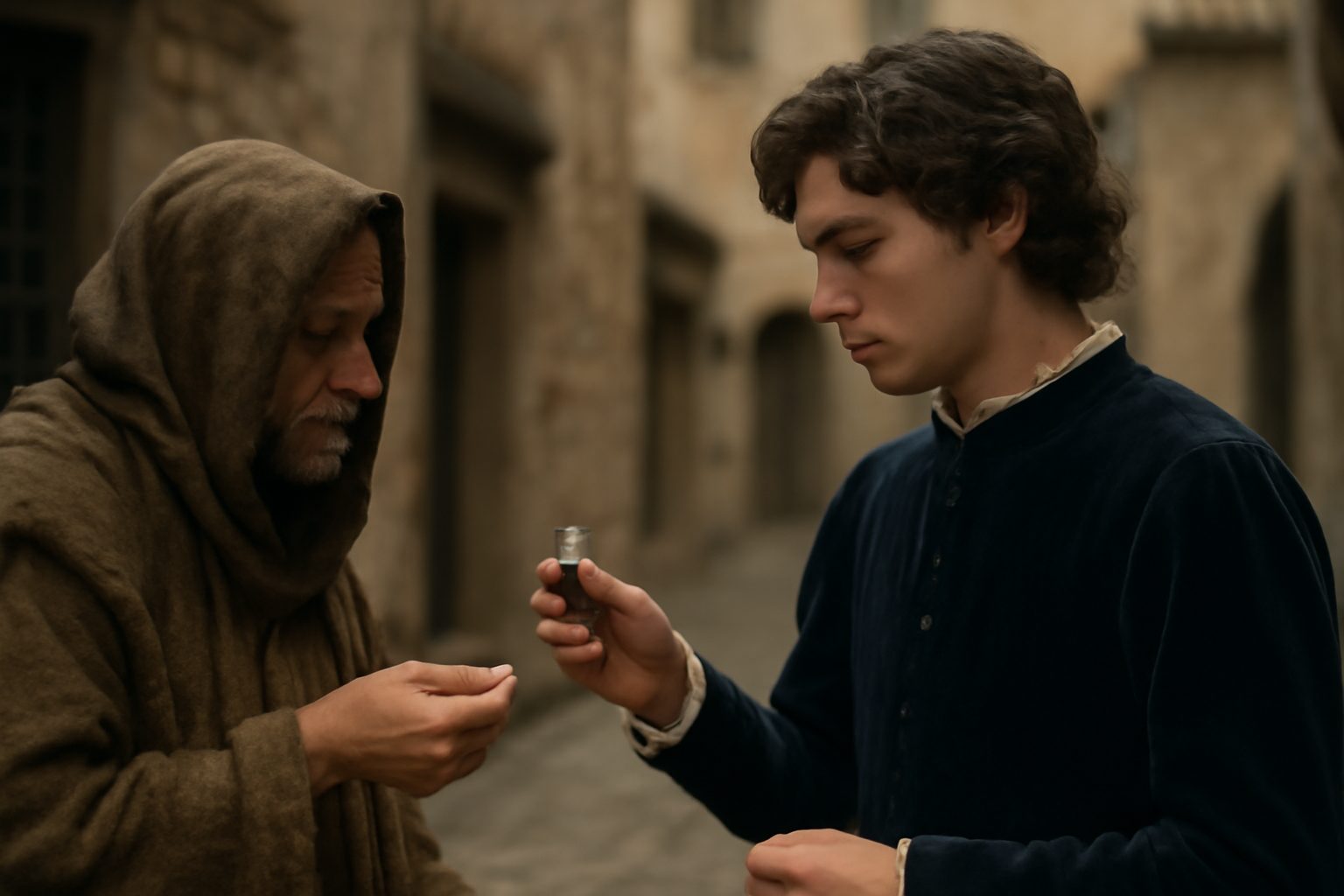
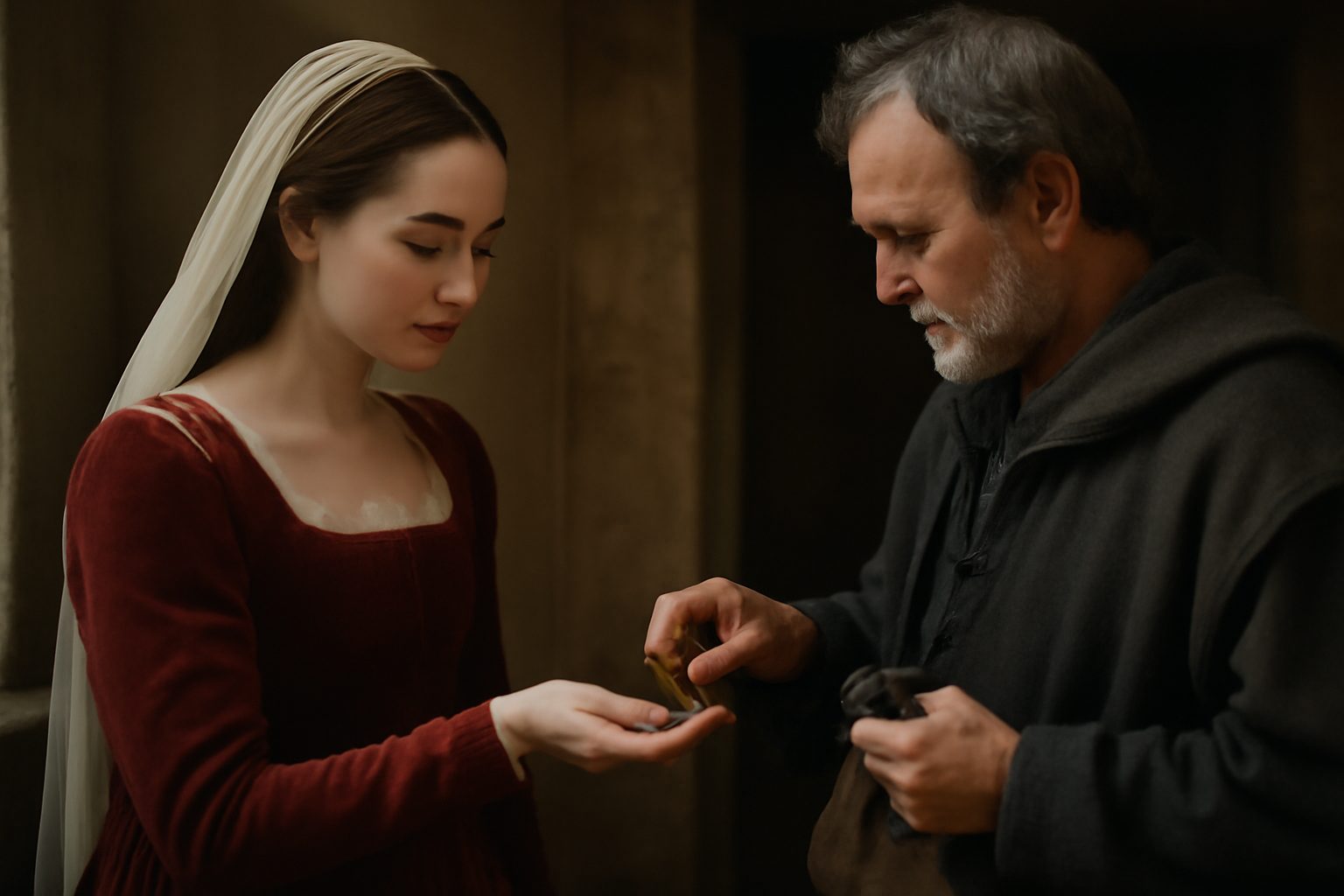
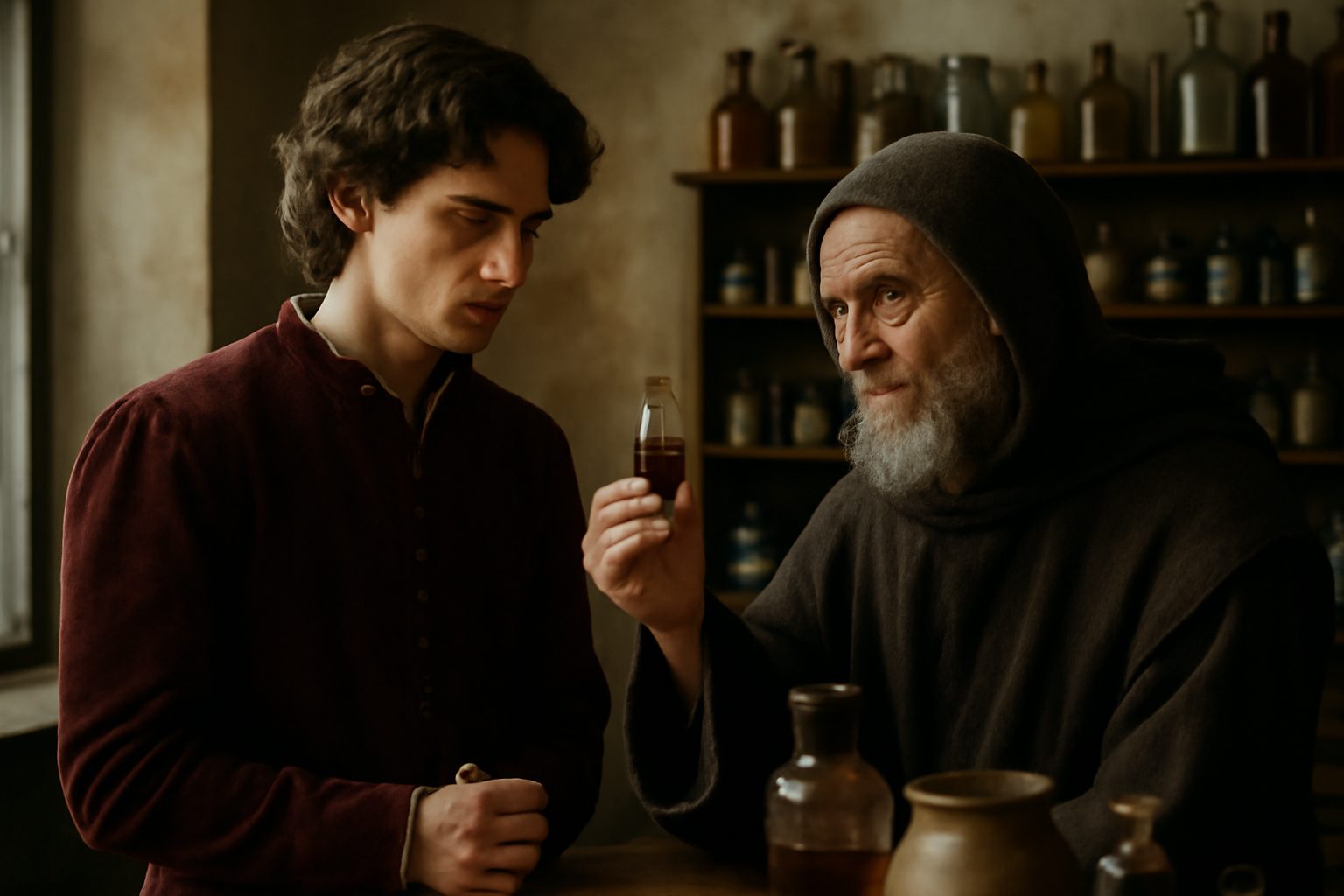
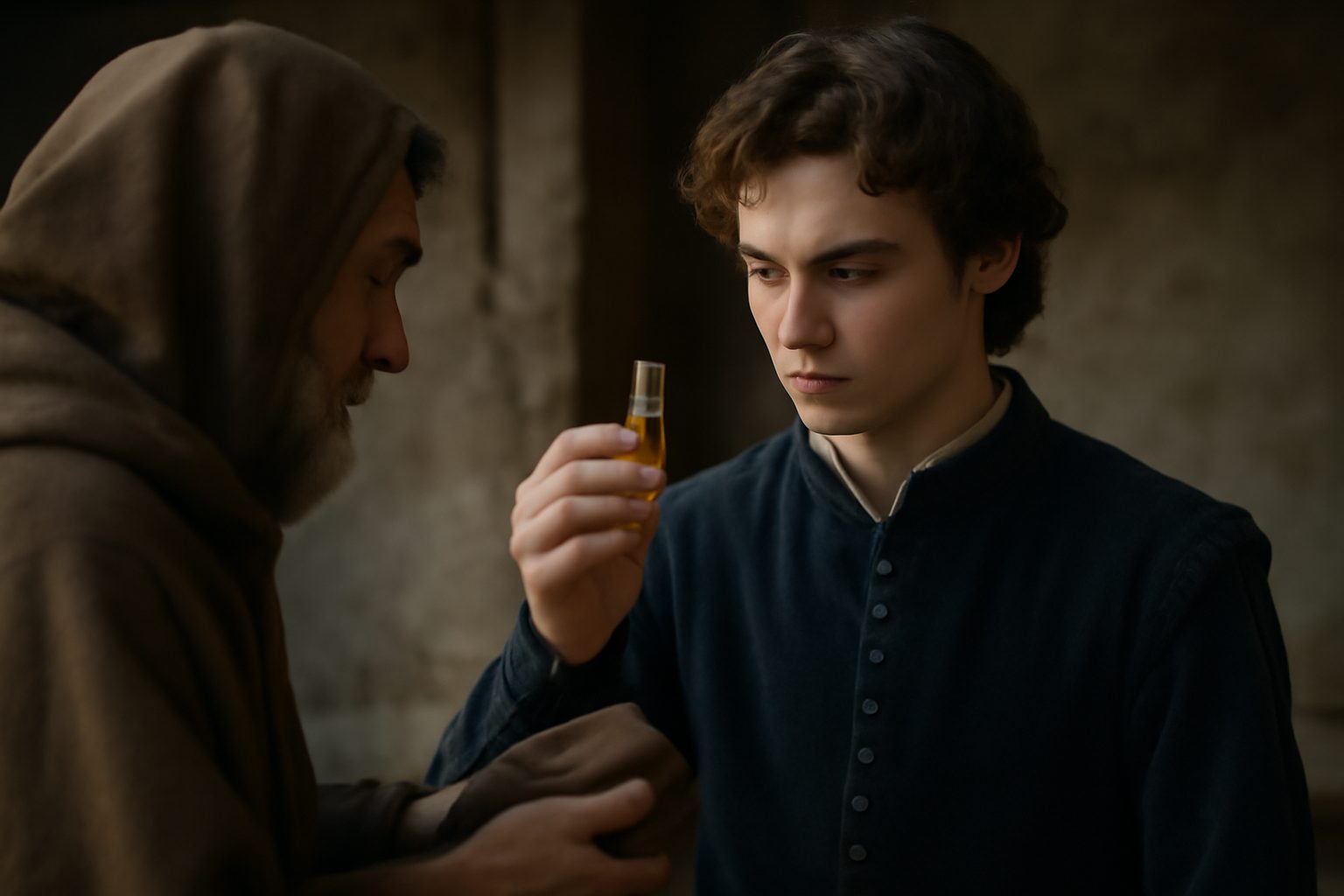
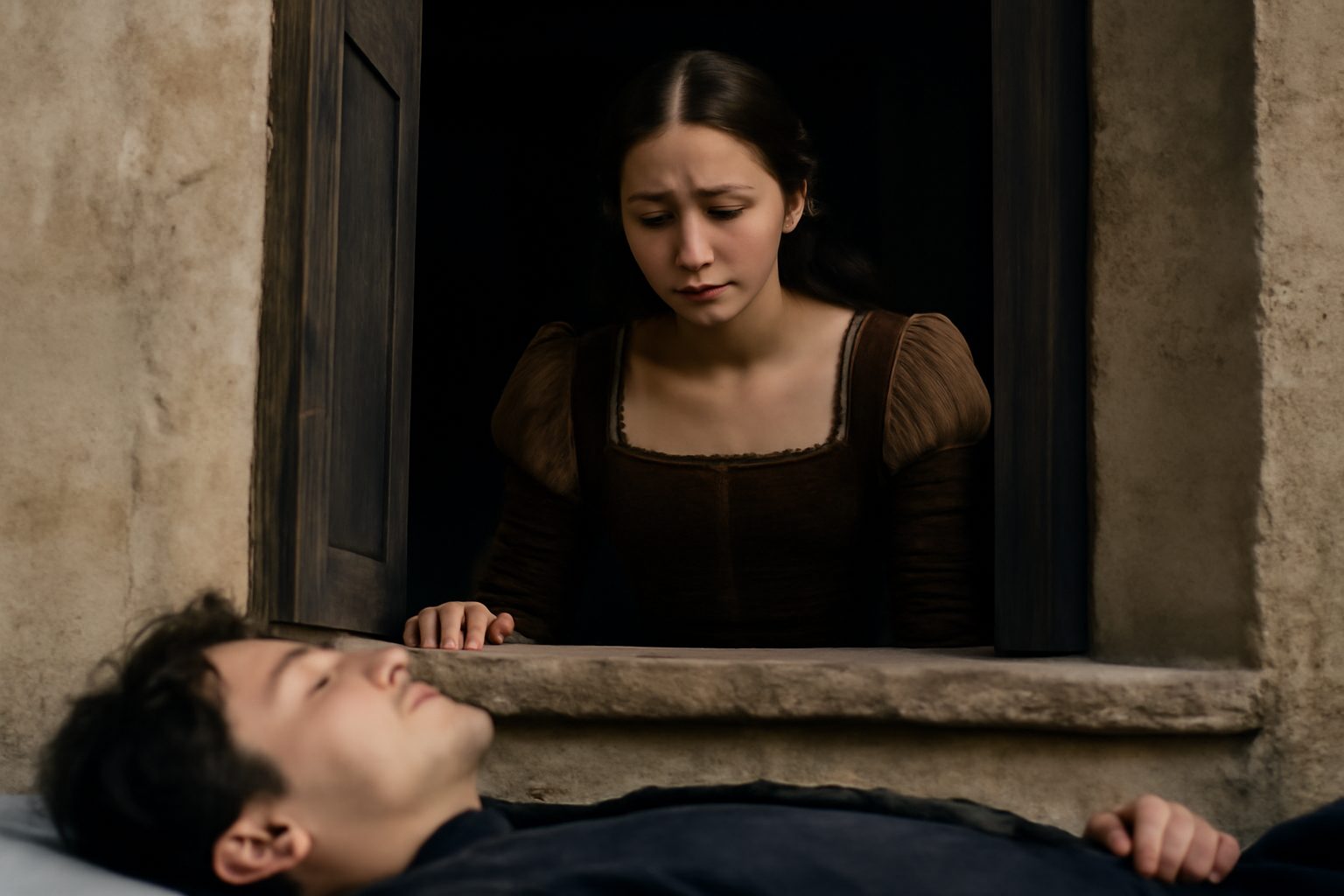
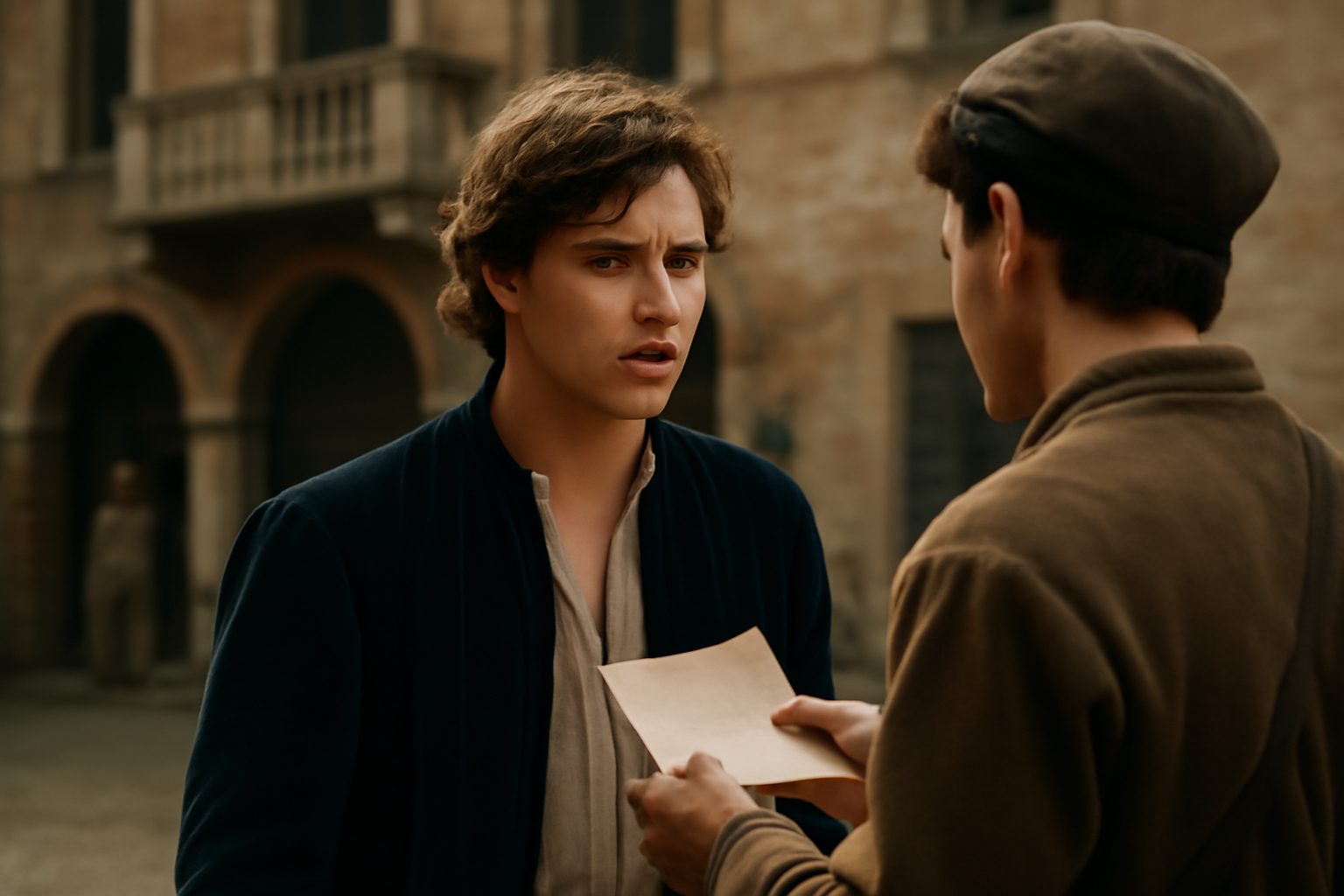
In Act 5, Scene 1 of Romeo and Juliet, Romeo speaks these words to an apothecary after being banished to Mantua. Desperate to reunite with Juliet, he seeks poison to end his life, knowing the apothecary risks punishment for selling it. The line reflects Romeo's inner conflict, acknowledging his financial coercion of the apothecary while insisting his own intentions remain pure.
Apothecary: "My poverty, but not my will, consents."
In modern day english, we would say:
I’m poor, so I have to agree to this, even though I don’t want to.
Frequently Asked Questions
Why does the Apothecary agree to sell poison to Romeo?
The Apothecary agrees to sell poison because he is poor and needs the money, even though he does not want to.
Connections to other verses:
Connections to "My poverty, but not my will, consents."
The line "My poverty, but not my will, consents." is spoken by the Apothecary in response to Romeo's offer of gold for poison. This moment highlights the theme of economic desperation overriding moral or legal constraints, a motif that recurs throughout the scene.
Economic Desperation and Moral Conflict
The Apothecary's poverty is emphasized in several other verses. For instance, Romeo observes the Apothecary's dire state in "Art thou so bare and full of wretchedness" and "Need and oppression starveth in thine eyes", painting a vivid picture of his desperation. Romeo further notes the Apothecary's "Contempt and beggary hangs upon thy back", reinforcing how poverty has degraded him. The Apothecary himself acknowledges his circumstances earlier when he says "Such mortal drugs I have; but Mantua's law / Is death to any he that utters them", showing his awareness of the legal risks, which he ultimately ignores due to his need.
Romeo's Exploitation of Poverty
Romeo capitalizes on the Apothecary's poverty, as seen in "I pay thy poverty, and not thy will", directly echoing the Apothecary's consent rooted in economic necessity rather than willingness. Romeo's earlier remark, "And this same needy man must sell it me", underscores his deliberate targeting of someone vulnerable. The interaction begins with Romeo's assessment in "Come hither, man. I see that thou art poor", setting the stage for this transaction driven by desperation.
Poverty and Its Consequences
The Apothecary's shop is described as impoverished and sparse, with "A beggarly account of empty boxes" and "Were thinly scatter'd, to make up a show", illustrating the meagerness that defines his life. Romeo notes the broader societal neglect in "The world affords no law to make thee rich" and "The world is not thy friend nor the world's law", highlighting how poverty isolates and forces unethical choices. This context makes the Apothecary's consent in "My poverty, but not my will, consents" a tragic result of systemic indifference.
Foreshadowing and Irony
Romeo's own desperation mirrors the Apothecary's, as he seeks the poison after learning of Juliet's death. His resolve is clear in "Well, Juliet, I will lie with thee to-night", and he describes the poison's potency in "A dram of poison, such soon-speeding gear". The transaction's irony is underscored when Romeo later declares "I sell thee poison; thou hast sold me none", suggesting that gold is a greater poison, yet in this moment, both characters are victims of their circumstances—Romeo of love and fate, the Apothecary of poverty.