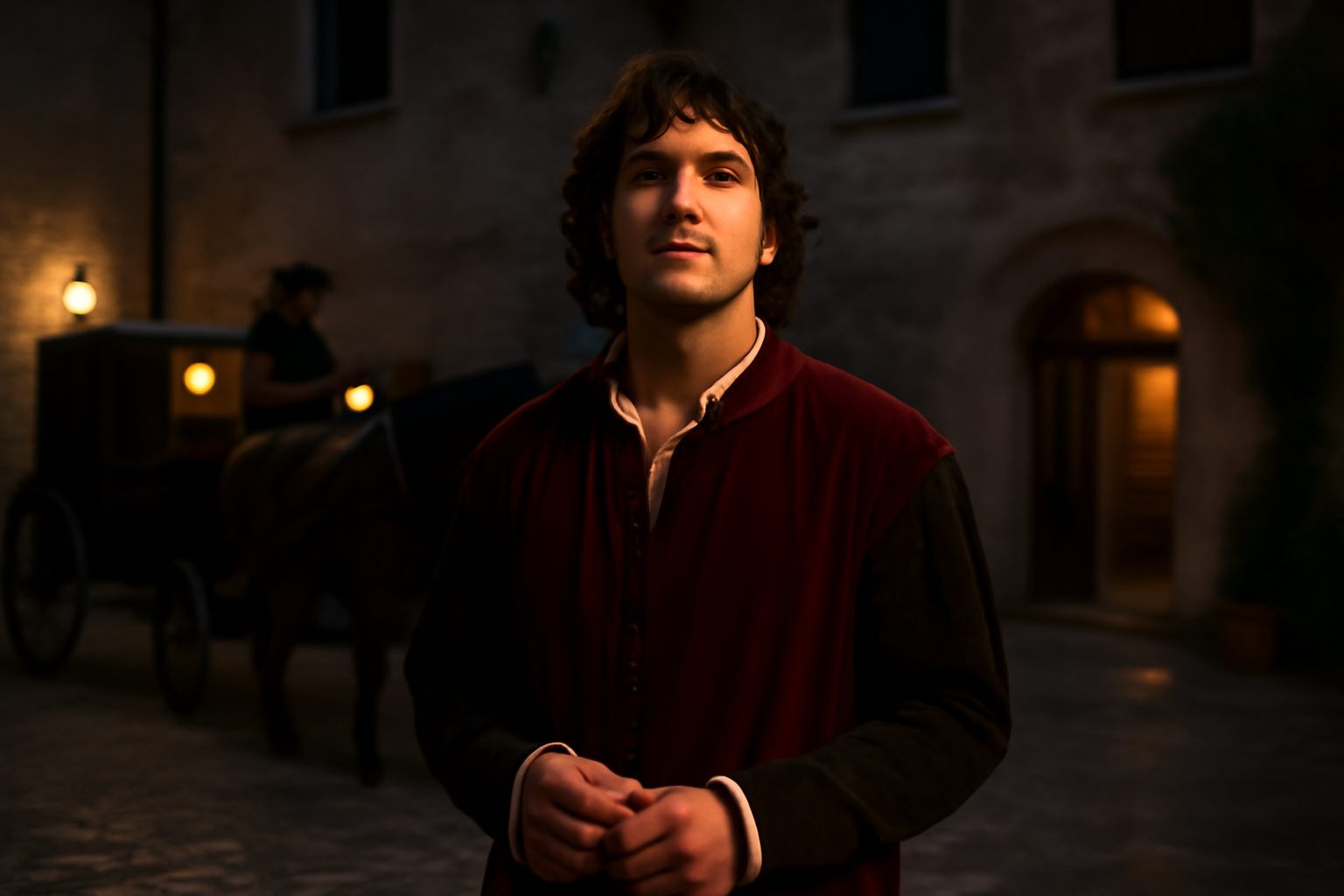
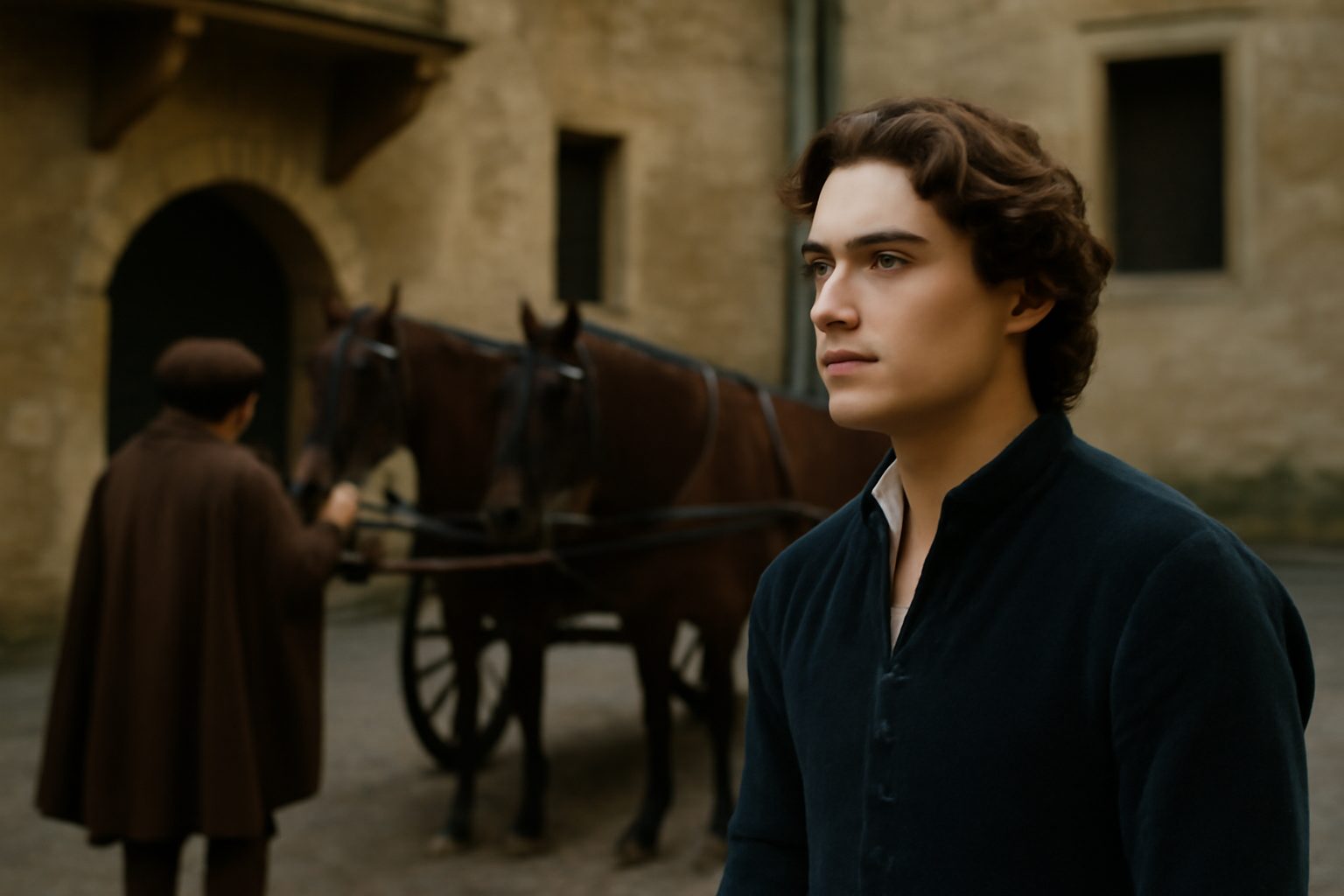
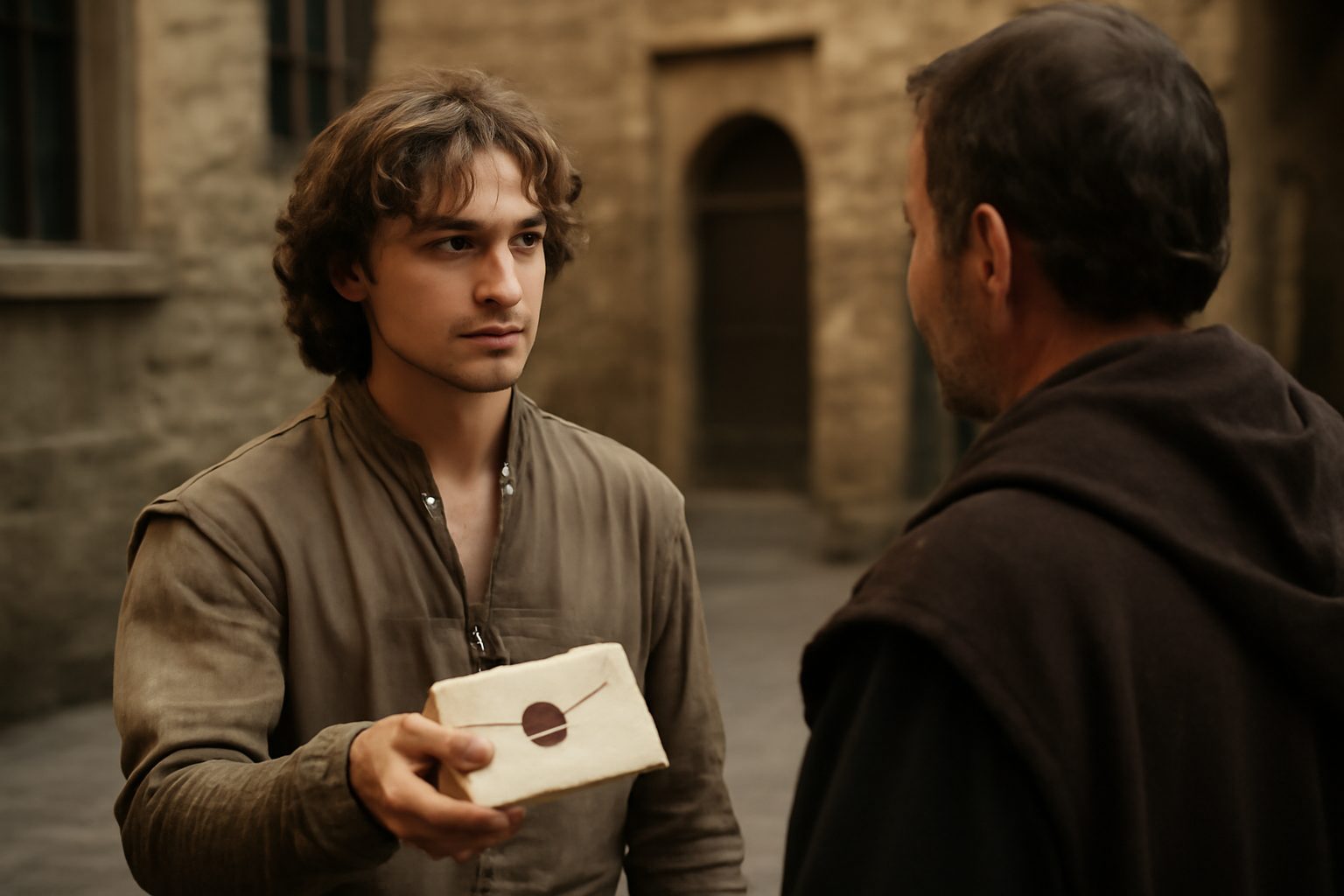
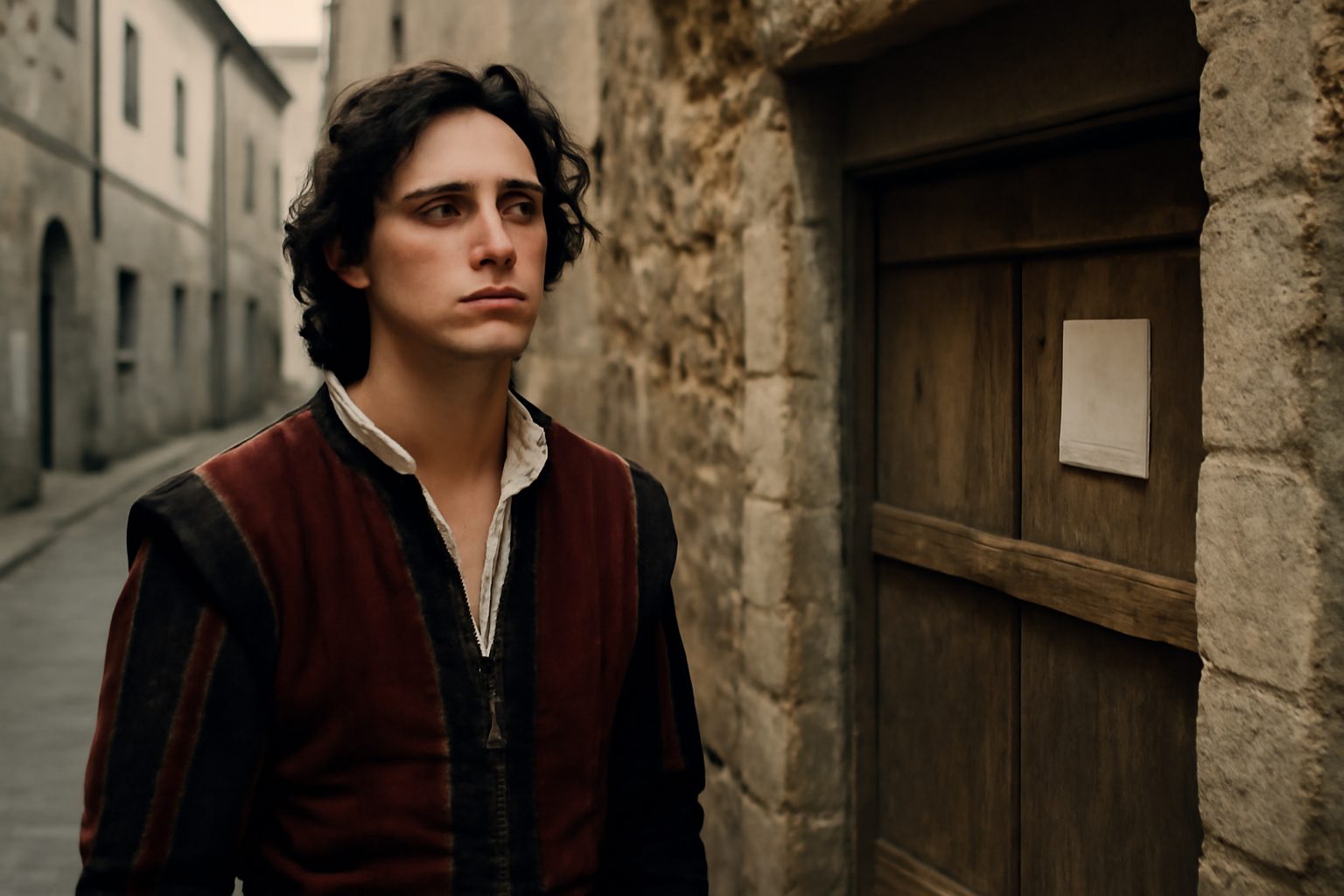
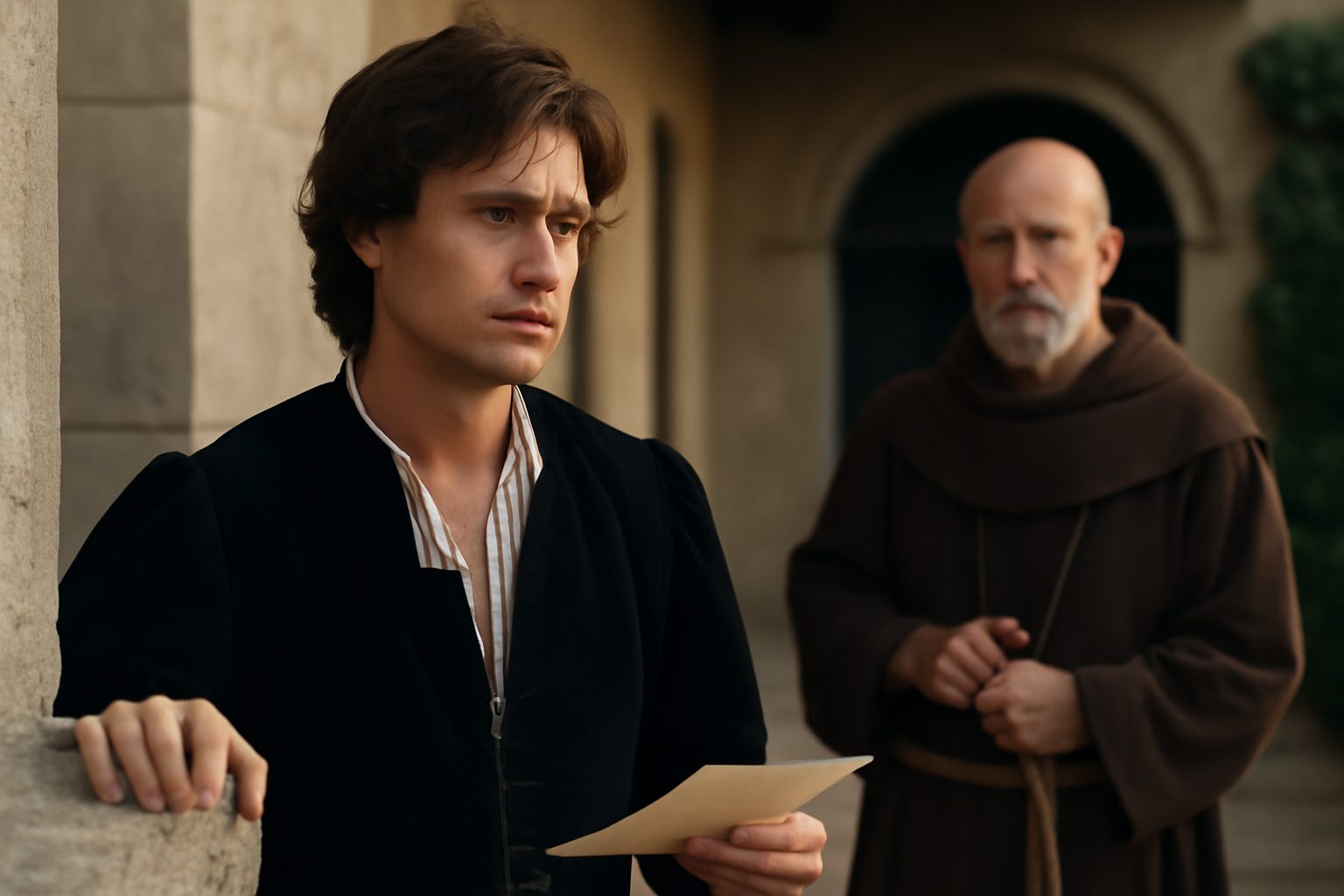
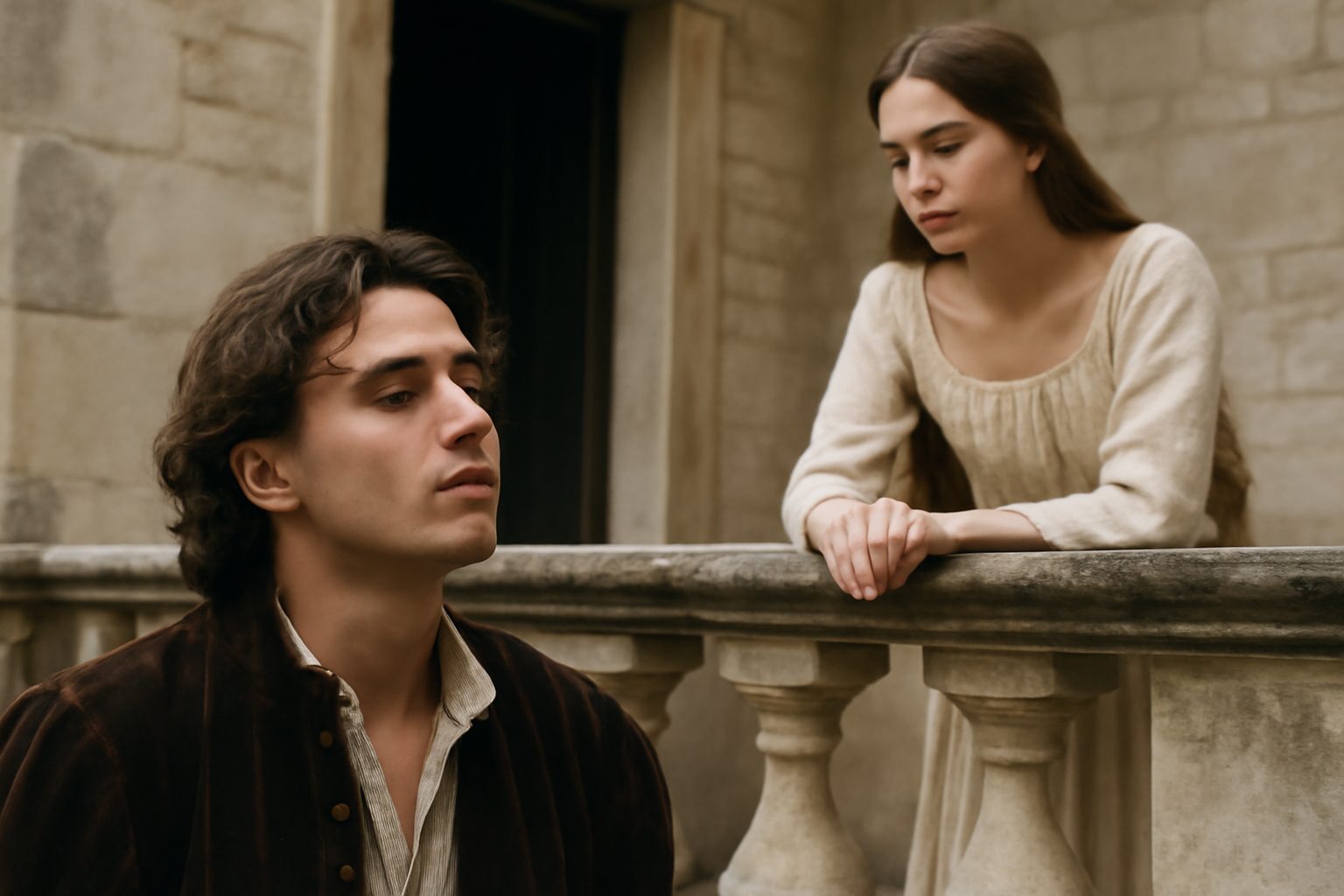
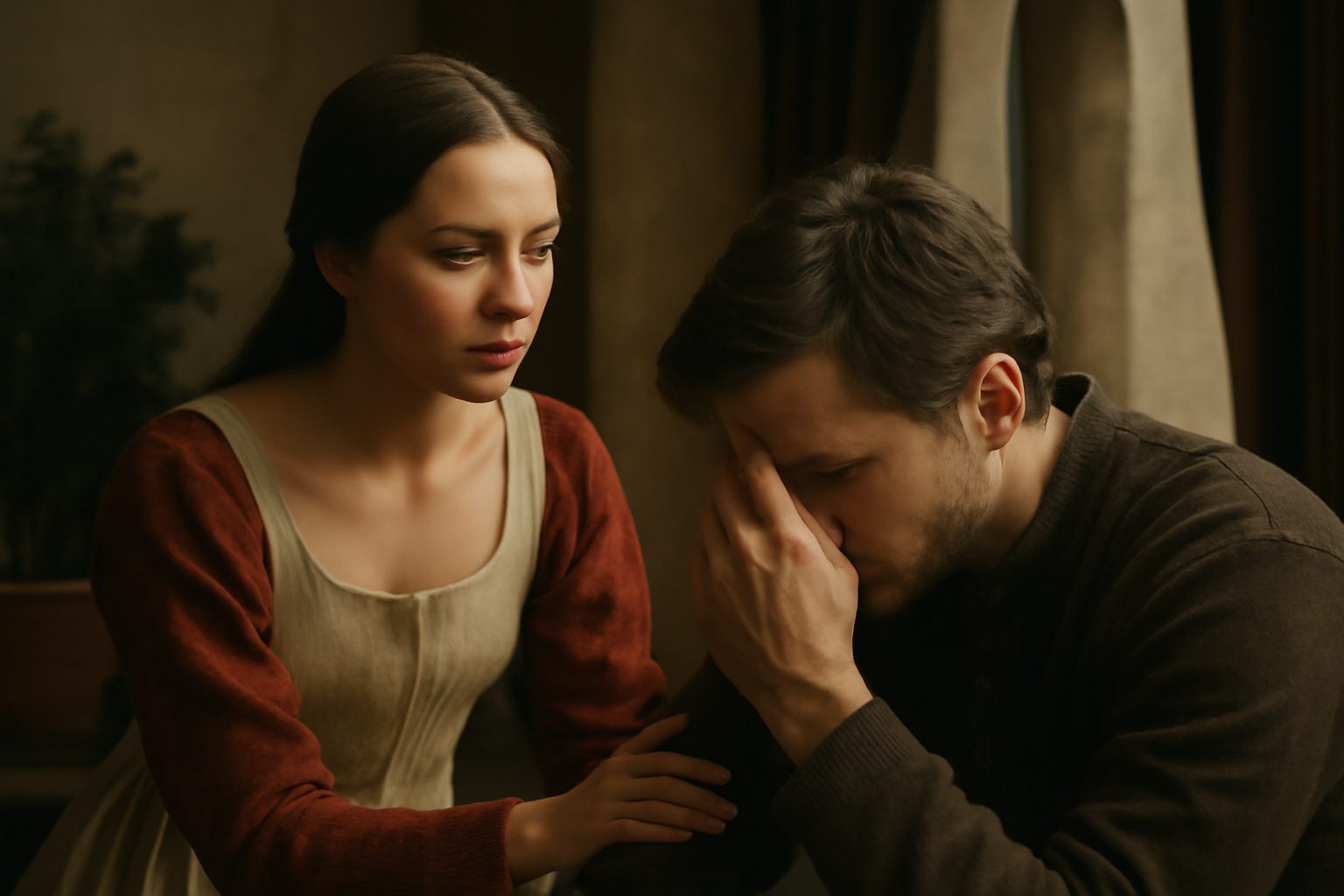
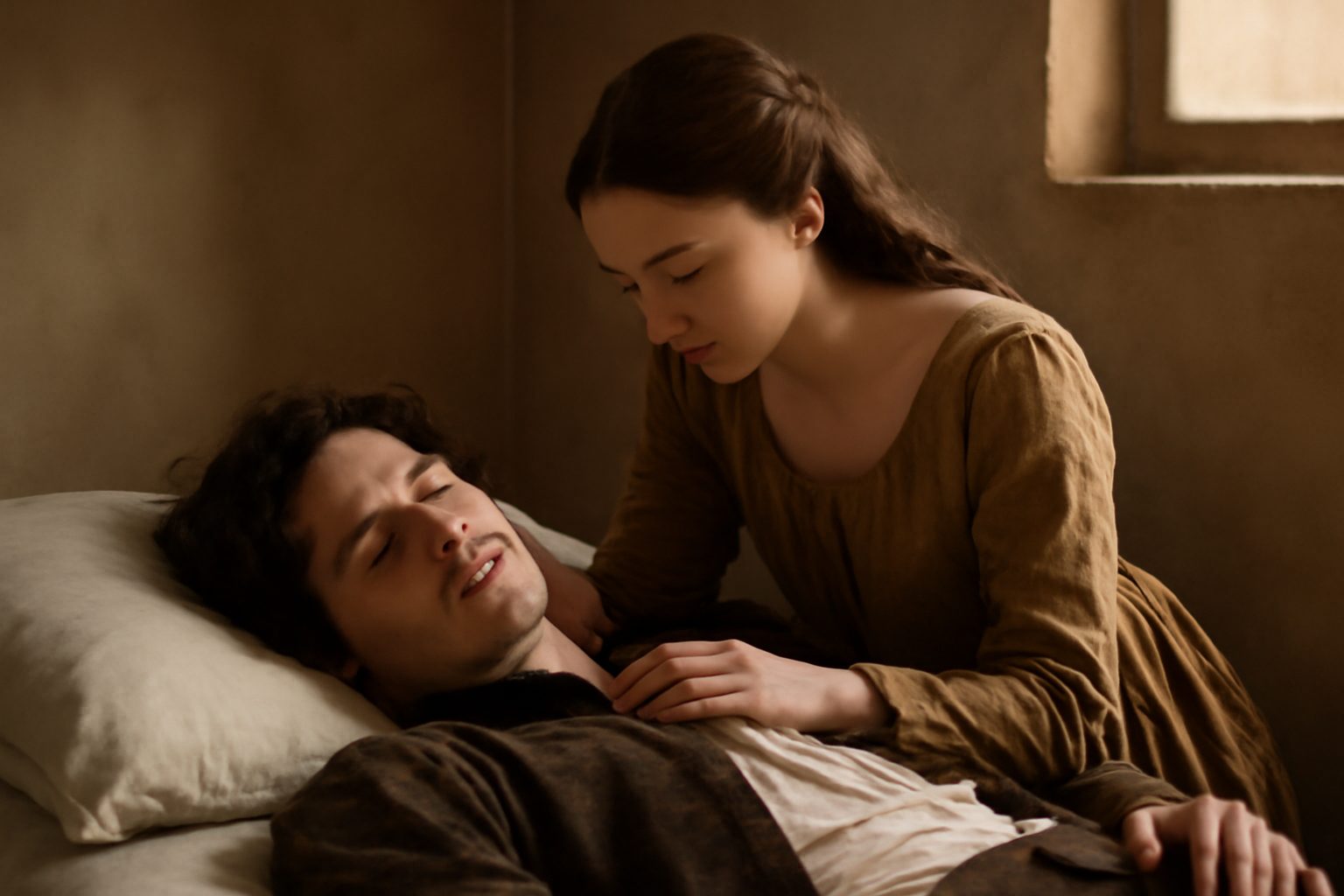
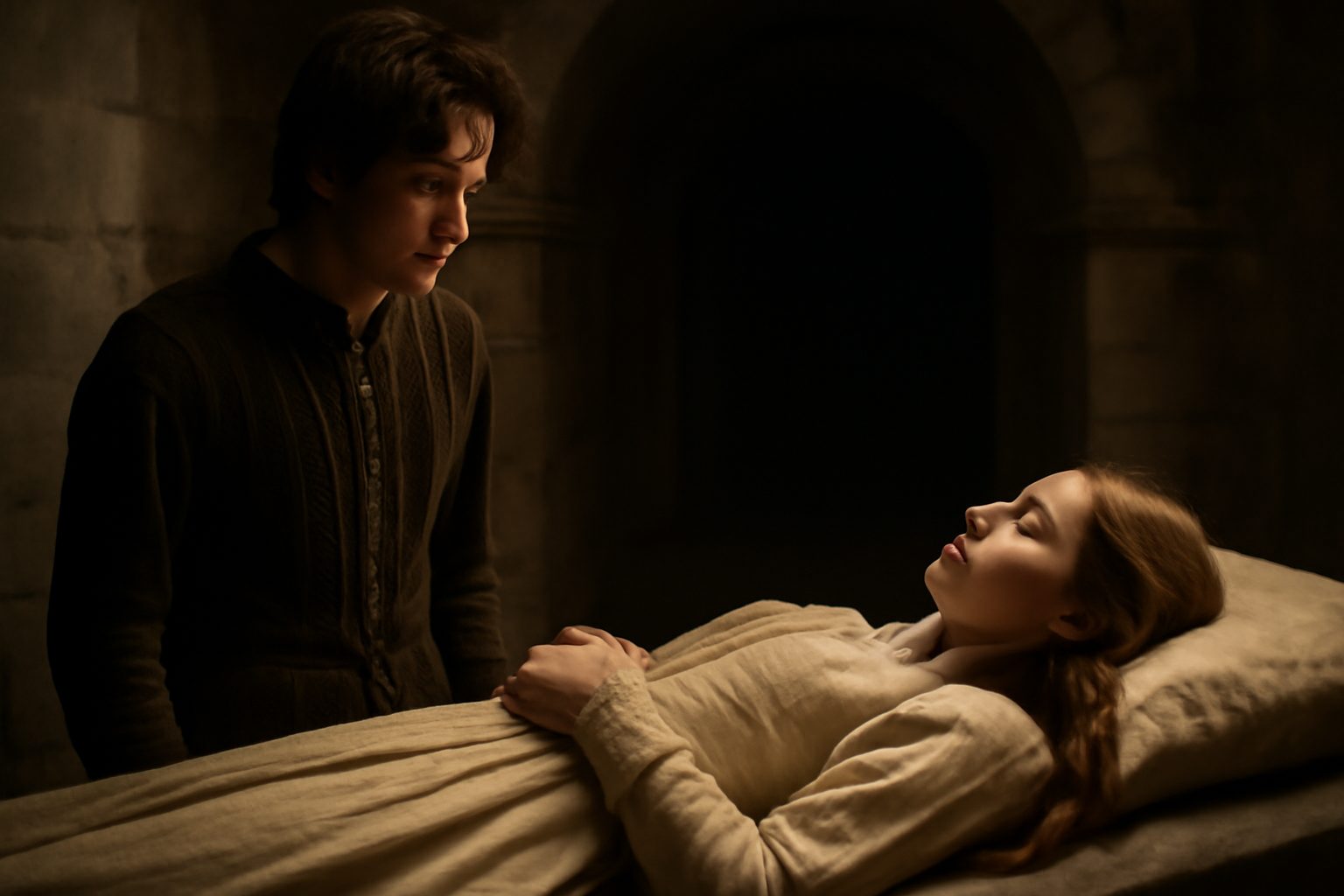
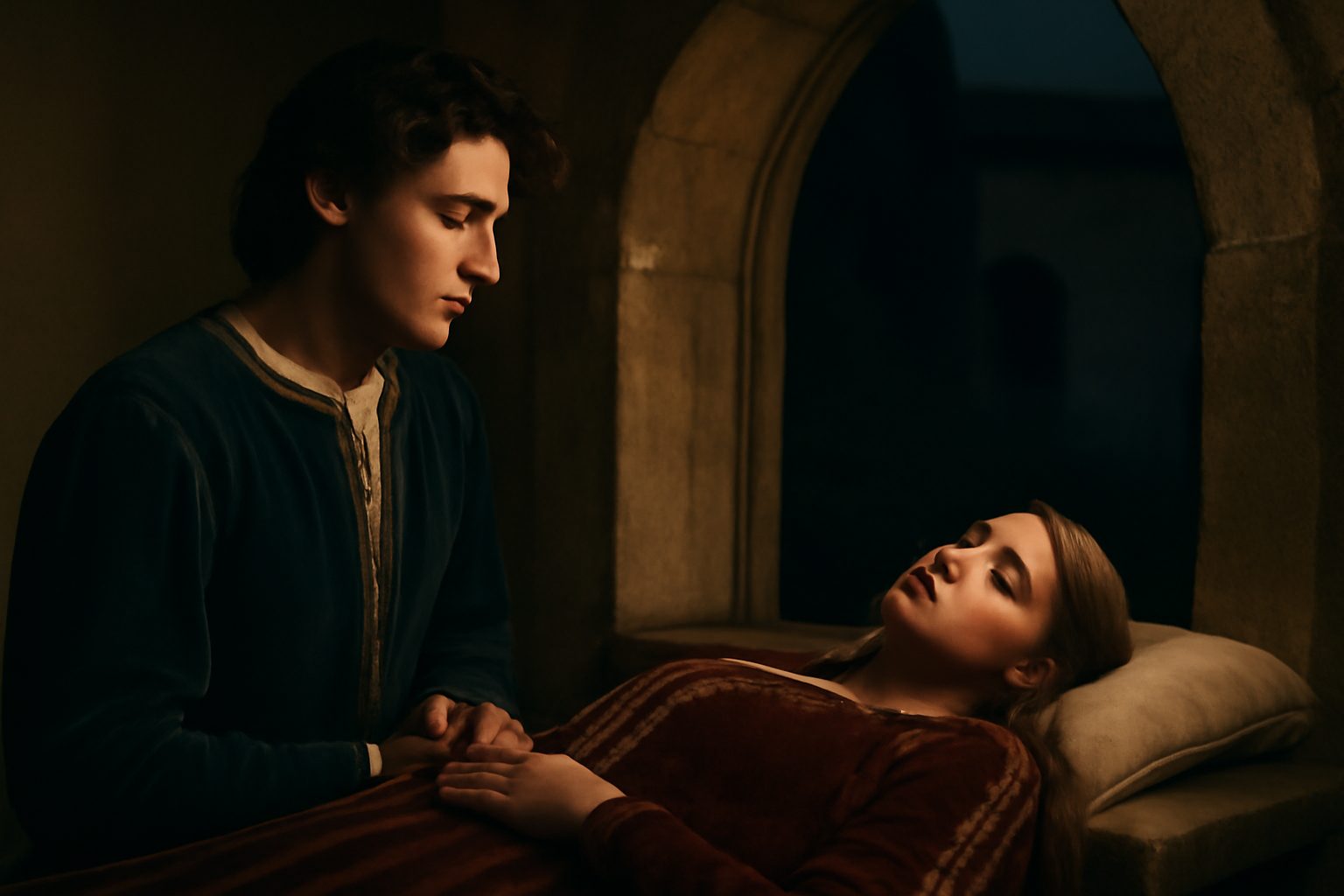
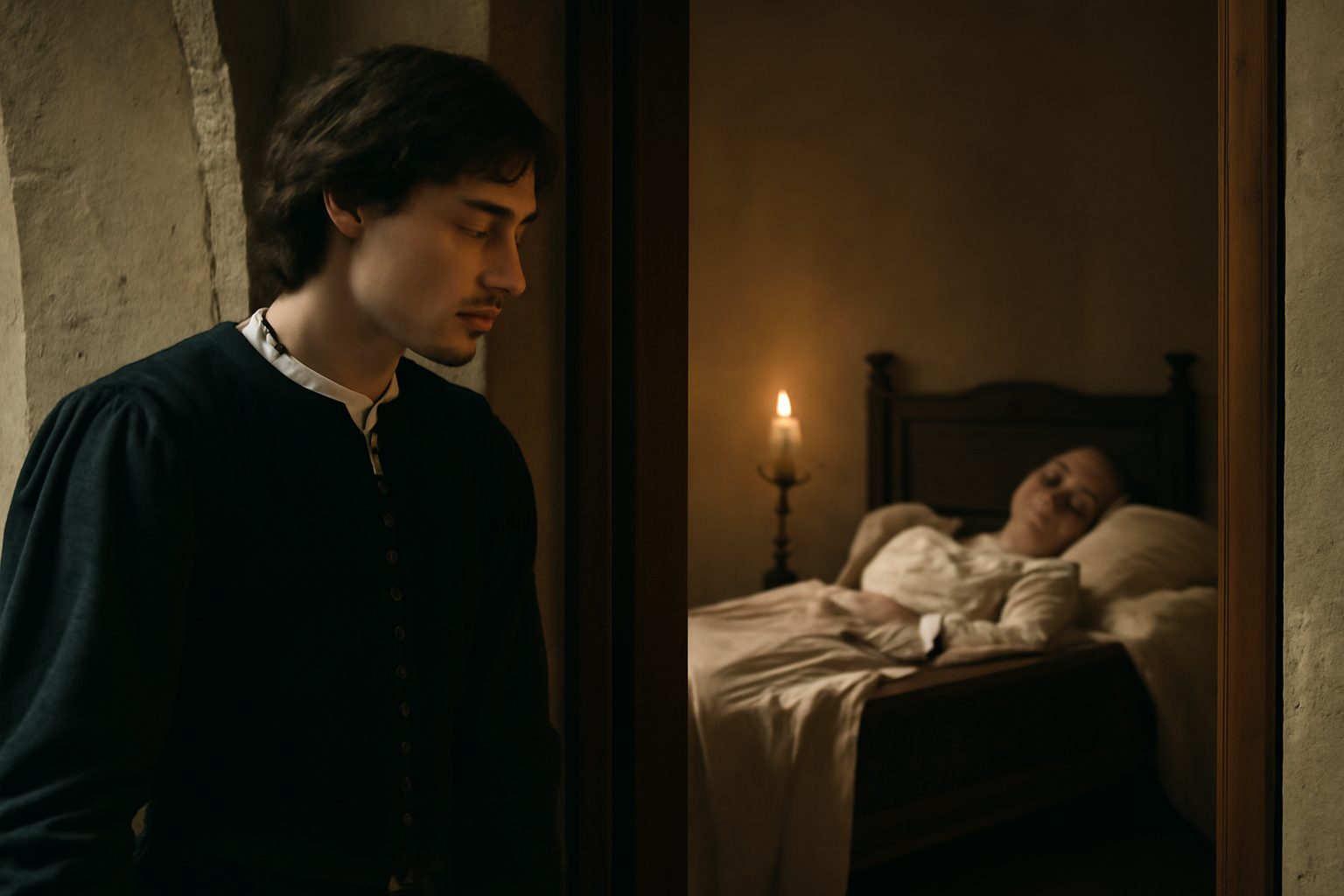
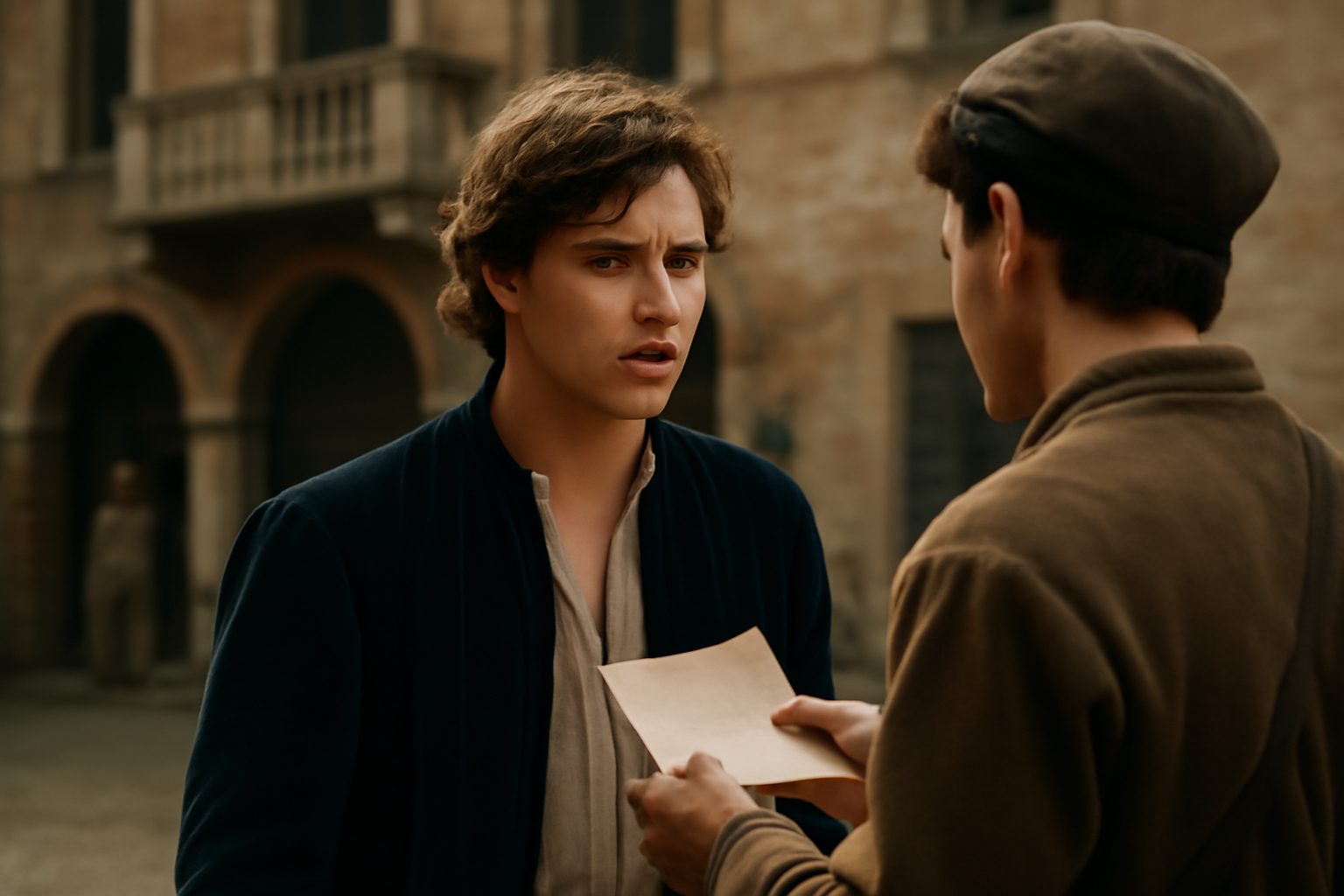
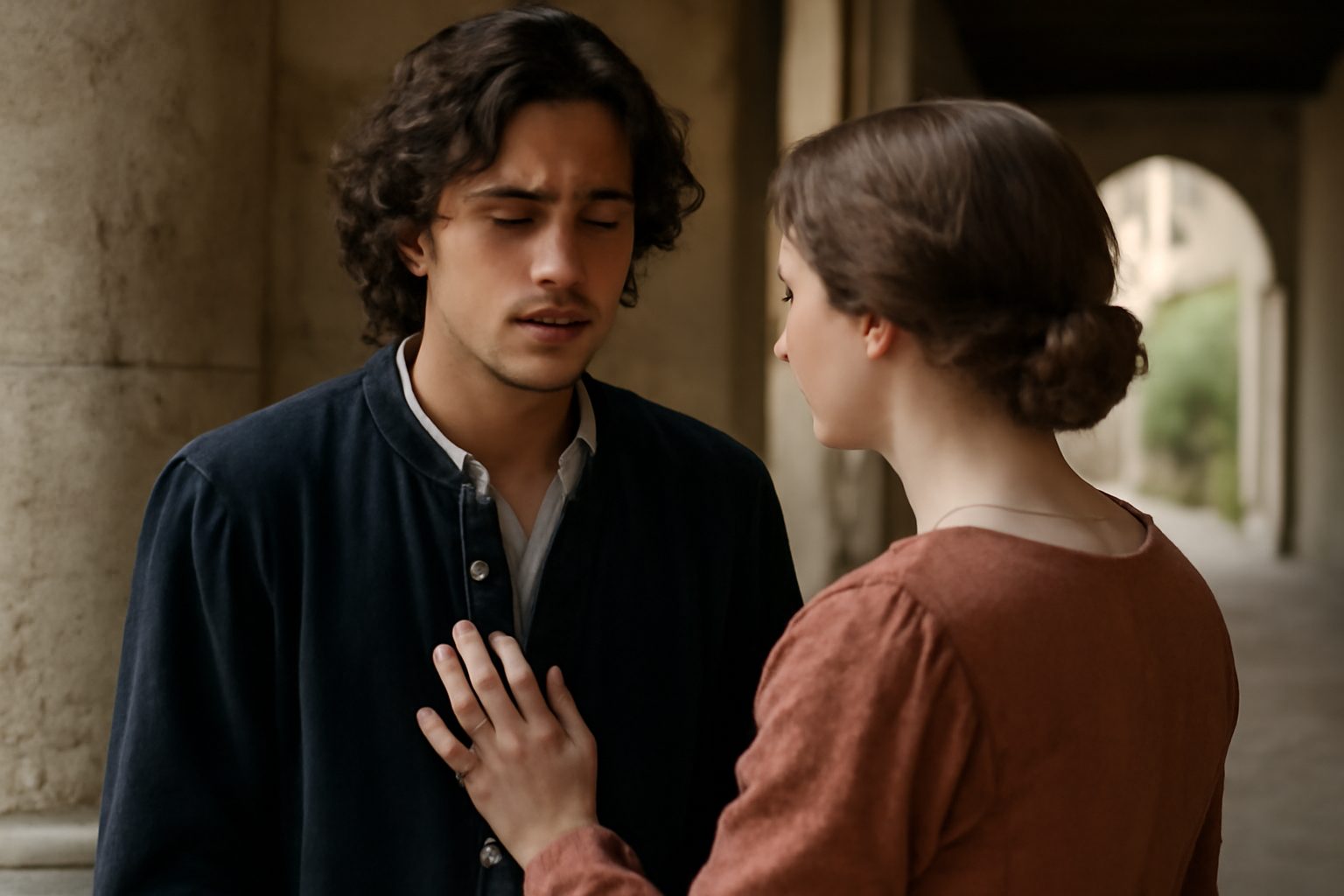
In Act 5, Scene 1 of Romeo and Juliet, Romeo is in exile in Mantua when his servant Balthasar arrives with news from Verona. This brief line is Balthasar's respectful response to Romeo, confirming the tragic report of Juliet's supposed death. The moment marks a turning point as Romeo, devastated, resolves to return to Verona with desperate intentions.
Balthasar: "No, my good lord."
In modern day english, we would say:
No, sir.
Frequently Asked Questions
Who is speaking in this line from Romeo and Juliet?
Balthasar
What is Balthasar responding to in this line?
He is responding to his lord, likely Romeo
In which act and scene does this line appear?
Act 5, Scene 1
Connections to other verses:
Connections to "No, my good lord."
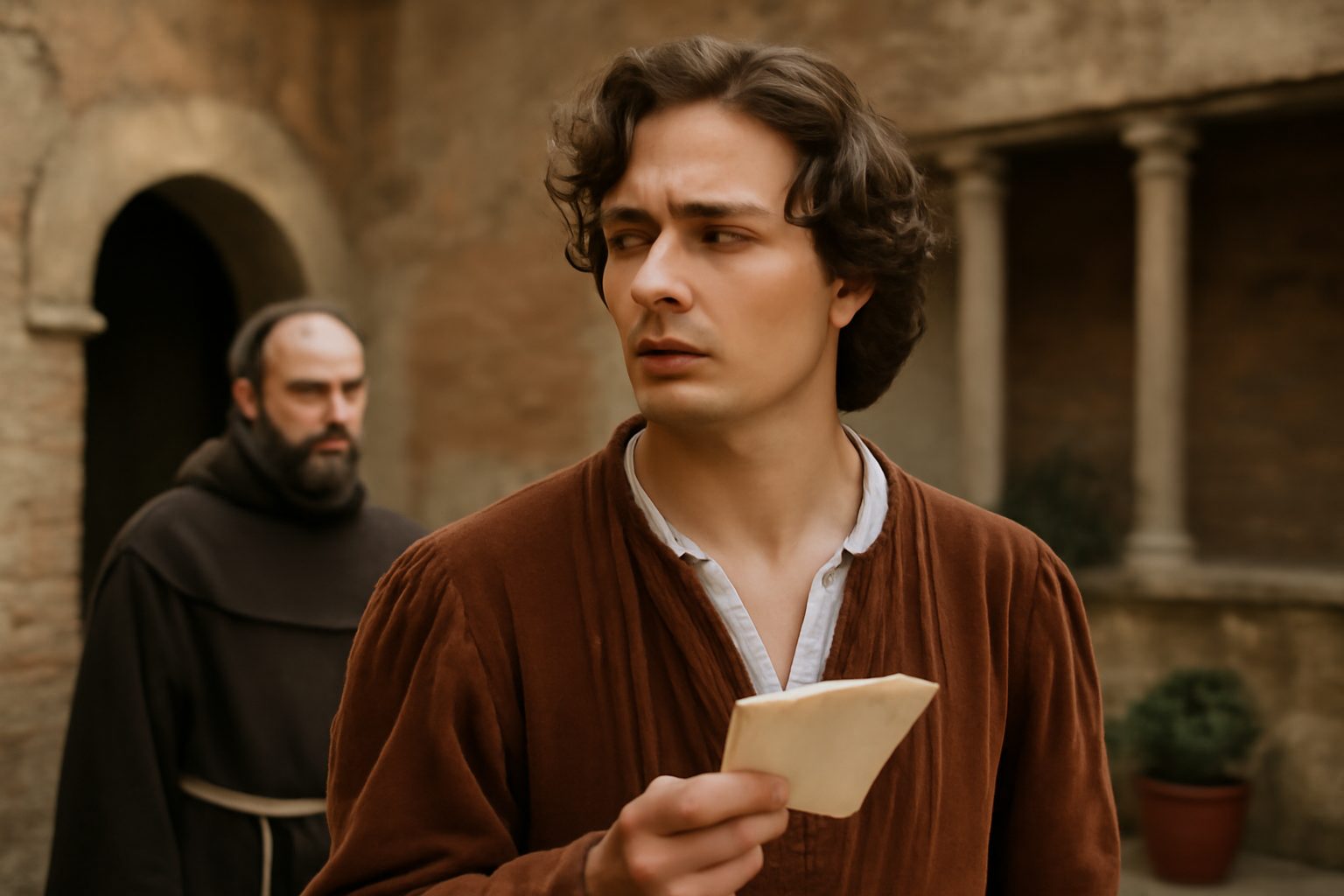
The verse No, my good lord. is spoken by Balthasar in response to Romeo's question about letters from Friar Laurence. This brief denial sets off a chain of tragic realizations and actions.
Immediate Context and Foreshadowing
Just before this, Romeo asks Hast thou no letters to me from the friar?, showing his desperate hope for news that might alter his fate. Balthasar's negative reply confirms Romeo's isolation and propels him toward his desperate resolve, leading to his defiant cry, Is it even so? then I defy you, stars!
Contrast with Earlier Optimism
This moment starkly contrasts with Romeo's earlier joyful anticipation, expressed in My dreams presage some joyful news at hand and My bosom's lord sits lightly in his throne. The absence of the expected letter shatters his optimism, replacing it with despair.
Trigger for Action
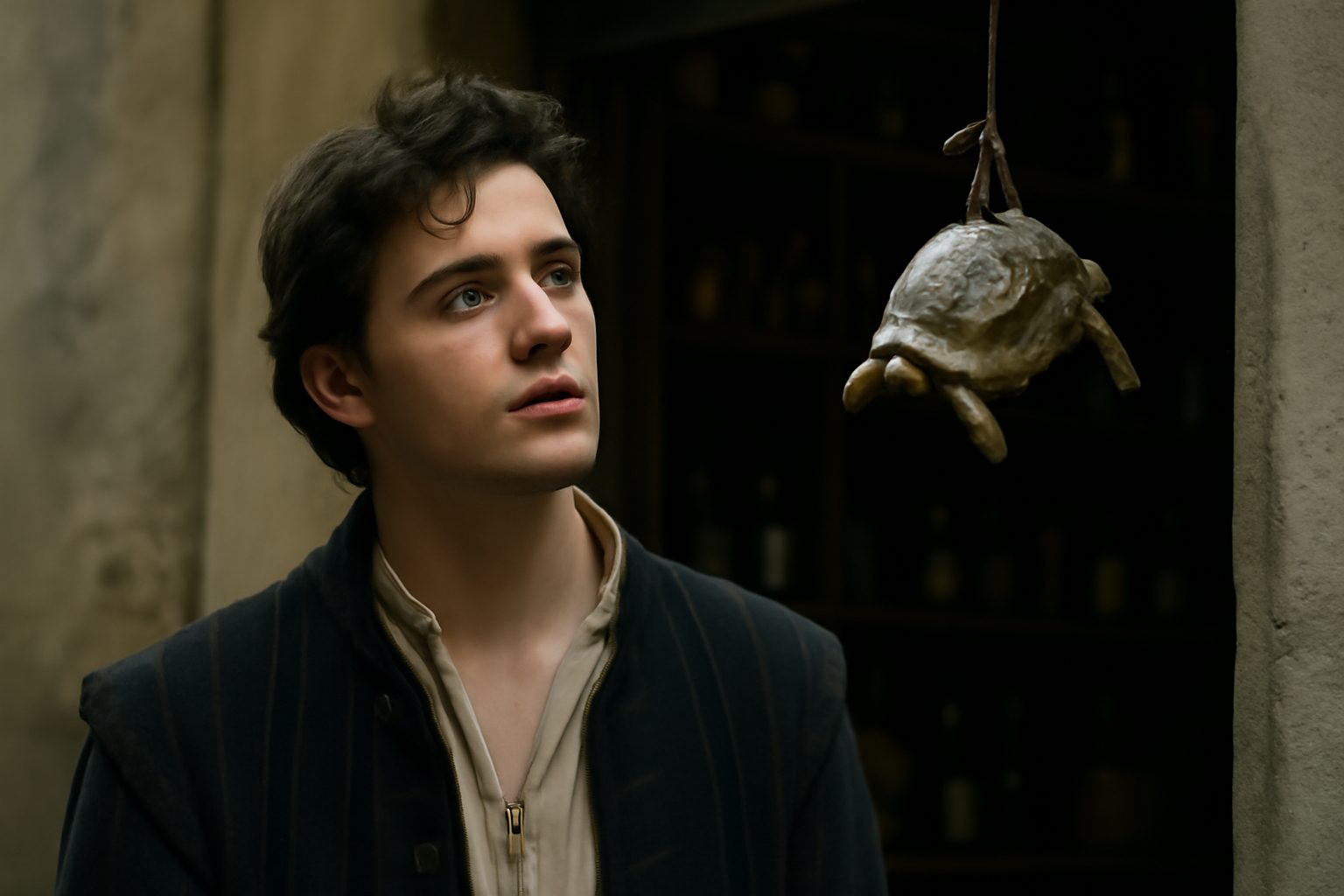
Balthasar's negative response is the catalyst for Romeo's swift decision to return to Verona. He immediately commands, Thou know'st my lodging: get me ink and paper, and And hire post-horses; I will hence to-night., setting his tragic end in motion.
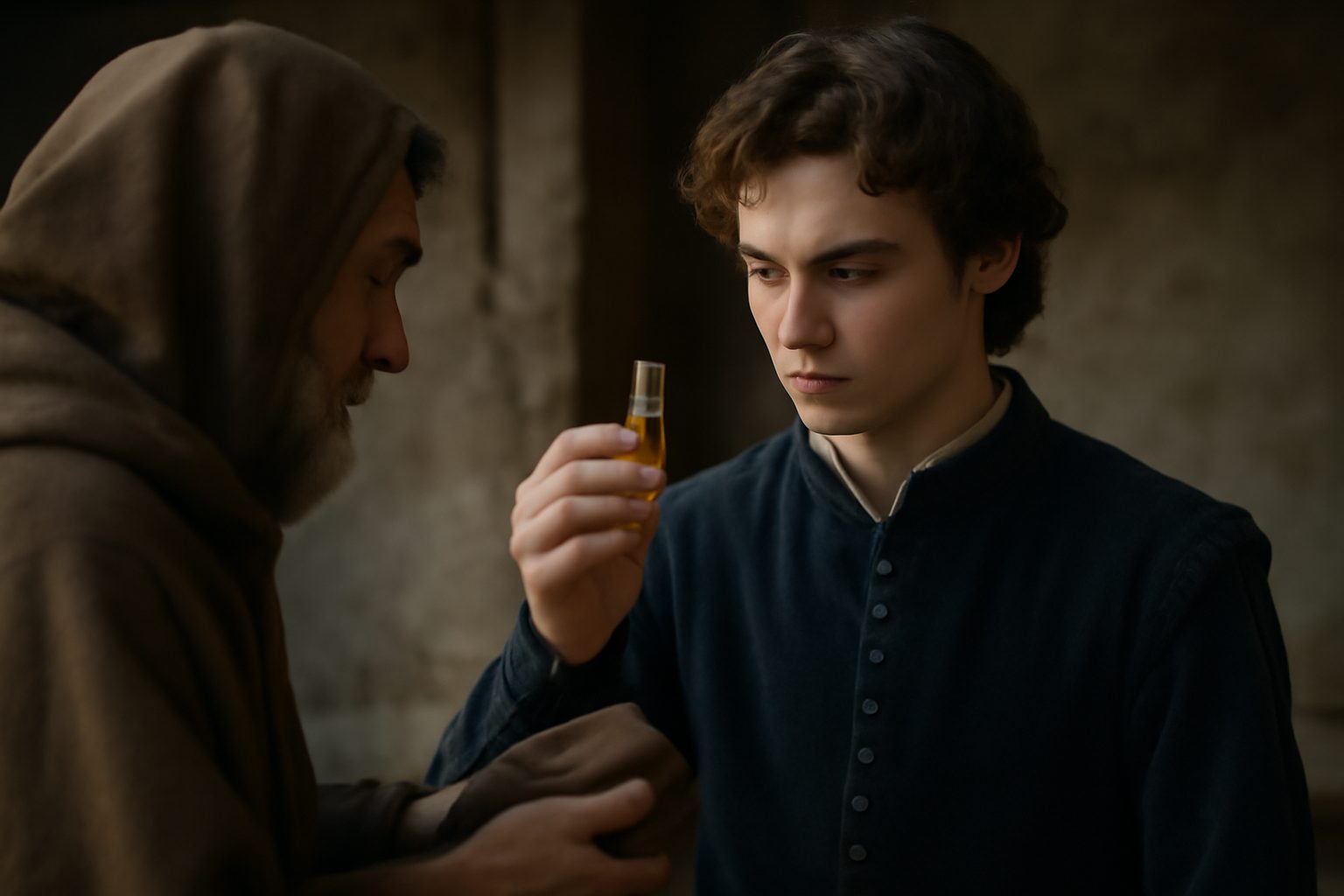
Connection to the Apothecary Scene
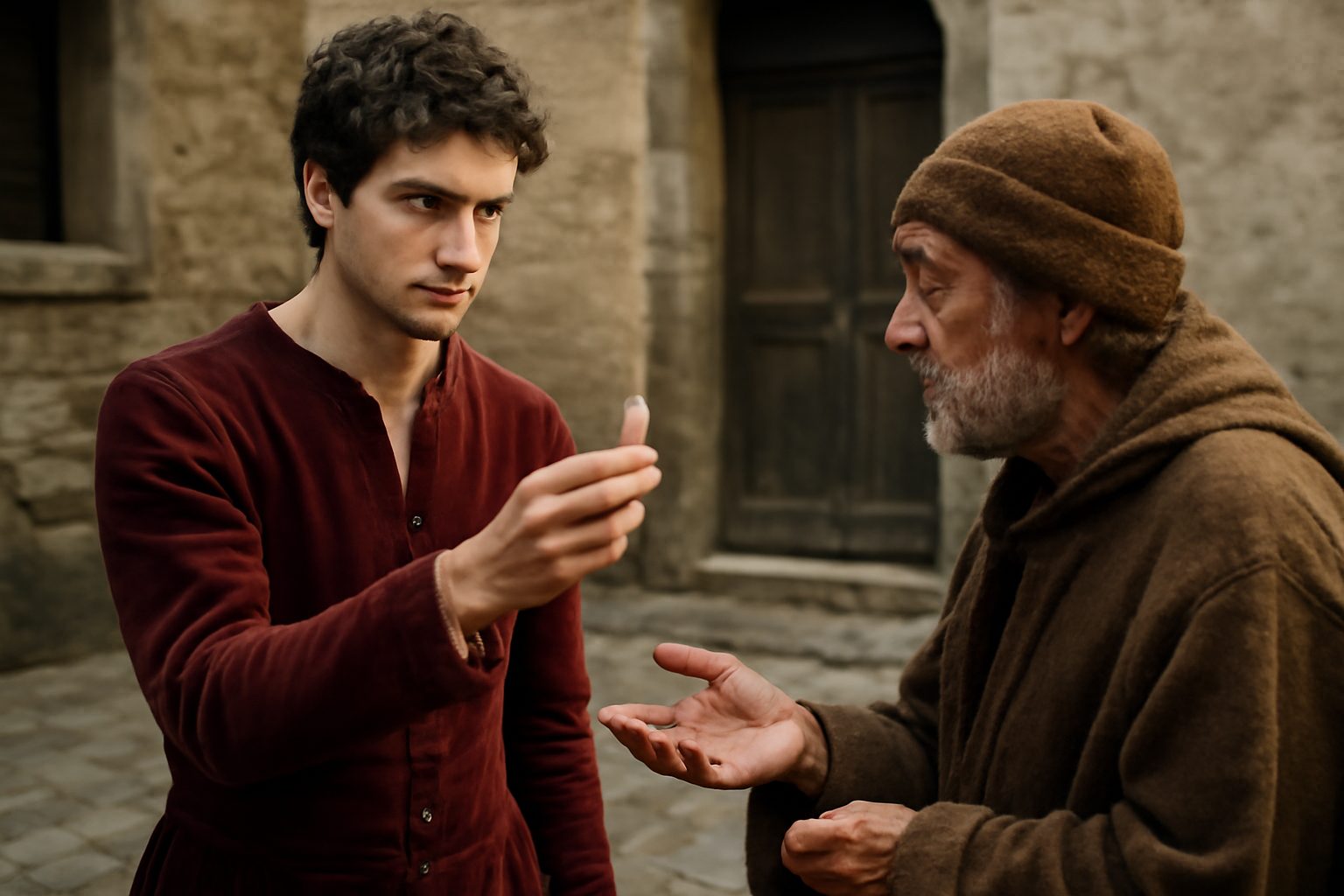
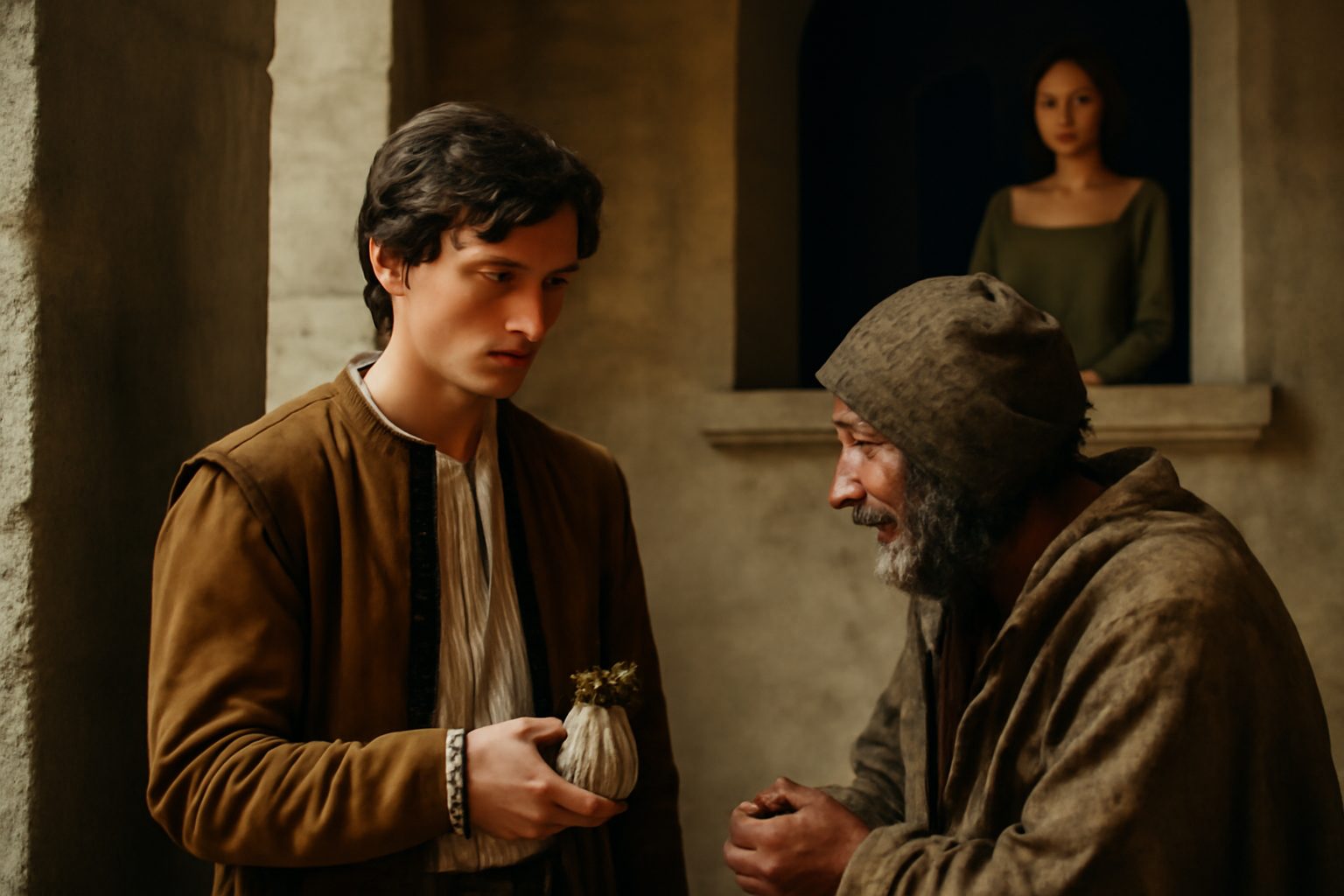
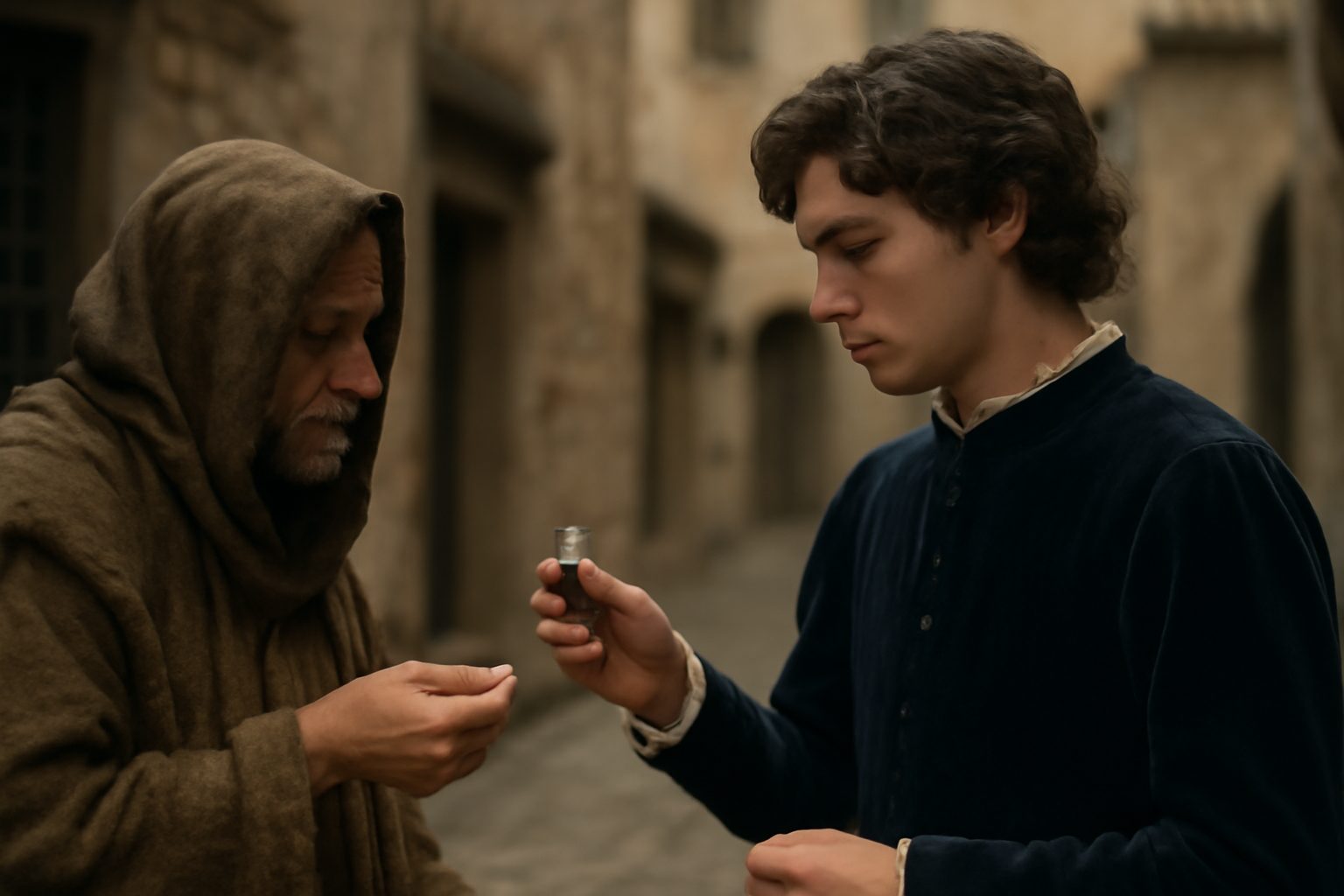
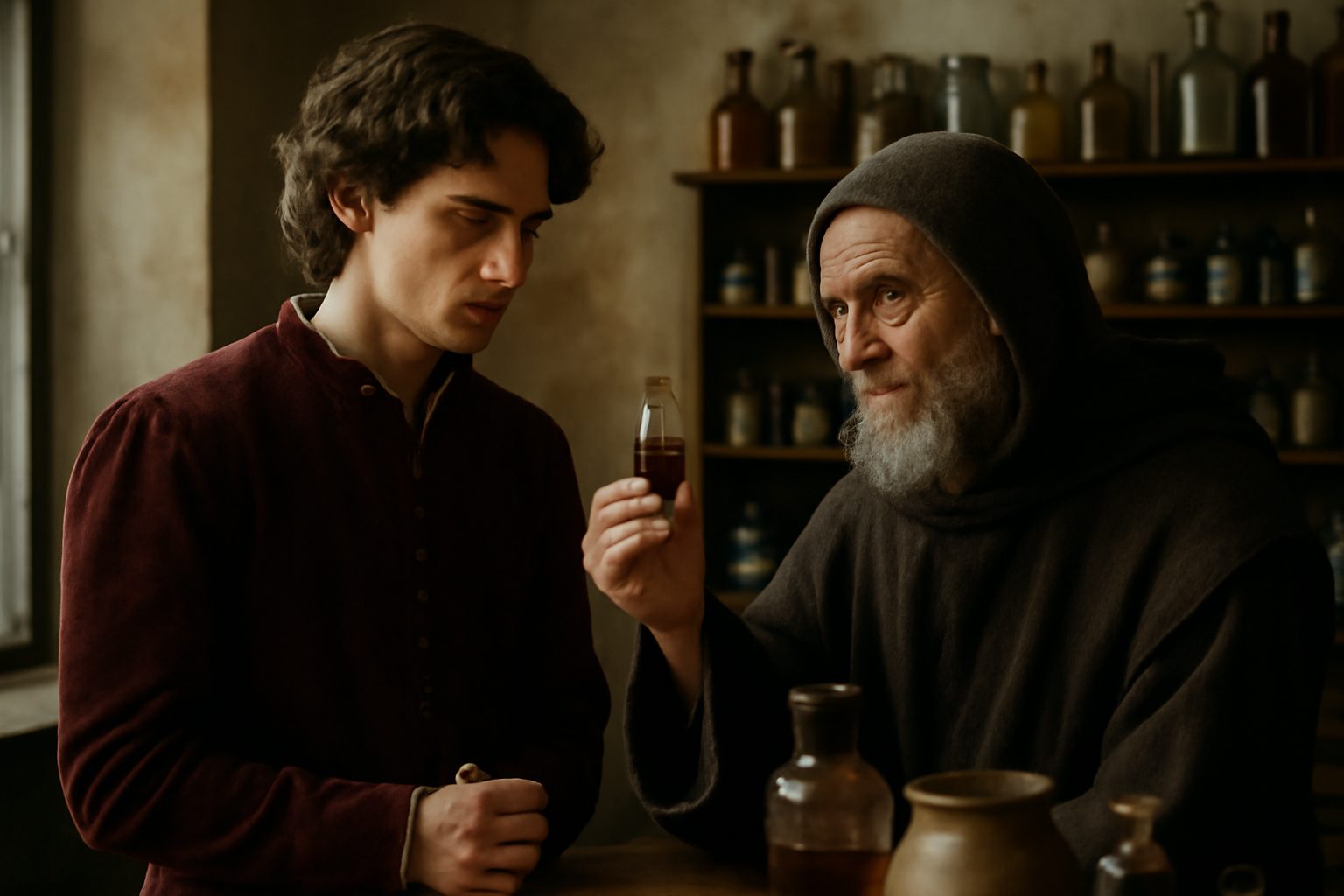
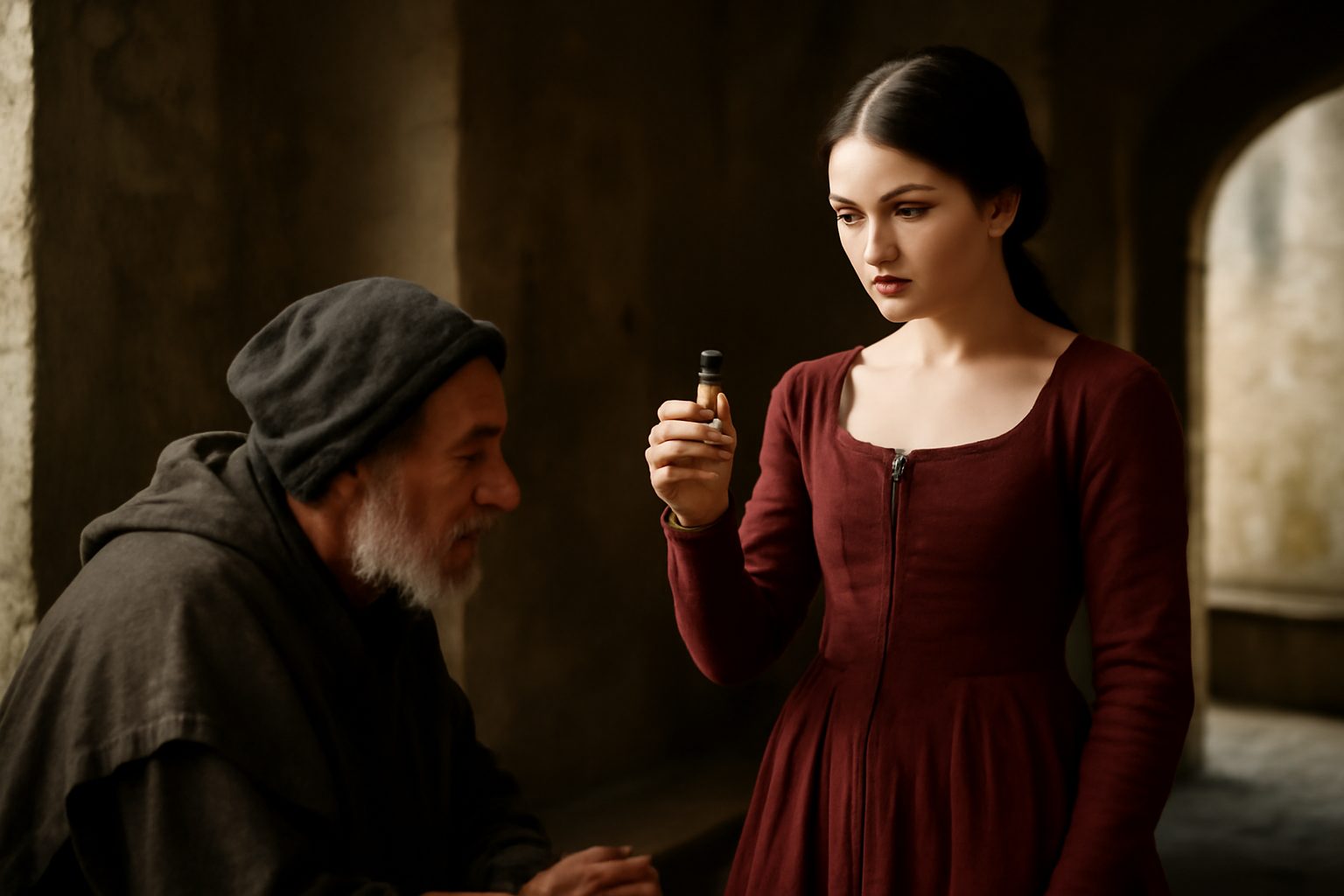
This denial indirectly leads Romeo to seek the apothecary, as he recalls, I do remember an apothecary, and resolves to obtain poison. The interaction culminates in Romeo's declaration, Well, Juliet, I will lie with thee to-night., directly tying Balthasar's words to the final tragedy.
Emotional Impact
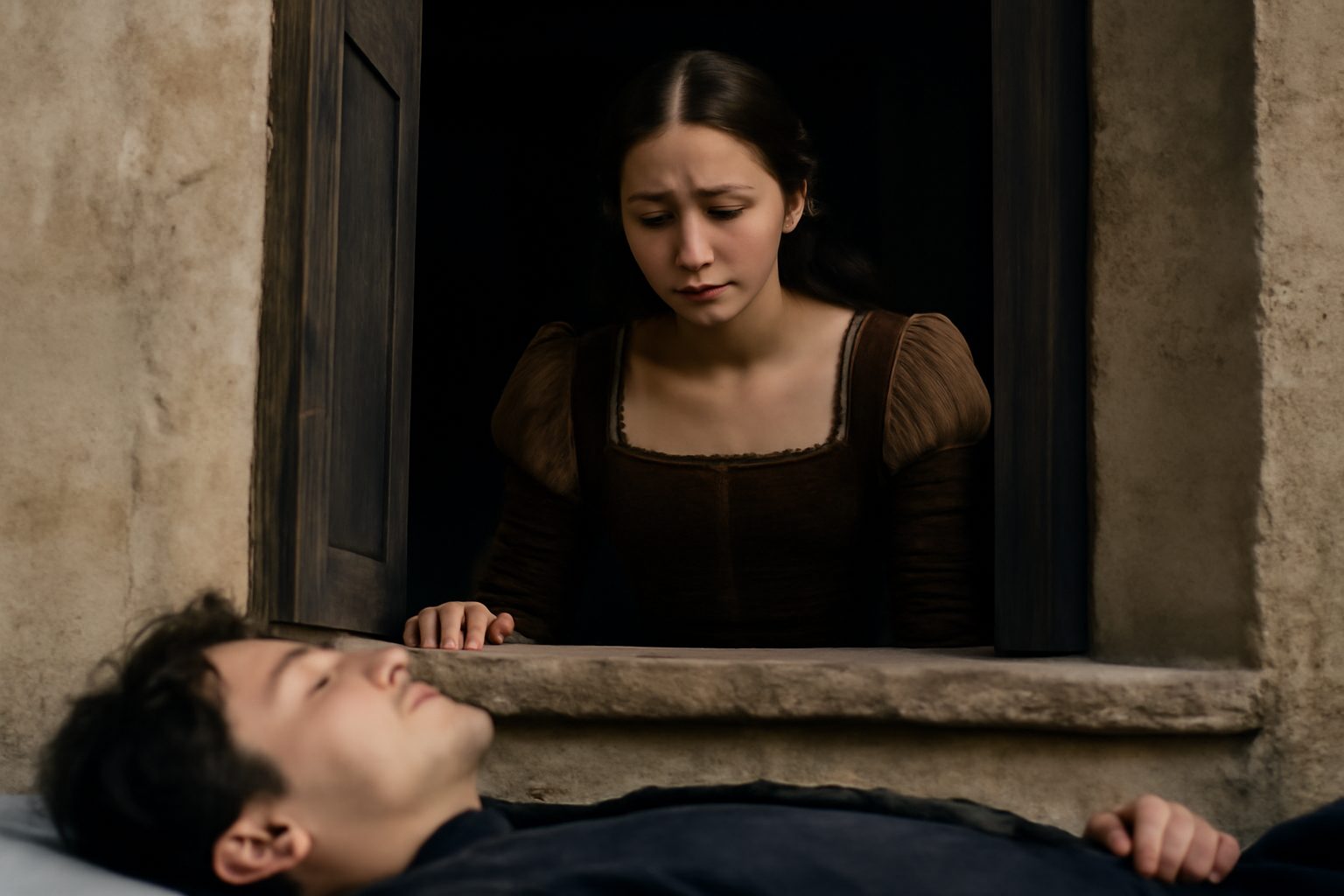
The verse underscores the theme of miscommunication and fate. While Balthasar speaks truthfully, his words, combined with Romeo's misinterpretation of Juliet's death, fulfill the premonition in I dreamt my lady came and found me dead, creating a poignant link between dream and reality.