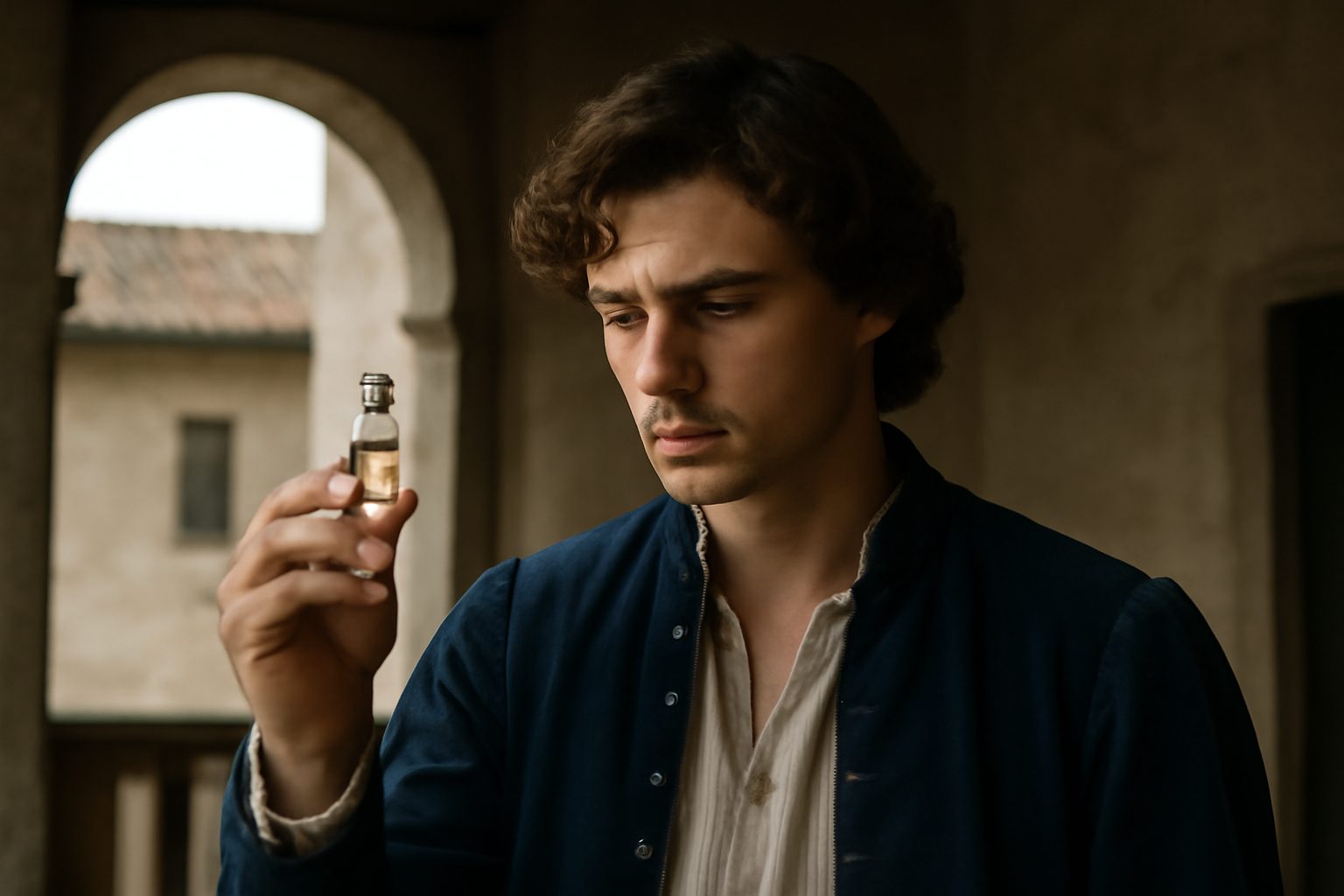
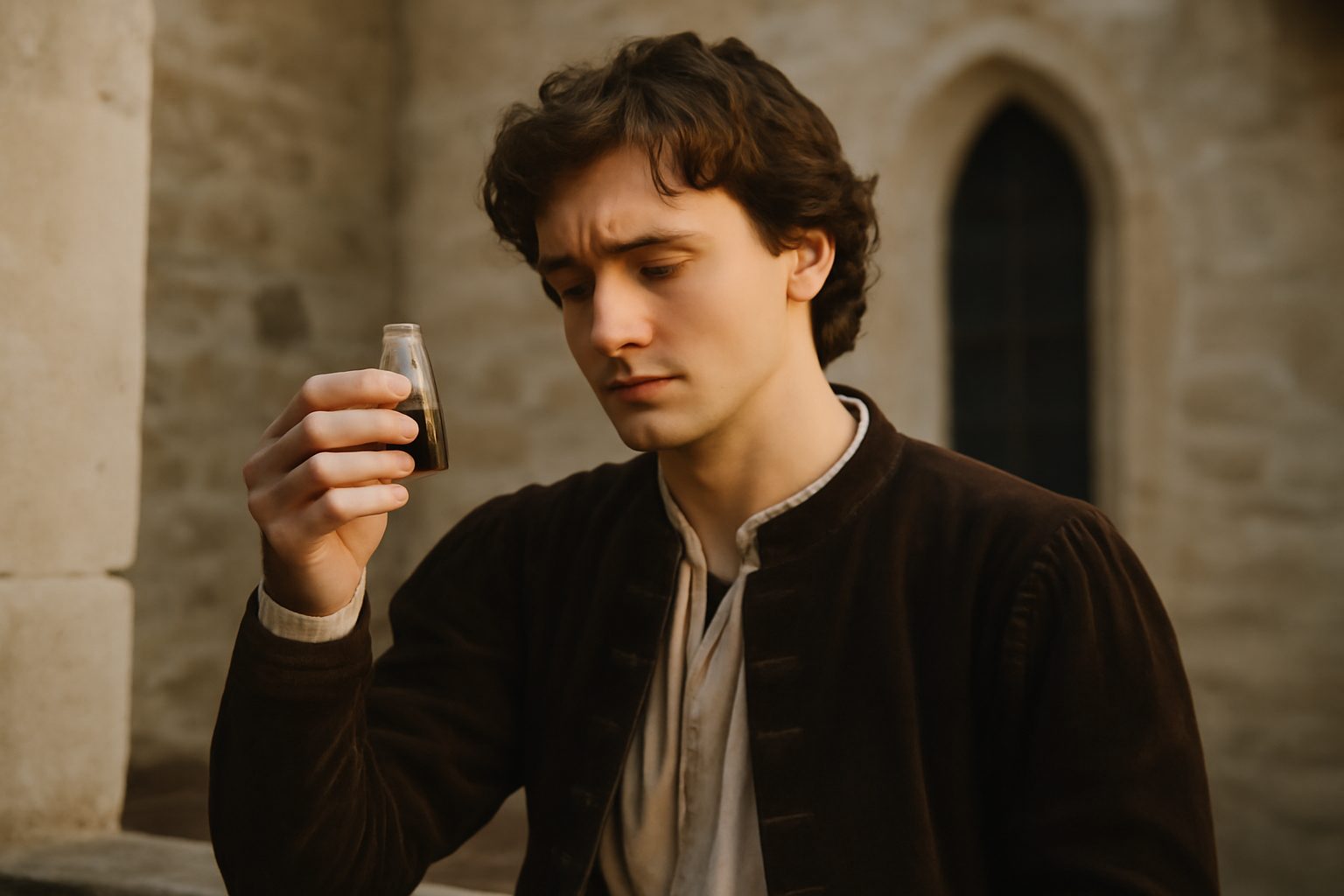
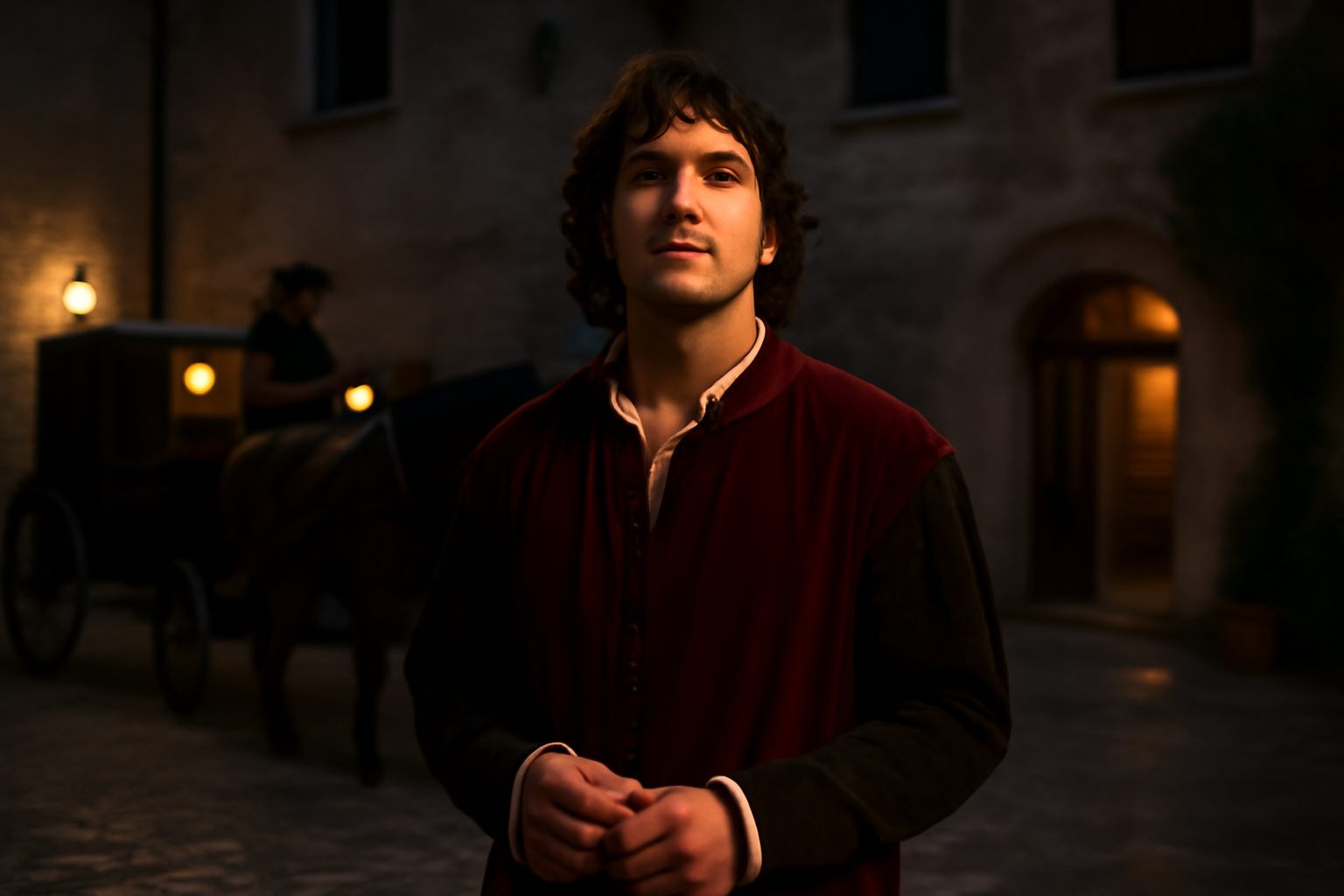
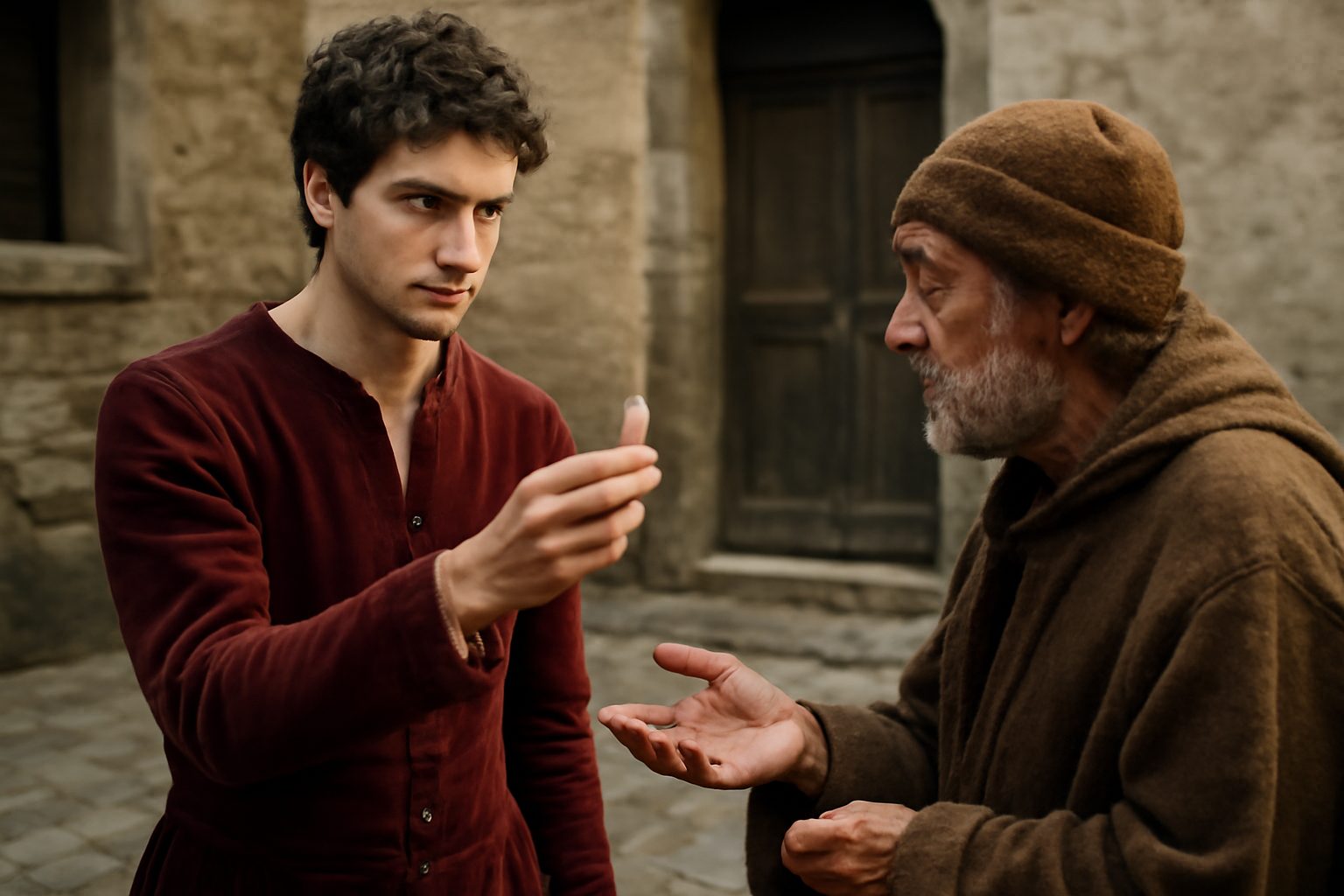
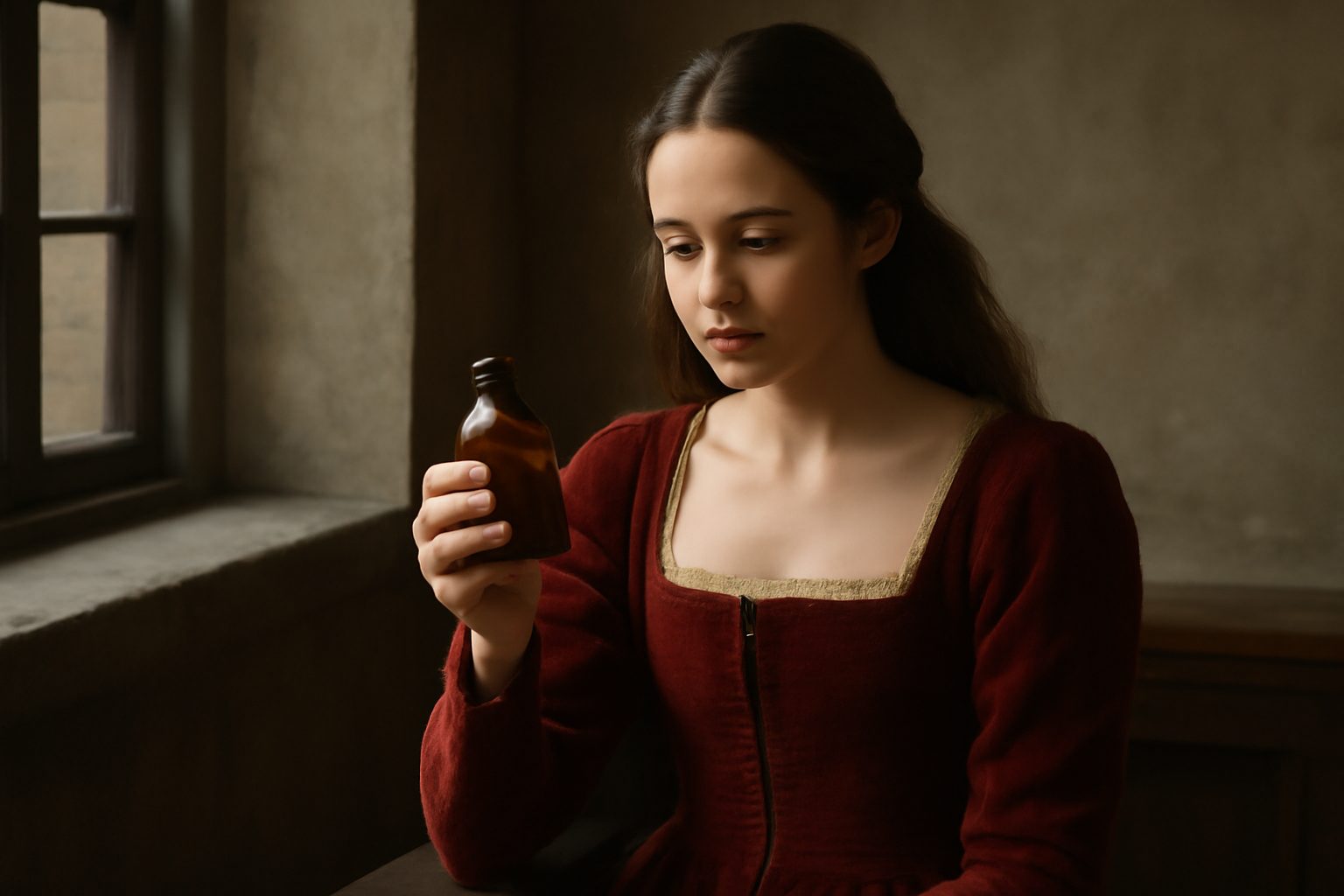
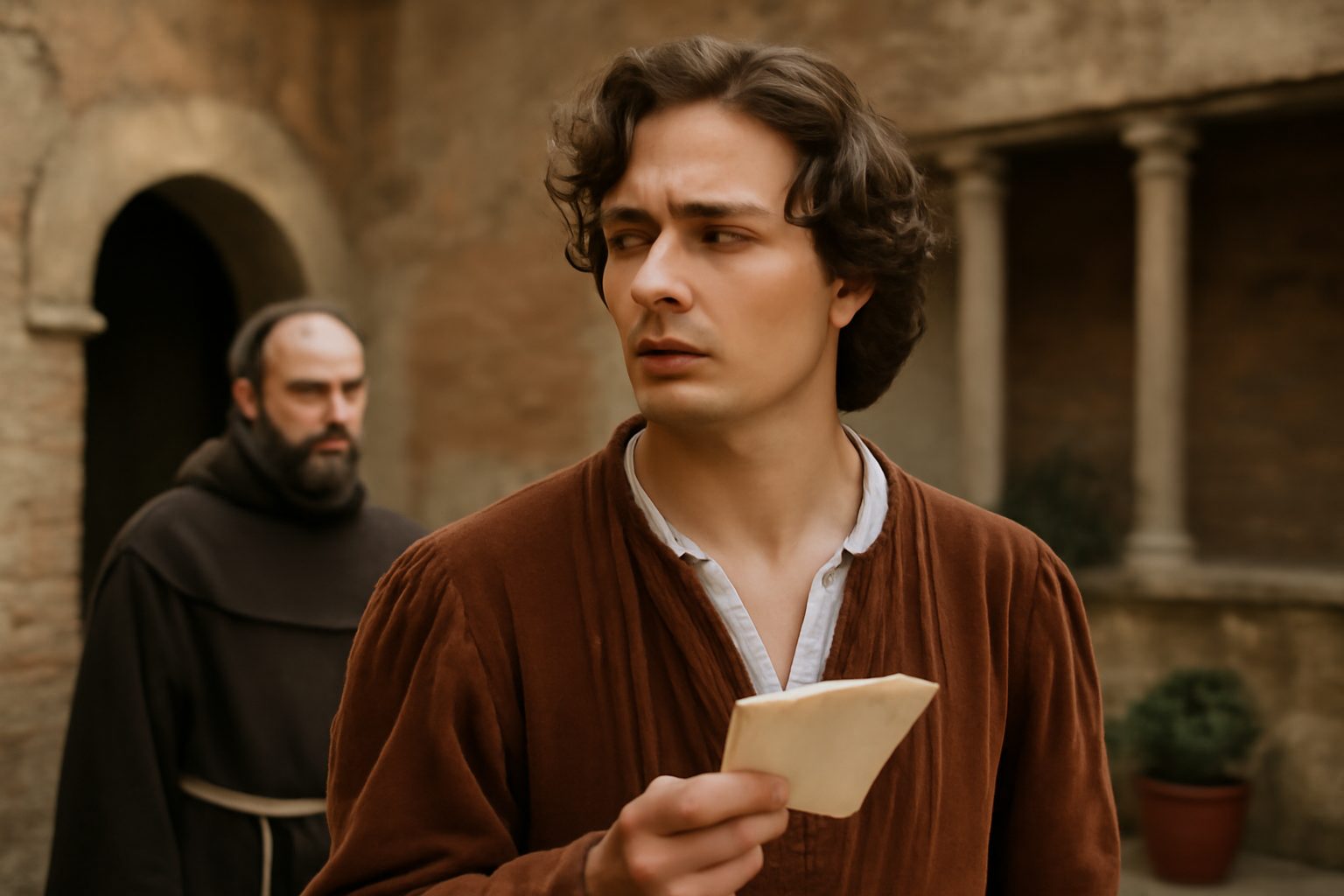
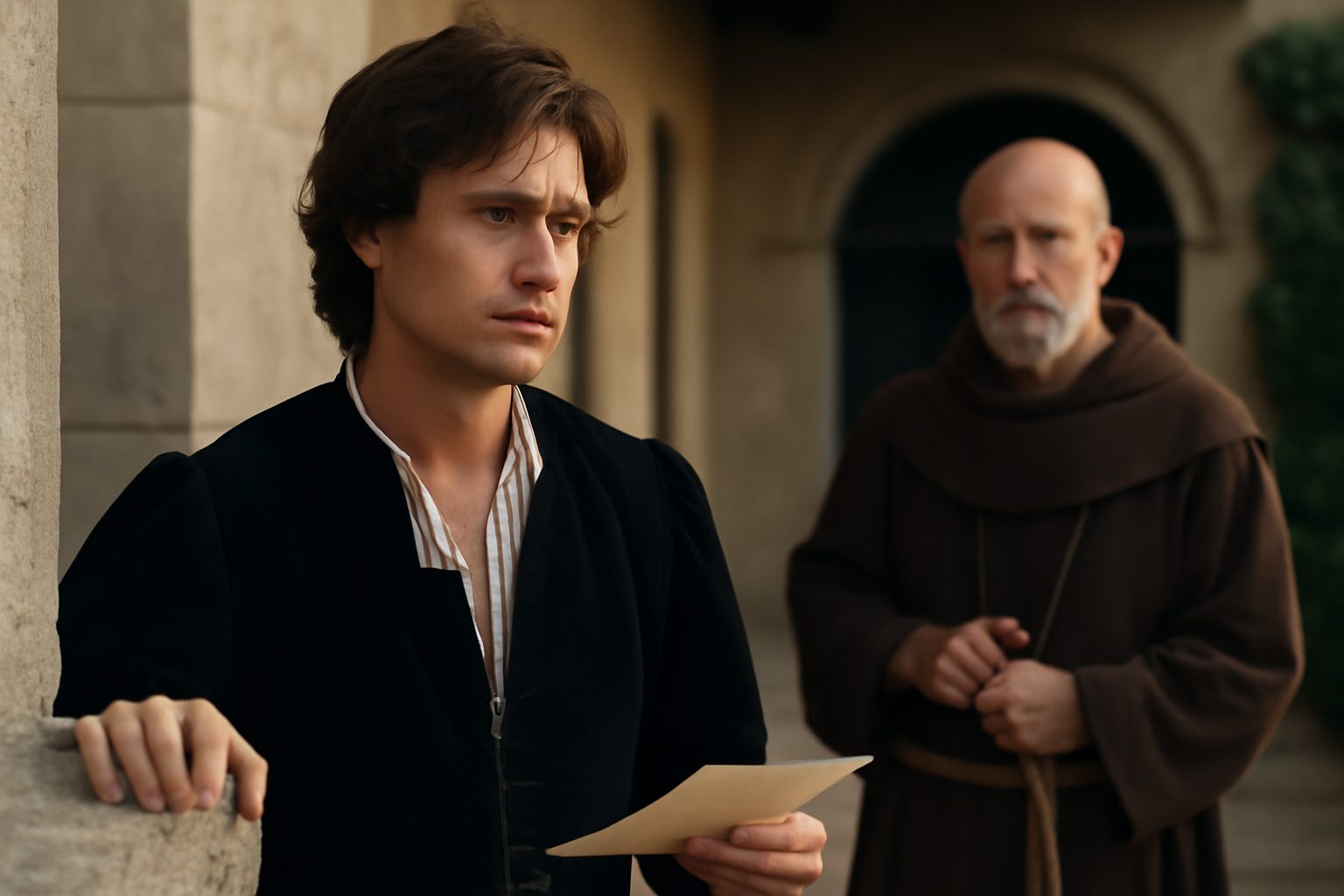
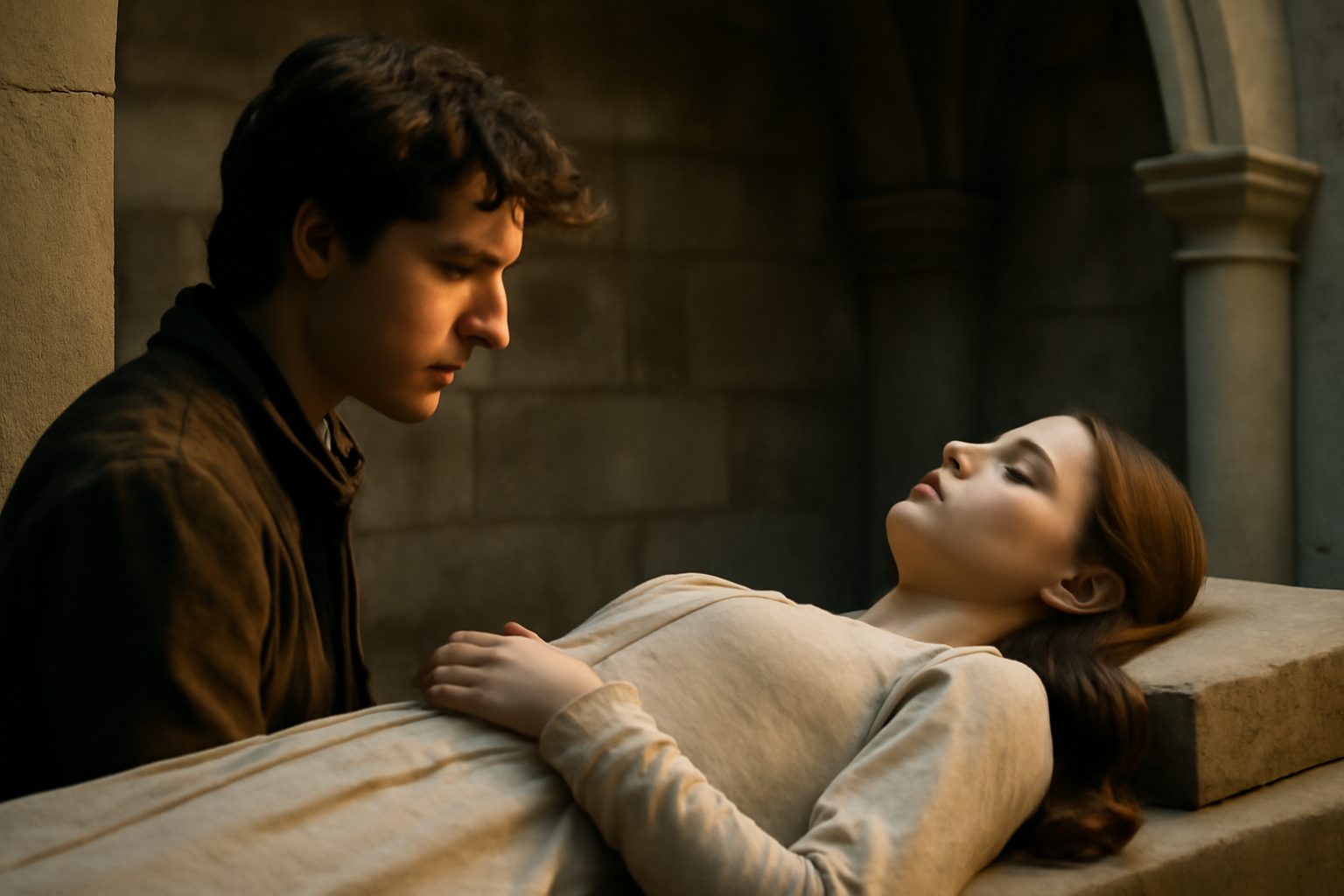
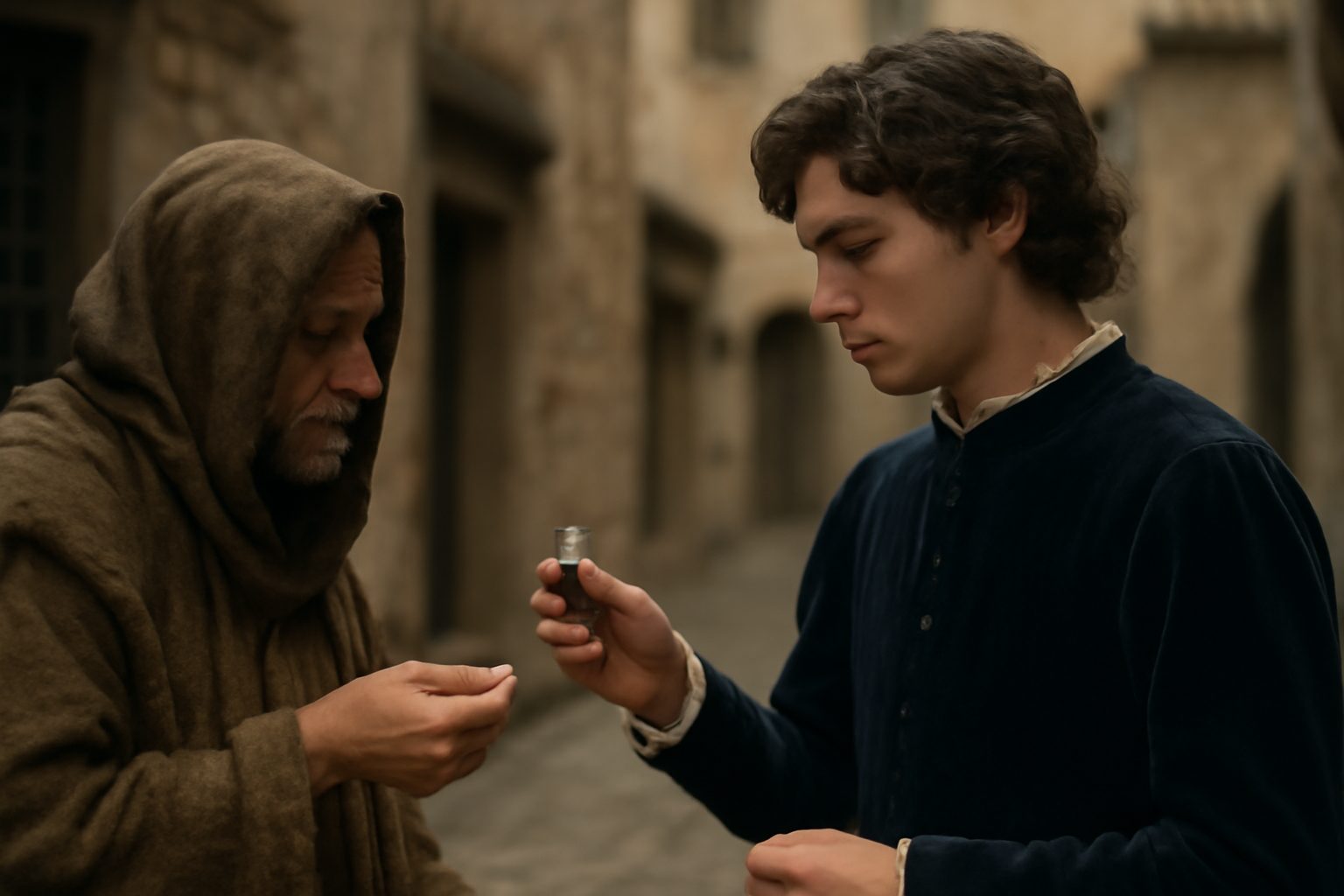
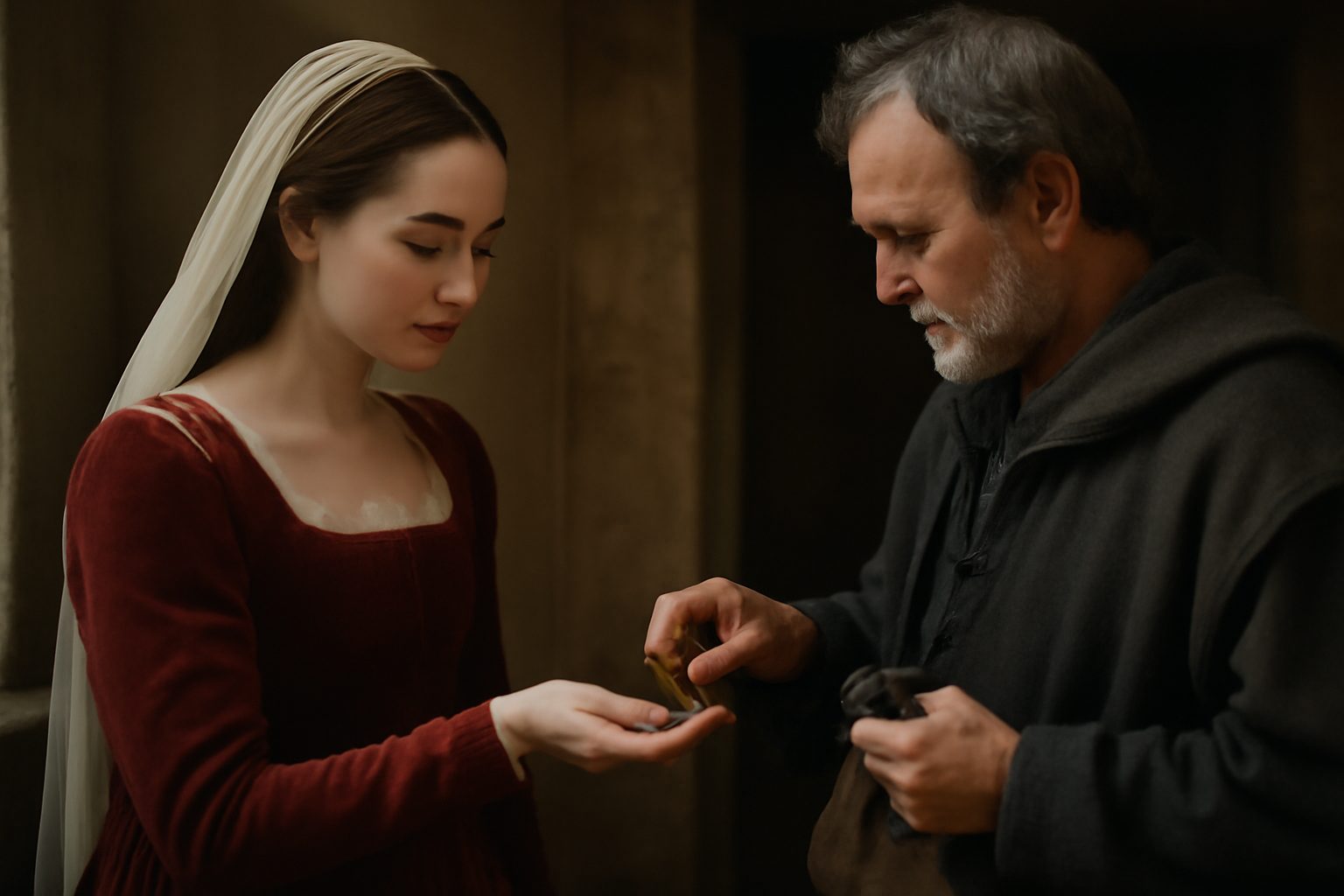
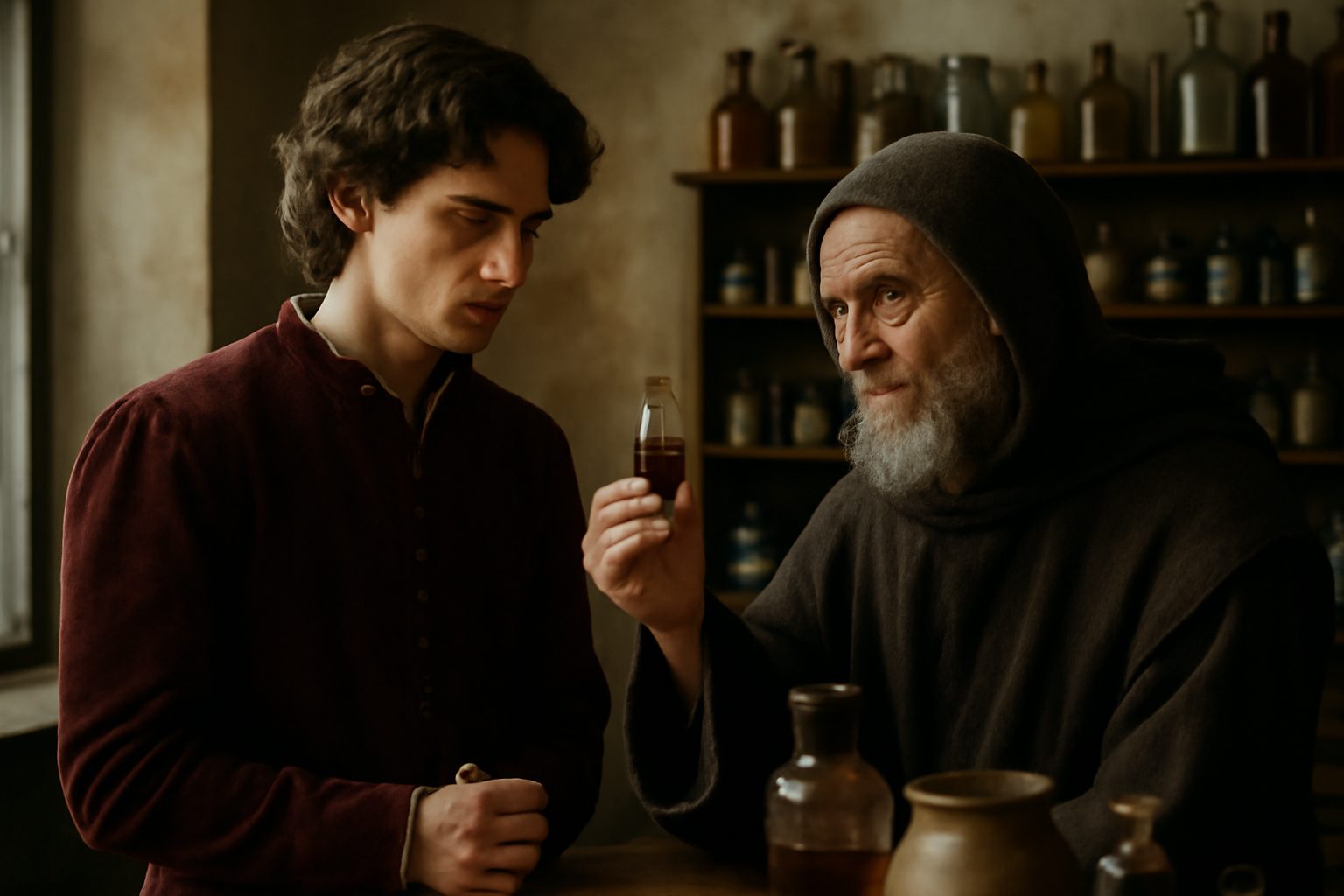
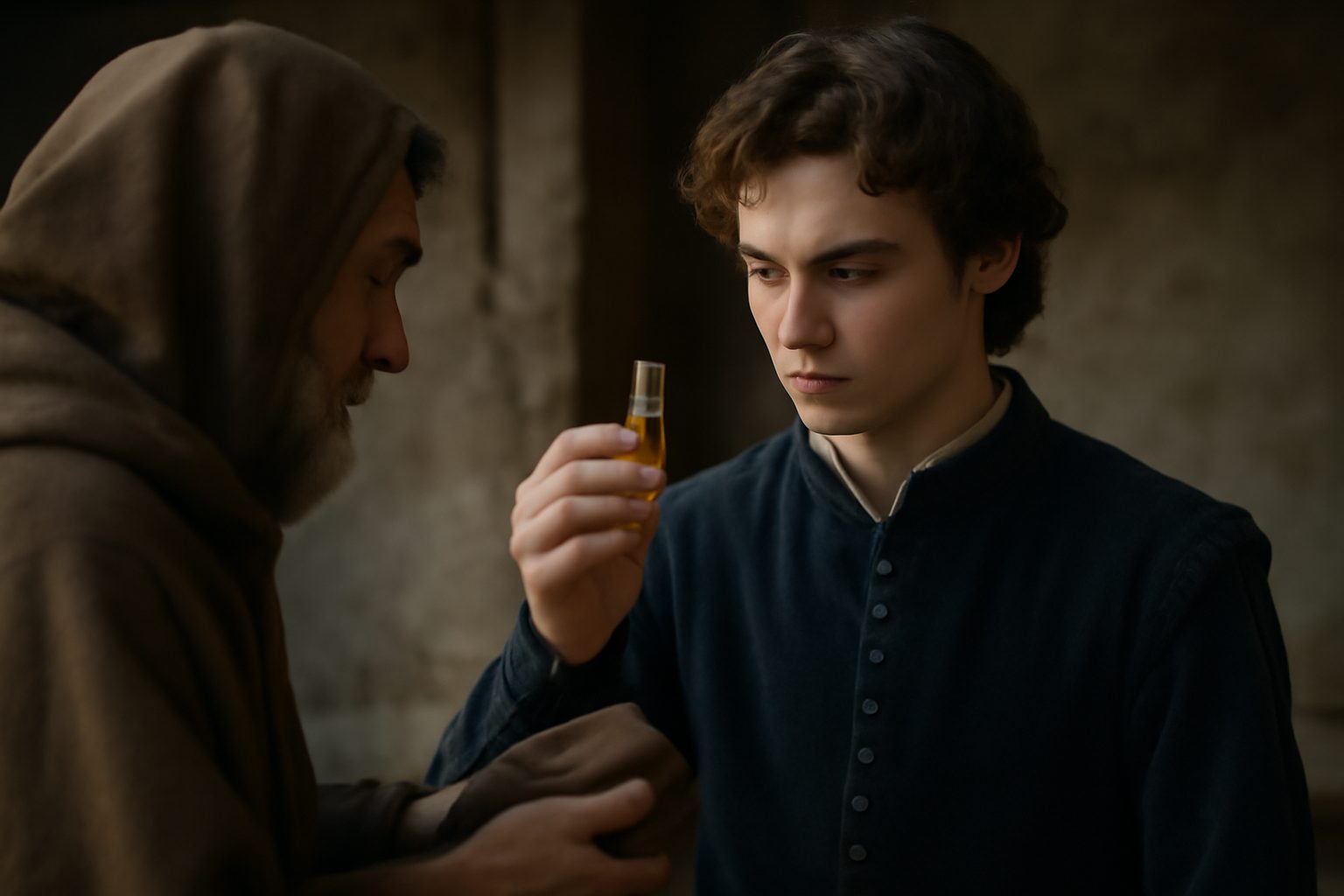
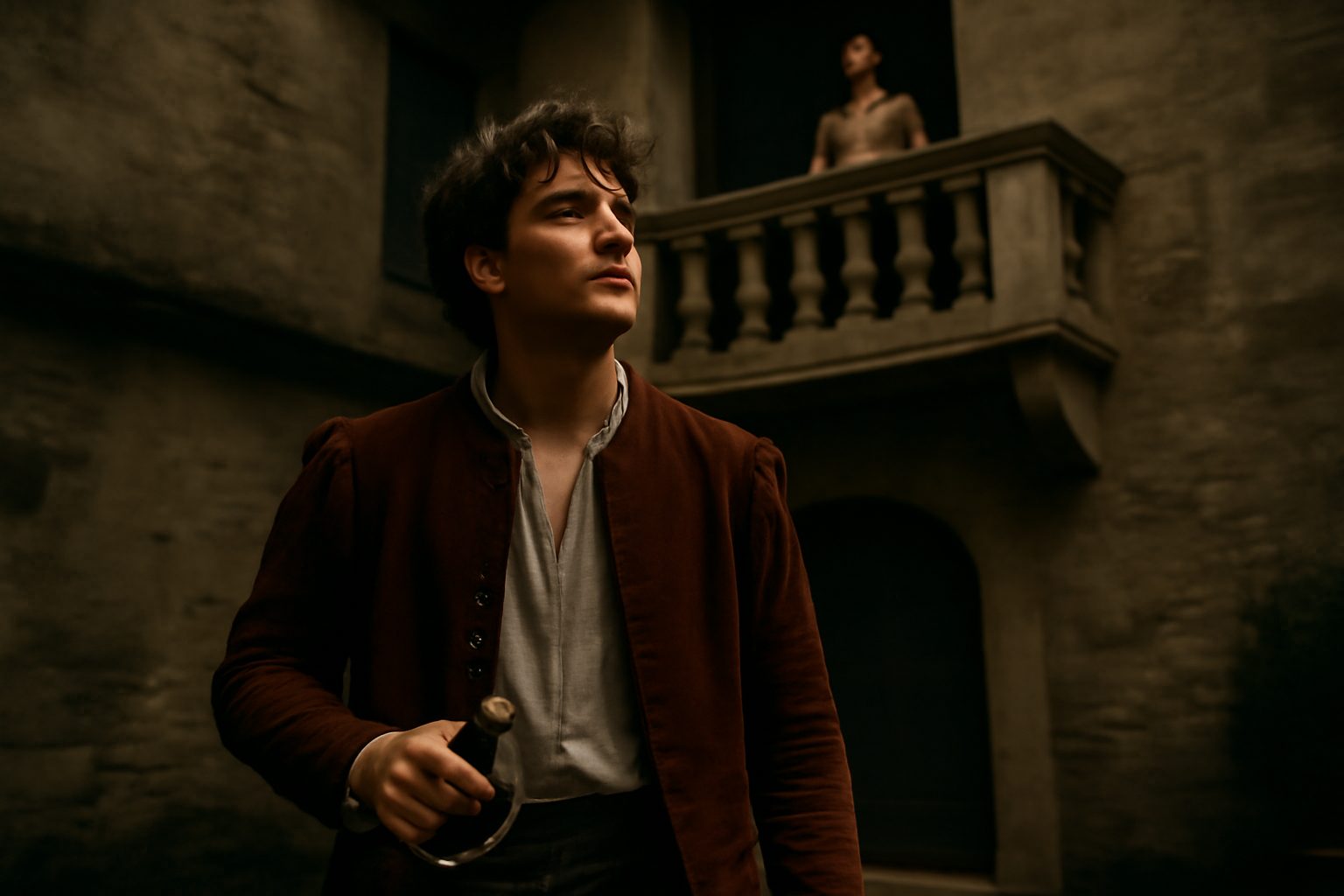
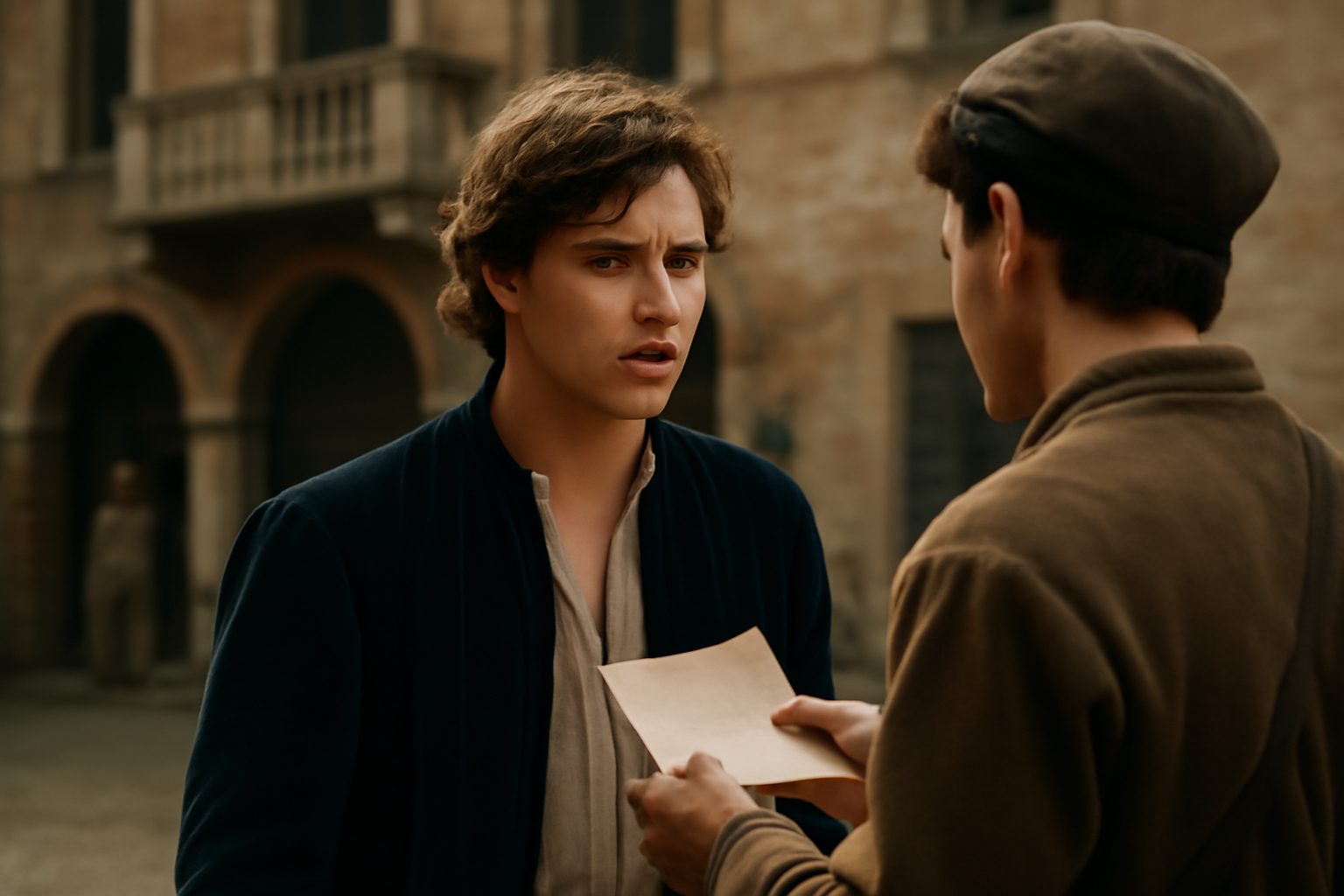
In Act 5, Scene 1 of Romeo and Juliet, Romeo, exiled in Mantua, receives news from his servant Balthasar that Juliet has died. Overwhelmed by grief, he resolves to return to Verona and take his own life beside her. This line reflects his despair as he dismisses the futility of worldly possessions in the face of his loss.
Romeo: "A beggarly account of empty boxes,"
In modern day english, we would say:
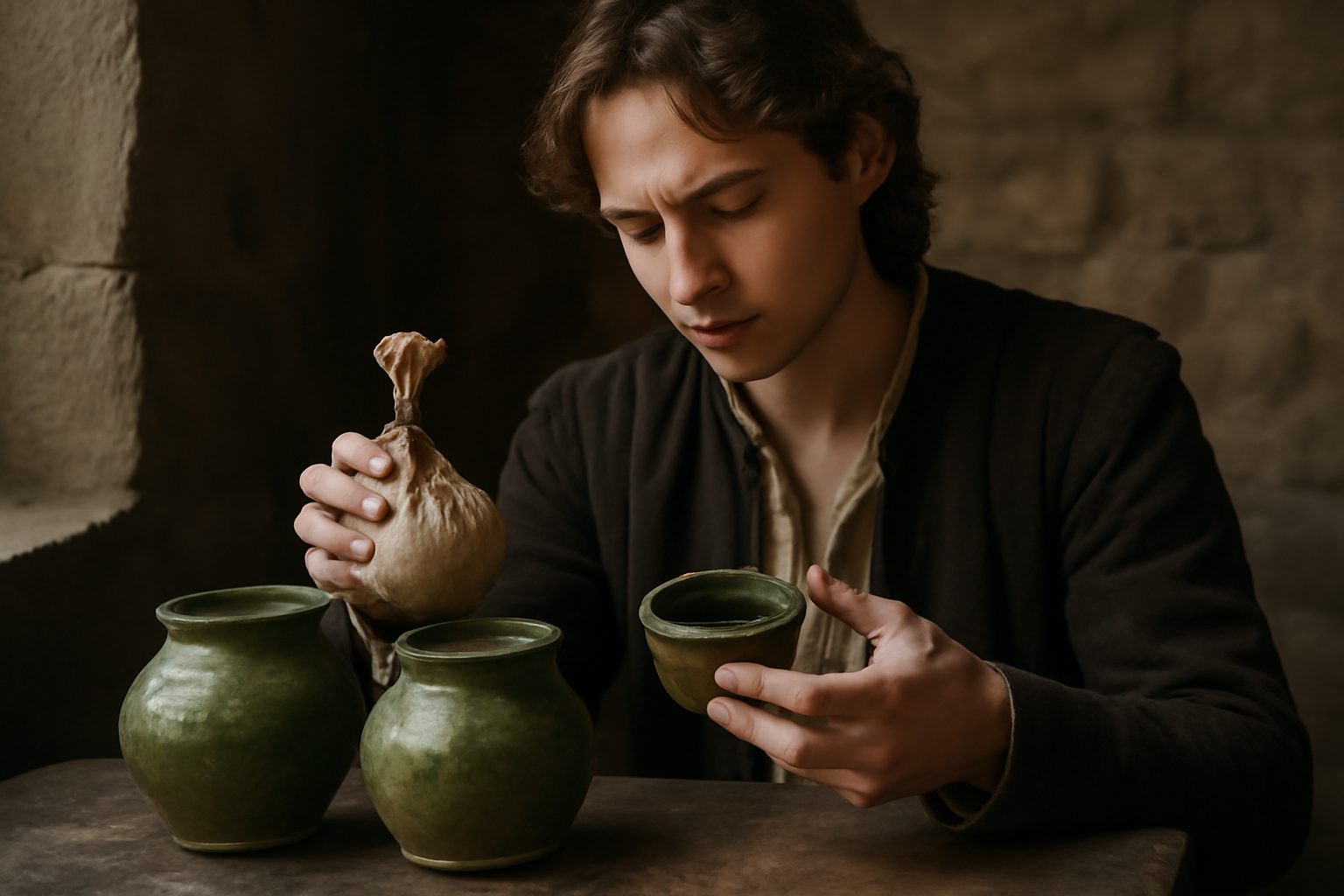
Romeo is complaining that the apothecary's shop looks poor and worthless, filled with nothing but empty containers.
Frequently Asked Questions
What does Romeo mean when he talks about empty boxes in this scene?
Romeo is expressing his disappointment and frustration because he expected to find poison in the apothecary's boxes, but they are empty.
Connections to other verses:
Connections to "A beggarly account of empty boxes"
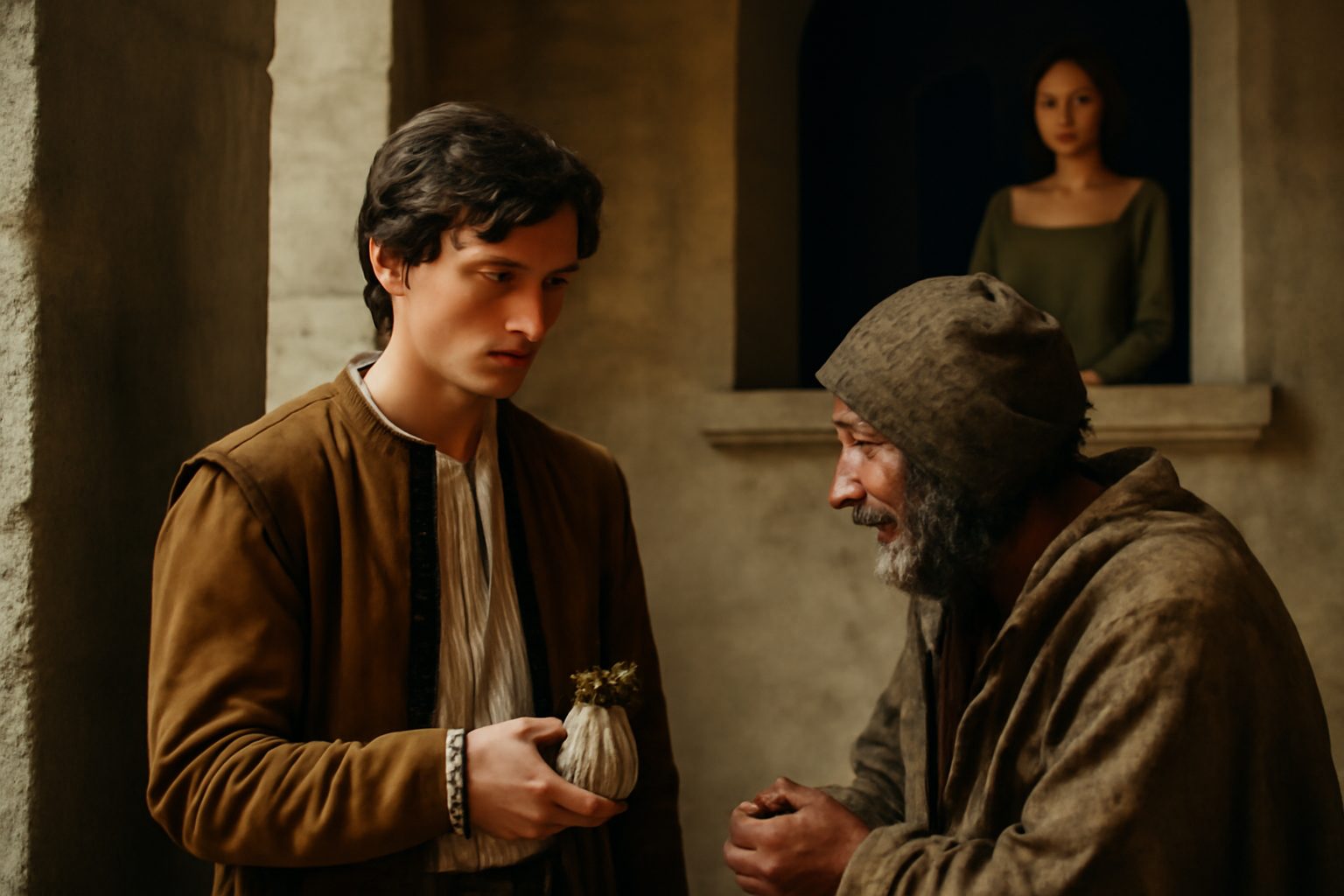
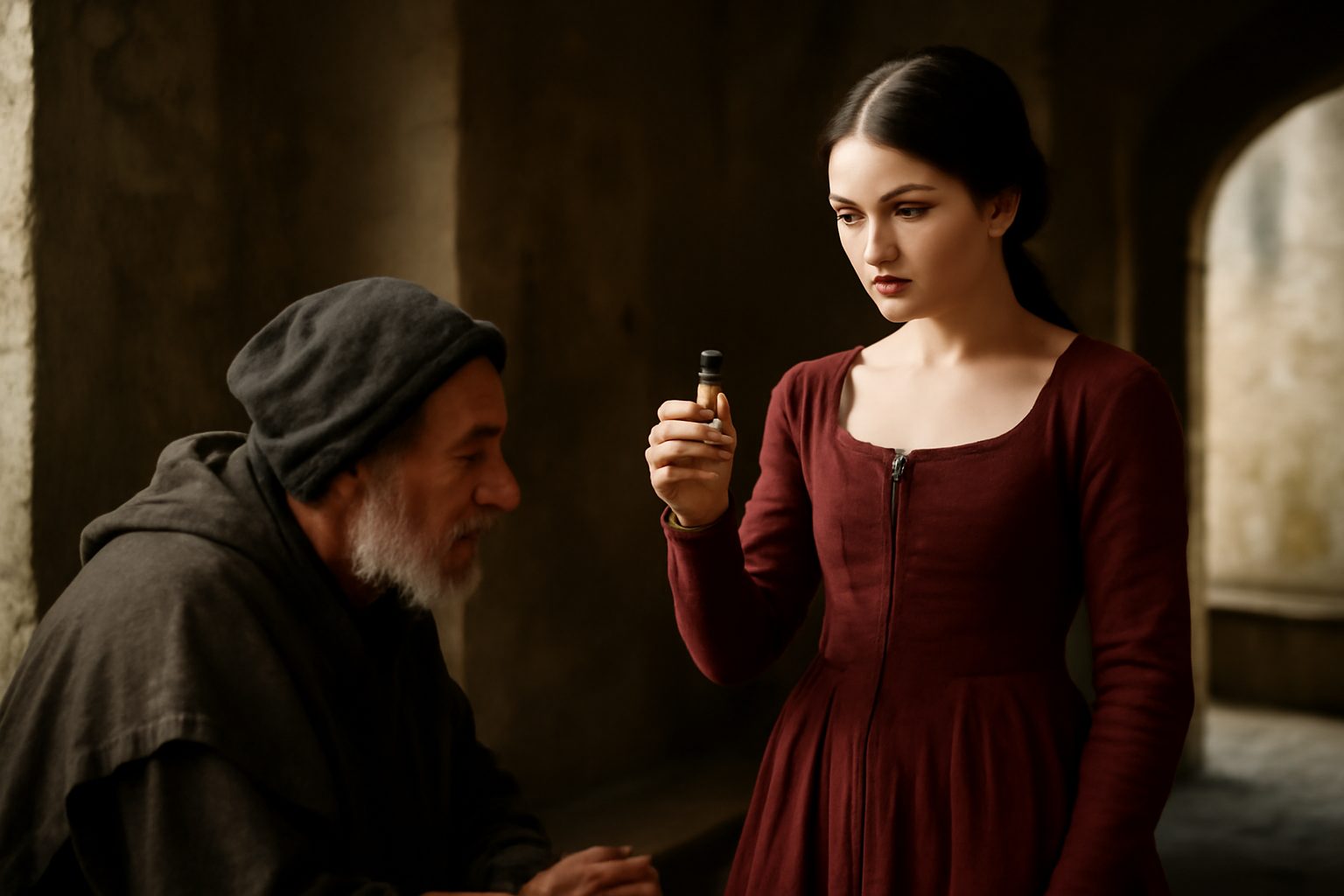
The verse "A beggarly account of empty boxes" describes the impoverished state of the apothecary's shop, which Romeo observes as he seeks poison. This imagery of poverty and emptiness connects thematically and literally to several other verses in the scene.
Poverty and Desperation
Romeo's description of the apothecary's destitution is echoed in his later interaction with the man himself. In Art thou so bare and full of wretchedness, Romeo directly addresses the apothecary's visible poverty, which he had earlier noted in the shop's condition. The apothecary confirms his circumstances in My poverty, but not my will, consents, highlighting how economic desperation drives the transaction.
Visual Imagery of the Shop
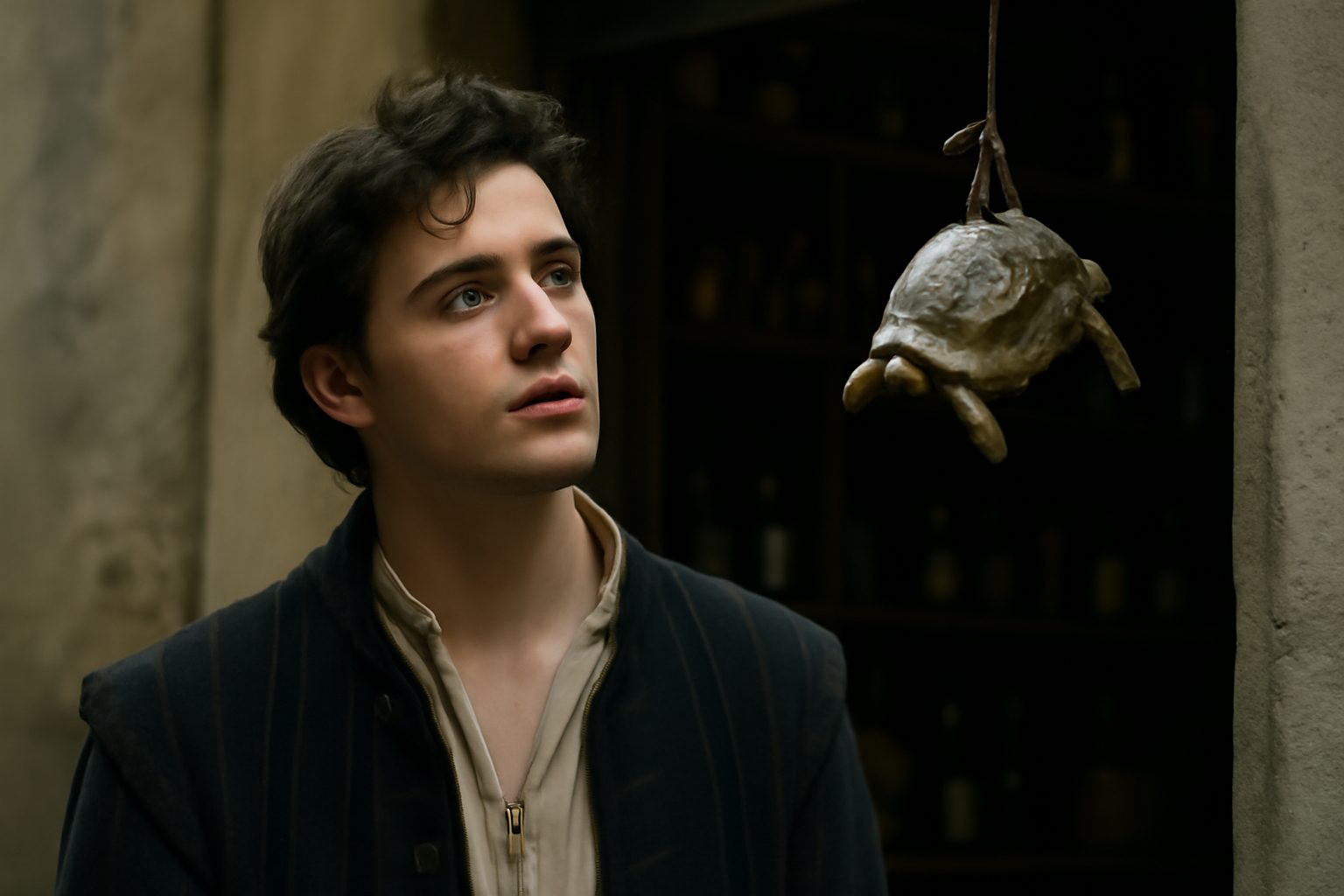
The "empty boxes" are part of a larger depiction of the apothecary's meager surroundings. This connects to And in his needy shop a tortoise hung and An alligator stuff'd, and other skins, which further illustrate the shop's bizarre and impoverished contents. The phrase Were thinly scatter'd, to make up a show reinforces the idea that these items are sparse and merely for appearance, much like the empty boxes.
Romeo's Reflection on Need
Romeo's observation of the apothecary's penury leads him to reflect on his own desperate situation. In Noting this penury, to myself I said, he explicitly connects the apothecary's poverty to his own need for poison, showing how the visual cue of the empty boxes triggers his plan. This thought is immediately followed by O, this same thought did but forerun my need, indicating that the apothecary's poverty prefigures Romeo's own desperate actions.
Contrast with Poison's Power
The barrenness of the "empty boxes" contrasts sharply with the lethal potency of the poison Romeo seeks. This is evident in A dram of poison, such soon-speeding gear, where the apothecary describes the poison's deadly efficiency. The irony is heightened in I sell thee poison; thou hast sold me none, as Romeo acknowledges that the real "poison" is the gold that corrupts souls, contrasting the tangible emptiness of the boxes with the metaphorical poison of wealth.