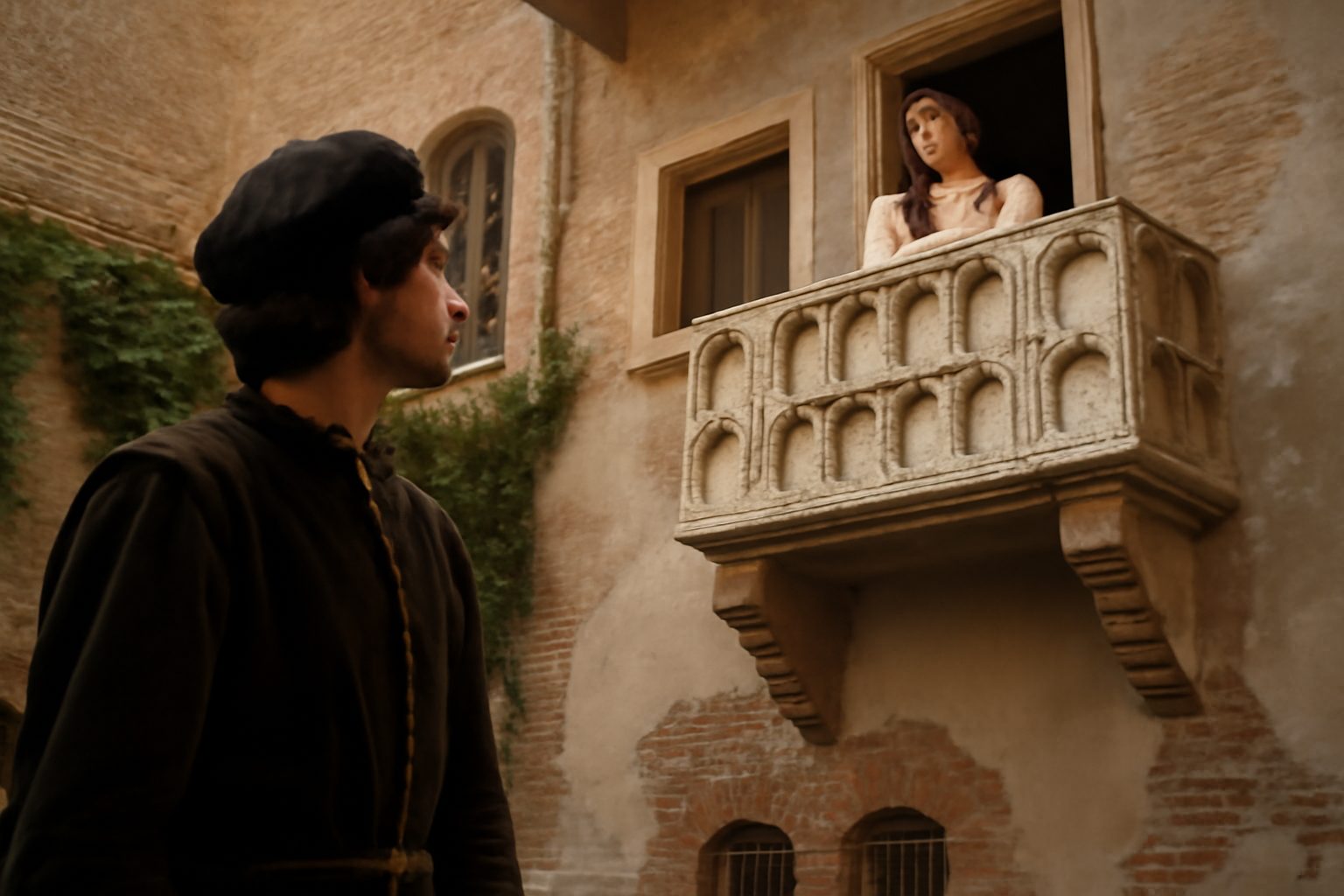
In Act 5, Scene 1 of Romeo and Juliet, Balthasar arrives in Mantua to deliver tragic news to Romeo. Overcome with guilt and hesitation, he prefaces his message with an apology, acknowledging the pain his words will cause. This moment marks a critical turning point, as Romeo's reaction to the news sets the final tragic events in motion.
Balthasar: "O, pardon me for bringing these ill news,"
In modern day english, we would say:
I’m sorry for giving you such terrible news.
Frequently Asked Questions
Who is speaking in Act 5 Scene 1 when someone apologizes for bringing bad news?
Balthasar is speaking.
Connections to other verses:
Connections to "O, pardon me for bringing these ill news"
This verse, spoken by Balthasar, serves as a pivotal moment of revelation in Act 5, Scene 1. It directly follows "And presently took post to tell it you", where Balthasar explains his haste to deliver the tragic news of Juliet's apparent death. His apology for "ill news" contrasts sharply with Romeo's earlier hopefulness, expressed in "My dreams presage some joyful news at hand", highlighting the cruel irony of the situation.
Emotional and Thematic Links
Balthasar's remorseful tone connects to Romeo's immediate despair upon hearing the news. In "Is it even so? then I defy you, stars!", Romeo's defiance of fate is a direct response to this "ill news," marking his transition from hope to desperation. The phrase also echoes the theme of miscommunication, as Romeo earlier inquires, "Dost thou not bring me letters from the friar?", underscoring the tragic gap between his expectations and reality.
Narrative Consequences
This apology sets in motion Romeo's rash decisions, leading him to seek poison from the apothecary, as referenced in "A dram of poison, such soon-speeding gear". Balthasar's words thus catalyze the scene's downward spiral, culminating in Romeo's resolve in "Well, Juliet, I will lie with thee to-night".