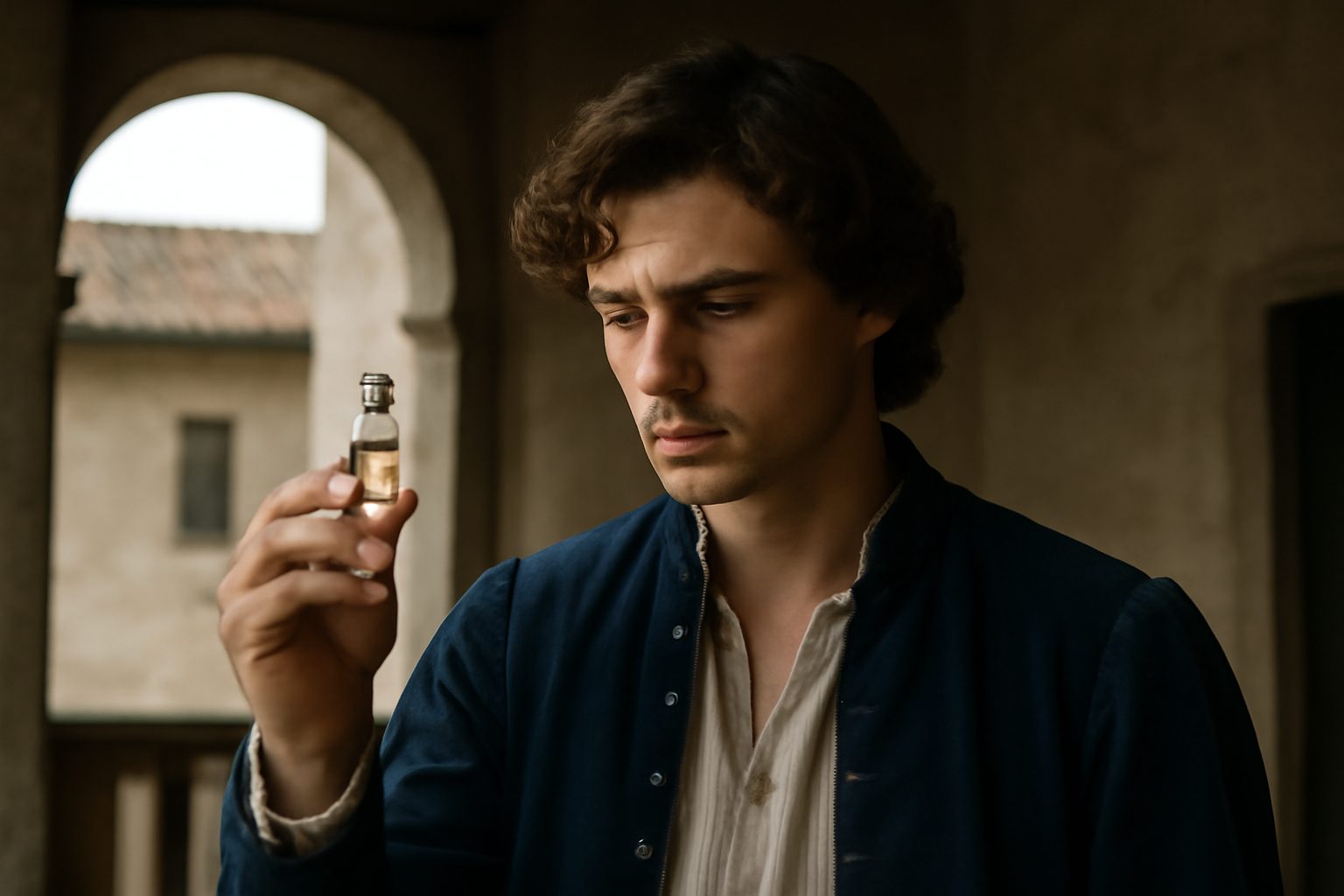
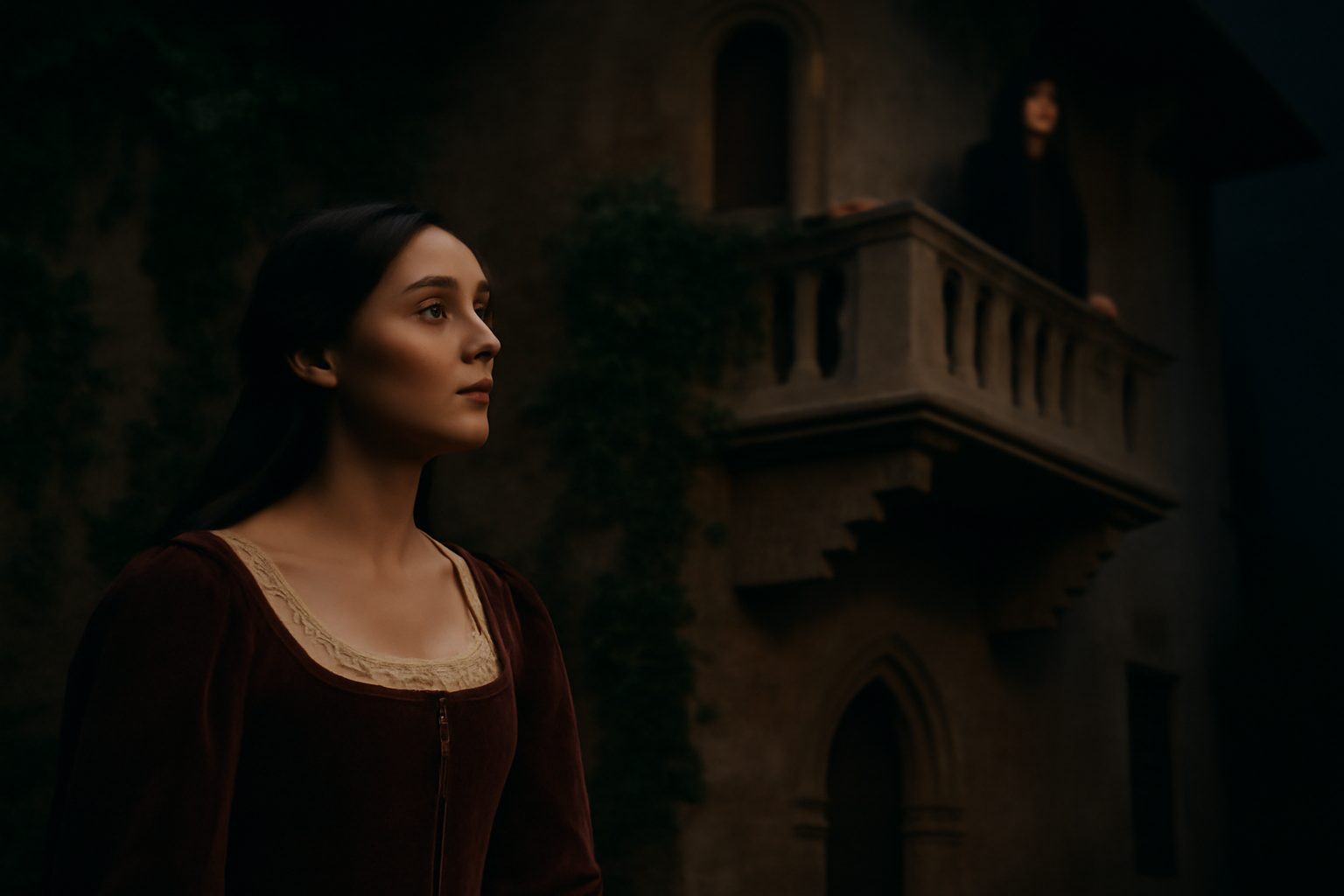
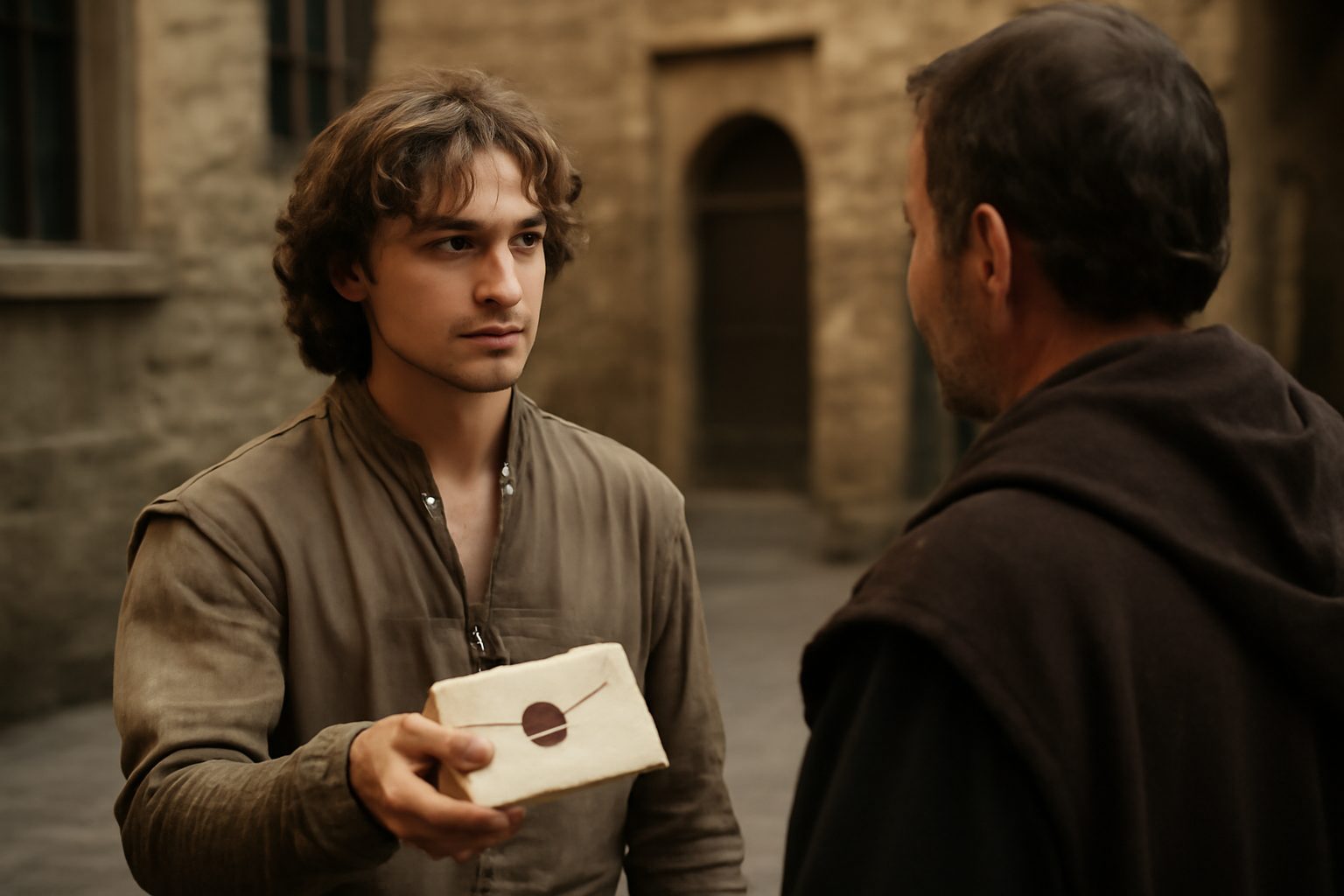
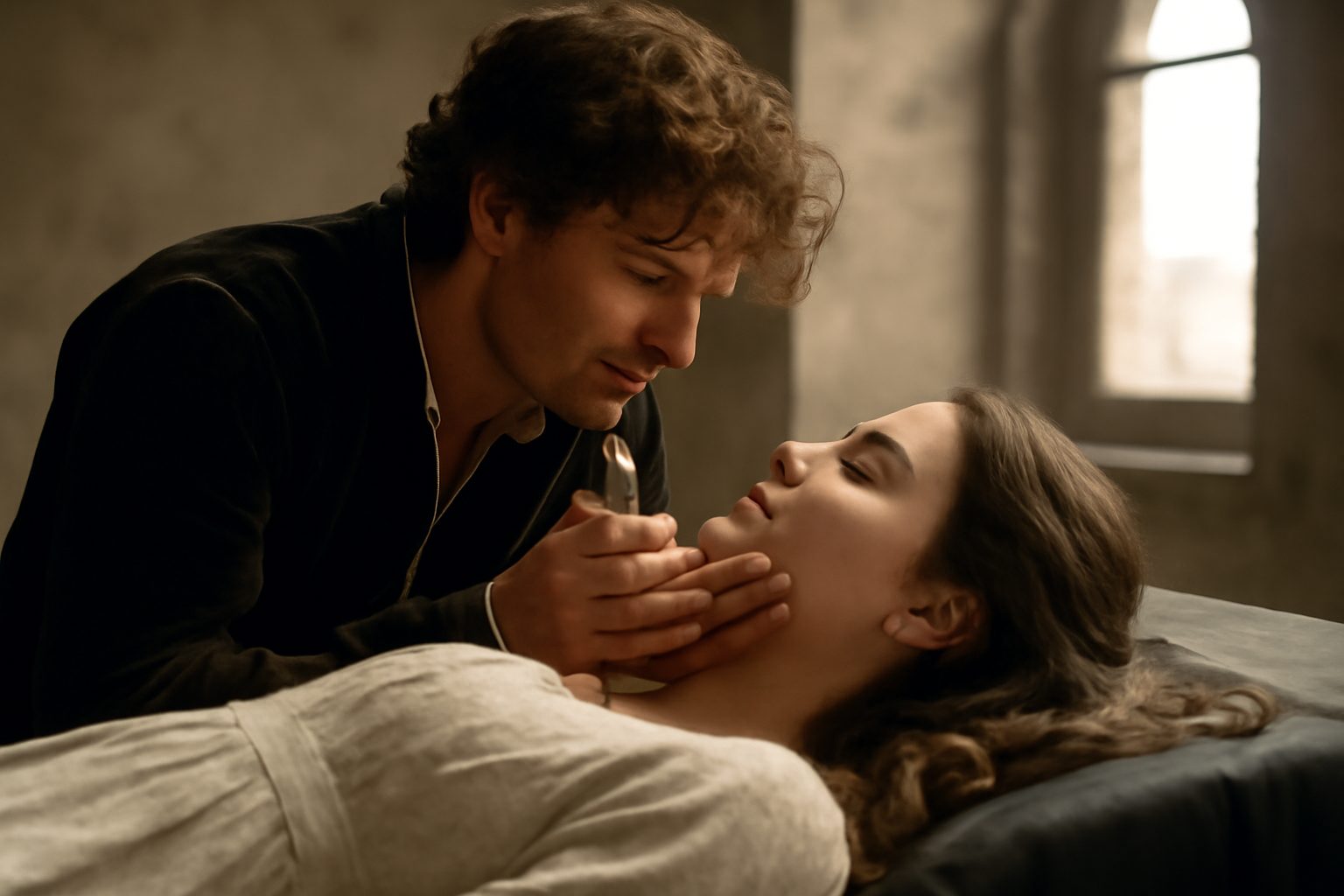
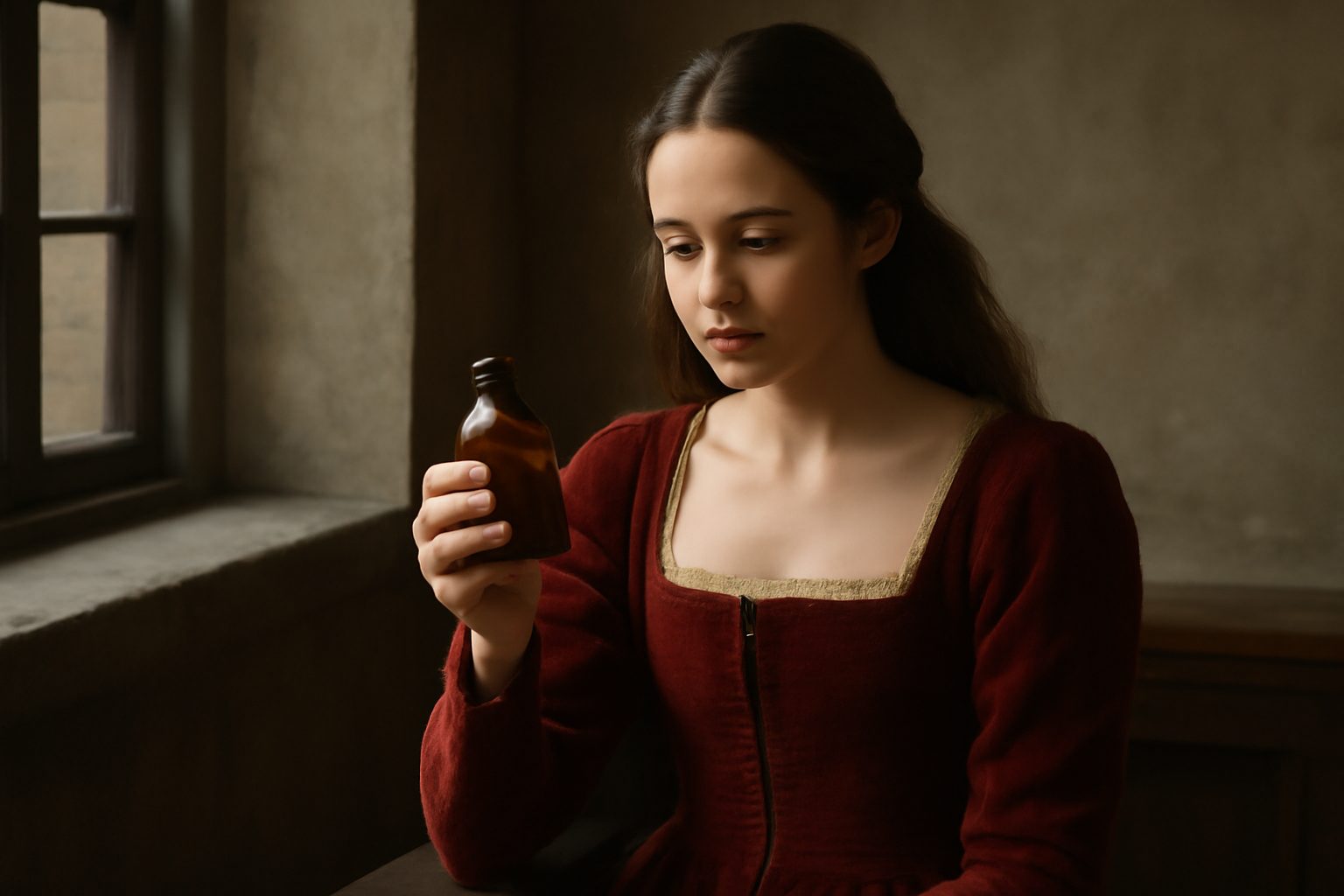
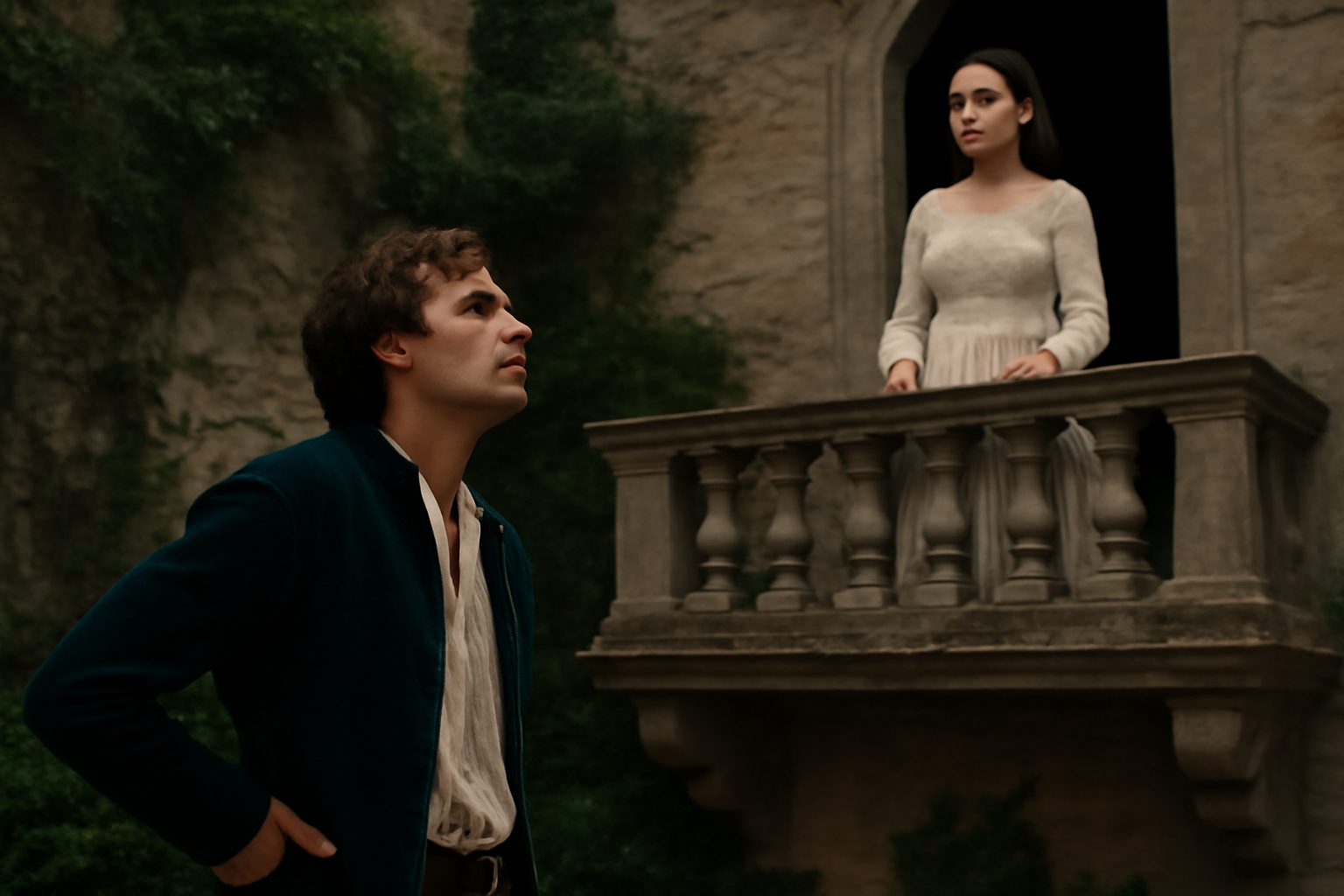
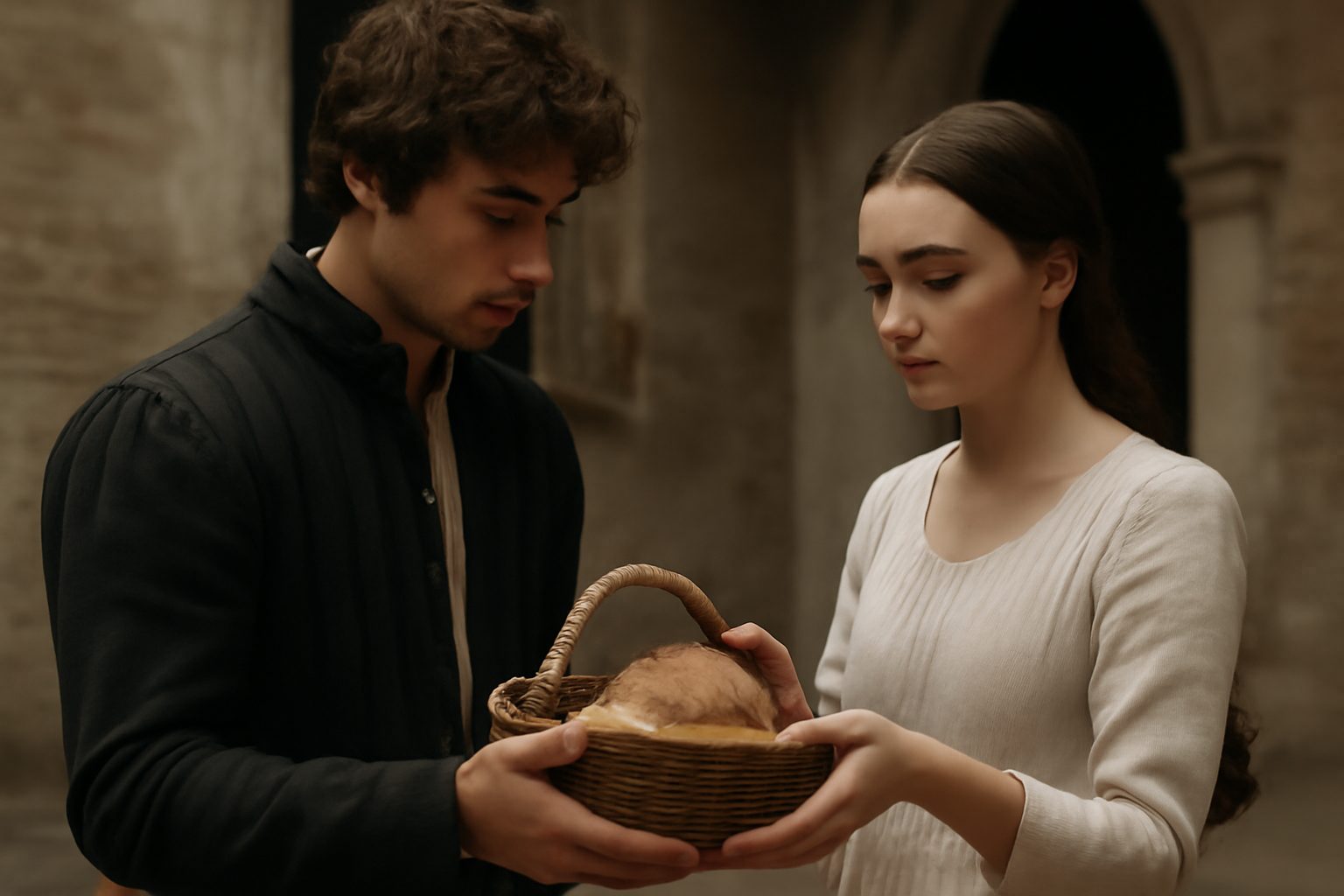
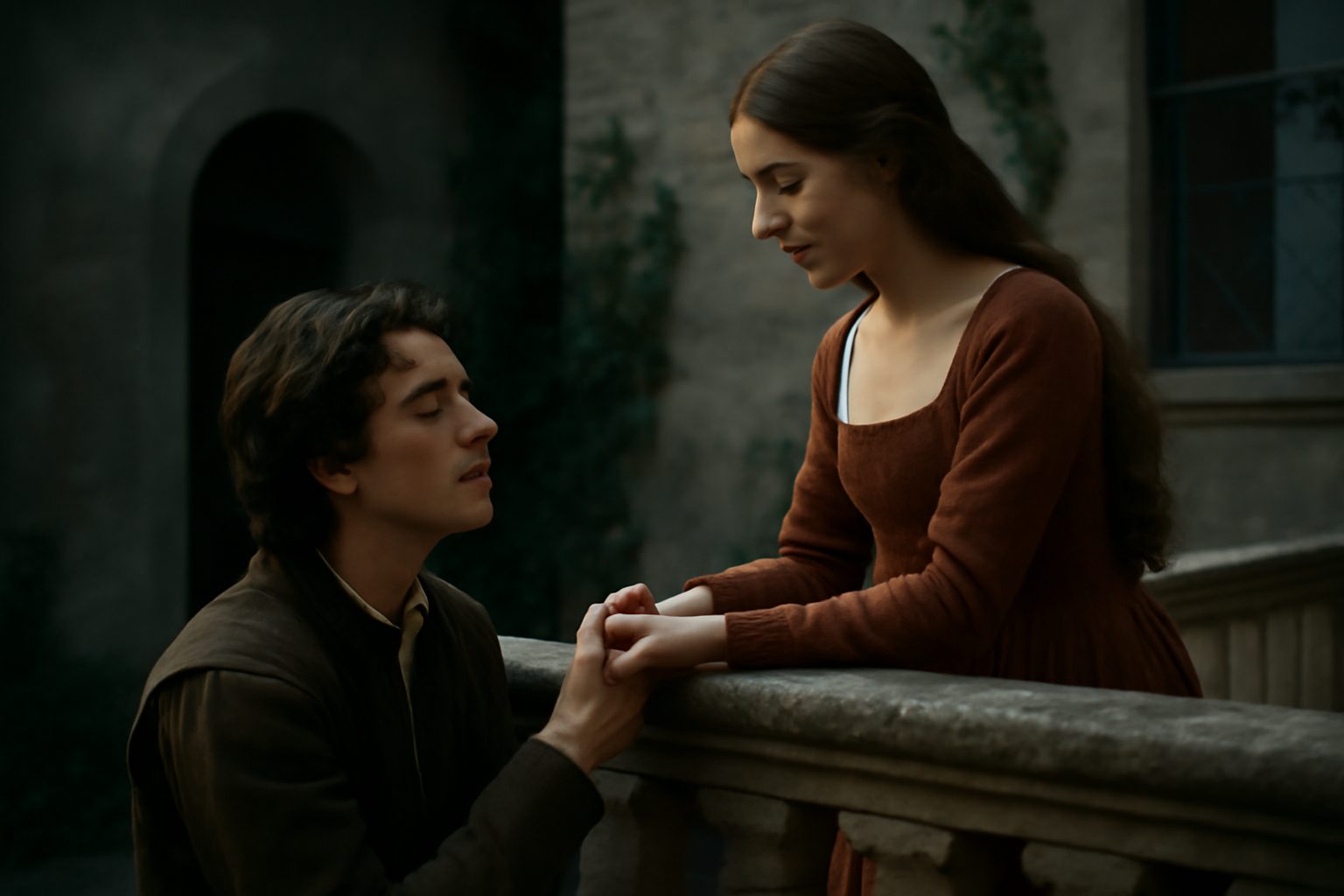
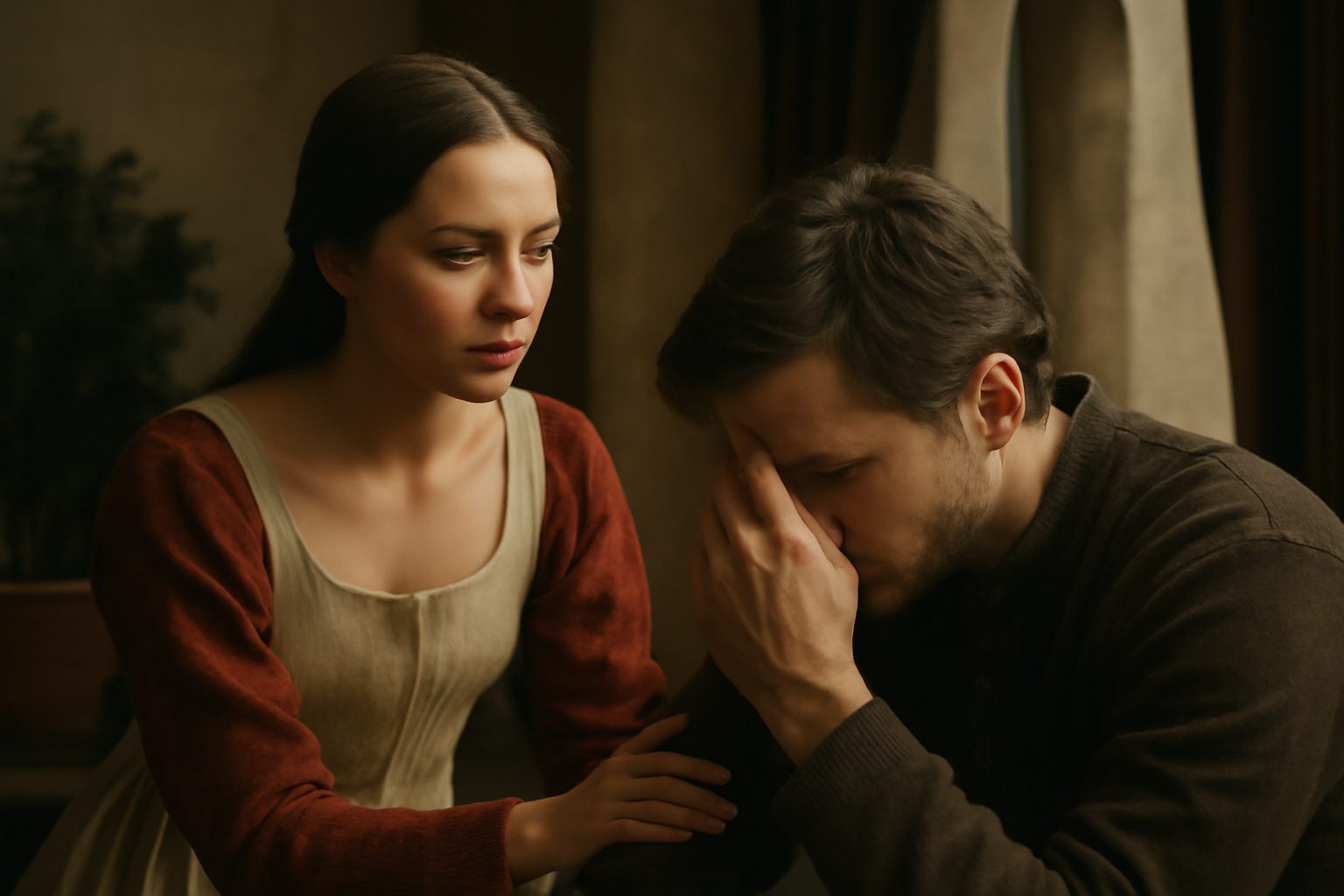
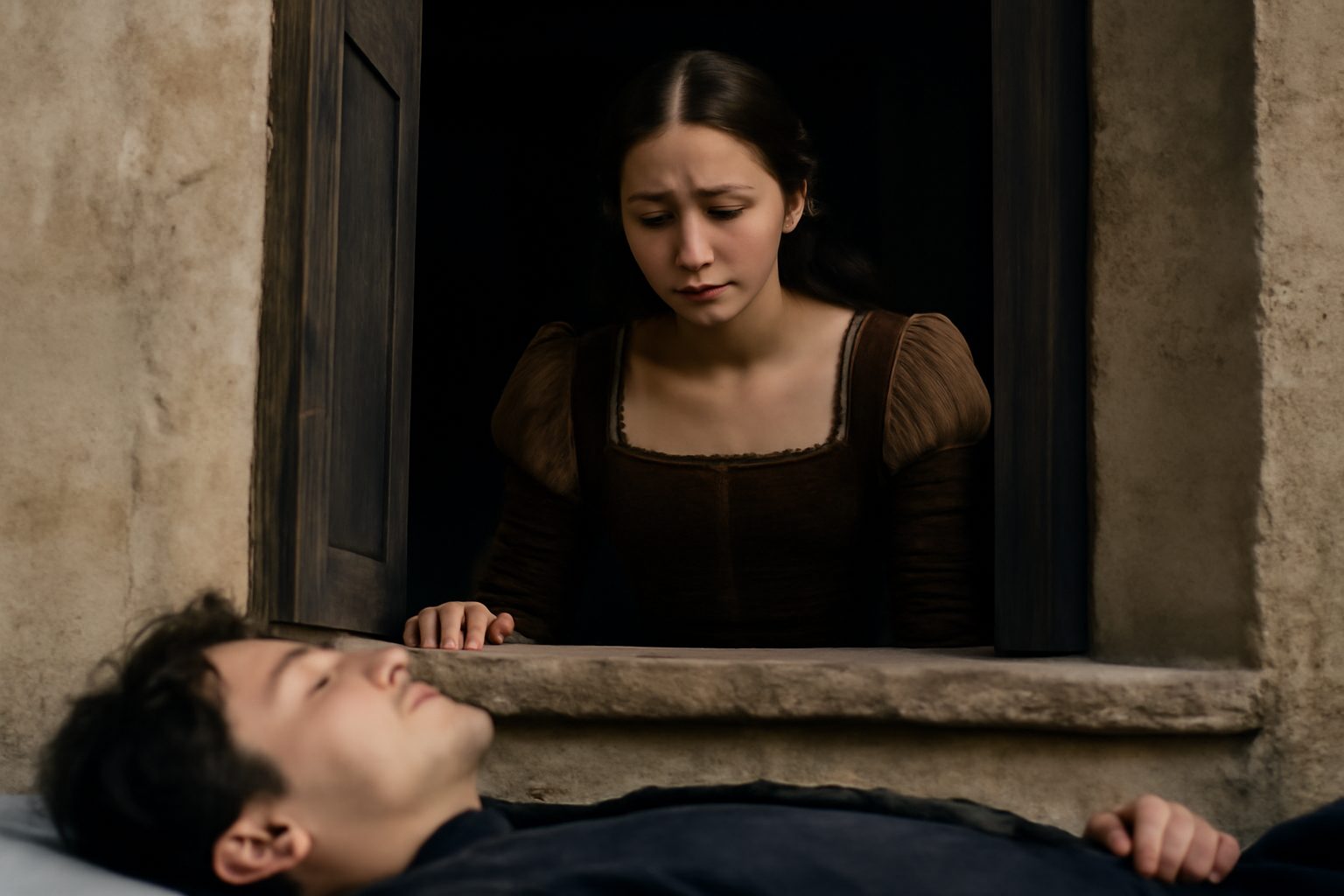
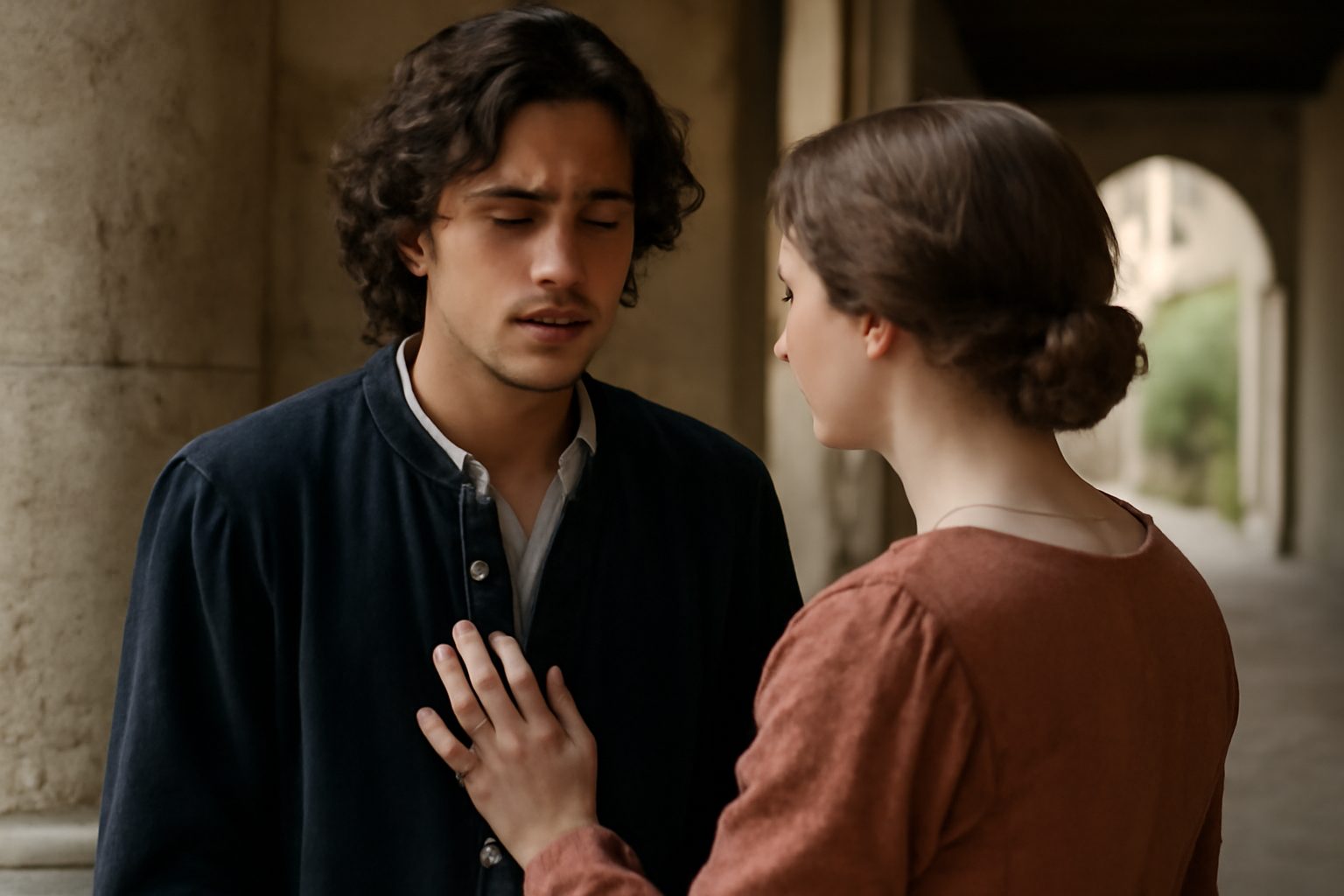
In Act 5, Scene 1 of Romeo and Juliet, Romeo hears news of Juliet's supposed death, though the audience knows she has only taken a sleeping potion. Overcome with grief, he speaks of her soul ascending to heaven, suggesting her purity and virtue will live on eternally. This line reflects Romeo's despair as well as his idealized view of Juliet, even in death.
Balthasar: "And her immortal part with angels lives."
In modern day english, we would say:
Her soul now lives forever with the angels.
Frequently Asked Questions
What does Balthasar mean when he says Juliet's immortal part lives with angels?
He means that Juliet's soul has gone to heaven after her death.
Connections to other verses:
Connections to Juliet's Spiritual Immortality
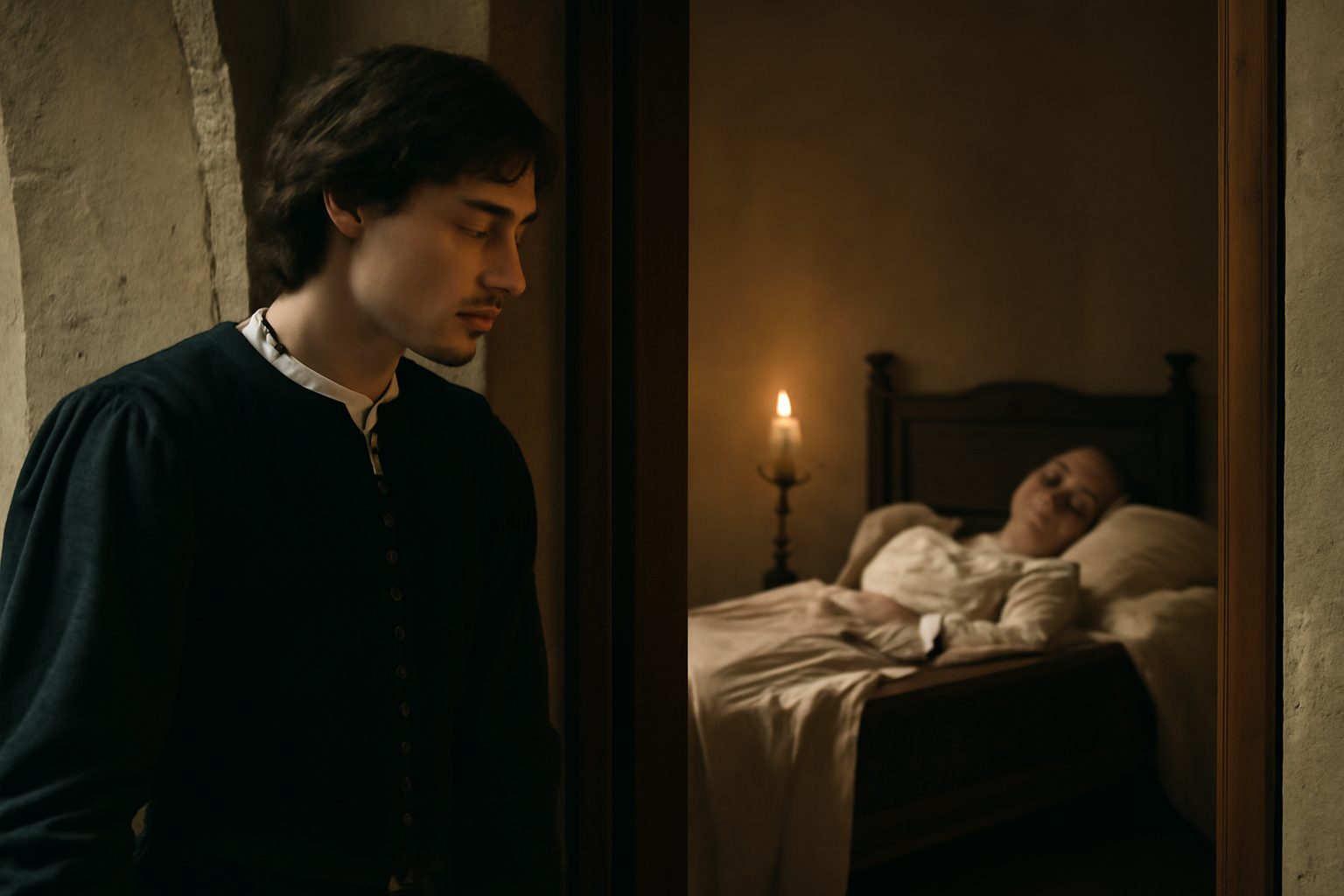
The verse "And her immortal part with angels lives" reflects Romeo's belief in Juliet's soul ascending to heaven, a stark contrast to the physical decay and earthly struggles depicted elsewhere in the scene. This spiritual optimism is immediately preceded by Balthasar's grim report in "Her body sleeps in Capel's monument", highlighting the dichotomy between Juliet's eternal soul and her entombed body.
Contrast with Material and Emotional Despair
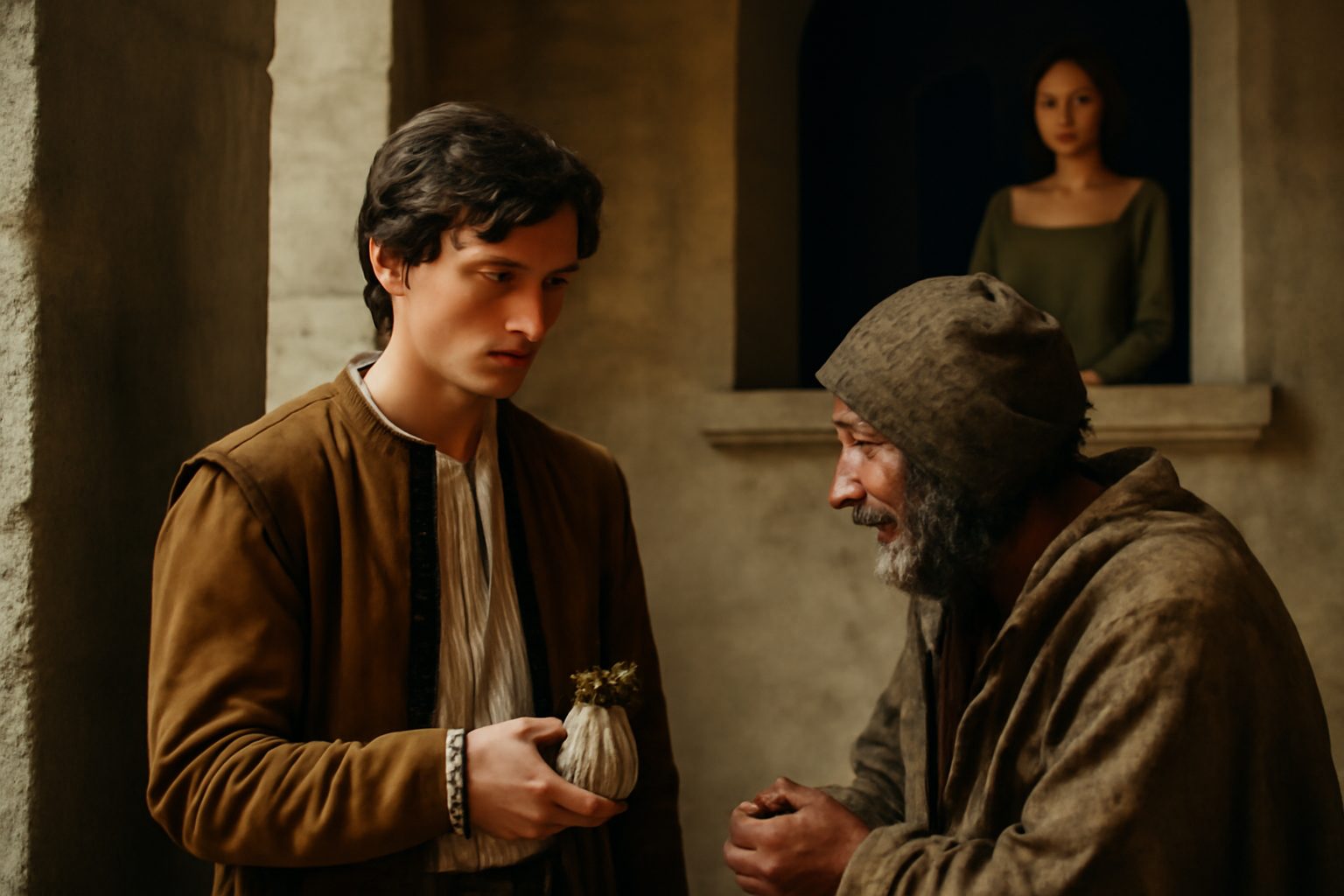
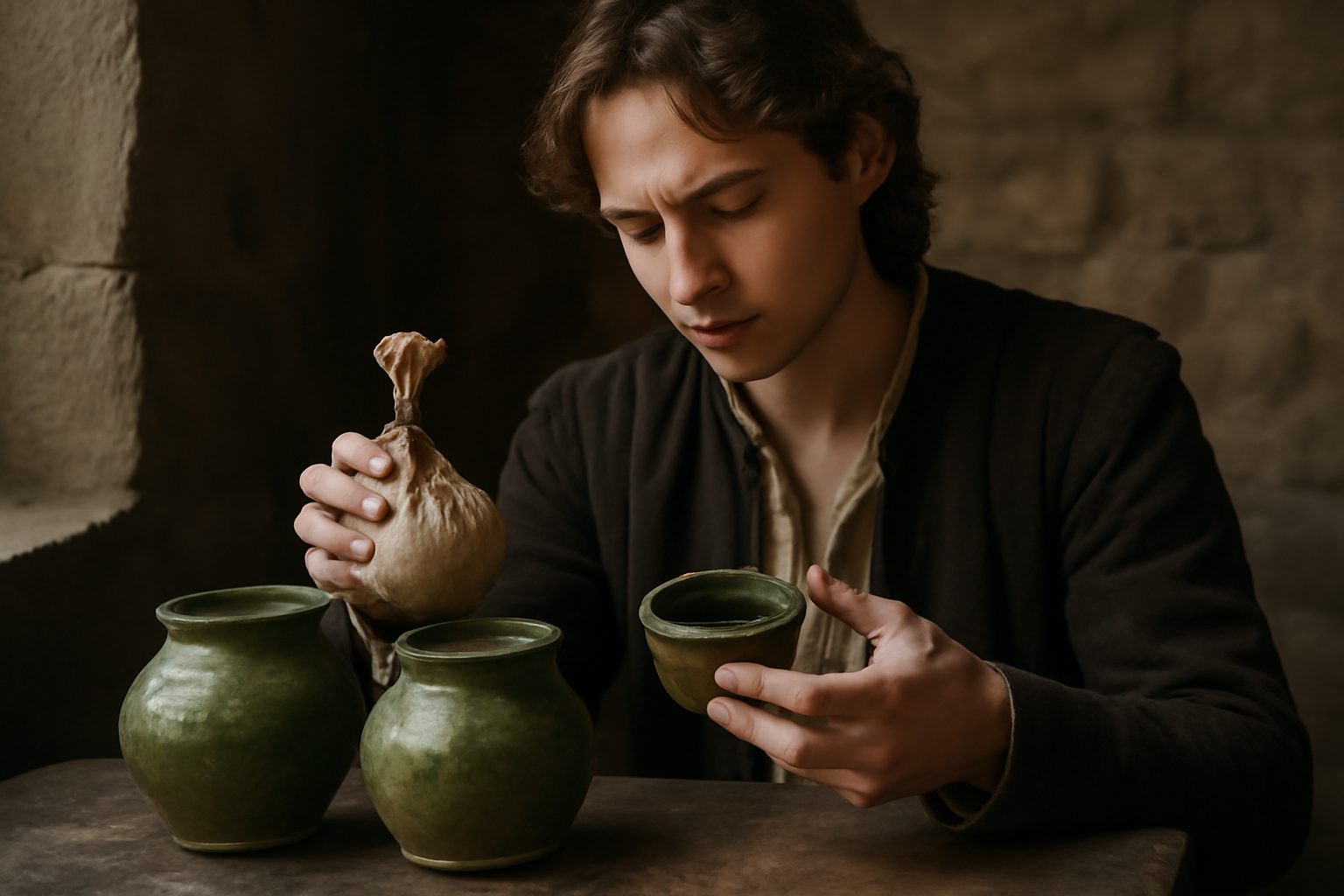
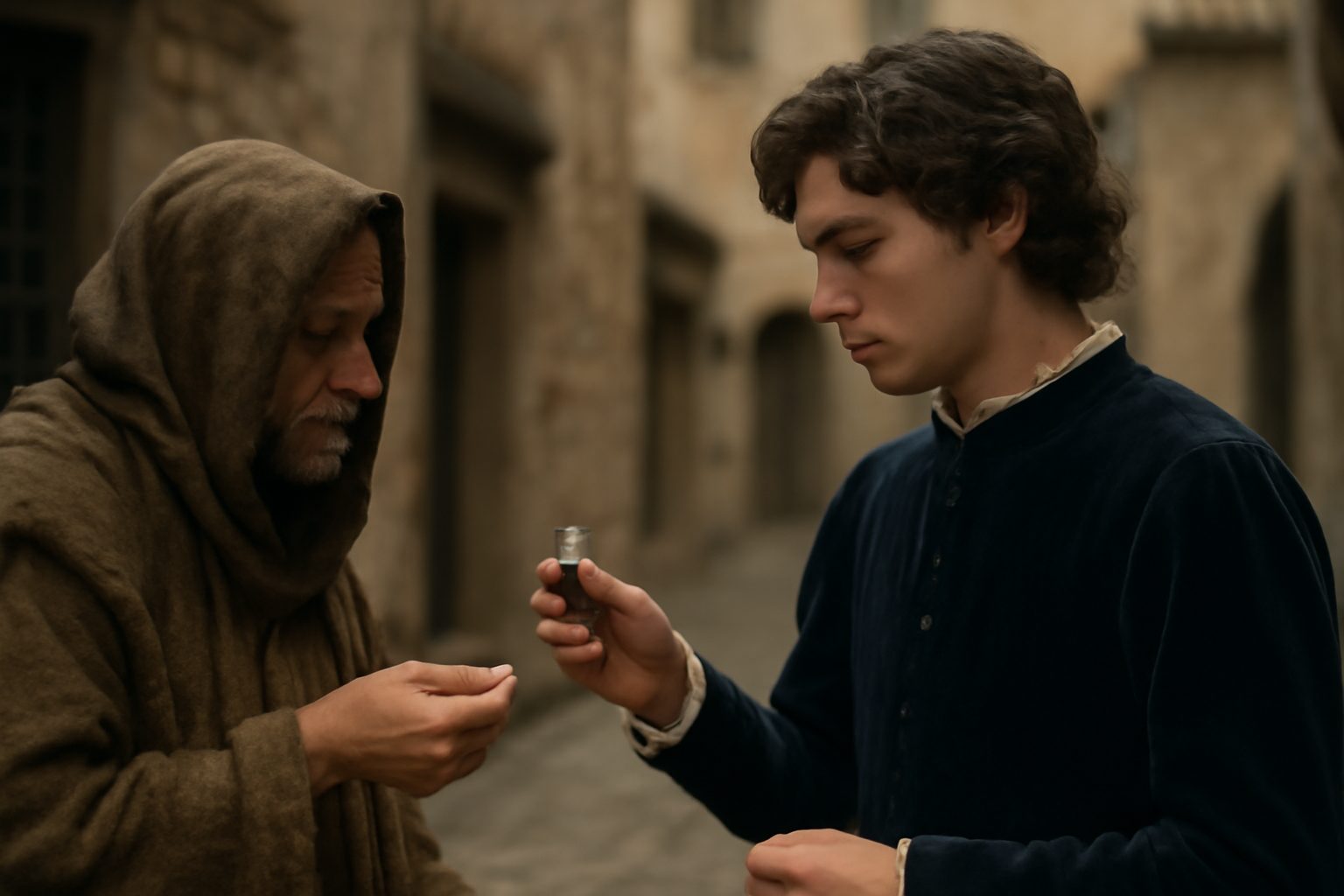
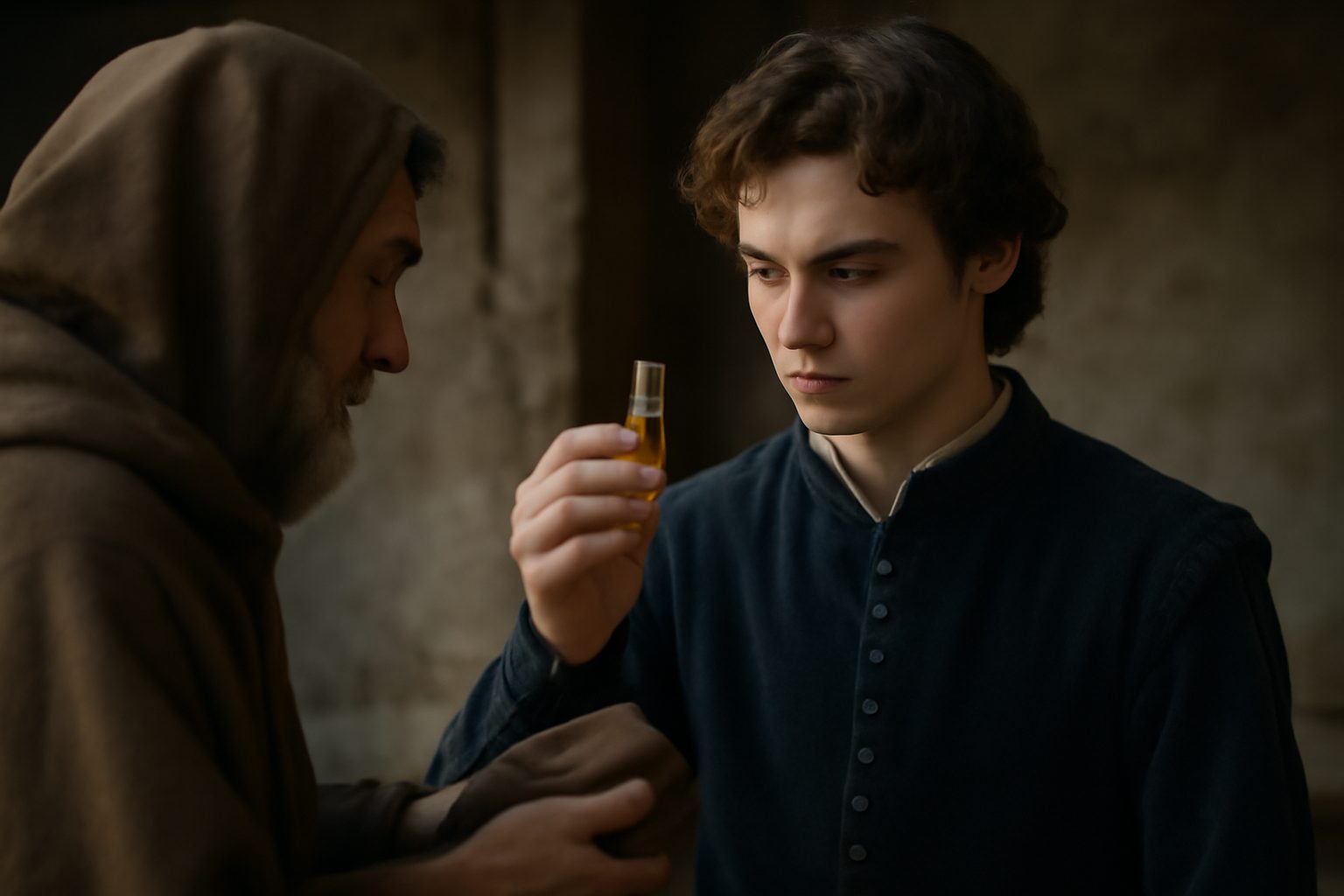
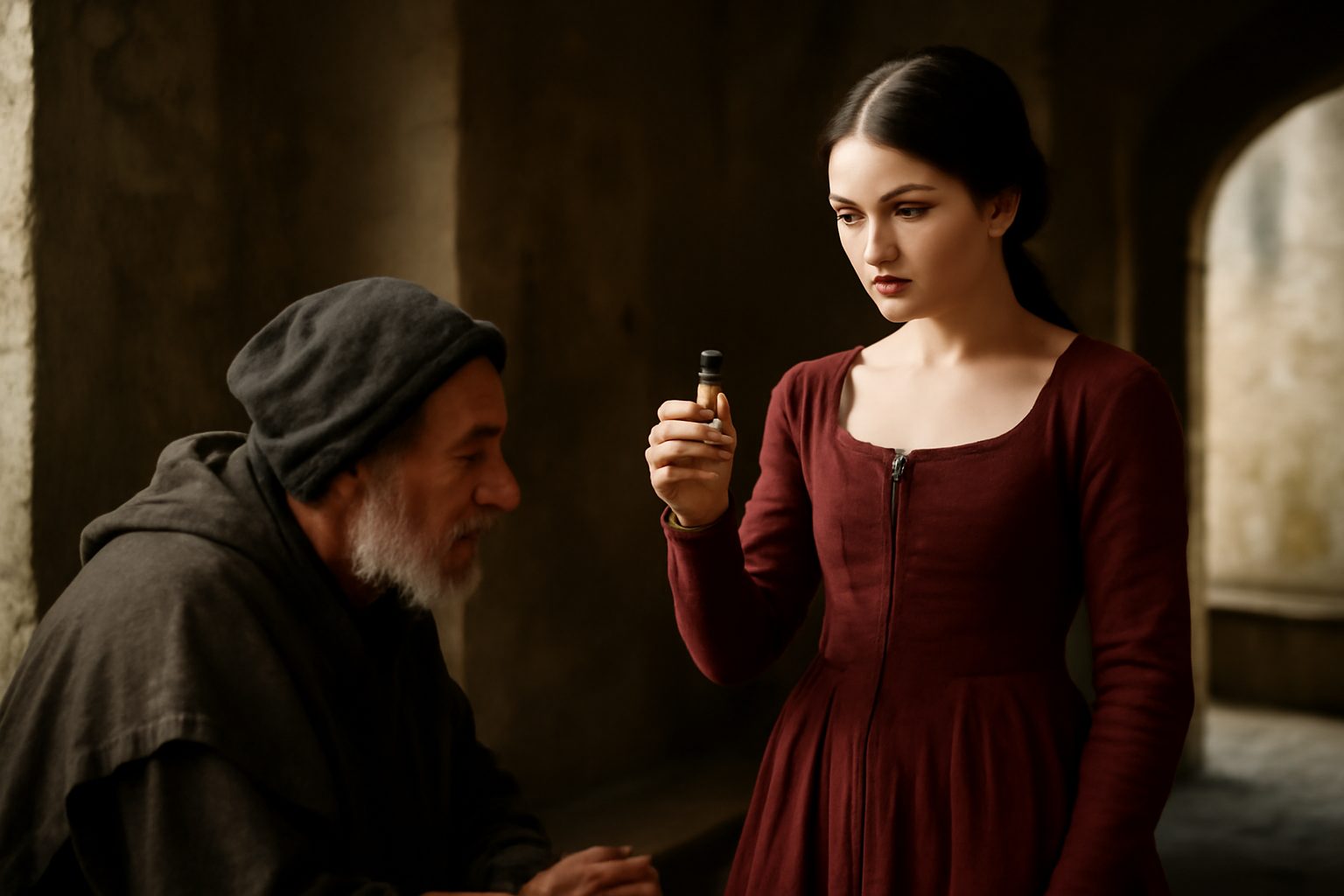
Romeo's vision of Juliet's angelic afterlife opposes the apothecary's poverty and moral compromise, described in verses like "An alligator stuff'd, and other skins" and "Art thou so bare and full of wretchedness". While Juliet's soul transcends, the apothecary is bound by earthly need, selling poison despite Mantua's laws ("Such mortal drugs I have; but Mantua's law").
Link to Romeo's Resolve and Poison
The belief in Juliet's immortality fuels Romeo's desperation to join her in death, leading him to seek "A dram of poison, such soon-speeding gear". His declaration "Well, Juliet, I will lie with thee to-night" underscores his intent to unite with her spiritually by ending his mortal life, seeing poison as a means to transcend the physical world.
Irony of Gold and Mortality
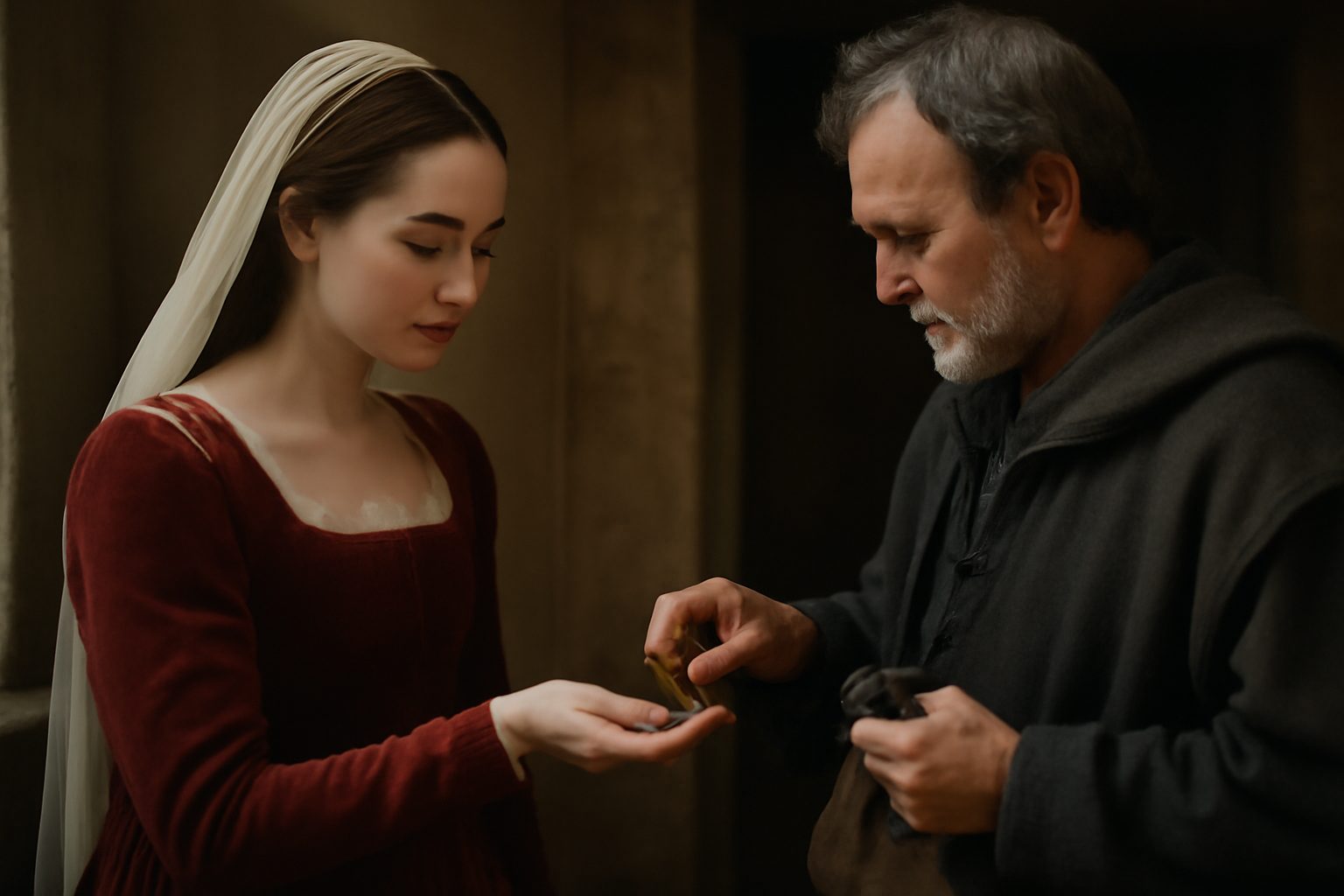
Romeo's payment for the poison—"There is thy gold, worse poison to men's souls"—ironically contrasts with Juliet's "immortal part." Gold corrupts earthly existence, while her soul is purified, emphasizing the theme that true value lies beyond material wealth, further echoed in the apothecary's destitution ("My poverty, but not my will, consents").