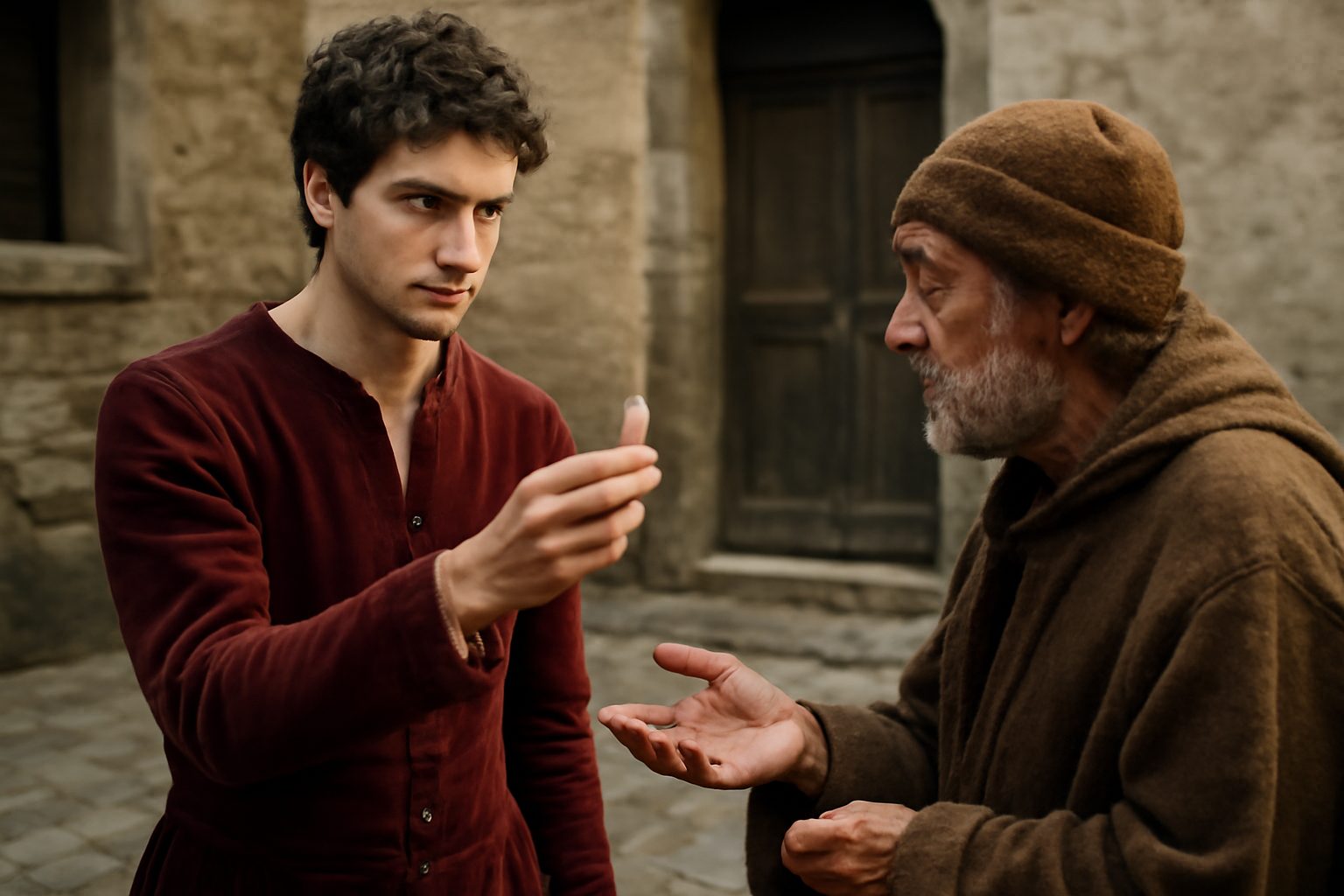
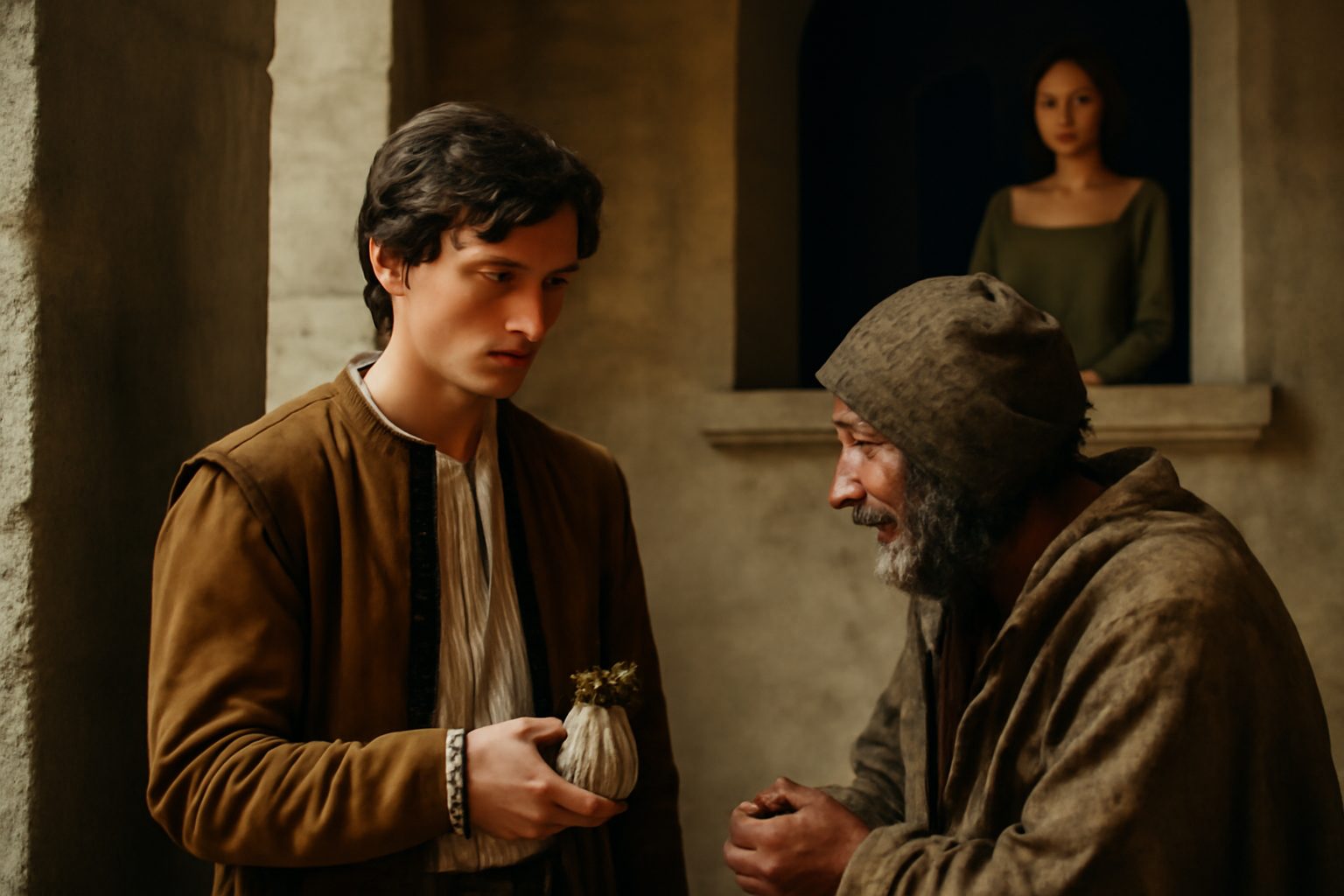
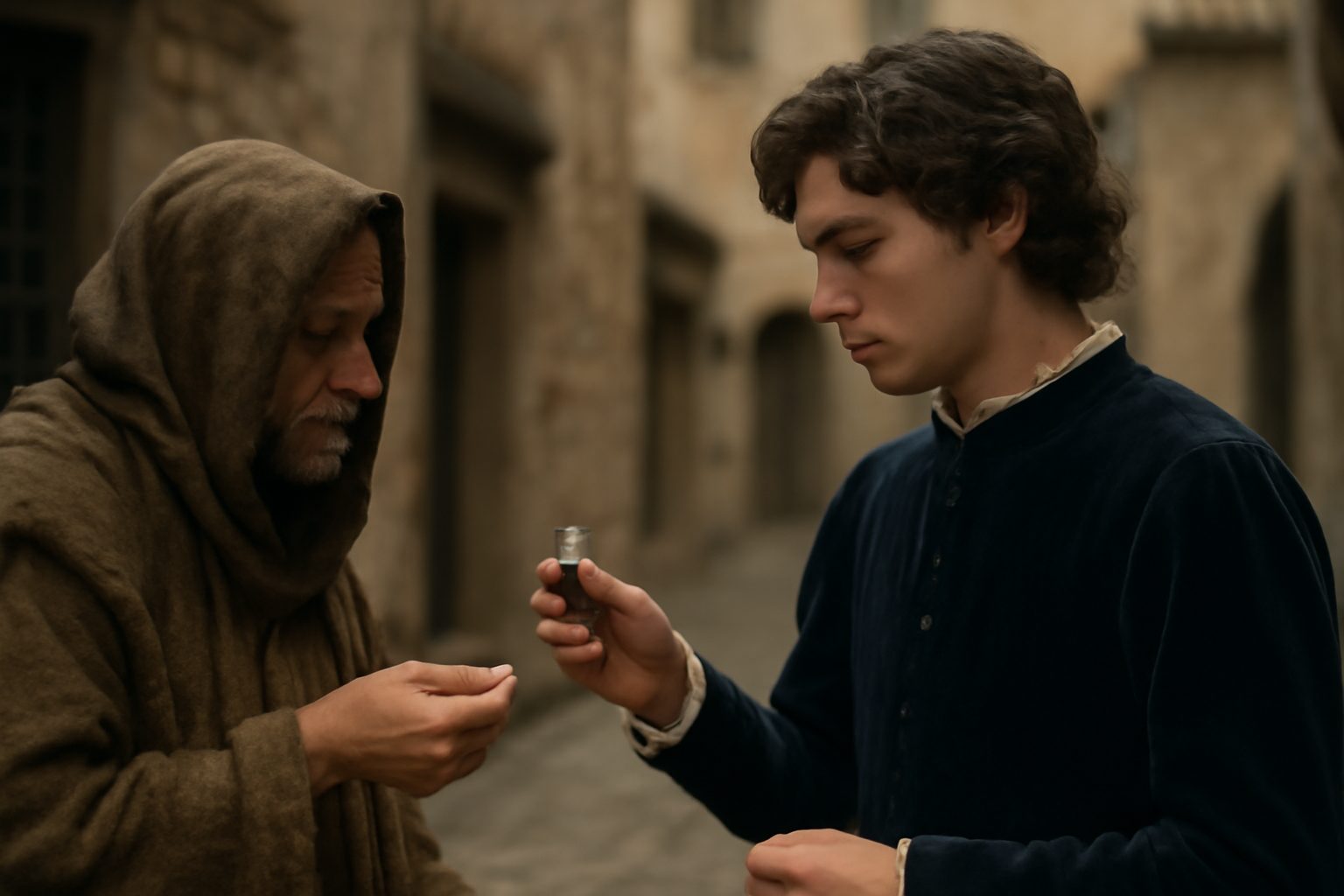
In Act 5, Scene 1 of Romeo and Juliet, Romeo, exiled in Mantua, reflects on a dream that left him with a sense of foreboding. When he speaks these words, he is reacting to the apparent poverty of his dream, interpreting it as a sign of misfortune. This moment underscores his growing despair and foreshadows the tragic news he is about to receive regarding Juliet.
Romeo: "Noting this penury, to myself I said"
In modern day english, we would say:
Seeing how poor he was, I thought to myself.
Frequently Asked Questions
What does Romeo mean when he says he noticed the lack of something?
Romeo is saying that he observed a shortage or absence of something important, which made him think about the situation.
Connections to other verses:
Connections to "Noting this penury, to myself I said"
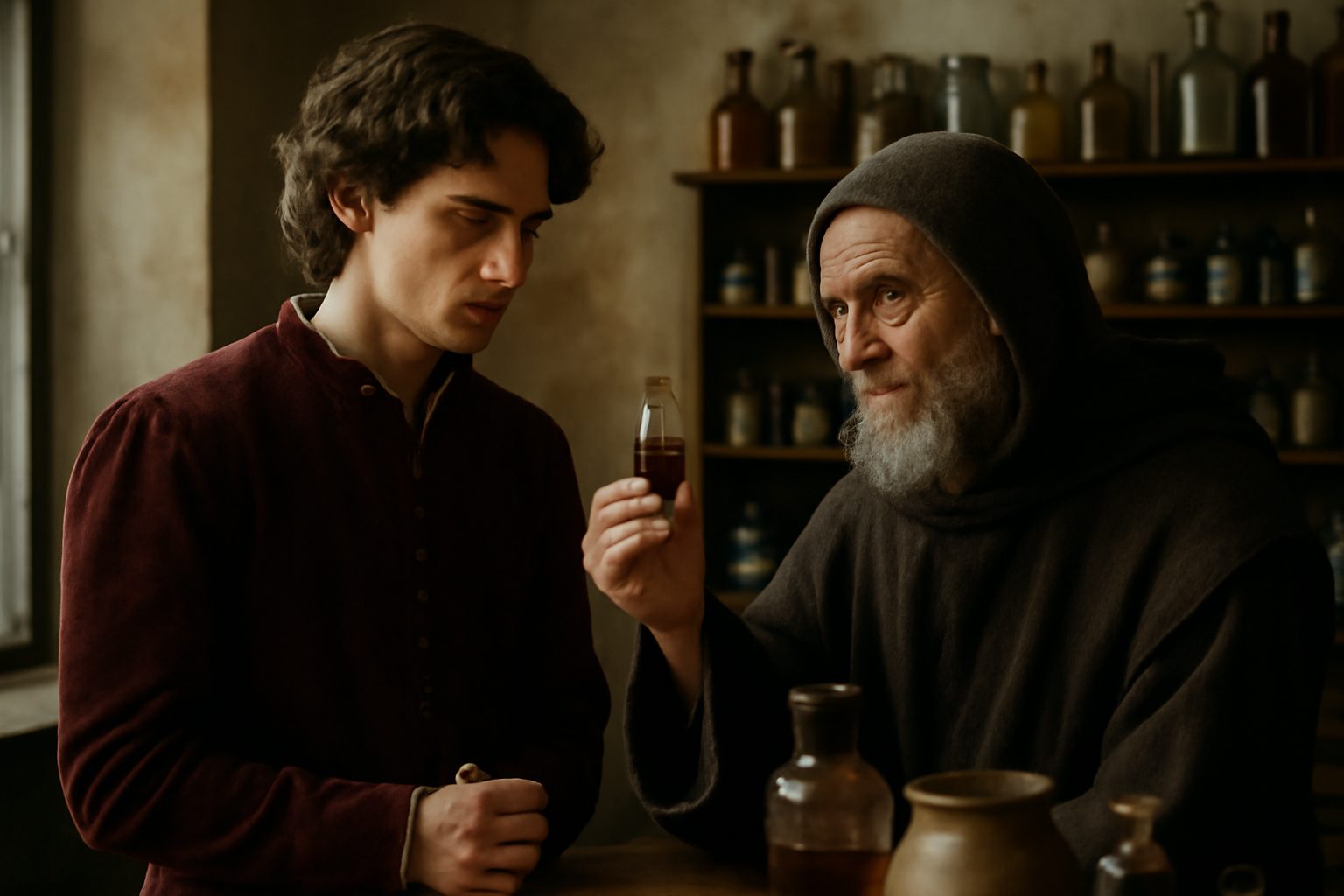
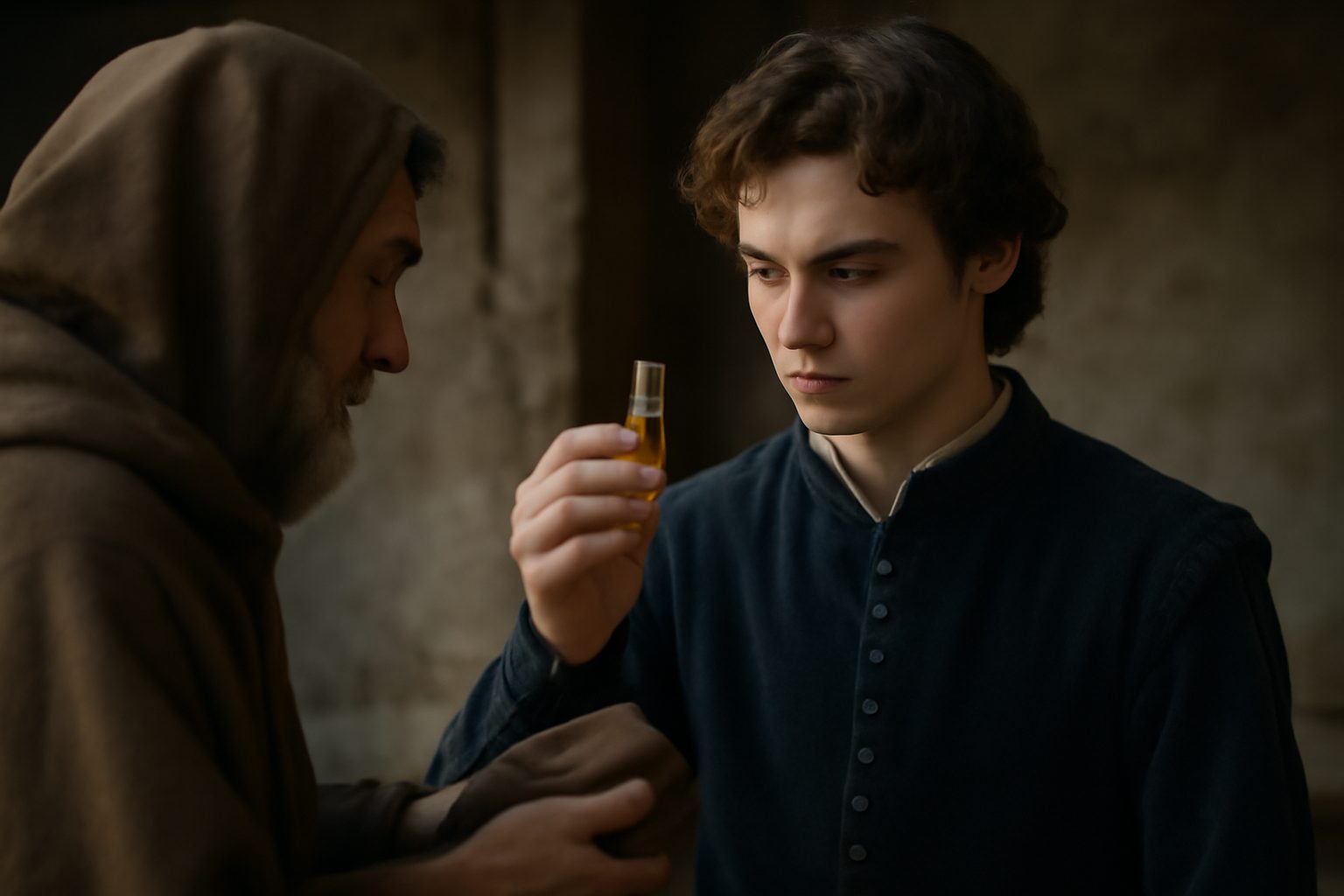
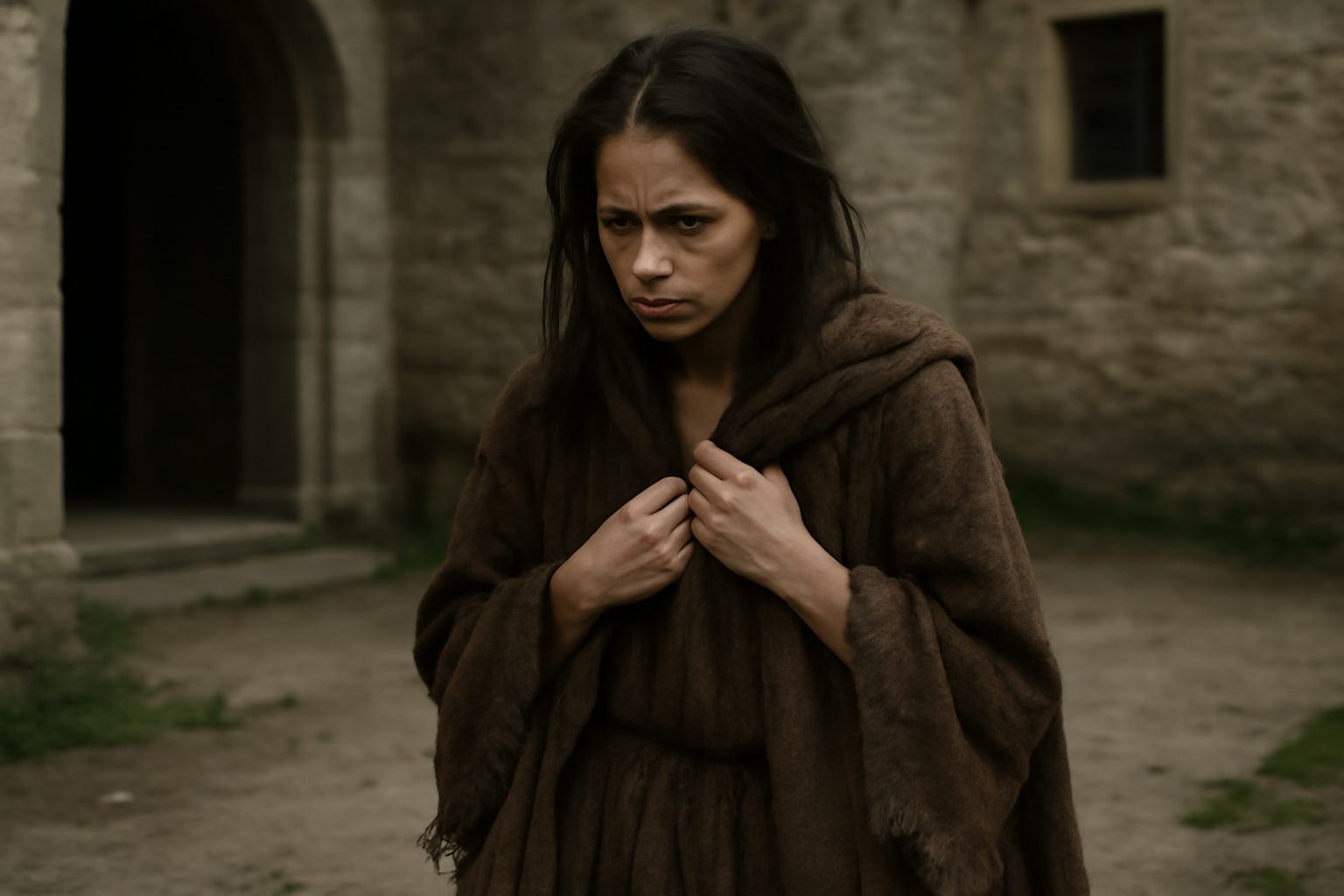
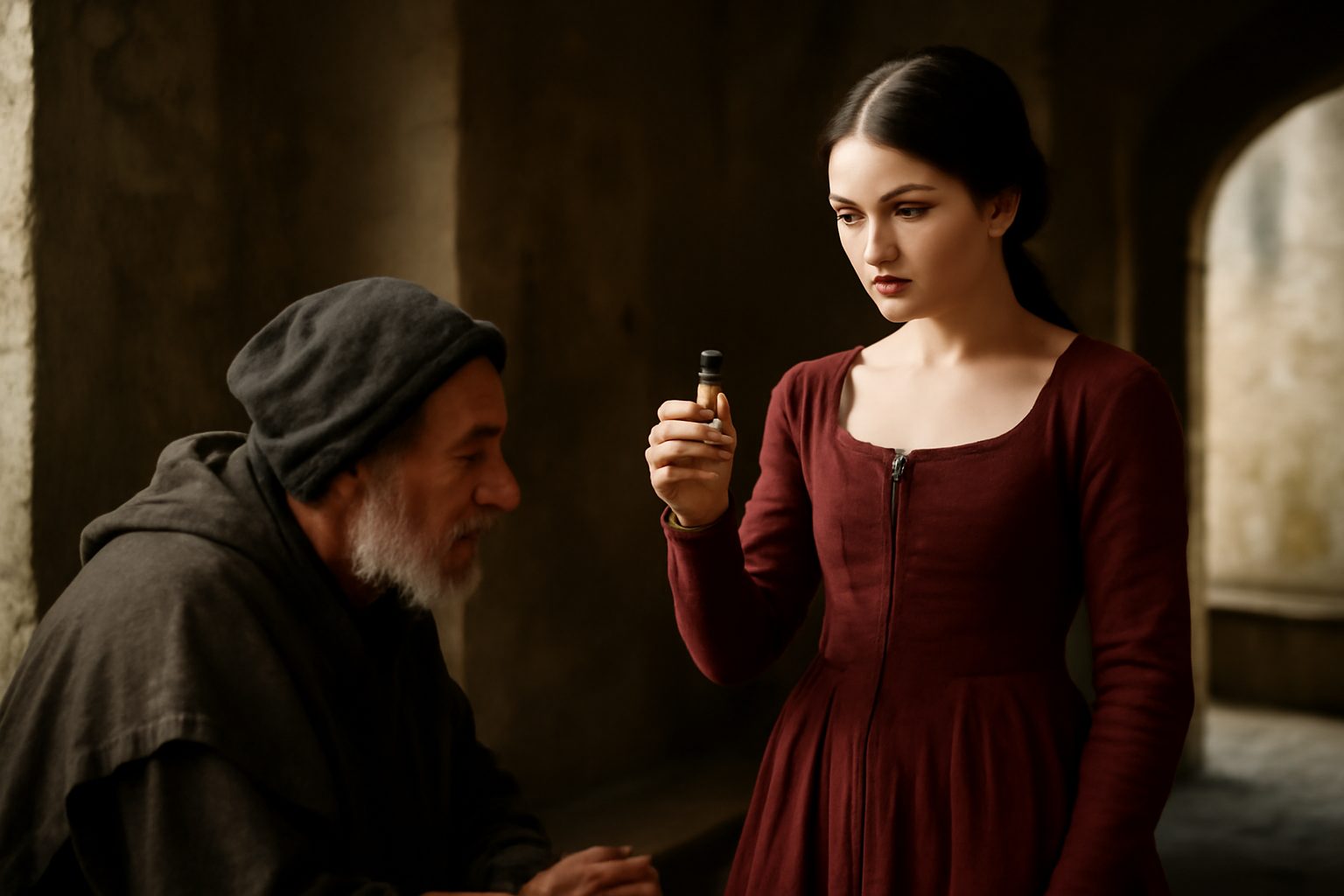
The verse Noting this penury, to myself I said reflects Romeo's observation of the apothecary's poverty, which he uses to persuade him to sell poison. This connects directly to Culling of simples; meagre were his looks, which describes the apothecary's gaunt appearance, reinforcing the theme of destitution.
Poverty and Desperation
Romeo's acknowledgment of the apothecary's need in this verse is echoed in Art thou so bare and full of wretchedness, where he explicitly comments on the man's miserable state. Similarly, Contempt and beggary hangs upon thy back underscores the apothecary's impoverished condition.
Moral and Legal Conflict
The apothecary's willingness to break the law due to poverty, hinted at in this line, is further developed in Such mortal drugs I have; but Mantua's law, where he cites the legal consequences. Romeo's response in The world affords no law to make thee rich highlights the societal neglect driving such actions.
Transaction and Irony
Romeo's manipulation of the apothecary's poverty culminates in the transaction noted in And this same needy man must sell it me. The irony of wealth and poison is starkly presented in There is thy gold, worse poison to men's souls, tying back to the initial observation of penury.