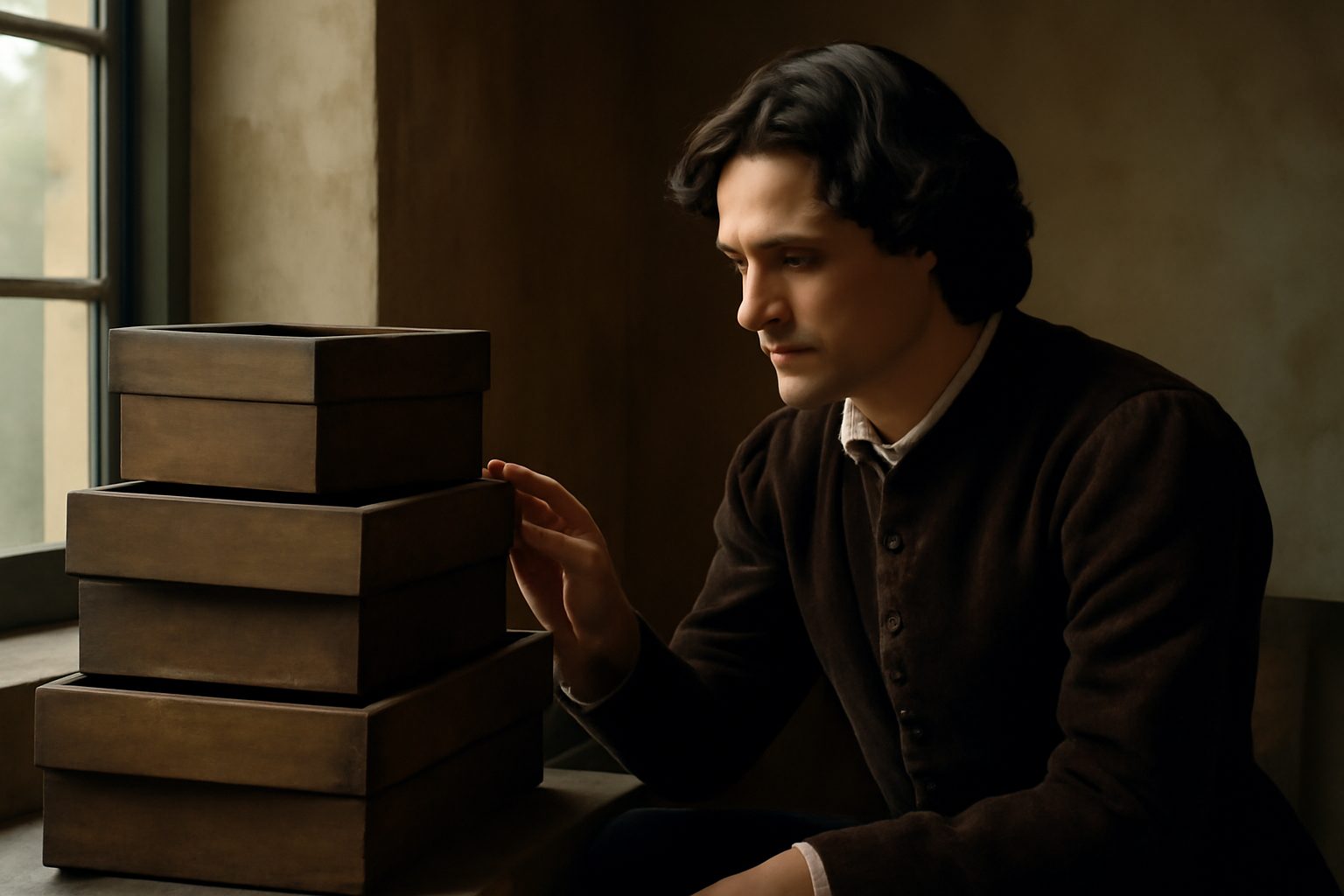
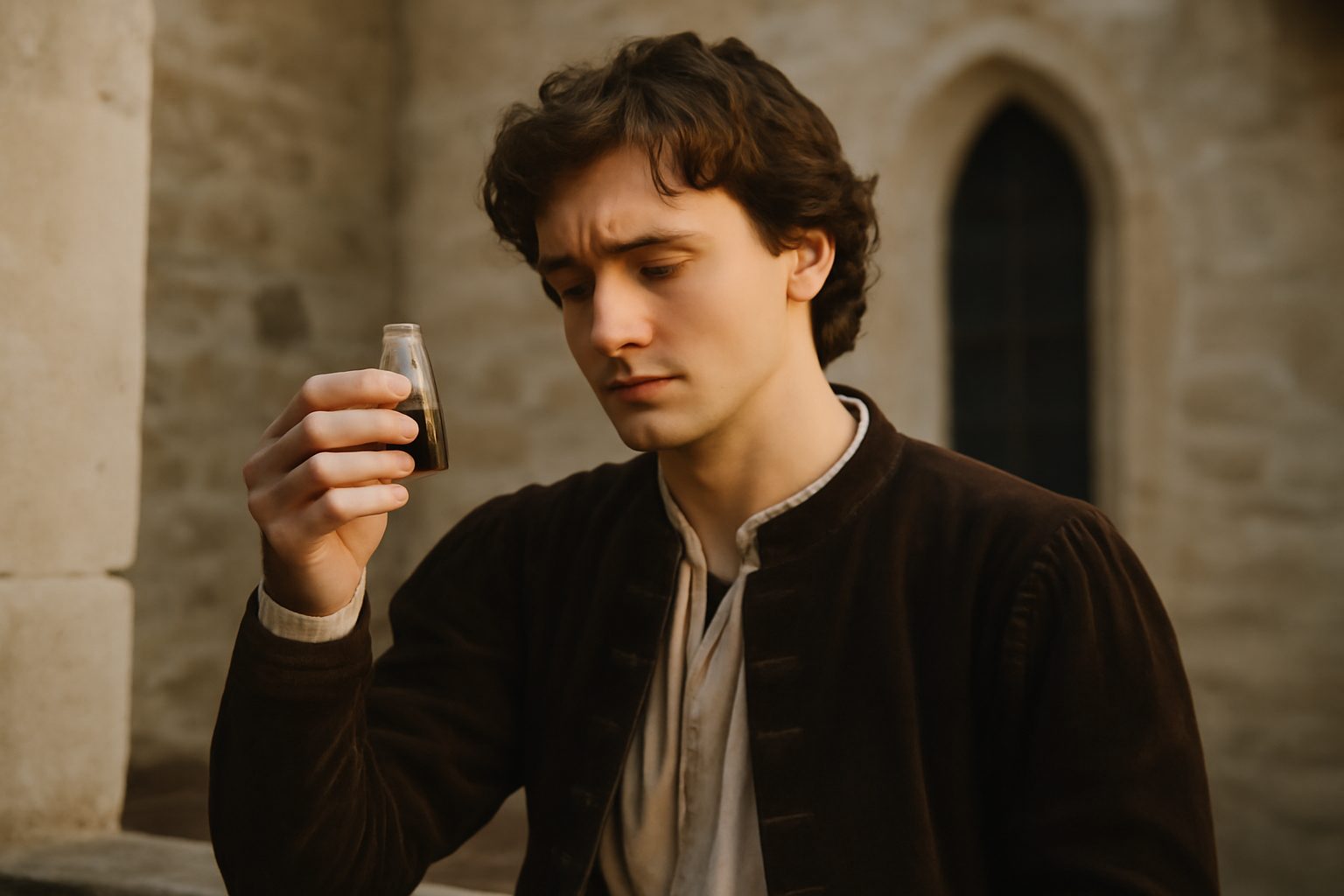
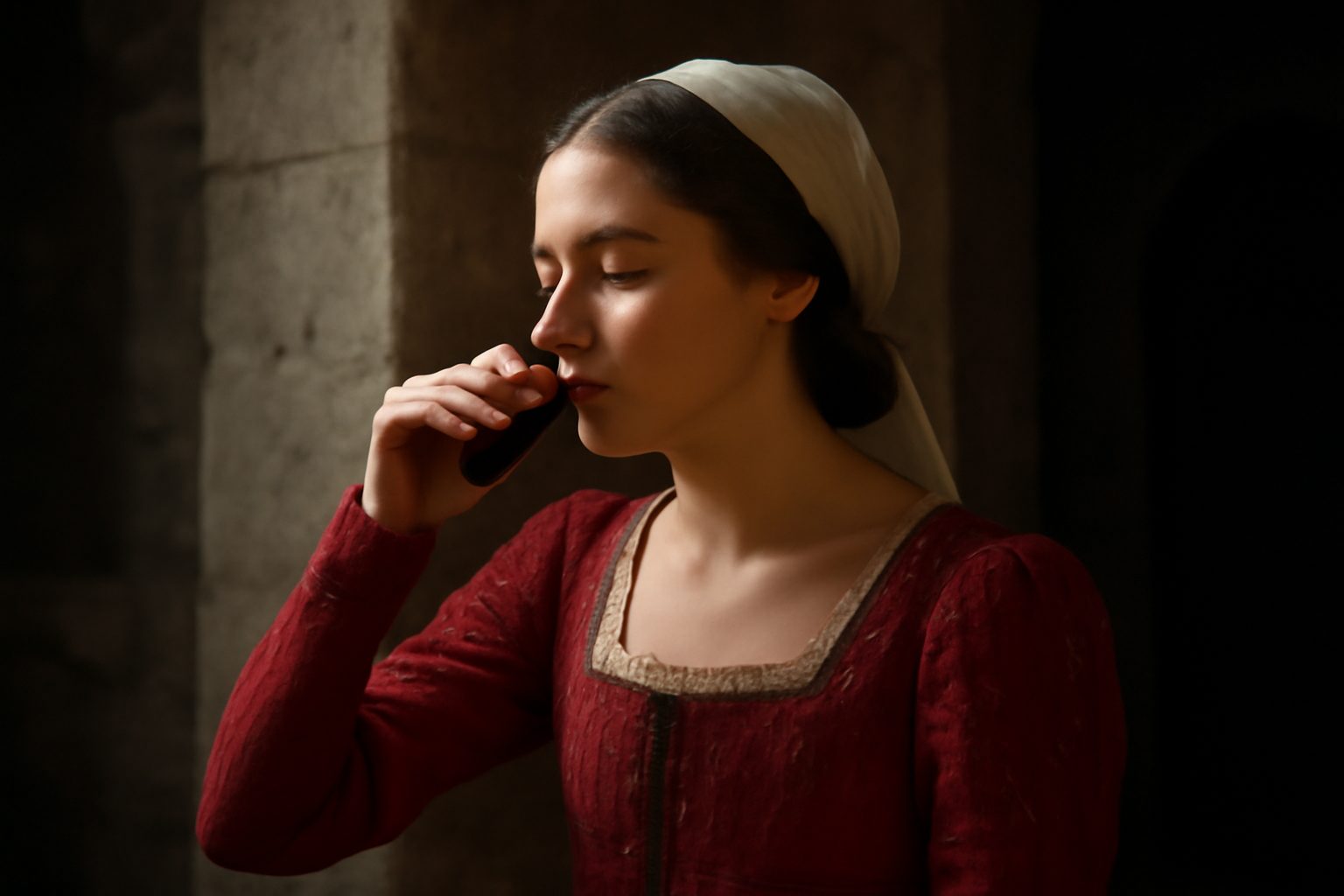
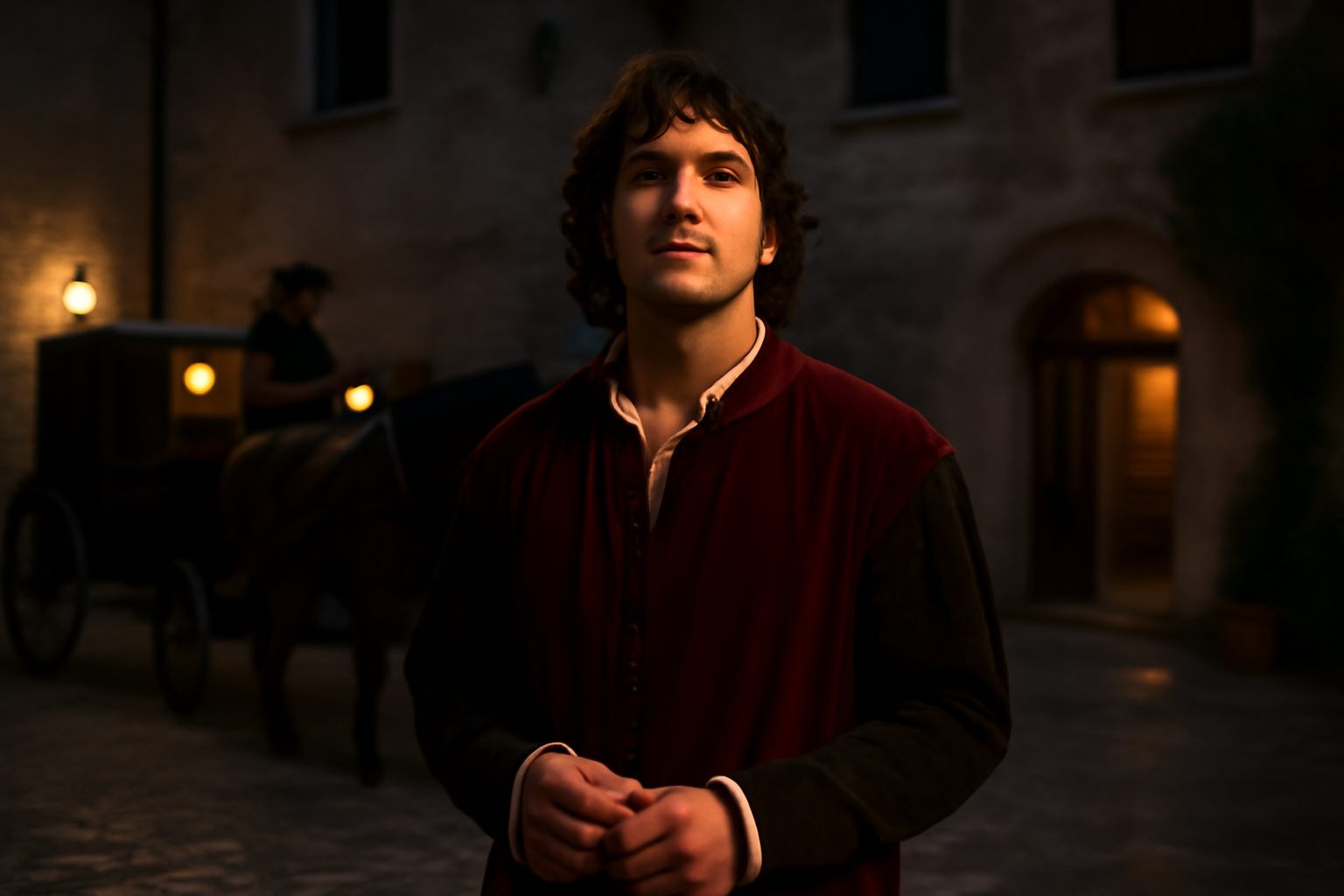
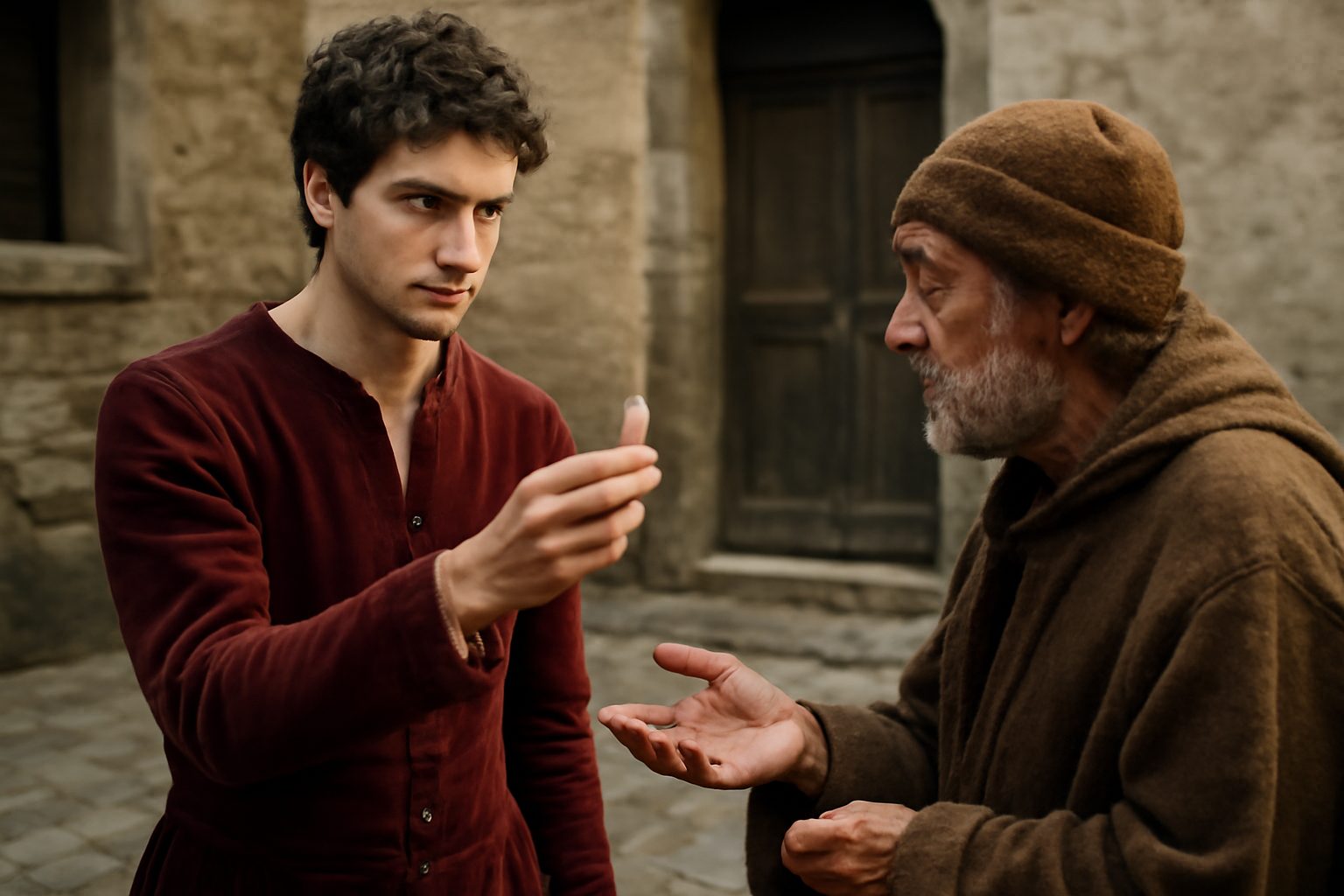
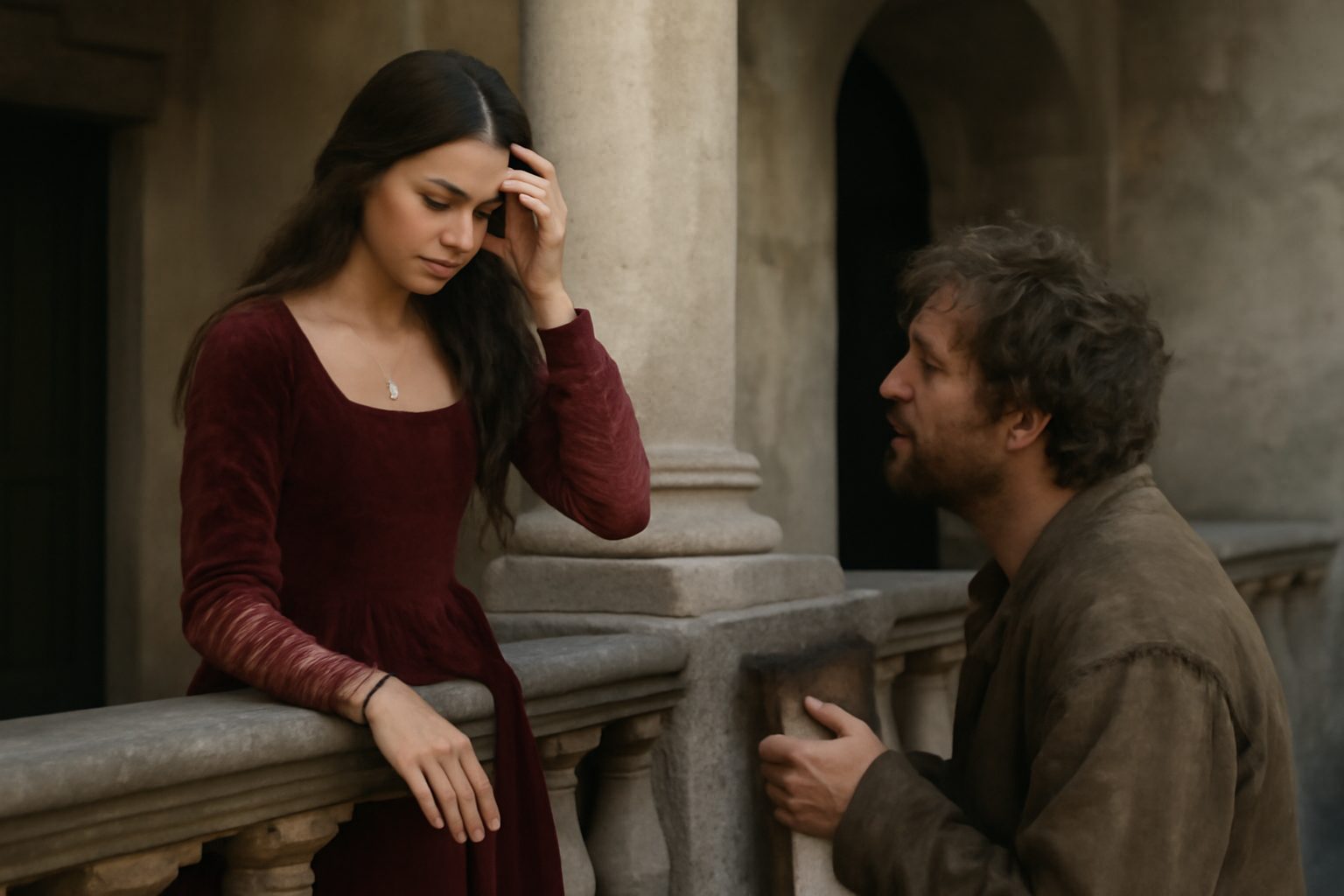
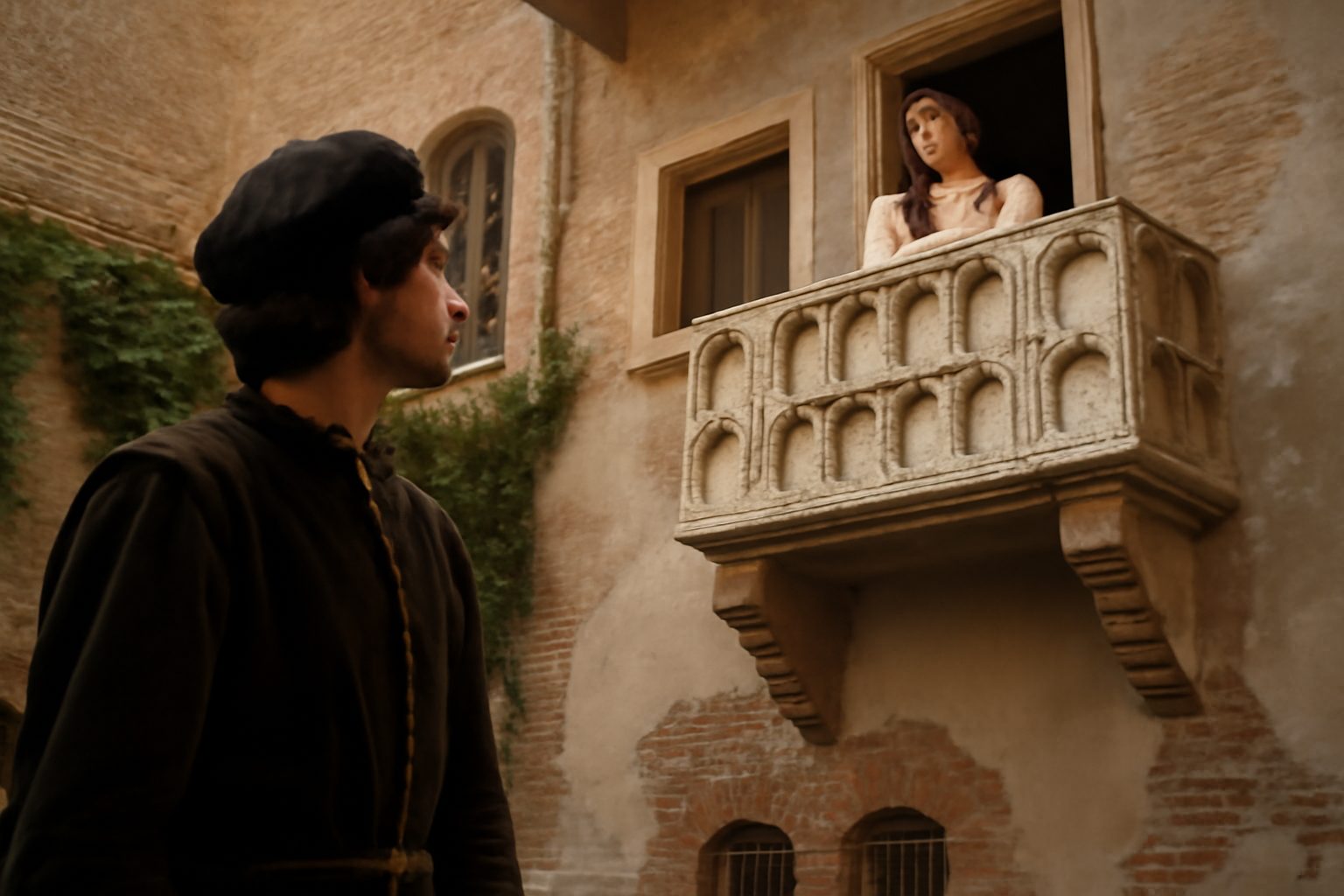
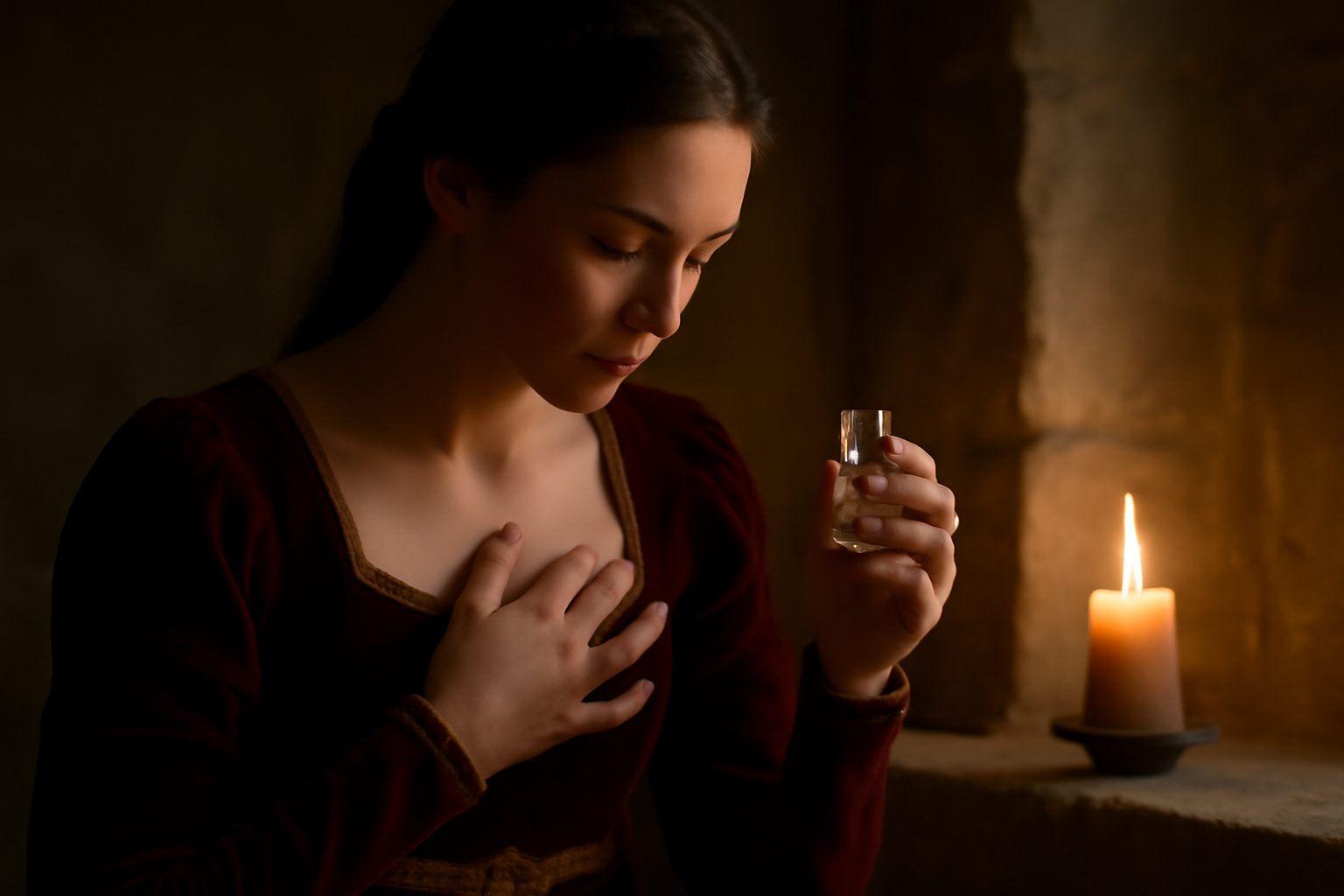
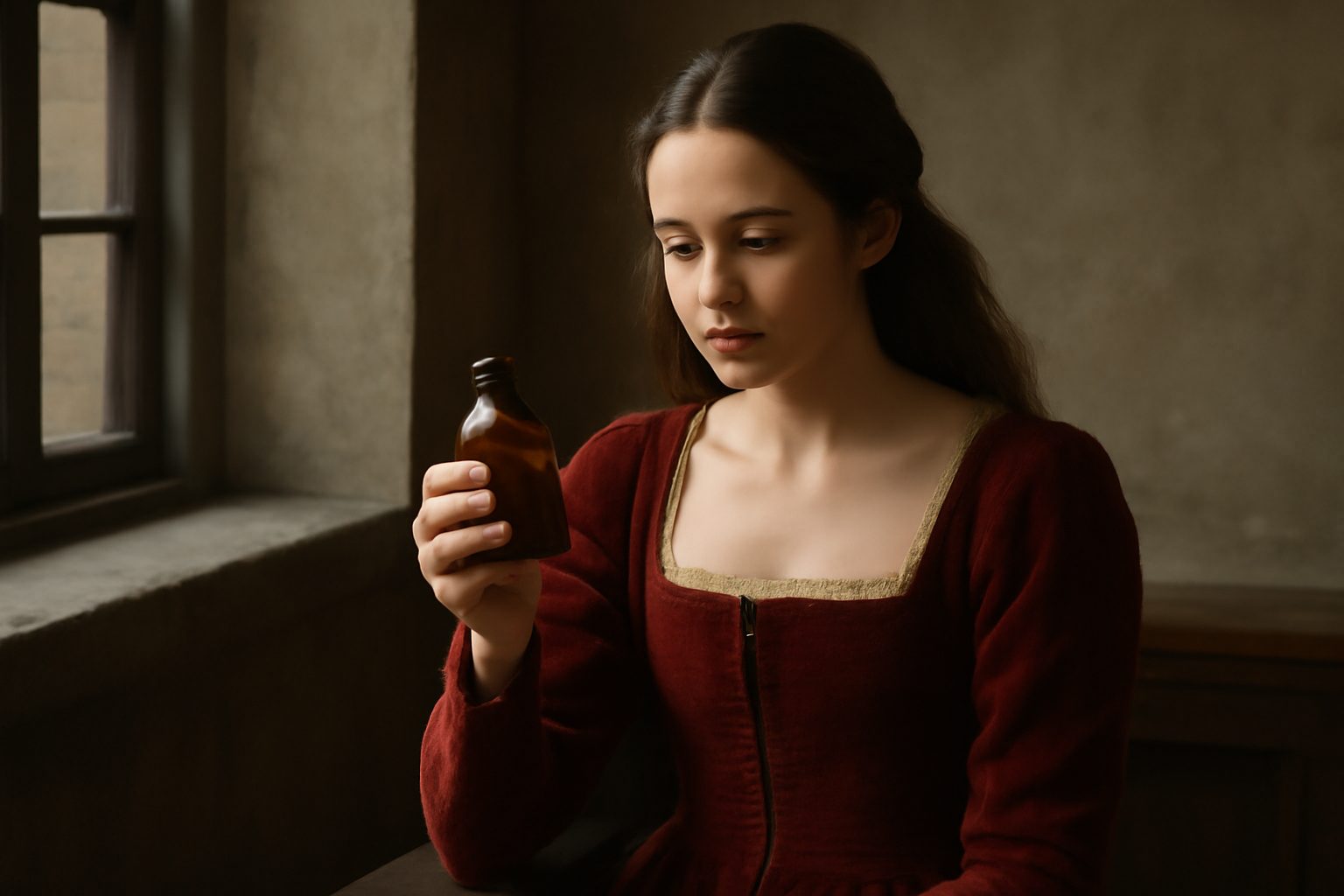
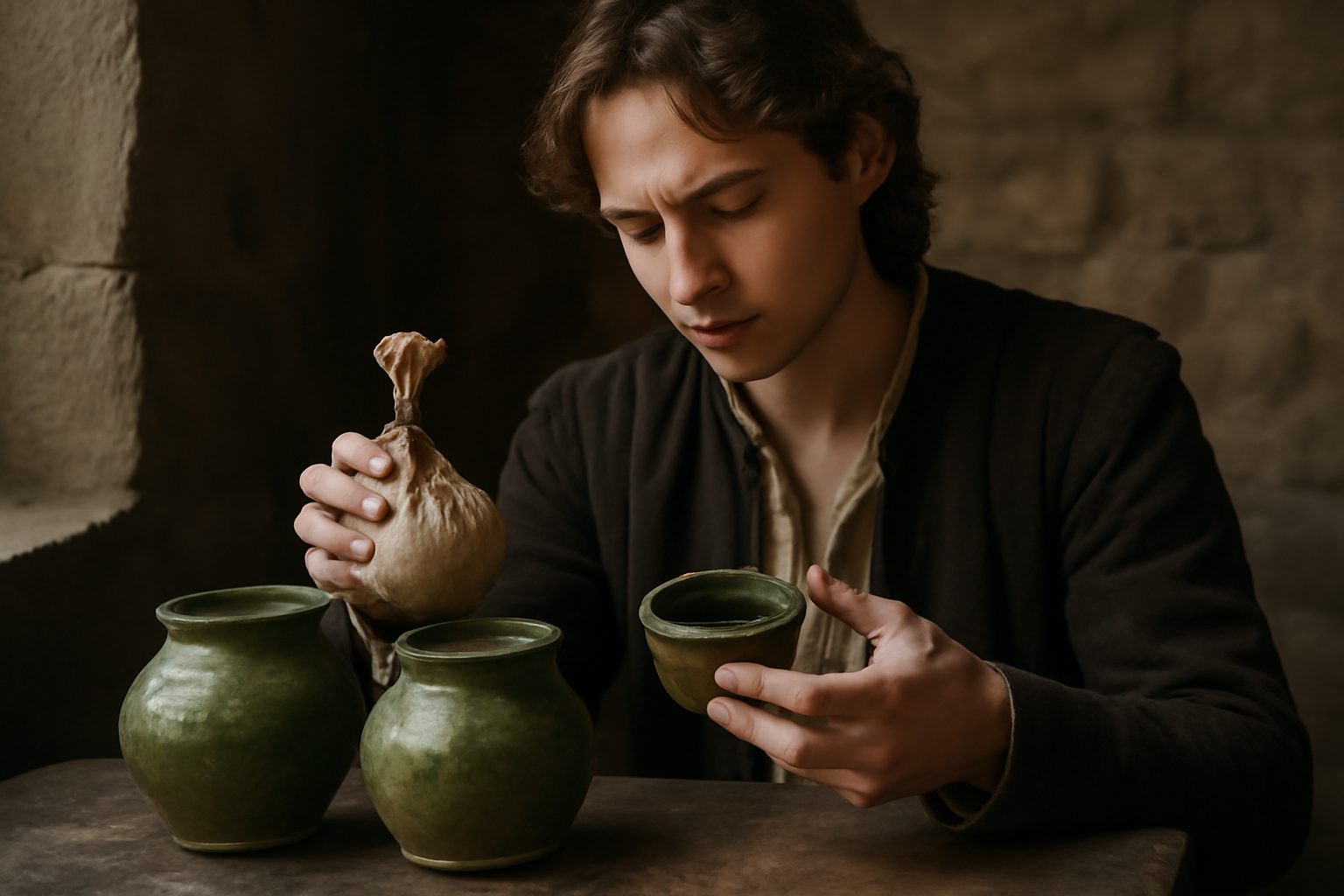
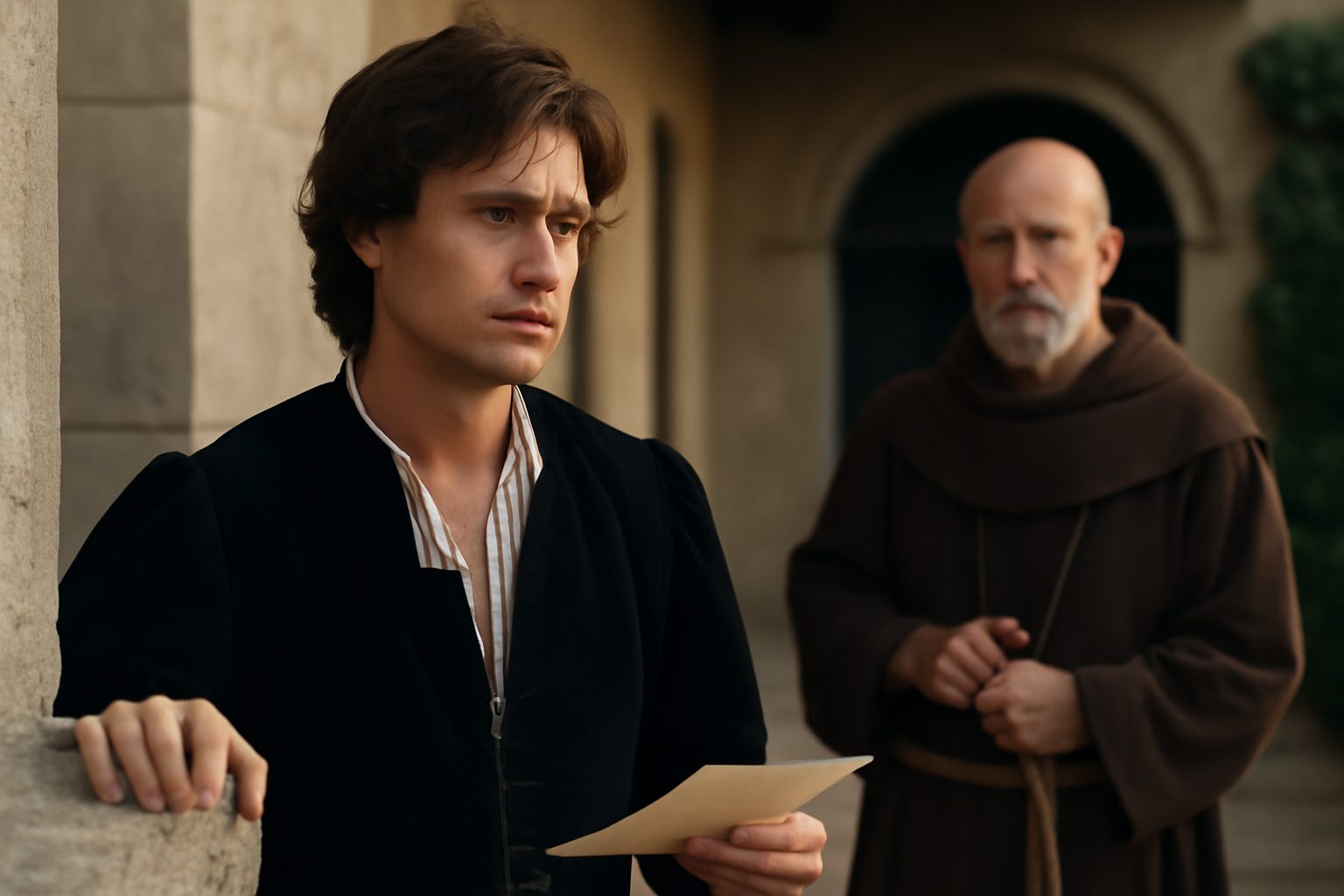
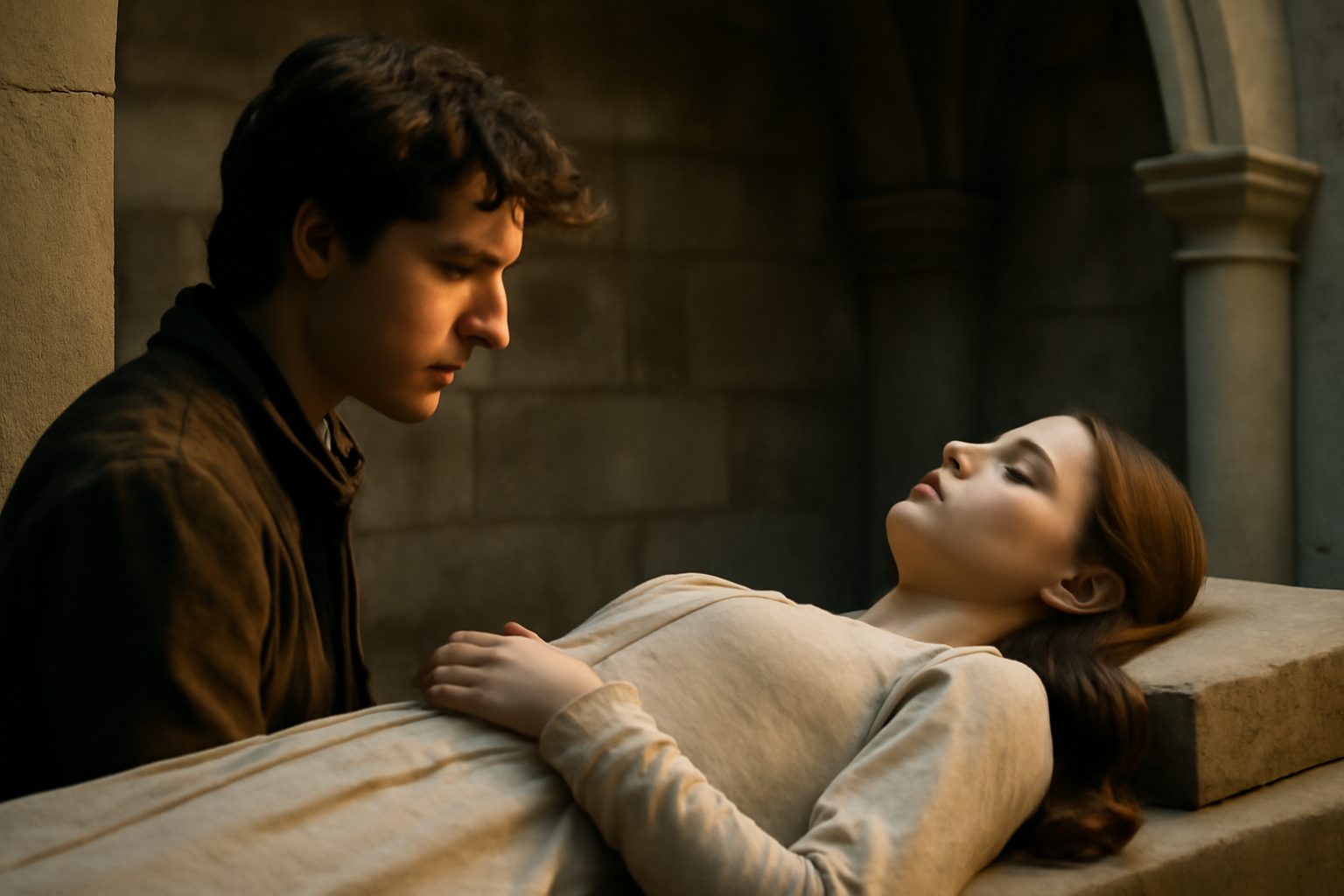
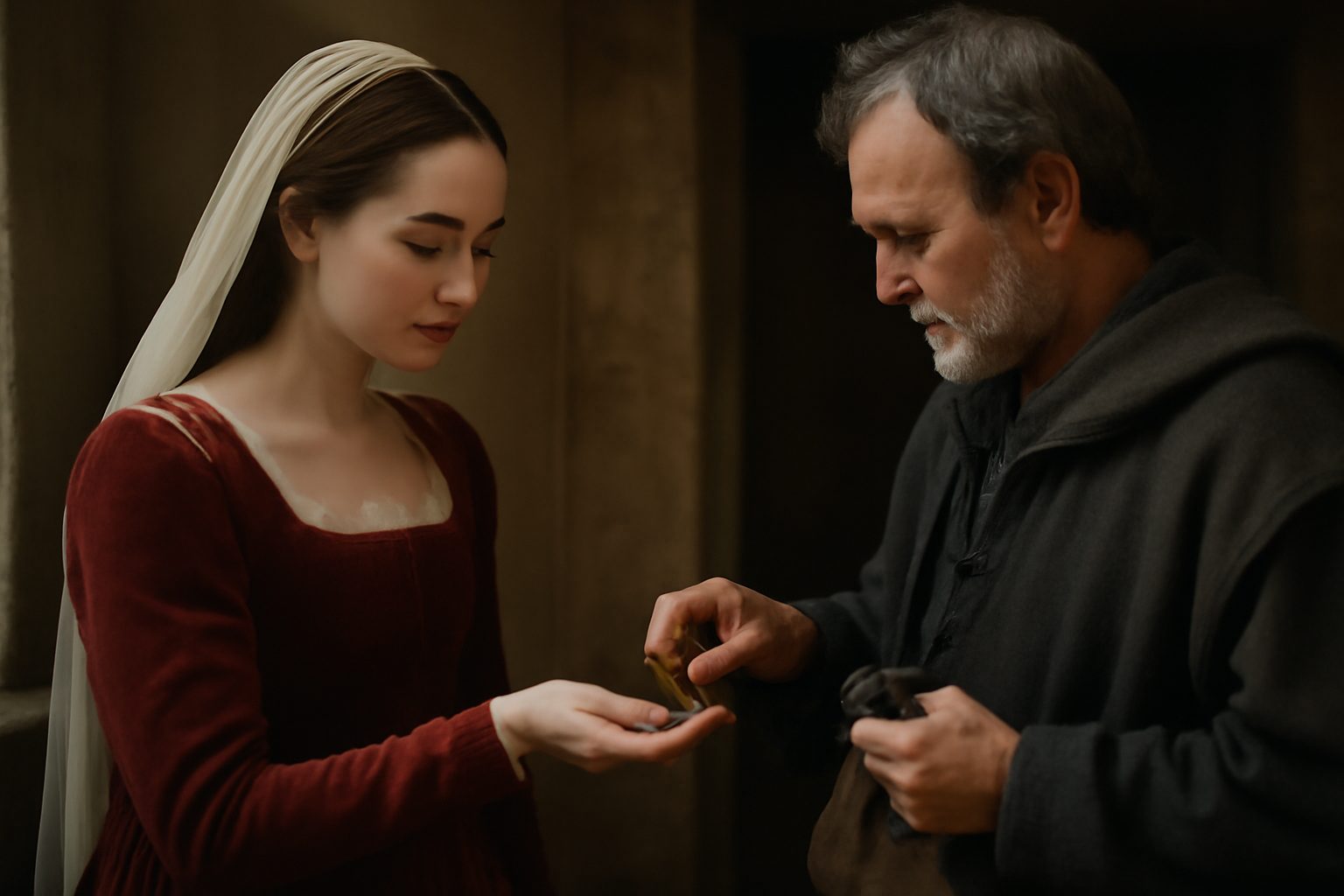
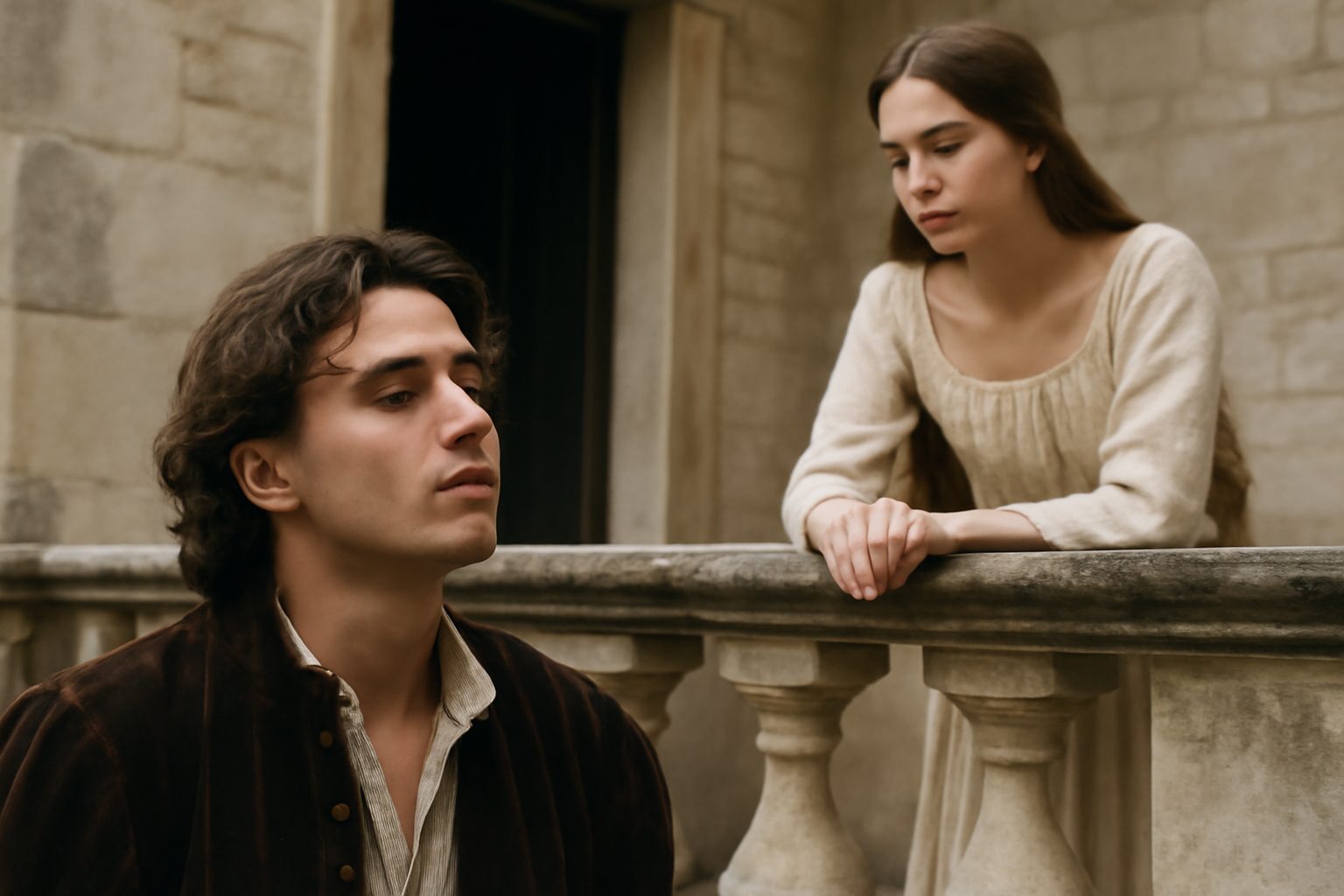
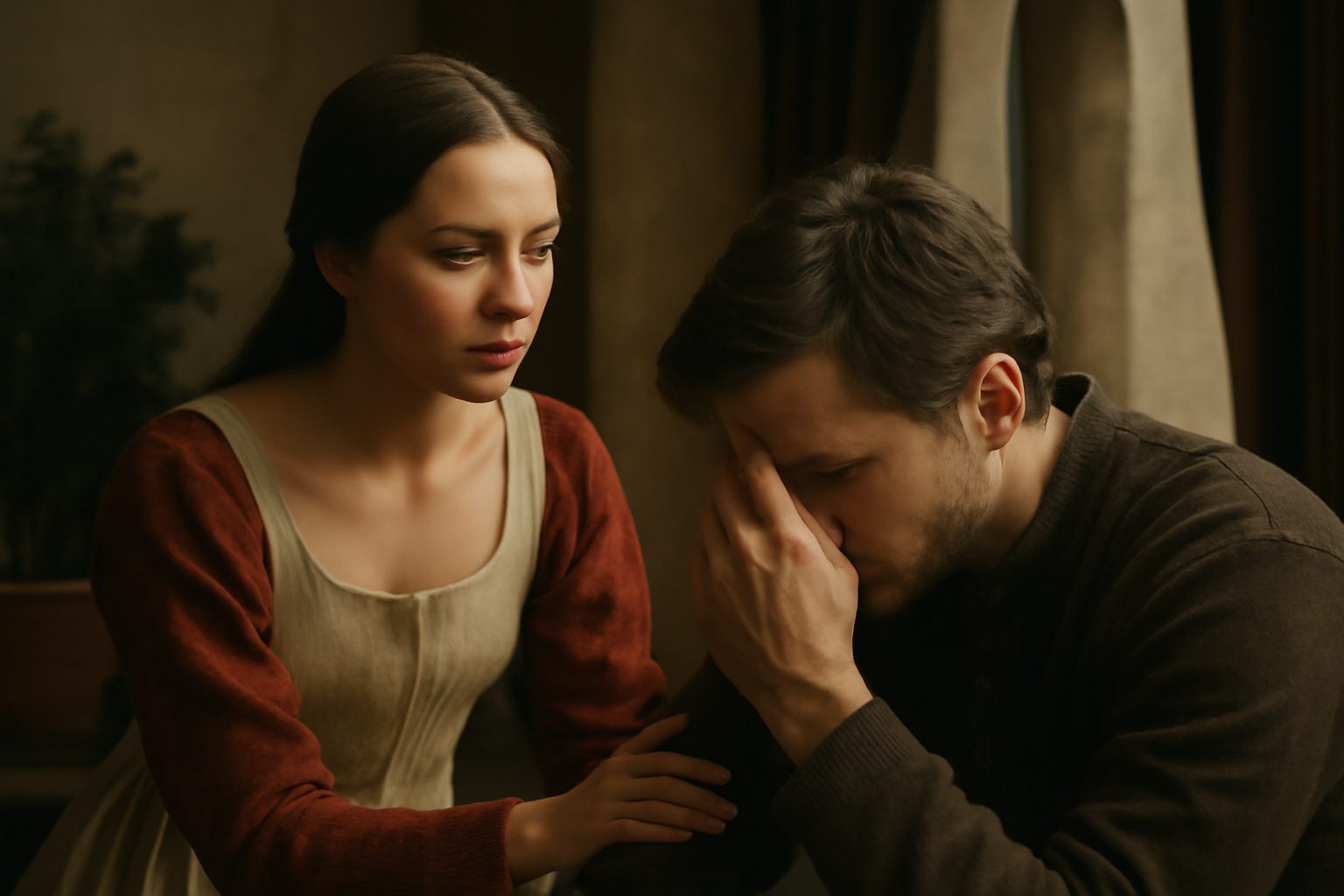
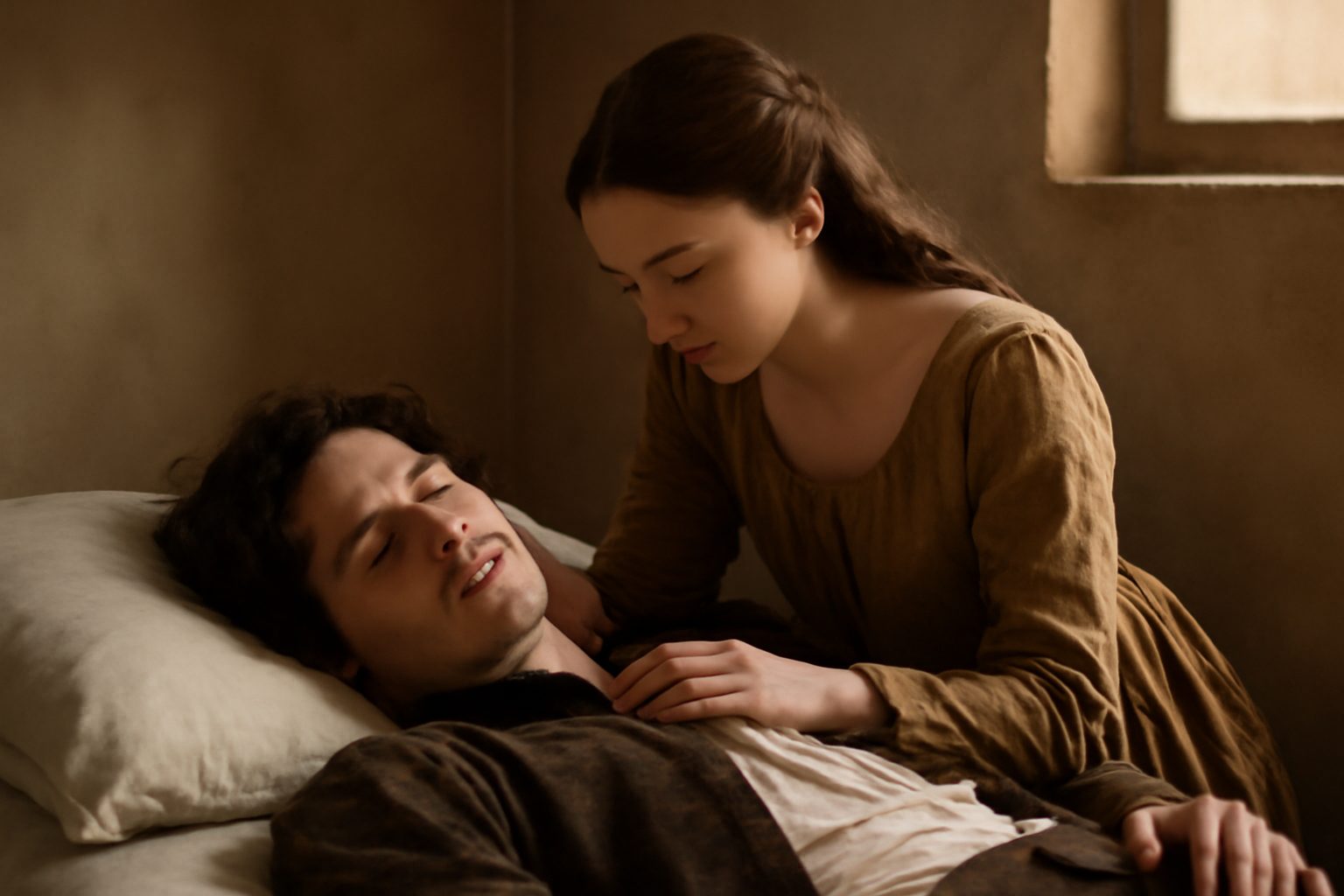
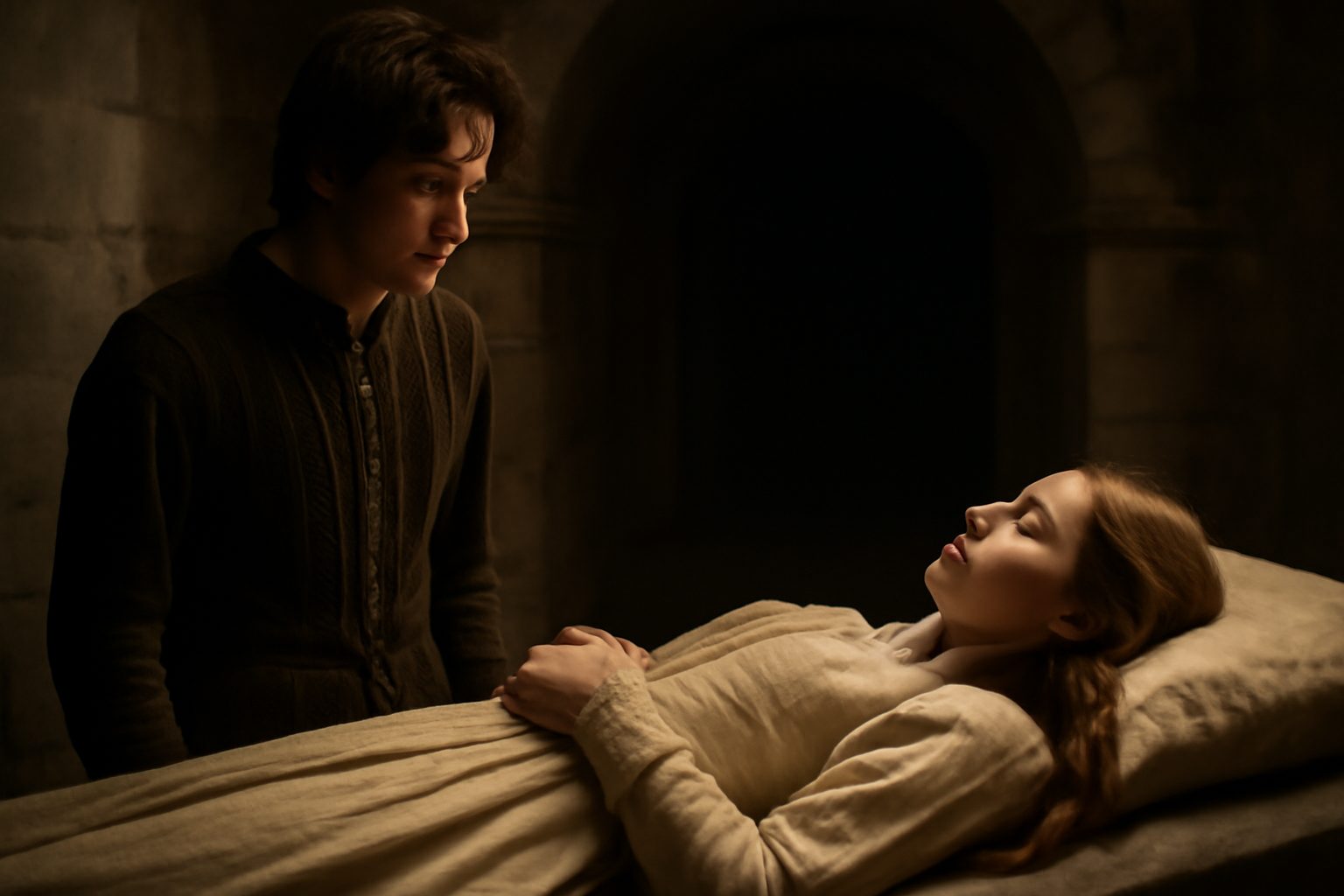
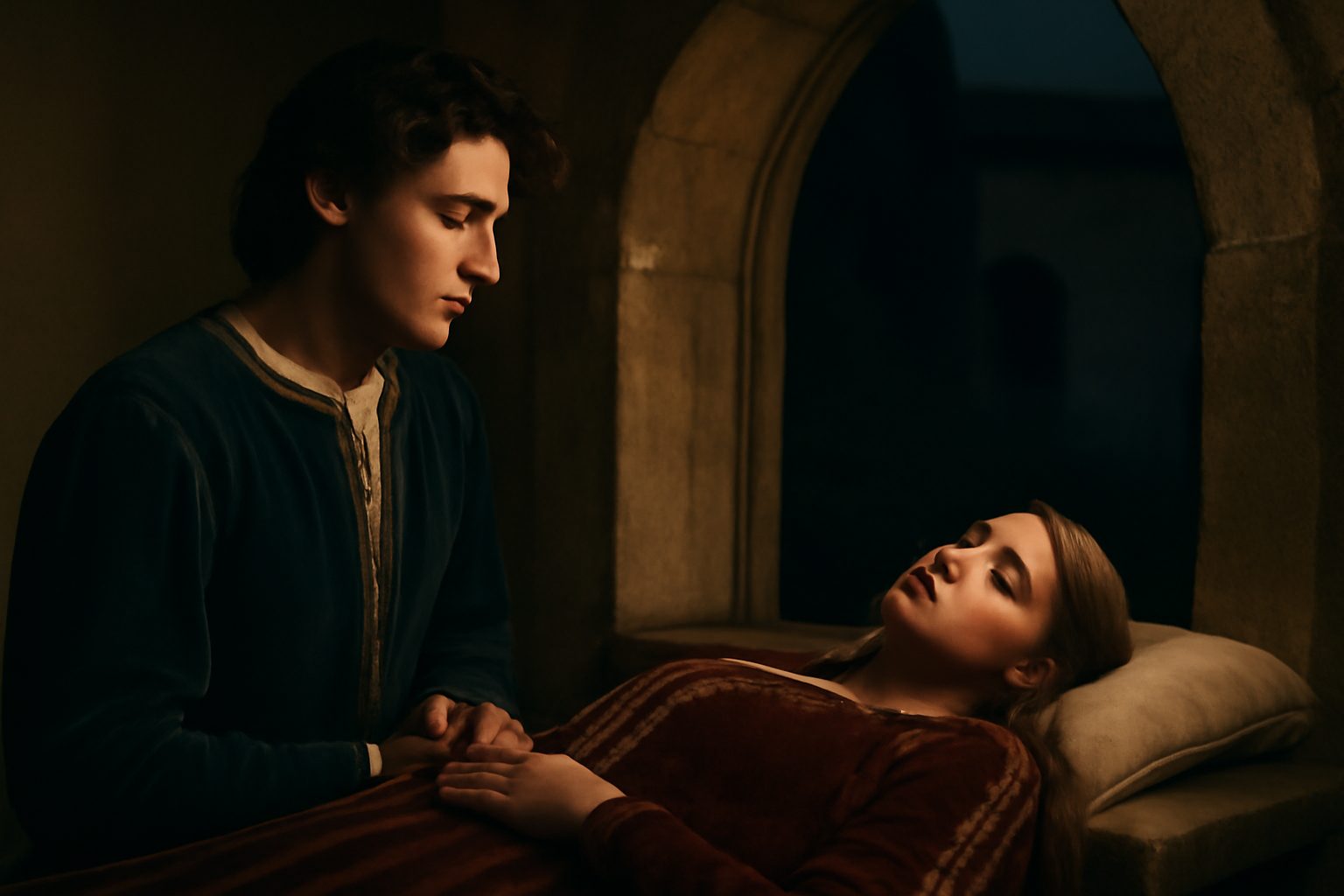
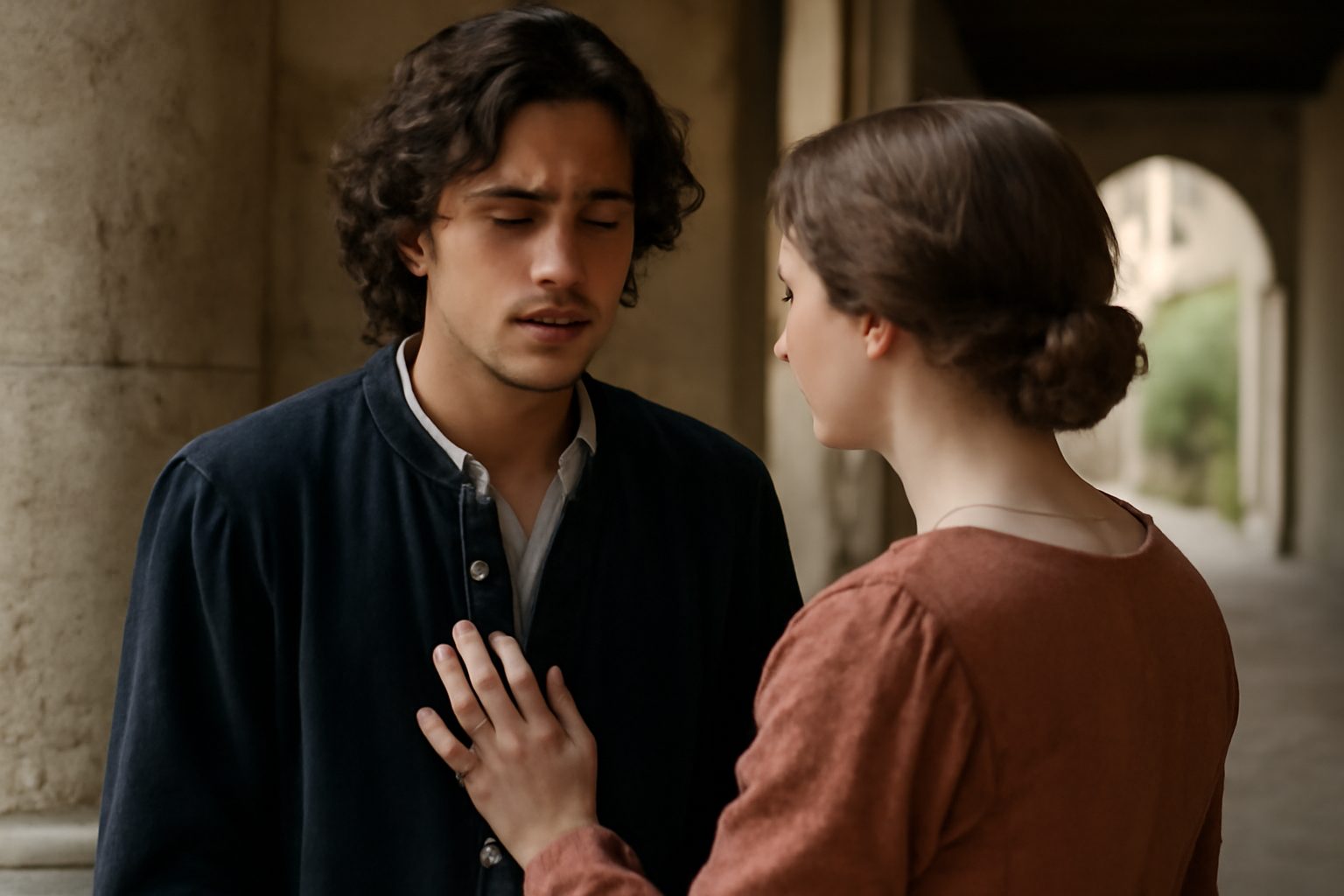
In Act 5 Scene 1 of Romeo and Juliet, Romeo is in Mantua, unaware that Juliet's death has been faked. When Balthasar brings news of her supposed death, Romeo resolves to return to Verona and join her in the tomb. This line reflects his grim determination to release his life, imagining his body as a vessel emptied of breath.
Romeo: "And that the trunk may be discharged of breath"
In modern day english, we would say:
Romeo means that he wants his body to be emptied of life, or to die.
Frequently Asked Questions
What does Romeo mean when he says the trunk may be discharged of breath?
Romeo is saying that he wants his body (the trunk) to be freed from life (breath), meaning he wishes to die.
Connections to other verses:
Connections to "And that the trunk may be discharged of breath"
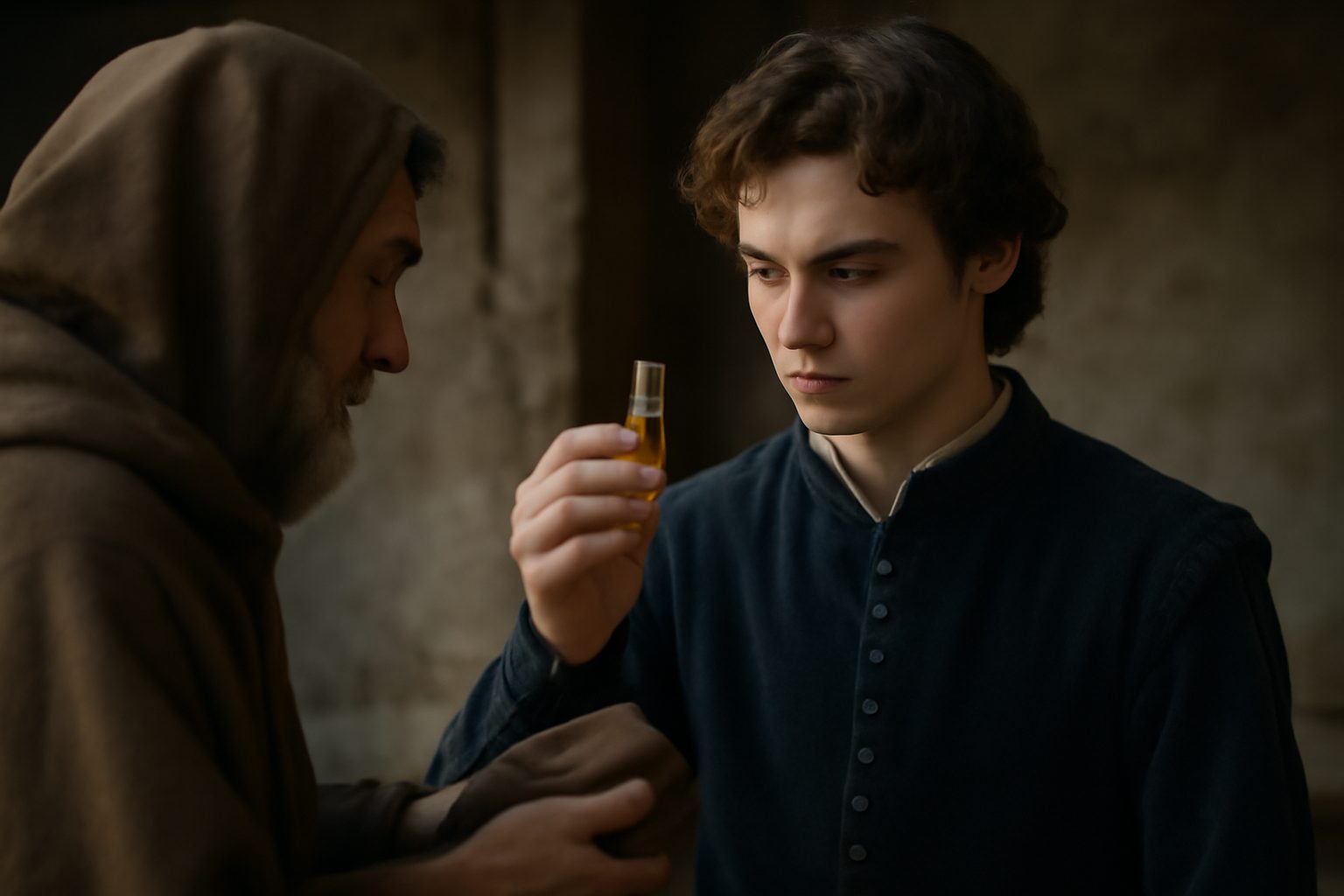
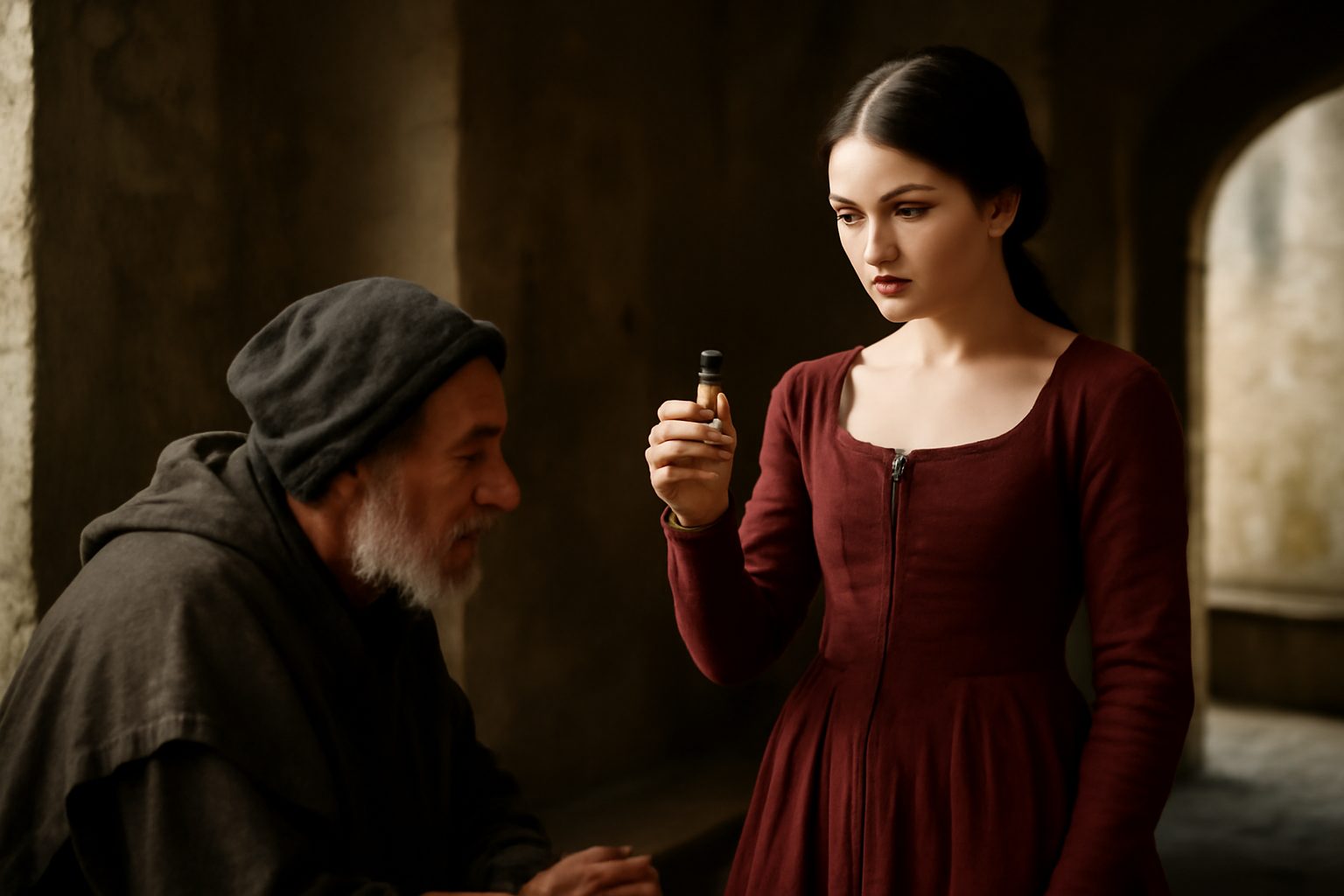
The verse "And that the trunk may be discharged of breath" is part of Romeo's description of the poison he seeks from the apothecary. It expresses his desire for a swift and effective means to end his life, specifically to join Juliet in death.
Related to the Poison's Potency
This line connects directly to "As will disperse itself through all the veins", which describes how the poison will rapidly spread through the body. Both emphasize the lethal efficiency Romeo requires.
It also relates to "That the life-weary taker may fall dead", underscoring Romeo's wish for immediate death upon consuming the poison.
Links to the Apothecary Scene
The context of acquiring the poison is established in "I do remember an apothecary", where Romeo recalls the impoverished seller. This sets the stage for their interaction.
Romeo's negotiation is reflected in "Hold, there is forty ducats: let me have", showing his urgency to obtain the substance referenced in the trunk verse.
Reflecting Romeo's Desperation
His resolve is echoed in "Well, Juliet, I will lie with thee to-night", declaring his intent to die beside her, which the poison will facilitate.
This desperation is further highlighted in "Is it even so? then I defy you, stars!", where Romeo rebels against fate, leading him to seek the means to end his life.
Contrast with Earlier Optimism
The verse contrasts sharply with his earlier hopefulness, such as in "My bosom's lord sits lightly in his throne", where he feels joy before learning of Juliet's death.
It also opposes "For nothing can be ill, if she be well", showing how his outlook darkens upon receiving the tragic news.