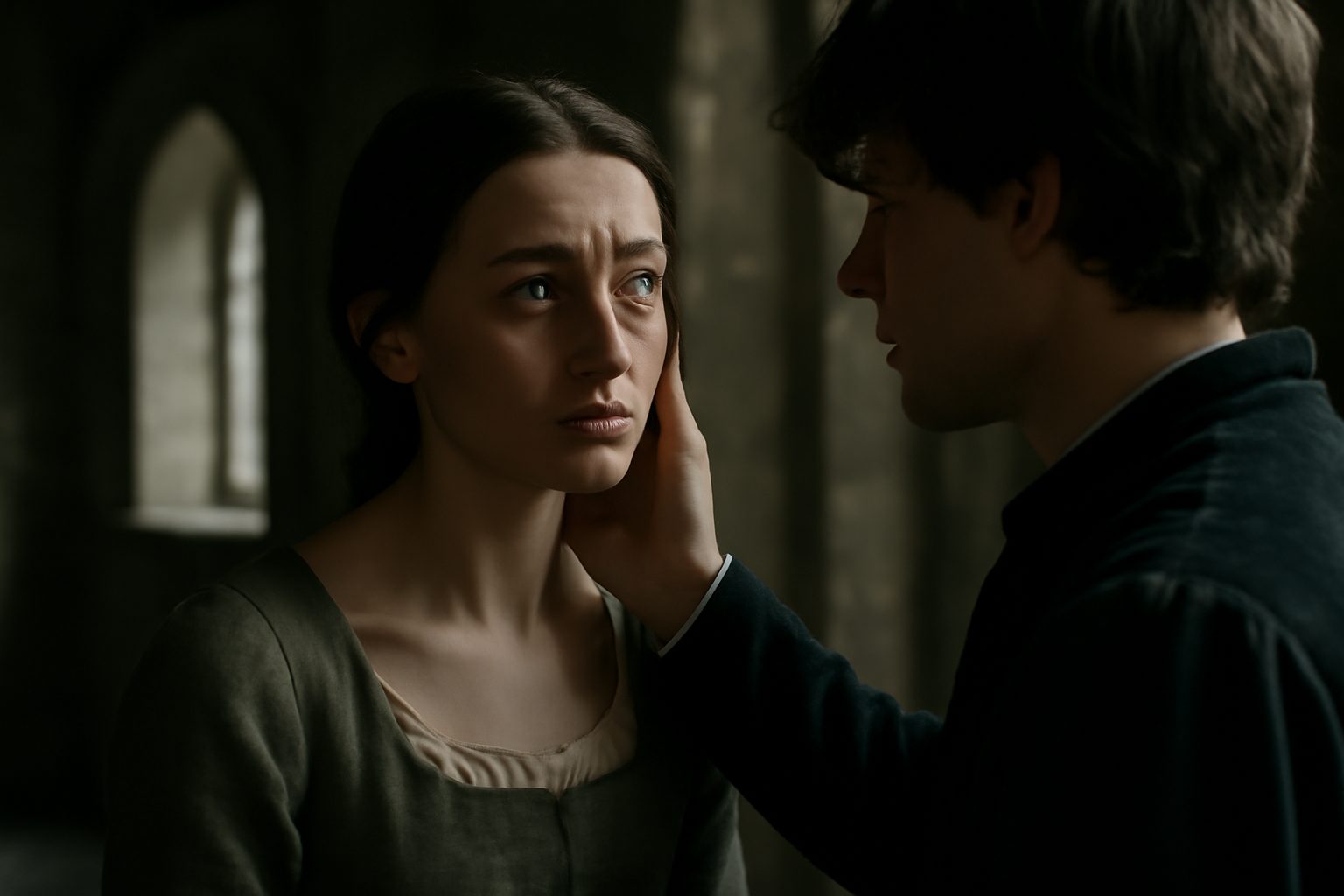
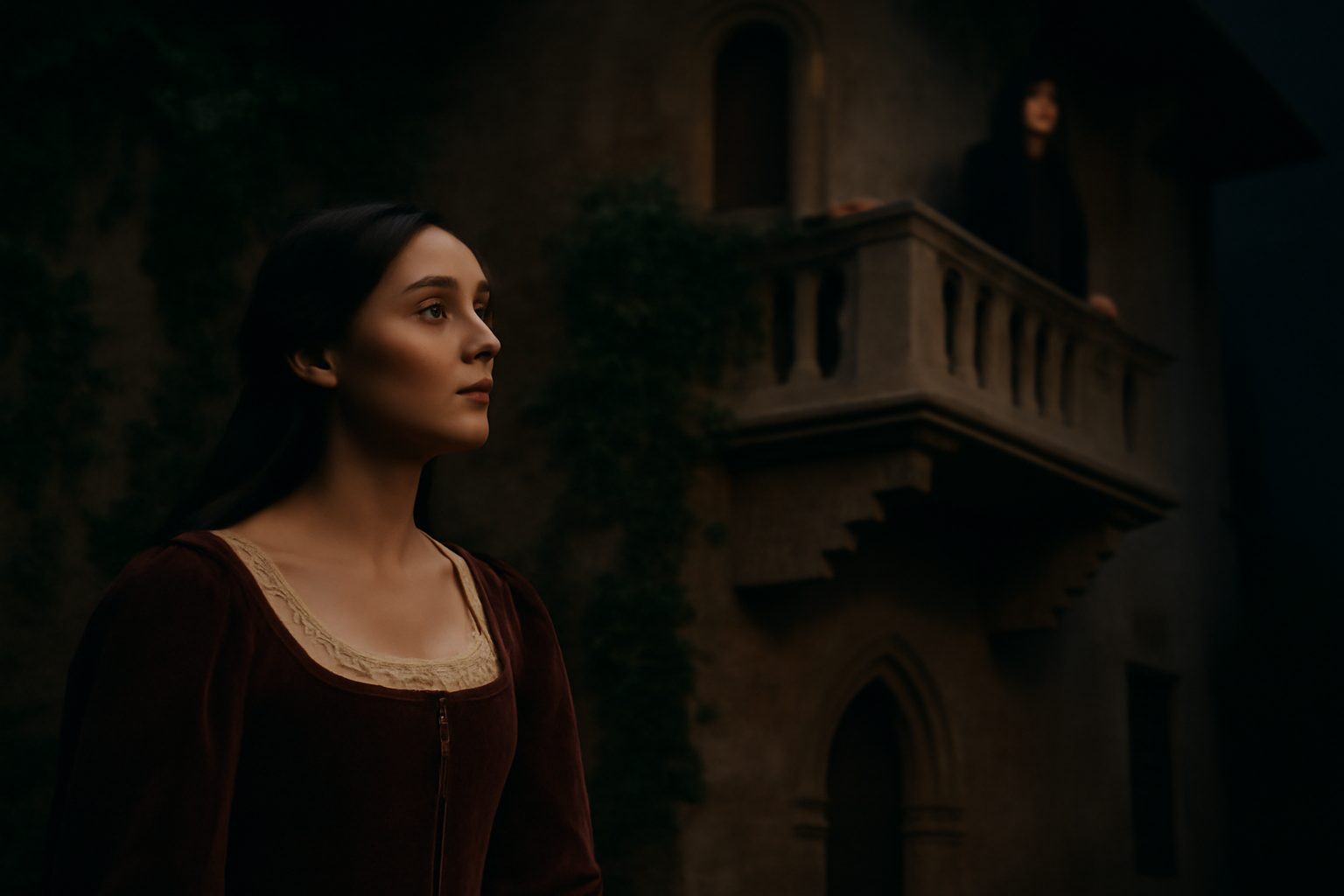
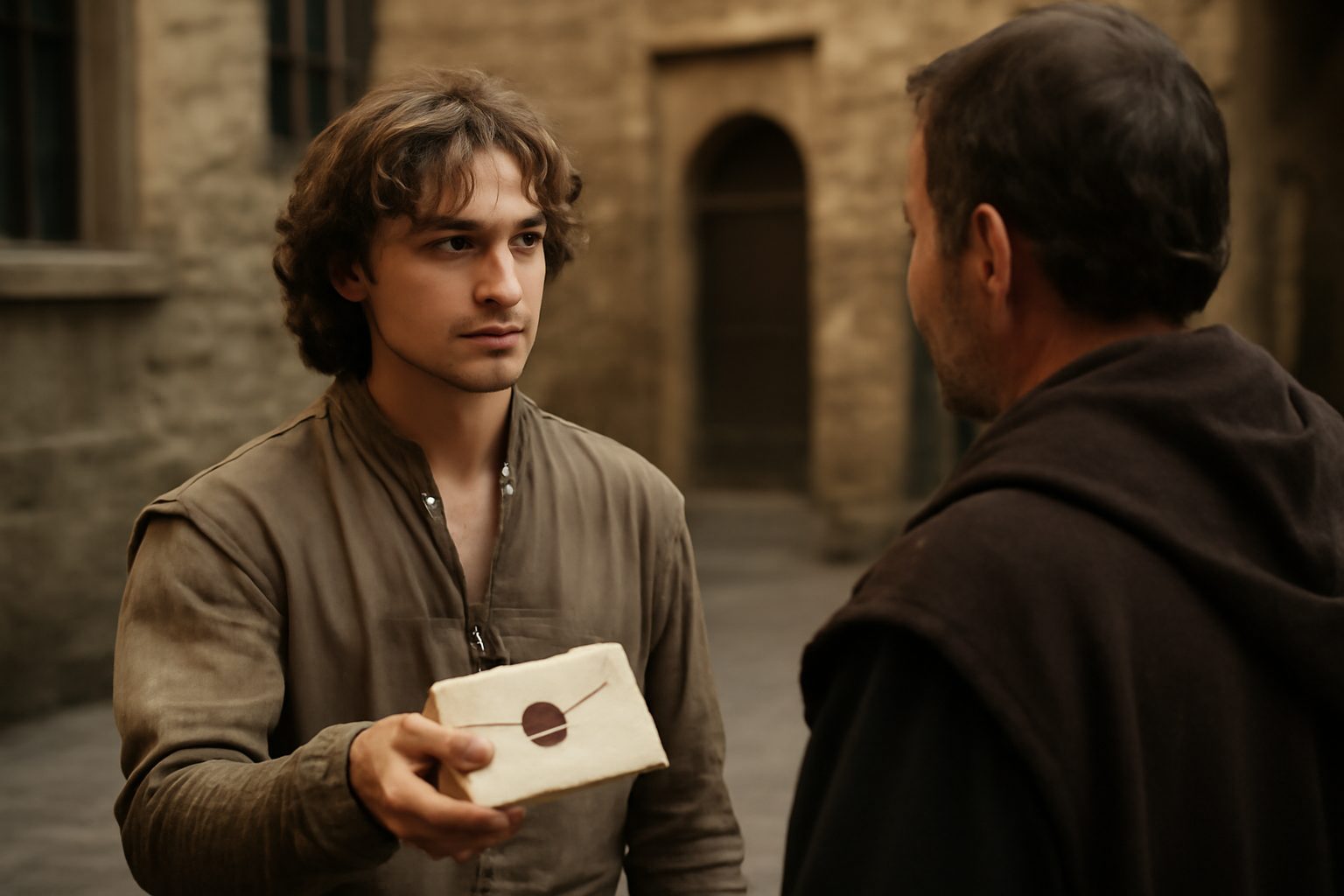
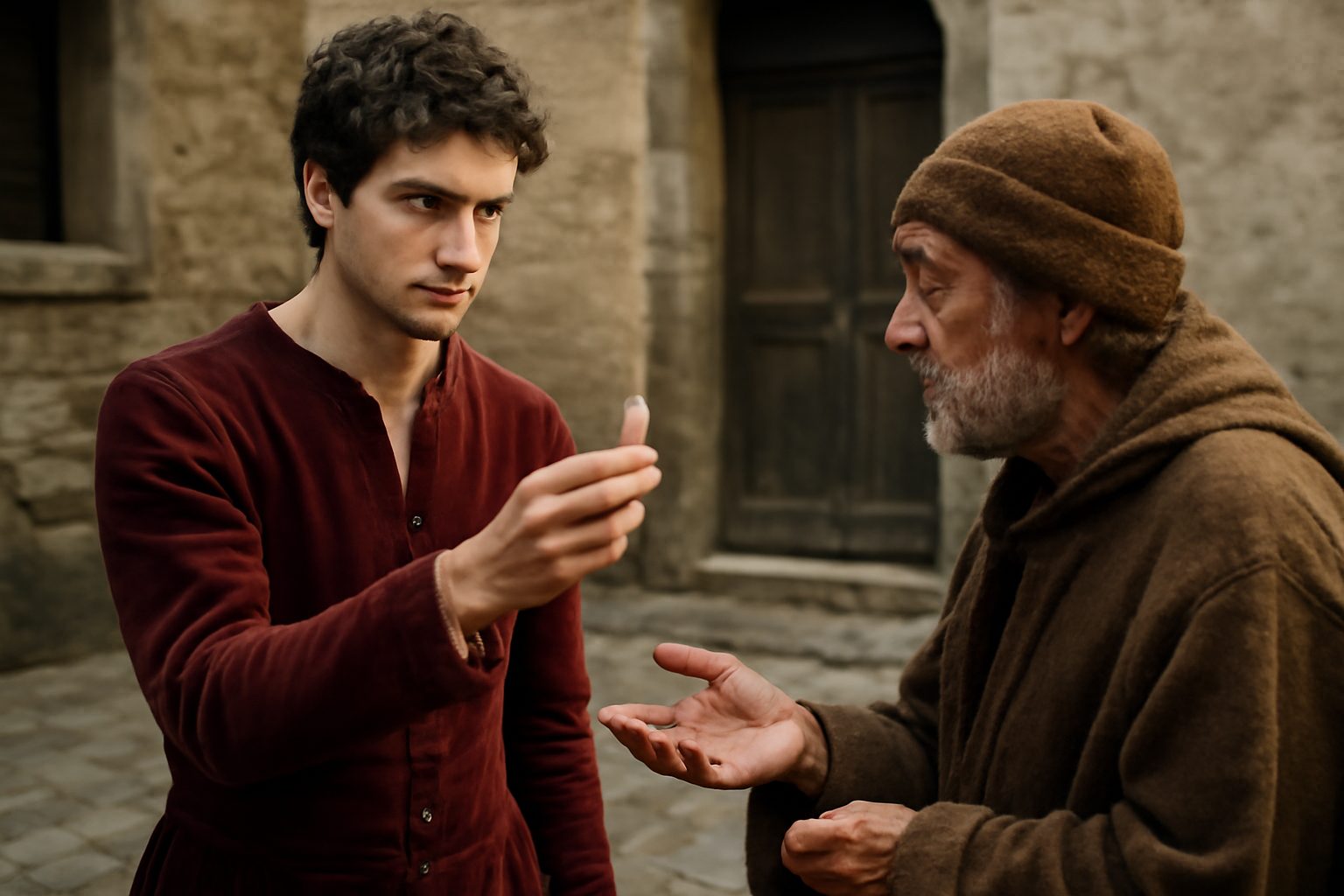
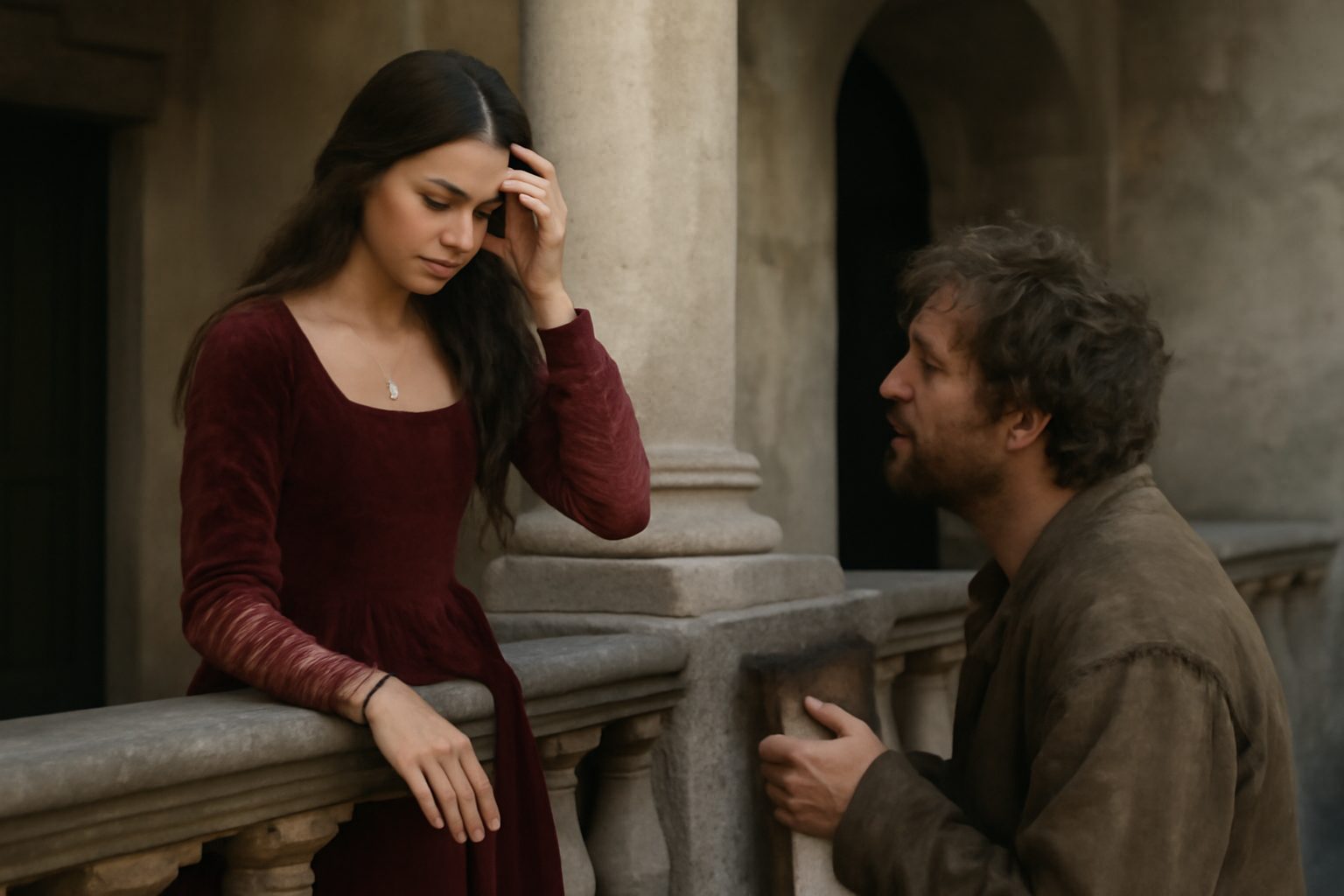
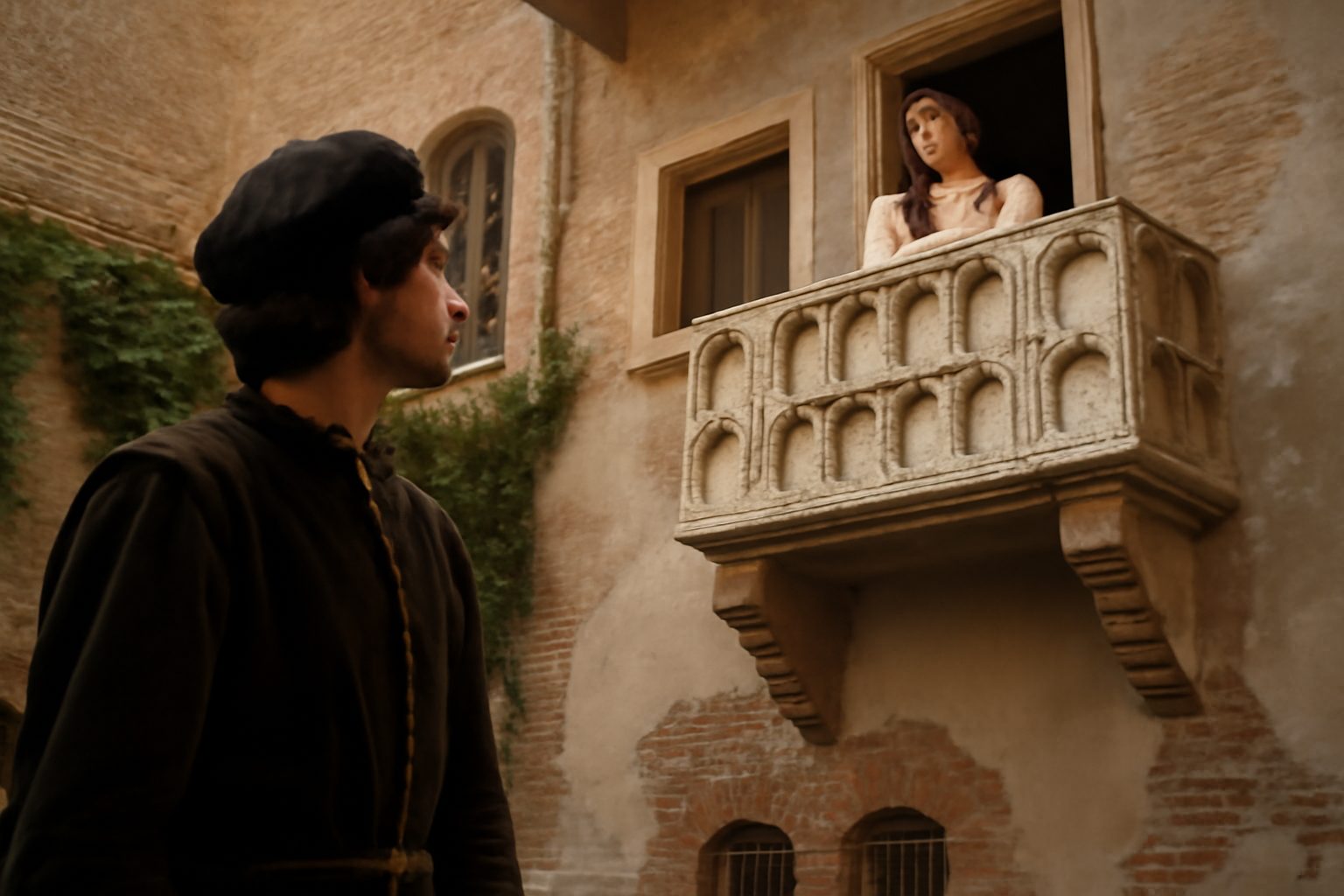
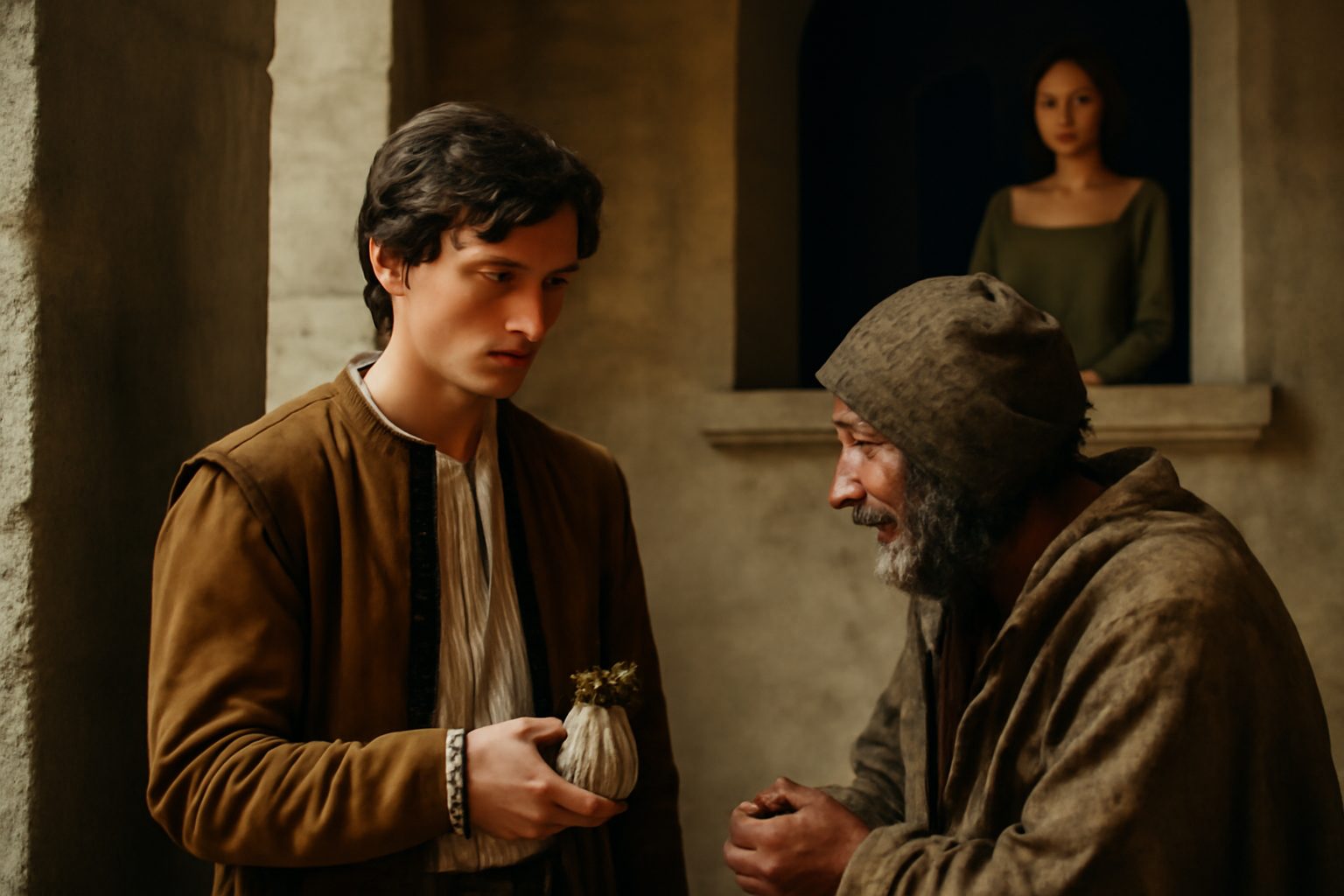
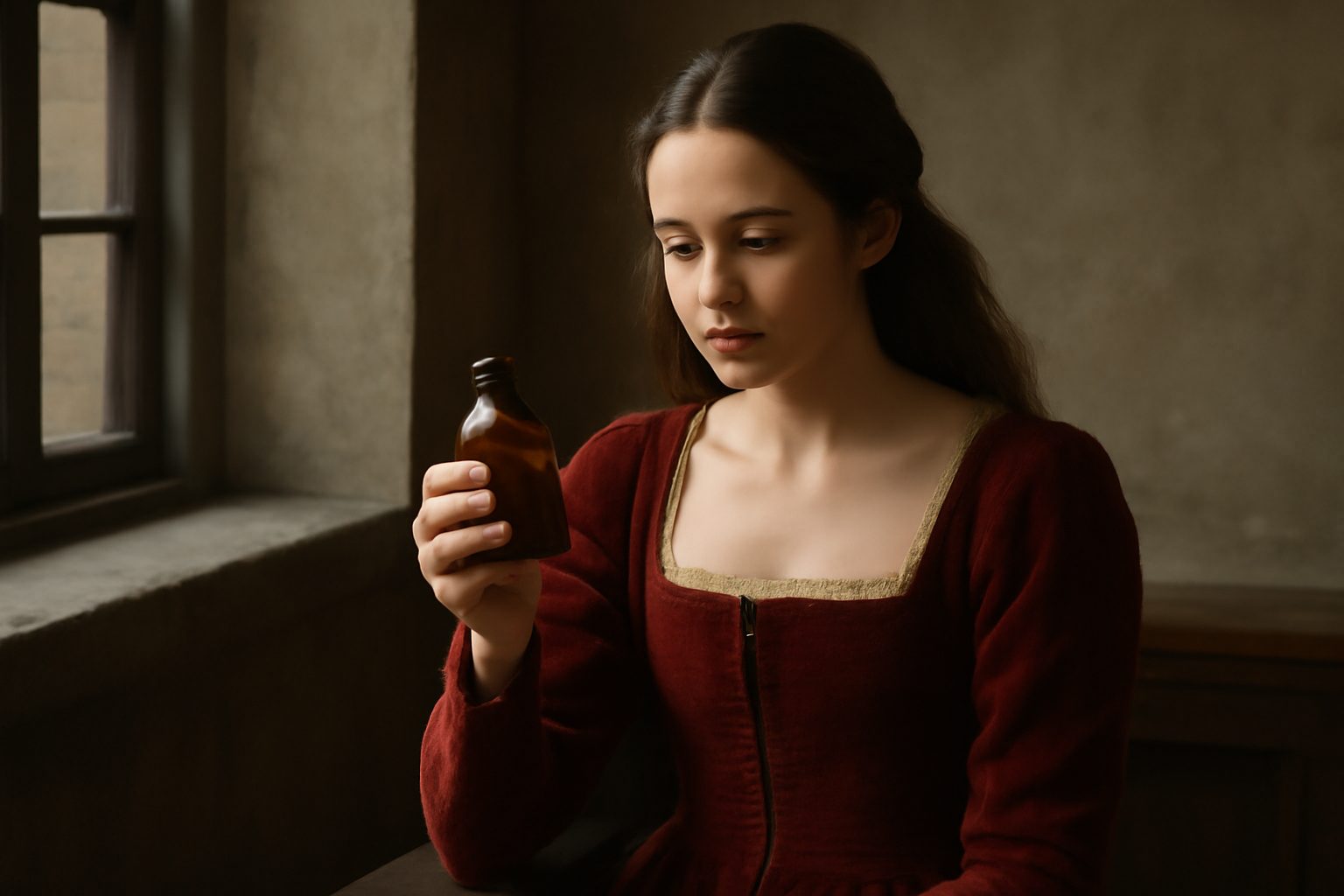
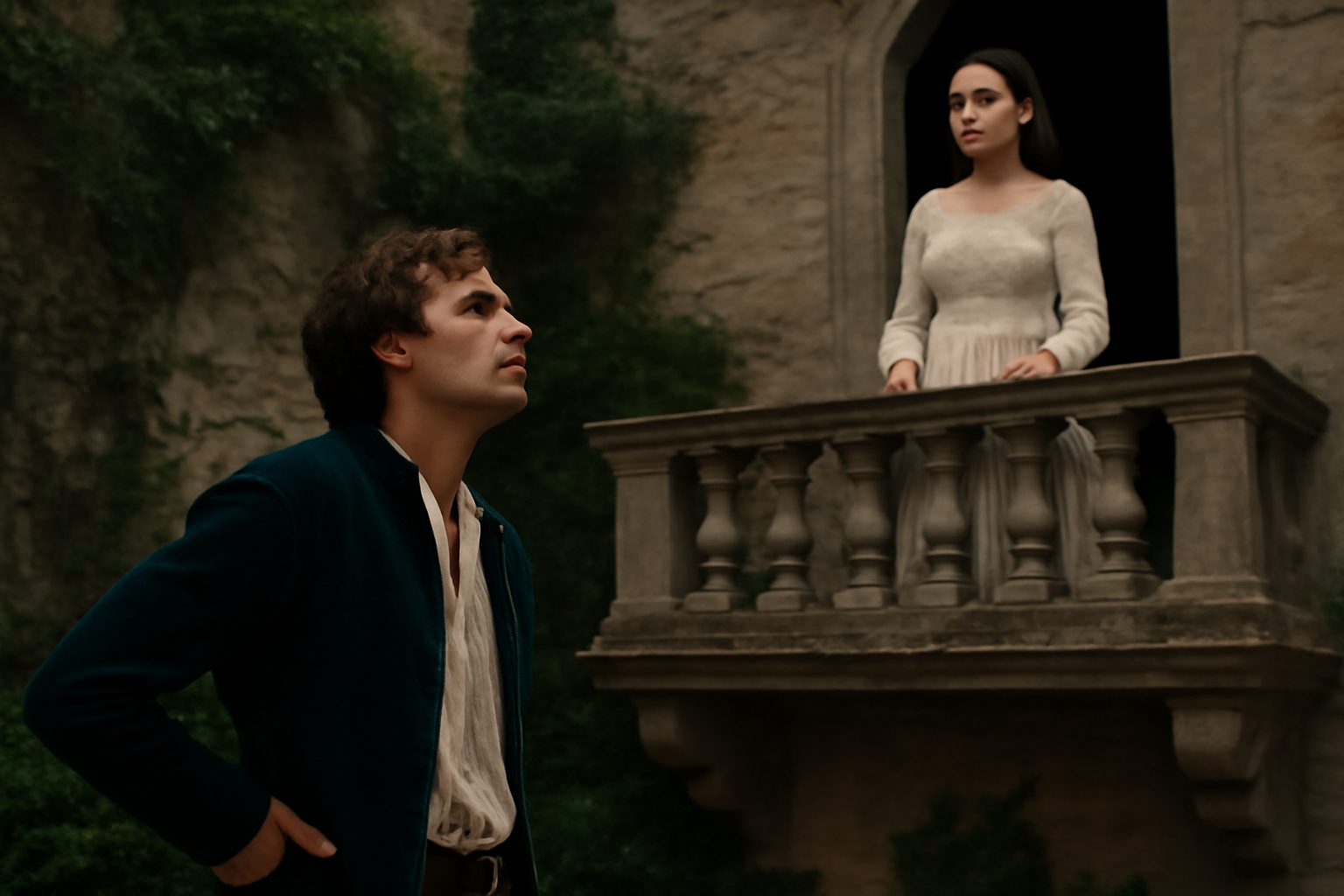
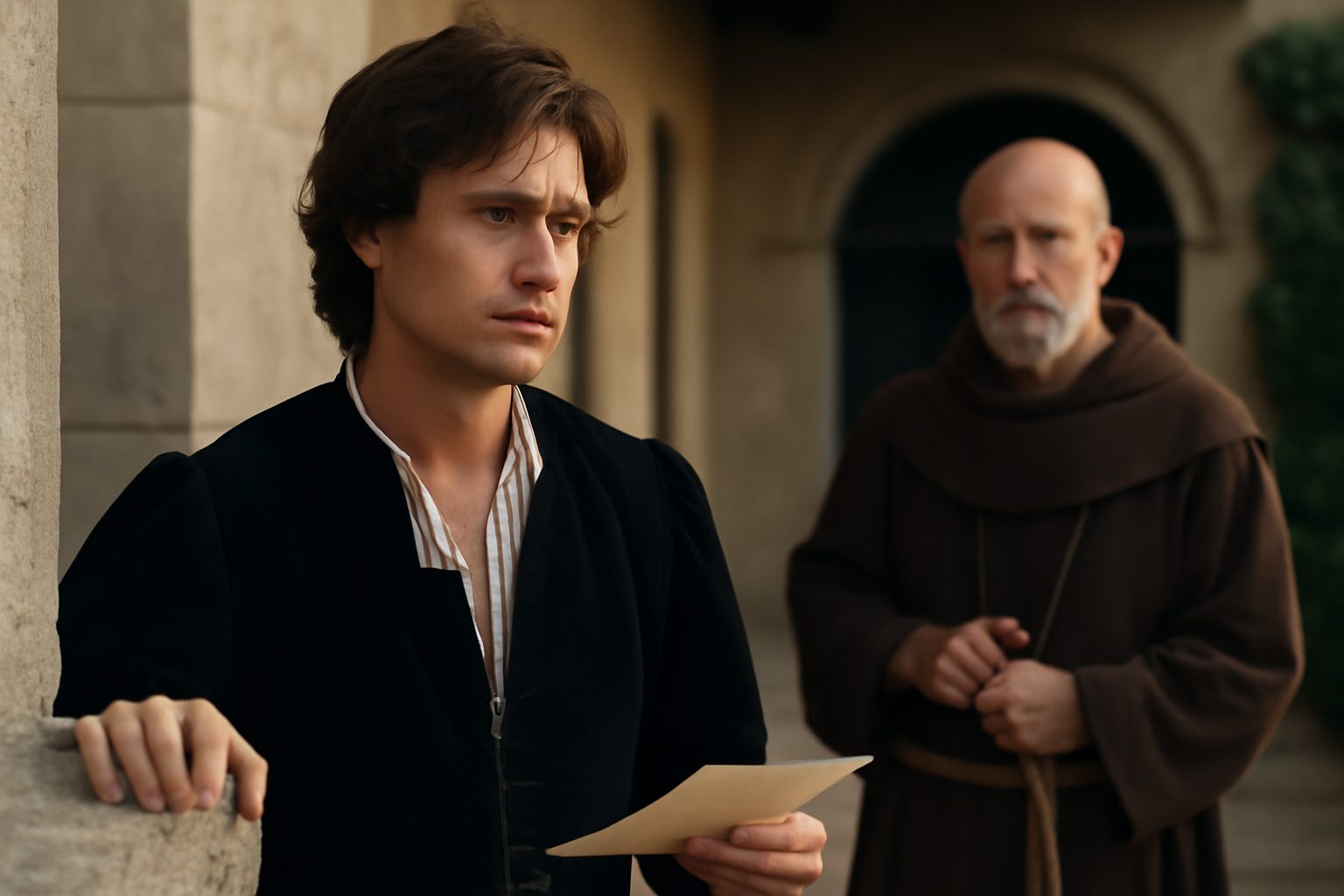
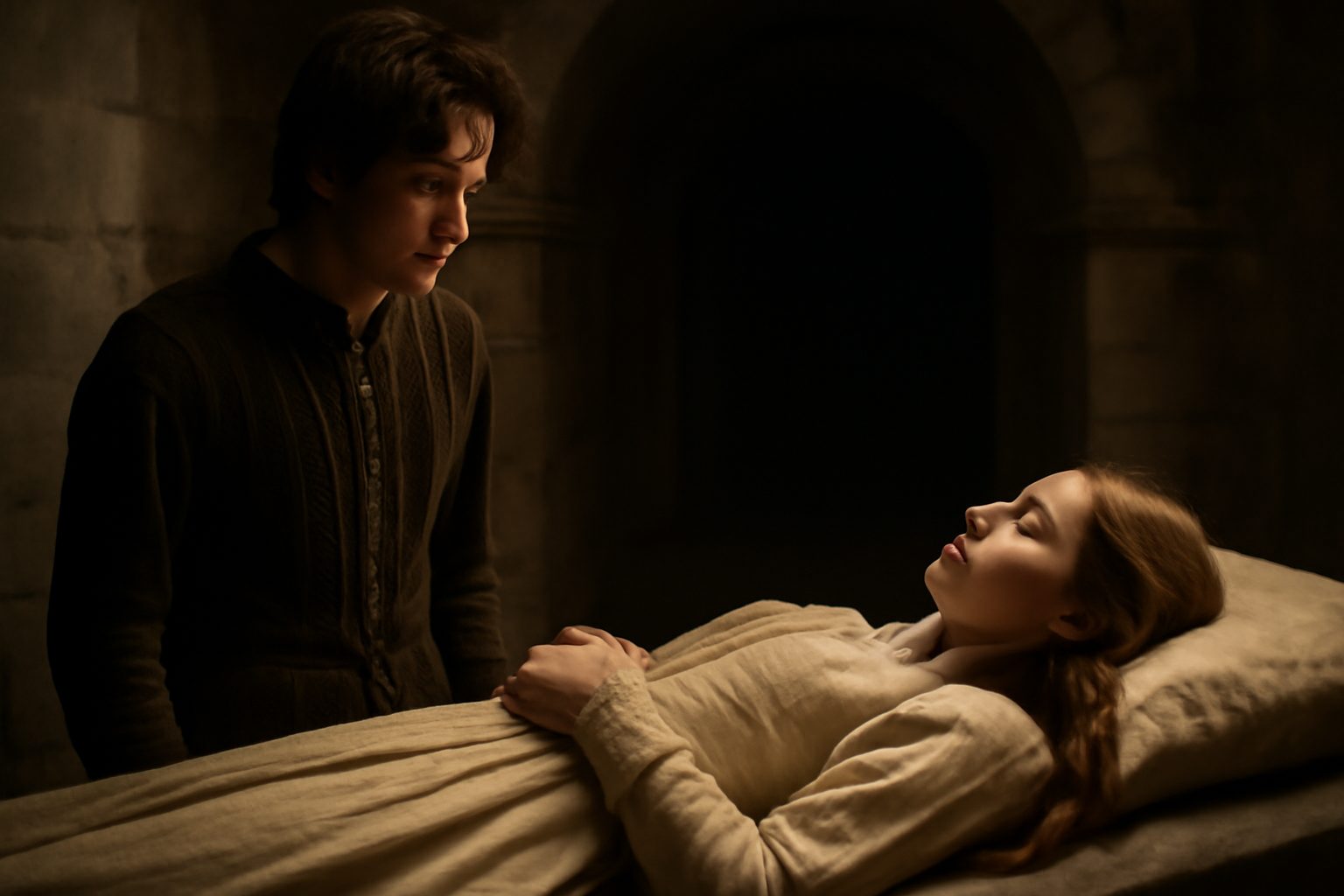
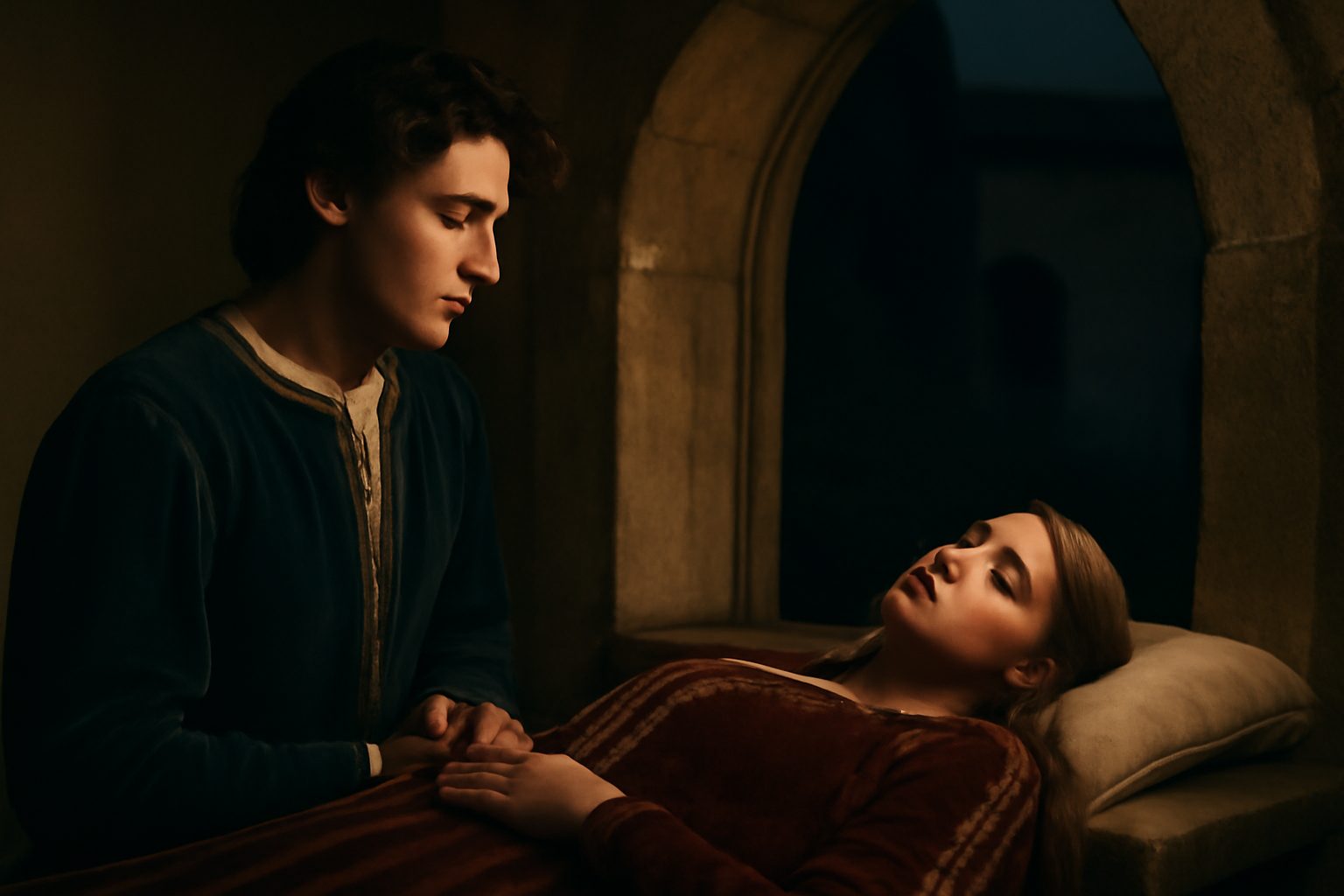
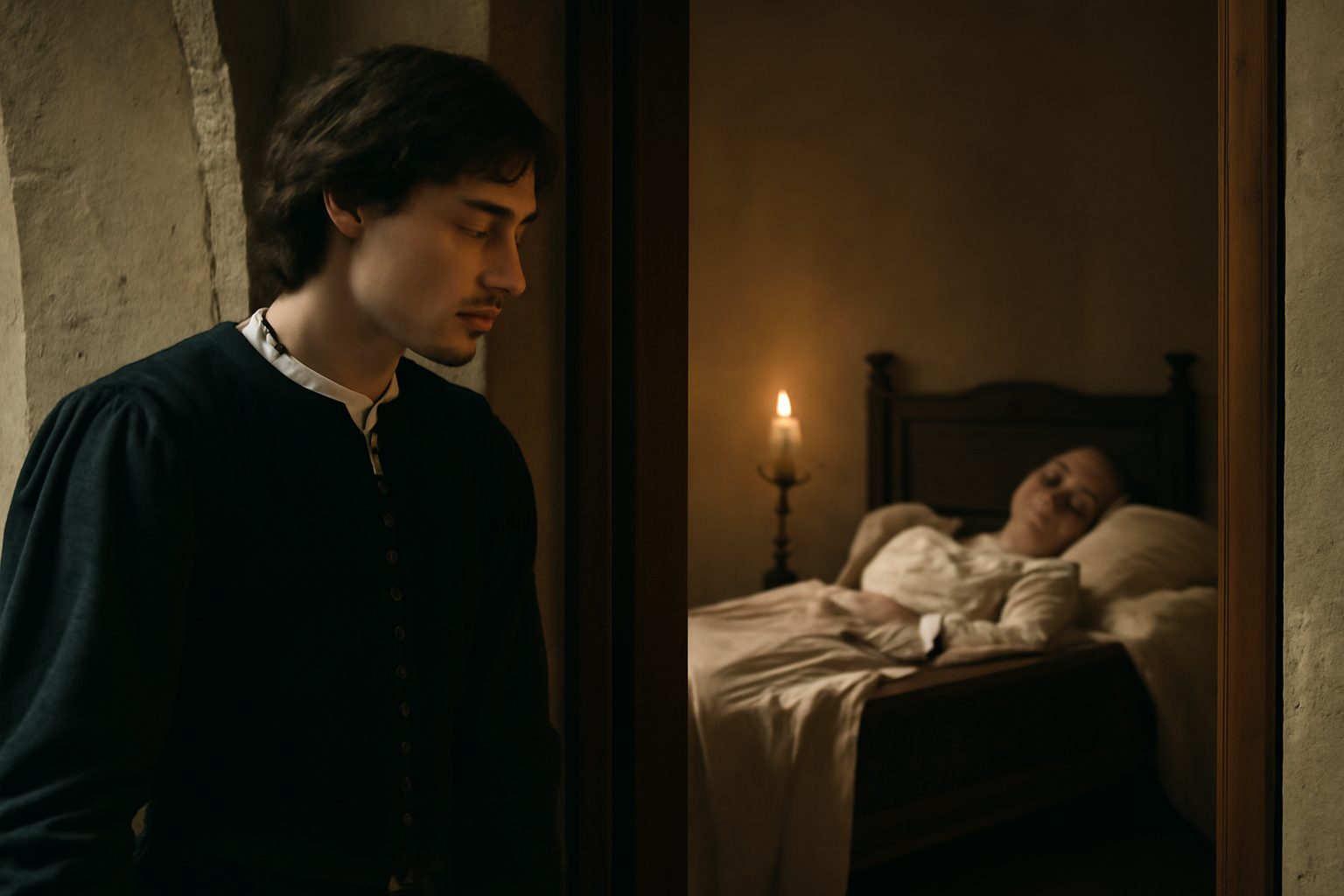
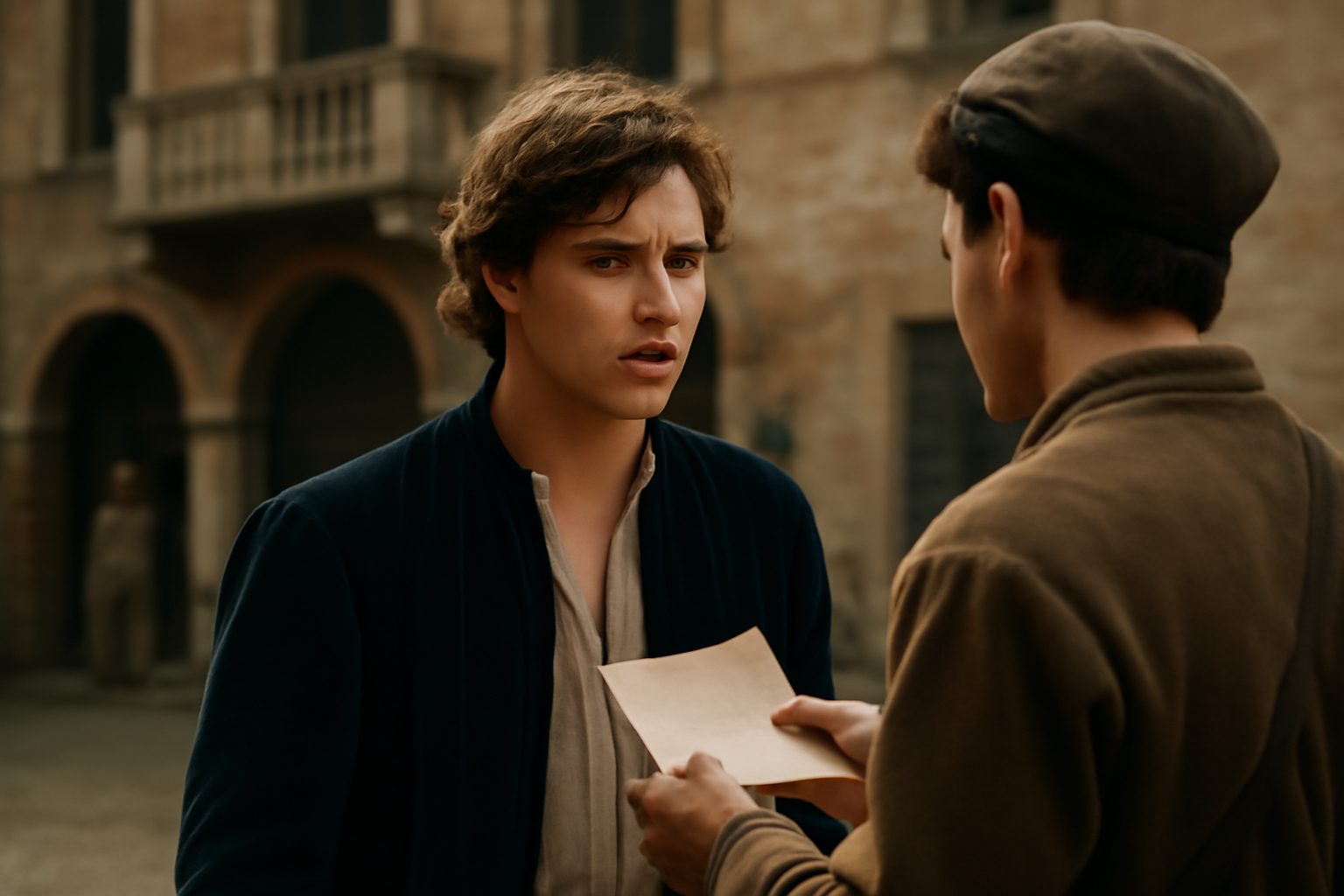
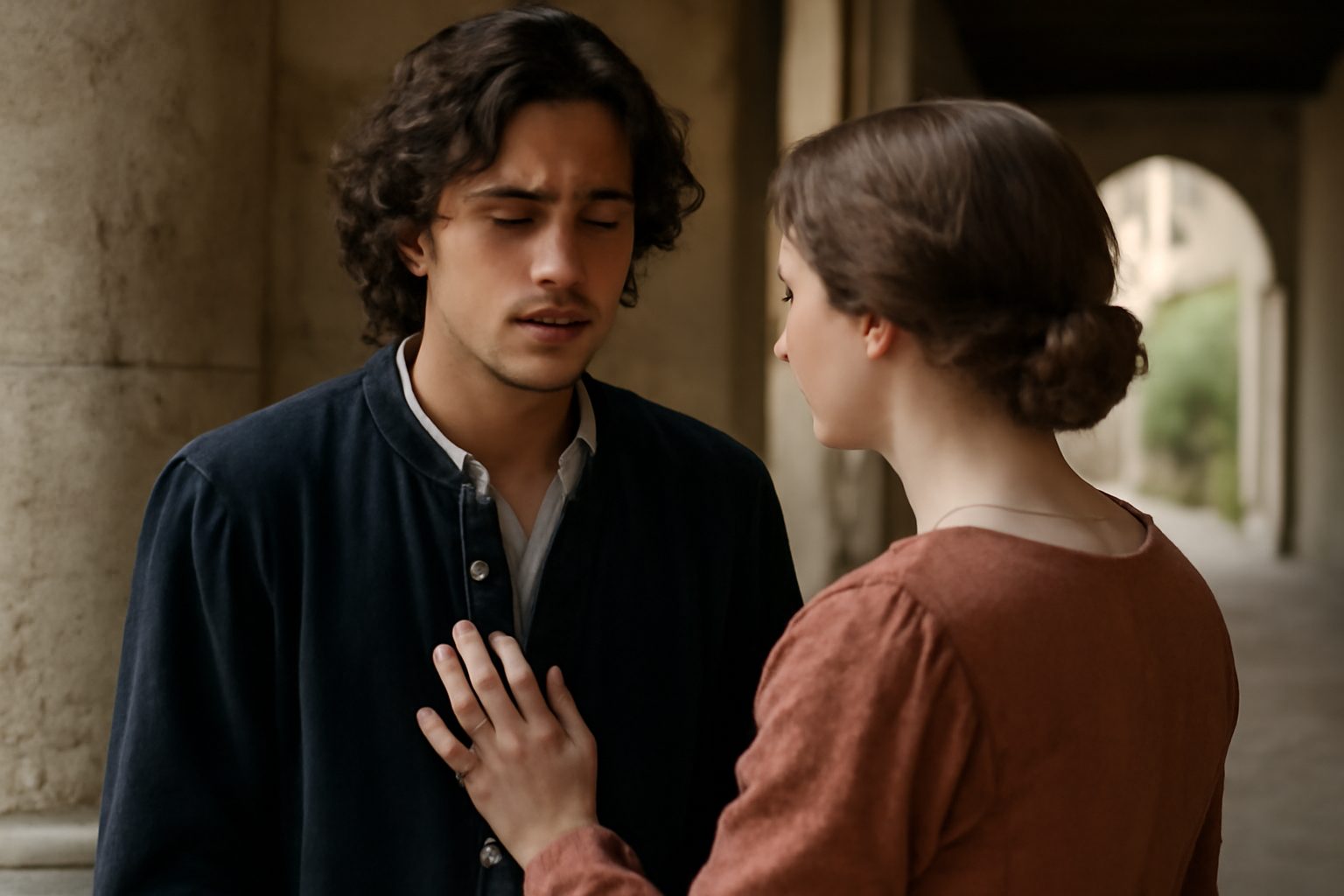
In Act 5, Scene 1 of Romeo and Juliet, Romeo has just learned of Juliet's supposed death from his servant Balthasar. Overwhelmed by grief and despair, he rejects the idea of fate controlling his life, expressing his defiance in this moment of anguish. This line marks a turning point as Romeo resolves to take action, setting the tragic final events of the play in motion.
Romeo: "Is it even so? then I defy you, stars!"
In modern day english, we would say:
Is that how it is? Then I reject my fate.
Frequently Asked Questions
What does Romeo mean when he says he defies the stars?
Romeo is expressing his anger and frustration at fate, or the stars, for keeping him apart from Juliet. He is determined to fight against his destiny.
Connections to other verses:
Defiance of Fate and Immediate Action
Romeo's exclamation, Is it even so? then I defy you, stars!, marks a pivotal moment of rebellion against fate. This defiance is immediately followed by decisive action, as seen in Thou know'st my lodging: get me ink and paper, where Romeo begins to plan his return to Verona. The urgency continues with And hire post-horses; I will hence to-night, showing his resolve to challenge destiny.
Connection to Desperation and Poison
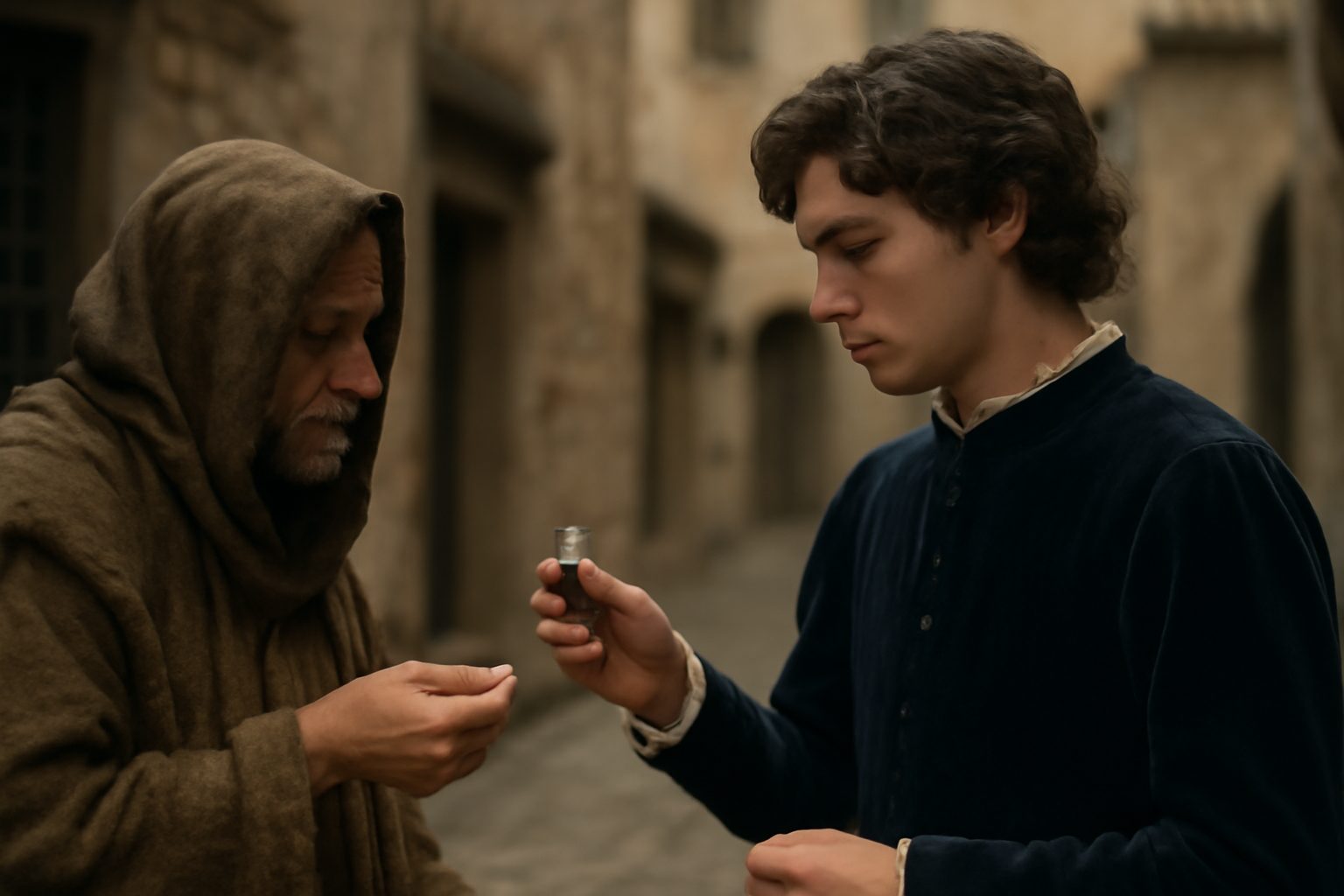
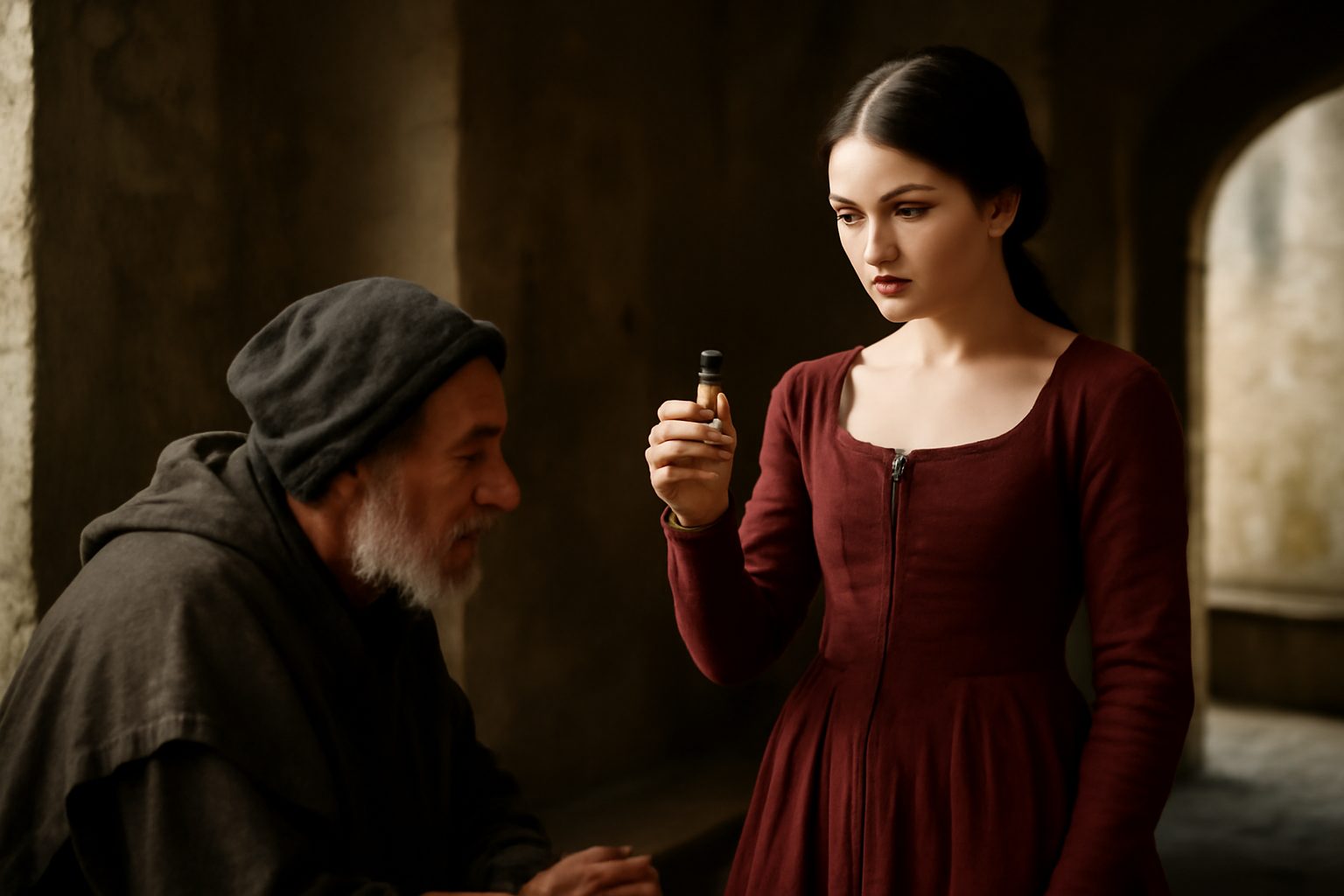
Romeo's defiance leads him to seek a means to join Juliet in death, connecting to his interaction with the apothecary. In I do remember an apothecary, he recalls a source for poison, and his determination is clear in A dram of poison, such soon-speeding gear. The purchase is finalized in Come, cordial and not poison, go with me, illustrating how his defiance drives the tragic outcome.
Contrast with Earlier Optimism
Romeo's defiance contrasts sharply with his earlier hopefulness. Just before Balthasar's news, he says in My bosom's lord sits lightly in his throne and Lifts me above the ground with cheerful thoughts, showing his uplifted mood. The dream he describes in I dreamt my lady came and found me dead ironically foreshadows the tragedy his defiance will hasten.
Link to Poverty and Moral Conflict
The theme of poverty, tied to the apothecary, underscores Romeo's actions. In Art thou so bare and full of wretchedness, Romeo notes the apothecary's need, and in I pay thy poverty, and not thy will, he acknowledges the moral compromise. This connects to his defiance, as he uses society's neglect to achieve his ends, highlighted in The world affords no law to make thee rich.
Finality and Union with Juliet
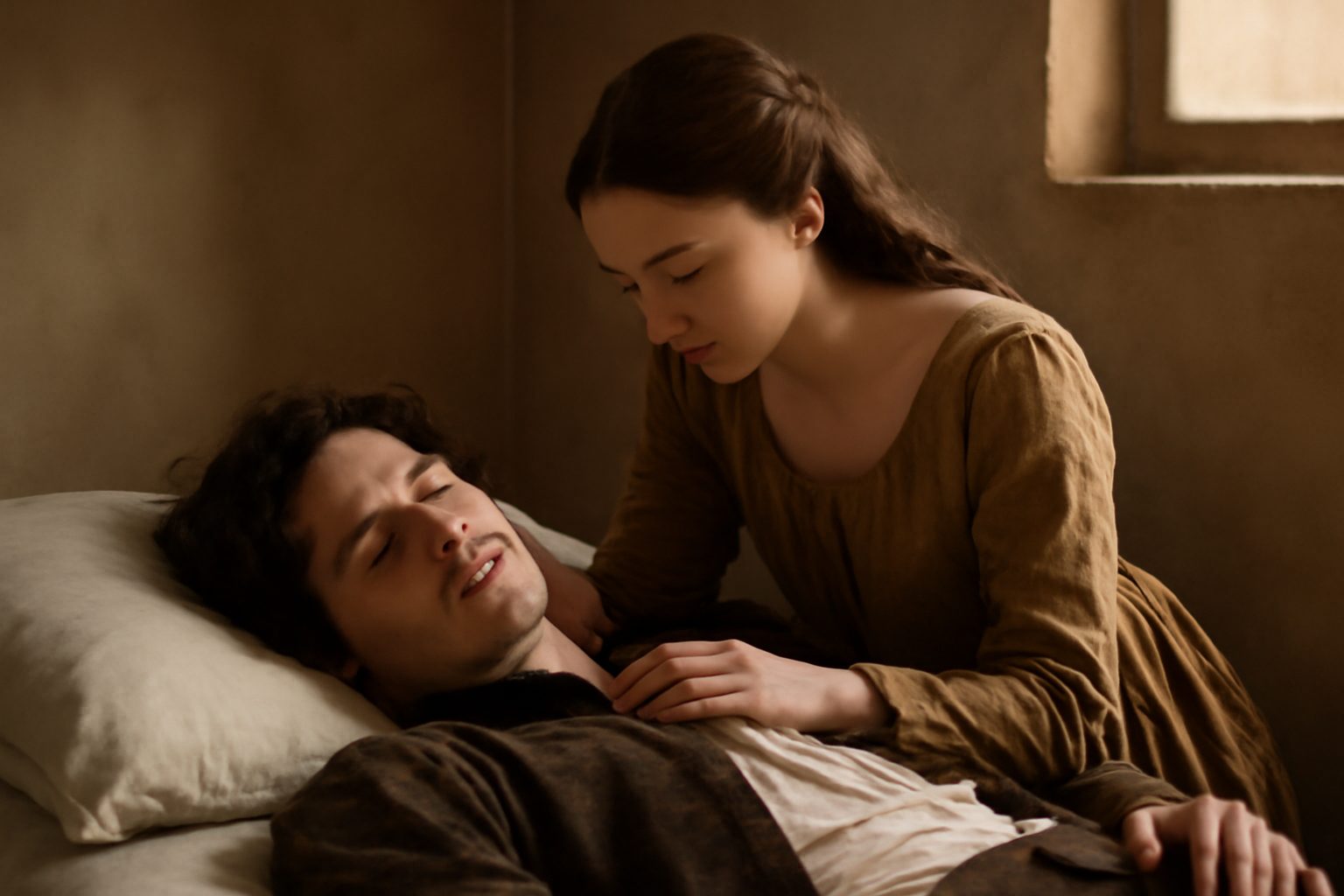
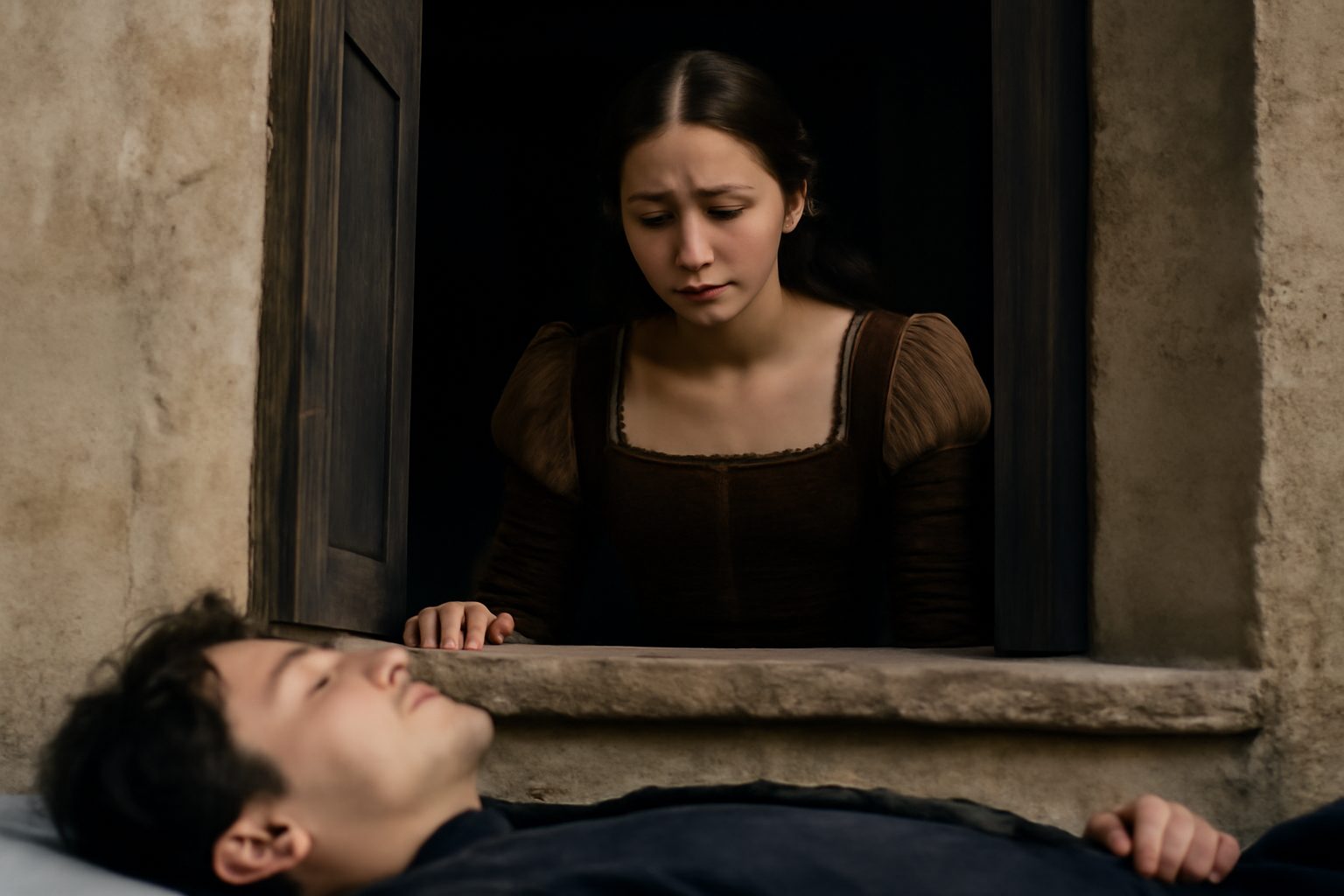
Romeo's defiance culminates in his plan for eternal union with Juliet. He declares in Well, Juliet, I will lie with thee to-night, and his resolve is reinforced in To Juliet's grave; for there must I use thee. The poison's purpose is stated in That the life-weary taker may fall dead, showing how his rebellion against the stars leads directly to his tragic end.