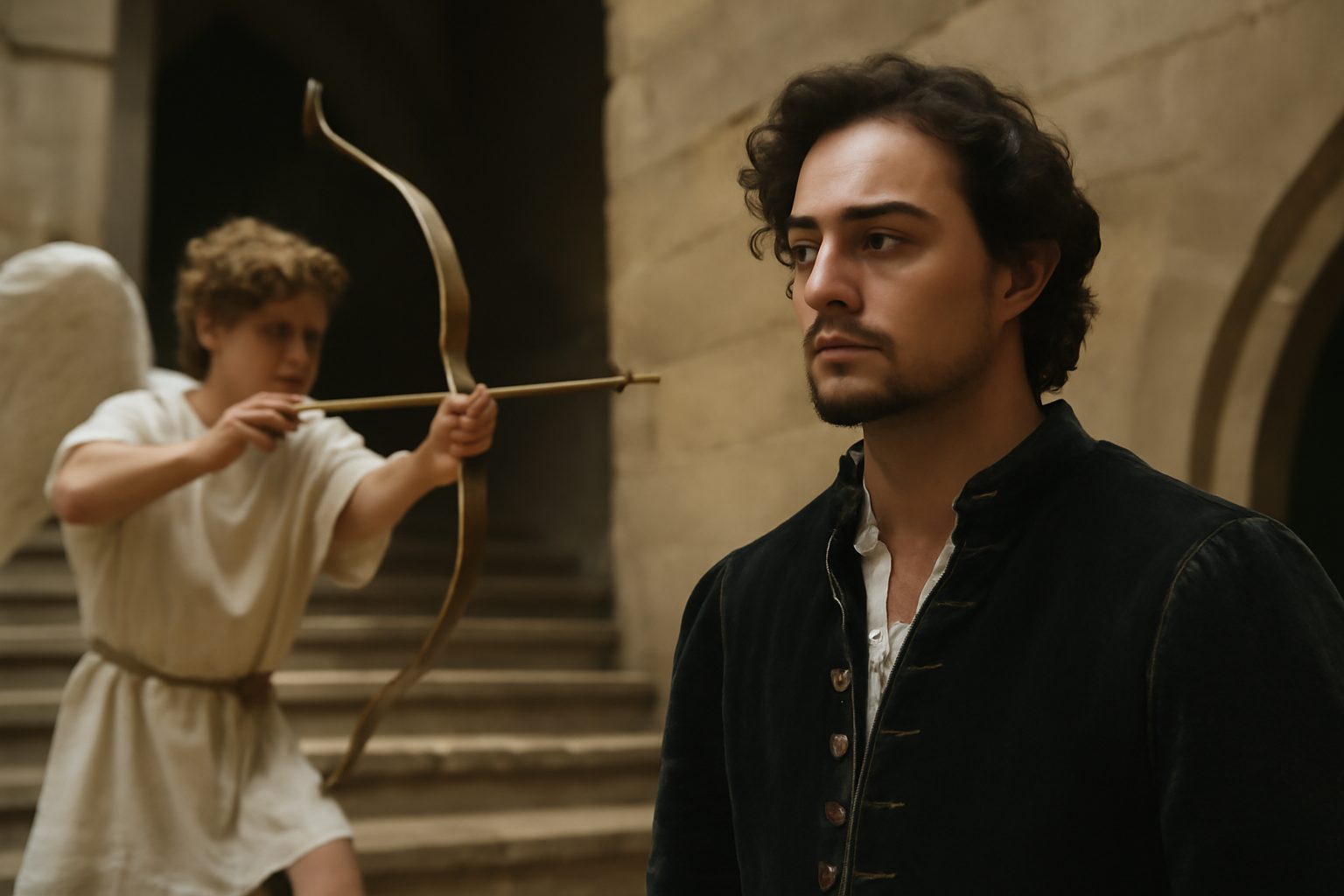
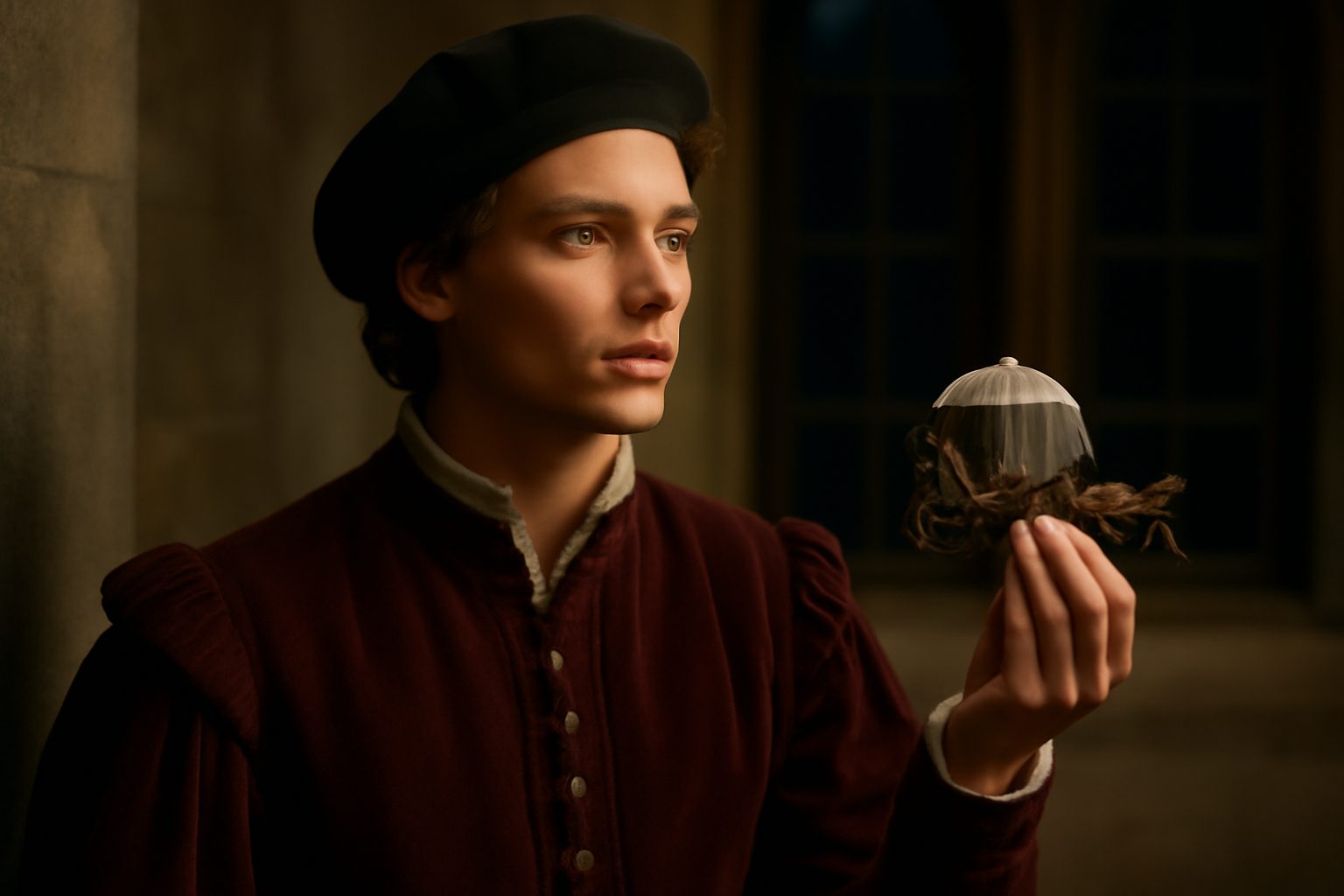
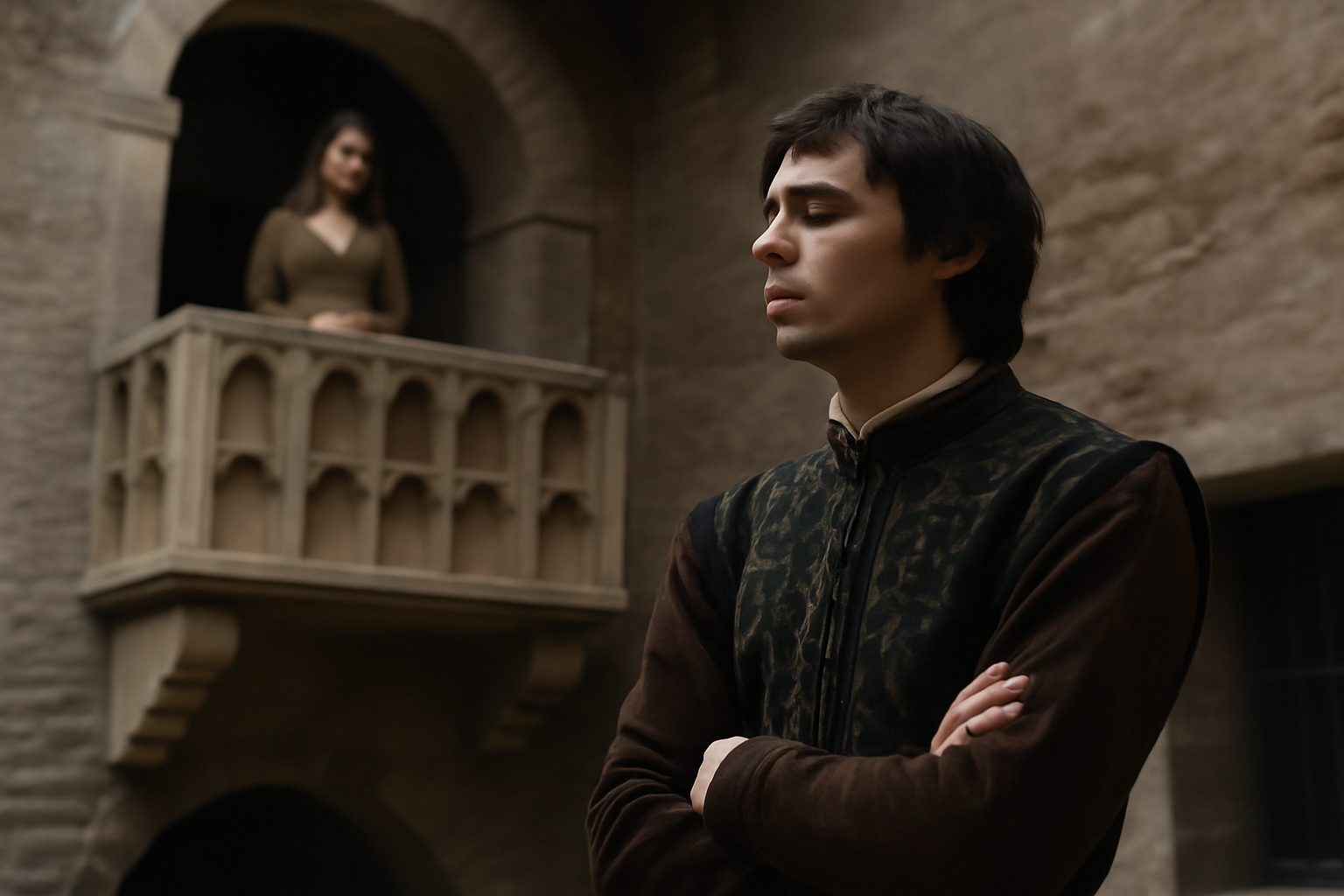
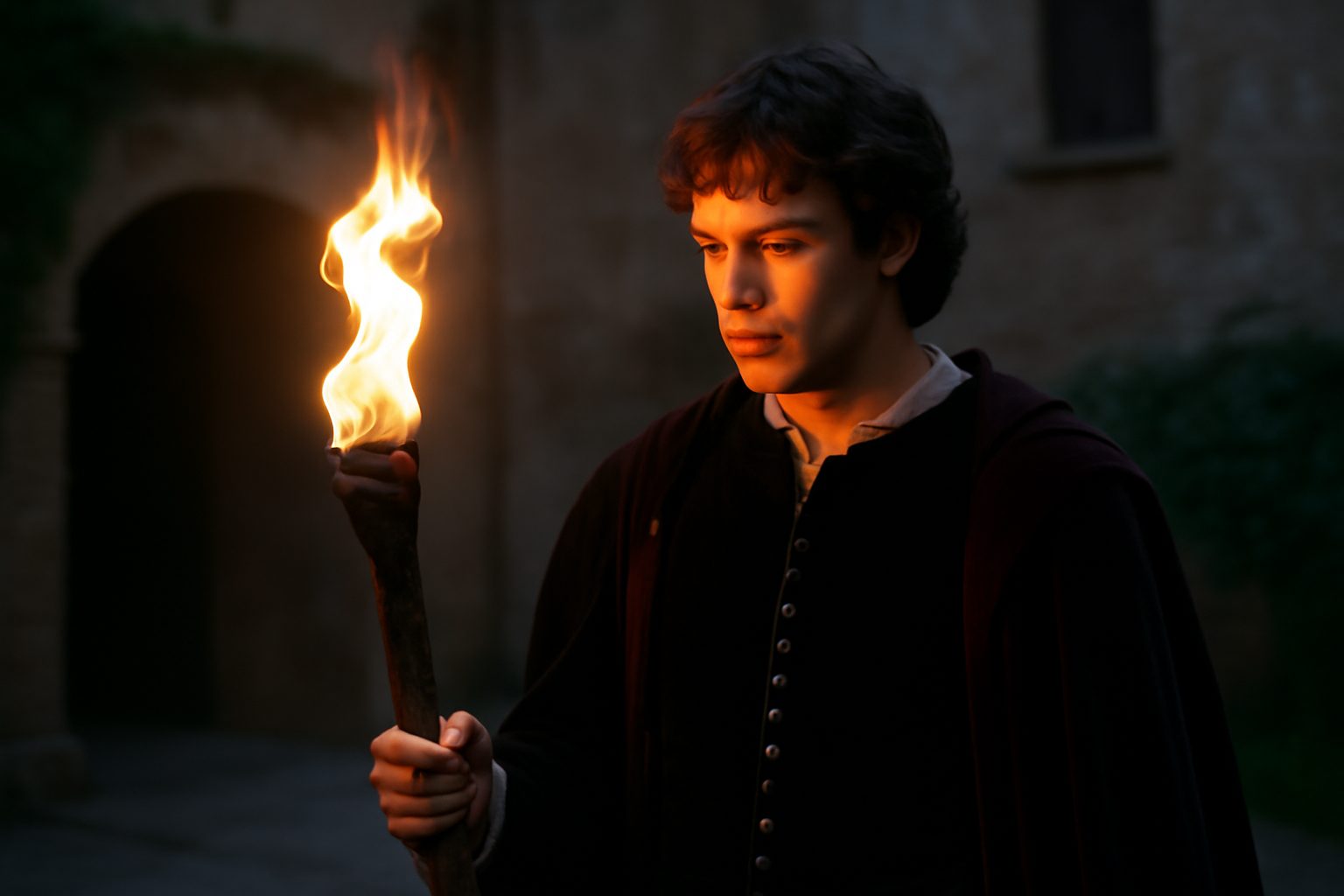
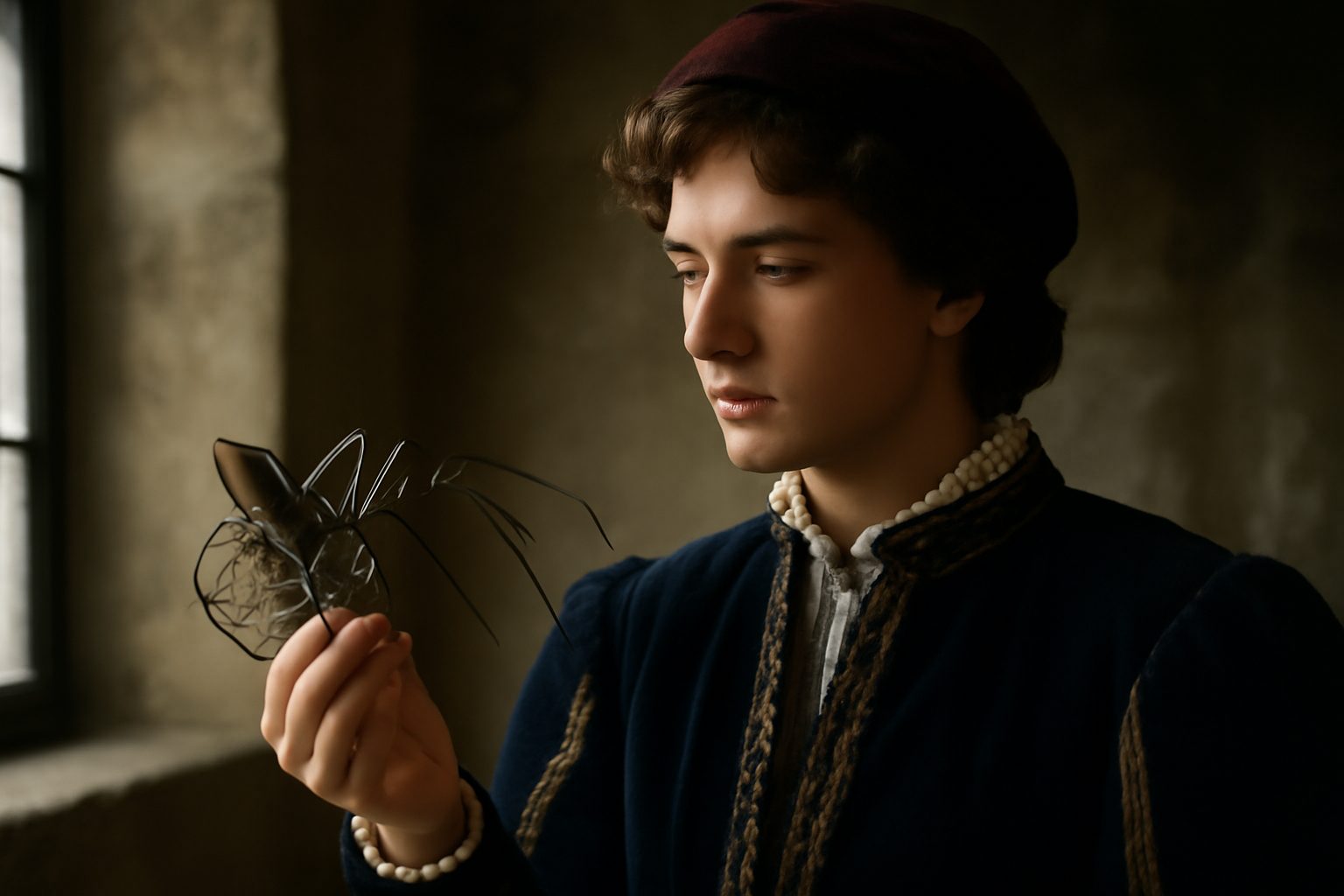
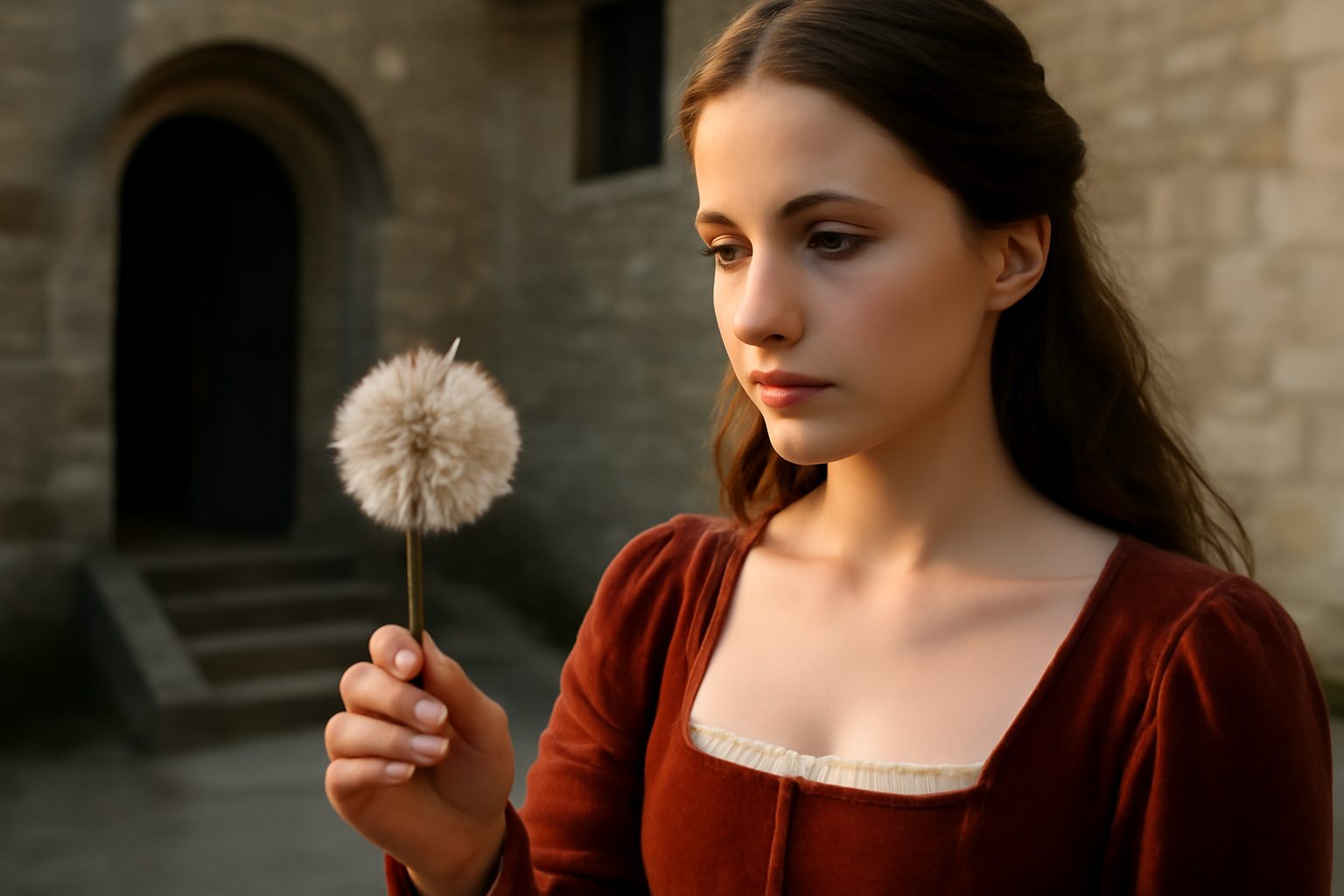
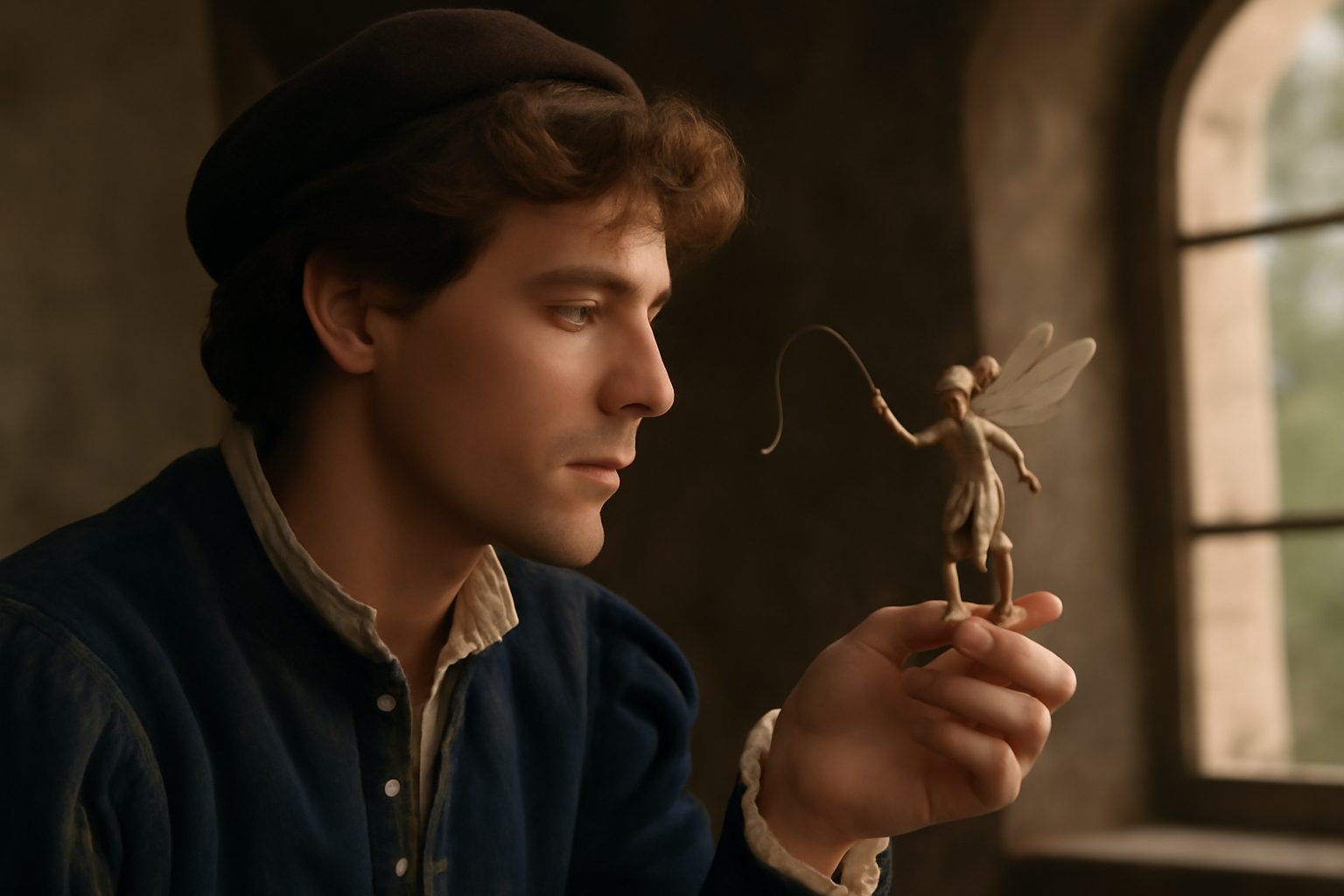
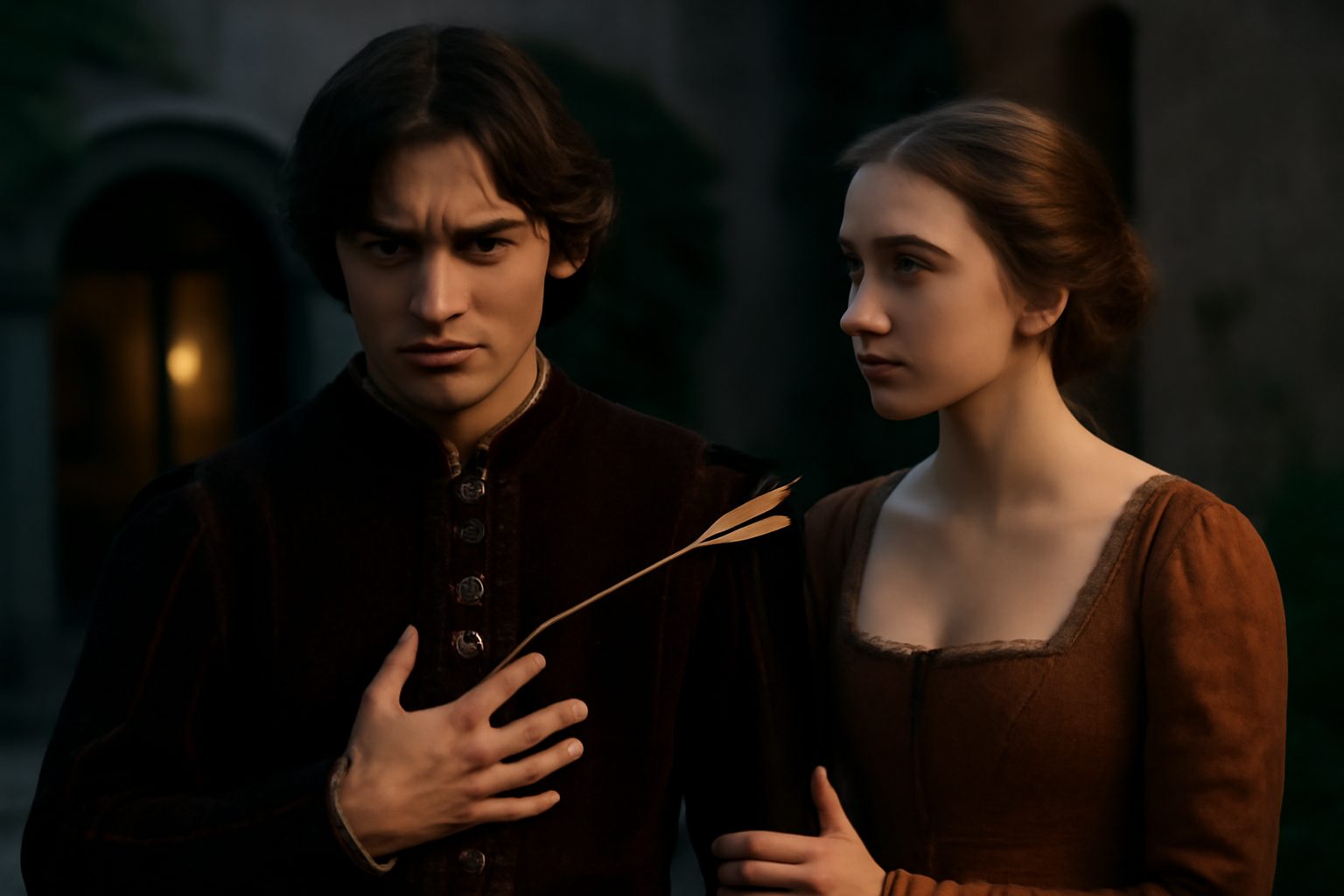
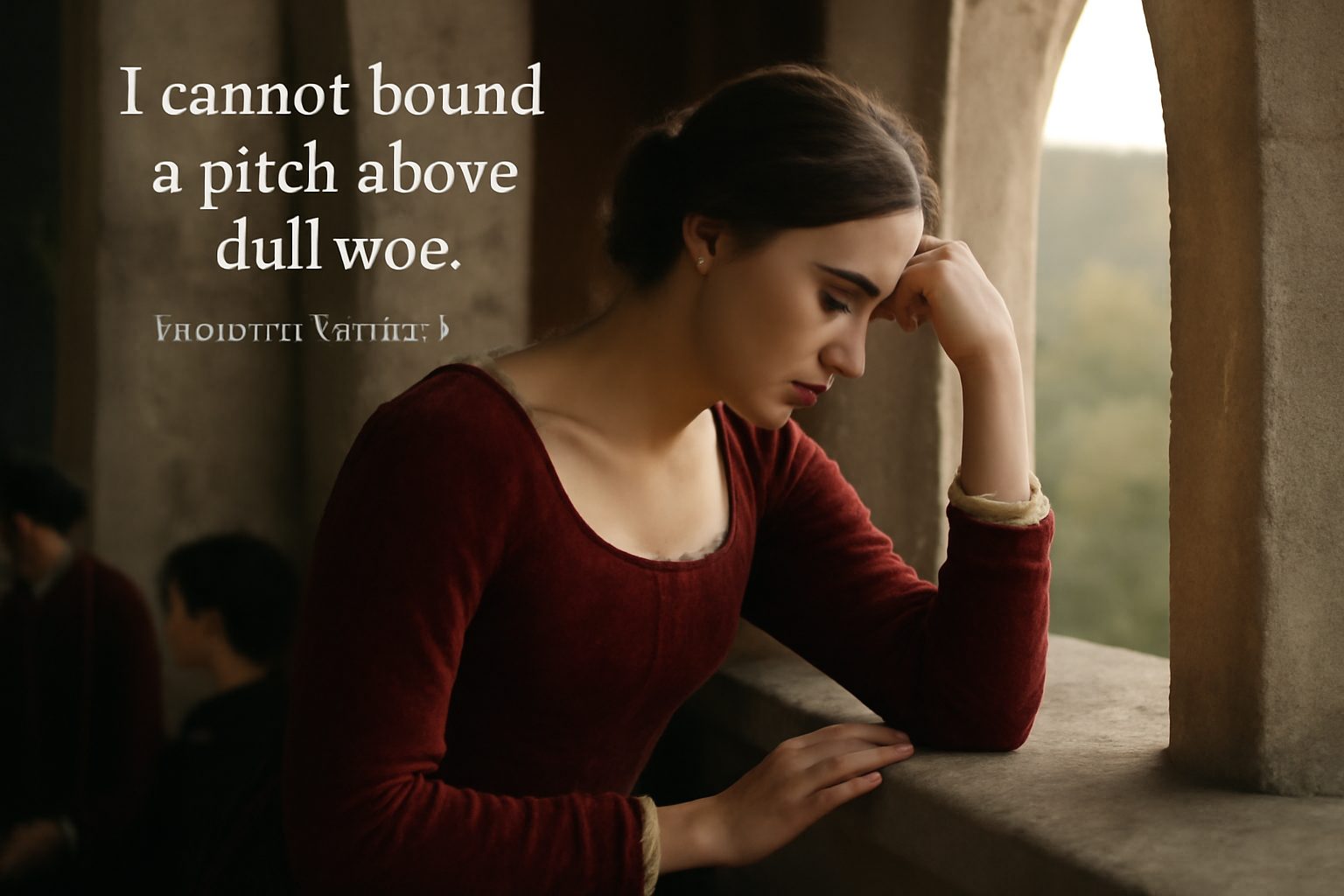
In Act 1, Scene 4 of Romeo and Juliet, Mercutio delivers a whimsical and imaginative speech about Queen Mab, a mythical figure who influences people's dreams. This line introduces her as a mischievous, otherworldly being who visits sleepers at night. It comes as Romeo and his friends are on their way to the Capulet feast, with Mercutio using vivid imagery to lighten the mood and tease Romeo about his lovesick state.
Mercutio: "She is the fairies' midwife, and she comes"
In modern day english, we would say:
She is the one who delivers people’s dreams, like a fairy midwife, and she arrives now.
Frequently Asked Questions
Who is Mercutio talking about in this line?
Mercutio is talking about Queen Mab, a fairy from folklore.
What role does Mercutio say this character has?
He says she is the fairies' midwife, meaning she helps deliver people's dreams.
Connections to other verses:
Connections to "She is the fairies' midwife, and she comes"
The verse "She is the fairies' midwife, and she comes" introduces Queen Mab, a central figure in Mercutio's imaginative speech. This line connects thematically and structurally to several other verses in the scene, particularly those elaborating on Mab's nature and actions.
Elaboration on Queen Mab's Character
Mercutio's description of Mab continues in "Her chariot is an empty hazel-nut", detailing her miniature and fantastical mode of transport. This imagery is extended in verses like "Her wagon-spokes made of long spiders' legs", "Her whip of cricket's bone, the lash of film", and "Her wagoner a small grey-coated gnat", all contributing to the ethereal and delicate portrayal of the fairy queen.
Mab's Influence on Dreams
The idea that Mab "comes" to influence dreams is explored in multiple verses. For instance, "Through lovers' brains, and then they dream of love" directly ties Mab's visits to specific dream contents. Similarly, "Sometime she gallops o'er a courtier's nose" and "Sometime she driveth o'er a soldier's neck" illustrate her varied interactions with sleepers, shaping their dreams according to their waking lives.
Contrast with Reality and Romeo's Foreboding
Mercutio's fantastical speech, beginning with the introduction of Mab, contrasts sharply with Romeo's ominous mood. While Mercutio indulges in whimsy, Romeo's lines like "I fear, too early: for my mind misgives" and "Some consequence yet hanging in the stars" introduce a tone of impending tragedy, undermining the lightness of Mab's mythology.
Conclusion of the Mab Speech
The speech culminates in "Which are the children of an idle brain", dismissing dreams (and by extension, Mab's influence) as mere fantasies. This returns to the theme introduced by "She is the fairies' midwife", framing it as part of Mercutio's larger critique of romantic idealism.