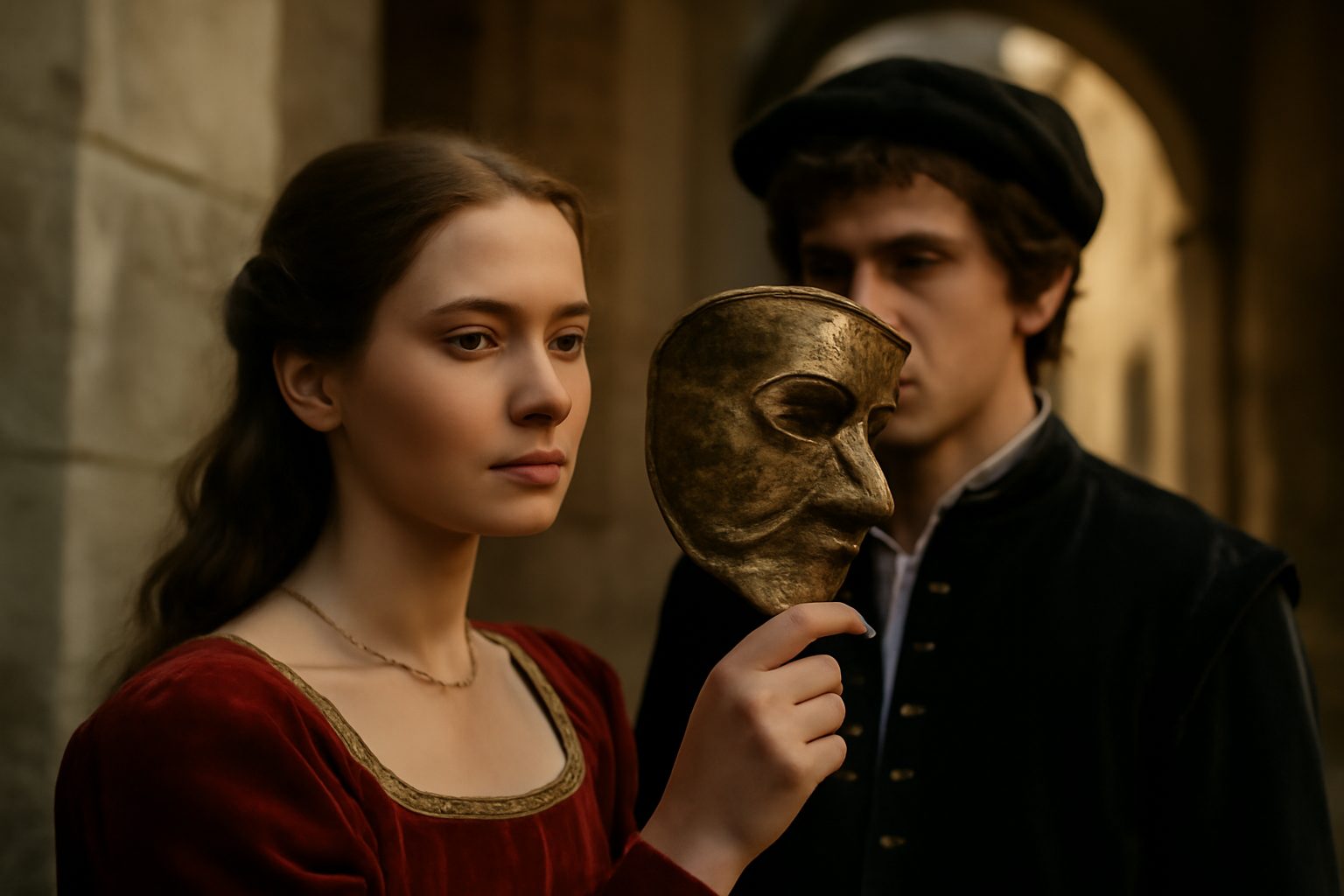
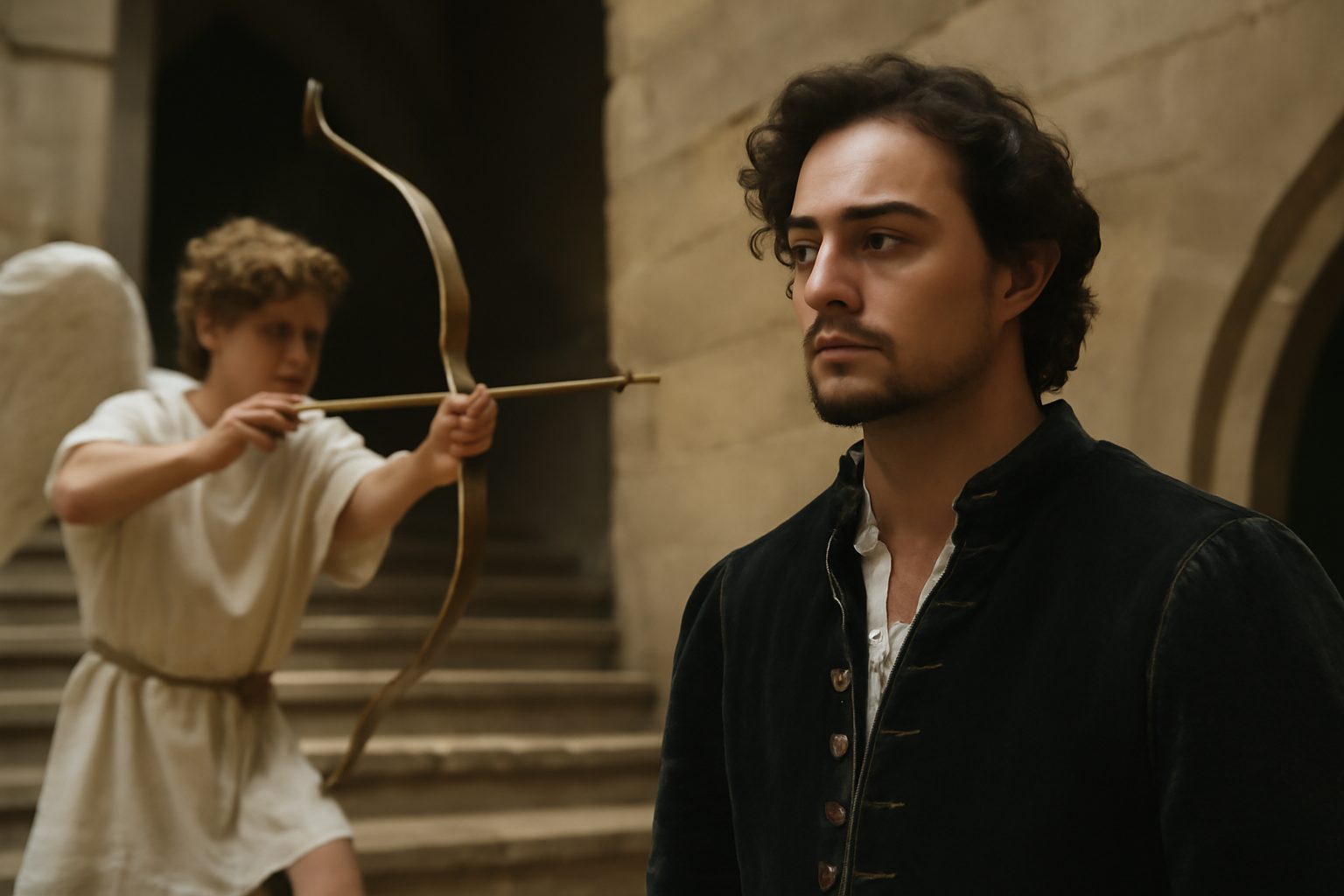
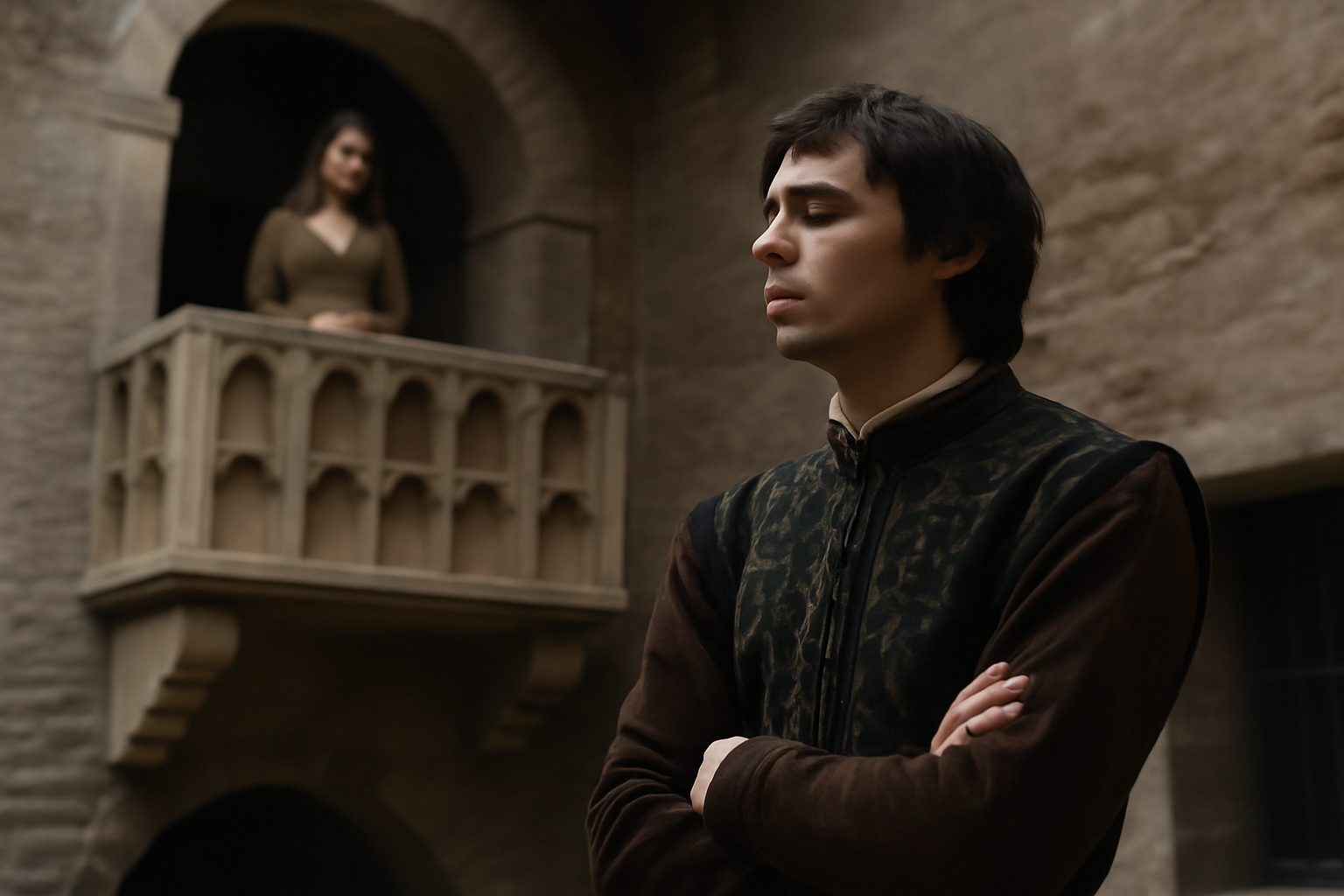
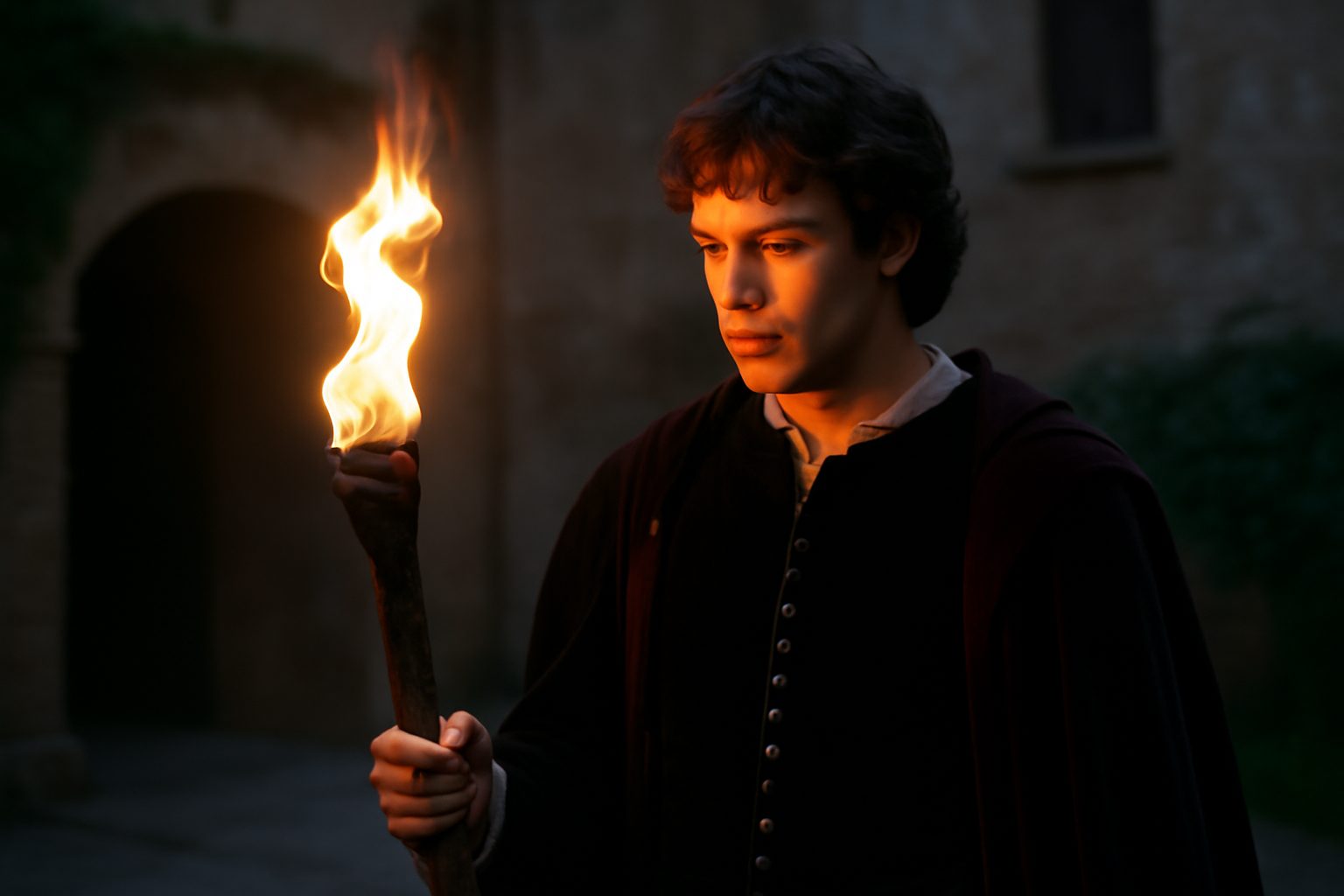
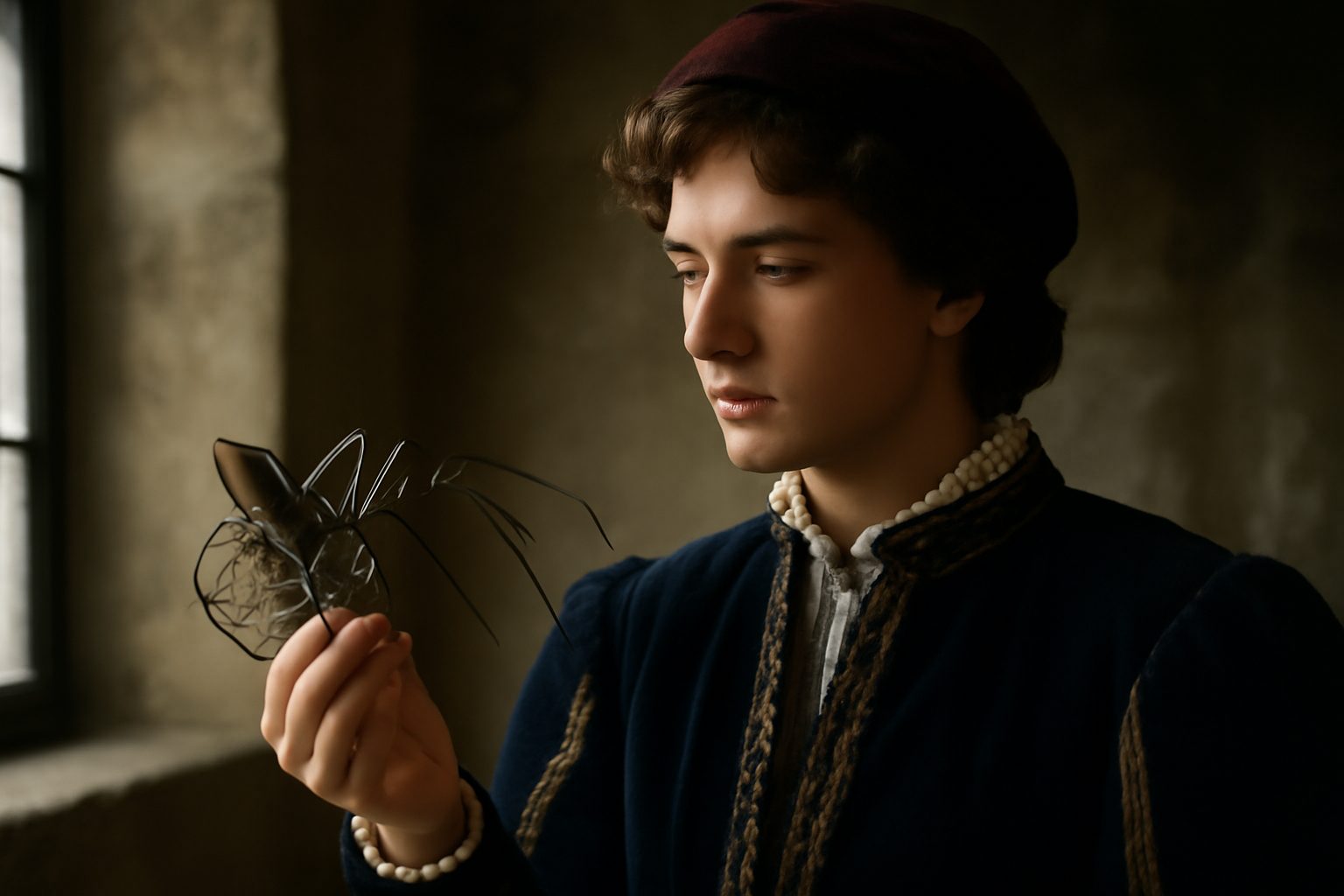
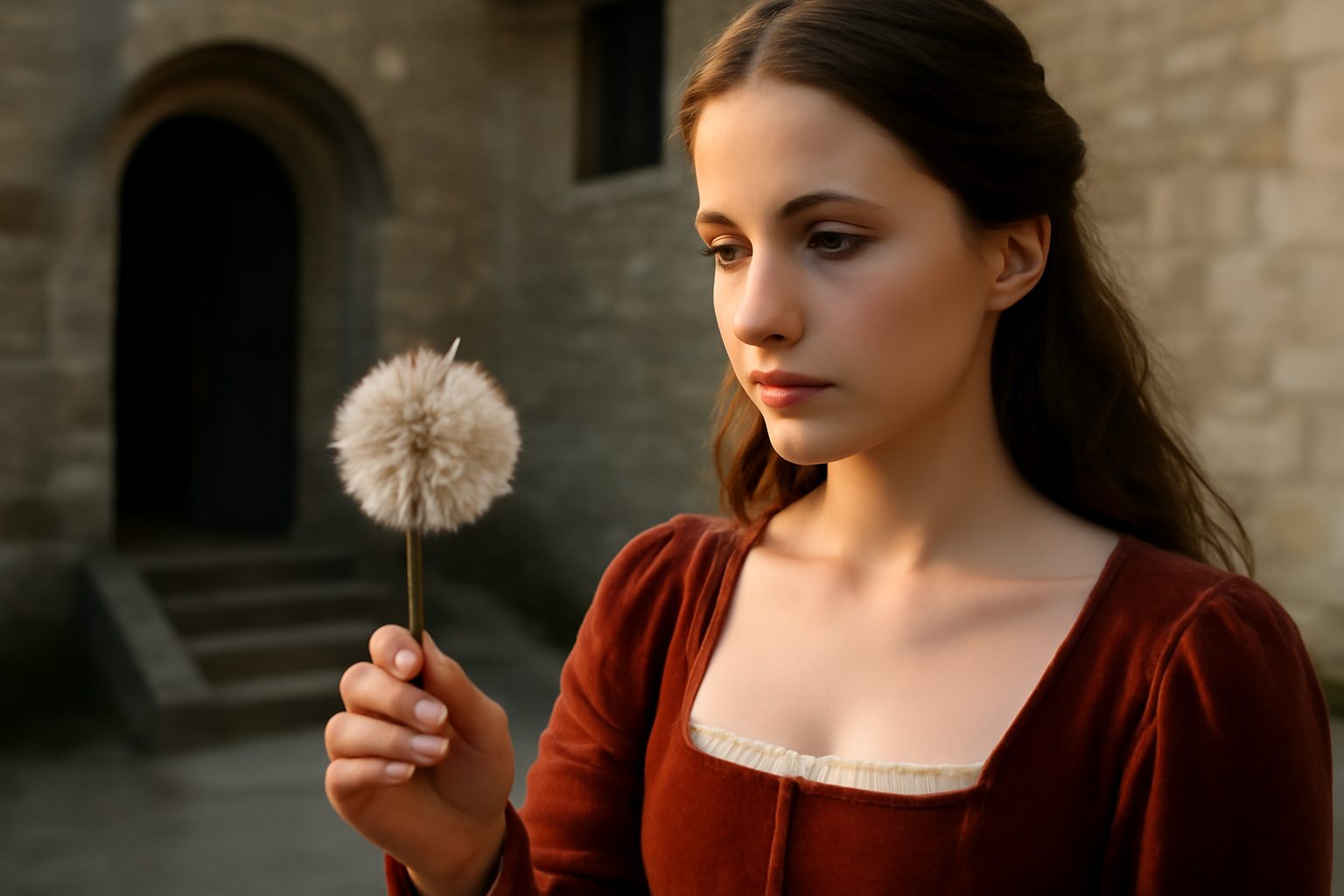
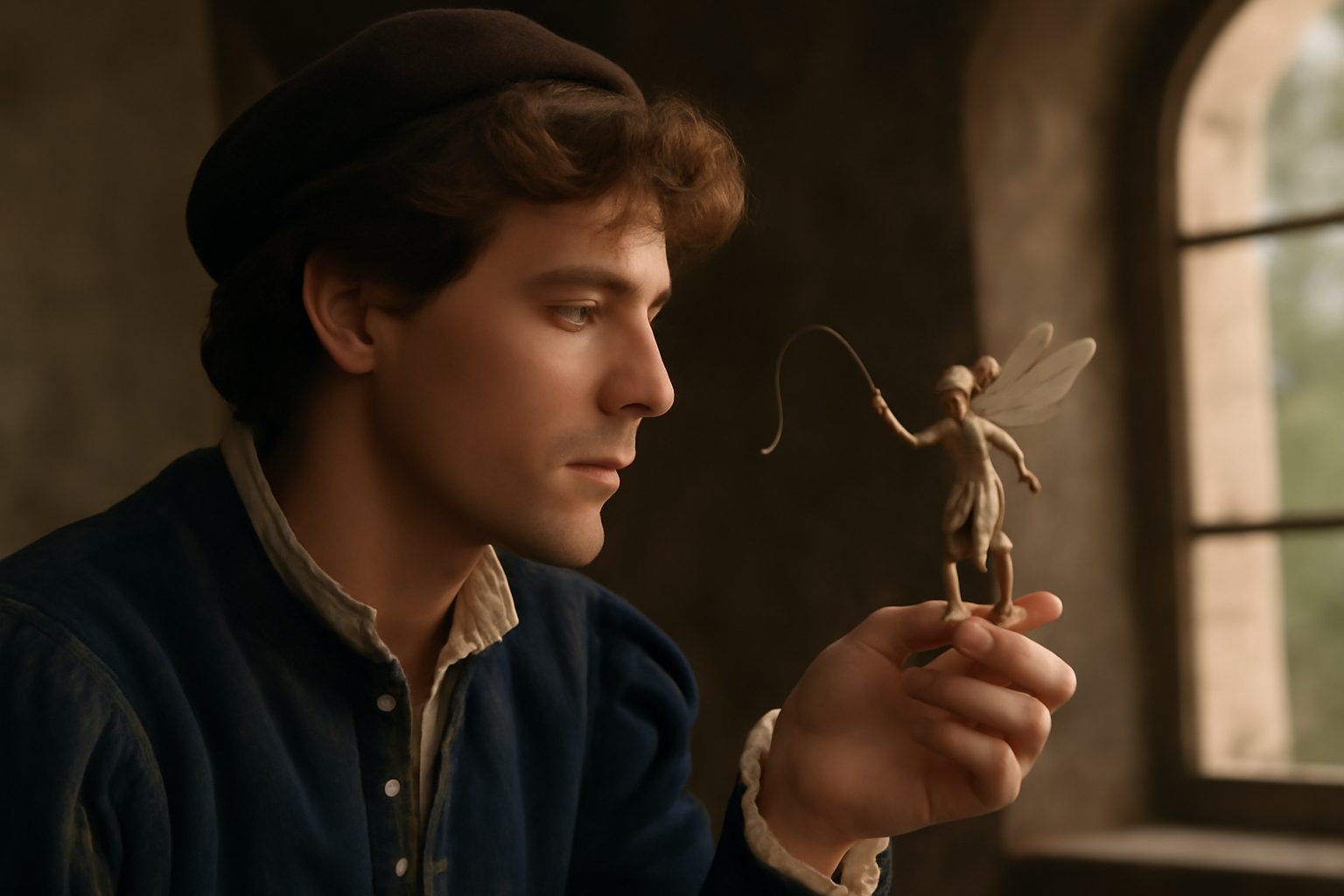
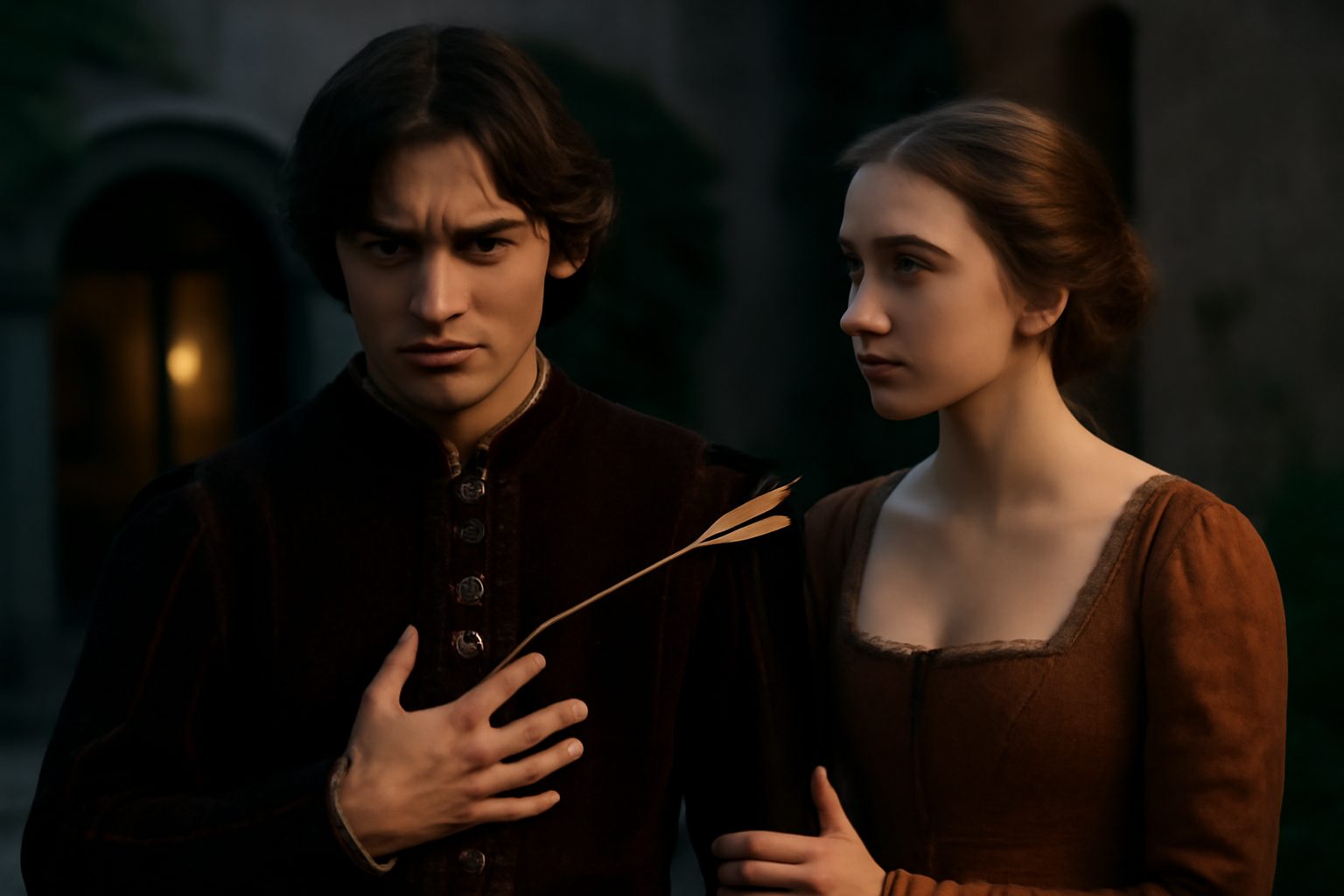
In Act 1, Scene 4 of Romeo and Juliet, Mercutio mocks Romeo's lovesick demeanor as they prepare to crash the Capulet feast. This line refers to Cupid, the blindfolded god of love, suggesting they will not disguise their intentions or sneak in like timid lovers. Mercutio's bold, irreverent tone contrasts with Romeo's melancholy, setting up their differing attitudes toward love and adventure.
Benvolio: "We'll have no Cupid hoodwink'd with a scarf,"
In modern day english, we would say:
We won’t have Cupid blindfolded by some scarf.
Frequently Asked Questions
What does Benvolio mean when he says they won't have Cupid blindfolded with a scarf?
Benvolio is saying they won't let love (represented by Cupid) be hidden or disguised at the party they're attending.
Connections to other verses:
Connections to "We'll have no Cupid hoodwink'd with a scarf"
The verse "We'll have no Cupid hoodwink'd with a scarf" establishes the theme of rejecting artificial or deceptive forms of love and revelry. This connects to several other verses in the scene that explore love, disguise, and the nature of dreams.
Rejection of Artificiality
This line dismisses the idea of a blindfolded Cupid, symbolizing a refusal to engage in love that is obscured or insincere. It aligns with "The date is out of such prolixity", which rejects overly elaborate customs, and "Nor no without-book prologue, faintly spoke", emphasizing a move away from contrived performances.
Contrast with Romeo's View of Love
Romeo’s melancholy perspective on love contrasts sharply with this rejection of playful artifice. In "I am too sore enpierced with his shaft", he describes being wounded by Cupid’s arrow, yet feels burdened rather than playful. Similarly, "Under love's heavy burden do I sink" underscores his sorrow, opposing the lightheartedness implied by a "hoodwink'd" Cupid.
Mercutio’s Queen Mab Speech
Mercutio’s extensive speech on Queen Mab ("She is the fairies' midwife") delves into dreams and fantasies, which are portrayed as "begot of nothing but vain fantasy" in this verse. This connects to the idea that love and dreams—like a hoodwinked Cupid—can be deceptive and insubstantial.
Disguise and Revelry
The theme of disguise is present in verses like "Give me a case to put my visage in" and "A visor for a visor! what care I", where masks are donned for the revelry. However, the rejection of a "hoodwink'd" Cupid suggests a desire for genuine interaction over hidden intentions.
Fate and Foreboding
Romeo’s sense of impending doom, expressed in "Some consequence yet hanging in the stars", contrasts with the playful imagery of Cupid. The idea that love might lead to a "vile forfeit of untimely death" (this verse) further undermines the notion of carefree romance symbolized by a blindfolded deity.