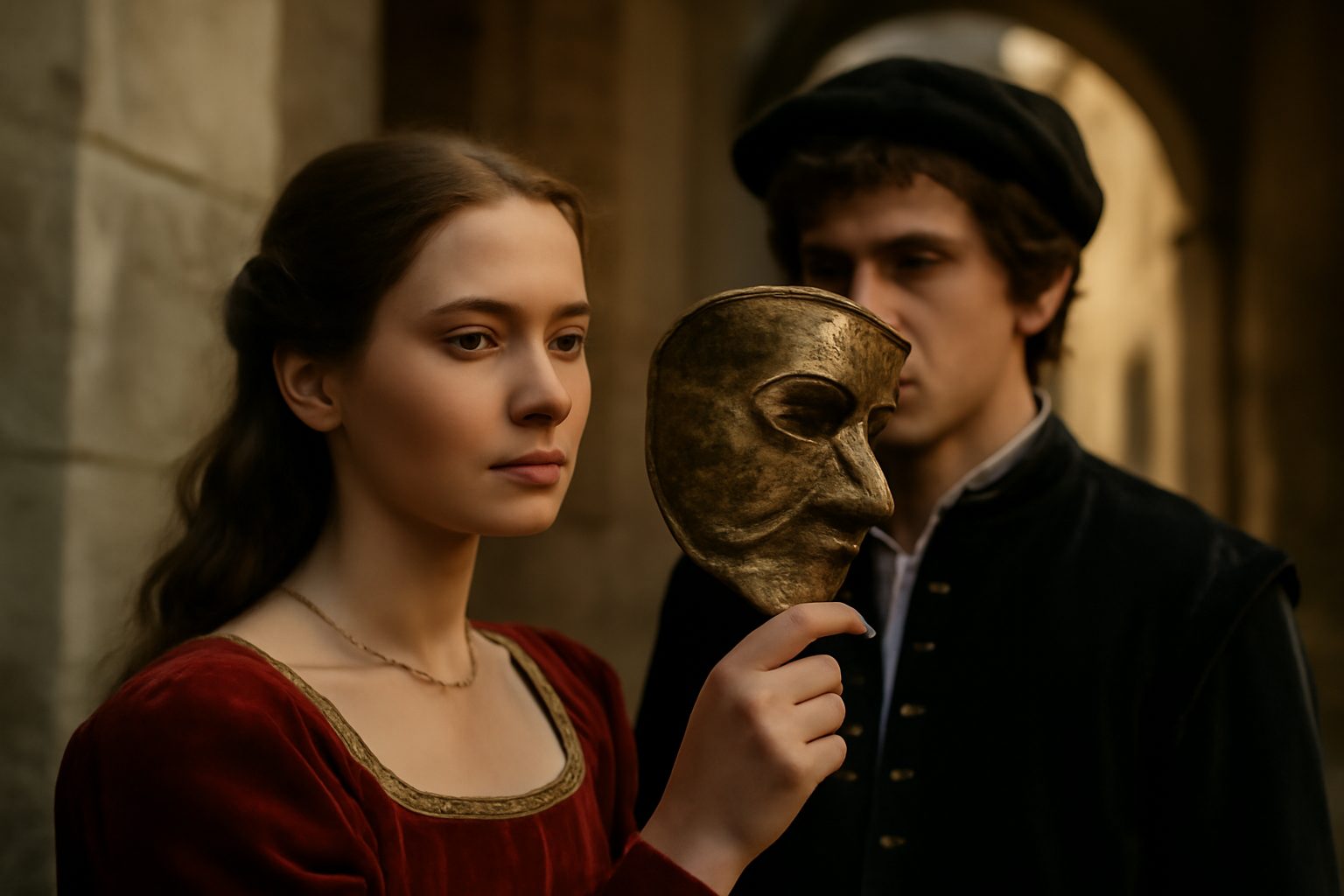
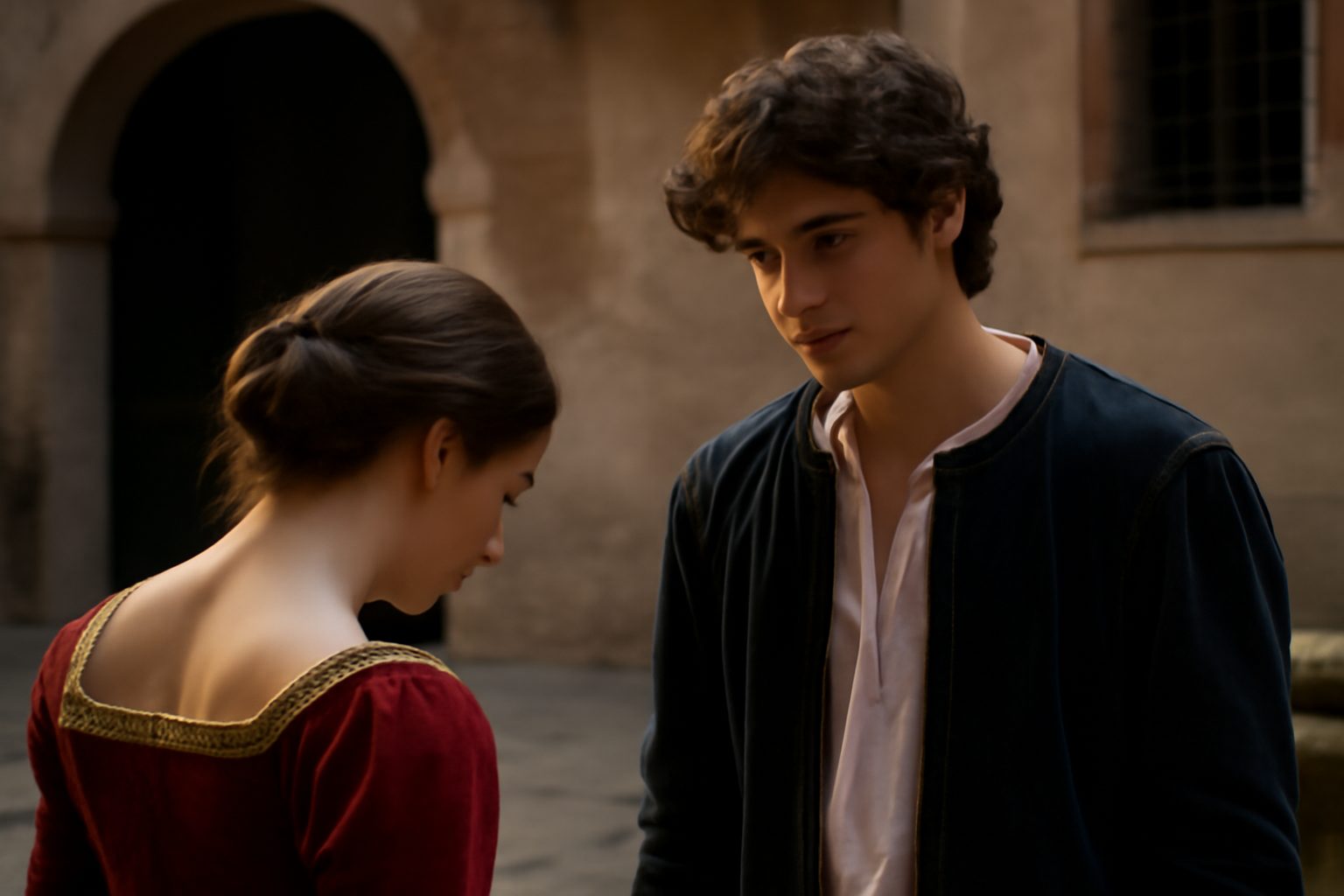
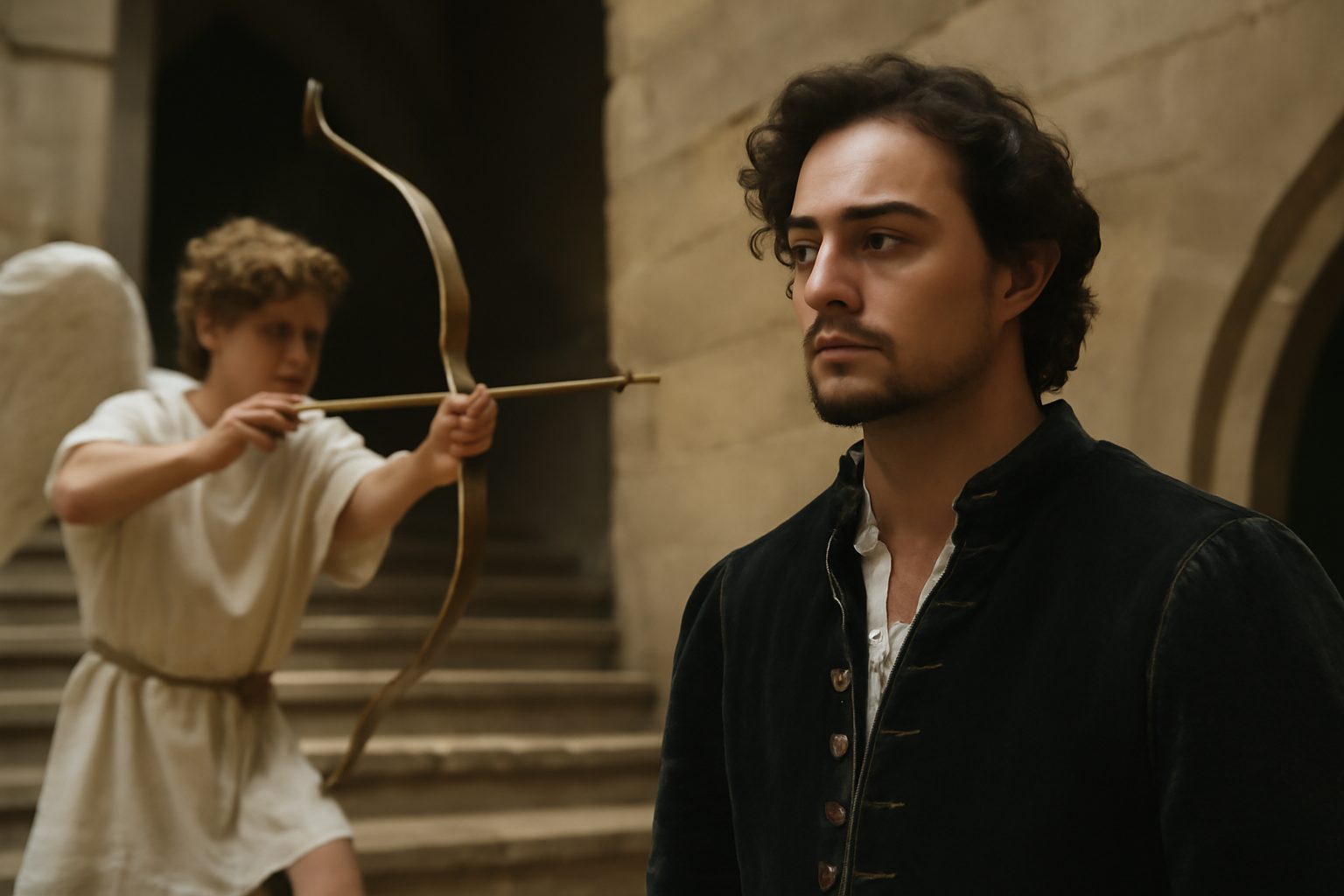
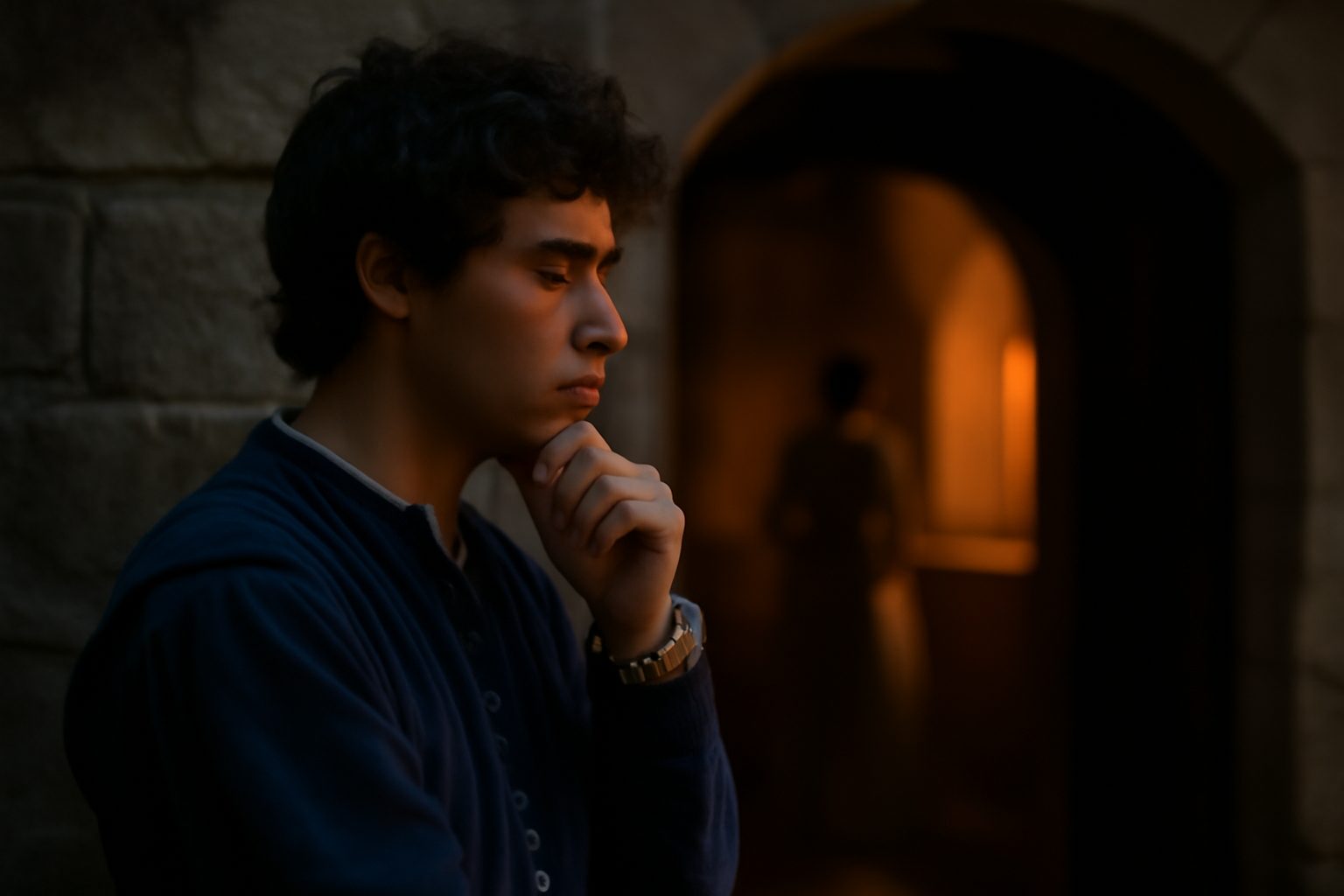
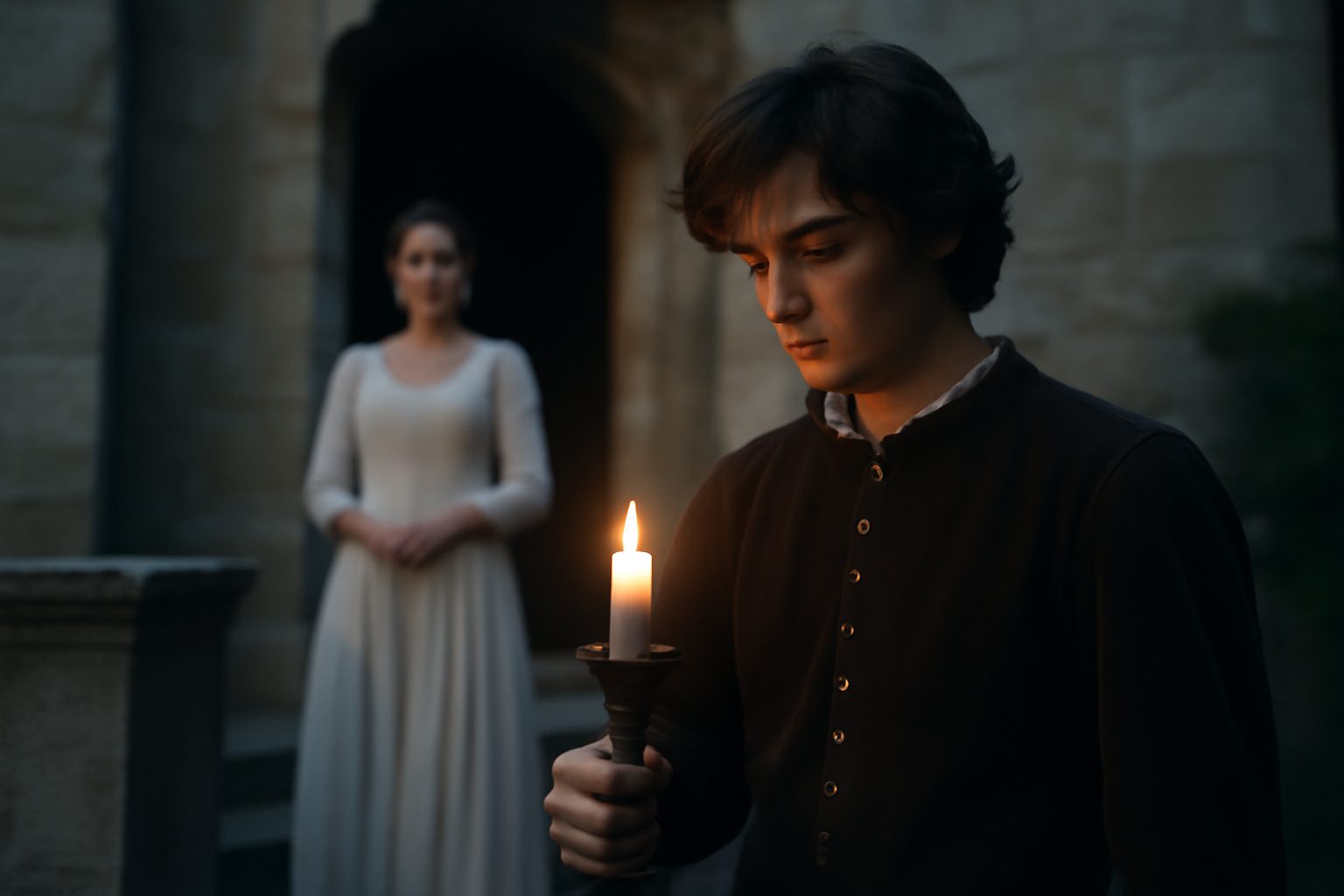
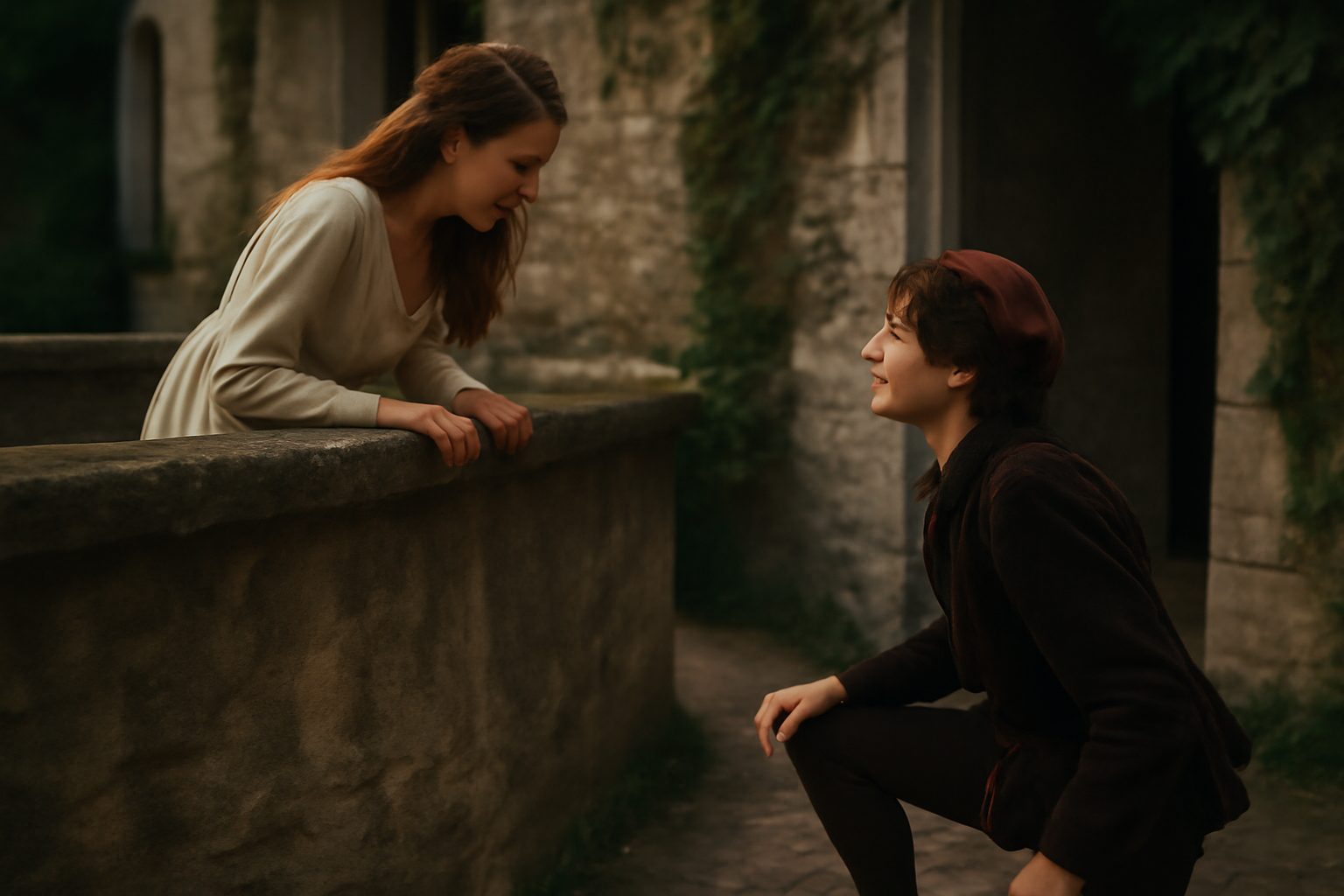
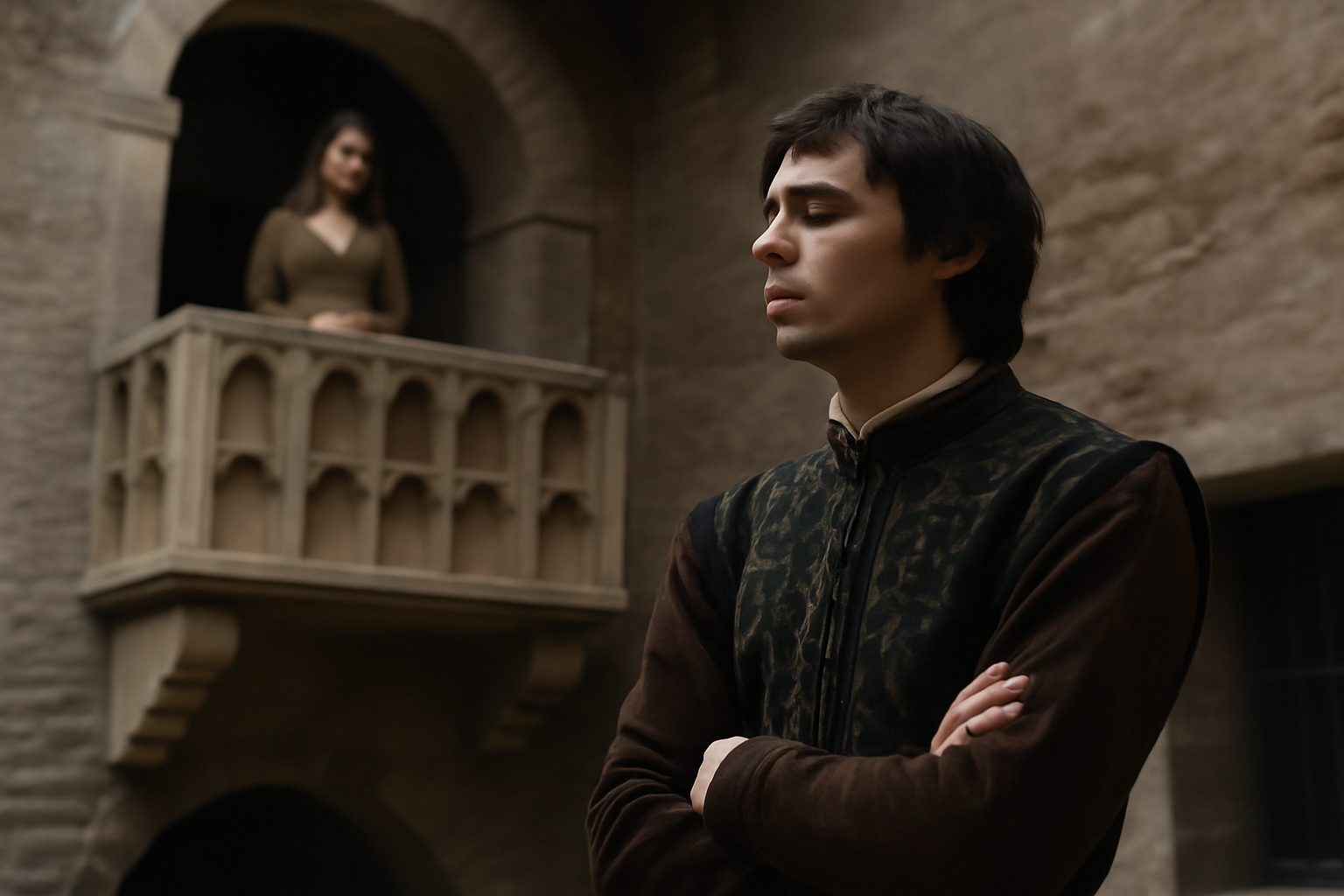
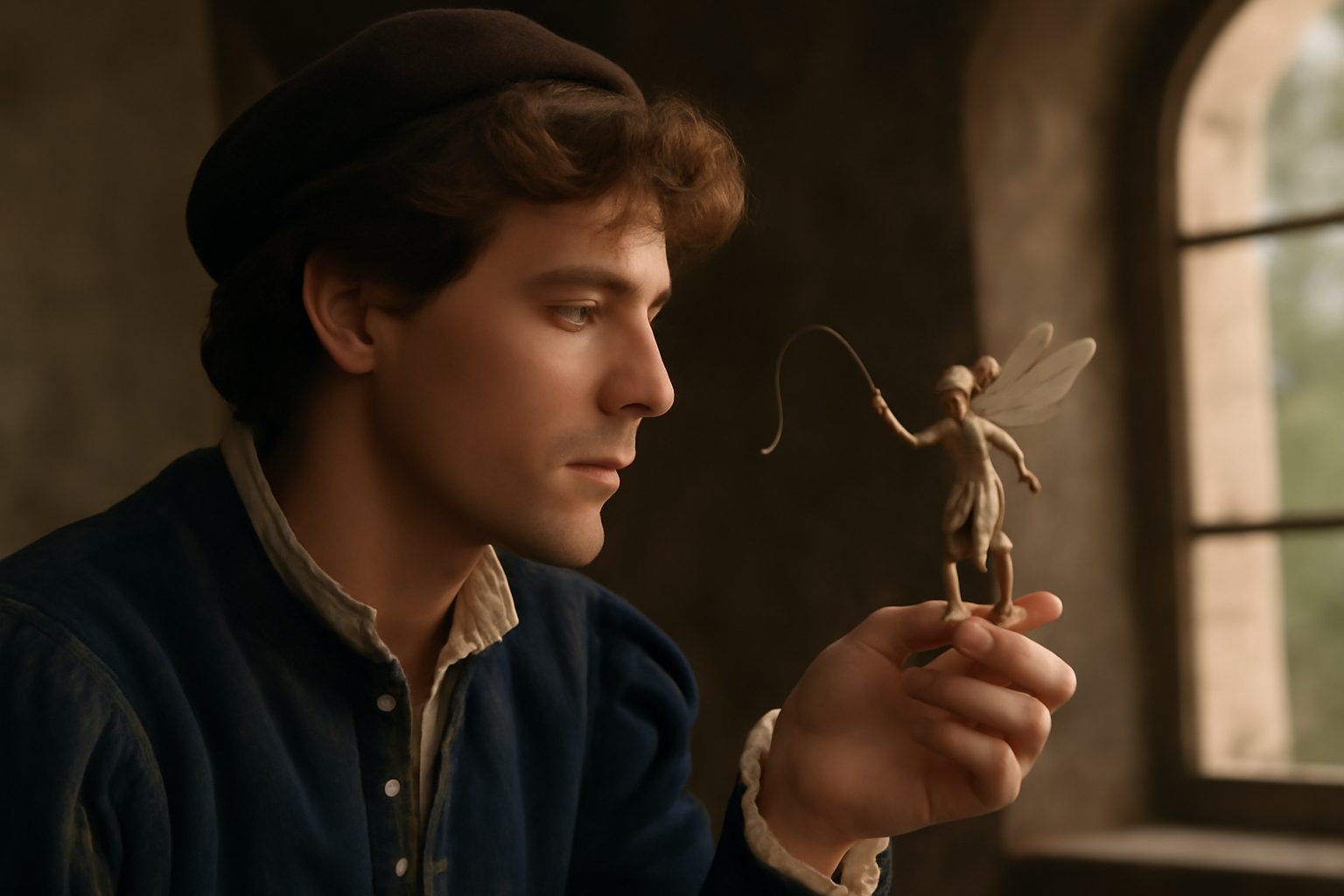
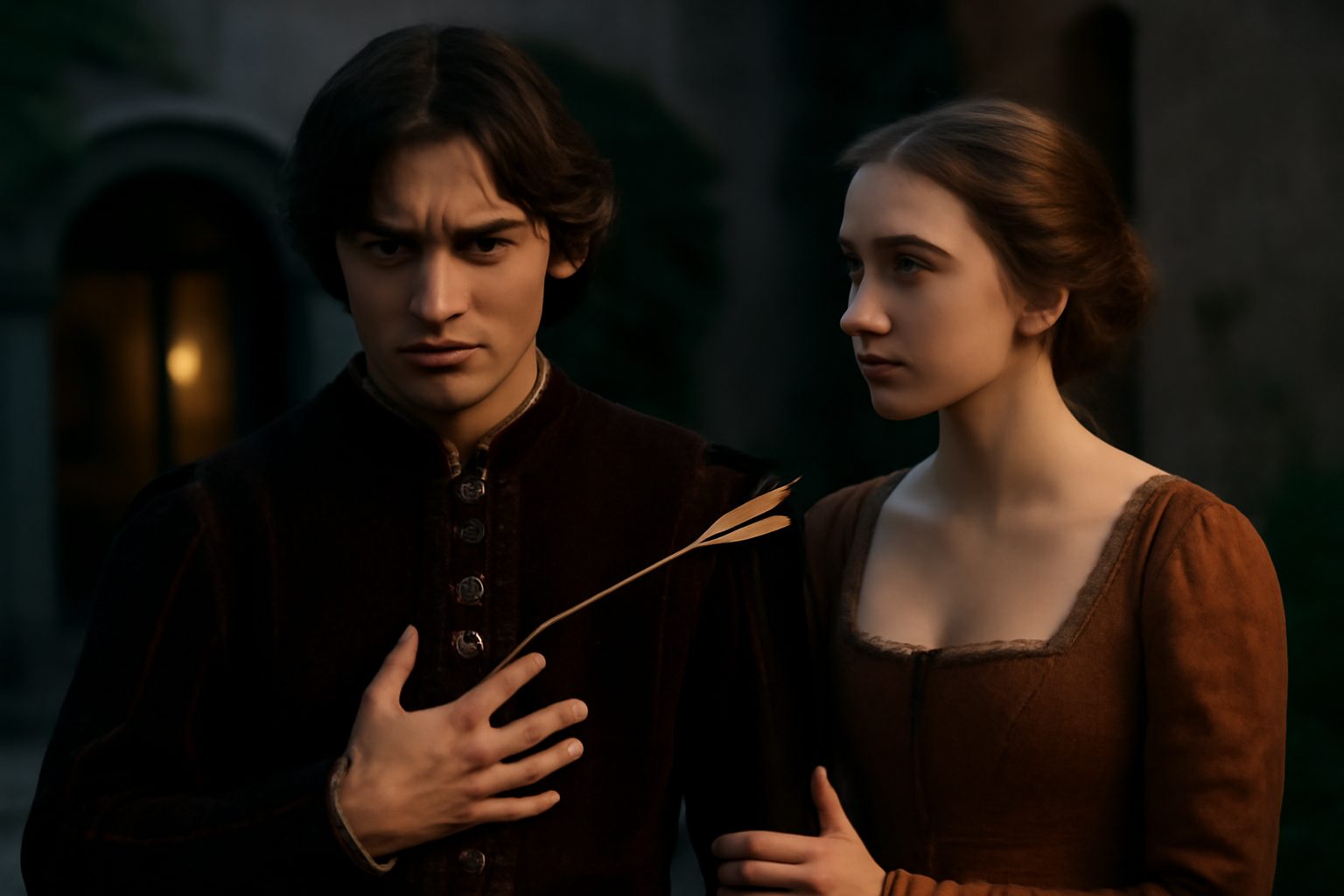
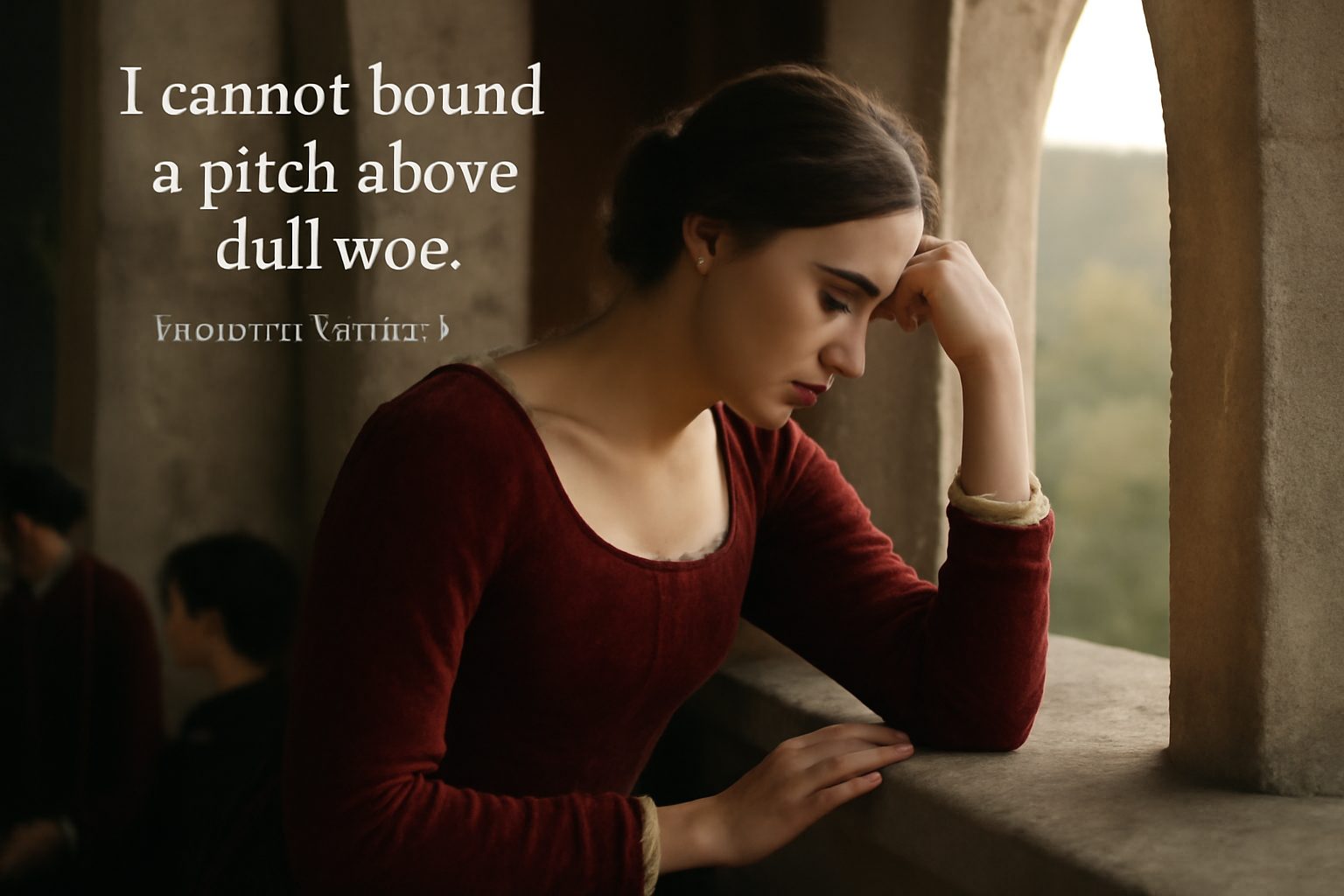
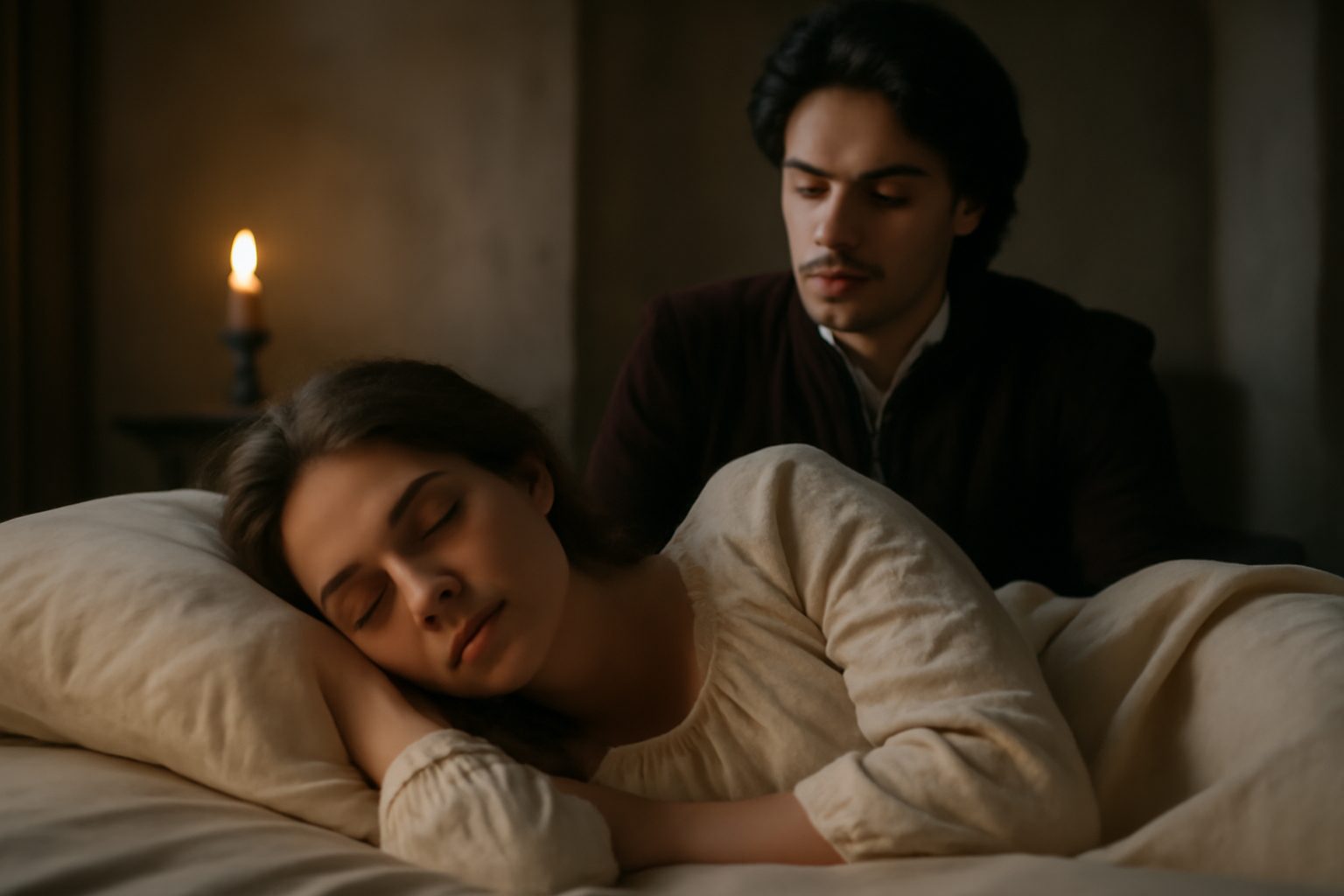
In Act 1, Scene 4 of Romeo and Juliet, Mercutio and Romeo are preparing to join the Capulet's masquerade ball. Mercutio, ever the quick-witted and theatrical figure, uses a metaphor from theater to suggest they are merely following the cues of fate. This line reflects his playful yet fatalistic view of their decision to attend the party, hinting at the unseen forces guiding their actions.
Benvolio: "After the prompter, for our entrance:"
In modern day english, we would say:
We’re waiting for our cue to enter, just like actors following the prompter’s signal.
Frequently Asked Questions
What does Benvolio mean when he says they are following the prompter for their entrance?
Benvolio is saying that they are waiting for their cue, like actors in a play, before they enter the scene.
Connections to other verses:
Connections to "After the prompter, for our entrance:"
The verse "After the prompter, for our entrance:" is spoken by Benvolio as part of the discussion about how the group will enter the Capulet's feast. It reflects the theme of performance and disguise that runs through the scene.
Related Verses on Performance and Disguise
- Earlier, Mercutio dismisses the need for a formal, rehearsed introduction with "Nor no without-book prologue, faintly spoke", emphasizing spontaneity over scripted behavior.
- Benvolio reinforces this idea of natural, unpretentious entry in "But let them measure us by what they will;", suggesting they should not worry about others' judgments.
- The theme of masking continues with Romeo's request in "Give me a case to put my visage in:", highlighting his desire to hide his emotions behind a physical disguise.
Contrast with Romeo's Melancholy
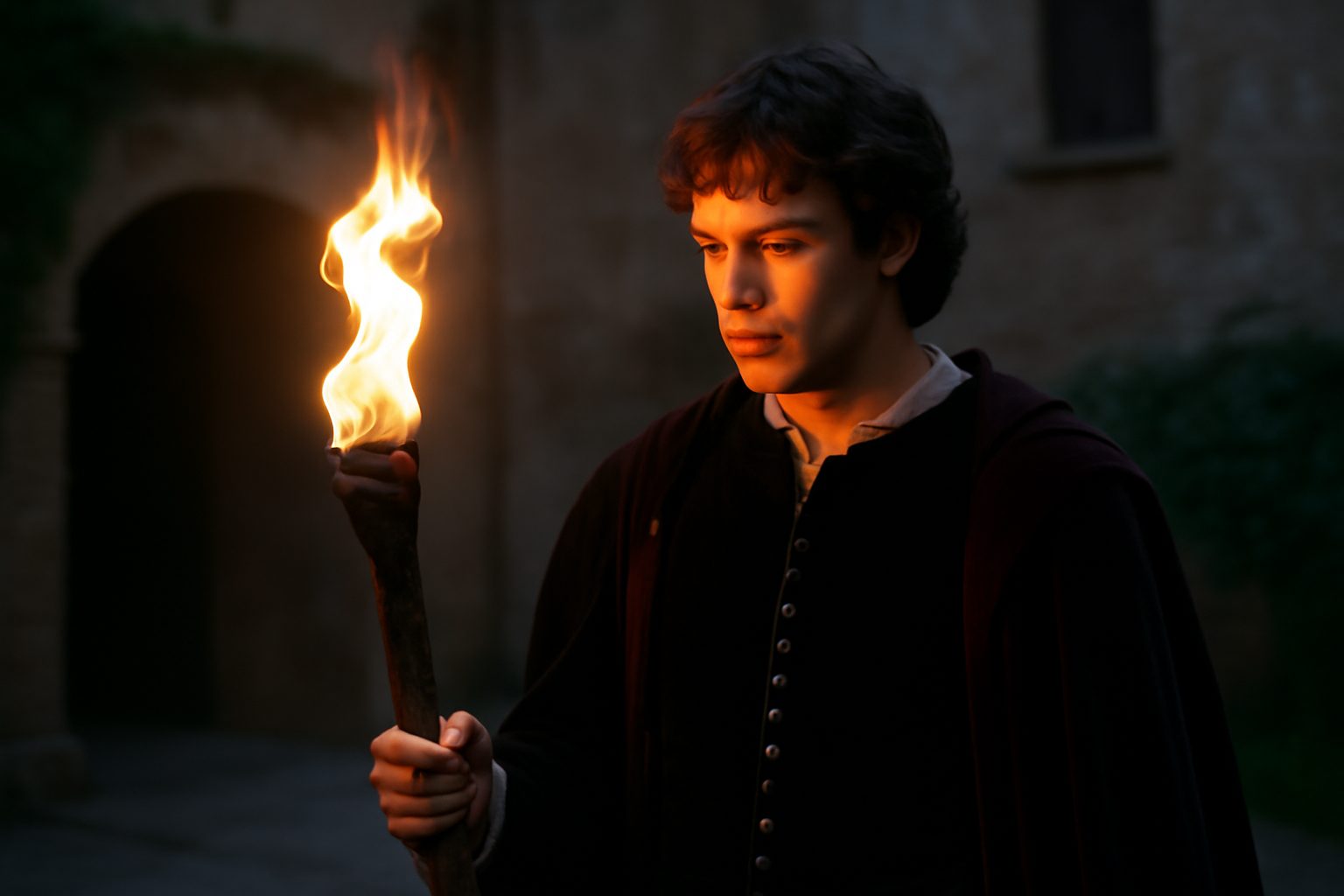
- Romeo's reluctance to engage in the festivities is clear in "Give me a torch: I am not for this ambling;", where he prefers to carry light rather than dance, symbolizing his heavy heart.
- He further expresses his sorrow in "With nimble soles: I have a soul of lead", contrasting the lightness of dance with the weight of his emotions.
- This connects to his feeling of being weighed down by love in "Under love's heavy burden do I sink.", reinforcing his resistance to the merrymaking implied in the "entrance" verse.
Foreshadowing and Ominous Undertones
- Romeo's sense of foreboding is introduced in "I fear, too early: for my mind misgives", suggesting that the entrance to the feast may lead to dire consequences.
- This is expanded in "Some consequence yet hanging in the stars", where he hints at a fateful outcome from this night's events.
- The idea culminates in "By some vile forfeit of untimely death.", directly linking the masquerade entrance to the tragedy that unfolds.